Loading...


Map quiz 1 Mediterranean Basin
Quiz by Alison Kingsley
Customize this quiz to suit your class
Instantly translate to 100+ languages
Tag the questions with any skills you have. Your dashboard will track each student's mastery of each skill.
Give this quiz to my class
Where is the Nile River?
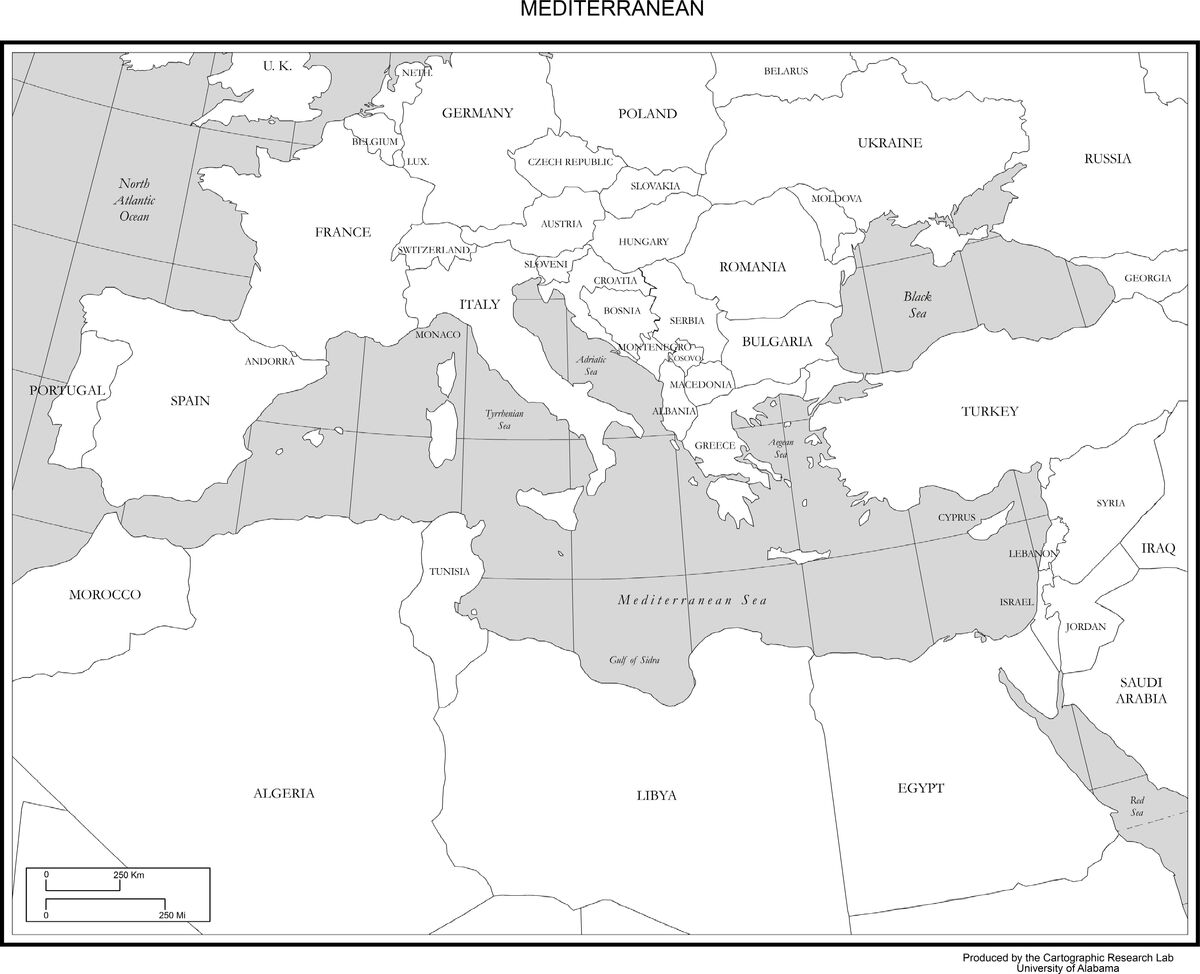
Kairouan
Barcelona
Turkey
Egypt
Where is Constantinople?
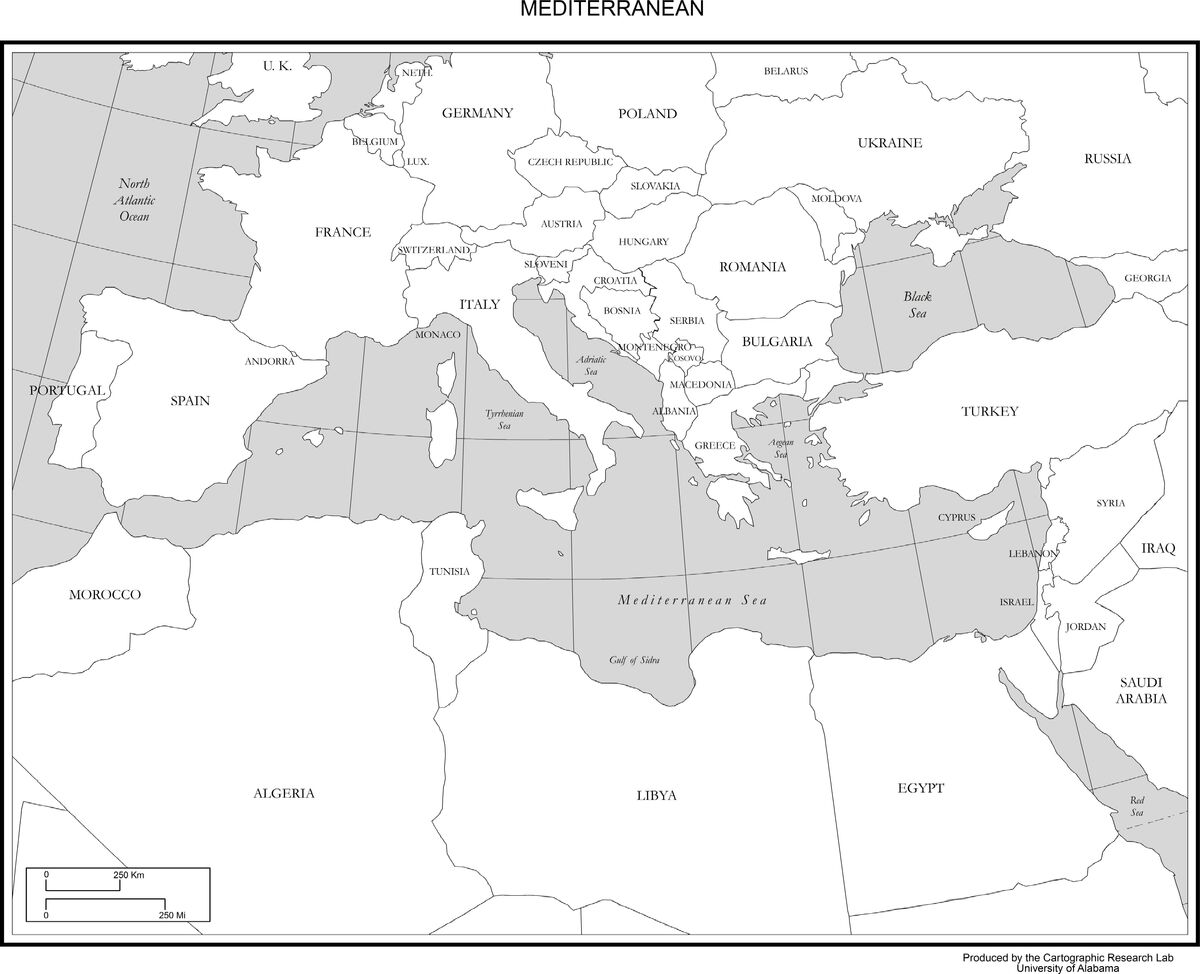
France
Greece
Mecca
Turkey
Where is the Nile River?
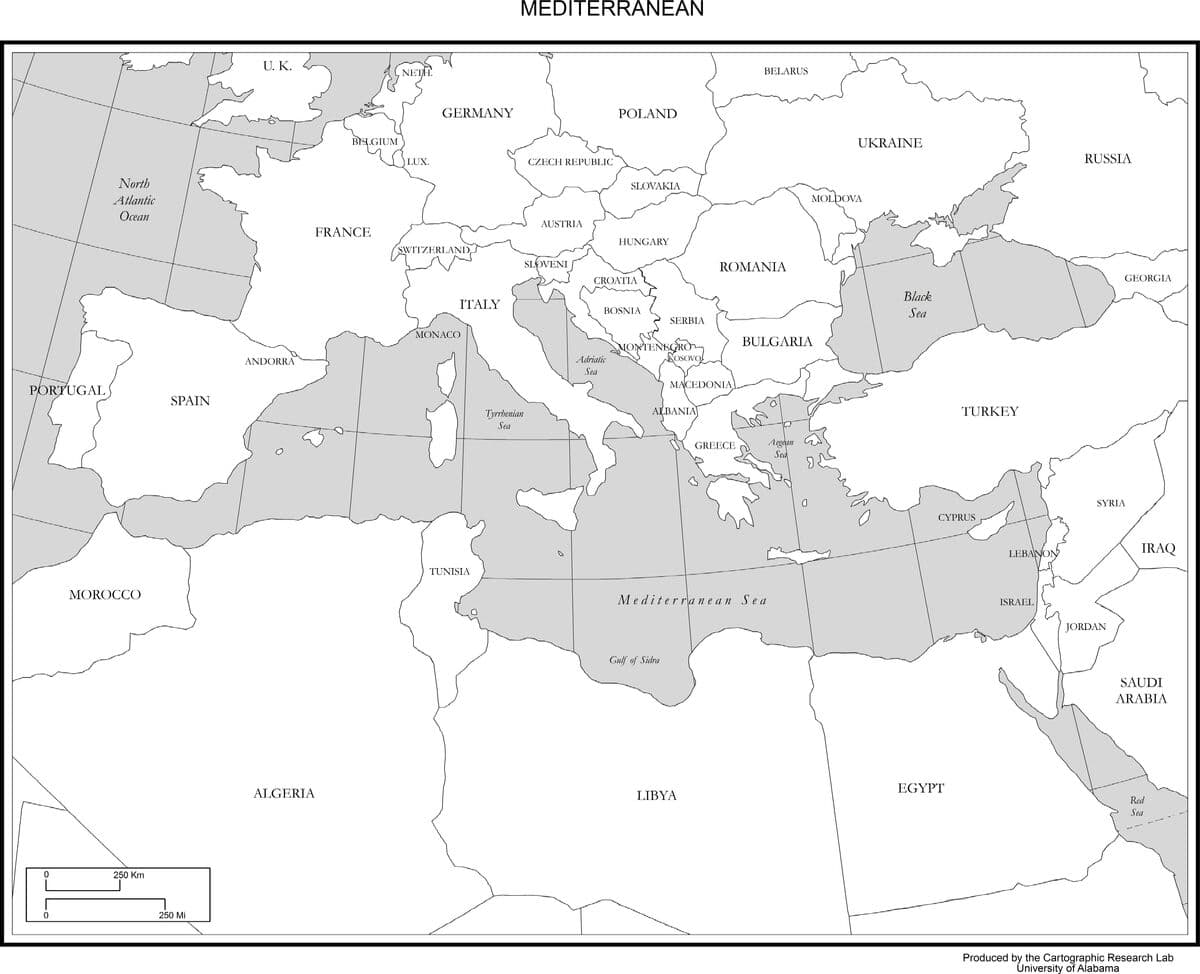
Where is Constantinople?

This city is located in upper egypt near Hierakonpolis
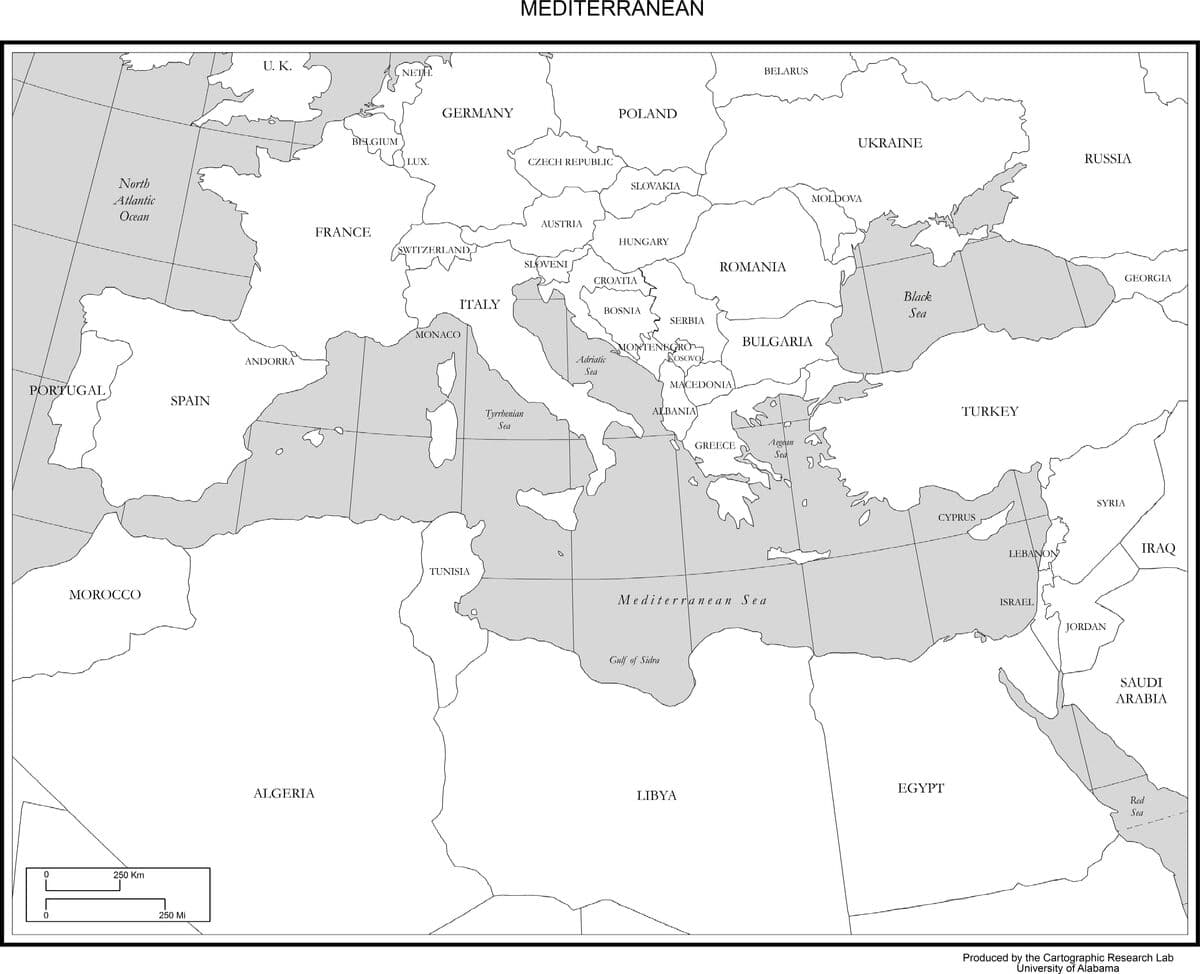
In Italy, Ravenna is north Rome

Mecca is located in ...
Athens is located in ...
King Narmer was an important ruler, united these two regions
In the Islamic religion a hajj is a pilgrimage to this holy city
A visual convention used in Egyptian art is composite view. What is composite view?
A space filled with columns is a ...
 Map Quiz 1.0GCR Quiz 1: PRMS Map QuizUnit 1 7th SS GSE Map Skills QuizWe found you were making a quiz on the subject of "What is a rubric? A tool comprising a set of criteria (with possible levels of performance quality on the criteria) developed to assess learners’ work, from written to oral to visual. It is used tomeasureperformance,suchastheprocess of doing something (e.g.,playing a musical instrument, making a speech) or products of the learners’ work (e.g., concept map, laboratory report, bookshelf) (Brookhart, 2013). BENEFITS OF USING RUBRICS Support authentic assessment Reflects how well learners are able to apply knowledge inthe real-world context. Communicate expectations Gives learners an idea of what is expected of them. It is especially useful when the rubrics are communicated to the learners before they are assessed. Improve performance Explicit criteria and performance level descriptions allow learners to understand the desired performance. Learners are able to assess themselves by referring to the specific criteria and performance-level descriptions. Provide informative feedback Instructors are able to provide constructive feedback to learners on their weaknesses and strengths. Promote thinking andlearning 4 Provide informative feedback Instructors are able to provide constructive feedback to learners on their weaknesses and strengths. Learners are able to review and revise their work,thus reflecting on their learning experiences. Ensure fairness Learner performance assessed fairly given its objectivity. It helps avoid disputes between learners and instructors about the scores/grades achieved. TYPES OF RUBRIC ANALYTIC It consists of individual criterion with corresponding descriptor of performance. HOLISTIC It consists of performance descriptors that are placed together to refeclet to overalll performance. ANATOMY OF ANANALYTIC RUBRIC Rating scales with corresponding scores or weights The row represents the criteria for the desired performance, while the column represents the evaluation score. Under the rating scale (corresponding weights orscorescanbeassigned),theperformance descriptors are explicitly stated ANATOMYOF AHOLISTICRUBRIC Descriptions: It comprises the rating scale (corresponding weights or scores can be assigned) in the row while the combined desired performance descriptors are placed in the column. Description of the task The purpose of the assignment is to assess learner’s cognitive and analytic skills in applying knowledge gained and constructed throughout the course Diffusion of Innovation,bywatching the Surrogates movieand writing ananalytical review of the movie in the context of innovation diffusion.Iwant to provide learners with informative feedback on their cognitive and analytic skills such as the following: applying the concepts of innovation diffusion,making judgmentson the scenes related to innovation diffusion identified from the movie,selecting and critiquing theories of innovation diffusion and making connections between the theories,aswell asarguingand proposing necessary solutions to the problemss hown in the movie. ESTABLISHING ALTERNATIVEASSESSMENTINHIGHEREDUCATION VALIDITYAND RELIABILITYOF RUBRICS. Validity Measuring what is supossedto be measured. Reability Yielding consists results. Instruments that are used in the alternative assessment must be aligned to the learning outcomes and measure well what it intends to measure (valid) and produce consistent scores (reliable). The valid instrument will manifest the true ability (latent trait) of learners and permit appropriate inferences to be made about a specific group of people for specific purposes. TYPES OF VALIDITY FACE VALIDITY Simple form of validity thatapplies a superficial and subjective assessment whether the instrument measures what it is supposed to measure. CONTENT VALIDITY Refers to the extent to which the items on a measure assess the same content or how wellthe content material was sampled inthe measure. CONSTRUCT VALIDITY Refers to the extent to which the test may be said to measure a theoretical construct or trait. CONCURRENT VALIDITY Refers to the extent to which scores onanewmeasure are related to scores from a criterion measure administered at the same time. PREDICTIVE VALIDITY Refers to the uses of the scores from the new measure to predict performance on a criterion measure administered ata later time. STEPS TO CONSIDER WHEN ESTABLISHING CONTENT VALIDITY Calculate the level of expert agreeement for the content validity, get expert to verfy. Interview the expert ,make meta contentdata análisis from literatura. STEPS TO CONSIDER WHEN ESTABLISHING CONSTRUCCT VALIDITY Administer the instrument for alll learners, revise any item necccesay, run an apropriates statistical analiysis, administerthe instrument to learners as a pilot test . CONSTRUCTMAP Morepreciseconceptthan construct. Ranges from one extreme to another(fromhightolow,small tolarge,positivetonegative,or strongtoweak). Identifiesthepositionofthe respondentsinthisrange. Representativenessofsampling (questions and ability of respondents). EXAMPLEO FACONSTRUCTMAP:AFFECTIVE LEVELOF AFFECTIVE VARIABLES EXAMPLESOFITEMSIN MEASURINGTEAM WORKING SKILLS 5. Characterisation Learnersvolunteerstodothe groupworks. 4. Organisation Learners are willing to help others,althoughitisnottheir scopeoftask. 3. Valuing Learners respect other team members’opinionwhendoing thediscussion. 2. Responding Learnergivescooperationwhen neededingroupworks. 1. Receiving Learneracceptsthediversityof races and nationalities among groupmembers. EXAMPLEOFACONSTRUCTMAP:PSYCHOMOTOR LEVELOF PSYCHOMOTOR VARIABLES EXAMPLESOFITEMSIN MEASURING DIGITAL SKILLS 7.Origination Learnerscanmodifytheirowndevicesto performbetter. 6.Adaptation Learnerscansolveandtroubleshootthe problemwhileusingthecomputer. 5.ComplexOvertResponse Learnerscanusethecomputercompetently. 4.Mechanism Learners can use the computer independently,butstillmakeminorerrors. 3.GuidedResponses Learnerscanusethecomputer,butstill needguidance. 2.Set Learnersarereadytousethecomputer. 1.Perception Learnerscanobservehowtousecomputer. EXAMPLEOFACONSTRUCTMAP:COGNITIVE LEVELOF COGNITIV E VARIABLES EXAMPLESOFITEMS IN MEASURING THINKINGSKILLS 6. Creating Learners are able to suggest anewmodelorframeworkof learningdigitalcommunity. 5. Evaluating Learners are able to judge the impactofthescenariotowards educationperspective. 4. Analysing Learnerscandifferentiate the factsusingafew theories. 3. Applying Learnerscansolveproblems usingthefactsgiven. 2. Understanding Learnersareabletoexplainthe factsusingtheirownwords. 1. Remembering Learnersonlymemorisethe. Direction of Increasing “X” Learners Learners with high “X” Learners with mid range “X” Learners with low “X” Responses to Item Item response indicate highest level of X Item response indicate higher level of X Item response indicate lower level of X The construct map shows the lower ability students are in line with the lower level of items. This shows that when educators plan to develop an instrument, it Item response indicate lowest level of X Direction of Decreasing “X” is crucial to create an item difficulty thatrepresents learners’ ability. Learners’ ability Learners who engage in level characterisation Learners who engage in level organisation Learners who engage in level valuing Learners who engage in level responding Learners who engage in level receiving Direction of Decreasing“X” MEASURINGCONSTRUCTVALIDITY Unlike content validity, this construct validity can be analysed using statistical analysis. Use Exploratory FactorAnalysis [EFA], Confirmatory FactorAnalysis [CFA] or Unidimensionality to confirm all items are measuring the right construct and the raw variance explained for the latent variables is sufficient. Gap initem map also can show accuracy in construct validity. RELIABILITY The degree to which test scores are consistent over repeated administrations of the same/ equivalent test and therefore considered dependable and repeatable for an individual learner.A test thatproduces highly consistent and stable results (i.e. relative free from random error) is said to be highly reliable. TYPESOFRELIABILITY Test-retest demonstrates the stability of a measure over time 01 Internal consistency most of the items within a rating scale of a concept show consistency of scoring. Inter-rater the extent to which two or more independent raters are consistent in observing, recording and scoring data (should be 70% or higher agreement) 04 Intra-rater relies on one rater to rate an object or event twice (70% or higher of agreement) FACTORSAFFECTING VALIDITYANDHOWTO INCREASEVALIDITY? FACTORS AFFECTING VALIDITY HOWTO INCREASE VALIDITY? 1. Inaccuracy of items in measuringtheoutcomes 1. Vetting session to get reviewsfromtheexpert. 2. Pooritemsdevelopment 2. Followtheformatandtips indevelopinggooditems. 3. Unclearinstructions 3. Do pilot testing to measuretheusabilityof thetest. 4. Interveningevents 4. Controltheinternalthreats validityfactors. 5. Itemsdifficultyisnot suitableforthelearners 5. Create a construct map toensurethereisanitem thatrepresentslearners ability. FACTORS AFFECTING RELIABILIT Y HOWTOINCREASERELIABILITY? 1. TestLength 1. Thetestlengthshouldbeappropriate withtestdifficulty. 2. Test retest interval 2. Suggesteddurationisbetween3 weeksto2months. 3. Variability of scores 3. Doconstructmaptoensuretheitems aresuitablewithlearners’ability. 4. Guessing 4. Penalisetheguessinganswers.You alsocandetecteitherthelearnersare guessing or not using the statistical analysis named guessing analysis andpersonfitanalysis. 5. Inconsistency score from different raters 5. Appointtheratertomarkcertain questionsforalllearners(Thisalways happen when you have more than onesectionandhavemorethanone lecturer). CONCLUSION Coming back to the issue of validity and reliability in assessment, there is a need for educators to put an effort to ensurethattheitemsintheformofquestionsorinstructions arenotonlyclearbutalsoabletomeasurewhatitisintended tomeasurebasedontherelatedlearningoutcomes. Establishingvalidityandreliabilityofinstrumentscan provide educators with some indications of the quality of the measuring tools being used. Valid and reliable instruments enabletheeducatorstocontinuouslyusethemeasuringtools withoutreservation. Reliablenot valid Precisenot Accurate Reliableand valid Preciseand Accurate NotReliable butvalid NotPrecisebut Accurate NotReliable butNotvalid NotPrecisebut NotAccurate 94 ". Would you like to continue making it or start afresh? 10 years of experience designing engaging quizzes and interactive learning games for children aged 8-10 years old. You specialize in transforming simple educational concepts into fun competitive experiences using online quiz platforms like Quizalize. Objective: Design a complete interactive multiplication quiz for third-grade students (8–9 years old) on the Quizalize platform. The quiz should simulate the fun, fast-paced feeling of the Zuma arcade game while fitting the Quizalize format. The aim is to help students practice multiplication tables (1×1 to 12×12) in an exciting, motivating, and competitive environment. Instructions: Structure: Design at least 40 multiplication questions. Questions should appear in increasing difficulty: start from easy (e.g., 2×3, 4×2) and move to harder problems (e.g., 11×12, 9×8). Timing: Set a short time limit for each question (e.g., 10 seconds) to simulate the fast reaction needed in Zuma. Encourage fast thinking and rapid response under time pressure. Answer Choices: Use multiple-choice answers. Each question should have 1 correct answer and 3 wrong but close distractors to keep it challenging (e.g., for 7×6: options 42, 43, 36, 48). Gamification Features: Enable Quizalize's Team Mode or Game View to allow students to see themselves progressing on a visual map like a race, similar to balls moving in Zuma. Set points bonuses for speed and accuracy. Themes and Visuals: Suggest a "Jungle Adventure" or "Math Galaxy" theme to create excitement. Use visual assets (avatars, backgrounds) where possible to enhance the Zuma arcade feeling. Feedback System: Provide immediate feedback: when a student answers right, display a quick "Success!" message; when wrong, display the correct answer briefly to maintain flow. Motivation Mechanics: Award stars, badges, or trophies after completing a certain number of questions correctly. Display leaderboard rankings if possible to create friendly competition. Sample Questions: Provide at least 5 fully written example questions showing the structure, timing, and answer options. Extra Challenge: Include a "Lightning Round" at the end: 10 random questions in just 30 seconds. Important: Keep language child-friendly and motivational. Make sure no question looks too similar to the others to avoid boredom. Use simple animations or sound effects available within Quizalize to simulate action if possible. Take a deep breath and work on this problem step-by-step.Title: The Adventures of Max and the Magical Computer (Shortened Version) Once upon a time, in a small town called Techville, there lived a curious fourth-grader named Max. One day, while exploring his grandma’s attic, he found an old, dusty computer. As he cleaned it, the screen lit up, and a cheerful voice said, “Hello, Max! I’m Compy, your magical computer. Let’s learn about operating systems, files, and folders!” Max was thrilled. “A talking computer? Let’s go!” Chapter 1: The World of Windows Compy explained, “I run on Windows, the brain of the computer. It uses a Graphical User Interface (GUI), so you can interact with me using icons, menus, and buttons. Let’s start by changing my desktop background—the image on the screen.” Max chose a spaceship picture. “Cool! Can I add a screen saver too?” “Of course!” said Compy. “It’s an image that appears when I’m inactive. Try this swirling galaxy!” Max set the screen saver and giggled as it appeared. “This is fun!” Chapter 2: Organizing with Folders and Files Compy’s screen filled with random icons. “Oh no! My files are a mess. Can you help?” “Sure! What are files and folders?” asked Max. “A file is information, like a picture or document. Files have names, like ‘Homework.docx.’ The part after the dot, like .docx, is the file extension. It tells you the file type,” Compy explained. Max pointed to “Game.exe.” “So, this is a program file?” “Yes!” said Compy. “To organize, we use folders—like drawers for files. You can even put folders inside folders!” Max created a “School” folder, added his homework files, and made a “Projects” folder inside it. “Now everything’s neat!” Chapter 3: The File Explorer Adventure Compy’s screen flickered. “Some files are missing. Let’s use Windows Explorer to find them. It’s like a map for files and folders.” Max opened Windows Explorer and saw a tree-like list of folders. “This is like a tree with branches!” “Exactly!” said Compy. “Search for the missing files and move them to the right folders.” Max found the files in “Downloads” and moved them. “I feel like a computer detective!” Chapter 4: The Final Challenge Compy’s screen turned into a game board. “Time for a quiz! What’s the purpose of an operating system? How do you change the desktop background? What’s the difference between a file and a folder?” Max answered all the questions correctly, and fireworks lit up the screen. “Congratulations, Max! You’re a computer whiz!” The End Max smiled. “Thanks, Compy! I can’t wait to teach my friends!” Compy replied, “Remember, Max, learning is an adventure. Keep exploring!” As Max turned off the computer, he knew his journey into technology had just begun.Map QuizOceania map Quiz