Loading...


March to Freedom.
Quiz by Manorama Patil
Customize this quiz to suit your class
Instantly translate to 100+ languages
Tag the questions with any skills you have. Your dashboard will track each student's mastery of each skill.
Give this quiz to my class
When was the Swaraj Party formed?
1923
1925
1953
1931
Who were the members of the HSRA and were the most famous revolutionaries of the time?
Azad and Gandhiji
Azad and Bhagat Singh
Rajguru and Motilal Nehru
Rajendra Prasad and Chandrashekhar Azad
When was the Swaraj Party formed?
Who were the members of the HSRA and were the most famous revolutionaries of the time?
Identify the personality.
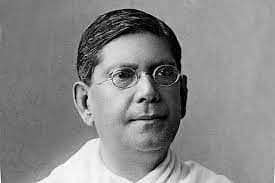
When did the Simon Commission arrive in India?
How was today's session?
Growing up in Sioux Falls, South Dakota, a small city surrounded by endless plains, I've found unexpected echoes of home in China's smaller towns — from the warmth of locals in Huaihua, Central China's Hunan province, to the quiet charm of Yangshuo, South China's Guangxi Zhuang autonomous region. With an itch to see more of China's lesser-visited regions, I began planning a trip to the northwest with seven friends — five Americans, one Pakistani, one Zimbabwean, and one Colombian. We bought round-trip tickets from Shanghai to Yinchuan, Ningxia Hui autonomous region, for less than $120 each. From there, we planned to rent a car and drive to Xining in Qinghai, then on to Qinghai Lake, and finally to Lanzhou, Gansu. To make that possible, several of us applied for Chinese driver's licenses, a process that involved translating our US licenses into Mandarin and passing a short test on traffic laws. Within a day, we were licensed. As we piled into two rental cars in late March to begin our eight-day journey, it became clear that this wasn't just a road trip — it was the culmination of our four years in China, the Mandarin we had so diligently studied, and our ongoing effort to contribute to US-China people-to-people relations. Right away, we drew curious reactions. At the Yinchuan airport, taxi drivers offered us rides into the city, only to stare in astonishment when we told them we had rented cars. "You're driving? In China?" one driver asked, visibly surprised. It was a reaction we'd encountered multiple times during our trip, as foreign drivers are rare in China, especially in remote regions. In Yinchuan, we stocked up on snacks and adjusted to the chilly desert air. From there, we headed west, navigating wide highways framed by dramatic landscapes: arid plains, jagged mountains, and occasionally, a herd of sheep crossing the road. The vastness of the Northwest was humbling — and as someone who grew up on the wide-open prairies of South Dakota, it felt oddly familiar. One of the highlights of our trip was camping by Qinghai Lake, the largest saltwater lake in China. A few summers ago, Santiago Solano, one of my classmates from the US, cycled from Xi'an in Shaanxi to Urumqi in the Xinjiang Uygur autonomous region over the course of a month and met many kind strangers along the way. One of them was Geng San, a Tibetan lamb herder who managed a piece of land right next to Qinghai Lake and graciously invited us to camp there. "That's what China is — it's the people. The quiet generosity of an old Tibetan nomad who, years after we first met, still offered us a place to rest on his land," said Solano, who is also part of the group on this trip. But apparently, we underestimated just how cold it would be to camp next to Qinghai Lake in late March. It was deathly freezing. In preparation for the trip, we had ordered two tent kits and eight sleeping bags. However, when the temperature eventually dropped to — 10 C, all of us piled into the cars and turned the heaters on. So much for camping. From Qinghai Lake, we drove to Lanzhou, where we visited many food markets and tried every type of noodle on offer. Since we are college students, we rented a gaming hotel room — something I've only ever seen in China. At night, instead of attending local parties as we had before, we stayed in the hotel and gamed late into the morning. For me, the trip was as much about the journey as it was about the destinations. Driving through Northwest China gave us a unique perspective on the region's natural beauty and its people. At gas stations, shopkeepers greeted us with curiosity and kindness, often offering recommendations for nearby attractions. At roadside carts, we sampled local specialties, grabbing a quick skewer and a mango for the road. And at every stop, we were touched by the warmth and hospitality that make traveling in China so rewarding. As an American who has lived in China for several years, I'm often asked about my experiences here. Trips like this one remind me of the similarities between the two countries, despite their differences. Just as road trips are a quintessential part of American culture, they've become my favorite way to explore China. Whether it's driving through the rolling hills of South Dakota or the deserts of Ningxia, there's something universal about the freedom and camaraderie that come with having complete control over where you end up. Written by Charlie Howes, a 22-year-old American who has lived in China since 2019. He completed his final year of high school at Beijing No 80 High School and is currently studying at New York University Shanghai. He has founded a company in China focused on facilitating US-China trade and plans to continue living in Shanghai long term. He enjoys road trips, cycling around the world, learning languages, and meeting new people.A Brief History of Washington’s Crossing of the Delaware River, Christmas Night 1776... In the fall of 1776, General George Washington and his army had suffered a series of defeats at the hands of the British Army. The Continental Army had lost every battle with the British in the New York campaign: Long Island, Manhattan, Brooklyn Heights, Harlem and White Plains and had surrendered Fort Washington and Fort Lee. At Fort Lee, the army barely escaped and was forced to leave behind its store of provisions, ammunition, and many of its weapons. A sense of defeat had settled around Washington as he was forced to retreat across New Jersey in November and finally to Pennsylvania on December 8, 1776. The British, at least, considered the war over. By December 11th, the only reason the British had not taken Philadelphia, the seat of the Continental Congress, was that Washington had ordered every boat in the Delaware River on the New Jersey side to be brought to the Pennsylvania side, thus denying the British army transportation. Washington knew that the British would be capable of resuming an offensive by crossing the Delaware once it iced over. As the harsh winter set in, the morale of the American troops was at an all-time low. The soldiers were forced to deal with a lack of both food and warm clothing, while Washington watched his army shrink because of desertions and expiring enlistments. Now, more than ever, a victory was desperately needed. Washington devised a courageous plan to take the offensive and cross the Delaware River on Christmas night and attack the Hessian garrison at Trenton, New Jersey, nine miles south of his encampment near McConkey's Ferry. The original plan called for three divisions to cross the Delaware under the cover of darkness. Lt. Col. John Cadwalader's division was to cross at Bristol and engage the southern most contingent of British forces — Hessian troops under the command of Colonel von Donop. General James Ewing's division was to cross at Trenton Ferry and take a position south of Assunpink Creek below Trenton and hold the bridge over that stream. Washington's division was to cross at McConkey's Ferry and then divide into two corps under General Nathanael Greene and General John Sullivan. Their point of attack was Trenton and the Hessian troops quartered there under the command of Colonel Johann Gottlieb Rall. The boats to be used for the crossing were gathered earlier in the month in compliance with General Washington's orders, primarily as a defensive measure. Various types of boats had been collected, most notably the large Durham boats used to carry pig iron down the Delaware to the Philadelphia markets. There were a number of problems in moving a large number of men, cannons, and supplies in an age when overland transportation was by foot and animal power. The roads were rutted and winding. There were no bridges over major rivers because the technology did not exist to span great distances. A river like the Delaware was crossed by ferry, sometimes out of service because of ice floes or floods, and certainly not designed to carry masses of men and equipment across quickly. A river could be a formidable natural barrier to an army on the move. Washington had several logistical concerns for the crossing. In addition to the troops were the cannon; each of which required at least two horses to pull it. The heavier twelve pounders, and probably the eight pounders, had four horses. There would have been between four and six ammunitions wagons. Officers of the rank of colonel or higher may have had horses. In sum, Washington had to move 2,400 men, eighteen cannons, at least four ammunition wagons and fifty to seventy-five horses across the Delaware River the night of December 25, 1776. Fully expecting to be supported by Cadwalader's and Ewing's divisions south of Trenton, Washington assembled his own troops near McKonkey's Ferry in preparation for the crossing. By 6:00 pm, 2,400 men had begun crossing the ice-chocked river. There was an abrupt change in the weather, forcing the men to fight their way through sleet and a blinding snowstorm. The river was flooded with sheets of ice moving at eleven or twelve miles per hour. These obstacles proved to be too much for the two supporting divisions led by Generals Cadwalader and Ewing, who did not cross at their assigned points along the river. It was Washington's pure force of will and determination that led to his troops' successful crossing of the river. Increasing Washington's odds were the sailors of Marblehead, Massachusetts. This group of hardened seamen, led by Col. John Glover, were used to the Nor'easters of New England. Sheer determination and muscles conditioned to the demands of rowing under the weather conditions now facing the Continental army enabled the Marbleheaders to row back and forth across the Delaware countless times. During the time of the Revolution, American soldiers marched single file along the margins of the roads. They were only assembled into a battle line (three deep) when they reached the battlefield. The battle plan had Washington's army marching in two divisions... General Greene's and General Sullivan's. They made a night march in two columns on separate roads, a very tricky operation that was prone to failure since the columns needed to arrive at the battlefield at the same time to carry out the surprise attack planned by Washington. The American army carried out the march flawlessly. Against all odds, Washington and his men successfully completed the crossing and marched to Trenton on the morning of December 26th and, in the resulting battle, achieved a resounding victory over the Hessians. By moving ahead with his bold and daring plan, General Washington reignited the cause of freedom and gave new life to the American Revolution.A technical definition states or describes exactly the nature, scope, or meaning of something. Guidelines for Writing Technical Definitions 1. Be accurate. Use precise terms. Examples: Weak definition: Data is an information in digital form that can be transmitted or processed. Accurate and precise definition: Data are the quantities, characters, or symbols on which operations are performed by a computer, being stored and transmitted in the form of electrical signals and recorded on magnetic, optical, or mechanical recording media. 2. Be objective. Use facts, not opinions. Examples: Opinionated definition: A questionnaire is not valid and reliable for the study. Factual definition: A questionnaire is a set of printed or written questions with a choice of answers, devised for the purposes of a survey or statistical study. Clock or Time Heart or Love Bird or Freedom 11 3. Grade your language. Match it to the knowledge level of your readers. Examples: Complex and complicated definition: Research is a systematic investigation into and study of materials and sources in order to establish facts and reach new conclusions. Simple and clear definition: Research is collecting of information about a particular subjectThe Revolt of the Northern Earls (1569) Most people in the North remained loyal to the Catholic noble families who controlled the north and their Catholic faith. When Elizabeth came to power, she promoted ‘new men’ (Protestants) from the gentry and the powerful Catholic nobles lost their power and influence. This led them to organise the most serious rebellion of Elizabeth’s reign in 1569. Why did the Northern Earl’s revolt? The Earls had lost their power when Elizabeth became Queen (and wanted it back). They wanted Catholicism restored in England (and felt that ordinary Catholics would support it). Elizabeth was refusing to marry or to name an heir, causing uncertainty about England’s future. Mary Queen of Scots (if freed from prison) could replace Elizabeth and solve all these problems Who were the key players in the Revolt? Earl of Northumberland • A Catholic who had held an important position under Mary I. • He lost a lot of influence under Elizabeth (as she favoured Protestant gentry) • Elizabeth also took the rights to a valuable copper mine found on his lands Earl of Westmorland • From a rich Catholic family in the north Also the Duke of Norfolk’s brother in law Duke of Norfolk • England’s most senior Protestant noble, but he had very close links to old northern Catholic families, & was sympathetic to them & greedy for power. • He hated William Cecil & Robert Dudley, Earl of Leicester (Elizabeth’s favourite) who were Protestant and from the gentry • He planned to marry Mary QS, but later backed down and urged the earls to call off the rebellion. Mary also supported the plan to marry him What role did religion play? (7/10 – but only because it was linked to power) • Most northerners held onto their Catholic beliefs & although Elizabeth didn’t persecute them, they knew that she wanted their religion to gradually die out, so they supported the revolt. • In 1561 Elizabeth hired a strict Protestant as archbishop of Durham to promote Protestantism in the north, but he was unpopular & turned many northerners against the Protestant religion. What role did politics/power play? (9/10 – this was the most important cause of the revolt) • The Northern Earls lost a lot of their power/influence (even jobs/money under Elizabeth) • Northumberland was jealous of new Protestant families being given top jobs in the North • William Cecil & Robert Dudley were not from ancient noble families, but were very close to the Queen, so the northern Earls resented them getting top jobs in her Government • Elizabeth also confiscated large areas of land & the profits from their copper mines • It is possible, that had Elizabeth allowed the Catholic Northern Earls to keep their jobs, money and influence at court, they may have ‘tolerated’ her as a Protestant Queen (greedy/selfish). What role did Mary Queen of Scots and the Succession play? • Elizabeth was refusing to name an heir and it was becoming clear that she would not marry • If Mary Queen of Scots married the Duke of Norfolk, England would have an heir and England would be Catholic again. The country would be stable without people competing for power. • However, some of Elizabeth’s courtiers got worried that it might not work and that it might lead to charges of treason (punishable by death) • So by September 1569, Robert Dudley (Earl of Leicester) decided to tell Elizabeth about the plot. By this time it was much more serious than simply marrying Norfolk to Mary. • Mary QS had secretly asked Spain to send troops to help the rebellion & overthrow Elizabeth Plan for the Revolt of the Northern Earls (1569) • The Earls of Northumberland & Westmorland will raise rebel troops from their lands in the north and take control of Durham. • The rebels will then march south towards London to join with the Duke of Norfolk • 1000s of Spanish troops will land in England to support the rebel forces • The Duke of Norfolk & rebel forces will seize control of Government & overthrow Elizabeth • Mary Queen of Scots is to be freed, ready to marry the Duke of Norfolk Key Events of the Revolt • Once Elizabeth knew of the plot, Norfolk was arrested and sent to the Tower of London • The Northern Earls were worried they would be executed for their involvement and in a desperate attempt to avoid punishment, pushed ahead with the revolt • They raised an army of ordinary Catholics and took control of Durham cathedral • Catholic mass was celebrated across the north for 2 weeks. • They then headed south, to try and free Mary • Mary QSs was moved south to Coventry on the orders of Elizabeth, so she couldn’t escape • The rebellion failed as Spanish troops never arrived • Elizabeth’s friend (Earl of Sussex) had raised an army of 7,000 men to defend her throne. Results: • The rebellion was a serious threat to Elizabeth • She executed 450 rebels in the north • Northumberland was executed in 1572 & his head was put on a spike on the city gate • The Privy Council called for the Duke of Norfolk’s execution too, but Elizabeth released him. • Mary Queen of Scots was kept in prison for the next 14 years. • The failed plot also led the Pope to take action against Elizabeth • In 1570 he excommunicated Elizabeth from the Catholic Church • He also issued a Papal Bull (order) calling on all loyal Catholics to overthrow her hoping it would encourage another rebellion. • In 1571 Elizabeth called parliament to pass an Act making it treason to claim that she was not the rightful Queen and to bring in/print papal bulls in England. The Significance of the Revolt of the Northern Earls • It was the first and most serious rebellion by English Catholics against Elizabeth • Treason laws were made much harsher • It ended the influence of the powerful Catholic Earls in the North • It led to harsher treatment of Catholics, e.g. 1572 Elizabeth sent the Earl of Huntingdon (strict Protestant) to the north to carry out laws against Catholics (and suppress Catholicism). • Although Elizabeth’s brutal revenge on the rebels show how serious a threat it was, most Catholics in the north stayed loyal, but the Pope’s Papal Bull now put their loyalty in doubt There was little support for the revolt among the rest of the Catholic nobility and ordinary people. When faced with a choice between Elizabeth and their religion, most Catholics chose to support the Queen. 1569, was the last time English Catholics tried to remove Elizabeth by force. The future plots against her were always uncovered by Cecil & Walsingham, before they had a chance to get any public support. Despite this, the Northern Revolt & Papal Bull changed Elizabeth’s attitude towards Catholics who were now seen as potential traitors. From 1570, Elizabeth became less tolerant of recusants (people refusing to attend her church) & took increasingly tough measures against Catholics. The Ridolfi, Throckmorton & Babington plots • In the 1870s-80s, there were 3 Catholic plots to assassinate Elizabeth & replace her with Mary. • The plots were supported by France, Spain, the Pope and some Catholic nobles. • They reinforced the form Mary & from Catholics at home and abroad. Also the threat from Spain. The Ridolfi Plot (1571) • Ridolfi was an Italian banker living in England and a spy for the Pope. • He organised a plot to murder Eliz, marry Mary QS to the Duke of Norfolk & make her Queen. • The Pope & King Philip supported the plot & Philip told the Duke of Alba in the Netherlands to prepare 10,000 troops (but to only invade AFTER the English had overthrown Elizabeth). • The plot failed because Sir William Cecil intercepted coded letters & Norfolk was executed. • Mary was kept under closer watch. • Ridolfi was abroad when the plot was discovered and never returned to England. 1574: Catholic Priests and Priest Holes • From 1574 Catholic priests were smuggled into England to keep the religion alive. • They stayed with rich Catholic families, so Catholic families were kept under surveillance. • Catholic homes were raided – to find ‘priest holes’ where Catholic priests were hiding. • Catholic priests who were found could be hung, drawn and quartered (although not all were) • In 1581, Parliament also passed 2 new tougher laws against Catholics: • Recusants would be fined £20 (which would bankrupt most families) • Trying to convert people to Catholicism was now treason (punishable by death) The Throckmorton Plot (1583) • It aimed to assassinate Elizabeth and replace her with Mary. The French Duke of Guise (Mary’s cousin) would invade England with an army, funded by King Philip (Pope also supported it). • An Englishman, Throckmorton carried messages between Mary & Catholic plotters abroad. • Sir Walsingham (Secretary of State) uncovered the plot after his agents found the plans for the plot in Throckmorton’s house. Throckmorton confessed under torture and was executed. Significance: • The plots showed that Mary’s presence in England posed a serious threat • It also showed that France & Spain were a serious threat (& could invade) • Throckmorton’s papers showed a list of Catholic supporters in England, so the threat from English Catholics was also real • 1,000s of Catholics were imprisoned or kept under surveillance/house arrest • In 1585 another Act was passed to make helping Catholic priests punishable by death. • The Bond of Association was signed by the English nobles & gentry & forced them to promise to execute anyone who tried to overthrow the Queen. Weaknesses of the Plots The plots lacked public support & were uncovered by informers & spies before they had the chance to work King Philip was reluctant to destroy his alliance with Elizabeth (France was still a bigger rival) so is support for the plots was half-hearted, he rarely followed through on his promises to help the plotters or send an army The Babington Plot (1586) In 1586, Walsingham used his spy network to PROVE that Mary supported the Babington plot. His evidence persuaded Elizabeth to put Mary on trial & execute her for treason. • This was a plot to murder Elizabeth and put Mary on the throne • France would invade England with 60,000 men and Spain would also send an army • Babington was passing coded letters between Mary & her supporters in England & Europe. • But all of her letters were being intercepted and read by Walsingham. • Walsingham used his spies to follow every stage of the plot & had the letters decoded • One of Mary’s letters approved plans to murder the Queen and free Mary from prison • They also contained the names of 6 Catholics who planned to kill Elizabeth • They were arrested, hung, drawn and quartered for treason. • Mary had been implicated in plots before, but Elizabeth was always reluctant to execute her • But the proof found by Walsingham finally persuaded her to put Mary on trial • In October 1586, Mary was found guilty & was sentenced to death • But Elizabeth still hesitated, and did not sign the death warrant until February 1587. Significance 1) This plot was very significant because by 1585 England was effectively at war with Spain since Elizabeth had sent her army to help the Dutch Protestants fight the Spanish 2) This meant that Elizabeth’ situation was more dangerous than during previous plots. 3) Elizabeth’s government also became more determined to crush Catholicism 4) 1000s of recusants were arrested & 31 priests were executed 5) Mary’s execution removed the Catholic threat at home 6) English Catholics had no one to rally around, & lost hope of overthrowing Elizabeth 7) But Mary’s death increased the threat of a foreign invasion as England was at war with Spain and King Philip had been preparing an attack on England since 1585 8) Mary’s death made Philip even more determined to invade, Mary had left her claim to the English throne to King Philip upon her death Why was Mary Queen of Scots finally executed? 1 • A new Act in 1585 stated that in the event of Elizabeth’s assassination, Mary could be executed as long as she had been proved guilty & Walsingham had provided hard proof. 2 • Another reason was that by 1587, it was clear that Philip was planning to invade England • There were rumours that Spanish ships had landed in Wales & that Mary had escaped. This convinced Elizabeth that Mary had to be executed if she wanted to keep her throne. Walsingham’s Spy Network: • Walsingham (Secretary of State from 1573) had a network of spies all over England & abroad. He had spies in every English town, some were normal people paid to spy on neighbours. • He also had agents and spies in Spain, France, Germany and Italy • He hired mathematicians to crack written codes and people to open/seal letters secretly • He also pressured captured Catholic priests to spy on others for him in return for a pardon. • He used double agents to infiltrate Catholic networks - to help him discover traitors • But he only used torture against Catholic priests caught in England in the most serious cases • But 130 priests and 60 of their supporters were still executed during Elizabeth’s reign. Why did Relations with Spain get worse (1569-1588) • England had tried to stay on good terms with Spain, because Eliz wanted to avoid an expensive war that could lead to her being overthrown (English Catholics could support it) • But by the 1570s, Elizabeth wanted to have an empire of her own. • She also needed to make more money to defend her country and throne (by improving trade) • This religious, political and economic rivalry led to growing tensions between England & Spain Political and Religious Rivalry 1) Land abroad, gave countries wealth/power. By the 1580s, Eliz wanted an empire to rival Spain’s (especially as Spain had supported the Catholic plots against Eliz – even if it was half-hearted) 2) Religion was another cause of conflict. Philip opposed Elizabeth’s religious settlement 1559 3) Luckily for Elizabeth, in the 1550s Spain & France were competing to be the greatest European power and both wanted England as an ally against the other. 4) But from 1567, Spanish ships were sailing to the Netherlands with money for the Alba’s army 5) This alarmed English Protestants and Elizabeth’s Privy Council who put more and more pressure on her to send an army to help the Dutch Protestant rebels (in the Netherlands). Economic (commercial) Rivalry: The New World, privateers and Sir Francis Drake • Under Elizabeth, English merchants wanted to make big profits in the New World (Americas). • However, trading in the New World was difficult because of Spain’s power 1) Spain controlled most of the New World where there were huge profits to be made and anyone who wanted to trade there needed a licence from Spain (which it would not give): 2) But the Americas had valuable crops like tobacco, sugar, and also silver and gold 3) Elizabeth secretly encouraged privateers to trade illegally & raid Spanish ports & ships 4) At first Elizabeth denied responsibility for their actions, which delaye war with Spain Sir Francis Drake: Elizabeth sends Drake to rob Spanish colonies and ships (which infuriates Spain) 1) Spain’s support for the Ridolfi plot (1571) made her more willing to support Drake • In 1572 Eliz hired Drake to sail to the New World & steal £40,000 of Spanish silver • In 1577 she sent Drake back again with a secret mission to rob Spain’s colonies/ships • Drake brought back £400,000 of Spanish treasure & claimed an area of California in Elizabeth’s name (New Albion). He gave a lot of this money to Elizabeth • He boosted England’s finances at a time of growing concern over Spain’s threat • He became famous as the first Englishman to circumnavigate the globe. • Eliz knighted Drake as a reward, which infuriated Philip (as he saw Drake as a pirate) • Drake’s actions & his claim to California made it clear that England did not accept Spain’s domination of the New World. Elizabeth’s Support for the Dutch Rebels led to War with Spain (1585-88) • By the 1580s, tension between England & Spain had reached boiling point • At first, Eliz refused to send her army to help the Dutch rebels, because she wanted to avoid a war with Spain. So she tried to get the Spanish to leave the Netherlands in other INDIRECT ways: 1) By allowing Drake (& other English privateers) to attack and rob Spanish ships and colonies 2) By encouraging others (the French heir/mercenaries) to fight the Spanish in the Netherlands • In the 1570s, Elizabeth promised to marry the heir to the French throne (the Duke of Alencon) so that he would take an army to fight the Spanish in the Netherlands The Spanish Fury (1576) and the Pacification of Ghent (1576) • By 1576, the Spanish Govt in the Netherlands was bankrupt (the war was expensive) • After months without pay, Spain’s soldiers violently robbed Dutch towns in the “Spanish Fury” Spanish troops rebelling and robbing cities in the Netherlands in 1576. This united the Dutch Protestants & Catholics against Spain. They drew up the ‘Pacification of Ghent’ (demanding that): • Spanish troops leave the Netherlands • Spain allows the Dutch to rule themselves • The persecution of Dutch Protestants stops What did Elizabeth do? • Elizabeth sent £100,000 to help the Dutch rebels • In 1577 King Philip’s brother, Don Juan agreed to the rebels demands (but this was a trick) as just 6 months later Philip sent an even bigger army to attack the Dutch. • Elizabeth then hired a mercenary army of 6000 English & Scottish volunteers to help the Dutch. • But her plan backfired because the mercenaries destroyed Dutch Catholic churches, which caused the Catholics to make peace with Spain. • In 1578, her Privy Council urged Eliz to send her official army to help the Dutch, but she refused. The Dutch were disappointed & turned to France for help. The French Duke of Alencon arrived with an army to fight the Spanish, but by 1579 Spain had taken control again. • In 1580 Spain got even stronger after Philip won control of Portugal & its empire. • So Elizabeth gave the Duke of Alencon £70,000 to help him fight the Spanish • In 1582, Alencon took his army the Netherlands but failed to defeat Spain. • Elizabeth’s foreign policy in the Netherlands had failed & she had only managed to annoy Spain 1585: Why did Eliz finally decide to send her army to the Netherlands? (she lost her 2 main allies) • 1584 the Duke of Alencon died (so he could no longer fight the Spanish in the Netherlands) • 1 month later, William of Orange, the leader of the Dutch Protestant rebels was assassinated. • In 1585, Spain signed the Treaty of Joinville with France, agreeing to stamp out Protestantism in France/Europe meaning France & Spain were now allies against Protestantism • Elizabeth now felt she had no choice but to send her official army to the Netherlands • She signed the Treaty of Nonsuch with the Dutch rebels which promised them military help 1585: Robert Dudley’s campaign in the Netherlands was unsuccessful She sent 7,400 man army to the Netherlands led by Dudley. But he accepted the title of ‘Governor General’. Eliz was angry as it suggested that she had deposed King Philip so she told Dudley to resign this position. His army was defeated by the bigger Spanish Army as Eliz had not provided him with enough money to win. In 1587 Dudley resigned and returned to England. At the same time, Eliz had sent Drake to raid Spanish colonies in the New World to disrupt King Philip’s flow of money. Philip was furious and told the Pope he planned to invade England at the end of 1585. Drake singes the King of Spain’s beard 1587 • In 1587 Elizabeth ordered Drake to attack Spain’s most important port Cadiz • He destroyed 30 ships in 3 days – known as the ‘Singeing of the King of Spain’s Beard’ • He also stole lots of wood, meaning the Armada did not have quality barrels for food/water • Drake’s disruption delayed the Armada by a year (& meant that its food rotted in 1588). • This bought England more time to prepare for war. The Spanish Armada (1588) The Plan • By 1588, the Spanish Armada was ready to invade England • It had 130 ships with 8000 sailors & 18,000 soldiers • The Duke of Medina Sidonia would lead the Armada, but he had little experience at sea and didn’t want the job • The Armada would collect Parma’s army from France & sail to England under the protection of the Armada’s warships • Parma would march to London to depose Elizabeth & impose a Catholic government in England. 1) The Armada reached the English Channel The Armada set out in May 1588, but was delayed for a few weeks by bad weather In July the Armada was near England & signal fires were lit to warn Elizabeth English ships set sail to meet the Armada The Armada sailed up the channel in a crescent (half moon) formation, to use the large armed galleons to protect the weaker supply and army ships The English navy carried out a few minor raids, but did not inflict much damage Only 2 Spanish ships were lost (by accident) 2) The English attack the Spanish at Calais (with fire ships) and at Gravelines The Armada sailed up the English channel & anchored at Calais to wait for Parma’s army But Parma’s men didn't reach the coast in time (news had reached them too late) At midnight, the English sent 8 fireships into the Spanish ships causing panic They cut their anchors, broke formation & headed for the open sea (without Parma) The Spanish ships sailed to Gravelines, but bad weather stopped them returning to Calais The English attacked and the battle lasted many hours (5 Spanish ships were sunk) The rest were forced to sail away from France towards Scotland The English ships followed them to make sure they didn’t come back to collect Parma’s army 3) The Armada’s Journey back to Spain around Ireland was a disaster The Spanish called off the attack and returned to Spain around Scotland & Ireland Bad storms sank many ships and wrecked more on the Irish coast Many sailors died from starvation & disease – less than half the men made it back to Spain How did England defeat the Spanish Armada? !) Faster Ships • Years before the battle, England had started building smaller, faster ships (galleons) that could fire canon balls quicker & further than Spanish ships • Spanish ships were huge and slow to change direction. 2) Bad Planning & Communication (Spanish) • Philip’s plan to join with the Duke of Parma’s army in France was risky. • Parma had lots of small ships which took 48 hours to load, man and set sail. • It took too long (a week) for word to reach Parma that Medina was in the English Channel, by which time Medina had set sail to Calais. • Parma was not ready to set sail & the English were already ready to attack (leaving Medina with very little back up when anchored in France). 2) English Tactics were more effective • Spanish ships aimed to come alongside the English ones, jump on board & fight the enemy. But the English ships were faster & kept a safe distance. • They chased the Armada down the Channel, with heavy cannon fire, which forced the Spanish to arrive in France before Parma’s army was ready • As the Armada was waiting, the English sent fireships into the Spanish fleet. • This caused the Armada to panic, cut their anchors & sail away to the north • When the Spanish ships regrouped, the English attacked them in the Battle of Gravelines & the Armada was forced to sail north, chased by faster ships. 5) Bad Weather • Strong winds made it impossible for the Armada to return & pick up Parma’s army and storms wrecked or sunk Spanish ships as they tried to return home along the Scottish-Irish coasts. 2) Spanish Supplies • The Armada was not well supplied with food/weapons. Drake’s attack on Cadiz port in 1587 had destroyed food barrels. Delays in setting sail meant that by the time the English attacked the Armada it had been at sea for 10 weeks and had rotting food. 1000s died from starvation/disease. The consequences of the English victory? • Victory over the Spanish Armada gave Elizabeth a great propaganda victory • A new portrait was made, and a medal was made to commemorate her victory, it said “God blew and they were scattered”. • Elizabeth claimed that God was on the side of Protestantism • This led to a feeling of English pride and encouraged the Dutch rebels to renew their fight against the Spanish • The defeat of the Armada showed the strength of the English navy and gave England the confidence to trade and explore more widely at sea • Although Philip did not give up and continued the war for the rest of Elizabeth’s reign, the defeat had cost Spain dearly, both financially and in terms of its power • The Armada marked the start of a long decline in Spain’s power and fortunes. • English ships were sent on voyages of discovery and set up valuable new trade routes • By the end of Elizabeth’s reign, the navy was also trying to set up a new colony in Virginia • The English victory boosted Elizabeth’s popularity & strengthened the Protestant causeSoils Southeast Asia, on balance, has a higher proportion of relatively fertile soils than most tropical regions, and soil erosion is less severe than elsewhere. Much of the region, however, is covered by tropical soils that generally are quite poor in nutrients. Often the profusion of plant life is more related to heat and moisture than to soil quality, even though these climatic conditions intensify both chemical weathering and the rate of bacterial action that usually improve soil fertility. Once the vegetation cover is removed, the supply of humus quickly disappears. In addition, the often heavy rainfall leaches the soils of their soluble nutrients, hastens erosion, and damages the soil texture. The leaching process in part results in laterites of reddish clay that contain hydroxides of iron and alumina. Laterite soils are common in parts of Myanmar, Thailand, and Vietnam and also occur in the islands of the Sunda Shelf, notably Borneo. The most fertile soils occur in regions of volcanic activity, where the ejecta is chemically alkaline or neutral. Such soils are found in parts of Sumatra and much of Java in Indonesia. The alluvial soils of the river valleys also are highly fertile and are intensively cultivated. Climate All of Southeast Asia falls within the warm, humid tropics, and its climate generally can be characterized as monsoonal (i.e., marked by wet and dry periods). Changing seasons are more associated with rainfall than with temperature variations. There is, however, a high degree of climatic complexity within the region. Temperatures Regional temperatures at or near sea level remain fairly constant throughout the year, although monthly averages tend to vary more with increasing latitude. Thus, with the exception of northern Vietnam, annual average temperatures are close to 80 °F (27 °C). Increasing elevation acts to decrease average temperatures, and such locations as the Cameron Highlands in peninsular Malaysia and Baguio in the Philippines have become popular tourist destinations in part because of their relatively cooler climates. Proximity to the sea also tends to moderate temperatures. Precipitation Much of Southeast Asia receives more than 60 inches (1,500 millimeters) of rainfall annually, and many areas commonly receive double and even triple that amount. The rainfall pattern is distinctly affected by two prevailing air currents: the northeast (or dry) monsoon and the southwest (or wet) monsoon. The northeast monsoon occurs roughly from November to March and brings relatively dry, cool air and little precipitation to the mainland. As the southwestward-flowing air passes over the warmer sea, it gradually warms and gathers moisture. Precipitation is especially heavy where the airstream is forced to rise over mountains or encounters a landmass. The east coast of peninsular Malaysia, the Philippines, and parts of eastern Indonesia receive the heaviest rains during this period. The southwest monsoon prevails from May to September, when the air current reverses and the dominant flow is to the northeast. The mainland receives the bulk of its rainfall during this period. Over much of the southern Malay Peninsula and insular Southeast Asia there is little or no prolonged dry season. This is especially marked in much of the equatorial region and along the east coast of the Philippines. While the dry and wet monsoons are important in explaining rainfall patterns, so too are such factors as relief, land and sea breezes, convectional overturning and cyclonic disturbances. These factors often are combined with monsoonal effects to produce highly variable rainfall patterns over relatively short distances. While many of the cyclonic disturbances produce only moderate rainfall, others mature into tropical storms—called cyclones in the Indian Ocean and typhoons in the Pacific—that bring heavy rains and destruction to the areas over which they pass. The Philippines are particularly affected by these storms. Plant life Tropical forests in Southeast Asia Tropical forests in Southeast Asia The seasonal nature and pattern of Southeast Asia’s rainfall, as well as the region’s physiography, have strongly affected the development of natural vegetation. The hot, humid climate and enormous variety of habitats have given rise to an abundance and diversity of vegetative forms unlike that in any other area of the world. Much of the natural vegetation has been modified by human action, although large areas of relatively untouched land still can be found. The vegetation can be grouped into two broad categories: the tropical-evergreen forests of the equatorial lowlands and the open type of tropical-deciduous, or “monsoon,” forests in areas of seasonal drought. The evergreen forests are characterized by multiple stories of vegetation, consisting of a variety of trees and plants. Although a large diversity of tree species is found in these forests, members of the Dipterocarpaceae family account for roughly half of the varieties. Deciduous forests are found in eastern Indonesia and those parts of the mainland where annual rainfall does not exceed 80 inches. Just as in the equatorial forest, a wide variety of species is normally the rule. Certain species, such as teak, have become highly valued commercially. Teak is found in parts of Indonesia, Myanmar, Thailand, and Laos. In addition to these two basic types of vegetation, other regional patterns reflect topography. Especially noteworthy are coastal and highland plant communities. Mangrove belts, of which there are more than 30 varieties, occur where silt is deposited in coastal areas. Upland forests dominated by maples, oaks, and magnolias are found especially on mainland mountain slopes. Human activity has been rapidly altering the stands of virgin forest in Southeast Asia. Most deforestation results from removal for fuelwood and clearing for agriculture and grazing. Although only a relatively small portion of the total land area has been permanently cleared for cultivation—e.g., in Java (Indonesia) and western Luzon (the Philippines)—in some areas shifting cultivation has brought about the replacement of virgin forest with secondary growth. In addition, nearly all countries have commercial logging industries; notable are those in Indonesia, Malaysia, Thailand, and Myanmar. A growing problem has been illegal logging. Thus, timber harvesting has come to contribute significantly to deforestation. Programs in social forestry and reforestation have yet to halt the rapid denuding of the landscape. Animal life Southeast Asia is situated where two major divisions of the world’s fauna meet. The region itself constitutes the eastern half of what is called the Oriental, or Indian, zoogeographic region (part of the much larger realm of Megagaea). Bordering along the south and east is the Australian zoogeographic region, and the eastern portion of insular Southeast Asia—Celebes (Sulawesi), the Moluccas, and the Lesser Sunda Islands—constitutes a transition zone between these two faunal regions. a classroom in Brazil More From Britannica education: Southeast Asia Southeast Asia is notable, therefore, for a considerable diversity of wildlife throughout the region. These differences are especially striking between the species of the eastern and western fringes as well as between those of the archipelagic south and the mainland north. The differences stem largely from the isolation, over varying lengths of geologic time, of species following their migration from the Asian continent. In addition, the tropical rain forests in many parts of the region, with their great diversity of vegetation, have made possible the development of complex communities of animals that fill specialized ecological niches. Especially numerous are arboreal and flying creatures. orangutans orangutansOrangutans (Pongo pygmaeus) in Sumatra, Indonesia. The distinction between the two faunal regions is best depicted by their mammal populations. In general, Australia is inhabited largely by marsupials (pouched mammals) and monotremes (egg-laying mammals), while Southeast Asia contains placental mammals and such hybrid species as the bandicoot of eastern Indonesia. Small mammals such as monkeys and shrews are the most numerous, while in many areas the larger mammals have been pushed into more remote areas and national preserves. Bears, gibbons, elephants, deer, civets, and pigs are found in both mainland and insular Southeast Asia, as are diminishing numbers of tigers. The Malayan tapir, a relative of the rhinoceros, is native to the Malay Peninsula and Sumatra, while the tarsier is found in the Philippines and parts of Indonesia. A number of rare endemic species are found in Indonesia and East (insular) Malaysia, including the Sumatran and Javan rhinoceros, the orangutan, the anoa (a dwarf buffalo), the babirusa (a wild swine), and the palm civet. As the pace of development accelerates and populations continue to expand in Southeast Asia, concern has increased regarding the impact of human activity on the region’s environment. A significant portion of Southeast Asia, however, has not changed greatly and remains an unaltered home to wildlife. The nations of the region, with only few exceptions, have become aware of the need to maintain forest cover not only to prevent soil erosion but to preserve the diversity of flora and fauna. Indonesia, for example, has created an extensive system of national parks and preserves for this purpose. Even so, such species as the Javan rhinoceros face extinction, with only a handful of the animals remaining in western JavaSelma to Montgomery MarchThe Civil Rights Movement in the United States was a pivotal period in history that aimed to secure equal rights and end segregation and discrimination against Black Americans. Let's explore some key aspects of this important movement: Which movement fought for equal rights for Black Americans? The Civil Rights Movement What was one of the main goals of the Civil Rights Movement? Ending racial segregation and discrimination Who was a prominent leader in the Civil Rights Movement known for his "I Have a Dream" speech? Martin Luther King Jr. Where did the famous bus boycott led by Rosa Parks take place? Montgomery, Alabama What event marked the beginning of the Civil Rights Movement? Rosa Parks' bus boycott Which organization was founded by Dr. Martin Luther King Jr. to fight against racial segregation and discrimination? SCLC (Southern Christian Leadership Conference) The Civil Rights Act of 1964 aimed to: End racial segregation What peaceful protest did Dr. Martin Luther King Jr. lead in Washington D.C.? March on Washington Which event led to the passage of the Voting Rights Act of 1965? Bloody Sunday in Selma Who was the first Black student to desegregate an all-white school in the South? Ruby Bridges What impact did the Civil Rights Act of 1964 have on U.S. society? Ended racial segregation in public places The Civil Rights Movement inspired other movements for equality, including the: Women's Rights Movement Which city was the location of a series of nonviolent protests led by Dr. King in 1963? Birmingham The Civil Rights Act of 1968 aimed to prevent: Discrimination in housing What was the purpose of the sit-in movement during the Civil Rights Movement? To protest against racial segregation Who inspired the Montgomery Bus Boycott by refusing to give up her seat to a white passenger? Rosa Parks What form of protest did students use during the Civil Rights Movement to challenge segregation at lunch counters? Sit-ins Which Supreme Court case declared state laws establishing separate public schools for Black and White students unconstitutional? Brown v. Board of Education In what state did the famous Selma to Montgomery March for voting rights take place in 1965? Alabama What strategy did Civil Rights activists use to draw attention to their cause, as exemplified by the Birmingham Campaign? Nonviolent direct action• Agriculture is growing of crops and keeping of animals. • People who practice agriculture are called farmers. • Agriculture is very important to the family. Benefits to the family • It provides food. • It provides money. • Agriculture gives us medicine. • It provides jobs. • Agriculture gives us transport and power. • It helps most families become self sufficient. • Farm tools are instruments used on farms to make work easier. • They are usually handheld and are used frequently when practicing agricultural activities. • Farm tools are light in weight, easy to handle and are suited to the strength of the farmer Name of tool Picture Use Watering can For fine watering of seed beds bucket Carrying manure, fertilizer,seed and ripe crops Name of tool Picture Use Sickle Cutting grass and harvesting of cereals like rice and wheat Slasher Cutting down tall grass and weeds USES OF FARM TOOLS Name of tool Picture Use Garden trowel Transplanting seedlings and making planting holes Hand fork Shallow cultivation of soil Aerating the soil USES OF FARM TOOLS Name of tool Picture Use Shovel Loading and offloading soil or manure into a wheelbarrow, scotch cart or truck Spade Digging and turning over of moist soil USES OF FARM TOOLS Name of tool Picture Use Garden fork Loosening and turn soil Garden line Marking straight ridges and garden beds USES OF FARM TOOLS Name of tool Picture Use wheelbarrow Moving items around the farm Items such as soil, mulch, animal feed. Etc Knapsack sprayer Spraying pesticides and herbicides Spraying fertilizers on crops. • An inventory is a record of the things that you have. • This is a list of tools issued out and tools received back and from whom Inventory of farm tools Inventory record sheets Created by Date Name of tool Sheet Tool numbenumber Description r Location Quantity Spade 1/15 Black,wooden handle Store room 2 SAFETY IN AGRICULTURE • Agricultural activities can be dangerous. • Hazards involved results in injury, disability and death of people and animals. • The hazards are usually caused by physical injury and chemical poisoning. Common hazards in Agriculture 1. physical injury These include: • Injury caused by accidents during use of farm tools, equipment and machinery. • Misuse and improper storage of farm tools and equipment. • Being kicked by animals. • Drowning in farm pond, pool or dam. Common hazards in Agriculture 2 . Chemical poisoning These include: • Spraying without protective clothing. • Eating or smoking when spraying chemicals. • Dumping toxic chemical left overs on land and in water. • Eating agriculture produces without prior permission from adults. • Pesticides, herbicides and fertilizers pollute water sources and kill animals. Chemical poisoning Ways of preventing common agricultural hazards 1. Wear protective clothing such as gloves, gumboots, respirator, hat and overalls. 2. Do not eat, drink or smoke when spraying. 3. Dispose off all chemical remains safely. 4. Bury or burn empty chemical containers and chemical left overs. 5. Wash thoroughly with running water and soap after using chemicals. 6. Do not spray during windy days. 7. Handle tools the right way. 8. Fence farm ponds and dams. Ways of preventing common agricultural hazards Climate and Landuse Seasons of Zimbabwe Seasons of Zimbabwe Definition of terms • A season is a time of the year with almost the same weather patterns. • Weather is the state of the atmosphere at a particular time at a particular place. • it is the daily condition of air around us. • Seasons are determined by rainfall and temperature. Seasons of Zimbabwe • There are four seasons in Zimbabwe , which are: 1.The rain season 2.Post rain season 3.Cool dry season 4.Hot dry season Seasons of Zimbabwe 1.The rain season ( summer) • It is also called the hot- wet season. • The season begins in mid November to mid March. • The period is rainy and hot. • Dams and rivers fill up. Seasons of Zimbabwe 2 . The post rain season ( autumn ) • It starts mid March – May • The days are bright and sunny. • The leaves change from green to red, orange, yellow or brown before falling. • In addition, there is less sunlight because the days are shorter. • It is the harvesting period of most crops. Seasons of Zimbabwe 3. The cold dry season ( winter ) • It begins mid May – mid August • The mornings, evenings and nights are very cold. • Has short days and long nights. Seasons of Zimbabwe 4 . The hot season (spring ) • It begins mid August – mid November. • The days are very hot with cool nights. • A season for trees to develop new shoots. Summer Activities Agricultural activities done during the rain season includes: • Ploughing and planting of summer crops for example maize, cotton. • Weeding • Pest and disease control • Applying fertilizers. • Weekly dipping of animals because ticks, lice and mites would be many. • Harvesting of summer crops • Preparing fireguards. A fireguard is a fire break. • Beginning of the planting of wheat, barley and oats. Winter Activities • Planting of winter crops such as wheat, barley and oats. • Harvesting and selling of summer crops continues. • Constructing frost barriers for frost sensitive crops such as tomatoes. • Vaccinating animals against blackleg. • Supplementary feeding of grazing animals. • Dosing of animals to kill internal parasites. Spring Activities • Shelling and threshing of grain crops. • Dry planting of summer crops. • Carrying manure to fields. • Ploughing and harrowing. • Making planting holes Soil Components •Soil is made up of 4 components: 1)Mineral matter 2)Organic matter 3)Soil water 4)Soil air