


meiosis quiz 2
Quiz by Dieterle 1
Feel free to use or edit a copy
includes Teacher and Student dashboards
Measure skillsfrom any curriculum
Measure skills
from any curriculum
Tag the questions with any skills you have. Your dashboard will track each student's mastery of each skill.
With a free account, teachers can
- edit the questions
- save a copy for later
- start a class game
- automatically assign follow-up activities based on students’ scores
- assign as homework
- share a link with colleagues
- print as a bubble sheet
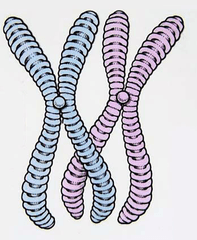
- Q 1/21Score 0Chromosomes that have the same sequence of genes, that have the same structure, and that pair during meiosis - one from mom and one from dad.29Homologous Chromosomes

21 questions
Show answers
- Q1Chromosomes that have the same sequence of genes, that have the same structure, and that pair during meiosis - one from mom and one from dad.Homologous Chromosomes30s
- Q2A cell that contains two sets of chromosomes; one inherited from the mother and one inherited from the father. Most body cells (nerve, brain, muscle, skin, etc.) are considered diploid cell. (represented by 2n)Diploid30s
- Q3A cell that contains only one set of chromosomes instead of the normal pair. Gametes, which are sex cells like sperm and eggs, are haploid cells.Haploid30s
- Q4diploid body cells (everything except egg and sperm)Somatic cells30s
- Q5Haploid sex cells. The result of meiosis is 4 gametes, or sex cells, that each contain half of the genetic information in the parent organism.Gametes30s
- Q6cell grows and Chromosomes (uncondensed in this phase) replicate in preparation for meiosis. At this point they are long and thing and called "chromatin".Interphase30s
- Q7Homologous chromosomes pair, crossing over occurs(exchange of genetic material) ; nucleus breaks downProphase 130s
- Q8homologous chromosomes line up at the equator of the cell. The centromere of each chromatid pair attaches to one spindle fibre.Metaphase 130s
- Q9Homologous chromosomes, in tetrad, exchange genetic material. Process in which homologous chromosomes exchange portions of their chromatids during meiosis. This increases genetic variation.Crossing over30s
- Q10formation of tetradsSynapsis30s
- Q11Homologous chromosomes separate and move to opposite poles. Note that chromatids do not separate - each duplicated chromosome still has two chromatids.Anaphase 130s
- Q12chromosomes uncoil, two nuclei form; The cytoplasm divides and two new haploid cells form. Each new cell has one duplicated chromosome from each similar pair.Telophase 130s
- Q13chromosomes condense in each new cell. The duplicated chromosomes and spindle fibers reappear in each new cell.Prophase 230s
- Q14The duplicated chromosomes move to the centre or equator of the cell. Each centromere attaches to two spindle fibres instead of one.Metaphase 230s
- Q15The centromere divides. The chromatids seperate and move to opposite ends of the cell. Each chromatid is now an individual chromosome.Anaphase 230s


