Loading...


Mexico's History
Quiz by Melinda Badger
Customize this quiz to suit your class
Instantly translate to 100+ languages
Tag the questions with any skills you have. Your dashboard will track each student's mastery of each skill.
Give this quiz to my class
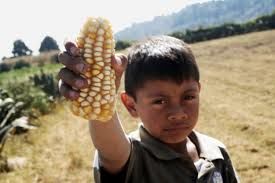
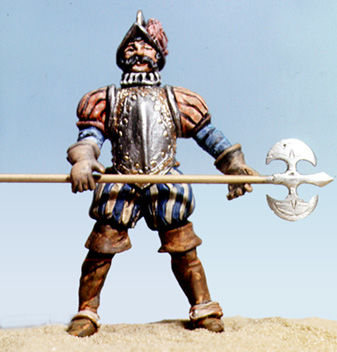
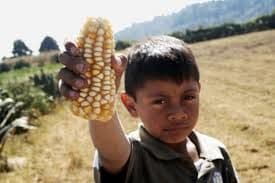
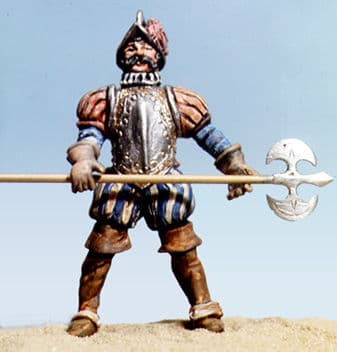
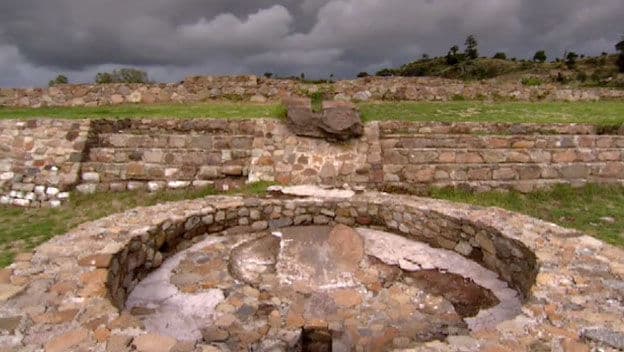
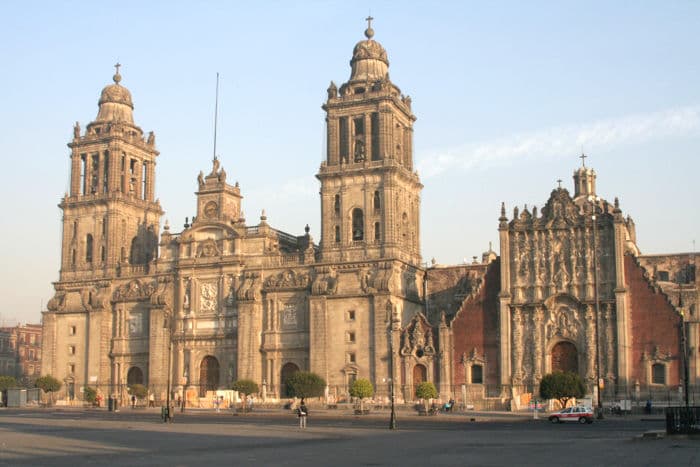
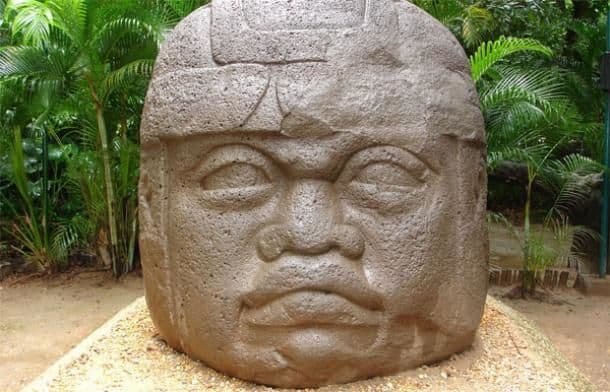
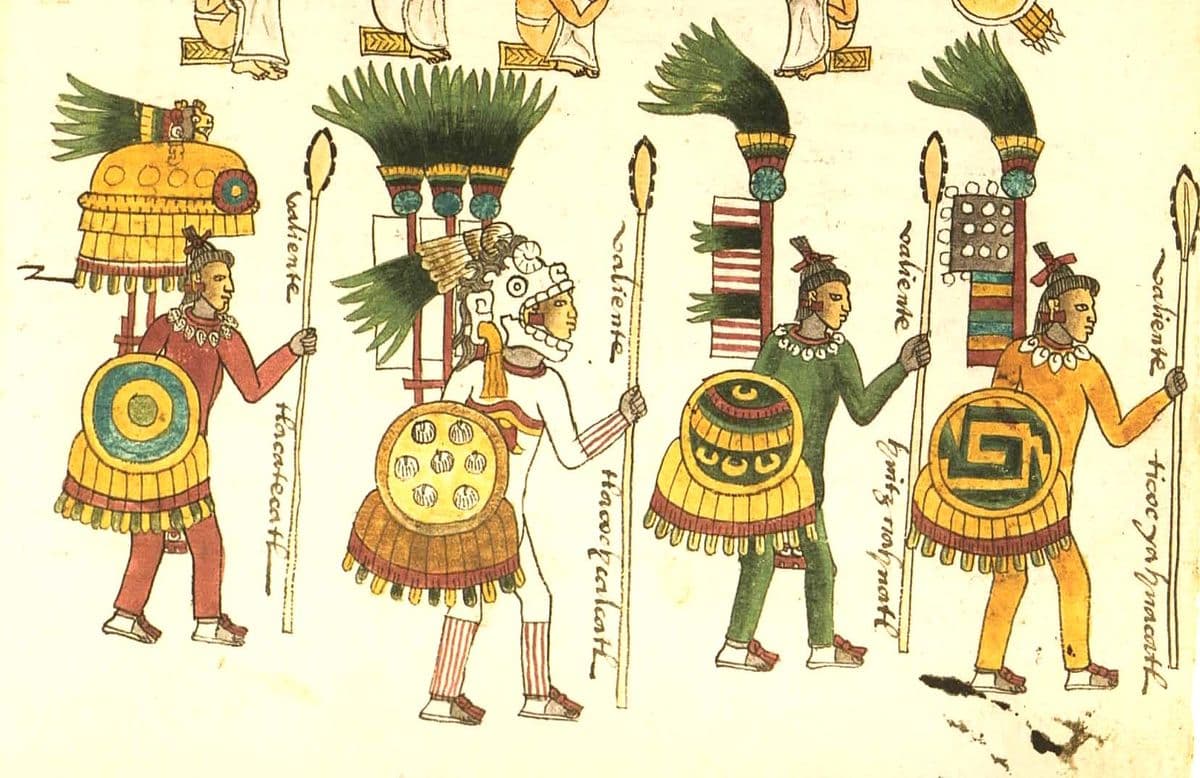
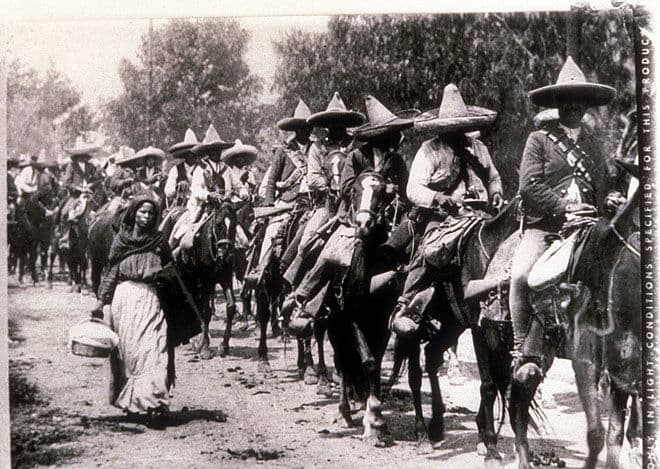
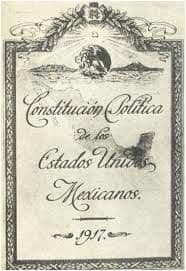
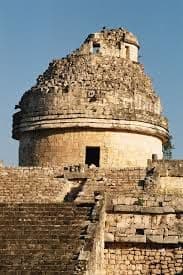 Mexico's History through MuralsEconomic integration Population and GDP of ASEAN Countries Population and GDP of ASEAN CountriesThe countries of ASEAN vary widely in population size and income level, yet nonetheless have achieved a high level of economic integration. ASEAN is considered to be one the developing world’s most successful regional economic cooperation zones. Unlike its primary counterparts in the developed world, the European Union (EU) and the United States–Mexico–Canada Agreement (USMCA), ASEAN has followed a more gradual and flexible approach to integration, accommodating the diversity of its member states. ASEAN has prioritized trade liberalization, sustainable development, and attracting foreign investment over deepening political integration or adopting a common currency. ASEAN’s economic integration efforts began with the creation of the ASEAN Free Trade Area (AFTA) in 1992, which successfully reduced tariffs between ASEAN’s first six members (Brunei, Indonesia, Malaysia, the Philippines, Singapore, and Thailand) to 0–5 percent by 2002. Vietnam, Laos, Myanmar, and Cambodia were required to sign the AFTA agreement upon joining ASEAN. Today tariffs between ASEAN countries are close to zero. In 2007 the ASEAN Economic Community Blueprint was signed in Singapore with the goal of achieving four objectives by 2015: (1) create a single market and production base, (2) become a highly competitive economic region, (3) promote equitable economic development within the region, and (4) fully integrate the region into the global economy. The AEC was implemented in 2015, although approximately 20 percent of measures toward achieving a single market remain in progress and have been deferred to a new deadline of 2025. The ASEAN-Japan Comprehensive Economic Partnership (AJCEP) was implemented in 2008, and the ASEAN-China Free Trade Agreement (ACFTA) was implemented in 2010. In 2020 ASEAN joined Australia, China, Japan, New Zealand, and South Korea in signing the Regional Comprehensive Economic Partnership (RCEP), the largest trade agreement in history. Get Unlimited Access Try Britannica Premium for free and discover more. Significant challenges remain for ASEAN’s economic integration, including pervasive nontariff barriers, restrictive investment measures, and vast disparities in GDP per capita. Domestic issues such as political instability and corruption in member states exacerbate these challenges. The COVID-19 pandemic created severe economic disruption in sectors such as industrial production and tourism; nonetheless, ASEAN coordinated a regional response to align economic recovery strategies and maintain open trade routes. Ultimately, ASEAN has demonstrated an exemplary and ongoing commitment to strengthening cooperation and integration and maximizing the region’s economic potential.Honduras is a Central American nation bordered by Nicaragua, Guatemala, and El Salvador. The Caribbean Sea forms its northern coastline. The Pacific Ocean borders a small southern strip of land. Almanaque Nombre oficial: República de Honduras Área total: 112.090 km2 Población: 9.038.741 Ciudad capital: Tegucigalpa Moneda: lempira Lenguas: español, dialectos amerindios Early History Explorer Christopher Columbus came to Honduras in 1502 on his fourth trip to the New World. As was the case in North America, Honduras, in Central America, had been home to many native indigenous groups including the Sumu and Lenca. Some estimates suggest an indigenous population of up to 2,000,000 before the Europeans arrived. Among these indigenous groups were the Maya. Their civilization spread from the Yucatán area of Mexico to Honduras’ ancient city of Copán. Spain’s conquest of Honduras began in 1525, but it was not easy. It took until 1539 to fully conquer it. There were conflicts with the native population, who were forced into labor. Many died from disease and abuse. Others were enslaved and sent to the Caribbean islands. In addition, there were pirate attacks and in-fighting among the Spaniards. Phawat/Shutterstock Gold and silver deposits were discovered in Honduras in the 1530s, attracting more settlers. By the mid-16th century, mining was an important industry, mainly in the towns of Gracias and Comayagua. More native labor was needed, taking its toll on the dwindling indigenous population. As a solution, enslaved Africans were introduced in the 1540s. This was well before 1619, when enslaved Africans first arrived in Jamestown in the American colonies. The 17th century was filled with conflicts, primarily between the Spanish and the British. Britain wanted to establish colonies on the Caribbean coast of Honduras. They eventually seized the coast with help from the native Sambo and Miskito peoples. However, Spain later regained control. Independence In the early 1800s in Honduras, resentment toward Spain grew. One reason was that Honduras was subject to more taxes to help pay for conflicts that were happening between Spain and France. Other Spanish colonies were also increasingly resentful toward Spain. In 1776 in North America, the 13 colonies banded together to declare their independence from Britain. Similarly, Honduras joined other Central American provinces. Together, they declared independence from Spain on September 15, 1821. Honduras briefly became a part of Mexico, but in 1823, it became independent from Mexico. It then joined the United Provinces of Central America. This included other former Spanish colonies: Costa Rica, El Salvador, Guatemala, and Nicaragua. But the federation did not last, partially due to divisions in political beliefs. In 1838, Honduras declared its independence from the federation. By the early 1900s, the United States had economic interests in Honduras. American fruit corporations like the Standard Fruit Company and United Fruit Company began investing in Honduras to export bananas. To protect American investments, the United States became more involved in Honduras’ political affairs. When Nicaragua appeared to threaten the stability in Honduras, US President Taft sent forces to Honduras to protect American interests. The Great Depression caused economic havoc in the United States and elsewhere. In Honduras, this meant economic problems and political turmoil. During this time, General Tiburcio Carías Andino was elected president, in 1932. He worked to strengthen the military and pay off Honduran debt. Yet he also worked to gather and maintain his own power. He changed the constitution so that he could extend his term in office as president until 1949. His advanced age and pressure from the United States forced him to allow free elections in 1948. General Francisco Morazán In 1823, Honduras joined the United Provinces of Central America. In 1830, Tegucigalpa-born General José Francisco Morazán was elected president of the federation. He remained president until just before the federation disbanded in 1840. aalezk/Shutterstock Morazán favored liberal policies and the reduced power of the church. Morazán was a self-educated man. He recognized the importance of education and the need for schools in Honduras. He believed that girls and boys should have an equal opportunity for education. During his presidency, he tried to make improvements in education. He opened schools that were free to attend. In addition to improving education, he established a system of trial by jury. It was based on the Livingston Code, created in Louisiana. This was a set of reforms to the system of legal punishment. Today, Honduras celebrates the Day of the Honduran Soldier on October 3, Morazán’s birthday. This holiday honors Morazán for his fight for democracy, liberalism, and the nation. Modern Honduras The last half of the 20th century was a political rollercoaster. There were various coups (government takeovers), conflicts, and changing leaders. Starting in 1963, Honduras was primarily led by military governments. This continued for almost 20 years. In 1969, Honduras fought a four-day war with El Salvador. The conflict was over immigration and the shared border. Though the war was brief, the two nations didn’t sign a peace treaty until 1980. With the election of president Roberto Suazo Córdova in 1981, Honduras returned to a civilian government. In the 1980s Honduras was tangled in conflicts of Nicaragua and El Salvador, partly because of the United States. Nicaraguan Contras, who wanted to overthrow the Sandinista government in Nicaragua, were using US-approved bases in Honduras. The United States was also running training camps in Honduras for Salvadoran forces facing their own civil war. This sparked anti-American protests and a desire to reduce the US presence in Honduras. Over the next few decades, Honduras continued to experience political instability. In 2009, President Manuel Zelaya was removed from power by a military coup. People were upset because he called for a referendum to change the constitution. The international community condemned this coup. As a result, Honduras cut diplomatic ties with several countries. In 2010, the United States recognized President Porfirio Lobo Sosa as a democratically elected leader. He was followed by Juan Orlando Hernández in 2014. However, protests in 2015 called for his resignation over claims of campaign fraud. In 2017, Orlando Hernández was re-elected in a disputed election.To the Lakota, and other indigenous people on North America's Great Plains, the bison was an essential part of their culture ( expressed in the quote on the previous page). The bison provided meat for nutrition, a hide for clothing and shelter, bones for tools, and fat for soap. The bison was also central to their religious beliefs. So, when European settlers hunted the bison nearly to extinction, Lakota culture suffered. Culture is central to a society and the identity of its people, as well as its continued existence. Therefore, geographers study culture as a way to understand similarities and differences among societies across the world, and in some cases, to help preserve these societies. Analyzing Culture All of a group's learned behaviors, actions, beliefs, and objects are a part of culture. It is a visible force seen in a group's actions, possessions, and influence on the landscape. For example, in a large city you can see people working in offices, factories, and stores, and living in high-rise apartments or suburban homes. You might observe them attending movies, concerts, or sporting events. Culture is also an invisible force guiding people through shared belief systems, customs, and traditions. Culture is learned, in that it develops through experiences, and not merely transmitted through genetics. For example, many people in the United States have developed a strong sense of competitiveness in school and business, and believe that hard work is a key to success. These types of elements, visible and invisible, are cultural traits. A series of interrelated traits make up a cultural complex, such as the process of steps and acceptable behaviors related to greeting a person in different cultures. A single cultural artifact, such as an automobile, may represent many different values, beliefs, behaviors and traditions and be representative of a cultural complex. Since culture is learned there are many ways that one generation passes its culture to the next. Children and adults learn traits three ways: • imitation, as when learning a language by repeating sounds or behaviors from a person or television • informal instruction, as when a parent reminds a child to say "please" • formal instruction, as when students learn history in school 132 HUMAN GEOGRAPHY: AP" EDITION CULTURAL COMPLEX OF THE AUTOMOBILE The automobile provides much more than just transportation, as it reflects many values that are central to American culture. Origins of Culture The area in which a unique culture or a specific trait develops is a culture hearth. Classical Greece was a culture hearth for democracy more than 2,000 years ago. New York City was a culture hearth for rap music in the 1970s. Geographers study how cultures develop in hearths and diffuse-or spread-to other places. Geographers also study taboos, behaviors heavily discouraged by a culture. For example, many cultures have taboos against eating certain foods, such as pork or insects. What is considered taboo changes over time. In the United States, marriages between Protestants and Catholics were once taboo, but they are not widely opposed now. Traditional, Folk, and Indigenous Cultures With the beginning of the Industrial Revolution in the late 18th century, modern transportation and communication connected people as never before and led to extensive cultural mixing, especially as cities have grown. The world prior to this time was very different; however, remnants of the past are still evident in our modern cultures. Traditional, folk, and indigenous cultures share some important characteristics and are often grouped together, but they do have some subtle differences. Traditional Culture Recently, the meanings of traditional, folk, and indigenous culture have begun to merge, causing geographers to debate when each should be used. Increasingly, the term traditional culture is used to encompass all three cultural designations. All three types share the function of passing down long-held beliefs, values, and practices and are generally resistant to rapid changes in their culture. Folk Culture The beliefs and practices of small, homogenous groups of people, often living in rural areas that are relatively isolated and slow to change, are known as folk cultures. Like all cultures, they demonstrate the diverse ways that people have adapted to a physical environment. For example, people around the world learned to make shelters out of available resources, whether 3.1: INTRODUCTION TO CULTURE 133 it was snow or mud bricks or wood. However, people used similar resources such as wood differently. In Scandinavia, people used trees to build cabins. In the American Midwest, people processed trees into boards, built a frame, and attached the boards to it. Many traits of folk culture continue today. Corn was first grown in Mexico around 10,000 years ago, and it is still grown there today. While many elements of folk culture exist side by side with modern culture, there are people whose societies have changed little, if at all, from long ago. These people practice traditional cultures, those which have not been affected by modern technology or influences. They often live in remote regions, such as some small tribes in the Amazon rainforest, and have scant knowledge of the outside world. As the lines continue blurring between cultural designations, the Amish of Pennsylvania are often referenced as both folk and traditional culture. Indigenous Culture When members of an ethnic group reside in their ancestral lands, and typically possess unique cultural traits, such as speaking their own exclusive language, they are considered an indigenous culture. Some indigenous peoples have been displaced from their native lands, but still practice their indigenous culture. Native Americans in the United States, such as the Navajo, have kept indigenous cultural practices. First Nations of Canada, such as the Inuit, have also retained their indigenous culture. Globalization and Popular Culture As a result of the Industrial Revolution, improvements in transportation and communication have shortened the time required for movement, trade, or other forms of interaction between two places. This development, known as space-time compression (see Topics 1.4 and 3.6), has accelerated culture change around the world. In 1817, a freight shipment from Cincinnati needed 52 days to reach New York City. By 1850, because of canals and railroads, it took half that long. And by 1852, it took only 7 days. Today, an airplane flight takes only a few hours, and digital information takes seconds or less. Similar change has occurred on the global scale. People travel freely across the world in a matter of hours, and communication has advanced to a point where people share information instantaneously across the globe. The increased global interaction has had a profound impact on cultures, from spreading English across the world to instant sharing of news, events and music. Globalization specifically refers to the increased integration of the world economy since the 1970s. The process of intensified interaction among peoples, governments, and companies of different countries around the globe has had profound impacts on culture. The culture of the United States is intertwined with globalization. Through the influence of its corporations, Hollywood movies, and government, the United States exerts widespread influence in other countries. But other countries also shape American culture. For example, in 2019, the National Basketball Association included players from 38 countries or territories. When cultural traits- such as clothing, music, movies, and types of 134 HUMAN GEOGRAPHY: AP. EDITION businesses-spread quickly over a large area and are adopted by various groups, they become part of popular culture. Elements of popular culture often begin in urban areas and diffuse quickly through globalization processes such as the media and Internet. These elements can quickly be adopted worldwide, making them part of global culture. People around the world follow European soccer, Indian Bollywood movies, and Japanese animation known as anime. With people in many nations wearing similar clothes, listening to similar music, and eating similar food, popular cultural traits often promote uniformity in beliefs, values, and the cultural landscape across many places The cultural landscape, also known as the built environment (see Topic 3.2), is the modification of the environment by a group and is a visible reflection of that group's cultural beliefs and values. Traditional Culture to Popular Culture Popular culture emphasizes trying what is new rather than preserving what is traditional. Many people, especially older generations or those who follow a folk culture, openly resist the adoption of popular cultural traits. They do this by preserving traditional languages, religions, values, and foods. While older generations often resist the adoption of popular culture, they seldom are successful in keeping their traditional cultures from changing, especially among the young people of their society. One clash between popular and traditional culture is occurring in Brazil. As the population expands to the interior of the rain forest, many indigenous cultures, like the Yanamamo tribe, have more contact with outside groups. Remaining isolated by the forest is becoming increasingly difficult as many young people from the indigenous cultures become exposed to popular culture and begin to integrate into the larger Brazilian society. As the young people leave their communities, they are more likely to accept popular culture at the expense of their indigenous cultural heritage, which threatens the very existence of their folk culture. Traditional culture typically exhibits horizontal diversity, meaning each traditional culture has its own customs and language that makes it distinct from other culture groups. Yet, people people within each group are usually homogeneous, or very similar to each other. By contrast, popular culture typically exhibits vertical diversity, meaning that modern urban societies are usually heterogeneous, or exhibiting differences, within the society and usually contain numerous multiethnic neighborhoods. However, on a global scale popular cultures are relatively similar with the same type of malls, shops, fast food, and clothing. Urban global culture centers are not identical, yet, global cities often do not have as much horizontal diversity across space as folk cultures. 3.1: INTRODUCTION TO CULTURE 135 COMPARING TRADITIONAL AND POPULAR CULTURE Trait Traditional Culture Popular or Global Culture Society • Rural and isolated location • Urban and connected location • Homogeneous and • Diverse and multiethnic indigenous population population • Most people speak an • Many people speak a global indigenous or ethnic local language such as English or language Arabic • Horizontal diversity • Vertical diversity Social • Emphasis on community and • Emphasis on individualism and Structure conformity making choices • Families live close to each • Dispersed families other • Weakly defined gender roles • Well-defined gender roles Diffusion • Relatively slow and limited • Relatively rapid and extensive • Primarily through relocation • Often hierarchical • Oral traditions and stories • Social media and mass media Buildings and • Materials produced locally, • Materials produced in distant Housing such as stone or grass factories, such as steel or glass • Built by community or owner • Built by a business • Similar style for community • Variety of architectural styles • Different between cultures • Similar between cities • Traditional architecture • Postmodern / contemporary architecture Food • Locally produced • Often imported • Choices limited by tradition • Wide range of choice • Prepared by the family or • Purchased in restaurants community Spatial Focus • Local and regional • National and global Artifacts, Mentifacts, and Sociofacts Whether a cultural attribute is considered traditional, folk, indigenous, or popular in nature, it is valuable to differentiate between elements of culture that can be seen and those that can not. There are artifacts that comprise the material culture, which consists of tangible things, or those that can be experienced by the senses. Art, clothing, food, music, sports, and housing types are all tangible elements of culture. Another element of the study of artifacts is understanding the techniques to use or build a specific artifact. Artifacts can be unique to a particular culture, or can be shared. For example, people of all cultures need to communicate through language, yet there are many groups that possess languages unique to their culture. The ability to read, write and understand the English language is an artifact of importance for much of popular global culture. 136 HUMAN GEOGRAPHY: AP" EDITION Mentifacts comprise a group's nonmaterial culture and consist ofintangible concepts, or those not having a physical presence. Beliefs, values, practices, and aesthetics (pleasing in appearance) determine what a cultural group views as acceptable and desirable. Mentifacts can also be unique or shared. People of many cultures possess an belief in one or many deities, and often the deities are unique to that culture. The belief in a god is a mentifact-the religious building or symbols are artifacts. Cultural groups also possess sociofacts, which are the ways people organize their society and relate to one another. Taken altogether, people tend to see the whole of their culture as greater than the sum of its individual parts. Sociofacts are embodied through families, governments, sports teams, religious organizations, education systems, and other social constructs. As with artifacts and mentifacts, sociofacts may also be unique or similar to other societies. Families are the foundations of most societies, yet what constitutes the structure of a family may vary widely between cultural groups. For example, Western cultures tend to view the nuclear family, consisting of the parents and their children as the basic family unit. By contrast, in many Western African cultures the norm is the extended family, consisting of several generations and other family members such as cousins living under one roof.Contact with the Americas In 1001, Viking sailors led by Leif Erikson reached the eastern tip of North America. Archaeologists have found evidence of the Viking settlement of Vinland in present-day Newfoundland, Canada. The Vikings did not stay in Vinland long and no one is sure why they left. However, Viking stories describe fierce battles with Skraelings, the Viking name for the Inuit. Evidence suggests that Asians continued to cross the Bering Sea into North America after the last ice age ended. Some scholars believe that ancient seafarers from Polynesia may have traveled to the Americas using their knowledge of the stars and winds. Modern Polynesians have sailed canoes thousands of miles in this way. Still others think that fishing boats from China and Japan blew off course and landed on the western coast of North or South America. Perhaps such voyages occurred. If so, they were long forgotten. Before 1492, the peoples of Asia and Europe had no knowledge of the Americas and their remarkable civilizations. The Voyages of Columbus Portuguese sailors had pioneered new routes around Africa toward Asia in the late 1400s. Spain, too, wanted a share of the riches. King Ferdinand and Queen Isabella hoped to keep their rival, Portugal, from controlling trade with India, China, and Japan. They agreed to finance a voyage of exploration by Christopher Columbus. Columbus, an Italian sea captain, planned to reach the East Indies by sailing west across the Atlantic. Finding a sea route straight to Asia would give the Spanish direct access to the silks, spices, and precious metals of Asia. The spice trade was a major cause for European exploration and a reason the Spanish rulers supported Columbus’s voyage. They also wanted wealth from any source. “Get gold,” King Ferdinand said to Columbus. “Humanely if possible, but at all hazards—get gold.” Crossing the Atlantic In August 1492, Columbus set out with three ships and about 90 sailors. As captain, he commanded the largest vessel, the Santa María. The other ships were the Niña and the Pinta. After a brief stop at the Canary Islands, the little fleet continued west into unknown seas. Fair winds sped them along, but a month passed without the sight of land. Some sailors began to grumble. They had never been away from land for so long and feared being lost at sea. Still, Columbus sailed on. On October 7, sailors saw flocks of birds flying southwest. Columbus changed course to follow the birds. A few days later, crew members spotted tree branches and flowers floating in the water. At 2 a.m. on October 12, the lookout on the Pinta spotted white cliffs shining in the moonlight. “Tierra! Tierra!” he shouted. “Land! Land!” At dawn, Columbus rowed ashore and planted the banner of Spain. He was convinced that he had reached the East Indies in Asia. He called the people he found there “Indians.” In fact, he had reached islands off the coasts of North America and South America in the Caribbean Sea. These islands later became known as the West Indies. For three months, Columbus explored the West Indies. To his delight, he found signs of gold on the islands. Eager to report his success, he returned to Spain. Columbus Claims Lands for Spain In Spain, Columbus presented Queen Isabella and King Ferdinand with gifts of pink pearls and brilliantly colored parrots. Columbus brought with him many things that Europeans had never seen before: tobacco, pineapples, and hammocks used for sleeping. Columbus also described the “Indians” he had met, the Taino (ty noh). The Taino, he promised, could easily be converted to Christianity and could also be used as slaves. The Spanish monarchs were impressed. They gave Columbus the title Admiral of the Ocean Sea. They also agreed to finance future voyages. The promise of great wealth, and the chance to spread Christianity, gave them a reason to explore further. Columbus made three more voyages across the Atlantic. In 1493, he founded the first Spanish colony in the Americas, Santo Domingo, on an island he called Hispaniola (present-day Haiti and the Dominican Republic). A colony is an area settled and ruled by the government of a distant land. Columbus also explored present-day Cuba and Jamaica. He sailed along the coasts of Central America and northern South America. He claimed all of these lands for Queen Isabella of Spain. Columbus proved to be a better explorer than governor. During his third expedition, settlers on Hispaniola complained of his harsh rule. Queen Isabella appointed an investigator, who sent Columbus back to Spain in chains. In the end, the queen pardoned Columbus, but he never regained the honors he had won earlier. He died in 1506, still convinced that he had reached Asia. The Impact of Columbus’s Voyages Columbus has long been honored as the bold sea captain who “discovered America.” Today, we recognize that American Indians had discovered and settled these lands long before 1492. We also recognize that Columbus and the Europeans who followed him treated the ancient inhabitants of the Americas brutally. Still, Columbus’s voyages did change history. They marked the beginning of lasting contact among the peoples of Europe, Africa, and the Americas. For a great many American Indians, contact had tragic results. Columbus and those who followed were convinced that European culture was superior to that of the Indians. The Spanish claimed Taino lands and forced the Taino to work in gold mines, on ranches, or in Spanish households. Many Taino died from harsh conditions or European diseases. The Taino population was wiped out. Still, the voyages of Columbus signaled a turning point for the Americas. A turning point is a moment in history that marks a decisive change. Curious Europeans saw the new lands as a place where they could settle, trade, and grow rich. Spanish Exploration Continues After the voyages of Columbus, the Spanish explored and settled other Caribbean islands that Columbus had found. They sought gold, land for crops, people to enslave, and converts to Christianity for the Spanish crown. By 1511, they had conquered Puerto Rico, Jamaica, and Cuba. They also explored the eastern coasts of North America and South America in search of a western route to Asia. In 1513, Vasco Núñez de Balboa (bal boh uh) crossed the Isthmus of Panama. American Indians had told him that a large body of water lay to the west. With a party of Spanish soldiers and Indians, Balboa reached the Pacific Ocean and claimed the ocean for Spain. The Spanish had no idea how wide the Pacific was until a sea captain named Ferdinand Magellan (muh jel un) sailed across it. The expedition—made up of five ships and about 250 crew members—left Spain in 1519. Fifteen months later, it cut through the stormy southern tip of South America by way of what is now known as the Strait of Magellan and entered the Pacific Ocean. Crossing the vast Pacific, the sailors ran out of food: Primary Source “We remained 3 months and 20 days without taking in provisions or other refreshments and ate only old biscuit reduced to powder, full of grubs and stinking from the dirt which rats had made on it. We drank water that was yellow and stinking.” —Antonio Pigafetta, The Diary of Antonio Pigafetta Magellan himself was killed in a battle with the local people of the Philippine Islands off the coast of Asia. In 1522, only one ship and 18 sailors returned to Spain. They were the first people to circumnavigate, or sail completely around, the world. In doing so, they had found an all-water western route to Asia. Europeans became aware of the true size of the Earth. How Did the Columbian Exchange Affect the Rest of the World? The encounter between the peoples of the Eastern and Western Hemispheres sparked a global exchange of goods and ideas. Because it started with the voyages of Columbus, this transfer is known as the Columbian Exchange. The Columbian Exchange refers to a biological and cultural exchange of animals, plants, human populations, diseases, food, government, technology, the arts, and languages. The exchange went in both directions. Europeans learned much from American Indians. At the same time, Europeans contributed in many ways to the culture of the Americas. This exchange also brought about many modifications, or changes, to the physical environment of the Americas, with both positive and negative results. Changing Environments Europeans introduced domestic animals such as chickens from Europe and Africa. European pigs, cattle, and horses often escaped into the wild and multiplied rapidly. Forests and grasslands were converted to pastures. As horses spread through what would become the United States, Indians learned to ride them and used them to carry heavy loads. Plants from Europe and Africa changed the way American Indians lived. The first bananas came from the Canary Islands. By 1520, one Spaniard reported that banana trees had spread “so greatly that it is marvelous to see the great abundance of them.” Oranges, lemons, and figs were also new to the Americas. In North America, explorers also brought such plants as bluegrass, the daisy, and the dandelion. These plants spread quickly in American soil and modified American grasslands. Tragically, Europeans also brought new diseases, such as smallpox and influenza. American Indians had no resistance to these diseases. Historians estimate that within 75 years, diseases from Europe had killed almost 90 percent of the people in the Caribbean Islands and in Mexico. American Indian Influences on Europe, Africa and Asia American Indians introduced Europeans to valuable food crops such as corn, potatoes, sweet potatoes, beans, tomatoes, manioc, squash, peanuts, pineapples, and blueberries. Today, almost half the world’s food crops come from plants that were first grown in the Americas. Europeans carried the new foods with them as they sailed around the world. Everywhere, people’s diets changed and populations increased. In South Asia, people used American hot peppers and chilies to spice stews. Chinese peasants began growing corn and sweet potatoes. Italians made sauces from tomatoes. People in West Africa grew manioc and corn. European settlers often adopted American Indian skills. In the North, Indians showed Europeans how to use snowshoes and trap beavers and other fur-bearing animals. European explorers learned how to paddle Indian canoes. Some leaders studied American Indian political structures. In the 1700s, Benjamin Franklin admired the Iroquois League and urged American colonists to unite in a similar way. Positive and Negative Consequences Through the Columbian Exchange, Europeans and American Indians modified their environments and gained new resources and skills. At the same time, warfare and disease killed many on both sides. Europeans viewed expansion positively. They gained great wealth, explored trade routes, and spread Christianity. Yet their farming, mining, and diseases took a toll on the physical environment and left many American Indians dead. Despite these negatives, the Columbian Exchange shaped the modern world, including what would become the United States.When Europeans met American Indians in the late 15th century, the people of two continents exchanged many beneficial customs and goods. Europeans received New World crops such as potatoes and corn. American Indians acquired cloth and horses. However, besides the beneficial exchanges, Europeans and American Indians often traded deadly germs–bacteria and viruses–for which they had no immunity. Smallpox and Indians Image 1: Smallpox epidemics helped Europeans conquer the Aztec and Incan Empires of Mexico and South America. North American Indians quickly concluded that contact with Europeans often resulted in devastating diseases that caused widespread death. This drawing, made in the 1500s in Mexico, shows how the disease was passed from a European to an American Indian through simple contact. Many of the diseases that were common in Europe were entirely new to the peoples of North America. Diseases such as tuberculosis and measles could be fatal, but Europeans had developed resistance to the disease, so many people survived. However, when European diseases infected American Indians with no previous exposure, the people suffered terribly. The most devastating of these diseases was smallpox which is caused by a virus (Variola major). Smallpox, like many other diseases, had a latent period of about one week between the time the person was exposed to the disease and the time when signs of the disease became apparent. During this time, the sick person might begin a journey and carry the germs along with him. Anyone the person met would be exposed to smallpox. Anything the victim touched including clothing, bedding, or unwashed dishes carried living germs of smallpox. Cotton Mather Image 2: Cotton Mather was a Boston minister. When smallpox threatened Boston, he remembered reading about how the Turks inoculated people with dried material from smallpox blisters. The inoculation usually gave the person a mild case of the disease and future immunity. The procedure was highly controversial, but it helped save the lives of 274 people who were inoculated during the Boston smallpox epidemic of 1721. Symptoms of the disease began with fever, chills, and aches. The fever might raise a person’s temperature from the normal 98.6o to a dangerous 106o. After four days of misery, the victim entered the second stage when large pustules (fluid-filled bumps) appeared on the body. The rash made the person feel as if their skin were on fire. After suffering with the rash for nine days, the victim entered a new stage-if he or she had survived this long. The pustules opened and dried up. Each pustule formed a scab that turned into a scar that marked the person’s face for the rest of his or her life. Complications of smallpox for those who survived might include loss of vision or damage to the lungs, heart, or liver. Waterhouse Image 3: Dr. Benjamin Waterhouse of Harvard University brought Jenner’s smallpox preventative to the United States. It was called vaccination and used cowpox as the infective material. This much milder form of pox gave immunity to smallpox with fewer complications. Dr. Waterhouse encouraged President-elect Thomas Jefferson to promote vaccination. Jefferson responded, “Every friend of humanity must look with pleasure on this discovery, by which one evil more is withdrawn from the condition of man.” (T. Jefferson 12/25/1800 to Benjamin Waterhouse, December 25, 1800) Historians have found evidence of smallpox as far back as 1157 B.C. when the Egyptian pharaoh Ramses V apparently died of smallpox. From Egypt, where scientists believe smallpox began, the disease spread to Asia. Europeans began to experience periodic epidemics of smallpox in the14th century when Crusaders returning from the Middle East brought smallpox to Europe. People who survived the disease were immune and could not get smallpox again. This fact explains why epidemics struck periodically and the disease was not a constant threat to European societies. Smallpox Vaccination 1803 Image 4: Dr. Edward Jenner’s new smallpox vaccination (from cowpox) was widely accepted. This medical image was published by a Spanish physician to teach colonial doctors how to apply the vaccine to native Mexicans. The scratches were supposed to go through several stages of development as evidence that the vaccine had given the patient immunity. Vaccination was very effective in preventing smallpox epidemics among those who received the vaccine. In 1520, while Cortés was trying to conquer the Aztecs, smallpox broke out among the Spaniards and was transferred to the Aztecs. By 1527, the disease had migrated through Central America to Peru where it helped Pizarro conquer the Incas. (See Image 1.) In 1633, smallpox infected American Indians living near the English colony of Plymouth, Massachusetts. The disease traveled very quickly to tribes living far inland from the English colonies. In 1721, a smallpox epidemic threatened the English colonists of Boston. (See Image 2.) Cotton Mather, a Boston minister, wanted to inoculate people against the disease. He knew that Turkish healers took material from a dried smallpox scab and injected it into the body of a healthy person by scratching the surface of the skin. The patients developed a mild form of the disease from which they recovered. The procedure was highly controversial in Boston where about 280 Bostonians accepted inoculation. The epidemic infected more than half of the people living in Boston at the time. About 15% of those who got sick died of the disease. Among those who were inoculated, only six (2%) died of smallpox. The practice of inoculation spread to other English colonies, but not to the American Indian tribes living near the colonies. Late in the 18th century, British doctor Edward Jenner recognized that people who milked cows never came down with smallpox. They had already been infected with cowpox, a similar, but much milder disease that gave them immunity to smallpox. In 1796, Jenner inoculated a young man with cowpox virus he had collected from a milkmaid. The young man had a mild infection for less than 24 hours and recovered. Jenner’s efforts resulted in a widespread acceptance of vaccination (vaccine comes from Latin words meaning “taken from a cow”). By 1800, many Americans were receiving smallpox vaccinations. (See Image 3.) President Thomas Jefferson supported and encouraged the vaccination program in major American cities. (See Image 4.) By the middle of the 19th century, smallpox was under control, but broke out from time to time among unvaccinated people. Bismarck, Dakota Territory, experienced a small outbreak of smallpox in 1882. American Indians, however, were still subject to the disease in its most dangerous form.Weathering describes the breaking down or dissolving of rocks and minerals on the surface of the Earth. Water, ice, acids, salts, plants, animals, and changes in temperature are all agents of weathering. Once a rock has been broken down, a process called erosion transports the bits of rock and mineral away. No rock on Earth is hard enough to resist the forces of weathering and erosion. Together, these processes carved landmarks such as the Grand Canyon, in the U.S. state of Arizona. This massive canyon is 446 kilometers (277 miles) long, as much as 29 kilometers (18 miles) wide, and 1,600 meters (1 mile) deep. Weathering and erosion constantly change the rocky landscape of Earth. Weathering wears away exposed surfaces over time. The length of exposure often contributes to how vulnerable a rock is to weathering. Rocks, such as lavas, that are quickly buried beneath other rocks are less vulnerable to weathering and erosion than rocks that are exposed to agents such as wind and water, As it smoothes rough, sharp rock surfaces, weathering is often the first step in the production of soils. Tiny bits of weathered minerals mix with plants, animal remains, fungi, bacteria, and other organisms. A single type of weathered rock often produces infertile soil, while weathered materials from a collection of rocks is richer in mineral diversity and contributes to more fertile soil. Soils types associated with a mixture of weathered rock include glacial till, loess, and alluvial sediments. Weathering is often divided into the processes of mechanical weathering and chemical weathering. Biological weathering, in whichliving or once-living organisms contribute to weathering, can be a part of both processes. Mechanical Weathering Mechanical weathering, also called physical weathering and disaggregation, causes rocks to crumble. Water, in either liquid or solid form, is often a key agent of mechanical weathering. For instance, liquid water can seep into cracks and crevices in rock. If temperatures drop low enough, the water will freeze. When water freezes, it expands. The ice then works as a wedge. It slowly widens the cracks and splits the rock. When ice melts, liquid water performs the act of erosion by carrying away the tiny rock fragments lost in the split. This specific process (the freeze-thaw cycle) is called frost weathering or cryofracturing. Figure 4.3 Frost Wedging Temperature changes can also contribute to mechanical weathering in a process called thermal stress. Changes in temperature cause rock to expand (with heat) and contract (with cold). As this happens over and over again. the structure of the rock weakens. Over time, it crumbles. Rocky desert landscapes are particularly vulnerable to thermal stress. The outer layer of desert rocks undergo repeated stress as the temperature changes from day Eventually, Lo outer night. layersflake off in thin sheets, a process called exfoliation. Exfoliation contributes to the formation of bornhardts, one of the most dramatic features in landscapes formed by weathering and erosion. Bornhardts are tall, domed, isolated rocks often found areas. in tropical Sugarloaf Mountain, an iconic landmark in Rio de Janeiro, Brazil, is bornhardt. a Salt also works to weather rock in a process called haloclasty. Saltwater sometimes gets into the cracks and pores of rock. If the saltwater evaporates, salt crystals are left behind. As the crystals grow, they put pressure on the rock, slowly breaking it apart. Plants and animals can be agents of mechanical weathering. The seed of a tree may sprout in soil that has collected in a cracked rock. As the roots grow, they widen the cracks, eventually breaking the rock into pieces. Over time, trees can break apart even large rocks. Even small plants, such as mosses, can enlarge tiny cracks as they grow. Animals that tunnel underground, such as moles and prairie dogs, also work to break apart rock and soil. Other animals dig and trample rock aboveground, causing rock to slowly crumble. Chemical Weathering Chemical weathering changes the molecular structure of rocks and soil.For instance, carbon dioxide from the air or soil sometimes combines with water in a process called carbonation. This produces a weak acid, called carbonic acid, that can dissolve rock. Carbonic acid is especially effective at dissolving limestone. When carbonic acid seeps through limestone underground, it can open up huge cracks or hollow out vast networks of caves. Carlsbad Caverns National Park, in the U.S. state of New Mexico, includes more than 119 limestone caves created by weathering and erosion. The largest is called the Big Room.. With an area of about 33,210 square meters (357,469 square feet), the Big Room is the size of six football fields. Another type of chemical weathering works on rocks that contain iron. These rocks turn to rust in a process called oxidation. Rust is a compound created by the interaction of oxygen and iron in the presence of water. As rust expands, it weakens rock and helps break it apart. Another familiar form of chemical weathering is hydrolysis. In the process of hydrolysis, a new solution (a mixture of two or more substances) is formed as chemicals in rock interact with water. In many rocks, for example, sodium minerals interact with water to form a saltwater solution. Hydration and hydrolysis contribute to flared slopes, another dramatic example of a landscape formed by weathering and erosion. Flared slopes are sometimes nicknamed "wave rocks." Their c-shape is largely concave rock formations a result of subsurface weathering, in which hydration and hydrolysis wear away rocks beneath the landscape's surfaceWeathering and People Weathering is a natural process, but human activities can speed it up. For example, certain kinds of air pollution increase the rate of weathering Burning coal, natural and petroleum releases chemicals such as nitrogen oxide and gas, sulfur dioxide into the atmosphere. When these chemicals combine with sunlight and moisture, they change into acids. They then fall back to Earth as acid rain. Acid rain rapidly weathers limestone, marble, and other kinds of stone. The effects of acid rain can often be seen on gravestones, making names and other inscriptions impossible to read. Acid rain has also damaged many historic buildings and monuments. For example, at 71 meters (233 feet) tall, the Leshan Giant Buddha at Mount Emei, China is the world's largest statue of the Buddha. It was carved 1,300 years ago and sat unharmed for centuries. An innovative drainage system mitigates the natural process of erosion But in recent years, acid rain has turned the statue's nose black and made some of its hair crumble and fall.Mexico's Population Distribution & Trade