Loading...


Middle East. North Africa Map
Quiz by Madelyn Pedler
Customize this quiz to suit your class
Instantly translate to 100+ languages
Tag the questions with any skills you have. Your dashboard will track each student's mastery of each skill.
Give this quiz to my class
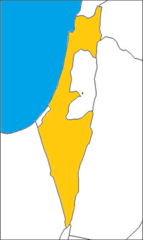
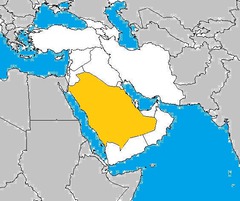
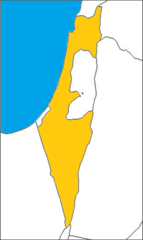


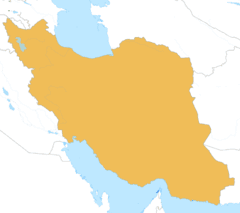





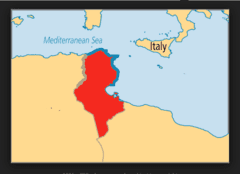
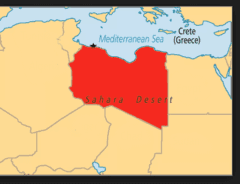

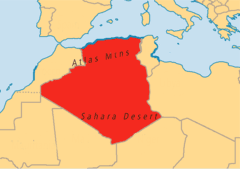
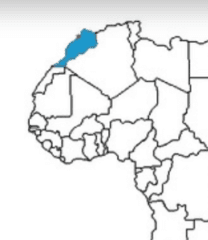 North Africa / Middle East Map QuizMiddle East and North AfricaMiddle East & North Africa Unit 2: Middle East & North Africa (MENA)North Africa and the Middle East ReviewSouthwestern Asia and North Africa (middle east) VocabTobruk, a small town on the Libyan coast, was central to much of the fighting that took place in the Western Desert during the Second World War. It had originally been developed by the Italians during their colonisation of eastern Libya during the early decades of the 20th century. With a sheltered deep water harbour it became a key naval outpost. It was fortified during the 1930s with both coastal defence batteries and a 50 kilometre-long perimeter of reinforced concrete platoon posts, and other supporting infrastructure such as gun positions, headquarters bunkers, underground supply dumps, and observation towers. When British and Commonwealth forces advanced out of Egypt and into Libya in January 1941, Tobruk was their second objective. The Italian defence perimeter was attacked by the 6th Australian Division on the morning of 22 January and the town fell the next morning. The operation resulted in approximately 27,000 Italian prisoners and the capture of over 200 artillery pieces, but cost 49 Australian lives. The 6th Division's advance pressed on beyond Tobruk and eventually they were withdrawn from Libya to be deployed to Greece.The 9th Australian Division was moved in to Libya in February 1941 to garrison the territory captured by the 6th. By this time, however, German troops had arrived in Libya to reinforce their Italian allies and they launched an offensive that the British Commonwealth forces were ill-disposed to hold back. A retreat towards Egypt commenced. The 9th Division was ordered to fall back upon Tobruk, hold it in order deny its port facilities to the Germans, and delay their advance so as to provide time for defences on the Egyptian frontier to be prepared. Tobruk and the 9th Division were subsequently encircled, beginning what became known as "the siege of Tobruk". Reinforced by the 18th Brigade of the 7th Australian Division and other British and Commonwealth troops, and resupplied by the sea, the 9th Division held Tobruk from April to September 1941. During this period it repelled two major German attacks. In September and October the 9th Division, its condition steadily declining, was relieved by the British 70th Division, which continued to defend Tobruk until the siege was finally lifted by Operation Crusader in December. The defence of Tobruk resulted in 749 Australian deaths, and another 604 became prisoners of war. Tobruk was the scene of further heavy fighting in June 1942 when the fortunes of war again saw a British Commonwealth force seeking to deny the port to the enemy. The Axis forces, however, were in no mood for another siege and launched a massive attack to capture it on 20 June. It remained in their hands until their final retreat from Libya in November 1942.John Hurst Edmondson (1914-1941), soldier, was born on 8 October 1914 at Wagga Wagga, New South Wales, only child of native-born parents Joseph William Edmondson, farmer, and his wife Maude Elizabeth, née Hurst. The family moved to a farm near Liverpool when Jack was a child. Educated at Hurlstone Agricultural High School, he worked with his father and became a champion rifle-shooter. He was a council-member of the Liverpool Agricultural Society and acted as a steward at its shows. Having served (from March 1939) in the 4th Battalion, Militia, he enlisted in the Australian Imperial Force on 20 May 1940 and was posted to the 2nd/17th Battalion. Later that month he was promoted acting corporal (substantive in November). Well built and about 5 ft 9 ins (175 cm) tall, Edmondson settled easily into army life and was known as a quiet but efficient soldier. His battalion embarked for the Middle East in October and trained in Palestine. In March 1941 the 2nd/17th moved with other components of the 9th Division to Libya and reached Marsa Brega before an Axis counter-attack forced them to retreat to Tobruk. The siege of the fortress began on 11 April. Two days later the Germans probed the perimeter, targeting a section of the line west of the El Adem Road near Post R33. This strong-point was garrisoned by the 2nd/17th's No.16 Platoon in which Edmondson was a section leader. The enemy intended to clear the post as a bridgehead for an armoured assault on Tobruk.Under cover of darkness thirty Germans infiltrated the barbed wire defences, bringing machine-guns, mortars and two light field-guns. Lieutenant Austin Mackell, commanding No.16 Platoon, led Edmondson's five-man section in an attempt to repel the intruders. Armed with rifles, fixed bayonets and grenades, the party of seven tried to outflank the Germans, but were spotted by the enemy who turned their machine-guns on them. Unknown to his mates, Edmondson was severely wounded in the neck and stomach. Covering fire from R33 ceased at the pre-arranged time of 11.45 p.m. and Mackell ordered his men to charge. Despite his wounds, Edmondson accounted for several enemy soldiers and saved Mackell's life. When the remaining Germans fled, the Australians returned to their lines. Although Edmondson was treated for his wounds, he died before dawn on 14 April 1941. The Germans' armoured attack that morning was thwarted, partly due to the earlier disruption of their plans. Edmondson was buried in Tobruk war cemetery. He had not married. His Victoria Cross, gazetted on 4 July, was the first awarded to a member of Australia's armed forces in World War II. In April 1960 Mrs Edmondson gave her son's medals to the Australian War Memorial, Canberra, where they are displayed alongside his portrait (1958) by Joshua Smith. At Liverpool a public clock commemorates Edmondson, as do the clubrooms used by the sub-branch of the Returned Services League of Australia.Perhaps my nerves will be more under control when I am by myself. There were no entries in the diary until Friday April 18 when she wrote: Fighting terrific in Greece and North Africa…. I dread the casualty list also the heaviest air raid over London to date. Account …. of heavy fighting and much use of bayonet at Tobruk. Also gives an account of a charge in which a Lieutenant and a Corporal took prominent parts on Easter Sunday night. Of course, no names. When I read it …. I was sure the Corporal was Jack…. It said no casualties but …. I know … that all is not well with Jack. ….. (and) Stuffy ….has not come home yet. On Wednesday April 23 she received a letter from Jack dated March 30 and for the first time he said the conditions were bad. The food short, water one bottle for 48 hours. It worried me terribly so I posted a parcel (of) milk tablets, chocolate milk, biscuits (and) cigarettes.Tuesday April 15 I was feeling afraid of something while I was working and packing the cake (and) had a couple of brandys to (keep going).April 26 Received the following telegram in the mail, the bus man brought it in. “It is with deep regret that I have to inform you that Corporal John Hurst Edmondson was killed in action on the 14th April and desire to convey the profound sympathy of the Ministry for the Army and the Military Board.”Her final entryWhen Europeans met American Indians in the late 15th century, the people of two continents exchanged many beneficial customs and goods. Europeans received New World crops such as potatoes and corn. American Indians acquired cloth and horses. However, besides the beneficial exchanges, Europeans and American Indians often traded deadly germs–bacteria and viruses–for which they had no immunity. Smallpox and Indians Image 1: Smallpox epidemics helped Europeans conquer the Aztec and Incan Empires of Mexico and South America. North American Indians quickly concluded that contact with Europeans often resulted in devastating diseases that caused widespread death. This drawing, made in the 1500s in Mexico, shows how the disease was passed from a European to an American Indian through simple contact. Many of the diseases that were common in Europe were entirely new to the peoples of North America. Diseases such as tuberculosis and measles could be fatal, but Europeans had developed resistance to the disease, so many people survived. However, when European diseases infected American Indians with no previous exposure, the people suffered terribly. The most devastating of these diseases was smallpox which is caused by a virus (Variola major). Smallpox, like many other diseases, had a latent period of about one week between the time the person was exposed to the disease and the time when signs of the disease became apparent. During this time, the sick person might begin a journey and carry the germs along with him. Anyone the person met would be exposed to smallpox. Anything the victim touched including clothing, bedding, or unwashed dishes carried living germs of smallpox. Cotton Mather Image 2: Cotton Mather was a Boston minister. When smallpox threatened Boston, he remembered reading about how the Turks inoculated people with dried material from smallpox blisters. The inoculation usually gave the person a mild case of the disease and future immunity. The procedure was highly controversial, but it helped save the lives of 274 people who were inoculated during the Boston smallpox epidemic of 1721. Symptoms of the disease began with fever, chills, and aches. The fever might raise a person’s temperature from the normal 98.6o to a dangerous 106o. After four days of misery, the victim entered the second stage when large pustules (fluid-filled bumps) appeared on the body. The rash made the person feel as if their skin were on fire. After suffering with the rash for nine days, the victim entered a new stage-if he or she had survived this long. The pustules opened and dried up. Each pustule formed a scab that turned into a scar that marked the person’s face for the rest of his or her life. Complications of smallpox for those who survived might include loss of vision or damage to the lungs, heart, or liver. Waterhouse Image 3: Dr. Benjamin Waterhouse of Harvard University brought Jenner’s smallpox preventative to the United States. It was called vaccination and used cowpox as the infective material. This much milder form of pox gave immunity to smallpox with fewer complications. Dr. Waterhouse encouraged President-elect Thomas Jefferson to promote vaccination. Jefferson responded, “Every friend of humanity must look with pleasure on this discovery, by which one evil more is withdrawn from the condition of man.” (T. Jefferson 12/25/1800 to Benjamin Waterhouse, December 25, 1800) Historians have found evidence of smallpox as far back as 1157 B.C. when the Egyptian pharaoh Ramses V apparently died of smallpox. From Egypt, where scientists believe smallpox began, the disease spread to Asia. Europeans began to experience periodic epidemics of smallpox in the14th century when Crusaders returning from the Middle East brought smallpox to Europe. People who survived the disease were immune and could not get smallpox again. This fact explains why epidemics struck periodically and the disease was not a constant threat to European societies. Smallpox Vaccination 1803 Image 4: Dr. Edward Jenner’s new smallpox vaccination (from cowpox) was widely accepted. This medical image was published by a Spanish physician to teach colonial doctors how to apply the vaccine to native Mexicans. The scratches were supposed to go through several stages of development as evidence that the vaccine had given the patient immunity. Vaccination was very effective in preventing smallpox epidemics among those who received the vaccine. In 1520, while Cortés was trying to conquer the Aztecs, smallpox broke out among the Spaniards and was transferred to the Aztecs. By 1527, the disease had migrated through Central America to Peru where it helped Pizarro conquer the Incas. (See Image 1.) In 1633, smallpox infected American Indians living near the English colony of Plymouth, Massachusetts. The disease traveled very quickly to tribes living far inland from the English colonies. In 1721, a smallpox epidemic threatened the English colonists of Boston. (See Image 2.) Cotton Mather, a Boston minister, wanted to inoculate people against the disease. He knew that Turkish healers took material from a dried smallpox scab and injected it into the body of a healthy person by scratching the surface of the skin. The patients developed a mild form of the disease from which they recovered. The procedure was highly controversial in Boston where about 280 Bostonians accepted inoculation. The epidemic infected more than half of the people living in Boston at the time. About 15% of those who got sick died of the disease. Among those who were inoculated, only six (2%) died of smallpox. The practice of inoculation spread to other English colonies, but not to the American Indian tribes living near the colonies. Late in the 18th century, British doctor Edward Jenner recognized that people who milked cows never came down with smallpox. They had already been infected with cowpox, a similar, but much milder disease that gave them immunity to smallpox. In 1796, Jenner inoculated a young man with cowpox virus he had collected from a milkmaid. The young man had a mild infection for less than 24 hours and recovered. Jenner’s efforts resulted in a widespread acceptance of vaccination (vaccine comes from Latin words meaning “taken from a cow”). By 1800, many Americans were receiving smallpox vaccinations. (See Image 3.) President Thomas Jefferson supported and encouraged the vaccination program in major American cities. (See Image 4.) By the middle of the 19th century, smallpox was under control, but broke out from time to time among unvaccinated people. Bismarck, Dakota Territory, experienced a small outbreak of smallpox in 1882. American Indians, however, were still subject to the disease in its most dangerous form.