Loading...

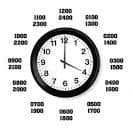
Military Time
Quiz by Cristy Wilson
Customize this quiz to suit your class
Instantly translate to 100+ languages
Tag the questions with any skills you have. Your dashboard will track each student's mastery of each skill.
Give this quiz to my class
 Land warfare is a complex domain that involves the application of military power on the ground to achieve political and strategic objectives. Modern military doctrine, such as that used by the U.S. Army and the Indian Army, categorizes these elements into Combat Power and the Principles of War. 1. The 8 Elements of Combat Power Combat power is the total means of destructive, constructive, and information capabilities that a military unit can apply. It is typically broken down into eight key elements: ElementDescriptionLeadershipThe "multiplier" of all other elements. It provides purpose, direction, and motivation to soldiers.InformationEnables commanders to make informed decisions and creates opportunities to achieve results.Mission CommandThe system used to integrate the other elements. It focuses on decentralized execution based on the commander's intent.Movement & ManeuverThe movement of forces to gain a positional advantage over the enemy to deliver lethal or non-lethal effects.IntelligenceThe understanding of the enemy, terrain, weather, and civil considerations.FiresThe use of weapon systems (artillery, mortars, air support) to create specific lethal or non-lethal effects.SustainmentThe logistics required to maintain operations, including ammunition, fuel, food, and medical support.ProtectionThe preservation of the force so that the commander can apply maximum combat power.2. The Principles of War These are the enduring "rules of thumb" that guide how land forces are employed strategically and tactically: Objective: Direct every operation toward a clearly defined and attainable goal. Offensive: Seize, retain, and exploit the initiative. You cannot win by defending alone. Mass: Concentrate the effects of combat power at the most advantageous place and time. Economy of Force: Allocate the minimum essential combat power to secondary efforts so you can "mass" elsewhere. Maneuver: Place the enemy in a position of disadvantage through flexible movement. Unity of Command: Ensure all forces operate under a single responsible commander toward a common objective. Security: Prevent the enemy from gaining an unexpected advantage. Surprise: Strike the enemy at a time, place, or in a manner for which they are unprepared. Simplicity: Prepare clear, uncomplicated plans to minimize confusion in the "fog of war." 3. The Modern Legal Framework Land warfare is also governed by the Law of Land Warfare (International Humanitarian Law), which rests on four pillars: Military Necessity: Actions must be necessary to achieve a legitimate military goal. Distinction: Forces must distinguish between combatants and non-combatants (civilians). Proportionality: The anticipated harm to civilians must not be excessive in relation to the concrete military advantage gained. Unnecessary Suffering: Weapons and methods must not cause gratuitous or superfluous injury. Note: Contemporary land warfare is increasingly "Multi-Domain," meaning land forces must now integrate with cyber, space, and electronic warfare to be effective. , While land warfare uses many tools, the two primary "philosophies" of how to win a war are Attrition and Maneuver. Most modern conflicts are a spectrum of both, but understanding the pure form of each helps explain military strategy. 1. Attrition Warfare: The "Sledgehammer" Attrition warfare is a strategy where one side attempts to win by wearing down the enemy to the point of collapse through continuous losses in personnel, equipment, and supplies. Core Logic: "I have more than you." It assumes that if you can destroy the enemy’s resources faster than they can replace them, you will eventually win. Focus: Firepower and mass. Success is measured by "body counts," equipment destroyed, and the steady seizing of terrain. Command Style: Usually centralized and methodical. It requires strict synchronization of massive resources (artillery, logistics, manpower). Historical Example: The Battle of Verdun (WWI). German Chief of Staff Erich von Falkenhayn famously stated his goal was to "bleed France white" by forcing them to defend a position they could not afford to lose, regardless of the cost in lives. 2. Maneuver Warfare: The "Scalpel" Maneuver warfare seeks to shatter the enemy’s moral and physical cohesion—their ability to act as a unified force—rather than simply destroying every soldier. Core Logic: "I am faster and more unpredictable than you." It aims to create a state of chaos where the enemy's leadership can no longer make effective decisions. Focus: Speed, surprise, and dislocation (forcing the enemy to be in the wrong place at the wrong time). The OODA Loop: Developed by Col. John Boyd, this is the heart of maneuver theory. It stands for Observe, Orient, Decide, Act. The goal is to cycle through these steps faster than the enemy, essentially "getting inside" their decision-making process until they collapse from confusion. Historical Example: The 1940 Invasion of France (Blitzkrieg). Instead of fighting a line-by-line battle of attrition, German forces used speed and concentrated armor to bypass strongpoints, cut communication lines, and cause a total systemic collapse of the French military in weeks. 3. Key Differences at a Glance FeatureAttrition WarfareManeuver WarfareObjectivePhysical destruction of the enemy army.Functional/Psychological collapse of the enemy.TargetThe enemy's strength (mass).The enemy's weakness (vulnerability).Primary ToolMassed Firepower.Movement and Tempo.Command"Command Push" (Top-down, rigid)."Recon Pull" (Decentralized, flexible).Success MetricExchange ratios (Kill counts).Disruption and loss of enemy control.4. The Modern Synthesis: "Schwerpunkt" In practice, no army is purely "maneuver" or "attrition." To maneuver successfully, you often need a period of attrition to punch a hole in the enemy's line. A critical concept here is the Schwerpunkt (Center of Gravity/Focus of Effort). A commander identifies the single most important place to strike and concentrates all available "elements of power" there. While the rest of the front might look like attrition, the Schwerpunkt is where the maneuver happens to achieve a breakthrough. Modern Reality: In high-intensity conflicts today (like the war in Ukraine), we see a "return to attrition" because modern sensors (drones, satellites) make it very difficult to achieve the surprise needed for pure maneuver warfare. When you can see everything, it's hard to be "unexpected."During the American Revolution, the Founding Fathers met to develop a government that would take over as soon as the British left. By 1777, they had written the Articles of Confederation, which created the first United States government. Under the Articles, the states joined together in an alliance of separate state powers with a very weak central government. For example, the government could not collect taxes or keep a standing military. After ten years, the Founding Fathers realized the Articles created a government that was too weak to work! They decided it was time for a change. The Founding Fathers wanted a stronger government that had more authority with the states. Representatives from each state gathered in Philadelphia on May 14, 1787 to discuss possible changes. They agreed on a federalist government, where a central power would oversee and share authority with the states. To make sure the federal government did not gain too much power, they created three branches to provide for checks and balances. The legislative branch would make the laws, the judicial branch would interpret the laws, and the executive branch would enforce the laws. This solved many problems, but one large issue remained: how would the states be represented in this new federal government? At first, the bigger states wanted the population of a state to determine the amount of representation. But the smaller states called foul! The bigger states would end up deciding the laws for everyone. The smaller states suggested that each state have an equal number of representatives. But that would end up giving smaller states too much power. Finally delegates from Connecticut submitted a solution: Why not have two houses make up the legislative branch? The Senate would have an equal number of representatives from each state. Representation in the House of Representatives would be based on the state’s population. This model is called bicameral representation and helped the delegates find a compromise. Between May and September 1787, the delegates at the Constitutional Convention compromised on many issues in order to unite and build a strong national government. They decided the office of the executive would consist of one person and that the national government would have the power to tax and to create a military. These decisions determined that the new federal government would have more authority than before. Some delegates disagreed with the new system, but many of their concerns would be addressed when the Bill of Rights was added to the Constitution in 1789. Looking Ahead At the end of the Constitutional Convention, the delegates signed the Constitution. Many saw a bright future ahead for the United States. The document guarantees a government with three branches based on a system of checks and balances. The delegates of the Convention successfully created a government that addressed the needs of small and large states alike, while providing for a federal government that would tie them together. Reading Passage: The Anatomy of a Kill Chain In the lexicon of modern warfare, the term "kill chain" describes the end-to-end process of a military attack, from the initial identification of a target to its eventual destruction and the subsequent evaluation of the strike's effectiveness. Conceptually, the kill chain is a structural model used to understand and optimize the speed and precision of military operations. The fundamental principle of this model is that an attack functions as a sequence of interdependent stages; if any single link in the chain is broken, the entire operation fails. For strategic planners, this creates a dual objective: to accelerate one's own kill chain while simultaneously finding ways to disrupt the adversary's. Strategic Concept: The Kinetic Model (F2T2EA) The traditional military kill chain is often summarized by the acronym F2T2EA, representing a continuous cycle of find, fix, track, target, engage, and assess. The kinetic kill chain begins with Find, the reconnaissance phase where intelligence assets identify a potential target within a theater of operations. Once found, the process moves to Fix, which involves pinning down the target's specific location and ensuring it can be distinguished from friendly forces or non-combatants. Track follows, maintaining a persistent watch on the target's movements to prevent its escape. In the Target phase, commanders select the appropriate weapon system and verify the legality and strategic value of the strike. Engage is the kinetic moment—the actual deployment of ordnance against the objective. Finally, Assess involves battle damage assessment (BDA) to determine if the desired effects were achieved or if further engagement is required. This model emphasizes "compressing the sensor-to-shooter timeline," meaning the faster a military can move through these steps, the more lethal it becomes. The Evolution: The Cyber Kill Chain® As warfare expanded into the digital domain, Lockheed Martin adapted the kinetic model into the Cyber Kill Chain. This framework assists defenders in identifying and stopping Advanced Persistent Threats (APTs). Unlike a physical missile, a cyberattack often unfolds over weeks or months, but the sequential logic remains the same. The model consists of seven distinct stages: Stage Description of Attacker Activity 1. Reconnaissance The harvesting of information. Attackers research targets via social media, public records, and technical scanning to find vulnerabilities. 2. Weaponization Coupling a remote access trojan with an exploit into a deliverable payload (e.g., a malicious PDF or Microsoft Office document). 3. Delivery Transmission of the weapon to the target environment. Common vectors include email attachments, malicious websites, or USB drives. 4. Exploitation The weapon triggers. The code executes on the victim's system, typically by taking advantage of a software or operating system vulnerability. 5. Installation The attacker installs a persistent backdoor or malware on the victim's system, allowing them to maintain access even after a reboot. 6. Command & Control (C2) The compromised system opens a communication channel back to the attacker's server, allowing the intruder to give manual instructions. 7. Actions on Objective The final stage where the attacker achieves their goal, such as data exfiltration, encryption for ransom, or destruction of critical infrastructure. Strategic Implications for Defense The strategic value of the Cyber Kill Chain lies in its ability to provide a roadmap for "proactive defense." By understanding the sequence, security professionals can implement controls at every stage. For instance, robust email filtering can break the chain at the Delivery stage, while endpoint detection can stop the Installation phase. Crucially, the earlier a defender breaks the chain, the lower the cost of mitigation and the lower the risk of damage. If an attacker is stopped during Reconnaissance, they have gained nothing. If they are stopped during Actions on Objective, the damage may already be catastrophic. In both kinetic and cyber environments, the goal is the same: to create a "defensive depth" that makes the cost of a successful attack prohibitively high for the adversary.The Compound Book Quiz - 6th Grade Reading Comprehension 1. What is the name of the main character in "The Compound"? A. Eli Yanakakis B. Marcus Yanakakis C. Luke Yanakakis D. Rex Yanakakis 2. Where do Eli and his family go to escape? A. A mountain cabin B. An underground compound C. A secret island D. A military base 3. Who built the compound? A. The government B. Eli's grandfather C. Eli's father D. A mysterious organization 4. How long was the family supposed to stay in the compound? A. 6 months B. 15 years C. 10 years D. 1 year 5. Which family member supposedly didn't make it into the compound? A. Eli's mother B. Eli's twin brother Eddy C. Eli's younger sister D. Eli's father 6. What does Eli's father tell the family happened outside? A. An earthquake B. A terrorist attack C. A nuclear war D. A deadly virus 7. What unusual food source does Eli's father plan to use in the compound? A. Artificial meat B. Insects C. Supplements only D. A special protein formula 8. How does Eli spend most of his time in the compound? A. Reading books B. Playing video games C. Exercising D. Isolating himself 9. What discovery does Eli make that makes him suspicious? A. Hidden cameras B. A working internet connection C. Secret passages D. Extra food supplies 10. What is the name of Eli's youngest sister born in the compound? A. Lexie B. Quinn C. Terese D. Lucy 11. What hobby does Eli take up to cope with his time underground? A. Painting B. Writing C. Playing music D. Cooking 12. What does Eli find in his father's private office? A. Family photos B. A radio C. A computer D. Survival guides 13. What makes Eli realize his father might be lying? A. Found newspapers B. Working internet C. Phone signals D. Television broadcasts 14. Who helps Eli discover the truth about the compound? A. His mother B. His sister C. The supplements supplier D. His grandmother 15. What is revealed about Eddy? A. He died in an accident B. He's living with relatives C. He's alive outside D. He never existed 16. What does Eli's father do when confronted with the truth? A. Confesses immediately B. Threatens the family C. Tries to escape D. Denies everything 17. How do they eventually escape the compound? A. Through air vents B. Using explosives C. With outside help D. Through emergency exit 18. What was Eli's father's true motivation for building the compound? A. Protection from war B. A psychological experiment C. Financial gain D. Government orders 19. How many years have they actually been in the compound when they escape? A. 6 years B. 3 years C. 15 years D. 9 years 20. What happens to Eli's relationship with his twin after the escape? A. They become close again B. They remain estranged C. They never meet D. They become rivals ANSWER KEY A B C B B C D D B A C C B B C B C B A AThe Invention of the Automobile An automobile, or car, is a wheeled vehicle that carries its own motor and transports passengers. The automobile as we know it was not invented in a single day by a single inventor. In 1769, the French engineer Nicolas-Joseph Cagnon devised the first self-propelled road vehicle, a military tractor powered by a steam engine. One year later, Cagnon built a steam-driven tricycle that could carry four passengers, but steam engines were very heavy and they proved a poor design for road vehicles. Around 1830, the Scotsman Robert Anderson built the first electric carriage. Both steam and electric road vehicles were soon abandoned in favour of petrol-powered vehicles. In 1876, Nicolaus August Otto built the first practical four-stroke internal combustion engine. In an internal combustion engine, the fuel is burnt inside the engine, while in a steam engine, the fuel is burnt outside. The most common internal combustion engine type is petrol-powered. The first petrol-powered vehicles were developed by Gottlieb Daimler and Karl Benz. In 1885, Karl Benz designed the first three-wheeler powered by an internal combustion engine. In 1891, Benz built the first four-wheeler. The first automobile to be mass-produced in the USA was the 1901 curved-dashed Oldsmobile built by Ransom L.E. Odds. Odds devised the basic concept of the assembly line and started the Detroit-area automobile industry. Henry Ford installed the first conveyor belt-based assembly line in his car factory in Michigan in 1913. The assembly line reduced production costs for cars by reducing assembling time. Ford's famous Model T was assembled in 93 minutes. The Ford Motor Company was launched in 1903, and by 1927, 15 million Model Ts have been manufactured. The modern era of automobiles had begun. The assembly line During the period known as the Industrial Revolution (1760-1850) machines changed people’s lives as well as their methods of manufacturing. Most products people in the industrialized nations use today are manufactured by the process of mass production, that is by people and robots that use power-driven machines. Through the use of mass pro-duction methods and the assembly line, a larger amount of goods can be produced in a given period of time, usually at a lower cost.The assembly line developed at the Ford Motor Com-pany in 1913 had immense influence on the automo-tive industry and on other industrial branches. Henry Ford, founder of the company, had built his first car in 1896 and was unique among automobile inventors. In Ford’s early assembly line, cars were pulled by rope from one worker to the next. This new technique allowed individual workers to stay in one place and perform the same task repeatedly on vehi-cles as they passed by. This reduced production timeby about one-half. Ford later employed the use of conveyor belts to move the parts down the line.Dred Scott was born enslaved in Virginia in 1799. In 1833, he was purchased by Dr. John Emerson, an army surgeon, living in Missouri. At the time, the U.S. was divided into free states (where slavery was outlawed) and slave states (where slavery was allowed). The Missouri Compromise of 1820 made Missouri a slave state. But it also outlawed slavery in any territory north of it. In 1833, Dr. Emerson was assigned to a fort in Illinois, and later, a fort in the Wisconsin Territory. He took Dred Scott with him. They lived in these areas for years. Even though slavery was outlawed in both places, Emerson never freed Scott. Eventually, Scott was sent back to Missouri to live with Emerson’s wife, Eliza Sanford*. After the doctor died in 1843, Scott tried to buy his freedom. Sanford refused. With the support of his church, abolitionists, and friends, Scott sued to get it. His case ended up going all the way to the Supreme Court. The Arguments Scott sued using two Missouri laws. One said any person held in wrongful enslavement could sue for their freedom. The other stated any person taken to a free territory was automatically free, and could not be re-enslaved. Sanford argued that the Missouri laws applied only to someone moving to free areas by choice. Dr. Emerson was ordered by the army to move to his posts. Sanford also said that military authority was greater than the states’. And since they lived on military bases, Emerson did not have to follow state or territory laws. The Decision In a 7–2 decision, the Court ruled that Dred Scott was not free. Chief Justice Roger Taney stated that all people of African descent, free or enslaved, were not U.S. citizens. They did not have rights, like the power to vote or sue in court, so Scott’s case was invalid. But Taney did not stop there. He added that, because enslaved people were property, the Fifth Amendment protected the rights of enslavers. The Fifth Amendment says the government can’t take someone’s property without going through the courts or paying for it. Laws that banned slavery, like the Missouri Compromise, were unconstitutional. No level of government, Taney said, state or federal, could outlaw slavery.Multiple choice quiz on this reading: By 1900, the United States had claimed its place as a world power through the Spanish-American War. As the new century began, the country governed subject territories in Puerto Rico, Hawaii, Guam, the Wake Islands, and the Philippines. U.S. troops also occupied Cuba. U.S. businesses reached beyond the country's borders. During the first decade of the new century, the Coca-Cola Company, Quaker Oats, AT&T, the Standard Oil Company, Du Pont, General Electric, and Ford Motor Company seized the opportunity for international sales. After finding international markets, they built factories abroad, taking advantage of lower labor costs in foreign countries. Then they asked for U.S. protection of their investments and interests. Foreign countries invested heavily in Central America. U.S. investors focused on banana plantations and mining, as well as railroads, with little money in government bonds. By 1913, U.S. investments in Central America totaled about $93 million. British investment in Central America peaked at about $115 million in 1913. About $75 million of that total represented railroad holdings, mostly in Costa Rica and Guatemala. The other $40 million was in government bonds, which were worth little or nothing. The Roosevelt Corollary to the Monroe Doctrine From its earliest days, the United States claimed a special interest in the Western Hemisphere. The Monroe Doctrine, issued in 1823, warned European powers to keep their hands off Latin America. In 1902, Britain, Germany, and Italy mounted a naval blockade of Venezuela. They wanted to force the government to repay its debts. All the countries involved eventually agreed to settle the matter by arbitration. The United States stood back and did nothing, but U.S. citizens were clearly uneasy with the appearance of European military forces in "their" hemisphere. In 1904, President Theodore Roosevelt issued a corollary to the Monroe Doctrine, saying that the United States would act as a police officer to keep order in the region. He intended both to keep European military forces out of the hemisphere and to protect U.S. and European investors, exerting whatever pressure or control on Latin American governments that might be necessary to these ends. In 1905, the Dominican Republic owed $40 million in debts to European lenders. In order to prevent the European nations from using military force to collect their debts, Roosevelt used U.S. power. The United States basically took over collection of Dominican customs taxes, declared that $20 million of the debt was unjustified, and began repayment of the rest. Building a Canal The United States needed a canal through Central America, in order to save shipping time and costs. Colombia had the best location for a canal, and the United States negotiated a deal. It would pay Colombia $10 million for a three-mile-wide strip of land and would make annual rental payments of $250,000 yearly, beginning in 1912. Colombia's Senate turned down the deal, and Roosevelt exploded in rage, calling its members "foolish and homicidal corruptionists." Roosevelt considered seizing the land for the canal by military force but soon found an easier way. The province of Panama seceded from Colombia. A U.S. gunship stood off shore, protecting the Panamanian rebels. They formed a new republic under the protection of the United States. The new country of Panama and the United States agreed on a canal treaty within days. The new treaty had similar terms except that the Canal Zone would be five miles wide, instead of three, and the United States would guarantee and maintain the independence of Panama. Revolutions While Roosevelt welcomed the revolution that separated Panama from Colombia, he opposed most other revolutionary activity. So did his successors in office, William Howard Taft and Woodrow Wilson. The U.S. presidents sent troops to put down revolutions in Nicaragua and Haiti, using U.S. military forces to set up new governments in those countries and maintaining military occupations for years. U.S. military interventions were frequent throughout the hemisphere. Dollar Diplomacy President Taft preferred using "dollar diplomacy" to control Latin American countries. In Honduras, for example, U.S.-based banana companies virtually ran the government. Taft supported expanded U.S. investment in South and Central American countries, the Caribbean, and the Far East. He ordered Secretary of State Philander Chase Knox to protect U.S. investments, sending in military troops if necessary. On the World Stage As a world power, the United States did not limit its involvement to the Western Hemisphere. In 1905, President Roosevelt brought Russia and Japan to the negotiating table to end their war over control of Korea and Manchuria. Roosevelt agreed to Japanese annexation of Korea in return for Japan giving up any claim to China, Hawaii, and the Philippines. Roosevelt won the Nobel Peace Prize for settling this dispute. In 1906, Roosevelt's negotiating powers were tested again. This time, he mediated a dispute between the Alliance powers—Germany, Austria-Hungary, and Italy—with the Entente—France, Russia, and Britain—over control of Morocco. The United States backed France and ended the dispute. No longer an upstart, the United States had taken its place as a world power alongside its former colonial ruler.SS Spanish Version 8/25/25 Topic: Fall of Rome, Medieval Europe, and the Role of Monasteries Tema: La caída de Roma, la Europa medieval y el papel de los monasterios Reading Passage / Pasaje de Lectura The Roman Empire, once the most powerful civilization in the world, began to weaken during the 4th and 5th centuries. Several causes contributed to its decline, including political corruption, heavy taxes, reliance on slave labor, and invasions by barbarian tribes such as the Visigoths and Vandals. In 476 CE, the last Roman emperor in the West was removed, marking the official fall of the Western Roman Empire. This event brought significant changes to Europe, as centralized government disappeared and smaller kingdoms took control. El Imperio Romano, una vez la civilización más poderosa del mundo, comenzó a debilitarse durante los siglos IV y V. Varias causas contribuyeron a su declive, incluyendo la corrupción política, los altos impuestos, la dependencia de la mano de obra esclava y las invasiones de tribus bárbaras como los visigodos y los vándalos. En el año 476 d.C., el último emperador romano en Occidente fue depuesto, marcando la caída oficial del Imperio Romano Occidental. Este evento trajo cambios significativos a Europa, ya que el gobierno centralizado desapareció y reinos más pequeños tomaron el control. After the fall of Rome, Europe entered the Middle Ages, also known as Medieval Europe. This period lasted roughly from 500 to 1500 CE. Life during this time was shaped by the feudal system, where kings gave land to nobles in exchange for loyalty and military service. Most people were peasants who farmed the land and gave a portion of their harvest to their lords. Castles provided protection, while the Catholic Church became the most powerful institution, guiding people’s beliefs and daily lives. Después de la caída de Roma, Europa entró en la Edad Media, también conocida como la Europa medieval. Este período duró aproximadamente del año 500 al 1500 d.C. La vida durante este tiempo estaba organizada por el sistema feudal, en el cual los reyes daban tierras a los nobles a cambio de lealtad y servicio militar. La mayoría de las personas eran campesinos que cultivaban la tierra y entregaban una parte de su cosecha a sus señores. Los castillos brindaban protección, mientras que la Iglesia Católica se convirtió en la institución más poderosa, guiando las creencias y la vida diaria de las personas. In the uncertain times of Medieval Europe, monasteries served as centers of learning and stability. Monks lived simple lives dedicated to prayer, work, and study. They carefully copied ancient texts, preserving knowledge from Greece and Rome. Monasteries also offered medical care, shelter to travelers, and food to the poor. In many ways, they became islands of peace and knowledge in a world often filled with war and hardship. En los tiempos inciertos de la Europa medieval, los monasterios sirvieron como centros de aprendizaje y estabilidad. Los monjes vivían vidas simples dedicadas a la oración, el trabajo y el estudio. Ellos copiaban cuidadosamente textos antiguos, preservando el conocimiento de Grecia y Roma. Los monasterios también ofrecían atención médica, refugio a viajeros y comida a los pobres. De muchas maneras, se convirtieron en islas de paz y conocimiento en un mundo a menudo lleno de guerras y dificultades.