Loading...


MISA Prep
Quiz by Ashley Gratton
Tag the questions with any skills you have. Your dashboard will track each student's mastery of each skill.
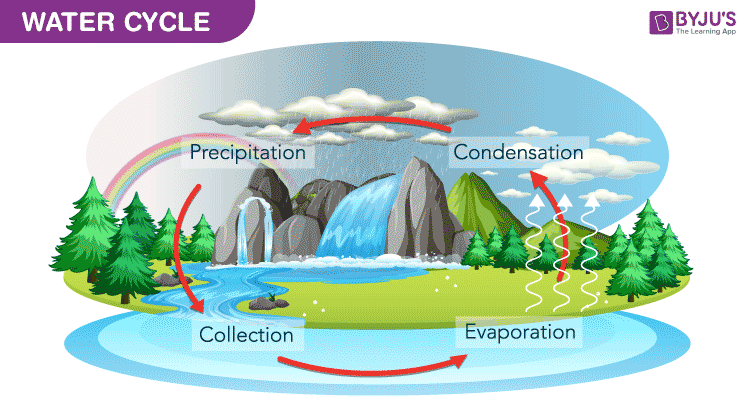
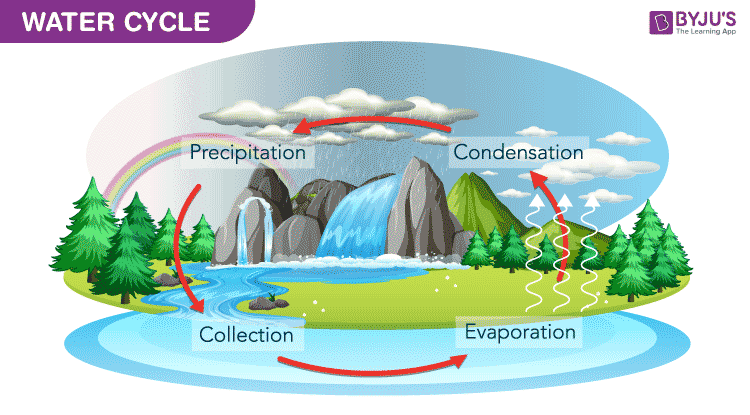
The water cycle is a continuous process by which water circulates through the Earth’s atmosphere and surface. Water evaporates from oceans, lakes, and rivers into the atmosphere, where it cools and condenses into clouds. The clouds move across the sky, and when they reach a certain size, the water falls as precipitation (rain, snow, sleet, or hail). This water then returns to rivers and lakes and eventually flows back to the ocean, where the cycle begins again.
Which of the following best describes the role of precipitation in the water cycle?
Precipitation carries water from the atmosphere to bodies of water on Earth’s surface.
Precipitation allows water to evaporate into the atmosphere.
Precipitation cools the air and forms clouds.
Precipitation moves water from rivers to the ocean.
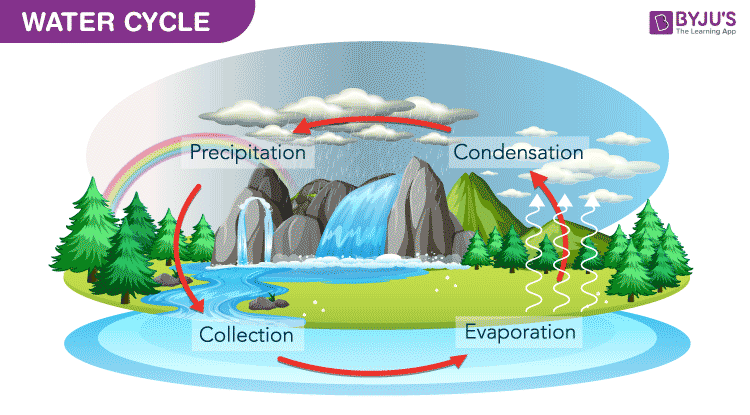
The water cycle is a continuous process by which water circulates through the Earth’s atmosphere and surface. Water evaporates from oceans, lakes, and rivers into the atmosphere, where it cools and condenses into clouds. The clouds move across the sky, and when they reach a certain size, the water falls as precipitation (rain, snow, sleet, or hail). This water then returns to rivers and lakes and eventually flows back to the ocean, where the cycle begins again.
Based on the passage, which part of the water cycle happens after condensation?
Evaporation
Transpiration
Precipitation
Runoff
The water cycle is a continuous process by which water circulates through the Earth’s atmosphere and surface. Water evaporates from oceans, lakes, and rivers into the atmosphere, where it cools and condenses into clouds. The clouds move across the sky, and when they reach a certain size, the water falls as precipitation (rain, snow, sleet, or hail). This water then returns to rivers and lakes and eventually flows back to the ocean, where the cycle begins again.
Which of the following best describes the role of precipitation in the water cycle?
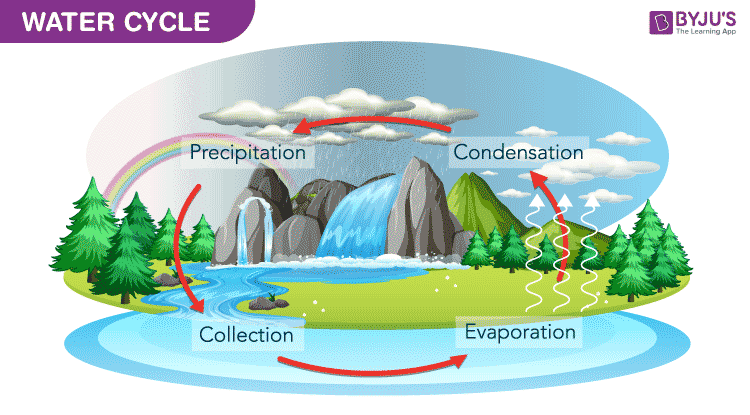
The water cycle is a continuous process by which water circulates through the Earth’s atmosphere and surface. Water evaporates from oceans, lakes, and rivers into the atmosphere, where it cools and condenses into clouds. The clouds move across the sky, and when they reach a certain size, the water falls as precipitation (rain, snow, sleet, or hail). This water then returns to rivers and lakes and eventually flows back to the ocean, where the cycle begins again.
Based on the passage, which part of the water cycle happens after condensation?
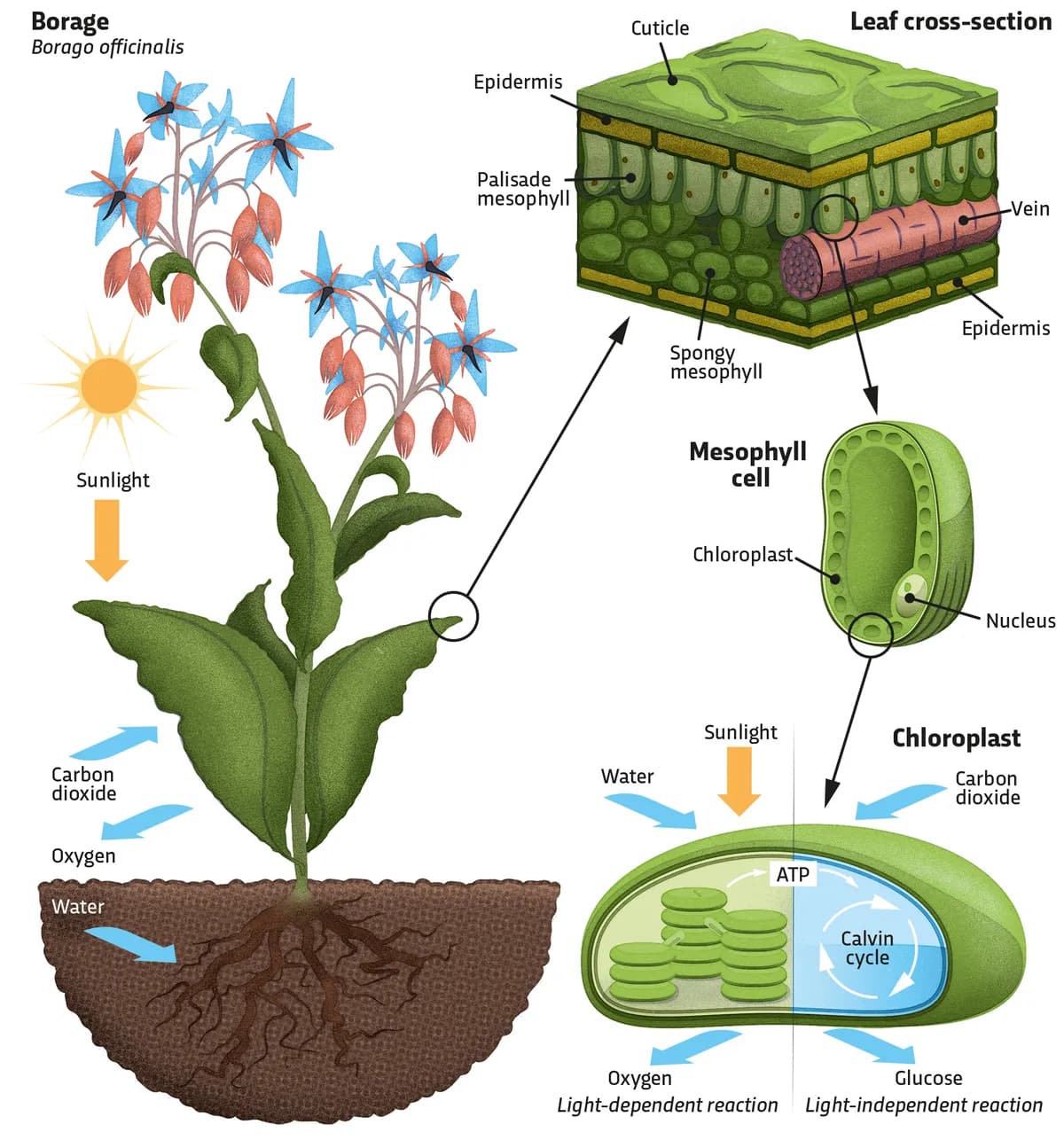
Plants perform a process called photosynthesis to produce their food. During photosynthesis, plants use sunlight, carbon dioxide from the air, and water from the soil to make glucose (a type of sugar) and oxygen. This process occurs in the chloroplasts of plant cells, primarily in the leaves. The glucose produced is used by the plant for energy, and the oxygen is released into the air as a byproduct.
What is the primary role of chloroplasts in plant cells?
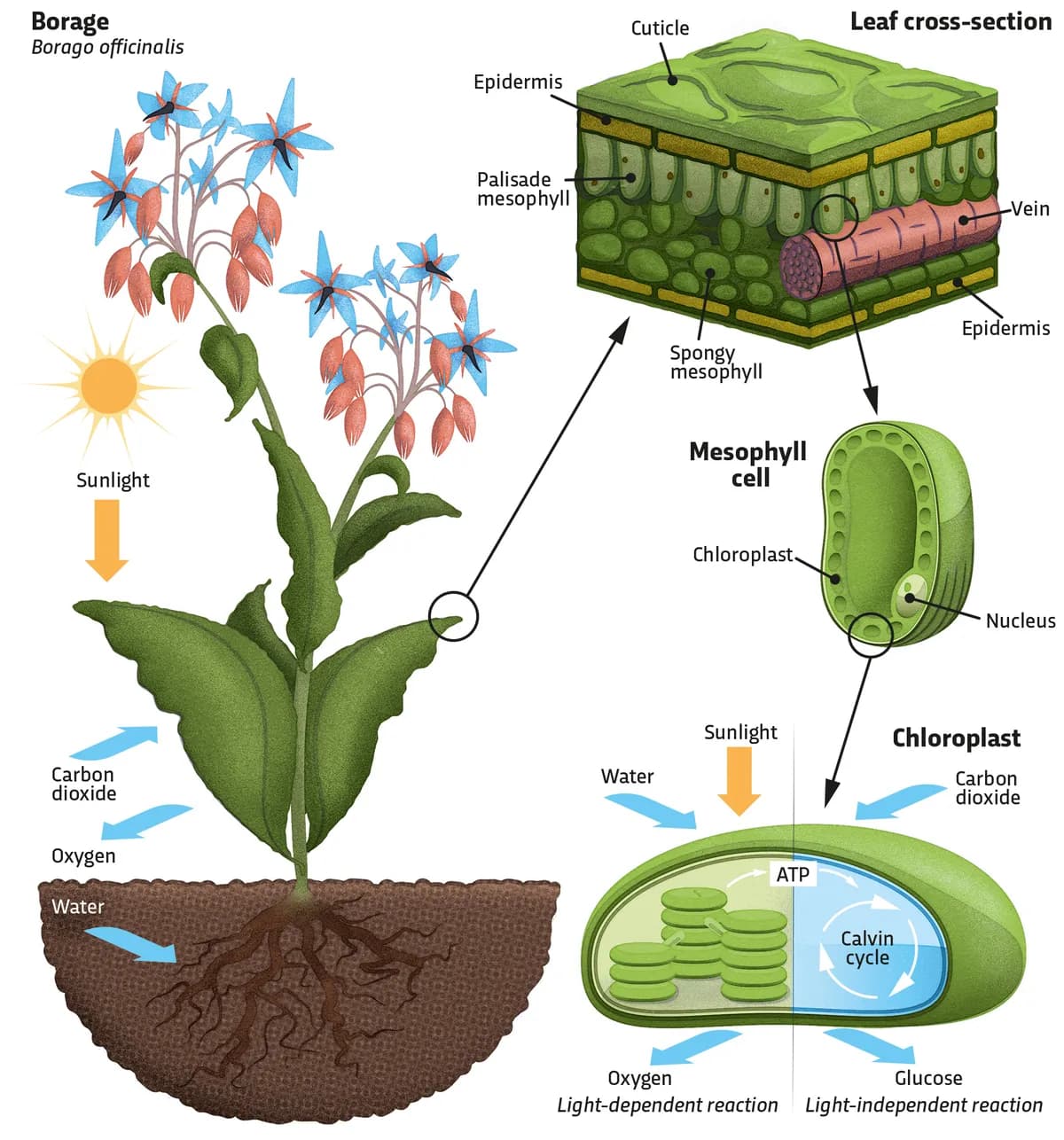
Plants perform a process called photosynthesis to produce their food. During photosynthesis, plants use sunlight, carbon dioxide from the air, and water from the soil to make glucose (a type of sugar) and oxygen. This process occurs in the chloroplasts of plant cells, primarily in the leaves. The glucose produced is used by the plant for energy, and the oxygen is released into the air as a byproduct.
Which of the following is a product of photosynthesis?
When an object moves, its motion can be affected by forces such as gravity, friction, and applied force. Gravity pulls objects toward the Earth, and friction opposes the motion of an object. For example, when you slide a book on a table, friction slows it down. If you push the book harder, you apply a force that increases its motion. The greater the force, the faster the object will move.
Which force is responsible for slowing down the motion of a sliding book?
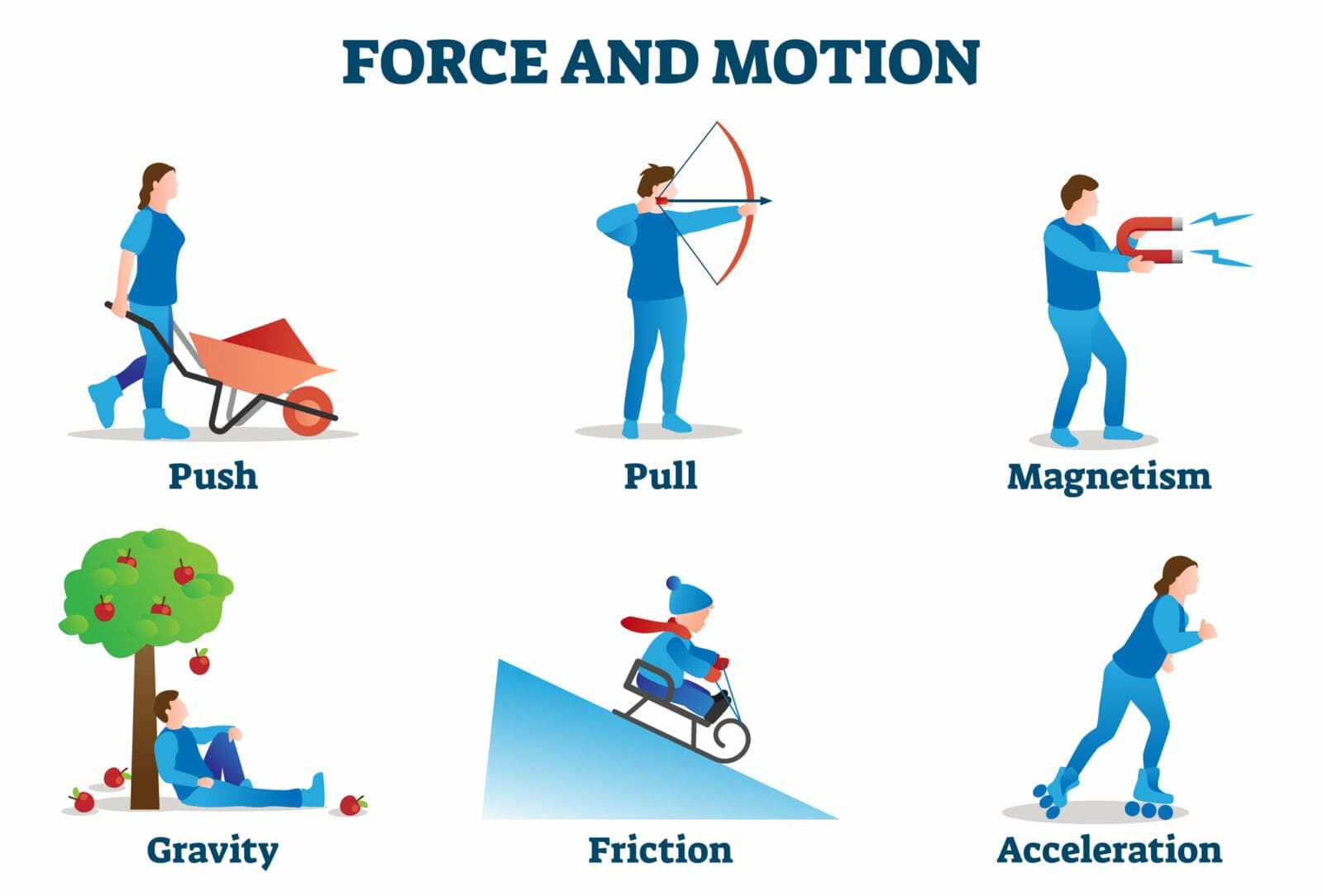
When an object moves, its motion can be affected by forces such as gravity, friction, and applied force. Gravity pulls objects toward the Earth, and friction opposes the motion of an object. For example, when you slide a book on a table, friction slows it down. If you push the book harder, you apply a force that increases its motion. The greater the force, the faster the object will move.
According to the passage, what happens when a greater force is applied to an object?
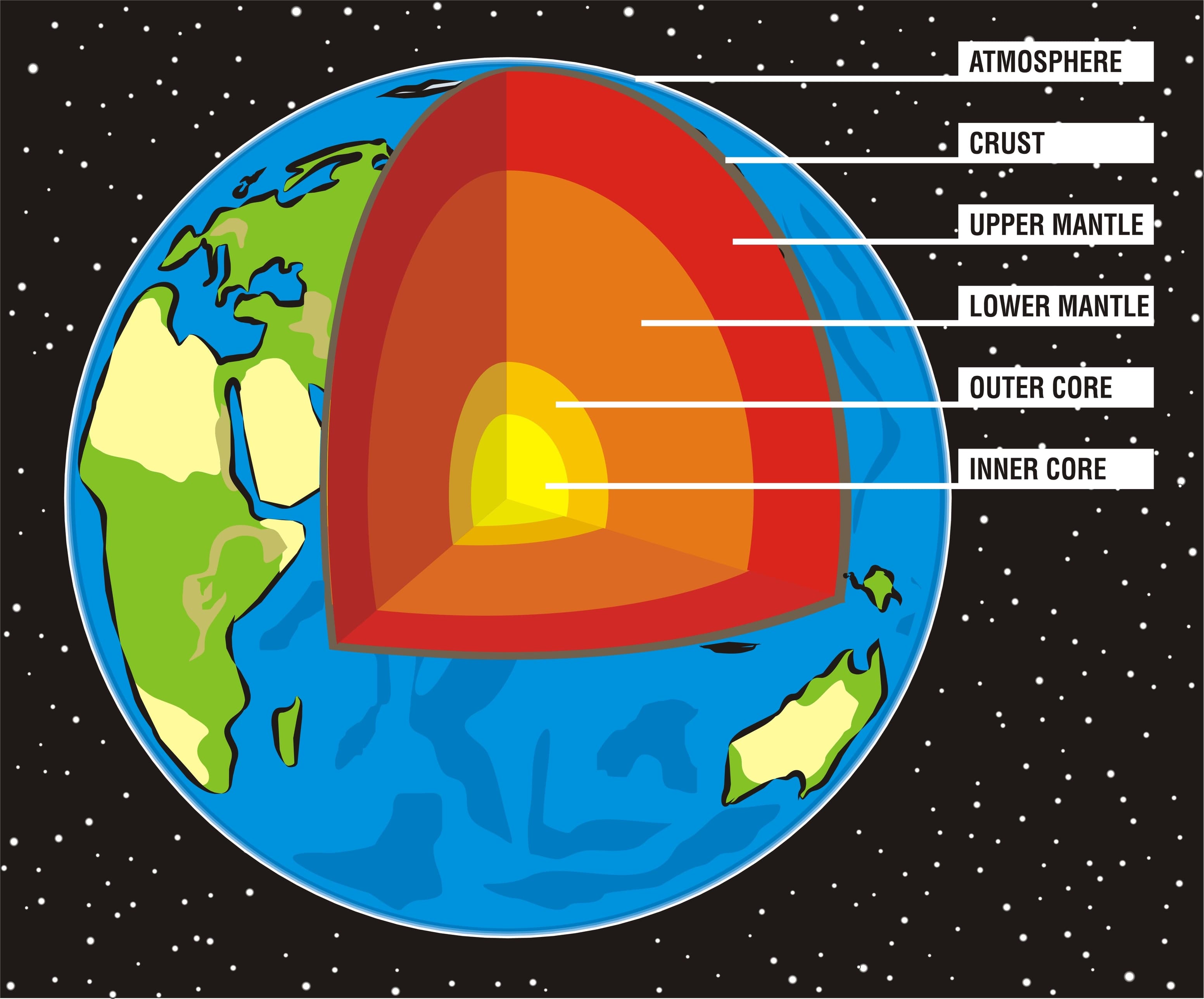
The Earth is made up of several layers. The outermost layer is the crust, which is a thin, solid layer that forms the surface of the Earth. Below the crust is the mantle, which is made of semi-solid rock that moves slowly over time. Below the mantle is the outer core, which is composed of liquid metal, and the innermost layer is the inner core, which is solid and made of iron and nickel. These layers work together to create the dynamic system of the Earth.
According to the passage, what is the function of the mantle?
According to the graph, which month has the least amount of sunshine recorded?
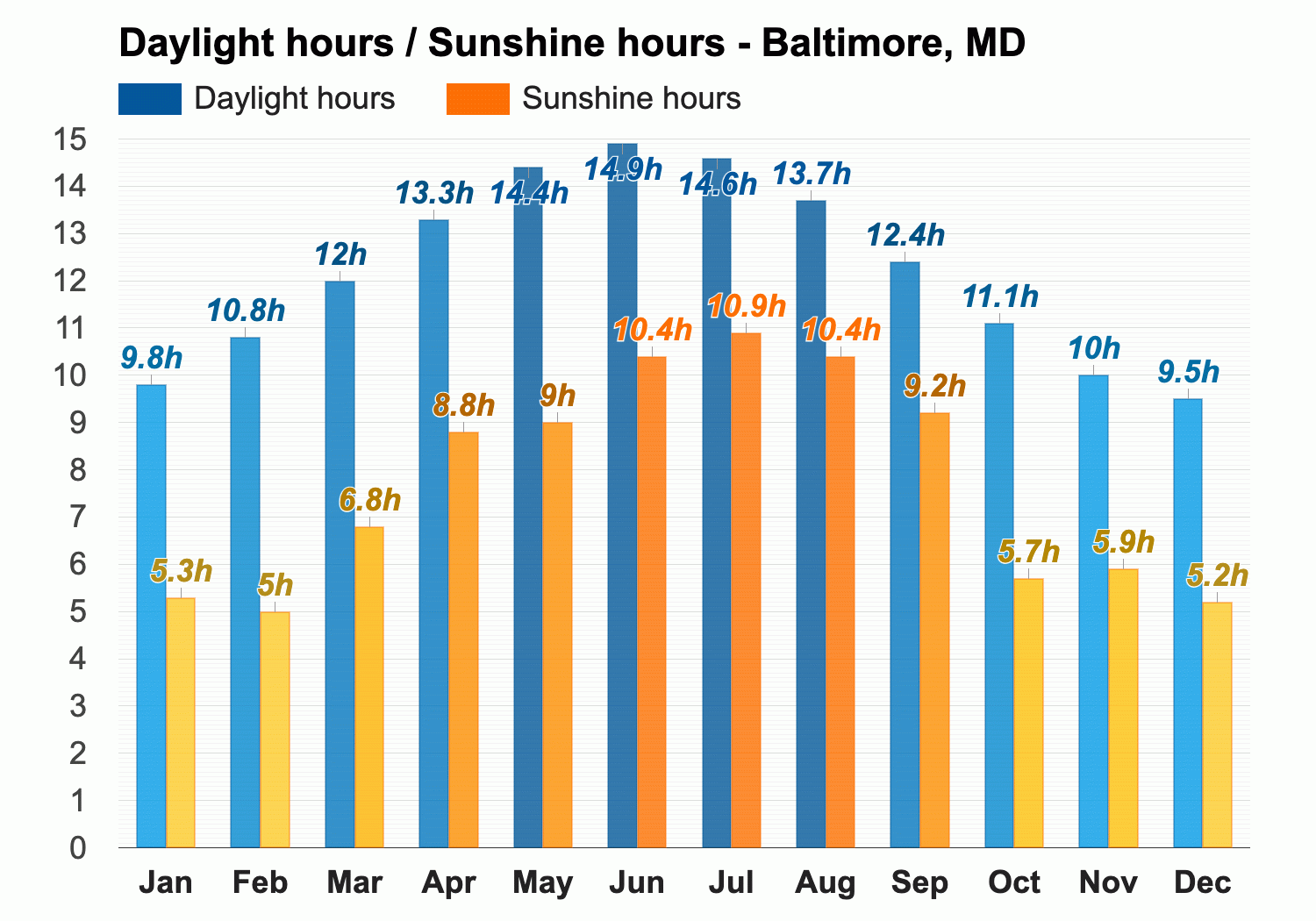
According to the graph, which month has the most daylight hours but not the most sunshine?
What trend is visible in the daylight hours from January to June?
How much sunshine does Baltimore receive on average in December?
After studying the island in the Chesapeake Bay, the scientist shifted their focus to exploring other natural features of Maryland. They wanted to determine whether the changes in Maryland’s landscape were similar to those found on other continents.
To begin their research, the scientist examined an outcrop in the mountains of Maryland and recorded the following characteristics:
- Various fossil types found in sedimentary rock layers V through Z
- An area where igneous rock had pushed into layers Y and Z
- A fault line
Graph Key
🔼Fossil Type 1
⏺️Fossil Type 2
⏹️Fossil Type 3
🔷Fossil Type 4
Based on the passage and graph, what does the presence of different fossil types in the sedimentary layers suggest?
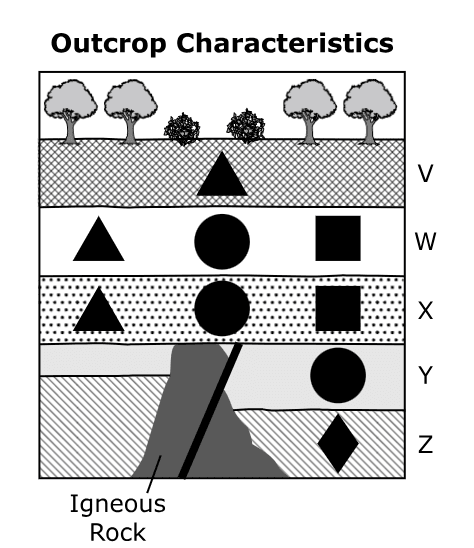
After studying the island in the Chesapeake Bay, the scientist shifted their focus to exploring other natural features of Maryland. They wanted to determine whether the changes in Maryland’s landscape were similar to those found on other continents.
To begin their research, the scientist examined an outcrop in the mountains of Maryland and recorded the following characteristics:
- Various fossil types found in sedimentary rock layers V through Z
- An area where igneous rock had pushed into layers Y and Z
- A fault line
Graph Key
🔼Fossil Type 1
⏺️Fossil Type 2
⏹️Fossil Type 3
🔷Fossil Type 4
Which rock layer contains the most types of fossils?
After studying the island in the Chesapeake Bay, the scientist shifted their focus to exploring other natural features of Maryland. They wanted to determine whether the changes in Maryland’s landscape were similar to those found on other continents.
To begin their research, the scientist examined an outcrop in the mountains of Maryland and recorded the following characteristics:
- Various fossil types found in sedimentary rock layers V through Z
- An area where igneous rock had pushed into layers Y and Z
- A fault line
Graph Key
🔼Fossil Type 1
⏺️Fossil Type 2
⏹️Fossil Type 3
🔷Fossil Type 4
Which layers contain Fossil Type 3 (⏹️)?
After studying the island in the Chesapeake Bay, the scientist shifted their focus to exploring other natural features of Maryland. They wanted to determine whether the changes in Maryland’s landscape were similar to those found on other continents.
To begin their research, the scientist examined an outcrop in the mountains of Maryland and recorded the following characteristics:
- Various fossil types found in sedimentary rock layers V through Z
- An area where igneous rock had pushed into layers Y and Z
- A fault line
Graph Key
🔼Fossil Type 1
⏺️Fossil Type 2
⏹️Fossil Type 3
🔷Fossil Type 4
Which piece of evidence best supports the idea that environmental conditions changed over time in the outcrop?
Flowering plants, also known as angiosperms, reproduce through sexual reproduction involving flowers. The flower contains both male and female reproductive parts. The male part of the flower is the stamen, which consists of the anther and filament. The anther produces pollen, which contains the male gametes or sperm cells. The female part of the flower is the pistil, which consists of the stigma, style, and ovary. The stigma is the part of the pistil where pollen lands. Once the pollen reaches the stigma, it travels down the style to the ovary, where fertilization occurs.
In fertilization, the sperm cell from the pollen merges with the egg cell inside the ovary. This fusion forms a zygote, which develops into a seed. The seed is encased in a fruit that forms from the ovary after fertilization. The fruit protects the seed and helps in its dispersal, often through wind, water, or animals.
Another method of reproduction in some plants, like strawberries, is vegetative reproduction. In this method, new plants grow from parts of the parent plant, such as runners, which are horizontal stems that produce new plants. This type of reproduction does not involve fertilization and results in offspring that are genetically identical to the parent plant.
Which sequence best describes the process of sexual reproduction in flowering plants?

Flowering plants, also known as angiosperms, reproduce through sexual reproduction involving flowers. The flower contains both male and female reproductive parts. The male part of the flower is the stamen, which consists of the anther and filament. The anther produces pollen, which contains the male gametes or sperm cells. The female part of the flower is the pistil, which consists of the stigma, style, and ovary. The stigma is the part of the pistil where pollen lands. Once the pollen reaches the stigma, it travels down the style to the ovary, where fertilization occurs.
In fertilization, the sperm cell from the pollen merges with the egg cell inside the ovary. This fusion forms a zygote, which develops into a seed. The seed is encased in a fruit that forms from the ovary after fertilization. The fruit protects the seed and helps in its dispersal, often through wind, water, or animals.
Another method of reproduction in some plants, like strawberries, is vegetative reproduction. In this method, new plants grow from parts of the parent plant, such as runners, which are horizontal stems that produce new plants. This type of reproduction does not involve fertilization and results in offspring that are genetically identical to the parent plant.
Which of the following is true about fertilization in flowering plants?
Flowering plants, also known as angiosperms, reproduce through sexual reproduction involving flowers. The flower contains both male and female reproductive parts. The male part of the flower is the stamen, which consists of the anther and filament. The anther produces pollen, which contains the male gametes or sperm cells. The female part of the flower is the pistil, which consists of the stigma, style, and ovary. The stigma is the part of the pistil where pollen lands. Once the pollen reaches the stigma, it travels down the style to the ovary, where fertilization occurs.
In fertilization, the sperm cell from the pollen merges with the egg cell inside the ovary. This fusion forms a zygote, which develops into a seed. The seed is encased in a fruit that forms from the ovary after fertilization. The fruit protects the seed and helps in its dispersal, often through wind, water, or animals.
Another method of reproduction in some plants, like strawberries, is vegetative reproduction. In this method, new plants grow from parts of the parent plant, such as runners, which are horizontal stems that produce new plants. This type of reproduction does not involve fertilization and results in offspring that are genetically identical to the parent plant.
How does seed dispersal help plants in their reproductive process?
Flowering plants, also known as angiosperms, reproduce through sexual reproduction involving flowers. The flower contains both male and female reproductive parts. The male part of the flower is the stamen, which consists of the anther and filament. The anther produces pollen, which contains the male gametes or sperm cells. The female part of the flower is the pistil, which consists of the stigma, style, and ovary. The stigma is the part of the pistil where pollen lands. Once the pollen reaches the stigma, it travels down the style to the ovary, where fertilization occurs.
In fertilization, the sperm cell from the pollen merges with the egg cell inside the ovary. This fusion forms a zygote, which develops into a seed. The seed is encased in a fruit that forms from the ovary after fertilization. The fruit protects the seed and helps in its dispersal, often through wind, water, or animals.
Another method of reproduction in some plants, like strawberries, is vegetative reproduction. In this method, new plants grow from parts of the parent plant, such as runners, which are horizontal stems that produce new plants. This type of reproduction does not involve fertilization and results in offspring that are genetically identical to the parent plant.
Which of the following processes is most directly responsible for the development of seeds in flowering plants?
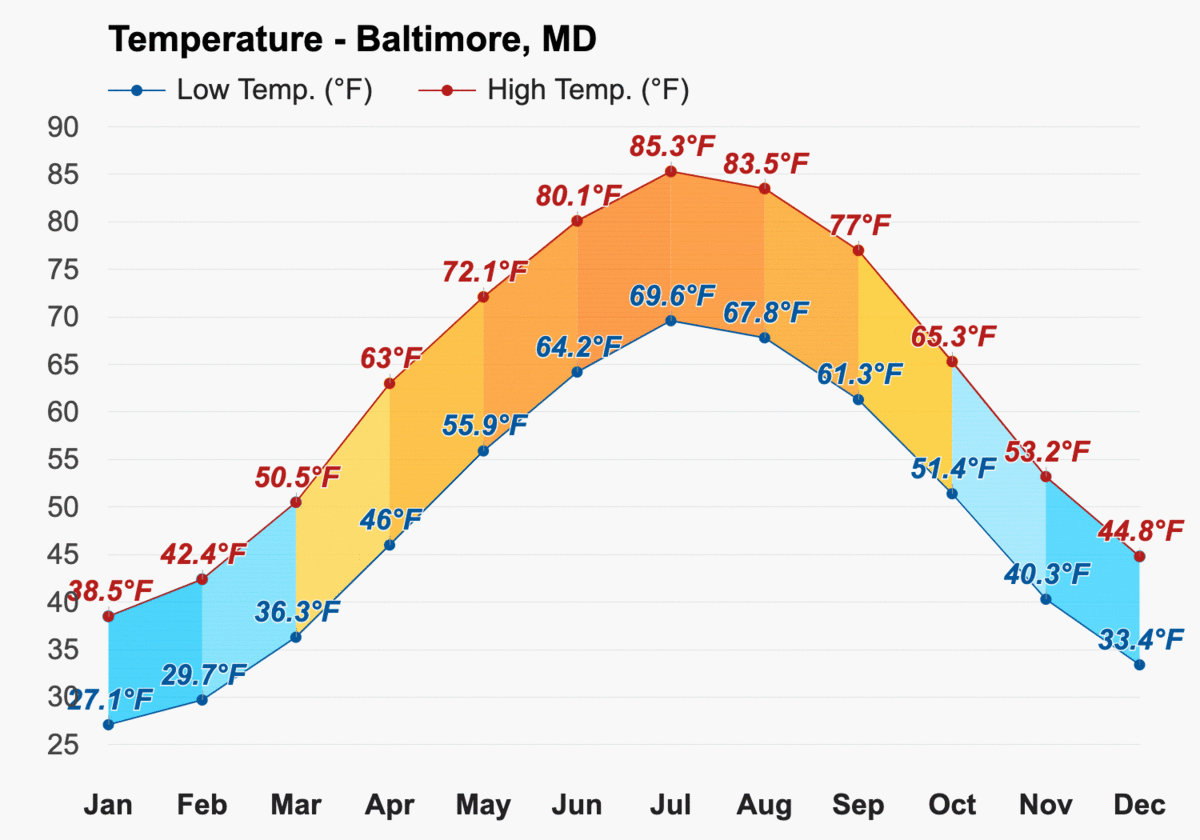
Which month sees the largest decrease in temperature between the high and low temperatures?