Mod 26 MCQ Quiz
Quiz by Hannah Tapp Thomas
Feel free to use or edit a copy
includes Teacher and Student dashboards
Measure skillsfrom any curriculum
Tag the questions with any skills you have. Your dashboard will track each student's mastery of each skill.
- edit the questions
- save a copy for later
- start a class game
- automatically assign follow-up activities based on students’ scores
- assign as homework
- share a link with colleagues
- print as a bubble sheet
- Q1
Which of the following describes how the physical features in Egypt provided protection for Cairo and the lush valley of the Nile River?
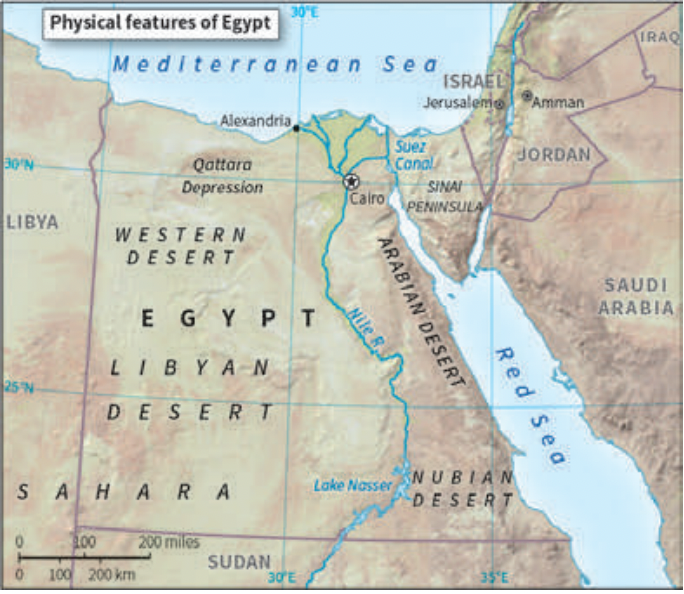
The sand from the surrounding deserts was used to build high fortifications that encircled Cairo and the valley of the Nile River.
The Qattara Depression was used to camou-flage military vehicles and armory.
The terrain features such as the deserts, river, and seas provided natural protection against invaders.
The water from the Nile was too rough for invaders to cross with horses or small boats.
The continuous sandstorms covered the build-ings in cities, acting effectively as natural camouflage.
300s - Q2
What is the scale of analysis on this map?
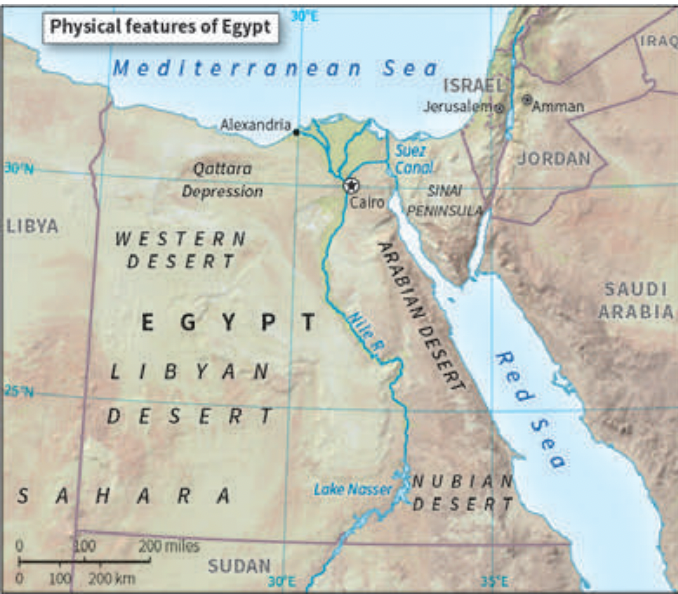
Global
Continent
Region
Country
Local
120s - Q3
Which of the following concepts in political geogra-phy are depicted in the following image?

Nation-state and colonialism
Imperialism and devolution
Colonialism and nationalism
Diffusion and self-rule
Self-determination and independence
120s - Q4
Which of the following explains a spatial relation-ship in a territorial force of devolution?
Catalonia’s resentment over mandatory fil-tering of revenues through Madrid, which are gained from Catalonian exports that continue to fuel a push for independence
Declarations of independence in Yugoslavia that led to the formation of separate countries based primarily on ethnicity or language
The movement by ethnic Hawaiians for auton-omy from the U.S. government similar to that accorded to indigenous Native Americans
The separatist movement in Brazil and the formation of the Republic of the Pampas in a dispute over inequalities between the northern and southern parts of the country
The separatist movement in Czechoslovakia that led to its separation into two countries, Czechia and Slovakia
300s - Q5
Which of the following best explains why the region of Catalonia in Spain could be a viable country?
Catalonia is linguistically distinct compared to other regions in Spain.
Catalonia is well developed economically compared to other regions in Spain.
Catalonia's population is ethnically distinct compared to other regions in Spain.
Catalonia has a large population compared to other regions in Spain.
Catalonia has a major city, Barcelona, which has a notoriety comparable to that of the Spanish capital, Madrid.
300s - Q6
Which of the following best represents the concept of the nation-state in its internal cultural-political makeup and spatial organization?
Iran
South Africa
Japan
New Zealand
Argentina
120s - Q7
Which of the following countries did NOT have a significant, long-lasting colonial presence in Africa after 1920 ?
Germany
Great Britain
France
Portugal
Belgium
120s - Q8
Based on the information in the map, what is the most likely outcome of the possible establishment of an independent Kurdistan for the Kurdish people?
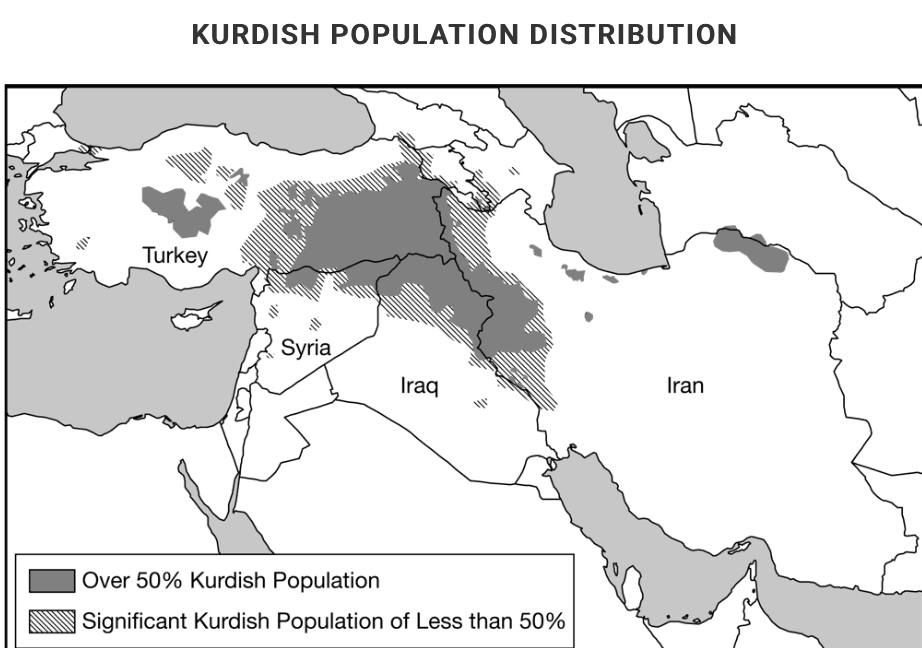
The state of Turkey, seeking to connect areas with a substantial Kurdish population into an independent state, might take action against neighboring states.
The Kurdish people, seeking a state of their own with a majority Kurdish population, might secede from or rebel against the states labeled on the map.
The Kurdish people would have to migrate into a single country to gain a population majority and would struggle for control of the government.
In areas with a Kurdish majority population, Kurdish people are politically active among Turks, Iranians, Iraqis, and Syrians and would be able to win an election on a national vote to secede.
The countries shown on the map will cooperate and work together to address the political situation and needs of people in areas with a substantial Kurdish population.
300s - Q9
Which of the following best explains the political pattern shown in the table?
The devolution of Yugoslavia occurred primarily along national lines, resulting in countries with a defined ethnic majority.
The breakup of Yugoslavia was the result of a civil war in which ethnic groups fought for control of the capital of Belgrade in Serbia.
The Balkanization of Yugoslavia resulted in the formation of new ethnic nationalities divided by differences in religion and language.
The dissolution of Yugoslavia resulted in some ethnic groups being aligned with capitalist Western Europe and others being aligned with communist Eastern Europe.
The downfall of Yugoslavia was a case of ethnic differences becoming a centripetal force in the formation of a multistate nation.
300s