
Mod 36 MCQ Quiz
Quiz by Hannah Tapp Thomas
Feel free to use or edit a copy
includes Teacher and Student dashboards
Measure skillsfrom any curriculum
Tag the questions with any skills you have. Your dashboard will track each student's mastery of each skill.
- edit the questions
- save a copy for later
- start a class game
- automatically assign follow-up activities based on students’ scores
- assign as homework
- share a link with colleagues
- print as a bubble sheet
- Q1
Which of the following describes the importance of the invention and diffusion of the seed drill in the early eighteenth century?
It increased a farmer’s grain yields by a multiple of at least 10.
It eliminated the need for the farmer to walk behind his horses, which pulled the farm equipment.
It added iron to the soil; iron was important to growing strong plants and increasing agricul-tural productivity.
It was instrumental in adding efficiencies and decreasing waste when farmers planted their crops.
It increased efficiency by helping farmers prepare large fields for planting grain crops.
120s - Q2
About 5000 years ago, early farmers in the Indus Valley invented an agricultural tool that was pulled by oxen to break up the soil before farm-ers planted their crops. Which of the following explains the importance of the improvements to this innovation during the Second Agricultural Revolution?
The cast iron plow patented in the United States in the late eighteenth century repre-sented the first major improvement in agricul-tural technology in 2000 years.
The mechanical reaper invented in the United States in the early nineteenth century was the first agricultural innovation that was pulled by a tractor rather than by horses.
The seed drill invented in England in the early eighteenth century was the first agricultural machine with moving parts.
The steel plow patented in the United States in the mid-nineteenth century was the first commercially successful plow in the world.
The agricultural scythe that cut wide swaths of grain during harvest time provided work for farm laborers.
300s - Q3
What agricultural activity is shown in the follow-ing image?
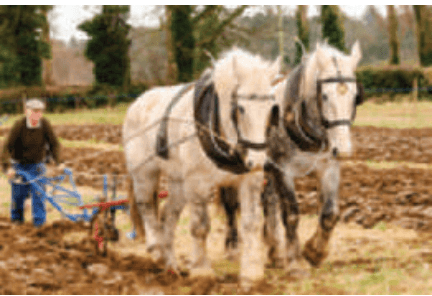
planting seeds
applying herbicide to the weeds
plowing the ground
harvesting the crop
spreading fertilizer
120s - Q4
Which of the following is a result of the change from subsistence farming to the production of cash crops by farmers and their families?
Industrialized countries purchased surplus food from economically less developed countries.
Farmers moved from producing for the farm family to producing for a non-farm market.
Farmers moved out of the village and bought new farms closer to urban areas.
Farmers hired immigrant laborers to plant the fields and harvest the grain.
Population in urban areas decreased when people moved to rural areas and bought farms.
120s - Q5
Which of the following is a result of the change from subsistence farming to cash crops in the farming communities?
Farm products were more diversified and sold for high profits at farmers’ markets.
The size of farm families increased, and taxes were raised to provide more schools.
Farmers turned from cooperation between farms to competition for markets.
Farm women increased sales of farm products, such as eggs and cheese, to the local market.
Government subsidies provided for a university education for all members of a farm family.
120s - Q6
Dramatic increases in global grain production since 1950 have been made possible by
substantial increases in the amount of land under cultivation
global warming
an increase in the urban workforce
an increase in the agricultural workforce
an increase in the use of energy and technology
120s - Q7
The two images show different agricultural methods. In the context of the Second Agricultural Revolution, which of the following trends is represented in these images?
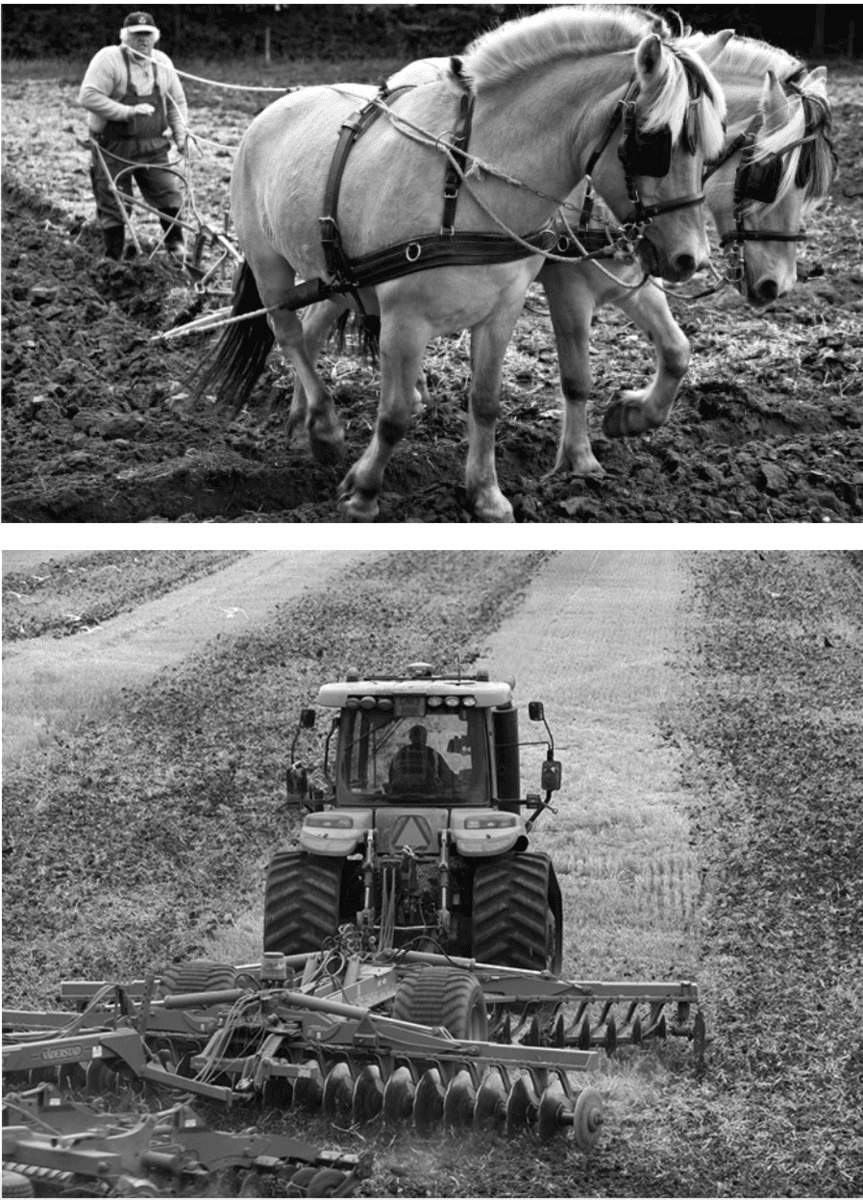
The introduction of machines during the Second Agricultural Revolution resulted in many farmers being pushed off their land, leading to famine and starvation in the countryside.
Although new farm machines were developed during the Second Agricultural Revolution, many farmers continued to practice agriculture in traditional ways because of cultural taboos associated with the adoption of modern farming techniques.
During the Second Agricultural Revolution, many farmers continued to use traditional farming techniques that were more suited to the tropical environments they lived in.
The mechanization of farming in the Second Agricultural Revolution resulted in more reliable crop harvests and healthier populations in areas where the mechanization was adopted.
The developments associated with the Second Agricultural Revolution were applicable only to farmers growing grain in temperate regions of the world.
300s - Q8
The images show devices developed during the Second Agricultural Revolution. Which of the following best describes the impacts of the Second Agricultural Revolution?
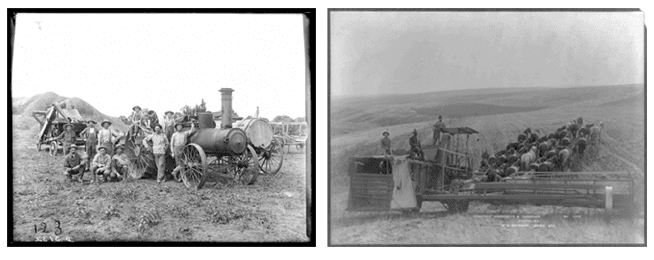
Genetically modified crops and ever-increasing levels of mechanization, as shown in the images, drove productivity up and made hunger a thing of the past.
Innovations such as crop rotations and hybrid selection, facilitated by the technology shown in the images, made agriculture productive enough to support the growth of urban centers and led to the creation of modern civilization.
The adaptation of newly introduced crops such as potatoes and corn from the New World, which were planted and harvested using the technology shown in the images, made European farms more productive, which led to better diets, longer life expectancies, and more people available for work in factories.
Technological innovations, such as the devices shown in the images, and increased agricultural productivity led to better diets, longer life expectancies, and more people available for work in factories.
The Second Agricultural Revolution is ongoing, as engineers continue to improve agricultural machinery and scientists search for crops adapted to the drier, warmer climates predicted for the coming decades.
300s - Q9
The images shown illustrate a change that took place as the Second Agricultural Revolution coincided with the Industrial Revolution. Which of the following compares this geographic relationship between these revolutions?
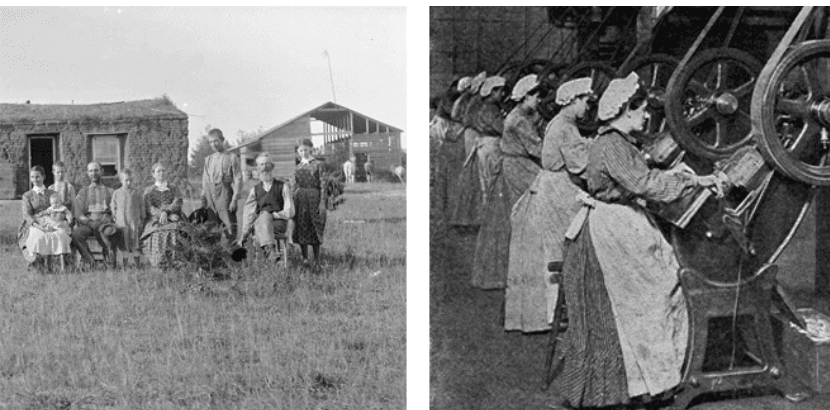
An increase in chemical farming practices let to more food being produced by farmers and then processed in factories
The domestication of plants and animals allowed for factory farming practices where workers made the first canned foods
An increase in the rural farming workforce lead to higher farm productivity, which resulted in more food for urban industrial workers
The mechanization of farm work allowed many young people to migrate and join a growing urban industrial workforce
The creation of sedentary societies, where farm work was done completely by machine, resulted in permanent settlements in town and cities
300s - Q10
Technologies invented during which of the following periods explain how farmland was divided and cultivated as shown in the satellite image?
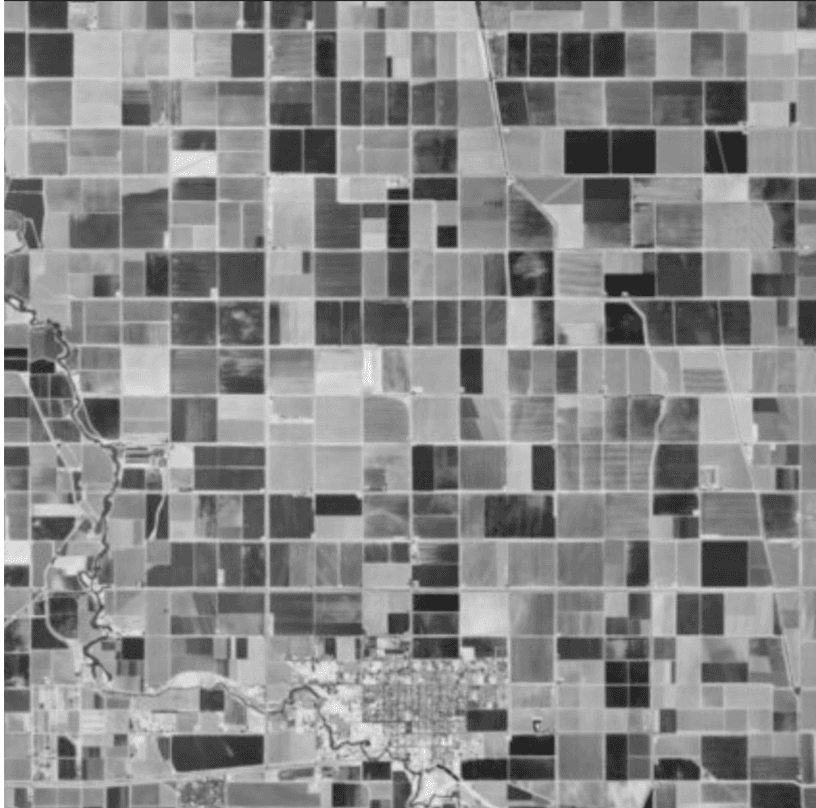
Columbian Exchange, when the use of Old World farm animals such as cows and horses was introduced.
First Agricultural Revolution, when the animal-powered plow and domesticated plants were developed.
Second Agricultural Revolution, when land-surveying technology and mechanical plows were developed.
Modern era, when local farmers used computers and data analysis.
Postindustrial era, when local farmers used global positioning systems and geographic information systems.
300s