Mod 40 MCQ Quiz
Quiz by Hannah Tapp Thomas
Feel free to use or edit a copy
includes Teacher and Student dashboards
Measure skillsfrom any curriculum
Tag the questions with any skills you have. Your dashboard will track each student's mastery of each skill.
- edit the questions
- save a copy for later
- start a class game
- automatically assign follow-up activities based on students’ scores
- assign as homework
- share a link with colleagues
- print as a bubble sheet
- Q1
Which of the following groups of countries are major producers of sugarcane?
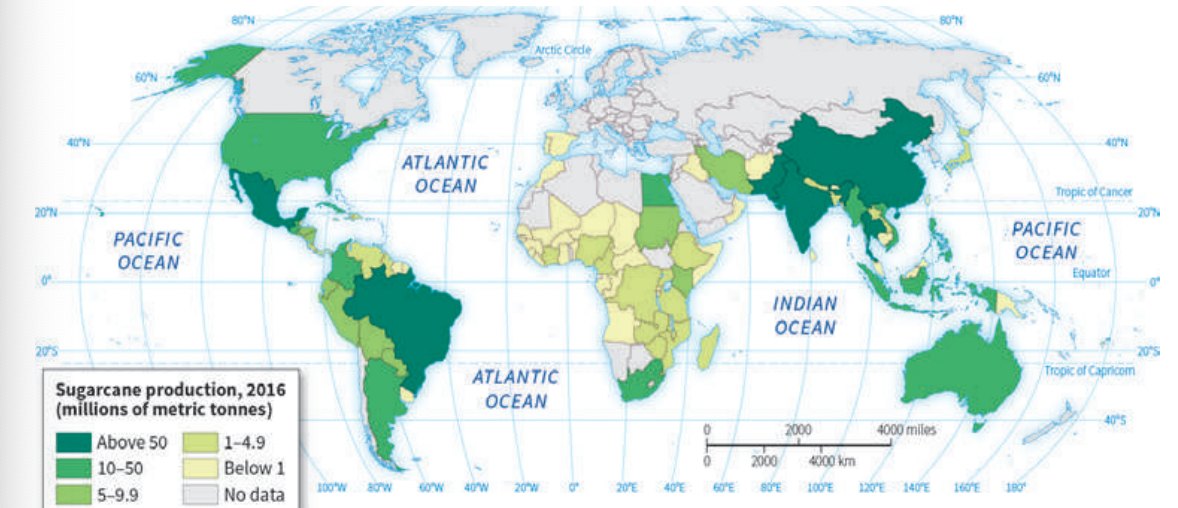
Cuba, Japan, U.S.
Australia, Morocco, Mexico
Brazil, India, China
Mexico, Brazil, Ireland
China, Cuba, Russia
120s - Q2
Which of the following describes the spatial pattern for sugarcane shown on the map?
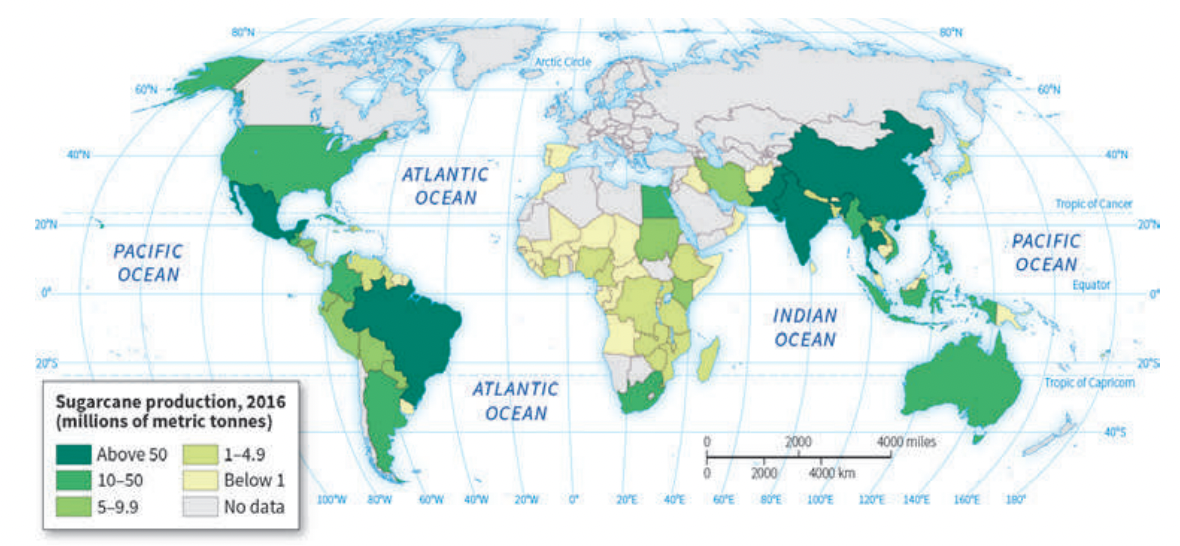
All the countries that produce sugarcane are in the Southern Hemisphere.
The countries that produce the most sugar are in North America.
All sugar-producing countries are located north of the equator.
Countries in Africa produce more sugar than countries in South America.
Sugar-producing countries are located in tropical & subtropical climate regions.
120s - Q3
Which of the following correctly identifies the scale of analysis shown on the map?
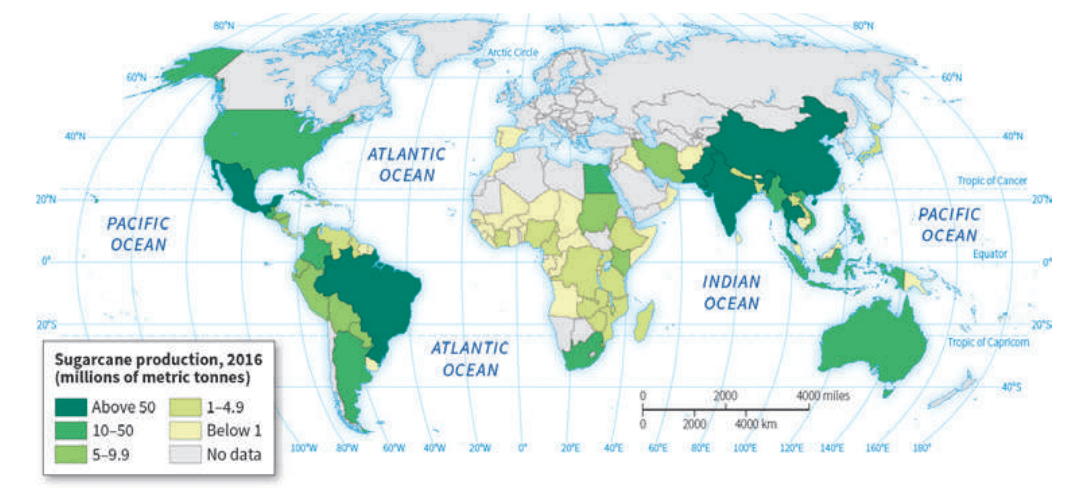
Local
Country
Region
Global
Continent
120s - Q4
A distinguishing feature of a multinational company engaged in agribusiness is its
management of multiple stages of the production process
ownership of multiple farms around the world
location in the U.S. & Europe
production of a single commodity rather than several different commodities
control over the production of rice in Asia
120s - Q5
Palm oil, an edible vegetable oil used in processing packaged food products, is obtained from the fruit of the oil palm tree, grown only in the tropics. Which of the following explains how global demand for palm oil has proved beneficial and detrimental for countries such as Indonesia and Malaysia?
Palm oil exports provided substantial corporate profits, but increased government subsidies to palm oil farmers led to increased poverty in the two countries.
Palm oil exports provided substantial corporate profits, but the process led to high rates of unemployment for farmworkers at harvest time.
Palm oil exports provided substantial corporate profits, but the growth in the industry resulted in heavy deforestation in both countries.
Palm oil exports provided increased income to the governments of Indonesia and Malaysia, but the number of farmers employed on palm oil plantations decreased in the two countries.
Palm oil exports aided in increasing the wealth of the two countries but also increased the diversity of plants in the two countries.
300s - Q6
In North America, which of the following frequently consumed items is most likely to be supplied by a trans-national corporation?
Milk
Water
Coffee
Electricity
Bread
120s - Q7
Which of the following explains an impact of globalized agricultural commodity chains on consumers as compared to producers?
Drought and depletion of groundwater sources in developing countries cause a rise in global grain prices and associated higher costs for food.
The shift from subsistence farming to value-added agriculture by small farmers in developed countries causes a drop in profits for global agribusiness corporations.
The imposition of government-imposed tariffs on specialty crops in order to protect domestic farmers causes a worldwide decrease in all farm products.
Farmers in developing countries who are unable to gain access to global food markets to sell their goods protest, leading to global unrest.
Agricultural production with a focus on monocropping cash crops creates more vulnerability in a country’s exports if consumer preferences shift to a different commodity.
300s - Q8
In 2017 the Ivory Coast exported $5.6 billion worth of cocoa beans and cocoa-derived products, such as cocoa butter. This represented 55 percent of the country’s exports and was worth four times the country’s combined gold and oil exports in that year. Which of the following best explains the international trade economy of the Ivory Coast?
High level of dependency on a single agricultural commodity that increases national economic development and increases foreign direct investment
High level of dependency on a single agricultural commodity that increases national economic risks during times of global economic crisis
Low level of dependency on primary-sector production and resource processing that will increase the country’s level of development
Low level of dependency on a single agricultural commodity that decreases national economic risks during times of global economic crisis
Low level of dependency on a single agricultural commodity that increases national economic development and increases foreign direct investment
300s - Q9
Compared to North American ranchers, commercial ranchers in the Pampas of Argentina, Uruguay, and southern Brazil are more likely to
raise mostly sheep
lease their grazing land
rely on feedlots
raise livestock primarily for export
use practices developed by indigenous people
120s - Q10
Which of the following best explains why the New England region, located in the northeastern United States, would specialize in market gardening agriculture rather than other types of agriculture, such as grain farming?
Wheat farming would require more machinery, which conflicts with the environmental standards of many states in New England.
Market gardening products can be easily transported to the primary market of California without spoiling.
Farmers can specialize in market gardening products because of the rocky soil found in many New England states.
Market gardening zones allow farmers the flexibility to grow market gardening crops along with other grain crops.
Several large cities on the East Coast provide a growing market and shorter distances for transporting market gardening products.
120s - Q11
During the winter months in North America, the primary source of fruits and vegetables found in grocery stores is
Uruguay
Chile
Nigeria
Philippines
Italy
120s - Q12
During the first half of the twentieth century, which of the following facilitated the transportation of beef over long distances to global markets?
Commercial canning
Irradiation of food
Refrigerated ships
Airplanes
High-speed railroads
120s