
Mod 53 MCQ Quiz
Quiz by Hannah Tapp Thomas
Feel free to use or edit a copy
includes Teacher and Student dashboards
Measure skillsfrom any curriculum
Tag the questions with any skills you have. Your dashboard will track each student's mastery of each skill.
- edit the questions
- save a copy for later
- start a class game
- automatically assign follow-up activities based on students’ scores
- assign as homework
- share a link with colleagues
- print as a bubble sheet
- Q1
Which of the following best explains the economic rationale for European colonialism and imperialism?
The need to diffuse industrialization to other locations.
Competition among industrialized countries for raw materials and markets.
The search for new mechanical innovations.
The need for more industrial workers.
The desire to help other countries.
120s - Q2
The machine manufacture of large quantities of identitical products is called
labor productivity
imperialism
mass consumption
mass production
wage labor
120s - Q3
Which of the following is not an explanation for the shift in power sources from water & wood to fossil fuels?
fossil fuels produce far more energy
fossil fuels are more transportable, allowing industry to locate in urban areas
fossil fuels are widely available in every country
the use of water power required proximity to rushing water, such as waterfalls and rapids
wood produces less energy than coal
120s - Q4
Steelmaking in the U.S. was centered in Pittsburgh, Pennsylvania, which had easy access to
markets
expanses of forests
nearby coalfields
a trained workforce
factories
120s - Q5
Compare the two images. What do the technologies shown demonstrate about the Industrial Revolution?
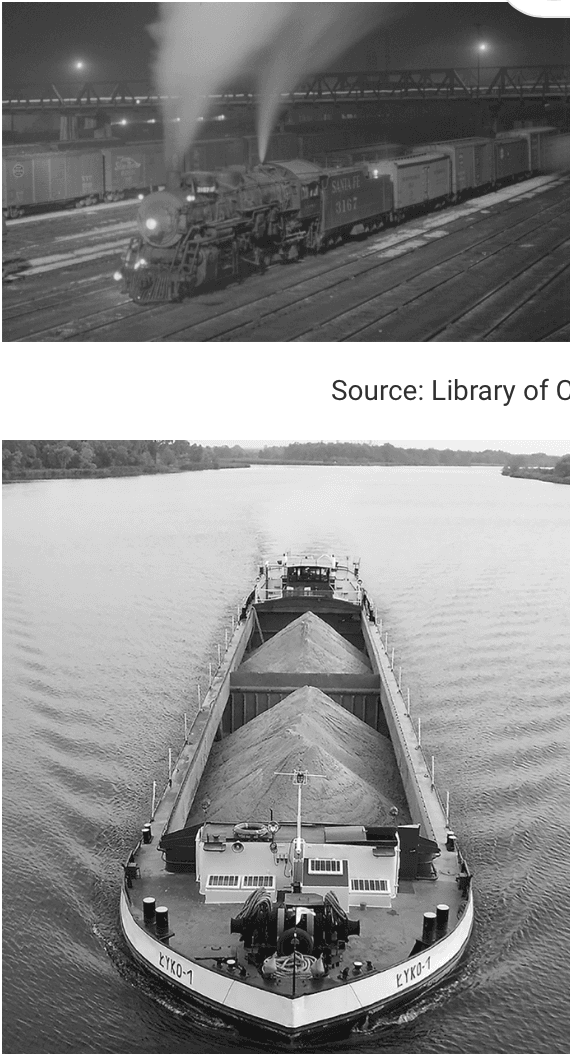
The dependence on large quantities of steel has limited industrial growth to areas with high concentration of coal and iron.
The increased transportation technology has enabled the diffusion and expansion of industrial activities.
Industrial centers must be built along rivers or waterways to facilitate the transportation of raw materials and finished goods.
The initial take-off stages of the Industrial Revolution focused solely on heavy, material-oriented industries.
Due to the cost of such large-scale industrial projects, industrialization has been unable to diffuse to developing countries.
300s - Q6
In the context of industrialization, how does the use of the building materials in Image 1 compare to the use of building materials in Image 2 ?
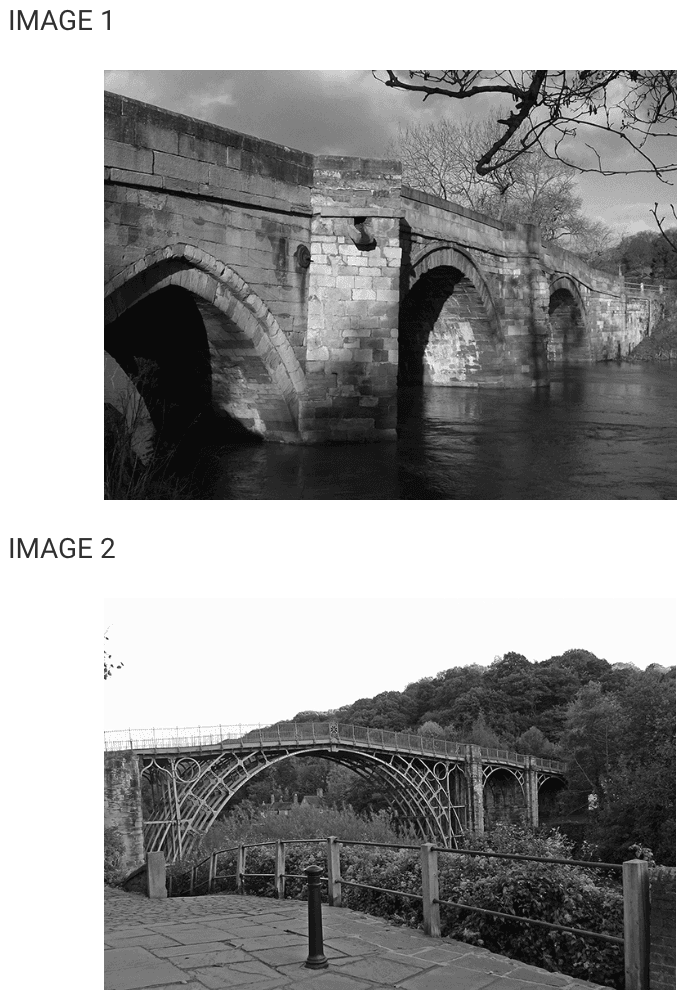
The change from stone to iron bridges had no impact on industrialization because stone was readily available and stronger than iron.
The change from stone to iron bridges created a great demand by Europeans for bridges because iron bridges were less expensive to build.
The scarcity in stone for building bridges facilitated the need to import new materials such as iron, leading to globalization and the rise of industrialization in Europe.
The development of the metals industry led to the construction of higher and longer bridges, a reduced need for stone as a building material, and rapid industrialization.
Bridges of stone were not constructed in Europe until modern times because the use of iron as a building material developed in the United States and did not diffuse to Europe until the early twentieth century.
300s - Q7
The two images illustrate advancements in technology resulting from the Industrial Revolution. Comparing the images, which of the following statements best illustrates an impact of the Industrial Revolution on society?
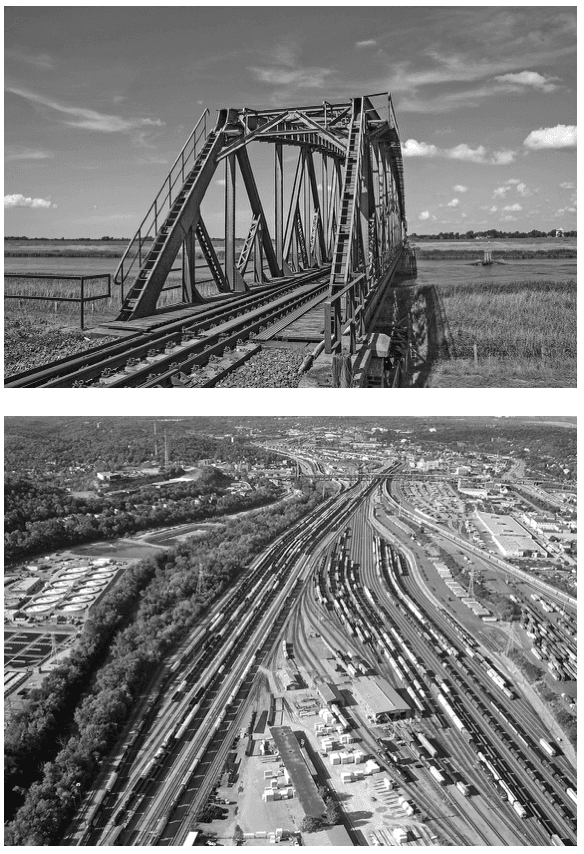
Industrialization technologies were applied to agriculture and to the transportation of agricultural products to widespread markets that led to greater food supplies and a surge in the population.
One major unintended change that came with industrialization was the standardization of time in order to provide nationwide schedules that were an aid to improving the efficiency of train travel in the United States.
The invention of the steam engine and the construction of steel bridges to carry trains across various physical features led to ever-increasing demand for the materials and labor to build more trains and tracks.
The Industrial Revolution was largely a change in economic activity that brought wealth to industrialists but did not significantly alter the landscape.
Improvements in technology effectively shrank transportation times, but intervening obstacles such as rivers and canyons lessened the efficiencies of travel by rail.
300s - Q8
Using the data in Table 2, which of the following terms best describes the median household income distribution among the five boroughs?
uneven development
gender inequality
informal economies
comparative advantage
economies of scale
120s