Loading...

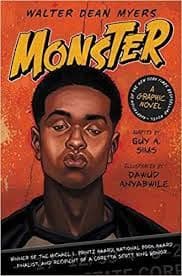
Monster: Steve Harmon
Quiz by Edith Galvez
Customize this quiz to suit your class
Instantly translate to 100+ languages
Tag the questions with any skills you have. Your dashboard will track each student's mastery of each skill.
Give this quiz to my class
According to Steve in the prologue, when is the best time to cry?
In the morning.
At night.
In private.
During visiting hours.
The Name of Steve's movie is
Monster
Prison
21 Jump Street
True Life
According to Steve in the prologue, when is the best time to cry?
The Name of Steve's movie is
Steve hits a young woman with:
Mrs. Harmon brings Steve a:
The drugstore was owned by:
What is the Point of View of this novel?
 Broken windows are covered. Floorboards are patched and doors screwed back on. The road that was ruined by German tanks is shovelled and raked smooth. Boot-shaped bruises turn yellow then fade and disappear. Flowers grow and spread across the ugly German footprints stomped into garden beds. The village looks pretty once more. School stops for the summer and everyone is put to work on the kolkhoz, the village farm. Women and big boys begin harvesting the barley crops in the outer fields. The biggest girls milk the cows, morning and night, and keep the barns clean. Old Nikolay mends ploughs, horse harnesses, pitchforks and scythes in his workshop. Anna Pushinka teaches Yelena and her friends how to get the honey from the beehives that are scattered through the orchards. I am in charge of collecting eggs. My friends Olga and Nina help. Olga and Nina are five, a year younger than me. They are twins and look exactly alike, except Nina’s nose is a little bit crooked from when she fell out of bed and squashed it sideways on the floor. The hens, ducks and geese wander free in the summer, so collecting eggs is like a treasure hunt and takes hours. Catching the hens for their daily hugs takes even longer, but I think it’s important because hugs make everyone happy and happy hens lay bigger eggs. Olga says I’m the best hen-hugger in all of Russia. Nina says I’ll be the best cow-hugger, too, when my arms grow longer. But good hugs have nothing to do with the size of your arms. It’s all to do with the size of your heart. When we are done with the hens, Olga, Nina and I can spend the rest of the day doing whatever we like. We climb the apricot trees, chase squirrels, lie in the meadow marvelling at how hot Ushanka’s black fur becomes in the sunshine, make daisy chains and race little boats of bark in the stream. I teach Olga and Nina the alphabet and we use charcoal to write our letters and our names all over the village – on doors and walls and the freshly cut ends of firewood. In between, I practise my knots. In case the German princemonsters return. I slip into Old Nikolay’s workshop and tie knots in the harnesses hanging on the walls. I wander into gardens where the washing is hung out to dry and tie knots in the laces on pants and smocks. I creep up behind Anna Pushinka and tie knots in her apron strings. I find baling twine in the hay shed and tie my own ankles together. I do such a good job of these last knots that I can’t get them undone. I have to jump all the way to Olga and Nina’s house and ask them to cut me free with their mama’s knife. At the end of each day, Ushanka and I run out into the distant barley fields to meet Mama. This is my favourite part of the day, because Mama always shouts, ‘Little Rabbit!’ and smothers my head with kisses. And as we walk home, we sing. Everyone – women, big boys and me. I love to sing. Almost as much as I love to be kissed by Mama. Sometimes one of the boys, Mikhail, has his balalaika with him. He takes the instrument out from beneath the sheaves of barley piled high on the wagon and plays music. We sing about forests and orchards and people who find their true love. As we walk home, arm in arm, my heart fills with happiness and my belly swells with pride that I am allowed to sing along with the big boys. And I can almost forget about the German prince-monsters and their lies about Russia and their big ugly boots. Almost. But today, when Mikhail reaches for his balalaika, I see other things hiding beneath the barley sheaves. Three of the mamas rush forward and cover them up, but it’s too late. I know they are there. I’ve already seen them. Rifles. Lots of rifles. Mikhail hugs his balalaika to his chest and blushes. ‘So play!’ cries Mama, her voice oddly loud and high. ‘Let’s play Sasha’s favourite song, “The Little Birch Tree”.’ So Mikhail plays and everyone sings about the lovely birch tree with its curly leaves and the branches that will be turned into silver flutes. They sing too quickly, too loudly, and as they sing and walk, they cast nervous sideways glances at me. ‘It’s alright,’ I say, when the song comes to an end. ‘I didn’t see the rifles.’ Mama nods and smiles, and I know it was the right thing to say. But I did see the rifles. And I think about Yelena wanting to get lots of guns and dynamite for the Partisans so they can shoot the Germans and blow them into thousands of tiny pieces, and Mama looking as though she agreed, and I know this is what the mamas and the big boys are doing. As well as harvesting, they are helping the Partisans. Three days later, I wake before dawn and I am all alone. Yelena is always here beside me when I wake. But not this morning. I climb down from our bed above the stove. Mama is filling a cloth sack with bread. She ties it closed with a piece of string and hands it to Yelena. ‘Stay out of sight,’ says Mama. ‘And don’t return until after dark.’ ‘Where’s she going?’ I ask. ‘Nowhere,’ snaps Mama. ‘Then why does she need all that bread?’ I ask. ‘There’s nothing left for us.’ Mama baked four loaves last night and she has stuffed them all into the sack. Yelena opens her mouth, but before she can speak, Mama shoves her out the door and sends her on the way to nowhere. Mama turns and stares at me, her blue, blue cornflower eyes wide with worry. ‘I know,’ I say, flopping down on the bench. ‘I didn’t see any bread.’ Mama sits beside me and takes my hand. ‘And . . .?’ she prods, obviously waiting for more. I puzzle for a while, then say, ‘And I don’t have a sister called Yelena.’ Mama laughs, softly and with a little bit of sadness around the edges. ‘Sweet Little Rabbit! You do have a sister called Yelena.’ ‘I do?’ I ask, now confused. ‘I haven’t seen the rifles or the bread, but I have seen Yelena?’ ‘Yes.’ Mama smiles and the magic makes me smile, too. And I am glad that Yelena is real because I love her very much. ‘Yelena is real,’ Mama explains, ‘but she does not carry sacks of bread into the forest for the Partisans.’ ‘Of course not!’ I shout, slapping my forehead. ‘Because there is no bread!’ Mama laughs loudly now, with not a hint of sadness. She hugs me, pressing me against her warm, loving heart, covering my head with kisses. ‘Clever Little Rabbit,’ she murmurs, and then, in barely a whisper, ‘Your papa would be so proud.’ When I wake the next morning, Yelena is sleeping beside me, her mouth open, her braided hair unravelling. Mama is serving kasha to a strange woman seated at our table. I crawl down from above the stove and slide along the bench beside her. I stare at her pants, her tunic, the rope she is using as a belt and her big boots. She’s dressed like a man! And there’s a rifle leaning against the wall near the door. ‘Hello,’ I say. ‘I’m Sasha.’ The woman doesn’t reply. She just shovels down her kasha. I line my four wooden bears along the table in front of her bowl and say, ‘These are my bears: Big Bear, Medium Bear, Little Bear and Even Littler Bear.’ ‘Hello, Sasha. Hello, bears.’ She smiles but she doesn’t tell me her name. ‘Why are you dressed like a man?’ I ask, tugging at the sleeve of her tunic. ‘Because men’s clothes make it easier to run and climb and crawl and shoot,’ she says. ‘You’re a Partisan!’ I gasp. ‘But she’s not real,’ says Mama, placing a bowl of kasha before me. ‘Is the kasha real?’ I ask. Mama laughs. ‘Yes, Little Rabbit.’ I’m glad the food is real, because I’m hungry. But I’m disappointed that the woman is not real. I was going to ask if I could use her rope-belt to tie her ankles together. For practice. But if she’s not real, then the rope and her ankles aren’t either. The woman finishes her kasha, hangs her rifle over her shoulder, kisses Mama on the cheek then slips out the door. I run to the window to watch her leave, but by the time I get there, she’s gone. Vanished. ‘Because she’s not real,’ I whisper. A week later, Mama and I are working in the garden. We sing as we weed between the flowers and pluck caterpillars from the vegetables. Anna Pushinka is picking strawberries in her garden and wanders over. ‘Taste these,’ she says, holding out the basket. Mama reaches in and takes out a fat strawberry and a tiny piece of folded paper. The strawberry goes into her mouth, the paper into her pocket. ‘What’s on the paper?’ I ask. ‘Paper?’ Anna Pushinka replies with a wave of her hand. ‘Goodness, Sasha! Who has money for paper? These are lean times. We must choose between paper for writing and noodles for our soup. And I always choose noodles.’ She chuckles and I know the paper is yet another thing that is not real. That night, Mama slips the paper to Yelena, but she drops it on the floor. I pick it up for her, and I see that there are tiny words and numbers written all over it. I wish I could read better. I’m desperate to know what it says. Or rather, what it doesn’t say, because it’s not real. Later, when Mama has tucked us into our bed above the stove and Ushanka has wrapped herself around the top of my head, I ask Yelena, ‘What’s on the paper?’ ‘What paper?’ says Yelena. ‘The paper that isn’t real,’ I reply. Yelena stares at me, nibbling her lip, then whispers, ‘A message for the Partisans. Stuff about where the Germans have their headquarters and when their trains are travelling and where they store their ammunition.’ ‘Why?’ ‘So the Partisans can blow them up.’ Yelena grabs my arm. ‘But don’t tell anyone. It’s a secret.’ ‘What’s a secret?’ I ask. ‘The message.’ ‘What message?’ I say, my eyes wide. Yelena laughs. ‘Good boy, Sasha.’ My belly swells with pride. I know how to play this game. ‘How are your knots coming along?’ asks Yelena. ‘Good! Yesterday, I crept into the dairy and tied knots in the apron strings of all the girls who were milking and only one of them noticed. Today, I tied Olga’s ankles together with Mama’s embroidery thread and just now, while you were taking a bath, I tied the sleeves of your blouse together in an enormous knot.’ Yelena rolls her eyes, then says, ‘I’ll see if I can find you some rope for practising.’ ‘Practising what?’ I ask. ‘Your knots,’ she says. ‘What knots?’ Yelena, my big sister who is twelve and always serious tMonsterMonster 2 Vocab reviewMonster by Walter Dean Myers July 6th Questions Monster Section 5Monster HalloweenMonster Book Vocabulary Pg. 1-47Monster Math: Place Value