Loading...


Mother to Son
Quiz by Isabelle Yang
Customize this quiz to suit your class
Instantly translate to 100+ languages
Tag the questions with any skills you have. Your dashboard will track each student's mastery of each skill.
Give this quiz to my class





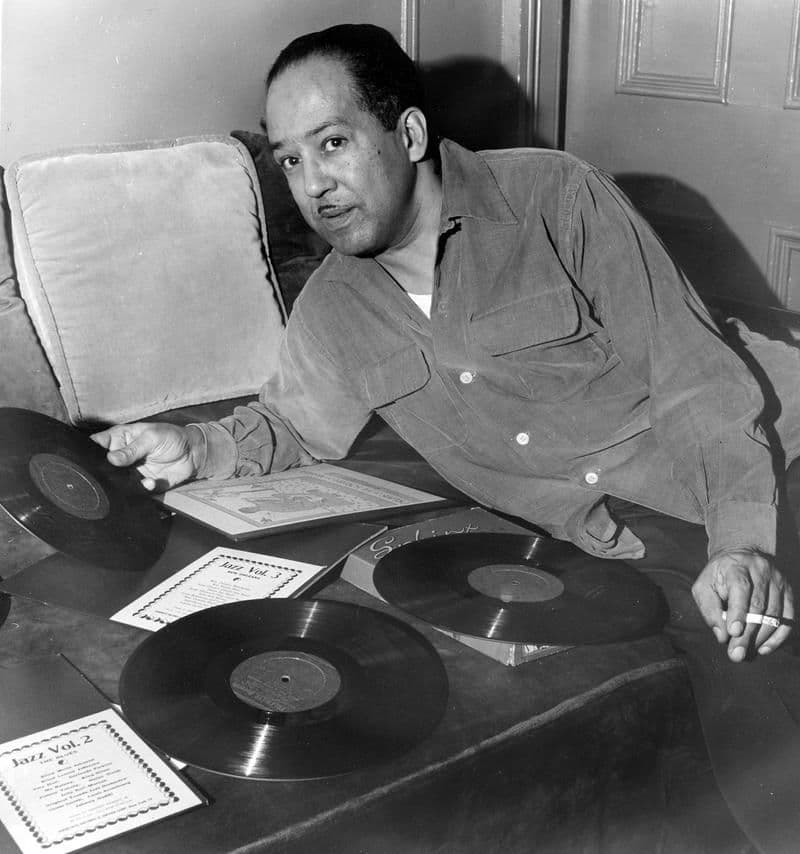

 Mother to Son PoemMother to Son by Langston Hughes“Mother to Son”; “To James”Make multiple choice questions for the following poem :Langston Hughes Mother to Son Well, son, I’ll tell you: Life for me ain’t been no crystal stair. It’s had tacks in it, And splinters, And boards torn up, And places with no carpet on the floor— Bare. But all the time I’se been a-climbin’ on, And reachin’ landin’s, And turnin’ corners, And sometimes goin’ in the dark Where there ain’t been no light. So boy, don’t you turn back. Don’t you set down on the steps ‘Cause you finds it’s kinder hard. Don’t you fall now— For I’se still goin’, honey, I’se still climbin’, And life for me ain’t been no crystal stair.The Story of Ramayana by Maharshi Valmiki Long ago, Dasharatha, the wise king of Ayodhya of Sarayu, India had three wives. Though the King had three wives, he didn’t have any children with them. The Chief priest Vasishta advised the king to make fire sacrifice to obtain a blessing from the gods. After the gods were pleased, one of them appeared out of the flame and handed him a pot full of nectar. The god told the king to share the nectar with his three queens namely Kausalya, Kaikeye, and Sumitra. While the nectar had been shared, the three queens gave birth to sons: Kausalya had Rama; Kaikeye had Bharatha; and Sumitra had twins Lakshmana and Shatrughna. A sage took the boys out to train them in archery. In a neighboring city, the ruler's daughter was named Sita. When it was time for Sita to choose her bridegroom, at a ceremony called a Swayamvara, the princes were asked to string a giant bow. No one else could even lift the bow, but as Rama bent it, he did not only string it but also broke it into two. Sita indicated that she chose Rama as her husband by putting a garland around his neck. The disappointed suitors were watching. 6 CO_Q3_English8_Module 4 King Dasharatha, Rama's father, decided it was time to give his throne to his eldest son Rama and retired to the forest to seek moksha. Everyone seems pleased. This plan fulfilled the rules of dharma because an eldest son should rule and, if a son can take over one's responsibilities, one's last years may be spent in a search for moksha. In addition, everyone loved Rama. However, Rama's stepmother, the king's second wife, was not pleased. She wanted her son, Bharata, to rule. Because of an oath Dasharatha had made to her years before, she got the king to agree to banish Rama for fourteen years and to crown Bharata even though the king, on bended knee, begged her not to demand such things. Broken-hearted, the devastated king could not face Rama with the news that Kaikeyi must tell him. Rama, always obedient, was as content to go into banishment in the forest as to be crowned king. Sita convinced Rama that she would always be at his side and his brother Lakshmana also begged to accompany them. Rama, Sita, and Lakshmana set out to the forest. Bharata, whose mother's evil plot had won him the throne, was very upset when he found out what had happened. Not for a moment he did consider breaking the rules of dharma and becoming king in Rama's place. He went to Rama's forest retreat and begged Rama to return and rule, but Rama refused. "We must obey father," Rama says. Bharata then took Rama's sandals saying, "I will put these on the throne, and every day I shall place the fruits of my work at the feet of my Lord." Embracing Rama, he took the sandals and returned to Ayodhya. Years passed and Rama, Sita, and Lakshmana were very happy in the forest. Rama and Lakshmana destroyed the rakshasas (evil creatures) who disturbed the sages in their meditations. One day a rakshasa princess named Shurpanakha tried to seduce Rama, and Lakshmana wounded her and drove her away. She returned to her brother Ravana, the ten-headed ruler of Lanka (Sri Lanka, formerly Ceylon), and told her brother, who is always attracted to beautiful women, about lovely Sita. Ravana devised a plan to abduct Sita. He sent a magical golden deer which Sita desired Rama to hunt. A long time had passed, but Rama didn’t return. Thus, Lakshmana went off to find his brother. Before leaving Sita, Lakshmana drew a protective circle around Sita and warned her that she would be safe if she would stay within the circle. As they went off, Ravana, who could change his shape, appeared as a holy man begging alms. The moment Sita stepped outside the circle to give him food, Ravana grabbed her and carried her off to his kingdom in Lanka. Rama was broken-hearted when he returned to the empty hut and could not find Sita. A band of monkeys led by Hanuman offered to help him find Sita. Ravana carried Sita to his palace in Lanka, but he could not force her to be his wife. So, he put her in a grove and alternately sweet-talked her and threatened her in an attempt to get her to agree to marry him. Sita would not even look at him but thought only of her beloved Rama. Hanuman, the general of the monkey band could fly since his father was the wind, and he flew to Lanka and found Sita in the grove, comforted her, and told her Rama would come soon and save her. 7 CO_Q3_English8_Module 4 Ravana's men captured Hanuman, and Ravana ordered them to wrap Hanuman's tail in cloth and to set it on fire. With his tail burning, Hanuman hopped from house-top to house-top, setting Lanka a fire. He then flew back to Rama to tell him where Sita was. Rama, Lakshmana, and the monkey army built a causeway from the tip of India crossing over to Lanka. A mighty battle took place. Rama killed several of Ravana's brothers and then Rama confronted ten-headed Ravana. Rama finally killed Ravana and freed Sita. After Sita gained her freedom from Ravana, she proved her purity through the trial by fire. Then, they returned to Ayodhya and Rama became the king. As Rama became the king, he ruled Ayodhya with Ramrajya - an ideal time when everyone does his or her duties and responsibilitiesMatch the word to its synonym level B1 CEFR. Use the vocabulary exactly adverb precisely except that aside from exist verb to be real existing adjective real, current Example: Flying cars are not practical with existing technology. existence noun reality Example: The existence of black holes has been confirmed by indirect observation. extraordinary adjective unusual feature noun important part of something Example: The Ramon Crater is a unique feature of the Negev Desert. feedback noun reaction figure noun shape Example: I can’t tell if that figure in the shadows is a man or a woman. figure out verb understand Example: I just can’t figure out how the magician did that amazing trick. financial adjective related to money Example: Her family is having financial problems so they can’t travel overseas this year. finance verb pay for Example: If I can’t get a loan from the bank, I won’t be able to finance a new apartment. finance noun money Example: An expert in finance predicts a global recession. finding/findings noun discoveries; results of a study Example: According to the findings of the police investigation, this is the gun which fired the fatal bullet. flexibility noun willingness to change flexible adjective adjusts easily Example: I’d prefer to meet on Monday morning but I can be flexible depending upon your schedule. flood noun a lot of water flood verb to cover with too much water flu noun type of sickness focus on/upon verb pay attention to Example: You should focus on your schoolwork if you want to improve your grades. focus noun attention People with attention deficit disorder lose focus easily. frequency noun how often frequent adjective very often Example: Hanah is a frequent customer and everyone at the store knows her. fresh adjective new Example: We need some fresh ideas if we’re going to solve this problem. frighten verb scare from preposition position, starting point gain verb make an increase, profit, earn Example: I have nothing to gain by choosing sides so I shall remain neutral. gain noun profit, amount earned generate verb create, make Example: Chat GPT can generate text written in any style you choose. guidance noun help, advice hopeful adjective optimistic, having a positive outlook Example: The farmers are hopeful that we will have rain this winter. hopefully adjective with luck ideal adjective best, most preferable Example: Nuclear power may not be an ideal solution to global warming, but it’s certainly worth considering. illness noun sickness, disease illustrate verb draw pictures illustration noun picture, image Example: Children’s storybooks have colorful illustrations. image noun picture, especially on film or television Example: The mother of the pop singer cried when she first saw her daughter’s image on television. in preposition within, inside, into in terms of regarding Example: That company makes a great product but they’re lacking in terms of customer service. in actual fact in truth Example: The mayor says the city is a safe place to live, but in actual fact the violent crime rate is very high. in connection with about Example: Police arrested four men in connection with the robbery. in that case if that is true Example: Billy Bob: “Traffic could be heavy tomorrow.” Peggy Sue: “In that case, we better leave early.” in the meantime while, during Example: The new computers won’t arrive until next week, but we can keep using the old ones in the meantime. initial adjective first Example: Her initial reaction to that song was negative, but over time she’s come to like it. initially adverb at first instruction noun teaching, order Example: Most new electronic devices come with a set of instructions. intelligence noun smartness Example: Since you have a degree from a good university, I assume you have sufficient intelligence to understand this problem. intelligent adjective smart Example: Joe isn’t very intelligent, but he is a kind person with a warm heart. interest noun attraction Example: Yossi has little interest in politics, whereas his wife goes to all the protests and demonstrations. interest verb to attract Example: Sports don’t really interest me, but my brother is a big basketball fan. introduce verb to show something new Example: Today in class I will introduce the basic concepts of literary analysis. invest verb to put money into something in order to earn money Example: Joe invested in cryptocurrency and lost a lot of money. investor noun one who puts money into something in order to earn money Example: Venture capitalists are investors who put money into risky start-up businesses. investment noun putting money into something in order to earn money Example: Buying real estate in Israel is a very safe investment because the value never goes down. investigate verb research, study Example: The police collected evidence to investigate the murder. investigation noun study Example: The police don’t have a suspect for the murder as the investigation isn’t finished yet. investigator noun detective Example: Detective Schmendrick is the lead investigator for the murder case. just about almost Example: I’m just about done here so I’ll be there shortly. keep on doing verb continue Example: You’re crazy if you keep on doing the same thing and expect different results. kind of type of Example: What kind of dog is that, a poodle? knowledge noun awareness Example: John failed the test due to lack of knowledge of the material. lack verb not having, missing Example: John failed the test due to lack of knowledge of the material. landscape noun the view of the land likely adjective, adverb probably Example: When we learn from our mistakes, we’re not likely to forget. limited adjective restricted Example: We should go to the store today because the sale is for a limited time only. limitation noun restriction little adjective small, not a lot Example: She always tells the truth. I have little reason to doubt her. look at verb see Example: People used to read newspapers on the train. Nowadays they just look at their phones. low adverb to a small amount or level Example: I have to charge my phone because the battery is running low. material noun documents, information Example: We have a lot of material to cover before the end of the semester. meaning noun significance mean verb to have significance or purpose means noun form of, by the use of Example: They communicate by means of radio. measure noun step Example: The teacher took measures to prevent cheating during the test mention verb to say, point out Example: The coach said the team played very well today but didn’t mention any player specifically. miss verb (1) fail to catch (2) wishing to see somebody Examples: (1) The football player kicked the ball but missed the goal. (2) Wow, it’s good to see you! I’ve missed you so much! misunderstand verb understand incorrectly Example: I’m afraid I misunderstood the instructions. Could you repeat them please? more or less approximately, somewhat, to a varying degree Example: This is more or less a religious neighborhood, though there are a few secular families. must modal verb have to naturally adverb as expected, normally nature noun (1) open air (2) character Examples: (1) We like to go hiking in nature reserves. (2) Pit bulls are aggressive by nature.Oliver Twist begins in a workhouse in 1830s England, in an unnamed village, where a young woman, revealed to be Oliver's mother, gives birth to her son and promptly dies. The boy, lucky to survive, is raised until the age of nine in a "farm" for young orphaned children, and then is sent to the local workhouse again, where he labors for a time, until his innocent request for more food so angers the house's board and beadle, Mr. Bumble, that the workhouse attempts to foist Oliver off as an apprentice to some worker in the villager. Oliver is eventually given over to a coffin-maker named Sowerberry. Oliver works as a "mute" mourner for Sowerberry, and must sleep at night among the coffins. After a fight with Noah, another of Sowerberry's apprentices, over Oliver's unwed mother (whom Noah insults), Oliver runs away to London, to make his fortune.
Near London, Oliver meets a well-dressed young boy who introduces himself as the Artful Dodger, a thief under the employ of a local crime boss named Fagin. The Dodger takes Oliver to Fagin, who promises to help Oliver but really holds him hostage, and forces him to go on a thieving mission with the Dodger and Bates, another young criminal. Bates and Dodger try to steal the handkerchief of an old man, who notices Oliver (an innocent onlooker), and believes him to be the thief. Oliver is caught and hauled to jail, only to be released into the old man Brownlow's company after Brownlow sees that Oliver had nothing to do with the crime. Brownlow nurses Oliver for a time and vows to educate him properly. But after sending Oliver out to return some books and money to a bookseller, Brownlow is shocked to find that Oliver does not return—Oliver has been picked up by Nancy, an associate of Fagin's, and taken back to the criminal gang.Smallpox epidemics had struck the tribes of the Upper Missouri at least twice before the terrible epidemic of 1837. The earlier epidemics of 1781 and 1801 took the lives of thousands of Mandans, Hidatsas, and Arikaras and forced them to move north to re-build their villages near the mouth of the Knife River. However, not long after the earthlodge villages became established on the Knife, they experienced the worst smallpox epidemic ever. Fort Clark was a fur-trading post that had been built in 1823 just a few miles south of the mouth of the Knife River on the west bank of the Missouri River. One-quarter mile from the fort was the Mandan village of Mitu'tahakto's (meh TOOT ah hahnk tosh). Within 15 miles of the post were several more Mandan, Arikara, and Hidatsa villages. Earlier epidemics and inter-tribal conflict had forced the earthlodge peoples north to the Knife River. The Yanktonais, Crows, Assiniboines and other tribes traveled to Fort Clark bringing buffalo robes and furs to trade for tobacco, guns, cloth, and other goods. Fort Clark was a busy, densely populated center of international trade. On June 18, 1837, the steamboat St. Peters approached Fort Clark. In addition to supplies, the St. Peters brought Andrew Jackson Chardon, the two-year-old son of Fort Clark’s superintendent, Francis Chardon. Chardon met the boat some 30 miles downstream. He removed his son from the boat and heard the news that people on the boat were infected with smallpox. When the steamboat landed at Fort Clark, people came and went from the boat to the fort and the villages. Workers from the boat and the post unloaded goods and loaded bales of furs. All of the activity took place in less than 24 hours amid a “frolick” of singing and dancing and celebration. Once loaded, the St. Peters headed upstream to Fort Union carrying the deadly virus. On July 14, 1837, Chardon noted in his journal that a Mandan man had died of smallpox in the village. (See Document 2.) Chardon knew that smallpox would become an epidemic and that many more would die, but the extent of the epidemic stunned him. He recorded the deaths of important village leaders including the highly-respected second chief of the Mandans, Four Bears. He heard, probably second-hand, the death-speech of Four Bears (See Document 2, entry for July 30.) and recorded it in his journal. Chardon was unable to keep track of the number of deaths: “they die so fast that it is impossible,” he wrote. Survivors swore revenge against Chardon for bringing death to their villages. There were murders and threats of murder as the deeply despairing Mandans tried to avenge the deaths of their families and friends. Some people, sick with smallpox or feeling desperate from the loss of every member of their family, committed suicide. Suicide was unknown among the Mandans and Hidatsas before the epidemic. Before the disease reached the post, Chardon sent his oldest son downriver to Fort Pierre. The boy was sent on to his grandparents’ home in Pennsylvania. The younger son, Andrew Jackson, remained with Chardon (the boy’s mother had died in April before the epidemic). When the disease finally penetrated the walls of the fort, Andrew Jackson sickened and died as did many other young children of the post employees. When the disease reached Fort Union, more people, both Indians and non-Indians, were exposed and suffered. The superintendent at Fort Union tried to inoculate as many people as he could. Many tribes fled the area and probably saved many lives in doing so. The disease however, continued to spread across the northern Great Plains where the Indians had been denied access to the 1832 federal vaccination program. The Mandan people suffered the greatest losses in the epidemic. Frequent, close contact among the people of the villages and the fur trade post helped to spread the disease quickly. About 2,000 Mandans lived in the Knife River villages in the spring of 1837. By October, 138 people remained alive. The survivors moved from the village at Fort Clark to other villages. The Arikaras, who had lost perhaps two-thirds of their population, moved into Mitu'tahakto's. They harvested the Mandans’ garden crops that year and remained in the village near Fort Clark.
Mother to Son PoemMother to Son by Langston Hughes“Mother to Son”; “To James”Make multiple choice questions for the following poem :Langston Hughes Mother to Son Well, son, I’ll tell you: Life for me ain’t been no crystal stair. It’s had tacks in it, And splinters, And boards torn up, And places with no carpet on the floor— Bare. But all the time I’se been a-climbin’ on, And reachin’ landin’s, And turnin’ corners, And sometimes goin’ in the dark Where there ain’t been no light. So boy, don’t you turn back. Don’t you set down on the steps ‘Cause you finds it’s kinder hard. Don’t you fall now— For I’se still goin’, honey, I’se still climbin’, And life for me ain’t been no crystal stair.The Story of Ramayana by Maharshi Valmiki Long ago, Dasharatha, the wise king of Ayodhya of Sarayu, India had three wives. Though the King had three wives, he didn’t have any children with them. The Chief priest Vasishta advised the king to make fire sacrifice to obtain a blessing from the gods. After the gods were pleased, one of them appeared out of the flame and handed him a pot full of nectar. The god told the king to share the nectar with his three queens namely Kausalya, Kaikeye, and Sumitra. While the nectar had been shared, the three queens gave birth to sons: Kausalya had Rama; Kaikeye had Bharatha; and Sumitra had twins Lakshmana and Shatrughna. A sage took the boys out to train them in archery. In a neighboring city, the ruler's daughter was named Sita. When it was time for Sita to choose her bridegroom, at a ceremony called a Swayamvara, the princes were asked to string a giant bow. No one else could even lift the bow, but as Rama bent it, he did not only string it but also broke it into two. Sita indicated that she chose Rama as her husband by putting a garland around his neck. The disappointed suitors were watching. 6 CO_Q3_English8_Module 4 King Dasharatha, Rama's father, decided it was time to give his throne to his eldest son Rama and retired to the forest to seek moksha. Everyone seems pleased. This plan fulfilled the rules of dharma because an eldest son should rule and, if a son can take over one's responsibilities, one's last years may be spent in a search for moksha. In addition, everyone loved Rama. However, Rama's stepmother, the king's second wife, was not pleased. She wanted her son, Bharata, to rule. Because of an oath Dasharatha had made to her years before, she got the king to agree to banish Rama for fourteen years and to crown Bharata even though the king, on bended knee, begged her not to demand such things. Broken-hearted, the devastated king could not face Rama with the news that Kaikeyi must tell him. Rama, always obedient, was as content to go into banishment in the forest as to be crowned king. Sita convinced Rama that she would always be at his side and his brother Lakshmana also begged to accompany them. Rama, Sita, and Lakshmana set out to the forest. Bharata, whose mother's evil plot had won him the throne, was very upset when he found out what had happened. Not for a moment he did consider breaking the rules of dharma and becoming king in Rama's place. He went to Rama's forest retreat and begged Rama to return and rule, but Rama refused. "We must obey father," Rama says. Bharata then took Rama's sandals saying, "I will put these on the throne, and every day I shall place the fruits of my work at the feet of my Lord." Embracing Rama, he took the sandals and returned to Ayodhya. Years passed and Rama, Sita, and Lakshmana were very happy in the forest. Rama and Lakshmana destroyed the rakshasas (evil creatures) who disturbed the sages in their meditations. One day a rakshasa princess named Shurpanakha tried to seduce Rama, and Lakshmana wounded her and drove her away. She returned to her brother Ravana, the ten-headed ruler of Lanka (Sri Lanka, formerly Ceylon), and told her brother, who is always attracted to beautiful women, about lovely Sita. Ravana devised a plan to abduct Sita. He sent a magical golden deer which Sita desired Rama to hunt. A long time had passed, but Rama didn’t return. Thus, Lakshmana went off to find his brother. Before leaving Sita, Lakshmana drew a protective circle around Sita and warned her that she would be safe if she would stay within the circle. As they went off, Ravana, who could change his shape, appeared as a holy man begging alms. The moment Sita stepped outside the circle to give him food, Ravana grabbed her and carried her off to his kingdom in Lanka. Rama was broken-hearted when he returned to the empty hut and could not find Sita. A band of monkeys led by Hanuman offered to help him find Sita. Ravana carried Sita to his palace in Lanka, but he could not force her to be his wife. So, he put her in a grove and alternately sweet-talked her and threatened her in an attempt to get her to agree to marry him. Sita would not even look at him but thought only of her beloved Rama. Hanuman, the general of the monkey band could fly since his father was the wind, and he flew to Lanka and found Sita in the grove, comforted her, and told her Rama would come soon and save her. 7 CO_Q3_English8_Module 4 Ravana's men captured Hanuman, and Ravana ordered them to wrap Hanuman's tail in cloth and to set it on fire. With his tail burning, Hanuman hopped from house-top to house-top, setting Lanka a fire. He then flew back to Rama to tell him where Sita was. Rama, Lakshmana, and the monkey army built a causeway from the tip of India crossing over to Lanka. A mighty battle took place. Rama killed several of Ravana's brothers and then Rama confronted ten-headed Ravana. Rama finally killed Ravana and freed Sita. After Sita gained her freedom from Ravana, she proved her purity through the trial by fire. Then, they returned to Ayodhya and Rama became the king. As Rama became the king, he ruled Ayodhya with Ramrajya - an ideal time when everyone does his or her duties and responsibilitiesMatch the word to its synonym level B1 CEFR. Use the vocabulary exactly adverb precisely except that aside from exist verb to be real existing adjective real, current Example: Flying cars are not practical with existing technology. existence noun reality Example: The existence of black holes has been confirmed by indirect observation. extraordinary adjective unusual feature noun important part of something Example: The Ramon Crater is a unique feature of the Negev Desert. feedback noun reaction figure noun shape Example: I can’t tell if that figure in the shadows is a man or a woman. figure out verb understand Example: I just can’t figure out how the magician did that amazing trick. financial adjective related to money Example: Her family is having financial problems so they can’t travel overseas this year. finance verb pay for Example: If I can’t get a loan from the bank, I won’t be able to finance a new apartment. finance noun money Example: An expert in finance predicts a global recession. finding/findings noun discoveries; results of a study Example: According to the findings of the police investigation, this is the gun which fired the fatal bullet. flexibility noun willingness to change flexible adjective adjusts easily Example: I’d prefer to meet on Monday morning but I can be flexible depending upon your schedule. flood noun a lot of water flood verb to cover with too much water flu noun type of sickness focus on/upon verb pay attention to Example: You should focus on your schoolwork if you want to improve your grades. focus noun attention People with attention deficit disorder lose focus easily. frequency noun how often frequent adjective very often Example: Hanah is a frequent customer and everyone at the store knows her. fresh adjective new Example: We need some fresh ideas if we’re going to solve this problem. frighten verb scare from preposition position, starting point gain verb make an increase, profit, earn Example: I have nothing to gain by choosing sides so I shall remain neutral. gain noun profit, amount earned generate verb create, make Example: Chat GPT can generate text written in any style you choose. guidance noun help, advice hopeful adjective optimistic, having a positive outlook Example: The farmers are hopeful that we will have rain this winter. hopefully adjective with luck ideal adjective best, most preferable Example: Nuclear power may not be an ideal solution to global warming, but it’s certainly worth considering. illness noun sickness, disease illustrate verb draw pictures illustration noun picture, image Example: Children’s storybooks have colorful illustrations. image noun picture, especially on film or television Example: The mother of the pop singer cried when she first saw her daughter’s image on television. in preposition within, inside, into in terms of regarding Example: That company makes a great product but they’re lacking in terms of customer service. in actual fact in truth Example: The mayor says the city is a safe place to live, but in actual fact the violent crime rate is very high. in connection with about Example: Police arrested four men in connection with the robbery. in that case if that is true Example: Billy Bob: “Traffic could be heavy tomorrow.” Peggy Sue: “In that case, we better leave early.” in the meantime while, during Example: The new computers won’t arrive until next week, but we can keep using the old ones in the meantime. initial adjective first Example: Her initial reaction to that song was negative, but over time she’s come to like it. initially adverb at first instruction noun teaching, order Example: Most new electronic devices come with a set of instructions. intelligence noun smartness Example: Since you have a degree from a good university, I assume you have sufficient intelligence to understand this problem. intelligent adjective smart Example: Joe isn’t very intelligent, but he is a kind person with a warm heart. interest noun attraction Example: Yossi has little interest in politics, whereas his wife goes to all the protests and demonstrations. interest verb to attract Example: Sports don’t really interest me, but my brother is a big basketball fan. introduce verb to show something new Example: Today in class I will introduce the basic concepts of literary analysis. invest verb to put money into something in order to earn money Example: Joe invested in cryptocurrency and lost a lot of money. investor noun one who puts money into something in order to earn money Example: Venture capitalists are investors who put money into risky start-up businesses. investment noun putting money into something in order to earn money Example: Buying real estate in Israel is a very safe investment because the value never goes down. investigate verb research, study Example: The police collected evidence to investigate the murder. investigation noun study Example: The police don’t have a suspect for the murder as the investigation isn’t finished yet. investigator noun detective Example: Detective Schmendrick is the lead investigator for the murder case. just about almost Example: I’m just about done here so I’ll be there shortly. keep on doing verb continue Example: You’re crazy if you keep on doing the same thing and expect different results. kind of type of Example: What kind of dog is that, a poodle? knowledge noun awareness Example: John failed the test due to lack of knowledge of the material. lack verb not having, missing Example: John failed the test due to lack of knowledge of the material. landscape noun the view of the land likely adjective, adverb probably Example: When we learn from our mistakes, we’re not likely to forget. limited adjective restricted Example: We should go to the store today because the sale is for a limited time only. limitation noun restriction little adjective small, not a lot Example: She always tells the truth. I have little reason to doubt her. look at verb see Example: People used to read newspapers on the train. Nowadays they just look at their phones. low adverb to a small amount or level Example: I have to charge my phone because the battery is running low. material noun documents, information Example: We have a lot of material to cover before the end of the semester. meaning noun significance mean verb to have significance or purpose means noun form of, by the use of Example: They communicate by means of radio. measure noun step Example: The teacher took measures to prevent cheating during the test mention verb to say, point out Example: The coach said the team played very well today but didn’t mention any player specifically. miss verb (1) fail to catch (2) wishing to see somebody Examples: (1) The football player kicked the ball but missed the goal. (2) Wow, it’s good to see you! I’ve missed you so much! misunderstand verb understand incorrectly Example: I’m afraid I misunderstood the instructions. Could you repeat them please? more or less approximately, somewhat, to a varying degree Example: This is more or less a religious neighborhood, though there are a few secular families. must modal verb have to naturally adverb as expected, normally nature noun (1) open air (2) character Examples: (1) We like to go hiking in nature reserves. (2) Pit bulls are aggressive by nature.Oliver Twist begins in a workhouse in 1830s England, in an unnamed village, where a young woman, revealed to be Oliver's mother, gives birth to her son and promptly dies. The boy, lucky to survive, is raised until the age of nine in a "farm" for young orphaned children, and then is sent to the local workhouse again, where he labors for a time, until his innocent request for more food so angers the house's board and beadle, Mr. Bumble, that the workhouse attempts to foist Oliver off as an apprentice to some worker in the villager. Oliver is eventually given over to a coffin-maker named Sowerberry. Oliver works as a "mute" mourner for Sowerberry, and must sleep at night among the coffins. After a fight with Noah, another of Sowerberry's apprentices, over Oliver's unwed mother (whom Noah insults), Oliver runs away to London, to make his fortune.
Near London, Oliver meets a well-dressed young boy who introduces himself as the Artful Dodger, a thief under the employ of a local crime boss named Fagin. The Dodger takes Oliver to Fagin, who promises to help Oliver but really holds him hostage, and forces him to go on a thieving mission with the Dodger and Bates, another young criminal. Bates and Dodger try to steal the handkerchief of an old man, who notices Oliver (an innocent onlooker), and believes him to be the thief. Oliver is caught and hauled to jail, only to be released into the old man Brownlow's company after Brownlow sees that Oliver had nothing to do with the crime. Brownlow nurses Oliver for a time and vows to educate him properly. But after sending Oliver out to return some books and money to a bookseller, Brownlow is shocked to find that Oliver does not return—Oliver has been picked up by Nancy, an associate of Fagin's, and taken back to the criminal gang.Smallpox epidemics had struck the tribes of the Upper Missouri at least twice before the terrible epidemic of 1837. The earlier epidemics of 1781 and 1801 took the lives of thousands of Mandans, Hidatsas, and Arikaras and forced them to move north to re-build their villages near the mouth of the Knife River. However, not long after the earthlodge villages became established on the Knife, they experienced the worst smallpox epidemic ever. Fort Clark was a fur-trading post that had been built in 1823 just a few miles south of the mouth of the Knife River on the west bank of the Missouri River. One-quarter mile from the fort was the Mandan village of Mitu'tahakto's (meh TOOT ah hahnk tosh). Within 15 miles of the post were several more Mandan, Arikara, and Hidatsa villages. Earlier epidemics and inter-tribal conflict had forced the earthlodge peoples north to the Knife River. The Yanktonais, Crows, Assiniboines and other tribes traveled to Fort Clark bringing buffalo robes and furs to trade for tobacco, guns, cloth, and other goods. Fort Clark was a busy, densely populated center of international trade. On June 18, 1837, the steamboat St. Peters approached Fort Clark. In addition to supplies, the St. Peters brought Andrew Jackson Chardon, the two-year-old son of Fort Clark’s superintendent, Francis Chardon. Chardon met the boat some 30 miles downstream. He removed his son from the boat and heard the news that people on the boat were infected with smallpox. When the steamboat landed at Fort Clark, people came and went from the boat to the fort and the villages. Workers from the boat and the post unloaded goods and loaded bales of furs. All of the activity took place in less than 24 hours amid a “frolick” of singing and dancing and celebration. Once loaded, the St. Peters headed upstream to Fort Union carrying the deadly virus. On July 14, 1837, Chardon noted in his journal that a Mandan man had died of smallpox in the village. (See Document 2.) Chardon knew that smallpox would become an epidemic and that many more would die, but the extent of the epidemic stunned him. He recorded the deaths of important village leaders including the highly-respected second chief of the Mandans, Four Bears. He heard, probably second-hand, the death-speech of Four Bears (See Document 2, entry for July 30.) and recorded it in his journal. Chardon was unable to keep track of the number of deaths: “they die so fast that it is impossible,” he wrote. Survivors swore revenge against Chardon for bringing death to their villages. There were murders and threats of murder as the deeply despairing Mandans tried to avenge the deaths of their families and friends. Some people, sick with smallpox or feeling desperate from the loss of every member of their family, committed suicide. Suicide was unknown among the Mandans and Hidatsas before the epidemic. Before the disease reached the post, Chardon sent his oldest son downriver to Fort Pierre. The boy was sent on to his grandparents’ home in Pennsylvania. The younger son, Andrew Jackson, remained with Chardon (the boy’s mother had died in April before the epidemic). When the disease finally penetrated the walls of the fort, Andrew Jackson sickened and died as did many other young children of the post employees. When the disease reached Fort Union, more people, both Indians and non-Indians, were exposed and suffered. The superintendent at Fort Union tried to inoculate as many people as he could. Many tribes fled the area and probably saved many lives in doing so. The disease however, continued to spread across the northern Great Plains where the Indians had been denied access to the 1832 federal vaccination program. The Mandan people suffered the greatest losses in the epidemic. Frequent, close contact among the people of the villages and the fur trade post helped to spread the disease quickly. About 2,000 Mandans lived in the Knife River villages in the spring of 1837. By October, 138 people remained alive. The survivors moved from the village at Fort Clark to other villages. The Arikaras, who had lost perhaps two-thirds of their population, moved into Mitu'tahakto's. They harvested the Mandans’ garden crops that year and remained in the village near Fort Clark.