Loading...

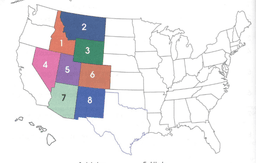
Mountain States Game
Quiz by Jeb Fleming
Customize this quiz to suit your class
Instantly translate to 100+ languages
Tag the questions with any skills you have. Your dashboard will track each student's mastery of each skill.
Give this quiz to my class
What state?
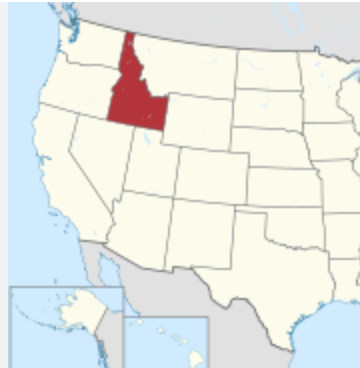
Montana
Idaho
Wyoming
What State
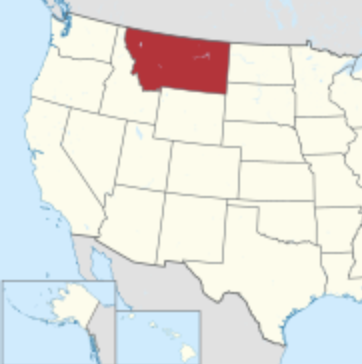
Montana
Idaho
Wyoming
What state?
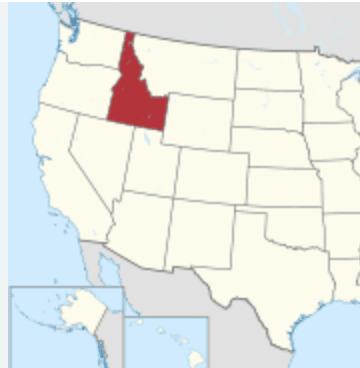
What State
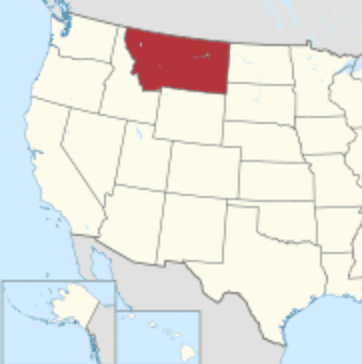
What state?
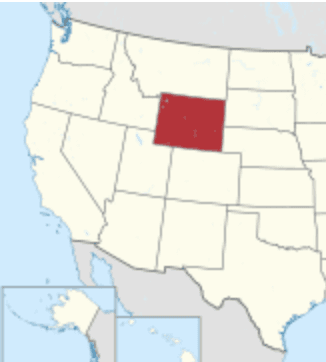
What state?
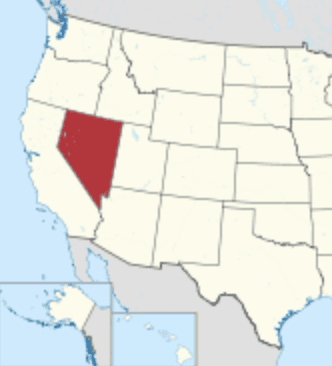
What state?
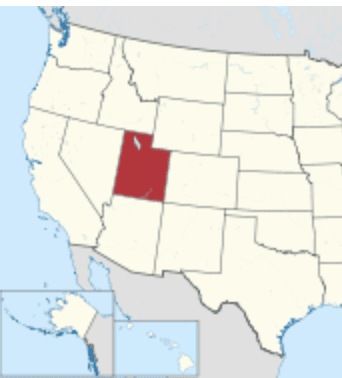
What state?
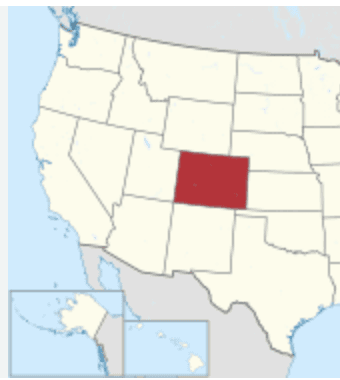
What state?
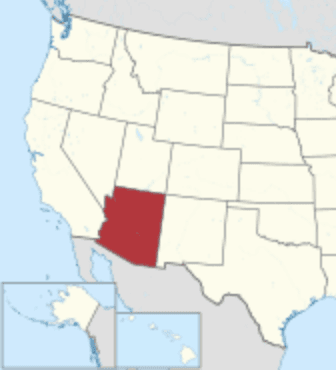
What state?
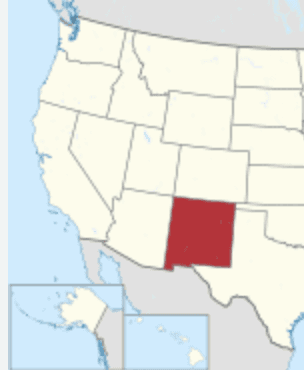
 Commas Directions: Correct the sentences by adding commas where needed. 1. After the sound of the bell we realized it was a false alarm. 2. Mr. Yoshino the head of the department resigned yesterday. 3. The gentleman with the black umbrella who is an ambassador to the United States said hello to us as we were entering the hotel. 4. Even though we won the game the players unfortunately did not play their best. 5. Heather walked quickly up to the door and knocked hoping that someone would answer. Author’s Purpose 6. An author writes a story about a boy who saves his town from a flood by using his quick thinking. The author includes exciting descriptions of the boy's bravery. What is the author’s most likely purpose for writing this story? A. To inform readers about the dangers of floods B. To entertain readers with a heroic tale C. To explain how to prevent floods D. To persuade readers to prepare for emergencies 7. Which of the following is an example of an author writing to persuade? A. A science textbook chapter explaining the water cycle B. A commercial encouraging people to adopt shelter pets C. A short story about a girl who finds a magical necklace D. A recipe for making chocolate chip cookies 8. Read the following sentence: "Studies show that students who read for 20 minutes a day score higher on tests. Reading is one of the best habits you can develop for success in school and life." What is the author’s purpose in this passage? A. To entertain readers with a fun story B. To persuade readers to read more often C. To inform readers about how books are written D. To explain how to find books to read 9. An author writes a how-to guide titled 10 Easy Steps to Plant a Garden. What is the author’s primary purpose? A. To persuade readers to grow their own vegetables B. To inform readers how to plant a garden C. To entertain readers with funny garden tips 10. Read the excerpt: "Long ago, in a village surrounded by mountains, the people discovered a secret about their water well. Every full moon, the well water turned to gold for just one night. But no one knew why. This mystery brought travelers from far and wide, hoping to uncover the truth." What is the author’s purpose in this excerpt? A. To persuade readers to visit the village B. To inform readers about a historical event C. To entertain readers with a mysterious tale D. To explain the science behind the water Main Idea When I stepped out into the bright sunlight from the darkness of the movie house, I had only two things on my mind: Paul Newman and a ride home. I was wishing I looked like Paul Newman--- he looks tough and I don't--- but I guess my own looks aren't so bad. I have light-brown, almost-red hair and greenish-gray eyes. I wish they were more gray because I hate most guys that have green eyes, but I have to be content with what I have. My hair is longer than a lot of boys wear theirs, squared off in back and long at the front and sides, but I am a greaser and most of my neighborhood rarely bothers to get a haircut. Besides, I look better with long hair. 11. What is the main idea? The narrator likes movies. The narrator wishes he was Paul Newman. The narrator is content with his appearance. The narrator looks better with long hair. 12. The narrator believes. . . looks are important. he should get a haircut. green eyes are bad. that he has red hair. Once there were four girls who shared a pair of pants. The girls were all different sizes and shapes, and yet the pants fit each of them. You may think this is a suburban myth. But I know it's true, because I am one of them, one of the sisters of the Traveling Pants. We discovered their magic last summer, purely by accident. The four of us were splitting up for the first time in our lives. Carmen had gotten them from a secondhand place without even bothering to try them on. She was going to throw them away, but by chance, Tibby spotted them. First Tibby tried them; then me, Lena; then Bridget; then Carmen. By the time Carmen pulled them on, we knew something extraordinary was happening. If the same pants fit and I mean really fit the four of us, they aren't ordinary. They don't belong completely to the world of things you can see and touch. My sister, Effie, claims I don't believe in magic, and maybe I didn't then. But after the first summer of the Traveling Pants, I do. 13. What is the main idea? Four friends were connected through a special pair of pants. A pair of pants called the Traveling Pants. Carmen finding a pair of pants from a second-hand shop. The girls believing in magic. 14. The narrator included that the pants fit all of them to emphasize how the girls become friends. the girls are different sizes. why the pants are special. where the pants came from. If you are interested in stories with happy endings, you would be better off reading some other book. In this book, not only is there no happy ending, there is no happy beginning and very few happy things in the middle. This is because not very many happy things happened in the lives of the three Baudelaire youngsters. Violet, Klaus, and Sunny Baudelaire were intelligent children, and they were charming, and resourceful, and had pleasant facial features, but they were extremely unlucky, and most everything that happened to them was rife with misfortune, misery, and despair. I'm sorry to tell you this, but that is how the story goes. 15. What is the main idea? description about the story to come. A warning about the story and its sad content. A declaration about the Baudelaire family. A beginning for the end of the story. 16. The narrator believes the reader does not like sad stories. likes stories with happy endings. can’t enjoy the story. will find the story unhappy. 17. Read the following sentence: Of course you can exaggerate your story, but what you say must be based on truth. Which word means the same as exaggerate? repeat reveal overstate increase 18. What is the meaning of the word inaugurated, used in the following sentence: Less than two months after Abraham Lincoln was inaugurated President in 1861, he encountered one of the most difficult tasks ever experienced by a United States leader: civil war. elected by a vote brought into office identified by name viewed as an authority 19. What does the phrase “practice your presentation so much that you could do it in your sleep” suggest in the following sentence: The best advice is to practice your presentation so much that you could do it in your sleep. get plenty of sleep the night before giving a presentation give their presentations in front of a small audience first take advice from their teachers on how to write a presentation memorize their presentations before they give them 20. Read the following sentence: The Phoenix Mars Lander is a NASA spacecraft that landed on the Red Planet in May 2009 to study the history of water and potential for life on the planet. What is another word for potential? existence situation possibility qualification Canada Where Is It? Canada is the biggest country in North America. It is so big that it reaches from the Atlantic Ocean to the Pacific Ocean. Canada is farther north than most other countries. Canada has only one neighbor, the United States. Ottawa is the country's capital. The city's buildings are fun to visit. People. Nearly all Canadians speak French, English, or both. People come from far-away countries to live in Canada. Together, all of these different people make Canada strong. Most Canadians live in big cities in the south of Canada. Few people live in the far north. Land. Canada has many different landforms. In the west are rows of steep mountains. Then there are flat or rolling plains. A high flat area with thousands of lakes is in the middle. The land in the south is where most of the cities are. In the east are hills. In the north, the land is covered with ice and snow. Animals. Some animals live only in the cold north. Others live only in the mountains or forests. Polar bears and baby harp seals live in the north. They both have white fur to hide on the snow. Big sheep live in the mountains. They have feet that help them climb rocks. Many animals in Canada move in winter and spring. Canada geese fly south every winter. They return in the spring when it is warmer. Celebrations. All across Canada, people celebrate winter. There are festivals for ice-skating and ice carving. There are dogsled races across the snow. The biggest winter festival is in Quebec City. There is an ice castle to visit and games to play. Conclusion. Canada is a very big country with many different landforms and animals. It has many different people, too. Canadians say their differences make them strong.The Mountain States: Kael's GroupThe Mountain StatesIf we look at the United States on a map today, it is very difficult to imagine that where we see borders, cities, and states, there once existed nothing but open land, uncharted mountain ranges, and miles of untouched wilderness. North America was a highly desired destination for exploration and settlement for Europeans. In the early 1500s, expeditions from Europe to North America were funded by Europe's kings and queens in hopes of expanding their territories across the world. The voyages were treacherous with unknown dangers and many attempts to settle in this new land were faced with failure. In the early 1600’s however, the settlers of Jamestown and Plymouth survived the harsh conditions and established the first two permanent English settlements in North America. Jamestown Colony in Virginia Jamestown was founded in 1607. Of course, its colonists did not know it would go on to become the the first permanent English settlement in the Americas. The settlement was located along the James River off Chesapeake Bay in modern-day Virginia. Life in Jamestown was very hard, and nearly 80% of the first settlers died in the first year due to disease and starvation. The region was warm and had fertile soil, making it a perfect place for growing crops, specifically tobacco. Sponsored by a joint stock company known as the Virginia Company of London, Jamestown was originally established as a profit-making enterprise. The first settlers looked for gold and other natural resources that could bring a profit to the company's investors. After several very difficult years, the colonists were eventually able to grow tobacco that was popular in England and it became a valuable cash crop. Jamestown's colonists were primarily all supporters of the Church of England and felt a strong connection to their homeland. Many, like John Smith, returned to England, or would move back and forth between the two locations. Being that Jamestown was founded by a corporation looking to make a profit, it began using enslaved labor in 1619. Indentured servants and enslaved Africans made up much of the workforce on the growing tobacco and cotton plantations. The system of using enslaved Africans for the profit of American plantations has been described as America's "original sin". About 400 miles to the north of Jamestown, a group of Pilgrims seeking religious freedom established Plymouth in 1620 as the second English colony in North America. Located in modern day Massachusetts, the colder climate and rocky soil made farming and agriculture more difficult. Instead of growing cash crops, settlers turned to lumber, shipbuilding, and fishing for trade. Unlike the settlers of Jamestown, the Pilgrims of Plymouth Colony were dissenters from the Church of England. They came to the New World so that they could freely practice their religion without fear of persecution. Although their reasons for settling were different, the settlements had many similar experiences. Jamestown and Plymouth both faced harsh and demanding climates and struggled with hunger, disease, and death. In their first years they had much difficulty establishing housing and finding a sustainable source of food. Plymouth Colony in New England While the settlers in Jamestown used the House of Burgesses as a legislative body for laws and decisions, the Pilgrims in Plymouth wrote and agreed to the Mayflower Compact as a set of rules for self-government. Both helped maintain the rule of law in new places far from the courts and tradition of England. Settlers of both colonies experienced complicated and, at times, violent relationships with local Native Americans that owned the land. While some American Indian groups offered help to the new settlers, oftentimes both sides needed to defend themselves from attacks. Nevertheless, the settlers of Jamestown and Plymouth persevered through these difficulties and maintained their establishments, providing inspiration for future colonies and settlers in search of a new life in the New World.Alaska: A special place Where can you find mountains, glaciers, and volcanoes? Alaska is the location you would visit. Alaska has different regions. In each part of the state, there are different features. Land Features The tallest mountain in the United States is in Alaska. It is called Mt. McKinley. Some people go to Alaska just to climb it. Alaska also has the biggest glaciers in all of the United States. Glaciers are made when one layer of snow falls on top of another. The snowfall becomes very thick. It turns to ice. The growth of a glacier takes many years to form. Temperature Changes Alaska has different temperatures. Northern Alaska is called the Arctic region. The temperatures are much colder than inside your freezer. The ground, lakes, and rivers are almost always frozen. As a result, most people live in the south of Alaska. It is warmer there. Crops grow well in the rich soil there. Animals Alaska has many different animals. You may spot a walrus or polar bear among the glaciers. You can see a black or brown bear fishing in a river or stream. In another region, you can see a moose or caribou. Daylight and Darkness The seasons are special here, too. In summer, people celebrate the mild temperate weather. These lively people also celebrate the sunlight because the sun does not set for many days. In one village, the Sun doesn't set for more than 80 days! You might be in bed and still see the sun shining. In winter, the Sun doesn't rise in some places in Alaska. These places have more than 60 days of winter darkness. You could have afternoon soccer practice in the dark! You might think this would be eerie, but Alaskans don't think this is weird. They are used to the dark winter days. Alaska is a very interesting place to live! Lesson 2: Plate Tectonics There are a few handfuls of major plates and dozens of smaller, or minor, plates. Six of the majors are named for the continents embedded within them, such as the North American, African, and Antarctic plates. Though smaller in size, the minors are no less important when it comes to shaping the Earth. The tiny Juan de Fuca plate is largely responsible for the volcanoes that dot the Pacific Northwest of the United States. The plates make up Earth's outer shell, called the lithosphere. (This includes the crust and uppermost part of the mantle.) Churning currents in the molten rocks below propel them along like a jumble of conveyor belts in disrepair. Most geologic activity stems from the interplay where the plates meet or divide. The movement of the plates creates three types of tectonic boundaries: convergent, where plates move into one another; divergent, where plates move apart; and transform, where plates move sideways in relation to each other. They move at a rate of one to two inches (three to five centimeters) per year. Convergent BoundariesWhere plates serving landmasses collide, the crust crumples and buckles into mountain ranges. India and Asia crashed about 55 million years ago, slowly giving rise to the Himalaya, the highest mountain system on Earth. As the mash-up continues, the mountains get higher. Mount Everest, the highest point on Earth, may be a tiny bit taller tomorrow than it is today. These convergent boundaries also occur where a plate of ocean dives, in a process called subduction, under a landmass. As the overlying plate lifts up, it also forms mountain ranges. In addition, the diving plate melts and is often spewed out in volcanic eruptions such as those that formed some of the mountains in the Andes of South America. At ocean-ocean convergences, one plate usually dives beneath the other, forming deep trenches like the Mariana Trench in the North Pacific Ocean, the deepest point on Earth. These types of collisions can also lead to underwater volcanoes that eventually build up into island arcs like Japan. Divergent Boundaries At divergent boundaries in the oceans, magma from deep in the Earth's mantle rises toward the surface and pushes apart two or more plates. Mountains and volcanoes rise along the seam. The process renews the ocean floor and widens the giant basins. A single mid-ocean ridge system connects the world's oceans, making the ridge the longest mountain range in the world. On land, giant troughs such as the Great Rift Valley in Africa form where plates are tugged apart. If the plates there continue to diverge, millions of years from now eastern Africa will split from the continent to form a new landmass. A mid-ocean ridge would then mark the boundary between the plates. Transform Boundaries The San Andreas Fault in California is an example of a transform boundary, where two plates grind past each other along what are called strike-slip faults. These boundaries don't produce spectacular features like mountains or oceans, but the halting motion often triggers large earthquakes, such as the 1906 one that devastated San Francisco.The Northeast is characterized by its long coast along the Atlantic Ocean, making it a defining landform of the region. There are no deserts or Rocky Mountains in the Northeast, and the Mississippi River does not play a significant role in the region's geography. A sound is a body of water that separates a mainland and an island. For example, Long Island Sound is located between New York and Connecticut. The coastal areas of the Northeast are known for their many islands and attract more visitors and tourists compared to the mountain areas. The mountain areas, on the other hand, are made up of older landforms and ranges such as the Appalachian Mountains. Evidence of glaciers once covering the Northeast includes the numerous lakes and ponds found in the mountain areas, which were left behind after the glaciers receded. The Northeast region’s four largest rivers drain into the Atlantic Ocean. This geographic feature contributed to the development of major cities along the Atlantic coast, as these rivers provided access for transportation and trade. Maple syrup is an example of a forest resource found in the Northeast region. It is made from the sap of sugar maple trees, which thrive in the region’s forests. New Hampshire is nicknamed the Granite State because of its rock quarries, which have been a significant part of the state’s history and economy. Vermont is well-known for its dairy farms, while Massachusetts is famous for its cranberry bogs, which are a unique feature of the state’s agriculture. Snow is considered a resource in the Northeast because it attracts skiers and tourists to states like Vermont, boosting the local economy. Tourism in the Northeast is most directly influenced by attractions such as historic homes in Rhode Island, which showcase the region’s rich history and culture.