Loading...


MUSIC 5_IM
Quiz by Ma. Cecilia Vecino
Customize this quiz to suit your class
Instantly translate to 100+ languages
Tag the questions with any skills you have. Your dashboard will track each student's mastery of each skill.
Give this quiz to my class
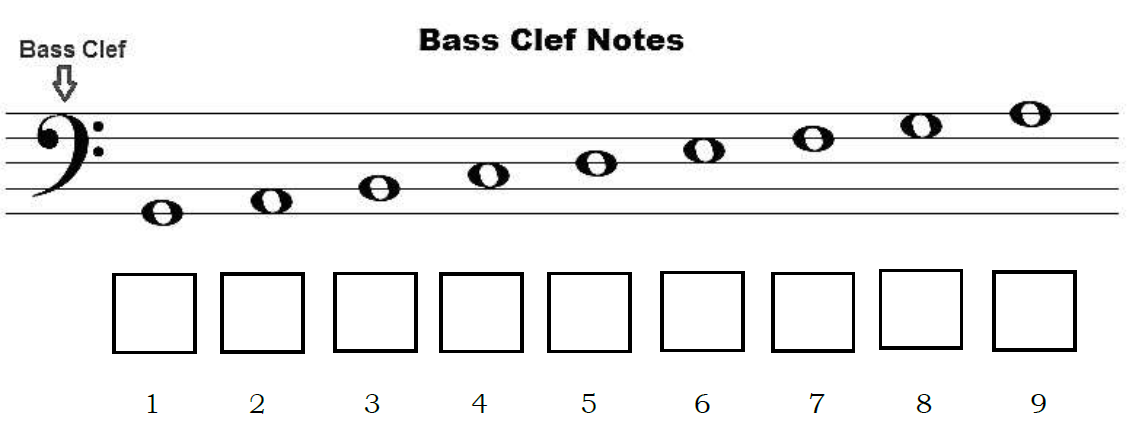
Isulat ang 9 na pitch names na nasa staff gamit ang F-clef.
Ano ang tawag sa simbolong ito?
Isulat ang 9 na pitch names na nasa staff gamit ang F-clef.

Ano ang tawag sa simbolong ito?

Ano ang tawag natin sa simbolong ito na may limang guhit at apat na puwang?

Isulat ang tamang pitch names nang nasa larawan.

Isulat ang wastong pitch names ng nasa larawan.

Tukuyin ang mga pitch names na nasa linya ng F-clef staff.

Tukuyin ang mga pitch names na nasa espasyo ng F-clef staff.

Ang F-Clef ay kilala rin sa tawag na Bass clef. Mahalaga ang F-clef dahil ito ay karaniwang ginagamit para sa range ng mga boses ng mga lalaki.
Kaya ito ay tinatawag na F-clef ay dahil ang pagguhit at pagsulat ng simbolong ito ay nagsisimula sa notang F o sa 4th line.
Ang C o Do ng F-clef ay nagsisimula naman sa pangatlong puwang o 3rd space.
Ang mga note ay simbolo ng tunog sa musika.
Ang note na may pinakamababang tunog ay ang sixteenth note.
Ang 4 na beat ay binubuo ng isang whole note.
Pareho ang bilang ng beat ng isang half note at dalawang quarter note.
Ang rest o pahinga ay may karampatang tunog din na maririnig gaya nang sa mga nota.
Ang whole note ay may katumbas na ________ na bilang ng kumpas.
Ang half note ay may katumbas na ________ na bilang ng kumpas.
Ang quarter note ay may katumbas na ________ na bilang ng kumpas.
Ang eight note ay may katumbas na ________ na bilang ng kumpas.
Ang sixteenth note ay may katumbas na ________ na bilang ng kumpas.
WEEK 5 MUSIC WHAT I KNOWWrite 5 multiple choice questions for the following transcript ...Setting goals and budgeting. [tranquil music] Getting where you want to be involves three important skills. Setting realistic goals, knowing your net worth, and budgeting. [energetic music] Setting goals is a way to get control of your life. A goal is not the same as a dream. It's not pie in the sky stuff. It's something that's achievable and it comes with a time frame. If you have a big goal, like buying a house in five years' time, you might need a plan that involves a whole series of mini goals to get you there in stages. The important is finding something you know you can do. Most people find longterm goals hard to stick to. Don't worry about it. If 10 years seems too far away, set your horizons a little closer. Give yourself a set sum of money to save in the next few years. You can use it as a springboard to get to your next goal and it'll get you in the savings habit. Changes in your life circumstances may also affect your goal, so use this opportunity to review them. Think about your financial goals when you have some quiet time. It may sound a little obsessive, but write down what they are and how you're going to achieve them. Be specific, be realistic, and always, always keep your goals within reach. Achieving a goal is a great excuse to celebrate, so don't forget to reward yourself for your achievement. [energetic music] Imagine if tomorrow you had to sell everything you own and pay off everything you owe the bank or anyone else, would you be left with much? Would you be left with anything? That figure is called your net worth. It's a measure of your actual financial wealth and growing it over time is what getting sorted is all about. Use Sorted's net work calculator to find out where you're at. Decide what you want your net worth to be in a year's time. Think about your cash and other assets and work out how you might get there. Monitoring and growing your net worth over time is the thing that will eventually get you to retirement in good shape. [energetic music] Budgeting is another one of those, I can't believe I didn't do something so basic, type of things. Do a budget. Stick to it and you're in control. There are two approaches to budgeting. The first is what we call cold turkey. Each time you get paid, you work out what you need to pay for all your essentials. Use Sorted's budget calculator to do this. You then take the rest and put it straight into savings. Going cold turkey on all those other things that you usually throw your money away on. Be realistic with your savings. Don't be too hard on yourself as it could take time for you to get into the saving habit. But if you remove the temptation to spend, you'll improve your financial position each month. If that seems a bit rigorous, try the alternative nip and tick approach. Do a budget using Sorted's budget calculator and then take a hard look at where your money's going. We're prepared to bet there's a nip here and a tuck there that will result in savings and every month you save, you increase your net worth. So go to it. ChatGPT What are the three important skills needed to achieve your financial goals? A) Budgeting, investing, and saving B) Setting realistic goals, knowing your net worth, and budgeting C) Planning, tracking, and monitoring How can you make a big goal more achievable? A) By dreaming about it often B) By breaking it down into a series of mini goals C) By setting a longer time frame What is net worth? A) The amount of money you have in savings B) The value of everything you own minus what you owe C) The amount of money you earn each year What are the two approaches to budgeting mentioned in the transcript? A) Cold turkey and warm turkey B) Nip and tuck and cold turkey C) Nip and tick and warm turkey How can you increase your net worth every month? A) By dreaming about your financial goals B) By sticking to a budget and removing the temptation to spend C) By investing in high-risk stocks What Is Rhythm in Music? Rhythm is the pattern of sound, silence, and emphasis in a song. In music theory, rhythm refers to the recurrence of notes and rests (silences) in time. When a series of notes and rests repeats, it forms a rhythmic pattern. In addition to indicating when notes are played, musical rhythm also stipulates how long they are played and with what intensity. This creates different note durations and different types of accents.Why Is Rhythm Important in Music? Rhythm functions as the propulsive engine of a piece of music, and it gives a composition structure. Most musical ensembles contain a rhythm section responsible for providing the rhythmic backbone for the entire group. Drums, percussion, bass, guitar, piano, and synthesizer may all be considered rhythm instruments, depending on the context. However, all members of a music group bear responsibility for their own rhythmic performances and play the musical beats and rhythmic patterns indicated by the piece's composer.7 Elements of Rhythm in Music Several core elements comprise the fundamentals of musical rhythm. 1. Time signature: A musical time signature indicates the number of beats per measure. It also indicates how long these beats last. In a time signature with a 4 on the bottom (such as 2/4, 3/4, 4/4, 5/4, etc.), a beat corresponds with a quarter note. So in a 4/4 time (also known as "common time"), each beat is the length of a quarter note, and every four beats form a full measure. In 5/4 time, every five beats form a full measure. In a time signature with an 8 on the bottom (such as 3/8, 6/8, or 9/8), a beat corresponds with an eighth note. 2. Meter: Standard Western music theory divides time signatures into three types of musical meter: duple meter (where beats appear in groups of two), triple meter (where beats appear in groups of three), and quadruple meter (where beats appear in groups of four). Meter is not tied to note values; for instance, a triple meter could involve three half notes, three quarter notes, three eighth notes, three sixteenth notes, or three notes of any duration. Musicians and composers regularly mix duple and triple meter in their work; Igor Stravinsky's "The Rite of Spring" is a textbook example of such a technique. 3. Tempo: Tempo is the speed at which a piece of music is played. There are three primary ways that tempo is communicated to players: beats per minute, Italian terminology, and modern language. Beats per minute (or BPM) indicates the number of beats in one minute. Certain Italian words like largo, andante, allegro, and presto convey tempo change by describing the speed of the music. Finally, some composers indicate tempo with casual English words such as “fast,” “slow,” “lazy,” “relaxed,” and “moderate.” 4. Strong beats and weak beats: Rhythm combines strong beats and weak beats. Strong beats include the first beat of each measure (the downbeat), as well as other heavily accented beats. Both popular music and classical music combine strong beats and weak beats to create memorable rhythmic patterns. 5. Syncopation: Syncopated rhythms are those that do not align with the downbeats of individual measures. A syncopated beat will put its emphasis on traditional weak beats, such as the second eighth note in a measure of 4/4. Complex rhythms tend to include syncopation. While these rhythms may be more difficult for a beginning musician to pick up, they tend to sound more striking than non-syncopated rhythmic patterns. 6. Accents: Accents refer to special emphases on certain beats. To understand accents, think of a piece of poetry. A poetic meter, such as iambic pentameter, may dictate a specific mixture of stressed syllables and unstressed syllables. Musical accents are no different. Different rhythms may share a time signature and tempo, but they stand out from one another by accenting different notes and beats. 7. Polyrhythms: To achieve a particularly ambitious sense of rhythm, an ensemble may employ polyrhythm, which layers one type of rhythm on top of another. For instance, a salsa percussion ensemble may feature congas and bongos playing 4/4 time, while the timbales concurrently play a pattern in 3/8. This creates a dense rhythmic stew and, when properly executed, it can yield incredibly danceable rhythm patterns. Polyrhythms originated in African drumming, and they’ve spread to all sorts of genres worldwide, from Afro-Caribbean to Indian to progressive rock, jazz, and contemporary classical.Ostentatiously Definition: Doing something in a way that shows off or tries to impress others. Example: She ostentatiously wore her expensive jewelry to the party. 2. Laden Definition: Carrying or loaded with something heavy. Example: The truck was laden with boxes of food. 3. Easel Definition: A wooden stand used to hold a canvas for painting. Example: The artist placed her painting on the easel to work on it. 4. Palette Definition: A flat board that painters use to mix their colors. Example: He mixed blue and yellow on his palette to create green. 5. Diffidently Definition: Acting in a shy or unsure way because of a lack of confidence. Example: She diffidently raised her hand to answer the question. 6. Quizzical Definition: Looking or acting confused or curious. Example: He gave a quizzical look when he didn’t understand the joke. 7. Acoustics Definition: The way sound behaves in a room or space. Example: The acoustics in the concert hall made the music sound amazing. 8. Plausible Definition: Something that seems believable or possible. Example: Her excuse for being late sounded plausible, so the teacher didn’t get upset.Good day this is Chris today we will be doing a quick walkthrough on ISO 14001 2015 Environmental Management System and its main clauses let's get started ISO 14001 2015 Environmental Management System is a globally recognized standard for environment Management systems or EMS an EMS is a framework that organizations use to manage their environmental impact comply with regulations and improve their environmental performance the standard outlines are requirements for an EMS including the development of an environmental policy the identification of environmental aspects and impacts the establishment of objectives and targets the implementation of operational control monitoring and measurement systems and the ongoing review and Improvement of the system ISO 14001 is a flexible standard that can be used by organizations of any size or type regardless of their environment impact or level of environment performance it provides a practical framework for organizations to manage their environmental impact reduce environment risks and demonstrate their commitment on sustainability to their stakeholders here is the standard that provides a structured approach to develop an EMS which includes several key steps one organizations must develop an environmental policy that outlines their commitment to environmental sustainability this policy should be communicated to all employees and stakeholders two organizations must identify their environmental aspects and impacts this involves identifying the activities products and services that have an impact on the environment as well as the potential environmental consequences of those impacts three once the environmental aspects and the impacts have been identified organizations must establish environmental objectives and targets these objectives and targets should be specific measurable achievable relevant and time-bound 4. after setting objectives and targets organizations must Implement operational controls and establish monitoring and measurement systems to ensure that they are meeting their objectives and targets finally organizations must review and continually improve their EMS this involves conducting regular audits reviewing the EMS to ensure that it remains relevant and effective and making any necessary changes or improvements the main Clause of iso 14001 2015 apart from its scope normative references and terms and conditions that the main Clauses of iso 14001 2015 can be listed as context of the organization leadership planning support operation performance evaluation and Improvement Clause 4.0 context of the organization is about understanding the organization and its context understanding the needs and expectations of the interested parties determining the scope of the Environmental Management System EMS and Environmental Management System itself Clause 5.0 talks about leadership and commitment Environmental Policy organizational roles responsibility and authorities Clause 6.0 planning focuses on actions to address risk and opportunities as well as environmental objectives and planning to achieve them Clause 7.0 support are detailed requirements on resources competence awareness communication that includes external and internal communication documented information that involves creating updating in control of documented information Clause 8.0 operation talks about operational planning and control as well as emergency preparedness and response overall the design of iso 14001 2015 provides guidelines to form a system that is structured to cater the requirements of stakeholder needs and expectations to drive life cycle perspective and Energy Efficiency as pictured here Clause 9.0 performance evaluation provides guidelines to monitoring measurement analysis and evaluation evaluation compliance and management review an additional note here is that ISO 19011 2018 guidelines for auditing Management Systems which is an audit process that will determine the scope to establish the audit criteria by collecting evidence evaluating the evidence and then draw a conclusion based on the findings as pictured here [Music] finally Clause 10.0 Improvement talks about how Improvement is an integral factor to an effective Environmental Management system through General non-conformity and corrective action and continual Improvement talking about Improvement it is always continual in putting efforts towards the betterment of the existing system here is a snapshot of the main Clauses of iso 14001 2015 [Music] I hope you find this video useful we are industry experts specialized in management system consultancy and Industry relevant corporate training give us a call and let us help you drive your business excellence and upskill your employees to elevate workplace efficiency [Music] CREATE 10 MCQ AND 2 SAQ QUESTIONS BASED ON THE ABOVE PARAGRAPHVocabulary List 1. Avocation Definition: A hobby or activity someone enjoys doing in addition to their main work. Example: Drawing cartoons was his favorite avocation after school. 2. Supercolossal Definition: Extremely large; even bigger than enormous. Example: They ordered a supercolossal pizza to share. 3. Repress Definition: To hold back or keep feelings or thoughts hidden. Example: She tried to repress her anger during the argument. 4. Subliminally Definition: In a way that affects the mind without someone realizing it. Example: The music subliminally made the store feel calmer. 5. Thrombosis Definition: A medical condition where a blood clot forms inside a blood vessel. Example: The doctor warned that lack of exercise can increase the risk of thrombosis. 6. Sclerosis Definition: A hardening of body tissue, especially arteries or organs. Example: The patient was diagnosed with sclerosis that affected his mobility. 7. Distortion Definition: A change that makes something appear different from what it really is. Example: The funhouse mirror caused a distortion of her reflection. 8. Philanthropy Definition: The act of giving money or help to improve the lives of others. Example: His philanthropy helped build a new library for the town. 9. Prevarications Definition: Lies or evasive statements used to avoid telling the truth. Example: The teacher grew tired of the student’s prevarications about missing homework. 10. Syndrome Definition: A group of symptoms or behaviors that occur together. Example: The doctor studied the syndrome to better understand the illness. 11. Schizophrenic Definition: Relating to a mental disorder where a person may have difficulty distinguishing reality from imagination. Example: The character in the story showed schizophrenic behavior. 12. Subsidize Definition: To support financially, usually with money from the government or an organization. Example: The city decided to subsidize public transportation. 13. Phenomenal Definition: Very remarkable or impressive. Example: The athlete gave a phenomenal performance in the race. 14. Demented Definition: Showing disturbed or irrational behavior. Example: The villain in the movie had a demented laugh. 15. Patron Definition: A person who supports or regularly visits a business, artist, or organization. Example: She was a loyal patron of the local bookstore. 16. Cultural Lag Definition: When ideas and beliefs take longer to change than technology or society. Example: Cultural lag can make it hard for laws to keep up with new technology. 17. Omens Definition: Signs believed to predict something that will happen in the future. Example: Some people think black cats are omens of bad luck. 18. Antagonistic Definition: Showing hostility or opposition. Example: The rival teams were antagonistic toward each other. 19. Voluptuous Definition: Curvy and attractive in a full, rich way. Example: The sculpture showed a voluptuous figure. 20. Oscilloscope Definition: A device used to view and measure electrical signals. Example: The scientist used an oscilloscope to study the sound waves. 21. Putrid Definition: Rotting and giving off a very bad smell. Example: The garbage smelled putrid after sitting in the sun. 22. Fixated Definition: Focused or obsessed with something. Example: He became fixated on winning the competition. 23. Mundane Definition: Ordinary, dull, or routine. Example: She was tired of the mundane chores she had to do every day. 24. Ghouls Definition: Evil or ghost-like creatures that feed on the dead in stories or legends. Example: The haunted house story was filled with ghouls and monsters. 25. Maladjusted Definition: Unable to cope well with the demands of life or society. Example: The counselor helped the maladjusted student deal with stress. 26. Incongruous Definition: Not fitting in; out of place. Example: The fancy chandelier looked incongruous in the small cabin. 27. Tribute Definition: Something done or given to show respect or admiration. Example: The concert was a tribute to the famous musician. 28. Audibly Definition: In a way that can be heard clearly. Example: He audibly sighed when the test ended. 29. Proficiency Definition: Skill or competence in doing something. Example: Her proficiency in math helped her tutor other students.In this video we take a look at the 0:02 fetch to code 0:03 execute cycle including its effect on 0:06 the various registers we've previously 0:12 [Music] 0:14 discussed a computer is defined Definition 0:17 as an electronic device that takes an 0:20 input 0:22 processes data 0:25 and delivers output 0:29 in this simple example you can see we're 0:31 taking the input 5 0:35 we're multiplying it by 2 that's our 0:37 process 0:39 and we're outputting 10. 0:44 but this could be way more complex for 0:46 example of a game console 0:48 the input could be the buttons you press 0:50 on a controller 0:53 the processes would then be carried out 0:55 by the console itself 0:59 and the output would be some form of 1:01 update to a monitor 1:02 and sound out for a speaker possibly 1:04 vibration feedback through the 1:06 controller 1:10 to process data a computer follows a set 1:13 of instructions 1:14 known as a computer program 1:18 if we take the lid off a typical desktop 1:20 computer we can identify 1:22 two critical components the memory 1:26 that stores the program and the central 1:29 processing unit or processor 1:31 which is under this large fan and 1:33 carries out the instructions 1:37 a computer carries out its function by 1:40 fetching 1:41 instructions decoding them and then 1:43 executing them 1:44 in a continuous repetitive cycle 1:46 billions of times a second 1:48 let's look at each of these stages in a 1:50 little more detail Fetch 1:53 so let's start with the fetch stage the 1:55 very first thing that happens 1:57 is the program counter is checked as it 2:00 holds the address 2:01 of the next instruction to be executed 2:07 the address stored is then copied into 2:09 the memory address register 2:14 the address is then sent along the 2:16 address bus to main memory 2:18 where it waits to receive a signal from 2:21 the control 2:22 bus so it knows what to do 2:27 as we want to read the data that's 2:29 stored in memory address 2:30 0 0 0 0 the control unit sends 2:34 a read signal along the control bus to 2:36 main memory 2:41 now main memory knows the data needs to 2:44 be read 2:45 the content stored in memory address 000 2:49 can be sent along the data bus to the 2:51 memory data register 2:56 now as we're currently in the process of 2:58 fetching an instruction 3:00 the data received by the memory data 3:03 register gets copied 3:04 into the current instruction register 3:11 the instruction effectively has now been 3:14 fetched from memory 3:16 just before we proceed to the decode 3:18 phase we now 3:19 increment the program counter so that 3:22 the address it contains 3:24 points to the address of the next 3:26 instruction which will need to be 3:30 executed 3:32 the instruction now being held in the 3:33 current instruction register 3:35 is ready to be decoded 3:39 now as we mentioned in the previous 3:41 video the instruction is made up of two 3:43 parts 3:44 we have the op code that's what it is we 3:47 need to do 3:50 and we have the operand what are we 3:53 going to do it to 3:55 now the operand could contain the actual 3:57 data 3:58 or indeed it could contain an address of 4:01 where the data is to be found 4:06 by decoding this instruction we can see 4:08 the operation we need 4:10 is a load operation so we need to load 4:14 the contents of memory location0101 4:18 into the cpus accumulator 4:25 in the exam a simple model will be used 4:27 to describe the 4:29 structure of any given instruction 4:32 you're not going to be expected to 4:34 define how an opcode is made up 4:36 but simply to interpret opcodes in the 4:39 given context of an exam 4:40 question in the example here 4:44 you can see there's a total of 16 4:46 different opcodes available 4:48 and this is because we're using four 4:50 bits for our representation 4:56 so now we've fetched the instruction and 4:59 we've decoded it so we know what we need 5:00 to do 5:01 we're finally ready to execute it 5:05 so we now send address 0101 5:08 to the memory dress register 5:13 now we're in the memory address register 5:15 we can finally send the address 5:18 down the address bus to main memory 5:24 this time we want to read the data 5:26 that's stored in memory 5:28 and so the control unit again sends a 5:30 read signal along the control bus 5:36 so main memories now receive an address 5:38 and a read signal 5:40 so the content stored at memory location 5:43 0101 5:44 can now be sent along the data bus back 5:46 to the cpu 5:47 and into the memory data register 5:54 finally the contents of the memory data 5:56 register are copied to the accumulator 5:59 and this is one of a number of general 6:00 purpose registers found in the cpu 6:04 this first instruction is now complete Branching 6:11 so what does this program actually do 6:14 you should be able to work it through 6:16 carefully and figure it out 6:19 we're now pointing instructions zero 6:21 zero zero one in the program counter 6:23 and we're ready to fetch the second 6:25 instruction 6:27 at the end of this video we're gonna 6:29 provide you with the answer 6:34 so let's talk a second about programs 6:37 that branch 6:40 on the left here we have a very simple 6:42 piece of pseudo code 6:44 line zero says first execute this line 6:46 of code 6:47 line 1 now execute this line and then 6:50 line 2 says 6:52 if the age is greater than 18 then 6:56 we're going to execute lines 3 and 4 6:58 otherwise 6:59 we're going to execute lines six and 7:02 seven 7:03 so this program doesn't necessarily 7:05 follow strictly in sequence from line 7:07 zero through to seven there's a chance 7:10 here the program may branch and jump 7:14 around 7:16 so we're going to pretend that this 7:17 program has been loaded into memory 7:20 each line of code on the left here has 7:23 ended up 7:24 as a location in memory now this is not 7:27 strictly how this would happen in this 7:28 one-to-one way 7:29 but for the purpose of example it's 7:31 absolutely fine 7:35 so the program counter starts by 7:37 pointing to memory address zero 7:39 and we fetch the first instruction 7:41 decode it and execute it 7:44 it then updates and tells us the next 7:47 instruction 7:48 is zero zero zero one because remember 7:50 the program counter is being incremented 7:52 so we fetch it decode it and we execute 7:55 line one of our program 7:59 we then fetch line two which in binary 8:01 is one 8:02 zero 8:06 now at this point depending on what 8:10 happens during the execution 8:11 of line two the program may be required 8:15 to fetch line three from memory or 8:18 line five from memory 8:25 so let's look at how this actually works 8:27 because we've said the program counter 8:28 simply gets incremented 8:31 well in the current instruction register 8:33 we have an instruction with the op code 8:36 0 1 1 0. 8:41 now when we look this up in the decode 8:43 unit we discover that this 8:45 code means branch always 8:51 this replaces the value held in the 8:54 program counter 8:56 with the contents of the operand that's 8:58 the second part of the instruction 9:01 from the current instruction register so 9:03 this case 9:04 one zero zero one 9:09 now when the next fetch cycle begins the 9:12 program counter is obviously checked 9:14 and as its contents have been previously 9:16 updated to a new memory location 9:19 and not simply incremented the program 9:22 effectively is able to jump 9:24 around memory 9:28 so having watched this video you should 9:30 be able to answer the following key 9:32 question 9:33 how does a cpu work 9:39 okay so let's um answer the question we 9:41 posed 9:42 earlier what did that program actually 9:48 do 9:50 so this is the first fetch to code 9:53 execute cycle 9:55 and this is the one that we ran through 9:57 in detail earlier 9:58 it effectively loaded the contents of 10:01 the memory 10:02 stored at location location0101 10:05 into the accumulator in other words 10:08 the dna number 3 is moved 10:11 from memory into the cpu 10:18 we then proceed onto the second fetch 10:20 decode execute cycle 10:23 now this one adds the contents of memory 10:27 located at 0 1 1 0 10:30 to the current contents of the 10:32 accumulator 10:34 so in other words the dna number one 10:38 because that's what's stored at address 10:40 zero one one zero 10:43 is added to the number three that was in 10:45 the accumulator 10:46 the results are stored back over the 10:48 accumulator 10:49 so effectively we've done three plus one 10:53 equals four 10:58 the third fetch to code execute cycle 11:00 stores the contents which are in the 11:02 accumulator 11:03 into memory location zero one one one 11:07 and that's because the op code the first 11:09 part of this current instruction 11:10 zero zero one one is the command to 11:13 store when we look it up in the decoder 11:15 unit 11:16 so in other words the result of the 11:17 previous calculation three plus one 11:19 equals four 11:20 is now written back into main memory 11:28 the fourth fetch decode execute cycle 11:30 outputs the contents of the accumulator 11:33 remember they were copied into main 11:34 memory but they're still held in the 11:35 accumulator 11:37 so in this simple abstraction the number 11:40 four is now 11:41 output to the user so they can see the 11:43 result of the calculation 11:49 the fifth and final fetch code execute 11:51 cycle 11:52 brings a halt to the current program 11:58 so this very simple program which has 12:01 five 12:02 fetch decode execute cycles has 12:04 performed the calculation 12:06 three plus one is then stored the result 12:09 in main memory 12:10 and displayed the result four to the 12:12 user 12:13 and in a high-level language this may 12:15 look something very similar to the 12:17 following two lines of code 12:20 sum variable equals num1 plus num2 12:24 print sum to the user 12:27 so you can start to get an appreciation 12:29 here of how the high level code you 12:32 write actually ends up being fetched 12:34 decoded 12:35 and executed inside a processor 12:38 of course your processor is doing 12:40 billions and billions of these 12:42 operations a second 12:43 which when you think about it is really 12:45 very impressive 12:52 [Music] 13:03 you. make 10 questions for a standerd of a levelEarlier in 2019 there was a lot of femicide uh girls being killed by their boyfriends because they did one or two things there are also cultures of if there is violence in terms of a marital relationship that that is fine if there's a marital rape that that is fine so you find such situations being normalized and it being also a taboo to speak about those issues the 2030 agenda for sustainable development is grounded in respect for human rights and the power of people to change the world every individual on the planet has the right to health and well-being in all aspects of their sexuality their body and their reproductive choices ensuring these rights is integral to addressing poverty education violence against women and gender equality sexual and reproductive health rights are agreed in international law they were fought for by courageous women's rights activists and advocates across a broad range of professional fields and frontline experiences by movements of all ages levels and backgrounds they are still being fought for while progress has been made globally many barriers remain especially for those most marginalized excluded or discriminated against human rights are central to delivering the 17 sustainable development goals in the sustainable development agenda indeed each sdg target is simultaneously a metric and a claim for human rights the interplay between these political commitments and human rights obligations is particularly important when it comes to achieving sexual and reproductive health rights for decades human rights-based tactics have been used to drive progress in this episode of right to a better world experts share challenges they have faced and tactics they have used to address them the challenges they describe occur in settings all around the world the strategies used are ones that they have found to be successful in their own settings viewers are encouraged to learn from these experiences and consider how tactics could be adapted to their own context when sexual and reproductive health begins with equality the discussions decisions programs and policies which follow can build towards a future where every individual is not only born free but lives free and equal in dignity and rights without violence or discrimination the time to take action is now violence against women is any act that results in or is likely to result in physical sexual or psychological harm or suffering to women this includes threats of such acts coercion or arbitrary deprivation of liberty in public or private life it happens everywhere in every country in the home in communities at work and at school crises including health and humanitarian crises frequently contribute to higher rates of violence against women violence against women is directed at women because of their status as women the consequences are dire jeopardizing women's health including sexual and reproductive health and mental health hampering their ability to participate fully in society causing tremendous physical and psychological suffering for both women and their children the majority of women survivors of violence do not disclose or seek any type of services efforts to address violence against women must recognize the many different contexts in which it occurs and the many different forms it can take the majority of violence against women is committed by an intimate partner her current or previous boyfriend or husband globally around 30 of women have experienced physical and or sexual violence by an intimate partner in their lifetime this increases the risk of acquiring an sti or in some regions hiv by 1.5 fold when a woman is experiencing violence especially from her partner she's really unable to keep safe from hiv men have power to decide how when and where sex should be done and the woman is at risk of being infected because she cannot say no schools are another setting where violence against girls can take place assault and harassment during their commute bullying sexual harassment and mental or physical abuse on school property are all challenges across various country contexts this has a direct impact on girls access to inclusive quality education a target of sdg4 and an indirect impact on many of their other human rights young girls are taking advantage of at a very young age and they do not understand the choices and the avenues whereby they can exercise their rights when it comes to sexual productive health and rights and so you find a lot of dropouts and a lot of girls also going through a lot of traumatic experiences that would be avoided if they had guidance promoting a safe and secure working environment for all is a cornerstone of sdg 8. this includes a workplace free from sexual harassment and violence but for many women especially women migrant workers and others in precarious employment this is far from reality so we went to naivasha which is a flower farm and we've met the informal workers the casual liberals working for the flower farms when for example the sexual violence cases are reported companies don't take them very seriously a wide range of tactics have been used to prevent and address violence against women and girls and to recognize it as a fundamental violation of human rights prevention of intimate partner violence is possible when interventions are informed by evidence of what works we started out by describing the problem we've now moved to research on what works what are the kinds of interventions that are successful both for preventing the problem from happening in the first place and also from interventions to respond the respect women framework on preventing violence against women developed by the who un women ohchr and other international agencies promotes seven strategies which focus on relationship skills strengthening empowerment of women services for health justice police and social sector poverty reduction environments made safer including schools workplaces and public spaces child and adolescence abuse prevented and transformation of gender attitudes beliefs and norms this action-oriented framework can enable policy makers and health implementers to design plan implement monitor and evaluate interventions and programs to prevent violence against women we have come a long way for sure we still have some ways to go and we need to do more to stop this violence from happening in the first place this involves addressing the social norms that still prevail in many settings that make this form of violence acceptable women are not exposed to gender-based violence by accident all because of an inbuilt vulnerability violence against women is rooted in discriminatory social norms and power dynamics dismantling these underlying causes of violence against women and girls is at the heart of achieving gender equality and empowering all women and girls as set out in the targets and indicators of sdg 5 ensuring healthy lives in sdg3 and reducing inequalities in sdg 10. women and men are valued differently society has heap privileges on the men while the women are looked at as subordinate power is not only the problem but also the solution to preventing violence against women we are making it personal everyone connects with power every day people living with power or grappling with power they find themselves within this whole conversation if you're working to create gnome change there has to be change at all levels strategies to raise awareness in communities about violence against women and girls are critical as there is still a lot of stigma and shame which inhibits many women and girls from talking about it intervention is like a big complicated word sometimes it's just about talking about dialogue i mean the fact that we went into schools and just began a conversation with parents um bringing them together in the school along with the school personnel and then having the conversation start from there and we also sort of train providers within schools to appropriately refer children to health facilities for care what we found was that this dialogue began to spark other conversations in the community and i guess they just felt that oh it's actually okay to talk about this openly rather than pretend that nothing is going on sassa is a community mobilization approach to prevent violence against women and hiv and aids it is activist led it's not workshop heavy based it comes away from the traditional programming of organizations going to do things themselves instead they support activists who do the activities with their friends and neighbors health systems play a critical role in responding to violence wherever it occurs supporting health workers to respond appropriately to violence as well as ensuring their work environment enables them to provide safe effective and quality survivor centred care are important strategies for better addressing violence against women and girls um we came to learn not to ask direct questions not to give our opinion or our judgment on them and let her speak and once with that flow starts once that connection is established that doctor-patient relationship emotionally is established she will actually tell you the whole history legal frameworks to promote enforce and monitor equality and non-discrimination on the basis of sex are an important sdg 5 indicator but putting laws in place does not automatically make them effective there are existing protections for women in the workplace or for individuals in the workplace in relation to harassment but we know from our call for evidence that they are not actually addressing the problem the recommendations that we developed included government implementing a mandatory duty for employers to take preventative steps to address harassment in the workplace so what we would like to see is government implement a much stronger legislative duty it has taken decades of struggle by the women's rights movement to persuade the international community to view violence against women as a human rights concern and a sustainable development priority not a private matter governments have obligations to respect protect and fulfill the right to a life free of violence and to provide for sanctions when they fail when seeking accountability the priority consideration must always be the safety and well-being of survivors respecting their wishes and autonomy and supporting them to make informed choices about the type of justice they want context is vitally important there are many strategies to hold perpetrators accountable including strategic litigation and public campaigns when the teachers impregnate the girls that means the system has failed and okay what they do is they blacklist the teachers and they are always removed from the payroll but we think that is not enough the case that was quite interesting is where one of the judges she did find a ruling against the teacher service commission the commission that is responsible for hiring teachers asking them that they must take responsibility and they were ordered to pay compensation to the girls who had gotten pregnant while in school the justice police issue came about a few years back when a young girl was raped and the punishment for her being ripped was that harappa she was gang-ripped and therapists were told to slash grass feminist organizations and young women organizations came back to the police and the police commissioner to ask and request that the people who are found to be perpetrators should be punished according to our constitution and according to the laws of the land and those are very big campaigns to get better justice so consequently they were jailed but also it was a sign that the system the police system had to be checked in terms of when someone reports a case any case of violence what happens and how is it followed through the maria pedra is another example of litigation that became a political mobilizer so this was a case from the inter-american commission that really galvanized a change in public policy a huge change because it was a case that addressed gender-based violence intimate partner violence it called on responsibility of brazil also for not having prevented this kind of violence the reality of a case that says you have the right to not be bruised you have the right to be free of physical psychological violence it's powerful it can change women's lives investing in autonomous women's movements has been one of the most important drivers of changes in laws and policies to address violence against women over the past 40 years according to data from over 70 countries women organizing to advance women's status define the very concept of violence against women raised awareness of the issue and put it on national and global policy agendas often we thought that it takes generations or centuries to change working intensely with the communities we can actually see change coming violence against women and girls is a violation of fundamental human rights to life and to physical and psychological integrity not to be tortured or treated in an inhuman and degrading way to respect for private and family life and the right not to be discriminated against this understanding is more than theoretical human rights-based tactics can offer a practical route to addressing systemic challenges across all the circumstances where violence against women and girls occurs including but not limited to at the hands of their partners at school and in the workplace by using evidence-informed prevention strategies addressing power relations and social norms community mobilizing and dialogue supporting health systems and professionals putting in place strong legal frameworks accessing justice and ending impunity feminist organizing and mobilizing every individual can help to deliver the 2030 agenda for sustainable development building a world in which women and girls are free from all forms of violence and discrimination [Music] you