Loading...


Musik 9 - Rhythmus
Quiz by Musicfreak123
Customize this quiz to suit your class
Instantly translate to 100+ languages
Tag the questions with any skills you have. Your dashboard will track each student's mastery of each skill.
Give this quiz to my class
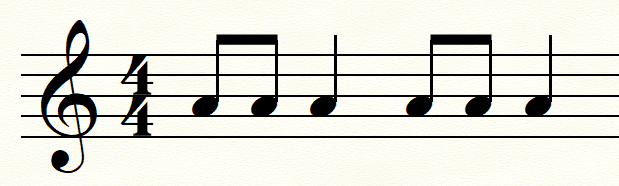
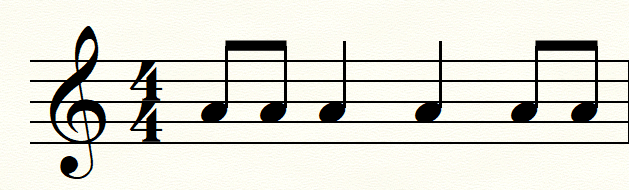
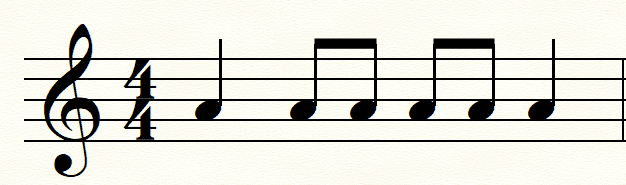
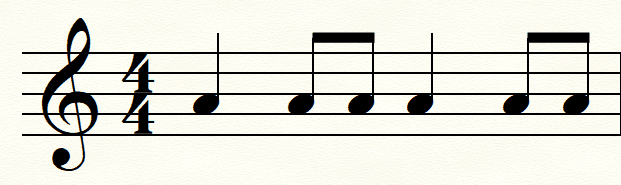
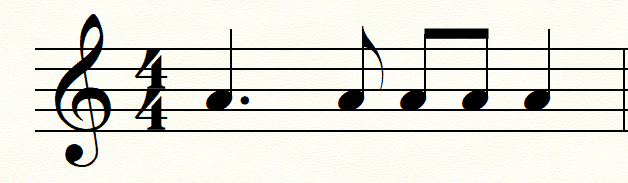
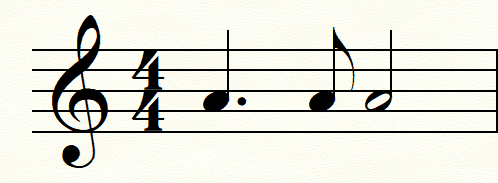
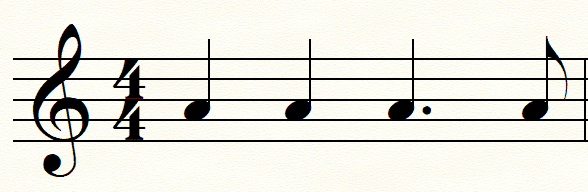
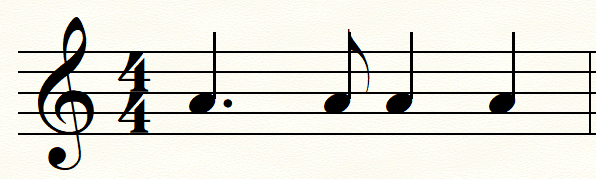
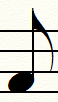
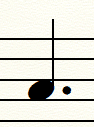
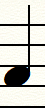 What Is Rhythm in Music? Rhythm is the pattern of sound, silence, and emphasis in a song. In music theory, rhythm refers to the recurrence of notes and rests (silences) in time. When a series of notes and rests repeats, it forms a rhythmic pattern. In addition to indicating when notes are played, musical rhythm also stipulates how long they are played and with what intensity. This creates different note durations and different types of accents.Why Is Rhythm Important in Music? Rhythm functions as the propulsive engine of a piece of music, and it gives a composition structure. Most musical ensembles contain a rhythm section responsible for providing the rhythmic backbone for the entire group. Drums, percussion, bass, guitar, piano, and synthesizer may all be considered rhythm instruments, depending on the context. However, all members of a music group bear responsibility for their own rhythmic performances and play the musical beats and rhythmic patterns indicated by the piece's composer.7 Elements of Rhythm in Music Several core elements comprise the fundamentals of musical rhythm. 1. Time signature: A musical time signature indicates the number of beats per measure. It also indicates how long these beats last. In a time signature with a 4 on the bottom (such as 2/4, 3/4, 4/4, 5/4, etc.), a beat corresponds with a quarter note. So in a 4/4 time (also known as "common time"), each beat is the length of a quarter note, and every four beats form a full measure. In 5/4 time, every five beats form a full measure. In a time signature with an 8 on the bottom (such as 3/8, 6/8, or 9/8), a beat corresponds with an eighth note. 2. Meter: Standard Western music theory divides time signatures into three types of musical meter: duple meter (where beats appear in groups of two), triple meter (where beats appear in groups of three), and quadruple meter (where beats appear in groups of four). Meter is not tied to note values; for instance, a triple meter could involve three half notes, three quarter notes, three eighth notes, three sixteenth notes, or three notes of any duration. Musicians and composers regularly mix duple and triple meter in their work; Igor Stravinsky's "The Rite of Spring" is a textbook example of such a technique. 3. Tempo: Tempo is the speed at which a piece of music is played. There are three primary ways that tempo is communicated to players: beats per minute, Italian terminology, and modern language. Beats per minute (or BPM) indicates the number of beats in one minute. Certain Italian words like largo, andante, allegro, and presto convey tempo change by describing the speed of the music. Finally, some composers indicate tempo with casual English words such as “fast,” “slow,” “lazy,” “relaxed,” and “moderate.” 4. Strong beats and weak beats: Rhythm combines strong beats and weak beats. Strong beats include the first beat of each measure (the downbeat), as well as other heavily accented beats. Both popular music and classical music combine strong beats and weak beats to create memorable rhythmic patterns. 5. Syncopation: Syncopated rhythms are those that do not align with the downbeats of individual measures. A syncopated beat will put its emphasis on traditional weak beats, such as the second eighth note in a measure of 4/4. Complex rhythms tend to include syncopation. While these rhythms may be more difficult for a beginning musician to pick up, they tend to sound more striking than non-syncopated rhythmic patterns. 6. Accents: Accents refer to special emphases on certain beats. To understand accents, think of a piece of poetry. A poetic meter, such as iambic pentameter, may dictate a specific mixture of stressed syllables and unstressed syllables. Musical accents are no different. Different rhythms may share a time signature and tempo, but they stand out from one another by accenting different notes and beats. 7. Polyrhythms: To achieve a particularly ambitious sense of rhythm, an ensemble may employ polyrhythm, which layers one type of rhythm on top of another. For instance, a salsa percussion ensemble may feature congas and bongos playing 4/4 time, while the timbales concurrently play a pattern in 3/8. This creates a dense rhythmic stew and, when properly executed, it can yield incredibly danceable rhythm patterns. Polyrhythms originated in African drumming, and they’ve spread to all sorts of genres worldwide, from Afro-Caribbean to Indian to progressive rock, jazz, and contemporary classical.Wage Rudolf Soepartman Wage Rudolf Soepratman merupakan seorang guru, violis, wartawan, sekaligus komposer Hindia Belanda yang dilahirkan di Jatinegara pada tanggal 9 Maret 1903. Pendidikannya dimulai pada tahun 1907 di Taman Kanak-Kanak di Frobelschool Jakarta. Selepas Taman Kanak-Kanak, ia melanjutkan pendidikannya ke Tweede Inlandscheschool (Sekolah Angka Dua) dan selesai pada tahun 1917. Dua tahun setelahnya, W.R. Soepratman lulus ujian Klein Ambtenaar Examen (KAE, ujian untuk calon pegawai rendahan). Pendidikannya kemudian berlanjut ke Normaalschool (Sekolah Pendidikan Guru). Karirnya dalam bidang musik tidak lepas dari peran kakak iparnya, W.M. Van Eldick. Ia diberikan hadiah oleh kakak iparnya sebuah biola saat ulang tahunnya yang ke-17. Bersama Van Eldik tersebutlah, ia mendirikan grup jazz band bernama Black and White. Kepandaian W.R. Soepratman dalam bermusik digunakannya untuk menciptakan lagu-lagu perjuangan yang salah satu di antaranya adalah Indonesia Raya. Puncak karier W.R. Soepratman terjadi saat kepindahannya dari Makassar ke Bandung. Ia memulai karier sebagai jurnalistik dengan menjadi wartawan di surat kabar Kaoem Moeda pada tahun 1924. la kemudian pindah ke Jakarta dan menjadi wartawan pada Surat Kabar Sin Po pada tahun 1925. Sejak itu, ia aktif menghadiri rapat-rapat organisasi pemuda dan partai politik yang diadakan di Gedung Pertemuan Batavia. Sejak saat itulah W.R. Soepratman berkenalan dengan tokoh-tokoh pergerakan. Dalam pelaksanaan kongres Pemuda II, tanggal 27-28 Oktober 1928, W.R. Soepratman ikut terlibat dalam menciptakan lagu kebangsaan negara Republik Indonesia. Saat itulah, untuk kali pertama lagu Indonesia Raya diperdengarkan dengan iringan gesekan biolanya di depan seluruh peserta kongres sebelum dibacakannya Putusan Kongres Pemuda yang dikenal sebagai Sumpah Pemuda. Setelah Kongres Pemuda II, kehidupan W.R. Soepratman tidak lagi tenang karena dimata-matai oleh polisi Belanda. Penyebabnya adalah kata "Merdeka, Merdeka" pada lagu karangannya itu. Pada tahun 1930, Pemerintah Hindia Belanda melarang rakyat Indonesia menyanyikan lagu Indonesia Raya di depan umum. Tahun 1933-1937, ia pindah dari Jakarta ke Cimahi, lalu ke Pemalang. Hingga bulan April 1937, ia dibawa kakaknya, Ny. Rukiyem Supratiyah, ke Surabaya dalam keadaan sakit. Kedatangan W.R. Soepratman di Surabaya segera diketahui teman-teman seperjuangannya. Mereka datang menjenguknya yang masih lemah setelah sakit. Tanggal tanggal 7 Agustus 1938, W.R. Soepratman ditangkap Belanda di studio Radio NIROM (Nederlandsch Indische Radio Omroep) di Jalan Embong Malang Surabaya, lantaran lagunya yang berjudul "Matahari Terbit" dinyanyikan pandu-pandu KBI (Kepanduan Bangsa Indonesia) di radio tersebut dan dianggap wujud simpati terhadap Kekaisaran Jepang. la sempat ditahan, kemudian dilepaskan setelah Belanda tidak dapat menemukan bukti-bukti bahwa dirinya bersimpati kepada Jepang. Kondisi kesehatannya pun makin menurun. Pada 17 Agustus 1938 (Rabu Wage), W.R. Soepratman meninggal dunia di Jalan Mangga 21 Tambak Sari, Surabaya karena gangguan jantung yang dideritanya. Almarhum dimakamkan di Pemakaman Umum Kapasan, Jalan Tambak Segaran Wetan, Surabaya.Music 9 - Quarter 3MUSIC 9 - QUIZ 2 (First Quarter)MUSIC 9MUSIC 9 - Quiz 1MUSIC 9` 4TH` QUIZMusic 9 Short Quiz