Loading...

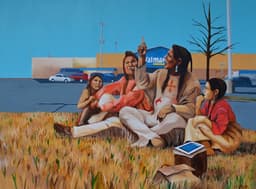
Native Americans and the True Thanksgiving
Quiz by Inconnu 7896
Customize this quiz to suit your class
Instantly translate to 100+ languages
Tag the questions with any skills you have. Your dashboard will track each student's mastery of each skill.
Give this quiz to my class
 La Isla de Pascua This 64-square mile island off Chile’s west coast goes by many names. Its English name is Easter Island, marking the day in 1722 when it was discovered by a European. In Spanish, it is called Isla de Pascua. The Rapa Nui, its first inhabitants, called it “The Navel of the World.” Experts do not agree on the history of Easter Island. It is unclear where the first people came from or when they arrived. Many people believe they came from neighboring Polynesia around AD 300. This culture built 900 enormous stone statues for which the island is famous. The statues are known as moai. Most of the moai are made of volcanic tuff. Tuff is a soft rock made from the ash that is forced out during a volcanic eruption. It is easier to carve than hard stones like marble, but it is not ideal for carving small details. The moai are considered megaliths (large stones that form prehistoric monuments). They stand up to 33 feet high when on their ceremonial platform (the average height is about 13 feet), and they weigh up to 82 tons. They usually have a trunk (body), inset arms, and an exaggerated head with angular edges. The head of each moai takes up about one-third of the total figure. It all shows that the people who created them could engineer monumental structures. Many moai stand with their backs to the sea. They watch the island like protective markers. Some low-relief carvings of religious deities were added to the backs of the moai at a later date. Experts are still trying to understand how they were carved and moved, and what they might mean. Chile took control of the island in 1888. At that time, its population was less than 200. The government used it for grazing livestock. Today, the mystery of Easter Island makes it a popular tourist spot. Valparaíso Valparaíso is a colorful blend of old and new traditions in Chile. This port city is an interesting example of daily life in Chile. Before the Panama Canal was opened in 1914, all ships traveling east to west had to pass all the way around South America. Valparaíso was ideally positioned as a stopping point in the Southern Pacific. Valparaíso has a long history of playing host to a large array of cultures and ideas. The city was known around the world as a place that embraced learning and new ideas. Pablo Neruda had a home in Valparaíso in the 1920s. After the Panama Canal was completed, shipping traffic declined significantly. Valparaíso was forgotten and fell upon hard times. In the 1990s, the government of Chile made an effort to revitalize the colorful port. Today it is a UNESCO (United Nations Educational, Scientific and Cultural Organization) World Heritage site. True to its history of embracing learning, it is also home to four universities. Tourists can visit the first stock exchange in Latin America. Valparaíso also has Chile’s first public library. Visitors stroll through cobblestone streets in the historic district. Here they can also view the city’s iconic colorful buildings. At night, music and street performers liven the experience. Try It Yourself Two Spanish words comprise the name of this city. Val means valley. Paraiso means paradise. The name Valparaíso means Paradise Valley. Can you recognize descriptive Spanish words in other Spanish place names? Start with names of places around you. Las Comidas Tradicionales To Chileans, nothing says home like pastel de choclo, a type of casserole made of beef and corn. The body of the casserole is flavorful. It contains beef, onions, raisins, and roasted chicken. It is topped off with a layer of creamed corn and then baked. Baking it brings out the sweetness in the corn, adding a contrast to the savory meat. The preferred type of corn is called choclo. This variety is grown in rugged conditions in the Andes. The kernels are large and hearty compared to other varieties. Another favorite dish in Chile is a type of meat stew called cazuela. Originally a native dish, it is now known as comfort food in Chile. Pork, beef, lamb, or chicken still on the bone is boiled in a traditional clay pot. To that, corn, potatoes, and other local vegetables are added. It is seasoned with onion and garlic. Pablo Rogat/Shutterstock When Chileans think about dessert, manjar is the first ingredient on their minds. It is a caramel sauce made from cooking milk, sugar, and vanilla. It is found in many desserts. It is used as filling in cakes, pies, and cookies. It is refrigerated to make puddings and custards. People even use it to sweeten their coffee.Native Americans and the American Revolution - Starter QuizNative Americans and the American Revolution - Exit QuizTo the Lakota, and other indigenous people on North America's Great Plains, the bison was an essential part of their culture ( expressed in the quote on the previous page). The bison provided meat for nutrition, a hide for clothing and shelter, bones for tools, and fat for soap. The bison was also central to their religious beliefs. So, when European settlers hunted the bison nearly to extinction, Lakota culture suffered. Culture is central to a society and the identity of its people, as well as its continued existence. Therefore, geographers study culture as a way to understand similarities and differences among societies across the world, and in some cases, to help preserve these societies. Analyzing Culture All of a group's learned behaviors, actions, beliefs, and objects are a part of culture. It is a visible force seen in a group's actions, possessions, and influence on the landscape. For example, in a large city you can see people working in offices, factories, and stores, and living in high-rise apartments or suburban homes. You might observe them attending movies, concerts, or sporting events. Culture is also an invisible force guiding people through shared belief systems, customs, and traditions. Culture is learned, in that it develops through experiences, and not merely transmitted through genetics. For example, many people in the United States have developed a strong sense of competitiveness in school and business, and believe that hard work is a key to success. These types of elements, visible and invisible, are cultural traits. A series of interrelated traits make up a cultural complex, such as the process of steps and acceptable behaviors related to greeting a person in different cultures. A single cultural artifact, such as an automobile, may represent many different values, beliefs, behaviors and traditions and be representative of a cultural complex. Since culture is learned there are many ways that one generation passes its culture to the next. Children and adults learn traits three ways: • imitation, as when learning a language by repeating sounds or behaviors from a person or television • informal instruction, as when a parent reminds a child to say "please" • formal instruction, as when students learn history in school 132 HUMAN GEOGRAPHY: AP" EDITION CULTURAL COMPLEX OF THE AUTOMOBILE The automobile provides much more than just transportation, as it reflects many values that are central to American culture. Origins of Culture The area in which a unique culture or a specific trait develops is a culture hearth. Classical Greece was a culture hearth for democracy more than 2,000 years ago. New York City was a culture hearth for rap music in the 1970s. Geographers study how cultures develop in hearths and diffuse-or spread-to other places. Geographers also study taboos, behaviors heavily discouraged by a culture. For example, many cultures have taboos against eating certain foods, such as pork or insects. What is considered taboo changes over time. In the United States, marriages between Protestants and Catholics were once taboo, but they are not widely opposed now. Traditional, Folk, and Indigenous Cultures With the beginning of the Industrial Revolution in the late 18th century, modern transportation and communication connected people as never before and led to extensive cultural mixing, especially as cities have grown. The world prior to this time was very different; however, remnants of the past are still evident in our modern cultures. Traditional, folk, and indigenous cultures share some important characteristics and are often grouped together, but they do have some subtle differences. Traditional Culture Recently, the meanings of traditional, folk, and indigenous culture have begun to merge, causing geographers to debate when each should be used. Increasingly, the term traditional culture is used to encompass all three cultural designations. All three types share the function of passing down long-held beliefs, values, and practices and are generally resistant to rapid changes in their culture. Folk Culture The beliefs and practices of small, homogenous groups of people, often living in rural areas that are relatively isolated and slow to change, are known as folk cultures. Like all cultures, they demonstrate the diverse ways that people have adapted to a physical environment. For example, people around the world learned to make shelters out of available resources, whether 3.1: INTRODUCTION TO CULTURE 133 it was snow or mud bricks or wood. However, people used similar resources such as wood differently. In Scandinavia, people used trees to build cabins. In the American Midwest, people processed trees into boards, built a frame, and attached the boards to it. Many traits of folk culture continue today. Corn was first grown in Mexico around 10,000 years ago, and it is still grown there today. While many elements of folk culture exist side by side with modern culture, there are people whose societies have changed little, if at all, from long ago. These people practice traditional cultures, those which have not been affected by modern technology or influences. They often live in remote regions, such as some small tribes in the Amazon rainforest, and have scant knowledge of the outside world. As the lines continue blurring between cultural designations, the Amish of Pennsylvania are often referenced as both folk and traditional culture. Indigenous Culture When members of an ethnic group reside in their ancestral lands, and typically possess unique cultural traits, such as speaking their own exclusive language, they are considered an indigenous culture. Some indigenous peoples have been displaced from their native lands, but still practice their indigenous culture. Native Americans in the United States, such as the Navajo, have kept indigenous cultural practices. First Nations of Canada, such as the Inuit, have also retained their indigenous culture. Globalization and Popular Culture As a result of the Industrial Revolution, improvements in transportation and communication have shortened the time required for movement, trade, or other forms of interaction between two places. This development, known as space-time compression (see Topics 1.4 and 3.6), has accelerated culture change around the world. In 1817, a freight shipment from Cincinnati needed 52 days to reach New York City. By 1850, because of canals and railroads, it took half that long. And by 1852, it took only 7 days. Today, an airplane flight takes only a few hours, and digital information takes seconds or less. Similar change has occurred on the global scale. People travel freely across the world in a matter of hours, and communication has advanced to a point where people share information instantaneously across the globe. The increased global interaction has had a profound impact on cultures, from spreading English across the world to instant sharing of news, events and music. Globalization specifically refers to the increased integration of the world economy since the 1970s. The process of intensified interaction among peoples, governments, and companies of different countries around the globe has had profound impacts on culture. The culture of the United States is intertwined with globalization. Through the influence of its corporations, Hollywood movies, and government, the United States exerts widespread influence in other countries. But other countries also shape American culture. For example, in 2019, the National Basketball Association included players from 38 countries or territories. When cultural traits- such as clothing, music, movies, and types of 134 HUMAN GEOGRAPHY: AP. EDITION businesses-spread quickly over a large area and are adopted by various groups, they become part of popular culture. Elements of popular culture often begin in urban areas and diffuse quickly through globalization processes such as the media and Internet. These elements can quickly be adopted worldwide, making them part of global culture. People around the world follow European soccer, Indian Bollywood movies, and Japanese animation known as anime. With people in many nations wearing similar clothes, listening to similar music, and eating similar food, popular cultural traits often promote uniformity in beliefs, values, and the cultural landscape across many places The cultural landscape, also known as the built environment (see Topic 3.2), is the modification of the environment by a group and is a visible reflection of that group's cultural beliefs and values. Traditional Culture to Popular Culture Popular culture emphasizes trying what is new rather than preserving what is traditional. Many people, especially older generations or those who follow a folk culture, openly resist the adoption of popular cultural traits. They do this by preserving traditional languages, religions, values, and foods. While older generations often resist the adoption of popular culture, they seldom are successful in keeping their traditional cultures from changing, especially among the young people of their society. One clash between popular and traditional culture is occurring in Brazil. As the population expands to the interior of the rain forest, many indigenous cultures, like the Yanamamo tribe, have more contact with outside groups. Remaining isolated by the forest is becoming increasingly difficult as many young people from the indigenous cultures become exposed to popular culture and begin to integrate into the larger Brazilian society. As the young people leave their communities, they are more likely to accept popular culture at the expense of their indigenous cultural heritage, which threatens the very existence of their folk culture. Traditional culture typically exhibits horizontal diversity, meaning each traditional culture has its own customs and language that makes it distinct from other culture groups. Yet, people people within each group are usually homogeneous, or very similar to each other. By contrast, popular culture typically exhibits vertical diversity, meaning that modern urban societies are usually heterogeneous, or exhibiting differences, within the society and usually contain numerous multiethnic neighborhoods. However, on a global scale popular cultures are relatively similar with the same type of malls, shops, fast food, and clothing. Urban global culture centers are not identical, yet, global cities often do not have as much horizontal diversity across space as folk cultures. 3.1: INTRODUCTION TO CULTURE 135 COMPARING TRADITIONAL AND POPULAR CULTURE Trait Traditional Culture Popular or Global Culture Society • Rural and isolated location • Urban and connected location • Homogeneous and • Diverse and multiethnic indigenous population population • Most people speak an • Many people speak a global indigenous or ethnic local language such as English or language Arabic • Horizontal diversity • Vertical diversity Social • Emphasis on community and • Emphasis on individualism and Structure conformity making choices • Families live close to each • Dispersed families other • Weakly defined gender roles • Well-defined gender roles Diffusion • Relatively slow and limited • Relatively rapid and extensive • Primarily through relocation • Often hierarchical • Oral traditions and stories • Social media and mass media Buildings and • Materials produced locally, • Materials produced in distant Housing such as stone or grass factories, such as steel or glass • Built by community or owner • Built by a business • Similar style for community • Variety of architectural styles • Different between cultures • Similar between cities • Traditional architecture • Postmodern / contemporary architecture Food • Locally produced • Often imported • Choices limited by tradition • Wide range of choice • Prepared by the family or • Purchased in restaurants community Spatial Focus • Local and regional • National and global Artifacts, Mentifacts, and Sociofacts Whether a cultural attribute is considered traditional, folk, indigenous, or popular in nature, it is valuable to differentiate between elements of culture that can be seen and those that can not. There are artifacts that comprise the material culture, which consists of tangible things, or those that can be experienced by the senses. Art, clothing, food, music, sports, and housing types are all tangible elements of culture. Another element of the study of artifacts is understanding the techniques to use or build a specific artifact. Artifacts can be unique to a particular culture, or can be shared. For example, people of all cultures need to communicate through language, yet there are many groups that possess languages unique to their culture. The ability to read, write and understand the English language is an artifact of importance for much of popular global culture. 136 HUMAN GEOGRAPHY: AP" EDITION Mentifacts comprise a group's nonmaterial culture and consist ofintangible concepts, or those not having a physical presence. Beliefs, values, practices, and aesthetics (pleasing in appearance) determine what a cultural group views as acceptable and desirable. Mentifacts can also be unique or shared. People of many cultures possess an belief in one or many deities, and often the deities are unique to that culture. The belief in a god is a mentifact-the religious building or symbols are artifacts. Cultural groups also possess sociofacts, which are the ways people organize their society and relate to one another. Taken altogether, people tend to see the whole of their culture as greater than the sum of its individual parts. Sociofacts are embodied through families, governments, sports teams, religious organizations, education systems, and other social constructs. As with artifacts and mentifacts, sociofacts may also be unique or similar to other societies. Families are the foundations of most societies, yet what constitutes the structure of a family may vary widely between cultural groups. For example, Western cultures tend to view the nuclear family, consisting of the parents and their children as the basic family unit. By contrast, in many Western African cultures the norm is the extended family, consisting of several generations and other family members such as cousins living under one roof.The Columbian Exchange was the widespread exchange of animals, plants, culture, disease, people, and ideas that began between European countries and their colonies in North and South America. The Spanish came to the Americas in search of gold and other riches. The Europeans wanted to convert the Native Americans to Christianity/Roman Catholicism. Spain had the greatest impact on the culture of Latin America. Sugarcane was a crop that was grown in the Caribbean that required a lot of land and labor. Native populations died out largely due to diseases that they had no natural immunity to before the arrival of Europeans. When the Native populations died out, African slaves were brought over to work. Two cultural elements in Latin America that resulted from the Columbian Exchange were language - Spanish, and religion - Roman Catholicism/Christianity. Environmental Issues Deforestation is the clearing of forests for human demands such as farmland, timber, and mining. The Amazon Rainforest in Brazil is one area experiencing major deforestation. Hurricanes can damage the economies in the Caribbean and Central America by keeping tourists away. Economy The three economic indicators used to determine the Human Development Index (HDI) are: life expectancy, literacy rate, and GDP per capita. Higher literacy rates, GDP per capita, and life expectancy are associated with more developed countries, while lower literacy rates, GDP per capita, and life expectancy are associated with less developed countries. The three sectors of the economy are primary/agriculture (e.g. rancher), secondary/manufacturing (e.g. table factory), and tertiary/services (e.g. teacher). A single product economy is when a country depends on just one product for almost all of its jobs, like the Caribbean Islands depend on tourism. Three disadvantages of a single product economy are: having to import other goods/resources, facing competition from other countries for the same product, and if the product fails, the economy is ruined which could restrict access to goods/resources. A free enterprise/market economy is when individual people and businesses make all economic decisions. A command/communist economy is when the government makes all basic economic decisions. Cuba has a communist economy where the government controls all aspects of the economy.If we look at the United States on a map today, it is very difficult to imagine that where we see borders, cities, and states, there once existed nothing but open land, uncharted mountain ranges, and miles of untouched wilderness. North America was a highly desired destination for exploration and settlement for Europeans. In the early 1500s, expeditions from Europe to North America were funded by Europe's kings and queens in hopes of expanding their territories across the world. The voyages were treacherous with unknown dangers and many attempts to settle in this new land were faced with failure. In the early 1600’s however, the settlers of Jamestown and Plymouth survived the harsh conditions and established the first two permanent English settlements in North America. Jamestown Colony in Virginia Jamestown was founded in 1607. Of course, its colonists did not know it would go on to become the the first permanent English settlement in the Americas. The settlement was located along the James River off Chesapeake Bay in modern-day Virginia. Life in Jamestown was very hard, and nearly 80% of the first settlers died in the first year due to disease and starvation. The region was warm and had fertile soil, making it a perfect place for growing crops, specifically tobacco. Sponsored by a joint stock company known as the Virginia Company of London, Jamestown was originally established as a profit-making enterprise. The first settlers looked for gold and other natural resources that could bring a profit to the company's investors. After several very difficult years, the colonists were eventually able to grow tobacco that was popular in England and it became a valuable cash crop. Jamestown's colonists were primarily all supporters of the Church of England and felt a strong connection to their homeland. Many, like John Smith, returned to England, or would move back and forth between the two locations. Being that Jamestown was founded by a corporation looking to make a profit, it began using enslaved labor in 1619. Indentured servants and enslaved Africans made up much of the workforce on the growing tobacco and cotton plantations. The system of using enslaved Africans for the profit of American plantations has been described as America's "original sin". About 400 miles to the north of Jamestown, a group of Pilgrims seeking religious freedom established Plymouth in 1620 as the second English colony in North America. Located in modern day Massachusetts, the colder climate and rocky soil made farming and agriculture more difficult. Instead of growing cash crops, settlers turned to lumber, shipbuilding, and fishing for trade. Unlike the settlers of Jamestown, the Pilgrims of Plymouth Colony were dissenters from the Church of England. They came to the New World so that they could freely practice their religion without fear of persecution. Although their reasons for settling were different, the settlements had many similar experiences. Jamestown and Plymouth both faced harsh and demanding climates and struggled with hunger, disease, and death. In their first years they had much difficulty establishing housing and finding a sustainable source of food. Plymouth Colony in New England While the settlers in Jamestown used the House of Burgesses as a legislative body for laws and decisions, the Pilgrims in Plymouth wrote and agreed to the Mayflower Compact as a set of rules for self-government. Both helped maintain the rule of law in new places far from the courts and tradition of England. Settlers of both colonies experienced complicated and, at times, violent relationships with local Native Americans that owned the land. While some American Indian groups offered help to the new settlers, oftentimes both sides needed to defend themselves from attacks. Nevertheless, the settlers of Jamestown and Plymouth persevered through these difficulties and maintained their establishments, providing inspiration for future colonies and settlers in search of a new life in the New World.Long ago, people from different cultures had stories about how the world began and how humans came to be. These stories are called creation stories. Even though these cultures were different, their creation stories often had similar ideas. Two creation stories that we will explore are one from Native Americans in North America and one from ancient Greece. Both stories talk about bringing light and fire to people. They also have something called archetypes, which are important in creation stories. Archetypes are things that show up a lot in different stories from different times and places. They can be symbols, patterns, or types of characters. Archetypes help us understand that even though cultures are different, they have some things in common. In these creation stories, there are two archetypal figures - the Raven and Prometheus. They represent things like wanting to learn, make progress, and find enlightenment. Both stories show how these figures go against higher powers to give people something good. The Raven and Prometheus are smart, resourceful, and want to make life better for humans. Understanding archetypes helps us see that cultures have things in common. The Raven and Prometheus are symbols that show what it means to be human. By studying and comparing these symbols, we can learn more about what people believe and want, no matter where they come from. The Raven and Prometheus remind us that people always want to learn, make progress, and find enlightenment. In the Native American creation story, the Raven brings light to the world. Long ago, the world was very dark and people had a hard time finding their way. But then, a clever bird called the Raven decided to help. The Raven stole a box that held the sun, moon, and stars from a powerful being. As the Raven flew across the sky, the box opened and filled the world with light. This light helped guide and teach humans. The Raven is seen as smart, resourceful, and a symbol of light. In the ancient Greek story, Prometheus steals fire from the gods on Mount Olympus. Prometheus cared a lot about humans and wanted to help them. Fire was something special that only the gods had, and it represented knowledge, creativity, and civilization. Prometheus brought fire down to Earth secretly because he knew it would make life better for humans. With fire, they could stay warm, cook food, and protect themselves. Prometheus was brave and kind, and he wanted to help humanity. Both the Raven and Prometheus stories have similarities. They are both about giving humans something important that helps them learn and progress. The Raven gave light, while Prometheus gave fire. The Raven and Prometheus are both very smart and clever. They wanted to make life better for people. These stories show us that no matter where people come from, they all have a desire to learn, make progress, and find enlightenment.The speaker is talking about how great the United States is and how it has a special role in the world. They believe that the country has been given a noble land by God, and its people are strong and important. They talk about the country's history of brave soldiers who have fought in difficult places. The speaker responds to those who say that governing people without their consent is wrong. They argue that the idea of consent only applies to people who can govern themselves, and they give examples like how the U.S. governs Native Americans, its territories, and even children without their consent. They also say that if other countries like England and Germany can govern foreign lands, the United States can do it too. They believe that this will bring more opportunities for young men in the country and increase resources and trade. They mention specific examples of the potential wealth in Cuba, such as unexplored forests and mines. The speaker believes that as the United States expands its influence and trade, it will spread the idea of liberty and civilization to other parts of the world. They think that the United States is chosen by God and has a special mission.