Relate area to the operations of multiplication and addition. • Find the area of a rectangle with whole-number side lengths by tiling it, and show that the area is the same as would be found by multiplying the side lengths. • Multiply side lengths to find areas of rectangles with whole-number side lengths in the context of solving problems, and represent whole-number products as rectangular areas in mathematical reasoning. • Use tiles and/or arrays to illustrate and explain that the area of a rectangle can be found by partitioning it into two smaller rectangles, and that the area of the large rectangle is the sum of the two smaller rectangles.
Represent and interpret scaled picture and bar graphs: • Collect data by asking a question that yields data in up to four categories. • Make a representation of data and interpret data in a frequency table, scaled picture graph, and/or scaled bar graph with axes provided. • Solve one and two-step “how many more” and “how many less” problems using information from these graphs.
Solve problems involving customary measurement. • Estimate and measure lengths in customary units to the quarter-inch and half-inch, and feet and yards to the whole unit. • Estimate and measure capacity and weight in customary units to a whole number: cups, pints, quarts, gallons, ounces, and pounds. • Add, subtract, multiply, or divide to solve one-step word problems involving whole number measurements of length, weight, and capacity in the same customary units.
Track each student's skills and progress in your Mastery dashboards
Give this quiz to my class
Q 1/8
Score 0
60
Q 2/8
Score 0
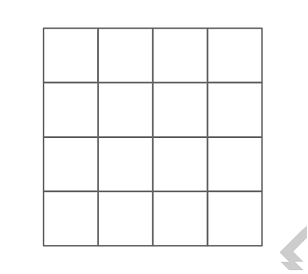
This figure is 4 units long and 4 units wide. Which measurements describe a rectangle that has the same area as the figure?
(*NO CALCULATOR*)
60
10 units long and 6 units wide
12 units long and 4 units wide
5 units long and 3 units wide
8 units long and 2 units wide
8 questions
Q.
1
60 sec
NC.3.MD.1
Q.
This figure is 4 units long and 4 units wide. Which measurements describe a rectangle that has the same area as the figure?
(*NO CALCULATOR*)
2
60 sec
NC.3.MD.7
Q.
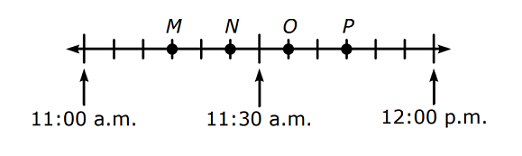
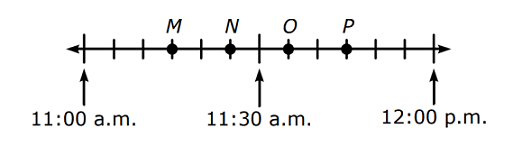
Eric leaves school at the time shown.
He arrives home 25 minutes later. At what time does Eric get home?
(*NO CALCULATOR*)
3
60 sec
NC.3.MD.1
Q.
4
60 sec
NC.3.MD.8
Q.
A third-grade class voted for their favorite subject, as shown.
How many more students voted for math than science?
5
60 sec
NC.3.MD.3
Q.
Four friends were playing a game. John and Bill were on Team 1. Susie and Amy were on Team 2. They made a graph to show how many points each person scored.
How many more points did Team 2 score than Team 1?