Loading...


Needs of Green Plants
Quiz by Riham Zaitoun
Customize this quiz to suit your class
Instantly translate to 100+ languages
Tag the questions with any skills you have. Your dashboard will track each student's mastery of each skill.
Plants are living things that need light, air and water to
keep warm
live
make fruit
The plant absorbs water and minerals through its:
stem
leaves
roots
Give this quiz to my class
Plants are living things that need light, air and water to
The plant absorbs water and minerals through its:
All living things do the following:
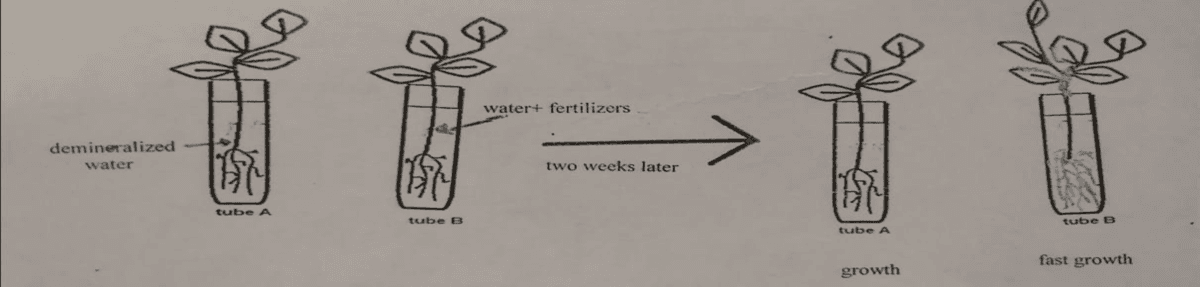
1.Describe the experiment.__________________________________________________________________________________
2-Indicate the variable.
________________________________________________________________________
3-Write down the results.
________________________________________________________________________
4-Draw out a conclusion.
_________________________________________
 Hello friends, welcome to a new Happy Learning video. Have you ever wondered how plants feed? To answer this question, we need to understand... photosynthesis. Photosynthesis is a process in which plants make their own food to be able to grow and develop. In order to perform photosynthesis, they need various elements: sunlight, carbon dioxide obtained from air, and water, and chlorophyll, which is a green substance that all plants have and is fundamental for performing photosynthesis since it could not happen without it. By the way, chlorophyll is what gives all plants their green color. But how does photosynthesis take place? Look at this plant. As you can see, its roots are anchored to the ground. And through them, the plant absorbs water and minerals in the soil. Water with minerals are transported up the stem, reaching the leaves. The leaves are full of tiny pores called stomata which absorb carbon dioxide that the air in the surrounding contains. All this containing water, minerals and carbon dioxide is called raw sap. Now it's chlorophyll's turn. The chlorophyll in the leaves has all the necessary ingredients for photosynthesis to take place. And when it receives sunlight, the process begins by transforming the raw sap into elaborated sap, which also circulates around the plant and works as food. All plants feed from elaborated sap, and they store it in their roots like a carrot, or in their fruit, like an apple or a pear. Now we know how photosynthesis takes place, but why is it so important? Without plants, there would be no life on Earth. We wouldn't have oxygen to breathe or food to feed on. You already know that herbivores eat plants, and carnivores eat herbivores. Plants are fundamental for the food chain. And they are also fundamental for our respiration. Actually, when humans breathe, we turn oxygen into carbon dioxide. Quite the opposite of when plants perform photosynthesis. A curious fact you need to know is that at night, because plants don't have sunlight to photosynthesize, they breathe like humans do. They take in oxygen and release carbon dioxide. Remember that. And one last thing so you understand the importance of photosynthesis. When plants absorb dirty and contaminated gases, they transform them into pure air, into oxygen, and this way they clean the atmosphere and all nature. Plants are the best solution to fight against contamination, don't you think? Goodbye friends and don't forget to subscribe to Happy Learning TV.Classification of plants • Plants can be classified as cultivated and wild plants. • Both cultivated and wild plants are very useful to people, animals and the environment. 1. Cultivated plants: • Cultivated plants are plants grown by people for selling. • They can be grown in the field, vegetable garden, home garden and orchard. Classification of plants 2. Wild plants Wild plants are plants that grow on their own outside the garden, orchard or field. They have many uses such as: • Food for people and animals • Shelter • Source of fuel in form of firewood. • Examples include, grasses, msasa, yellow wood, mahogany, mopane Plant Nutrition • The presence of plant nutrients in the soil make them grow well. • The three major plant nutrients are nitrogen, phosphorus and potassium. Sources of plant nutrients • The source for plant nutrients are grouped into organic and inorganic sources. Organic sources of plant nutrients • These are found in nature. • They are natural materials such, decayed plant and animal matter which include: • Animal manure from cattle, sheep, goats, poultry and pigs. • Green manure • Legume crops like beans, peas and groundnuts. • Humus • These material sources may also be called natural fertilizers. Inorganic sources of plant nutrients • These are sources of plant nutrients made by people in industries. They include: • Compound fertilizers like compound A, B, C and D. • These have two or more nutrients. • Straight fertilizers like ammonium nitrate, single super phosphate and urea. • A straight fertilizer supplies a single or more nutrient to the crop. A straight fertilizer A Compound fertilizer Sources of N,P,K • Ammonium nitrate and Urea- contain nitrogen Double super Phosphate, Single super phosphate-contain phosphorus • Muriate of Potash contains Potassium 2 . Compound fertilisers -have two or three of the three major plant nutrients (N.P.K). N-nitrogen P-phosphorus K-potassium Examples Compound D Wednesday 17 May 2023 Revision exercise (Plant nutrition) 1 .Name the 3 plant nutrients needed by plants. 2. What are the 2 groups of plant nutrients sources? 3. Give 3 examples of organic sources of plant nutrients. 4. What is a straight fertilizer? 5. Compound fertilizer supplies ……………or ………………. Nutrients. Vegetable crops • A vegetable is any part of a plant that is eaten by humans as food part of a meal. • Vegetables are grouped and named according to the part that is eaten. • These are leaf, root, fruit, flower, bulb, tuber and legume vegetables. Leaf vegetables Types of veg Legume etable cropsvegetables Fruit vegetables Root, bulb and tuber Flower vegetables Cabbage Peas Tomato Root: carrots Cauliflower Rape Green beans Pepper Parsnip broccoli Spinach Melons Beetroot Tsunga Cucumber Bulb: onion Lettuce Squash Garlic kale Egg plant Leek chillies Tuber: Irish potato Wednesday 31 May 2023 Vegetable crops 1. What is a vegetable? 2. Which one is not a vegetable from the list below? a. Covo B. cabbage C. wheat D. tomato 3. Choose a vegetable which is not a fruit vegetable. a. tomato B. pepper C. kale D. egg plant 4. From which pair of vegetables do we eat the flower? A. cauliflower and garlic B. broccoli and cauliflower C. broccoli and rape D. cauliflower and pepper 5. Give one example of a vegetable belonging to each of the following groups. a. root b. legume c. bulb 6. Name any 5 groups of vegetable classification according to the parts eaten. Growing leaf vegetables • Although there are many types of vegetables, the leaf, fruit and bulb vegetables are widely grown. • Leaf vegetables form the greater part of vegetable crops. • Leaf vegetables belong to a family called brassica. • Brassicas include cabbages, lettuce, spinach, covo and many others. • Each brassica family has got its own varieties called cultivar. • They usually grow under the same climatic conditions and are affected by the same pests and diseases. • The selection of a variety depends on the following : The intended use of the vegetable, for example, salad, stew or snacks. Days taken to mature. Disease resistant Season of the year Seedbed preparation • Brassica vegetables are usually raised in seedbeds. • The seedbeds are prepared by: • Marking the position of the bed 1 meter in width by any length using a tape measure, hammer and pegs. • Digging a seedbed to a depth of 25 to 30cm using a hoe. • Breaking lumps of soil using a garden rake. Soil requirements • Brassicas need: • Well drained soils. • Fertile soil for good growth • Slightly acidic soils (pH 5.5-6) Climatic requirements • Brassicas need cool to warm temperatures. • Very low temperatures cause cabbages to flower which is called bolting. • Brassicas can be grown throughout the year. Seedbed preparation • Brassica seedlings are usually raised in seedbeds. • A seedbed is prepared by: Marking the position of the bed 1 metre in width by any length using a tape measure, hammer and pegs. Digging a seedbed to depth of 25 to 30 cm using a hoe. Breaking lumps of soil using a garden rake. This is done in order to have a fine tilth and improve soil to seed contact. Making ridges that a 15cm high. Apply 3 to 5kg/m² of well decomposed manure. 60 to 100g/m² of compound fertilizer can be added into the soil. Management of vegetable crops • After transplanting the seedlings, the seedlings need to be looked after. (a)Controlling weeds: all vegetables must be kept weed free. • This is done either by hand pulling weeds or shallow cultivation using a hand fork. (b) Pest control: common pests that affect the brassicas are aphids and diamond black moth larva. • Aphids are small green insects that suck the juice from the leaves leaving them with curls. • They are controlled by spraying malathion using the instructions on the label. (c) Disease control: bacterial diseases are common in brassicas. • Common diseases are black rot and soft rot, especially in cabbages. • These are controlled by: Crop rotation Early planting Planting resistant cultivars (d) Top dressing: brassicas are top dressed using Ammonium Nitrate at a rate of 2.5g per plant. • Top dressing is usually done 3 or 4 weeks after germination. FIELD CROPS • Field crops are crops that are grown on a large piece of land. • Example of field crops: Maize Cotton Groundnuts Roundnuts Wheat Sunflower Tobacco Sugar cane Tea Coffee Soya beans sorghum Classification of field • Field crops can be classified according to use such crops cereal, fibre, sugar and oil. 1. Cereal crops: • A cereal is a grass grown for its edible seeds. • They are also known as grain crops. • The major cereal crops are maize, wheat, rice, barley, sorghum and millet. 2 . fiber crops : • these are crops which are grown for their fiber and are used in making textiles, ropes and rugs. • Important fiber crops are cotton, flax and sisal 3. Oil seed crops: • These crops are grown for the purpose of extracting oil from their seed. • The main oil seed crops are groundnuts, sunflower, soyabean and cotton seed. 4 . Sugar crops : • Sugar crops include sugarcane,Orchard / fruit trees Importance of fruit trees • Fruit trees are important for the following uses: They are a source of food, they produce fruits Some are used for making medicines Others provide shade and can also act as wind breakers. Those with beautiful flowers are very decorative. They contain vitamins which means they have nutritional value. Classification of fruit trees • Fruit trees are classified as indigenous and exotic. Indigenous fruit trees • are those that natural grow in a country. • They take longer to grow. • Examples of indigenous fruit trees are: English name Shona Name Snot apple Water berry Red ivory Fig Monkey orange Wild custard apple Mobola fruit Exotic fruit trees • These are trees that were brought from other countries. • They are commercially grown in orchards. • Common exotic fruit trees include: • Exotic fruit trees grow faster than indigenous. Ornamental horticulture • It deals with the growing of decorative plants. • Decorative plants are collectively called ornamental plants. • They include trees, shrubs, flowers and lawn grasses. Importance of ornamental plants They beautify the environment. Flowers often produce a pleasing fragrance. Flowers attract insects like bees that are responsible for pollination. Plants produce oxygen that we need for breathing. • Some are used for making medicines. • Lawn grasses prevent soil erosion. • Plants provide shelter for birds and insects. Classification of ornamental plants • There are four classes of ornamental plants. Trees Shrubs Flowers Lawn Trees: • Ornamental trees are very useful as decorative plants. • This is because most of these trees produce beautiful flowers and some are ever green. • Examples of decorative trees include flamboyant, jacaranda, pines, Cyprus. Shrubs: • A shrub is a woody plant with many branches but smaller than a tree. • Some of them are ornamentals because they produce beautiful flowers. • Others can be cut into decorative shapes. • The golden duranta is good example because it can be cut into nice shapes. • The bougainvillea is another example of a decorative plant because: It can act as a climbing plant. It produces decorative flowers. It can also be cut into any shape using a hedge shear. Flowers: • Flowers have the following functions: They are used for decorations at weddings, hotels and parties. They are used as an expression of love and appreciation such as valentine’s day and get well soon messages. They are useful in bee farming called apiculture as they are a source of nectar used for making honey. Flowers produce a pleasant fragrance used in the production of soaps and scents for perfumes, deodorant and lotions. Lawn: • A lawn is an area of grass that is kept cut short and is usually part of someone's garden or backyard, or part of a park. • Some lawn grasses grown in Zimbabwe are Durban, kikuyu, couch and buffalo lawn. • They prevent soil erosion. • They also provide a comfortable outdoor resting place. Forestry Importance of trees • Trees are important to us and animals. • The Forestry Commission is responsible for taking care of trees in Zimbabwe. • Trees are also important to the environment because: They are a source of fuel in the form of firewood. They are used for making most of the furniture we use. Most medicines come from both exotic and indigenous trees, for example pine trees and gum trees are used for making cough medicines. Trees provide browsing animals like the kudu and giraffe with food. Fruits from both exotic and indigenous fruit trees are a rich source of vitamins Trees give out oxygen which we need for breathing. Trees provide timber that can be used for roofing. • Trees are grouped according to where they come from. • The groups are indigenous and exotic. 1 . Indigenous trees : • These are local trees that have always been grown in their country. Shona name English name Mutohwe Snot apple Mususu Yellow wood Mubvamaropa Blood wood Muuyu Baobab Muonde Fig tree Musasa msasa Characteristics of indigenous trees take longer to mature Do not produce straight poles Grow on their own Hard wood 2 .Exotic trees : • These are trees that have been brought from another country to be grown in Zimbabwe. Characteristics of exotic trees They are brought in a country from another country. Grow very fast. Have soft woods Usually grow straight Usually grown in orchards and plantations Common exotic trees in Zimbabwe are: Gum trees Pine trees Wattle Cyprus Date palm Mango Apple pawpaw Causes of plant damage • plant damage is when cultivated crops are kept from normal growth that leads to reduced yields. • plant damage is caused by both living and non living things. • Some of the common causes of crop damage are: (a)Pests • These are living organisms that cause physical damage to crops. • Examples of pests are weevils, army worm, aphids, cutworms and locusts. (b) Diseases • Plant diseases are caused by living organisms called pathogens. • These pathogens infest the plant and take away nutrients. • Fruit rot and bacteria spot are some of the examples of plant diseases. (c) Weeds • these are plant which grow where they are not wanted. • For example if black jack grows in a groundnut field, it is a weed. • Weeds compete for nutrients with cultivated plants. (d) Very high temperatures • High temperatures may cause crops to wither. • High temperatures may also lead to lightning and fires. • This can burn up crops. ( e) Frost • Frost damages crops in winter. • Tomatoes, potatoes, and beans are easily damaged by frost. (f) Drought • drought is when there is no rainfall in a season where it supposed to be raining. • It is one of the most serious forms of crop damage. • Plants wither and die if there is no rainfall. ( g) Animals • Wild animals like baboons often eat maize crops before they mature. • Birds also are a problem to crops like sorghum. Signs of plant damage • There are various signs that show plant damage. • Some can be corrected but some lead to total loss. • Some signs of plant damage include: Lodged plants Flowers and small fruits blown to the ground Dull leaf color Wilted plants Stunted growthLESSON 3 Characteristics of Living Things Learning Objectives • Describe each characteristic of life • Relate each characteristic of life with how first forms of life evolved What sets living things apart from nonliving things? Organisms are equipped with different characteristics that allow them to grow, adapt, survive, and perpetuate. These include the ability to metabolize, respond to stimuli, interact, and reproduce, among others What are the characteristics of life? Try to look at your surroundings and identify the living things that you see. You have probably identified a lot. Many scientists believe that there are more than 10 million kinds of living things that exist on Earth today. But the question is, how can something be considered living? There are certain characteristics that all living things exhibit: the characteristics of life. Living things are made up of cells. They metabolize, grow and develop, respond to stimulus, adapt to their environment, and reproduce. Living Things Are Made up of Cells All living things are made up of cells. Cells are the basic building blocks of all living things. Each cell contains materials that carry out basic life processes such as respiration. In the 1600s, an argument against the theory of spontaneous generation was made. Italian physician and biologist Francesco Redi disproved the theory that all living things come from nonliving things. Cells have different properties and characteristics. The cell theory describes the properties of all cells. There are three tenets of the cell theory: 1. The cell is the basic unit of life. 2. All living things are composed of one or more cells. 3. All cells arise from preexisting cells. The discovery of the cell is largely attributed to Robert Hooke. Upon examining a piece of cork using a microscope that he built, Hooke observed tiny compartments that he called "cells" (from the Latin word cella, meaning "little room"). Matthias Schleiden suggested that all structural parts of plants are made up of cells. In 1839, Theodore Schwann stated that along with plants, all animals were composed of cells. From these conclusions about plants and animals, advancement on the study of animal parts and functions began. In 1855, Rudolf Virchow included the idea that all cells came from preexisting cells. Some living things are made up of only single cells. Single-celled or unicellular organisms include bacteria, some protists, and some fungi. Even though composed of single cells, these organisms carry out all the functions necessary for life. Most living things such as animals and plants, are multicellular organisms. They are composed of many cells, which are grouped together and perform specific tasks in the body. In different organisms, cells also vary in sizes, shapes, parts, and functions. There are two kinds of organisms according to their cell structure, the prokaryotes and eukaryotes (figure 5-3). Prokaryotes are single-celled organisms that lack a membrane-bound nucleus, mitochondria, and all other organelles. Its name comes from the Greek words pro, which means "before," and karyon, which means "nut or kernel." Eukaryotes are organisms with cells that contain membrane-bound nucleus and other membrane-bound organelles. The nucleus of a eukaryotic cell contains the genetic material (DNA), enclosed by a nuclear envelope. Other membrane-bound organelles are mitochondria, Golgi apparatus, and chloroplast found in photosynthetic organisms such as algae and plants. There are also unicellular eukaryotes known as protozoa. All other eukaryotes are multicellular organisms, such as plants, animals, and fungi. Living Things Metabolize Essential chemical reactions in life can be best described as building up (anabolism) and breaking down (catabolism) processes. In anabolism, the substances needed by organisms to grow, store energy, and repair tissues are synthesized. In contrast in catabolism, some complex substances are broken down, releasing the energy stored in their molecules. This happens in food digestion. This chemical building up and breaking down processes are collectively called metabolism. Metabolism, from the Greek word metabole meaning "change," is the sum total of all the life-sustaining chemical reactions in living things. It allows living things to grow, maintain their structures and functions, and respond to stimuli. Living Things Grow and Develop Growth and development are not new concepts to many. In all living things, growth involves the increase in one's size or height. However, growth is not just an increase in physical structure. It also involves complex changes in an organism. Growth and development occur rapidly from younger stages of life to maturity. In humans, animals, and plants, distinct changes brought by growth and development can be dearly identified. Microorganisms such as bacteria also undergo growth and development until they reach their maximum size and maturity. A life span is the average length of time a aving thing can live. Living things have different life spans. Humans have average life spectancy of 60 to 70 years, while some plants, such as the narra trees, can live for more than 100. Living Things Respond to Stimuli All living things respond to stimuli the environment. This responsiveness Increases survivability. Stimulus (plural: uli) is any signal or change in he environment of an organism that produces a response or reaction from that organism. Responses to stimuli depend on an organism's need. Responding to stimuli also maintains homeostasis in living things. Homeostasis is the internal balance of a body system. This balance is needed for the proper function and regulation of the living thing's body. For example, when a person is in a warmer environment, the body sweats, keeping the body maintain a temperature suited for the normal function of the body. Living Things Interact No living thing can live alone. Interaction among organisms is simultaneously happening on Earth. From the smallest microorganisms to the biggest organism, and from the North Pole to the South Pole of Earth, all are connected in one living system. An ecosystem is formed when a community of organisms interacts with another community and with their environment. Many processes and interactions, such as in a feeding relationship, life cycle, and the exchange of gases between plants and animals, occur in the ecosystem. These are some of the important processes needed to maintain life on Earth. Living Things Reproduce The ability of living things to produce offspring of their kind is called reproduction. Reproduction is not an individual organism's need, rather, it is for the species' perpetuation. In some cases, animals become extinct because of their inability to reproduce their kind. Higher forms of plants and animals reproduce through sexual reproduction. Sexual reproduction involves the union of sex cells or gametes-the egg cell from a female organism and the sperm cell from a male organism. This union gives rise to a new individual with characteristics or traits from both parents. Other simple organisms, such as bacteria and plants, can reproduce asexually. These organisms give rise to a new individual from their body. A bacterial cell divided in two through asexual reproduction gives rise to new bacteria, as shown in figure 5-5. A yeast can form buds that later on become separate individual. Plants grow new plants using their stem, leaf, and roots. Both sexual and asexual reproductions have important functions. In both cases, the genetic material (DNA) is passed on from one generation to the next, ensuring the survival of the species on Earth. 1. Bacteria copy their DNA by starting at any point on the circular chromosomes. 2. The two copies of DNA attach to the inside wall of the bacterial cell. 3. The cell starts to divide, forming a new membrane and cell wall. 4. The bacterial cell splits into two separate cells, each with their own DNA. Living Things Adapt and Evolve All living things can adapt to their environment. This adaptation is necessary for rvival. Adaptation depends on the need of an individual. A polar bear, for example, would not be able to survive in an extremely cold environment without its capacity adapt. Adaptation is any response or reaction toward a stimulus that helps in the survival of an organism. A seed-eating bird will eventually eat a worm when there are seeds to be found. This change in food choice is therefore its adapting mechanism. Prolonged adaptation to certain environments may lead to the gradual evolution of the succeeding generations. Evolution is the gradual change in organisms over a long period in response to changing environment. Living Things Are Organized Life on Earth exhibits organization. The atom is the smallest unit of matter, lowed by molecules, which are combinations of atoms. When these molecules are grouped together, they form a cell. The cell is the basic unit of life. In multicellular organisms, such as plants and animals, cells are grouped as tissues to perform specific Functions. Different tissues can be grouped further and form organs. Organs in animals include the heart, brain, and lungs, among others. The organs form organ systems that makes the function of the body more complex and efficient. Organ systems form the whole organism. All living things exhibit organization, whether they are unicellular or multicellular organisms.. • There are two groups of animals which are important in agriculture. • The groups are domestic and wild animals. 1. Domestic animals • These are animals which are trained to live with people in their homes. • Some examples includes : Uses of domestic animals • Source of food, for example milk, eggs and meat. • For cultural purposes, for example paying lobola. • Some are used for transport and labour. • Domestic animals can also be a source of income. 2 . Wild animals • These are animals which are found in game reserves and in the forests • They are also called game animals. • Examples of wild animals are: Uses of wild animals • Some of the wild animals give us meat, hides and ivory. • Wild animals attract visitors from other countries, so the country gets money. Wednesday 06 September 2023 Exercise: Domestic animals 1. What is a domestic animal? [2] 2. What is a wild animal? [2] 3. Name any 4 domestic animals that you know. [4] 4. State any 2 uses of domestic animals. [2] 5. Name any 3 wild animals that you know. [3] 6. Give 2 uses of wild ani mals. [2] 7. Wild animals can also be called animals. [1] • Animals, like human beings need good food to help them to grow and reproduce. • The main sources of food for animals include stock feeds, pastures, veld grass, crop remains and cereal grains. • These foods contain the most needed essential nutrients. Nutrient Function carbohydrates Gives energy Fats Give energy and warmth Proteins Helps in growth and repair of body parts Minerals Help in the formation of bones and teeth Vitamins Help develop good sight, improve fertility and help animals fight diseases Water Transports food in the body, cools the body and remove waste from the body. • Livestock are domesticated animals that are kept for food, use or for sale. • Small livestock has many uses. • They are a good source of food. • They also give us manure to use in gardens. • We get clothes and medicine as well from small livestock • Examples of small livestock are rabbits, sheep, goats and all form of poultry Poultry • All animals that are kept by farmers which have wings and feathers and lay eggs are called poultry. • They are a good source of white meat, eggs and manure. • They are also a source of income when we well them and their products. • Poultry includes chicken, guinea fowl, ducks, turkey, pigeons and quail birds. Rabbits • Rabbits have 3 known uses which are: They are kept for meat Kept for pelts. (pelt is animal skin used to make blankets, hats and jackets) They are used at agricultural shows • Rabbits are cheap to buy, easy to keep and feed. • They take about 4 months to mature. • Rabbits are fed using green vegetables and rabbit pellets. Wednesday 20 September 2023 Small livestock 1. Give 3 examples of small livestock. [3] 2. State 3 things that are provided by small livestock. [3] 3. What are the 2 uses of rabbits? [2] 4. Pelts are used to make _________________ [1] 5. State any 4 examples poultry. [4] 6. Rabbits take ___________ months to mature. [1] 7. What is poultry? • Apiculture is the keeping of bees in order for them to produce honey for sale. • Apiculture is very important because: (i) Provides honey - a valuable nutritional food (ii) Provides bees wax - which has many uses in industry Uses of wax For making candles Polish furniture Make crayons Prevent tools from rusting (iii) Honey bees are excellent pollinating agents, thus increasing agricultural yields. BEE COLONY Inhabitants of the bee colony and their roles • A honey bee colony typically consists of three kinds of adult bees: workers, drones and the queen 1. Workers • Workers are the smallest and constitute the majority of bees occupying the colony. • They do not lay eggs. • Workers have specialized structures, such as brood food glands, scent glands, wax glands, and pollen baskets. • these allow them to perform all the labors of the hive. Roles of the worker bees they forage for nectar, pollen, water, and plant sap. They clean and polish the cells. feed the brood. care for the queen. remove debris. handle incoming nectar. build beeswax combs. guard the entrance. 2. Drones • Drones (male bees) are the largest bees in the colony. • They are generally present only during late spring and summer. • The drone’s head is much larger than that of either the queen or worker. • Drones have no stinger, pollen baskets, or wax glands. • Their main function is to mate with the queen. 3 . Queen • Each colony has only one queen. • The queen is the largest of the bees in a bee colony. • The Queen Bee plays a vital role in the hive because she is the only female with fully developed ovaries. • She produces both fertilized and unfertilized eggs. • Queens lay the greatest number of eggs in the spring and early summer. • The queen also produce chemical scents that help regulate the unity of the colony. 1. What is apiculture? [2] 2. Give 3 reasons why apiculture is important in Zimbabwe. [3] 3. Name the 3 inhabitants of the bee colony. [3] 4. Briefly explain the roles of each inhabitant named in number 3. • Apart from using hand tools, farmers also use some farm implements and machinery to carry out their field work. • Machines help farmers do their work more easily and quickly. • The most common implements used by farmers to grow, harvest and transport their produces are: mouldboard plough Cultivator Scotch cart Harrow Planter Maize sheller combine harvesters Boom sprayers Disc harrow Spike toothed harrow KNAPSACK SPRAYER • Farming is a business. • Communal farmers grow crops and keep animal mainly for their own use. • If there is any extra they sell to get money. • Commercial farmers grow crops and keep animals for sale. • Crops and animals produced are called farm produce. • There are places were farmers have to sell their produce. • Farmers can take their produce to local markets. • A market is a place where buying and selling occurs. • Some of the local markets includes: A shopping centre A school A nearest bus stop A local village A school Local Grain Marketing Board depot (GMB) Types of farm produce Beef Fruits Mutton Eggs Vegetables Pork Milk Chicken Cereals/grains beansA Rainbow of Food Did you know that you can eat a rainbow? You can't eat a rainbow in the sky, of course. You can make a healthy rainbow out of all the different colors of fruits and vegetables. A red apple can help keep your heart strong. Eat some slices of this fruit for a healthy snack. Red raspberries can help keep you from getting sick. Eat a handful of this fruit instead of candy. An orange carrot can help keep your eyes healthy. This vegetable is just plain fun to crunch between your teeth. An orange is filled with vitamins that can help keep you from catching a cold. Squeeze this fruit for some tangy juice with breakfast in the morning. A yellow banana can give you tons of energy. Peel and eat this fruit before you play. Yellow corn can help keep your stomach healthy. Munch this vegetable right off the cob at a picnic. A green avocado can help your body take in all the stuff it needs. Squish up this fruit to make a creamy dip for chips. Green broccoli can help keep your bones strong. Pretend you are a dinosaur eating a tree and chow down on this vegetable. Blueberries can help you remember things. Eat this fruit every day to help you do well in school. Purple plums help food move through your body. Get sticky with a bite of this juicy fruit. Purple grapes can help keep blood moving around your body. Toss a bunch of this fruit in the freezer and have a chilly treat.These fruits and vegetables are just a few that can make up a food rainbow. Eating a rainbow every day is a fun and colorful way to stay healthy. How many colors will you eat today?Ideas for more sustainable cities In 2020. over 56% of the world s population lived in urbon arcos. Cities are becoming more and more popular. But why isn't rural life as attractive as city life? The main reasons include work. lifestyle education and Sea th in cities there ore more fun things to see and do, like art galleries, concert hails and sports stadiums, There are a so better hospitals, transport na anueners However, as cities become more overcrowded, they get more polluted. For this reason, urban residents want to make their cities more sustainable. But how? Here are five ways: 1 New York's Central Pork is an island of green in a forest of skyscrapers. City parks like these provide people with a peaceful ploce to connect with nature. and o quiet area for exercise. 2 The moming and evering tush hours lare the busest times in the city. When people commute* to and from work or school, they need frequent, fast public transport, like trams and underground troins. Transport should also be as cheap as possible - and accessible to those with less mobility, like older people or wheelchair users. 3 Cities need pleasant places for people to meet and so shopping. So they should have more pedestr on zones, like in Copenhagen, Denmark, Copenhagen has the world's longest pedestrion street. It's almost 3.2 km long! Pedeston aones encourage ' people to go shopping on foot, instead of driving to shopping malls. 4 1 kes are often the quickest and most susta nable. way to get around, but mony city streets are frenetic and dangerous. Sa susto nable cities have cycle paths, as well as public bikes ond e scooters. They alto have hybrid buses and lots of car charging points. 55 Cities need to encourage residents to care about the environment, with fun ecological exhibitions" and events. The Supertree Gardens in Singapore are amazing, ver fal botanic gardens. They are 50 metres high and the /se solor energy. Eco-festivols - lIke Terroformo in Milan, Italy, and the Secret Solstice in Reykjavik, Iceland - use solar and geothermol energy. They're some of the most sustoinable festiois in the wortdA BAD CASE OF THE STRIPES By David Shannon Parts(18): Camilla Narrator 1 Narrator 2 Narrator 3 Narrator 4 Mr. Harms Mother Father Dr. Bumble Old Woman Environmental Therapist Dr. Grop Dr. Gourd Dr. Sponge Mr. Mellon Dr. Cricket Dr. Young <><><><><><><><><><><><><><><><><><><><><><><><><><><><><><><><><><><><><><><><><><><><><><><><><> Narrator 1: A BAD CASE OF THE STRIPES By David Shannon Narrator 2: Camilla Cream loved lima beans. But she never ate them. Narrator 3: All of her friends hated lima beans, and she wanted to fit in. Camilla always worried about what other people thought of her. Narrator 4: Today she was fretting even more than usual. It was the very first day of school, and she couldn't decide what to wear. There were so many people to impress! Narrator 1: She tried on forty-two outfits, but none seemed quite right. She put on a pretty red dress and looked in the mirror. Then she screamed. Narrator 2: Her mother ran into the room, and she screamed, too. Mother: "Oh my heavens! You're completely covered with stripes!" Narrator 3: she cried. This was certainly true. Camilla was striped from head to toe. She looked like a rainbow. Narrator 4: Mrs. Cream felt Camilla's forehead. Mother: "Do you feel all right?" Narrator 1: she asked. Camilla: "I feel fine, but just look at me!" Narrator 2: Camilla answered. Mother: "You get back in bed this instant. You're not going to school today." Narrator 3: her mother ordered. Camilla was relieved. She didn't want to miss the first day of school, but she was afraid of what the other kids would say. And she had no idea what to wear with those crazy stripes. Narrator 4: That afternoon, Dr. Bumble came to examine Camilla. Dr. Bumble: "Most extraordinary! I've never seen anything like it! Are you having any coughing, sneezing, runny nose, aches, pains, chills, hot flashes, dizziness, drowsiness, shortness of breath, or uncontrollable twitching?" Narrator 1: he asked. Camilla: "No, I feel fine." Narrator 2: Camilla told him. Dr. Bumble: "Well then, I don't see any reason why she shouldn't go to school tomorrow. Here's some ointment that should help clear up those stripes in a few days. If it doesn't, you know where to reach me." Narrator 3: Dr. Bumble said, turning to Mrs. Cream. And off he went. Narrator 4: The next day was a disaster. Everyone at school laughed at Camilla. They called her "Camilla Crayon" and "Night of the Living Lollipop." Narrator 1: She tried her best to act as if everything were normal, but when the class said the Pledge of Allegiance, her stripes turned red, white, and blue, and she broke out in stars! Narrator 2: The other kids thought this was great. One yelled out, Narrator 3: "Let's see some purple polka dots!" Narrator 4: Sure enough, Camilla turned all purple polka-dotty. Someone else shouted, Narrator 1: "Checkerboard!" Narrator 4: and a pattern of squares covered her skin. Soon everyone was calling out different shapes and colors, and poor Camilla was changing faster than you can change channels on a T.V. Narrator 2: That night, Mr. Harms, the school principal, called. Mr. Harms: "I'm sorry, Mrs. Cream, I'm going to have to ask you to keep Camilla home from school. She's just too much of a distraction, and I've been getting phone calls from the other parents. They're afraid those stripes may be contagious." Narrator 3: he said. Camilla was so embarrassed. She couldn't believe that two days ago everyone liked her. Now, nobody wanted to be in the same room with her. Narrator 1: Her father tried to make her feel better. Father: "Is there anything I can get you, sweetheart?" Narrator 2: he asked. Camilla: "No, thank you," Narrator 3: sighed Camilla. What she really wanted was a nice plate of lima beans, but she had been laughed at enough for one day. Dr. Bumble: "Hmm, well, yes, I see. I think I'd better bring in the Specialists. We'll be right over.” Narrator 4: said Dr. Bumble to Mr. Cream on the phone. About an hour later, Dr. Bumble arrived with four people in long white coats. He introduced them to the Creams. Dr. Bumble: "This is Dr. Grop, Dr. Sponge, Dr. Cricket, and Dr. Young." Narrator 1: Then the Specialists went to work on Camilla. They squeezed and jabbed, tapped and tested. It was very uncomfortable. Dr. Grop: "Well, it's not the mumps." Dr. Sponge: "Or the measles." Dr. Cricket:"Definitely not chicken pox." Dr. Young: "Or sunburn." Narrator 2: replied the Specialists. Specialists:"Try these. Take one of each before bed." Narrator 4: said the specialists. They each handed her a bottle filled with different colored pills. Then they filed out the front door followed by Dr. Bumble. Narrator 1: That night, Camilla took her medicine. It was awful. Narrator 2: When she woke up the next morning, she did feel different, but when she got dressed, her clothes didn't fit right. She looked in the mirror, and there, staring back at her, was a giant, multi-colored pill with a face on it. Narrator 3: Dr. Bumble rushed over as soon as Mrs. Cream called. But this time, instead of the Specialists, he brought the Experts. Narrator 4: Dr. Gourd and Mr. Mellon were the finest scientific minds in the land. Once again, Camilla was poked and prodded, looked at and listened to. Narrator 1: The Experts wrote down lots of numbers. Then they huddled together and whispered. Dr. Gourd finally spoke. Dr. Gourd: "It might be a virus," Narrator 2: he announced with authority. Suddenly, fuzzy little virus balls appeared all over Camilla. Mr. Mellon: "Or possibly some form of bacteria," Narrator 3: said Mr. Mellon. Out popped squiggly little bacteria tails. Dr. Gourd: "Or it could be a fungus," Narrator 4: added Dr. Gourd. Instantly, Camilla was covered with different colored fungus blotches. The experts looked at Camilla, then each other. Experts: "We need to go over these numbers again back at the lab. We’ll call you when we know something," Narrator 1: said the Experts. But the Experts didn't have a clue, much less a cure. Narrator 2: By now, the T.V. news had found out about Camilla. Reporters from every channel were outside her house, telling the story of "The Bizarre Case of the Incredible Changing Kid." Narrator 3: Soon a huge crowd was camped out on the front lawn. Narrator 4: The Creams were swamped with all kinds of remedies from psychologists, allergists, herbalists, nutritionists, psychics, an old medicine man, a guru, and even a veterinarian. Narrator 1: Each so-called cure only added to poor Camilla's strange appearance until it was hard to even recognize her. She sprouted roots and berries and crystals and feathers and a long furry tail. But nothing worked. Narrator 2: One day, a woman who called herself an Environmental Therapist claimed she could cure Camilla. She said, Environmental Therapist: "Close your eyes, breathe deeply, and become one with your room." Camilla: "I wish you hadn't said that," Narrator 3: Camilla groaned. Slowly, she started to melt into the walls of her room. Her bed became her mouth, her nose was a dresser, and two paintings were her eyes. The therapist screamed and ran from the house. Mother: "What are we going to do? It just keeps getting worse and worse!" Narrator 4: cried Mrs. Cream. She began to sob. Narrator 1: At that moment, Mr. Cream heard a quiet little knock at the front door. He opened it, and there stood an old woman who was just as plump and sweet as a strawberry. Old Woman: "Excuse me, but I think I can help." Narrator 2: she said brightly. Narrator 3: She went into Camilla's room and looked around. Old Woman: "My goodness, what we have here is a bad case of the stripes. One of the worst I've ever seen!" Narrator 4: she said with a shake of her head. She pulled a container of small green beans from her bag. She said, Old Woman: "Here. These might do the trick." Mother: "Are those magic beans?" Narrator 1: asked Mrs. Cream. The old woman replied, Old Woman: "Oh my, no, there's no such thing. These are just plain old lima beans. I'll bet you'd like some, wouldn't you?" Narrator 2: she asked Camilla. Camilla wanted a big, heaping plateful of lima beans more than just about anything, but she was still afraid to admit it. She said, Camilla: "Yuck! No one likes lima beans, especially me!" Old Woman: "Oh, dear, I guess I was wrong about you." Narrator 3: said the old woman sadly. She put the beans back in her bag and started toward the door. Narrator 4: Camilla watched the old woman walk away. Those beans would taste so good. And being laughed at for eating them was nothing, compared to what she'd been going through. She finally couldn't stand it. Camilla: "Wait! The truth is...I really love lima beans." Narrator 1: she cried. The old woman smiled, popping a handful of beans into Camilla's mouth, and said, Old Woman: "I thought so." Camilla: "Mmmmmmm," Narrator 2: said Camilla. Suddenly the branches, feathers, and squiggly tails began to disappear.Then the whole room swirled around. When it stopped, there stood Camilla, and everything was back to normal. Camilla: "I'm cured!" Narrator 3: she shouted. The old woman said, Old Woman: "Yes, I knew the real you was in there somewhere." Narrator 4: She patted Camilla on the head and went outside and vanished into the crowd. Narrator 1: Afterward, Camilla wasn't quite the same. Narrator 2: Some of the kids at school said she was weird, but she didn't care a bit. Narrator 3: She ate all the lima beans she wanted, and she never had even a touch of stripes again.