Loading...

New Imperialism
Quiz by Maria Mahoney
Tag the questions with any skills you have. Your dashboard will track each student's mastery of each skill.
In the 19th century, a major reason the British wanted to control the Suez Canal region was to
Social Darwinism and the ideas expressed in the "White Man's Burden" were used by Europeans to justify their policies of
One major reason European countries engaged in imperialism in the late 19th century was to
Which statement best expresses the Western perspective regarding Rudyard Kipling’s “white man’s burden”?
The terms spheres of influence, extra-territoriality, and mandates are most closely associated with
European nations acquired colonies in Southeast Asia mainly to
The terms of the Treaty of Nanjing and of the Treaty of Kanagawa demonstrate the
The major factor that enabled Western Europe to dominate large parts of Asia and Africa in the 19th and early 20th centuries was the
During the 18th and 19th centuries, Europeans improved roads and bridges and built railroads in their colonies primarily to
The primary goal of the Indian National Congress (1885–1947) was to
To which period does the slogan "The Sun never sets on the British Empire" refer?
The government of Great Britain built railroads, schools, and irrigation systems in colonial India primarily to
Which topic was the focus of discussion at the Berlin Conference (1884-1885)?
Some of the ethnic strife in Africa today can be traced back to the European division of Africa resulting from the
Which African group centralized its rule and adopted new military techniques that challenged the power of the British and the Boers in South Africa?
The Opium Wars of the mid-19th century marked the beginning of the
A major goal of both the Sepoy Mutiny and the Boxer Rebellion was to
Base your answer on the passage below and on your knowledge of social studies.
". . . The Opium War of 1839-42 was short and one-sided, due to the superiority of European weapons, which came as a complete surprise to the Chinese. In the first skirmish alone, in July 1839, two British warships defeated twenty-nine Chinese ships. On land, the Chinese and their medieval weapons were no match for British troops armed with state-of-the-art muskets. By the middle of 1842 British troops had seized Hong Kong, taken control of the key river deltas, and occupied Shanghai and several other cities. The Chinese were forced to sign a peace treaty that granted Hong Kong to the British, opened five ports for the free trade of all goods, and required the payment of reparations to the British in silver, including compensation for the opium that had been destroyed by Commissioner Lin ...."
Source: Tom Standage
What was an immediate result of the Opium War described in this passage?
Which statement best describes China's relationship with the rest of the world at the end of the 19th century?
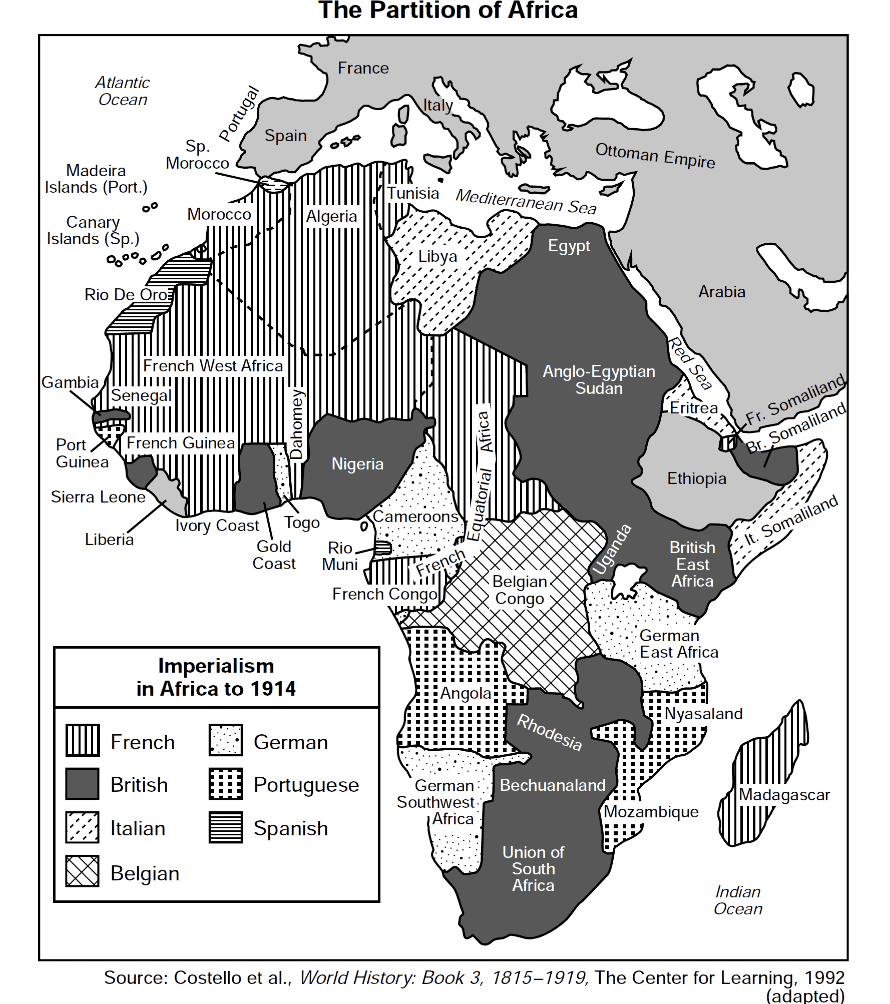
The best title for this map would be
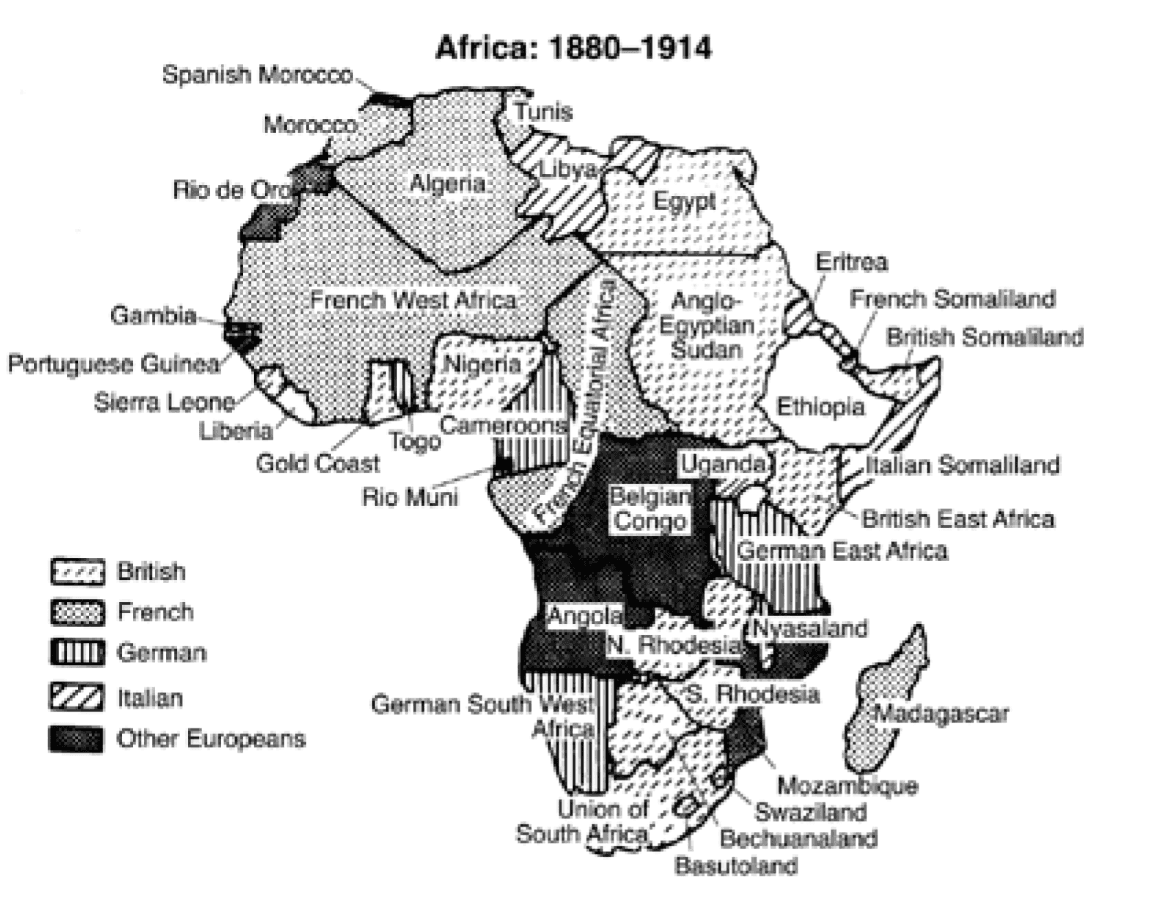
According to the information provided by the map, which European nation controlled the Union of South Africa?
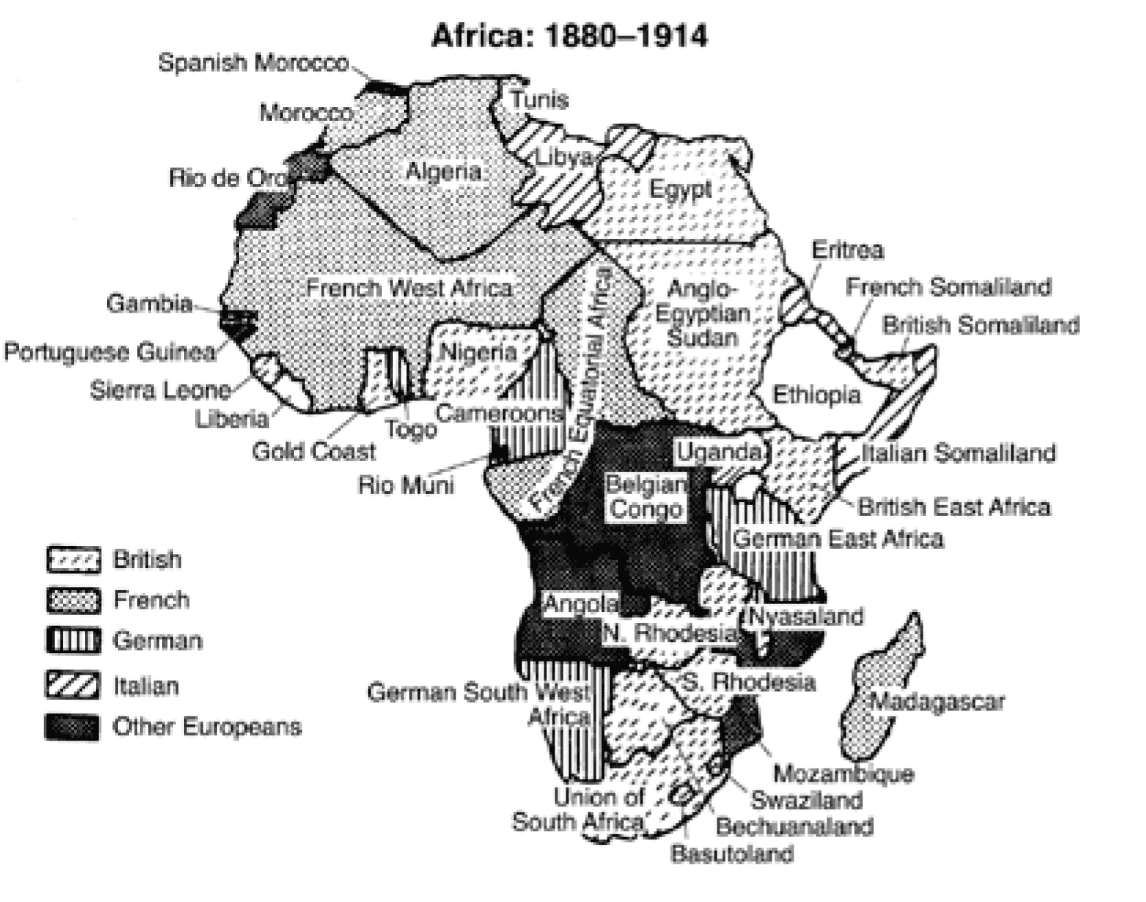
The establishment of a parliamentary democracy in India and the establishment of Portuguese as the official language of Brazil indicates that European colonizers
Which African state organized the most successful resistance movement to the European actions shown on this map?
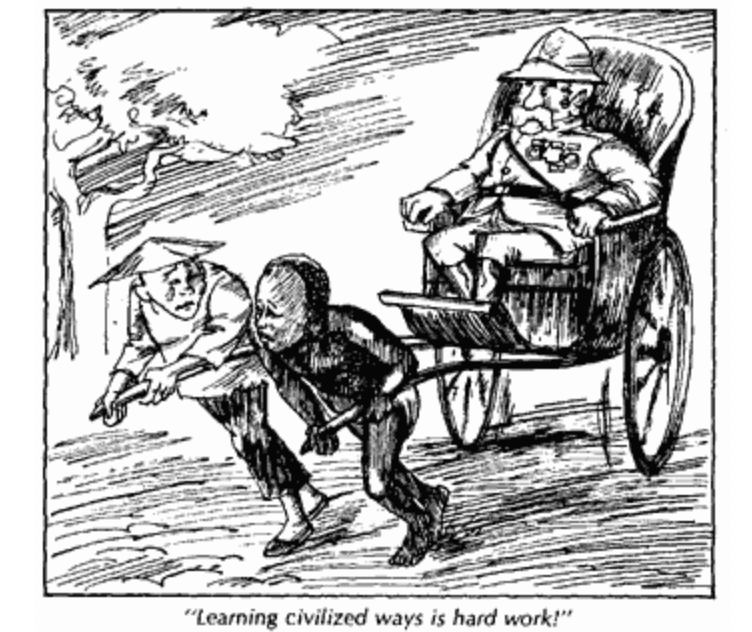
Base your answer on the cartoon below and on your knowledge of social studies.The cartoon depicts the
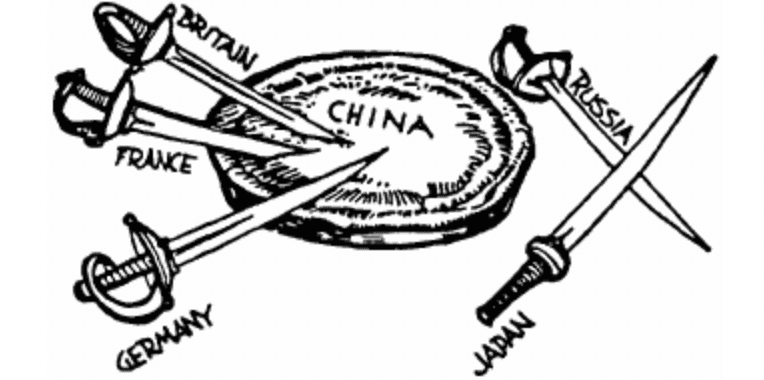
During the 19th century, European imperialism often led to the
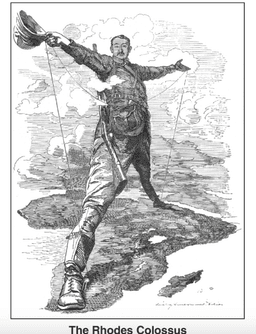
Which slogan best reflects the point of view of Cecil Rhodes as shown in this cartoon?
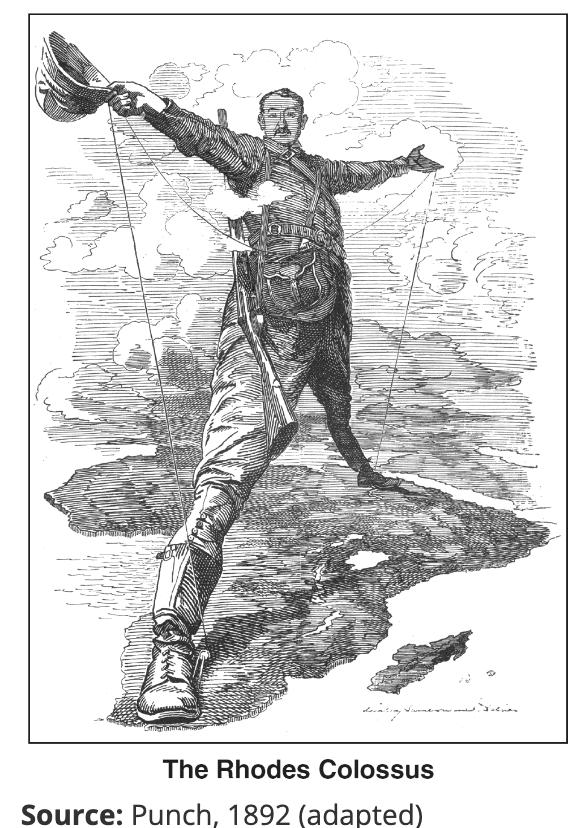
This cartoon most clearly shows the influence of which of the following?
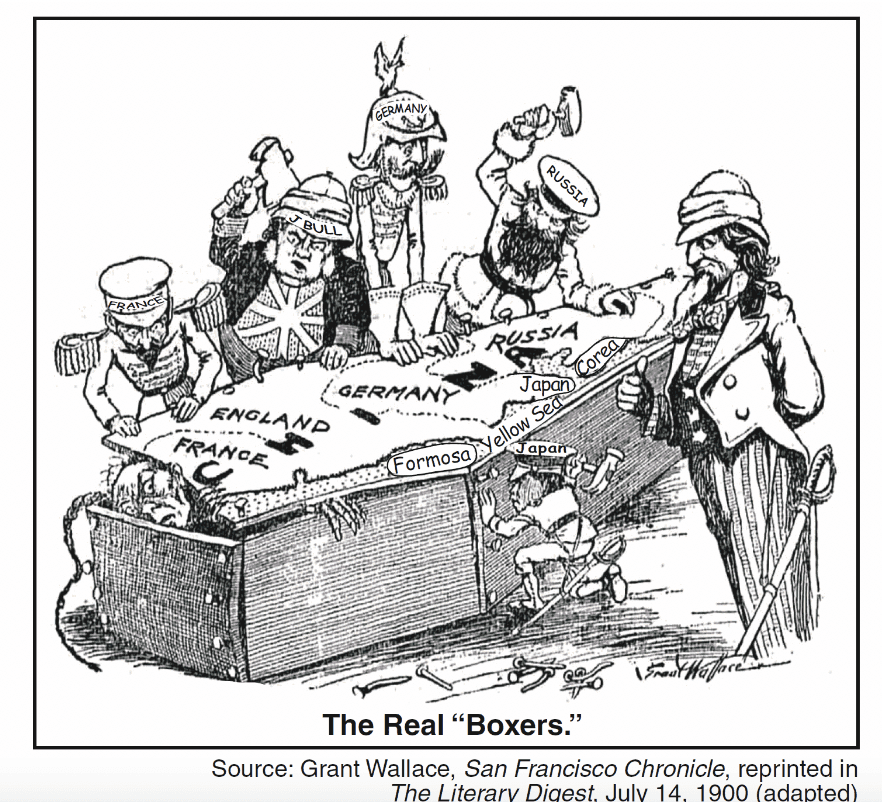
What is the main idea of the cartoon?