Interpret and compute quotients of fractions, and solve word problems involving division of fractions by fractions, e.g., by using visual fraction models and equations to represent the problem. For example, create a story context for (2/3) ÷ (3/4) and use a visual fraction model to show the quotient; use the relationship between multiplication and division to explain that (2/3) ÷ (3/4) = 8/9 because 3/4 of 8/9 is 2/3. (In general, (a/b) ÷ (c/d) = ad/bc). How much chocolate will each person get if 3 people share 1/2 lb of chocolate equally? How many 3/4- cup servings are in 2/3 of a cup of yogurt? How wide is a rectangular strip of land with length 3/4 mi and area 1/2 square mi?
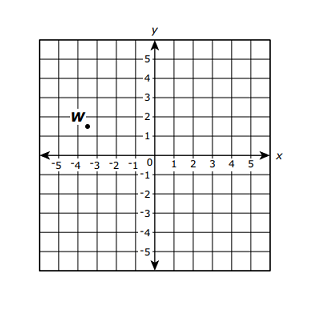
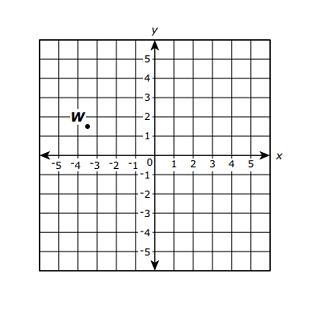
Find and position integers and other rational numbers on a horizontal or vertical number line diagram; find and position pairs of integers and other rational numbers on a coordinate
Interpret statements of inequality as statements about the relative position of two numbers on a number line diagram. For example, interpret –3 > –7 as a statement that –3 is located to the right of –7 on a number line oriented from left to right.
Find the greatest common factor of two whole numbers less than or equal to 100 and the least common multiple of two whole numbers less than or equal to 12. Use the distributive property to express a sum of two whole numbers 1–100 with a common factor as a multiple of a sum of two whole numbers with no common factor. For example, express 36 + 8 as 4 (9 + 2).
Track each student's skills and progress in your Mastery dashboards
Give this quiz to my class
Q 1/6
Score 0
60
Q 2/6
Score 0
60
Users enter free text
6 questions
Q.
1
60 sec
6.NS.A.1
Q.
2
60 sec
6.NS.C.6.c
Q.
3
60 sec
6.NS.B.3
Q.
4
60 sec
6.NS.C.7.a
Q.
5
60 sec
6.NS.B.4
Q.
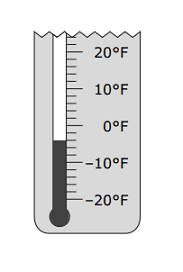
The picture shows part of a thermometer measuring temperature in degrees Fahrenheit.
What is the temperature, in degrees Fahrenheit, shown on the thermometer to the nearest integer?
Enter your integer answer in the box.