Loading...

oceans and seas
Quiz by Ayat Alsmadi
Customize this quiz to suit your class
Instantly translate to 100+ languages
Tag the questions with any skills you have. Your dashboard will track each student's mastery of each skill.
Give this quiz to my class
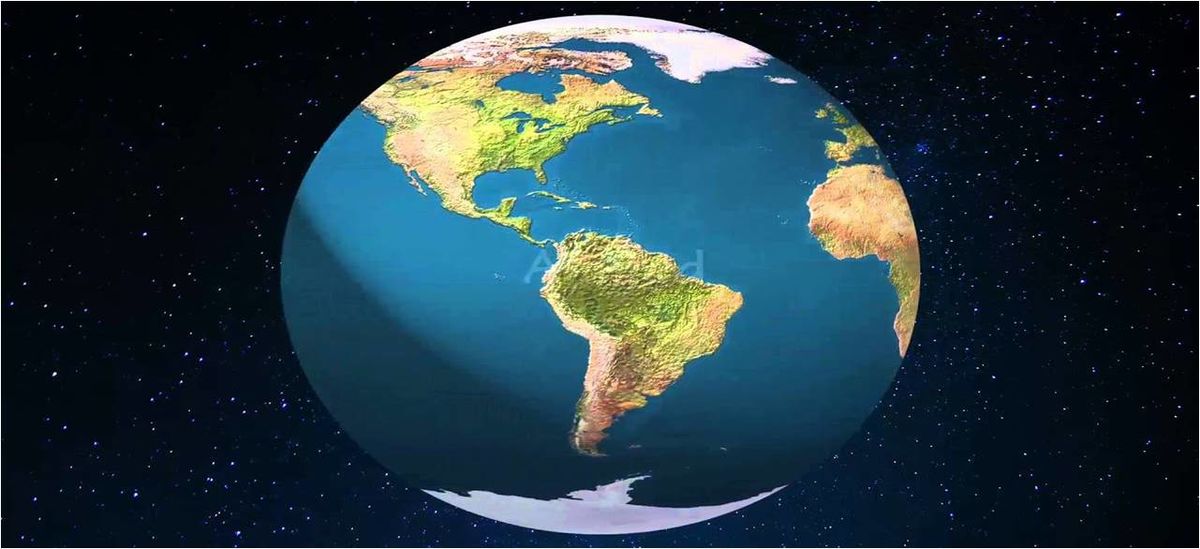
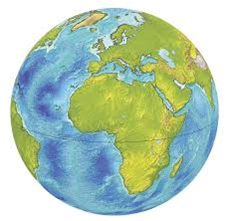
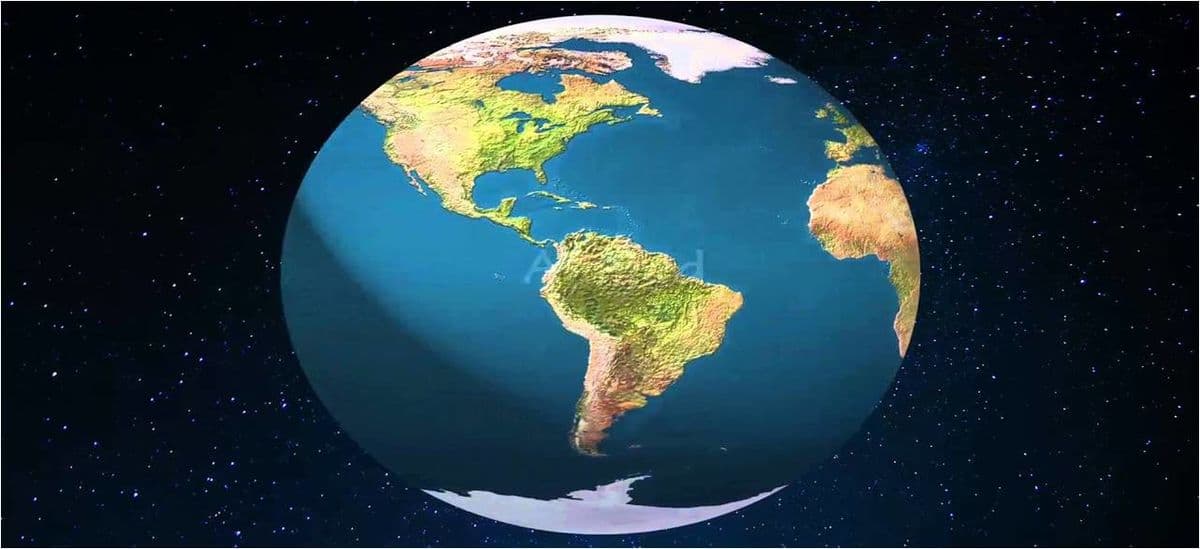
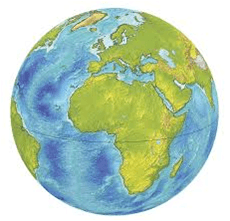
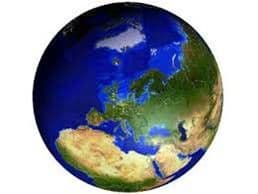
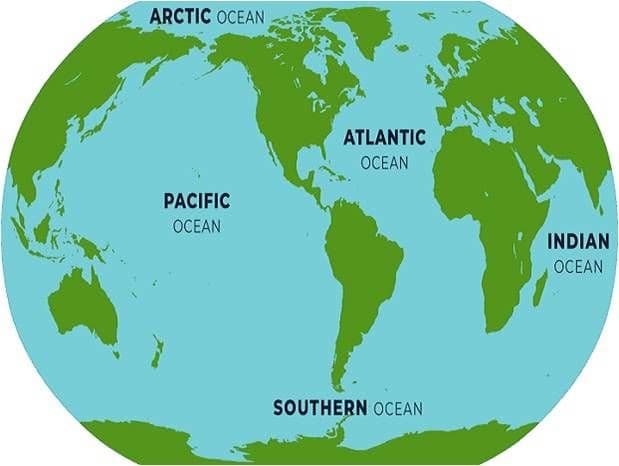
 Continents, oceans and seas7th Hw.Social. Seas and oceans Seawater covers about 60% of the world’s surface. Ever y year thousands of birds, turtles and dolphins die beca use the seas and oceans are polluted.Continents, Oceans, and Seas Based on the provided sources, here is a comprehensive extraction of the information regarding the water cycle, energy transfer, and Earth's wind systems, organized into key points: The Water Cycle and Its Reservoirs • Definition: The water cycle is the continuous movement of water among various reservoirs on Earth. • Water Reservoirs: These are storage locations for water and include: ◦ Oceans, seas, and lakes. ◦ Rivers, glaciers, soil, and rocks. ◦ The atmosphere and living organisms. • Total Volume: The total amount of water on Earth does not change, even when it changes state, because it is constantly being replaced or recycled through the cycle. Main Processes and Energy Transfer The movement of water through the cycle is driven by energy (thermal energy from the Sun) and force (gravity and wind). • Energy Gain (Absorption): ◦ Melting: Water changes from a solid state (ice) to a liquid state and gains energy. ◦ Evaporation: Liquid water changes into a gas state (water vapor) by gaining thermal energy. ◦ Transpiration: A specialized type of evaporation occurring in plants where water vapor is released through tiny holes in leaves called stomata. Approximately 10% of water vapor in the air comes from transpiration. • Energy Loss (Release): ◦ Condensation: Water vapor (gas) cools down and changes back into liquid water, releasing energy. ◦ Freezing: Liquid water changes into a solid state (ice) and loses energy. • Other Key Steps: ◦ Precipitation: Water falls back to Earth as rain, snow, sleet, or hail (snow pellets). ◦ Runoff: Water flows over Earth's surface into streams, rivers, and eventually larger bodies of water like oceans. ◦ Collection: Rainwater is collected in different water bodies to start the cycle again. Forces Driving Water Movement • Gravity: The main force that pulls water downward. It is responsible for: ◦ Bringing precipitation (rain and snow) from clouds to the surface. ◦ Moving ice in glaciers from higher to lower elevations. ◦ Causing liquid water to flow downhill into rivers and seas. ◦ Leakage: Pulling liquid water down into the ground to reach groundwater reservoirs. • Wind: Another force that affects water movement and transports water to different locations on Earth. Atmospheric Processes • Cloud Formation: Water vapor attaches to particles such as dust or smoke in the air and condenses into tiny droplets. When millions of these droplets join, they become heavy and fall as rain. • Convection: The transfer of heat in liquids and gases. ◦ Warm air/liquid: Becomes less dense, lighter, and rises upward. ◦ Cold air/liquid: Is more dense, heavier, and moves downward to replace the warm fluid. ◦ This process leads to convection currents, which help determine regional climates and drive wind and ocean currents. Solar Radiation and Climate The amount of solar energy reaching Earth differs from place to place, which affects the weather: • Hottest Regions (Equator): Sun rays fall perpendicular (vertical). Heat is concentrated on a small area, making the weather hot. • Moderate Regions: Sun rays fall semi-inclined. Heat is distributed over a larger area, making the weather warm. • Coolest Regions (Poles): Sun rays fall very slanted (inclined). Heat is spread over a very large area, making the weather very cold. Earth's Wind System • Wind Formation: Wind is generated when warm air (heated by the Sun) rises and is replaced by cooler air flowing from nearby areas. • Factors Affecting Wind: The amount of solar radiation and the rotation of Earth determine global wind directions. • Global Wind Cycle: Unequal heating between the equator and the poles generates a constant wind system. Warm air rises at the equator and moves toward the poles, while cold air from the poles moves toward the equator. • Importance: If there were no wind, the equator would become extremely hot, the poles would freeze solid, and many ecosystems would disappear. Practical Examples • Turkey’s Salt Lake: High evaporation in the summer can turn this large lake into a small puddle or dry it up completely. It is a critical site for flamingos, which migrate there to breed and feed on algae in the shallow, warm water.The film begins as a journey to film the largest animal on the planet, the blue whale. But during the journey the filmmakers (journalist Craig Leeson and environmental activist Tanya Streeter) make the shocking discovery of a huge, thick layer of plastic floating in the middle of the Indian Ocean. This prompts them to travel around the world to look at other areas that have been affected. In total, they visited 20 locations around the world during the four years it took them to make the film. The documentary premiered in 2016, and is now on streaming services such as Netflix.It’s very clear that a lot of research went into the film. There are beautiful shots of the seas and marine life. These are contrasted with scenes of polluted cities and dumps full of plastic rubbish. We see how marine species are being killed by all the plastic we are dumping in the ocean. The message about our use of plastic is painfully obvious. But the film doesn’t only present the negative side. In the second half, the filmmakers look at what we can do to reverse the tide of plastic flowing around the world. They present short-term and long-term solutions. These include avoiding plastic containers and ‘single-use’ plastic products as much as possible. Reuse your plastic bags and recycle as much as you can. The filmmakers also stress the need for governments to work more on recycling programmers, and look at how technology is developing that can convert plastic into fuel We make a staggering amount of plastic. In terms of plastic bags alone, we use five hundred billion worldwide annually. Over 300 million tons of plastic are produced every year, and at least 8 million of those are dumped into the oceans. The results are disastrous, but it isn’t too late to change. Once you’ve seen A Plastic Ocean, you’ll realize the time is now and we all have a role to play. Make a multiple choice quiz for my year 8 science students based on the science in this transcript from a video: 3°C 0:04 It can be the difference between snow and sleet 0:08 Wearing a jacket or not 0:11 In your day-to-day life, it may not seem significant 0:15 But 3°C of global warming would be catastrophic 0:20 Heatwaves, droughts, extreme precipitation, even fire 0:25 3°C of warming is really disastrous 0:28 The scary thing is, the world is well on its way there 0:32 Since the industrial revolution, the Earth has warmed between 1.1°C and 1.3°C 0:40 This is a problem that babies you pass in the street will have to live with 0:46 Children born today... 0:47 ...are up to seven times more likely to face extreme weather than their grandparents 0:52 If global temperatures do rise by 3°C... 0:55 ...what would their world look like? Climate change is already having devastating effects 1:03 Rising sea levels 1:05 Desertification 1:07 Hollywood has always enjoyed imagining the end of the world 1:11 While blockbusters like this are clearly fiction... 1:14 ...this film will show the scenario we all face... 1:17 ...unless more drastic measures are taken to stop burning fossil fuels 1:30 In some parts of the world the effects of inaction are already clear 1:35 The slums of Bangladesh’s capital are filling up with climate migrants 1:41 Minara comes from Bhola District, an area in southern Bangladesh 1:46 There, like many other parts of the country... 1:49 ...rivers swollen by heavier rain and melting Himalayan glaciers... 1:53 ...are washing away people’s homes 1:56 Many, like her, have lost everything 2:00 Our home in Bhola had endless amounts of land 2:03 There was lots of space for farming, we had a spacious house 2:08 There were different types of fruits, vegetation and trees growing at home 2:12 We used to eat the fruit from our own trees 2:18 I can’t eat them now because they don't exist anymore 2:21 Since the river flooded for the third time, I had to flee to Dhaka 2:26 Life was much better back home 2:29 It was unbearable to live through, truly intolerable 2:33 We didn’t have the time to save anything at all 2:38 1.1°C to 1.3°C of global warming has already transformed Minara’s life 2:45 It’s one of the reasons why so many migrants like her... 2:47 ...are moving to the city each year... 2:50 ...nearly 400,000 according to the last estimate 2:53 And climate models show there could be much worse to come How climate modelling works 3:02 Climate scientist Joeri Rogelj... 3:04 ...has spent the last ten years modelling future climate scenarios... 3:08 ...for the United Nations 3:10 The models we use to carry out this exercise... 3:13 ...really represent the state of the art... 3:15 ...of our current knowledge of climate change and where we are heading 3:19 Joeri’s projections use data collected by hundreds of scientists around the world 3:26 Here this is the 3°C level... 3:28 ...and so there is at least a one-in-four chance that under current policies... 3:32 ...we would hit 3°C by the end of the century 3:36 This is just one of the scenarios Joeri looks at 3:40 Another one imagines that all policy promises are kept 3:44 The most optimistic assumes that all promises have been kept... 3:47 ...and net-zero targets are met 3:50 Where our best estimate ends up around 2°C at the end of the century... 3:54 ...there is still a one-in-20 chance that we end up with 3°C instead 3:59 One would not be entering a plane if there is a one-in-20 chance... 4:03 ...that the plane will crash Nowhere is safe from global warming 4:07 A rise of 3°C would affect everyone 4:10 Even wealthy cities in rich countries wouldn’t be immune to the consequences 4:15 European capitals like Paris and Berlin... 4:18 ...would bake under more extreme heatwaves 4:22 Frequent storm-surges in New York could turn parts of the city desolate 4:27 In many ways, cities magnify, intensify climate events 4:33 Cities are hotter than the places around them... 4:36 ...they tend to be more vulnerable to flooding 4:39 And you can get a really bad event in a city in a way that you can’t in the countryside 4:46 And because of their denser populations... 4:49 ...disasters in a city affect far more people 4:52 Some cities might be badly prepared for the changes coming 4:56 But they have the means to adapt 4:59 Cities tend to be wealthier than surrounding places 5:03 They have a lot of amenities 5:05 A city that has taken seriously the risks of a 3°C world... 5:08 …wouldn’t necessarily be a worse place to be in a 3°C world 5:12 But a city that hasn’t prepared for these sort of eventualities... 5:16 ...that might be a really nasty place The impact of prolonged droughts 5:20 So far, many developed cities have got off lightly... 5:24 ...but some rural parts of the world are suffering disproportionately 5:29 Smallholders—small-scale farmers—are particularly vulnerable to climate change 5:35 And there are over 600 million around the world 5:38 Smallholders with farms under two hectares... 5:40 ...produce around a third of the global food supply 5:46 Central America’s “Dry Corridor”... 5:48 ...supports a mix of smallholdings and medium-sized farms 5:53 Sandwiched between the Pacific Ocean and the Caribbean Sea... 5:56 ...the area is prone to droughts 6:08 Israel Ramírez Rivera is a smallholder in Guatemala 6:12 Here, climate change is making the dry seasons longer, and more severe 6:18 This is the biggest ear of maize that this plot could deliver 6:23 He depends on his crops of corn and beans 6:26 But they’re getting harder to grow 6:30 The surrounding mountains... 6:32 ...used to provide us with native food... 6:38 ...and now that isn’t an option anymore... 6:41 ...due to climate change and its effects 6:46 Nearly two-thirds of the smallholders in the Dry Corridor now live in poverty 6:52 The impact of all of this for us... 6:59 ...malnutrition among children 7:03 We’ve lost a few 7:07 For my crops especially, the midsummer heat is harder than before 7:16 The plant dries up and can’t provide us... 7:19 ...with the necessary food provision 7:24 Severe droughts in Central America... 7:26 ...are now four times more likely than they were last century 7:30 Many families from here have gone to the States 7:37 The economic despair and debts... 7:44 ...have pushed many people from this community to do this journey 7:53 Migration from Guatemala to the United States has quadrupled since 1990 7:59 Not all of this has been due to climate change 8:02 But longer droughts would force even more to move 8:05 In a 3°C world, annual rainfall in this region... 8:09 ...could drop by up to 14% 8:12 At 3°C, over a quarter of the world’s population... 8:16 ...could endure extreme droughts for at least a month of the year 8:19 Northern Africa could see droughts that last for years at a time Rising sea levels, storm surges and flooding 8:24 But for some, too much water will be the problem 8:29 10% of the world’s population lives on a coastline... 8:32 ...that’s less than 10 metres above sea level 8:35 For these coastal inhabitants, a 3°C world would spell disaster 8:40 By 2100, global sea levels could have climbed by half a metre from 2005 levels 8:46 Low-lying cities like Lagos would be especially vulnerable... 8:49 ...with up to up to a third of the population displaced 8:54 And in Fiji, rising waters are already upending lives 9:04 You can see the graveyard there, it’s all under water now... 9:08 ...due to this rising sea level and climate change 9:15 The village of Togoru in Fiji is being swallowed by the sea 9:19 Barney Dunn, the village headman, has seen over half the village disappear 9:24 Relatives’ houses have been abandoned, and family graves are now under water 9:29 We have been asked by the government to relocate... 9:32 ...but no one wants to relocate... 9:34 ...because we have our great-great-grandparents down there in the sea 9:39 This is the place we’ve been brought up in 9:41 ...it’s not easy to leave 9:44 Past attempts to build a seawall haven’t worked 9:48 But Barney sees building a new one as the village’s only hope 9:52 If they do that, maybe we can save whatever is left 9:56 But if we don’t have the seawall, then it will be keep eroding and time will come... 10:01 ...maybe in ten,15 years, Togoru will be all eroded 10:05 Rising seas also mean storms cause more floods 10:11 And many more countries could suffer 10:14 The Philippines and Myanmar are just two countries... 10:17 ...that will also see an increase in storm surges in a 3°C world 10:21 To escape, many will move… 10:24 …often, to urban areas Extreme heat and wet-bulb temperatures 10:27 Half the world’s population already lives in cities... 10:31 ...almost a third in slums 10:36 For them, a 3°C world could be deadly 10:40 Minara has moved to Dhaka to escape the impact of climate change 10:44 But life could get even worse for her 10:47 I’m struggling a lot nowadays 10:49 The heat during the day is unbearable 10:52 Even late at night it doesn’t cool down 10:57 The heat is getting more intense every day 10:59 I mean, it’s going to get much worse 11:03 I can barely survive it now, how will I live through it in the future? 11:08 Dhaka is getting hotter 11:11 In the last 20 years the average daytime temperature... 11:13 ...has crept up by nearly half a degree 11:17 Days that approach 40°C are now being reported 11:20 And high so-called wet-bulb temperatures are on the rise 11:26 A wet-bulb temperature is a measure of heat and humidity 11:30 Humans cool themselves by sweating… 11:32 But in these conditions, when relative humidity is near 100%... 11:36 ...sweat doesn’t evaporate well 11:38 So people can’t cool down… 11:41 ...even if given unlimited shade and water 11:45 At a high wet-bulb temperature, the body can’t lose heat... 11:49 ...and so it gets hotter and hotter... 11:51 ...and the body is designed to work at a given temperature 11:53 And if it gets too hot inside, you will die 11:58 The human limit for wet-bulb temperatures is 35°C... 12:02 ...around skin temperature 12:04 Dhaka will have a much higher chance... 12:05 ...of reaching dangerous wet-bulb temperatures... 12:07 ...if global warming reaches 3°C 12:12 You can’t really adapt to that 12:14 You have to get out. If the temperature is so high that you can’t work... 12:20 ...can’t do hard manual labour outside for significant parts of the year... 12:25 ...then many places will become functionally no longer part of the economy 12:33 Jacobabad in Pakistan, and Ras al Khaimah, in the United Arab Emirates... 12:37 ...have already recorded deadly wet-bulb temperatures 12:40 More of the tropics and the Persian Gulf... 12:43 ...as well as parts of Mexico and the south-eastern United States... 12:47 ...could all get to this threshold by the end of the century 12:50 Climate modelling might show us the weather Increased migration and conflict 12:52 But it doesn’t show us its other effects on society 12:56 Established migration patterns could change 12:59 Climate disasters may exacerbate reasons people cross borders 13:03 Within countries, more people will move to cities 13:07 In a 3°C world, tens of millions of people a year... 13:10 ...could be displaced by disasters made worse by climate change 13:15 When people are displaced by climate... 13:18 …they may well go to cities... 13:19 ...because cities are the places that attract people from the countryside already 13:25 A lot of people who can get to the developed world... 13:28 ...not least because the developed world tends to be less hot, will give that a go 13:35 As migration around the world increases... 13:38 ...there could be more competition for fewer resources 13:42 Water—already a highly contested resource—will be a focal point 13:47 Turkey’s new Ilisu dam has reduced the flow of water into Iraq 13:53 China lays claim to rivers vital to India and Pakistan 13:57 The prospect of a water-conflict makes people very uneasy 14:03 How national tensions would exacerbate those sorts of reactions... 14:08 ...in a 3°C world... 14:09 ...is the sort of thing that no one should really want to find out 14:14 I think you’d have to be incredibly sanguine... 14:16 ...not to think that the sort of climate extremes that we talk about... 14:19 ...in a 3°C world wouldn’t lead some places... 14:22 ...to the brink of societal collapse 14:25 Those lucky enough to escape unrest... Adaptation and mitigation are crucial 14:28 ...would still have to adapt to a radically different world 14:32 People can adapt to climate change in all sorts of ways, one of the most obvious ones... 14:37 ...is air conditioning 14:39 But other ways to adapt at a local or regional level... 14:42 ...I mean, one of the most obvious is diversifying agriculture 14:47 There are physical things you can do, like seawalls 14:52 The fact that people can adapt and that adaptation will reduce suffering... 14:57 ...doesn’t mean that it will eliminate suffering 15:00 Suffering is built into this whole process of heating up the planet 15:06 Adaptation will only get the world so far 15:09 The best way to deal with a 3°C world... 15:12 ...is not to go to a 3°C world 15:14 And that’s why increasing efforts on mitigation are important 15:17 It’s why working towards negative emissions... 15:20 ...that could bring down the temperature after it peaks are important 15:25 Once you get to a 3°C world, you are in real bad global trouble 15:33 The scale of change needed... 15:35 ...and the slow progress of governments so far... 15:38 ...means 3°C of warming is uncomfortably likely unless more is done 15:44 Despite existing pledges, greenhouse-gas emissions... 15:48 ...are still set to rise by 16% from 2010 levels by 2030 15:54 The need to act has never been clearer 15:57 There’s still time to reduce emissions, so that a 3°C world remains fiction... 16:02 ...rather than becoming factContact with the Americas In 1001, Viking sailors led by Leif Erikson reached the eastern tip of North America. Archaeologists have found evidence of the Viking settlement of Vinland in present-day Newfoundland, Canada. The Vikings did not stay in Vinland long and no one is sure why they left. However, Viking stories describe fierce battles with Skraelings, the Viking name for the Inuit. Evidence suggests that Asians continued to cross the Bering Sea into North America after the last ice age ended. Some scholars believe that ancient seafarers from Polynesia may have traveled to the Americas using their knowledge of the stars and winds. Modern Polynesians have sailed canoes thousands of miles in this way. Still others think that fishing boats from China and Japan blew off course and landed on the western coast of North or South America. Perhaps such voyages occurred. If so, they were long forgotten. Before 1492, the peoples of Asia and Europe had no knowledge of the Americas and their remarkable civilizations. The Voyages of Columbus Portuguese sailors had pioneered new routes around Africa toward Asia in the late 1400s. Spain, too, wanted a share of the riches. King Ferdinand and Queen Isabella hoped to keep their rival, Portugal, from controlling trade with India, China, and Japan. They agreed to finance a voyage of exploration by Christopher Columbus. Columbus, an Italian sea captain, planned to reach the East Indies by sailing west across the Atlantic. Finding a sea route straight to Asia would give the Spanish direct access to the silks, spices, and precious metals of Asia. The spice trade was a major cause for European exploration and a reason the Spanish rulers supported Columbus’s voyage. They also wanted wealth from any source. “Get gold,” King Ferdinand said to Columbus. “Humanely if possible, but at all hazards—get gold.” Crossing the Atlantic In August 1492, Columbus set out with three ships and about 90 sailors. As captain, he commanded the largest vessel, the Santa María. The other ships were the Niña and the Pinta. After a brief stop at the Canary Islands, the little fleet continued west into unknown seas. Fair winds sped them along, but a month passed without the sight of land. Some sailors began to grumble. They had never been away from land for so long and feared being lost at sea. Still, Columbus sailed on. On October 7, sailors saw flocks of birds flying southwest. Columbus changed course to follow the birds. A few days later, crew members spotted tree branches and flowers floating in the water. At 2 a.m. on October 12, the lookout on the Pinta spotted white cliffs shining in the moonlight. “Tierra! Tierra!” he shouted. “Land! Land!” At dawn, Columbus rowed ashore and planted the banner of Spain. He was convinced that he had reached the East Indies in Asia. He called the people he found there “Indians.” In fact, he had reached islands off the coasts of North America and South America in the Caribbean Sea. These islands later became known as the West Indies. For three months, Columbus explored the West Indies. To his delight, he found signs of gold on the islands. Eager to report his success, he returned to Spain. Columbus Claims Lands for Spain In Spain, Columbus presented Queen Isabella and King Ferdinand with gifts of pink pearls and brilliantly colored parrots. Columbus brought with him many things that Europeans had never seen before: tobacco, pineapples, and hammocks used for sleeping. Columbus also described the “Indians” he had met, the Taino (ty noh). The Taino, he promised, could easily be converted to Christianity and could also be used as slaves. The Spanish monarchs were impressed. They gave Columbus the title Admiral of the Ocean Sea. They also agreed to finance future voyages. The promise of great wealth, and the chance to spread Christianity, gave them a reason to explore further. Columbus made three more voyages across the Atlantic. In 1493, he founded the first Spanish colony in the Americas, Santo Domingo, on an island he called Hispaniola (present-day Haiti and the Dominican Republic). A colony is an area settled and ruled by the government of a distant land. Columbus also explored present-day Cuba and Jamaica. He sailed along the coasts of Central America and northern South America. He claimed all of these lands for Queen Isabella of Spain. Columbus proved to be a better explorer than governor. During his third expedition, settlers on Hispaniola complained of his harsh rule. Queen Isabella appointed an investigator, who sent Columbus back to Spain in chains. In the end, the queen pardoned Columbus, but he never regained the honors he had won earlier. He died in 1506, still convinced that he had reached Asia. The Impact of Columbus’s Voyages Columbus has long been honored as the bold sea captain who “discovered America.” Today, we recognize that American Indians had discovered and settled these lands long before 1492. We also recognize that Columbus and the Europeans who followed him treated the ancient inhabitants of the Americas brutally. Still, Columbus’s voyages did change history. They marked the beginning of lasting contact among the peoples of Europe, Africa, and the Americas. For a great many American Indians, contact had tragic results. Columbus and those who followed were convinced that European culture was superior to that of the Indians. The Spanish claimed Taino lands and forced the Taino to work in gold mines, on ranches, or in Spanish households. Many Taino died from harsh conditions or European diseases. The Taino population was wiped out. Still, the voyages of Columbus signaled a turning point for the Americas. A turning point is a moment in history that marks a decisive change. Curious Europeans saw the new lands as a place where they could settle, trade, and grow rich. Spanish Exploration Continues After the voyages of Columbus, the Spanish explored and settled other Caribbean islands that Columbus had found. They sought gold, land for crops, people to enslave, and converts to Christianity for the Spanish crown. By 1511, they had conquered Puerto Rico, Jamaica, and Cuba. They also explored the eastern coasts of North America and South America in search of a western route to Asia. In 1513, Vasco Núñez de Balboa (bal boh uh) crossed the Isthmus of Panama. American Indians had told him that a large body of water lay to the west. With a party of Spanish soldiers and Indians, Balboa reached the Pacific Ocean and claimed the ocean for Spain. The Spanish had no idea how wide the Pacific was until a sea captain named Ferdinand Magellan (muh jel un) sailed across it. The expedition—made up of five ships and about 250 crew members—left Spain in 1519. Fifteen months later, it cut through the stormy southern tip of South America by way of what is now known as the Strait of Magellan and entered the Pacific Ocean. Crossing the vast Pacific, the sailors ran out of food: Primary Source “We remained 3 months and 20 days without taking in provisions or other refreshments and ate only old biscuit reduced to powder, full of grubs and stinking from the dirt which rats had made on it. We drank water that was yellow and stinking.” —Antonio Pigafetta, The Diary of Antonio Pigafetta Magellan himself was killed in a battle with the local people of the Philippine Islands off the coast of Asia. In 1522, only one ship and 18 sailors returned to Spain. They were the first people to circumnavigate, or sail completely around, the world. In doing so, they had found an all-water western route to Asia. Europeans became aware of the true size of the Earth. How Did the Columbian Exchange Affect the Rest of the World? The encounter between the peoples of the Eastern and Western Hemispheres sparked a global exchange of goods and ideas. Because it started with the voyages of Columbus, this transfer is known as the Columbian Exchange. The Columbian Exchange refers to a biological and cultural exchange of animals, plants, human populations, diseases, food, government, technology, the arts, and languages. The exchange went in both directions. Europeans learned much from American Indians. At the same time, Europeans contributed in many ways to the culture of the Americas. This exchange also brought about many modifications, or changes, to the physical environment of the Americas, with both positive and negative results. Changing Environments Europeans introduced domestic animals such as chickens from Europe and Africa. European pigs, cattle, and horses often escaped into the wild and multiplied rapidly. Forests and grasslands were converted to pastures. As horses spread through what would become the United States, Indians learned to ride them and used them to carry heavy loads. Plants from Europe and Africa changed the way American Indians lived. The first bananas came from the Canary Islands. By 1520, one Spaniard reported that banana trees had spread “so greatly that it is marvelous to see the great abundance of them.” Oranges, lemons, and figs were also new to the Americas. In North America, explorers also brought such plants as bluegrass, the daisy, and the dandelion. These plants spread quickly in American soil and modified American grasslands. Tragically, Europeans also brought new diseases, such as smallpox and influenza. American Indians had no resistance to these diseases. Historians estimate that within 75 years, diseases from Europe had killed almost 90 percent of the people in the Caribbean Islands and in Mexico. American Indian Influences on Europe, Africa and Asia American Indians introduced Europeans to valuable food crops such as corn, potatoes, sweet potatoes, beans, tomatoes, manioc, squash, peanuts, pineapples, and blueberries. Today, almost half the world’s food crops come from plants that were first grown in the Americas. Europeans carried the new foods with them as they sailed around the world. Everywhere, people’s diets changed and populations increased. In South Asia, people used American hot peppers and chilies to spice stews. Chinese peasants began growing corn and sweet potatoes. Italians made sauces from tomatoes. People in West Africa grew manioc and corn. European settlers often adopted American Indian skills. In the North, Indians showed Europeans how to use snowshoes and trap beavers and other fur-bearing animals. European explorers learned how to paddle Indian canoes. Some leaders studied American Indian political structures. In the 1700s, Benjamin Franklin admired the Iroquois League and urged American colonists to unite in a similar way. Positive and Negative Consequences Through the Columbian Exchange, Europeans and American Indians modified their environments and gained new resources and skills. At the same time, warfare and disease killed many on both sides. Europeans viewed expansion positively. They gained great wealth, explored trade routes, and spread Christianity. Yet their farming, mining, and diseases took a toll on the physical environment and left many American Indians dead. Despite these negatives, the Columbian Exchange shaped the modern world, including what would become the United States.