Loading...


On the animal farm
Quiz by Oxana
Customize this quiz to suit your class
Instantly translate to 100+ languages
Tag the questions with any skills you have. Your dashboard will track each student's mastery of each skill.
Give this quiz to my class
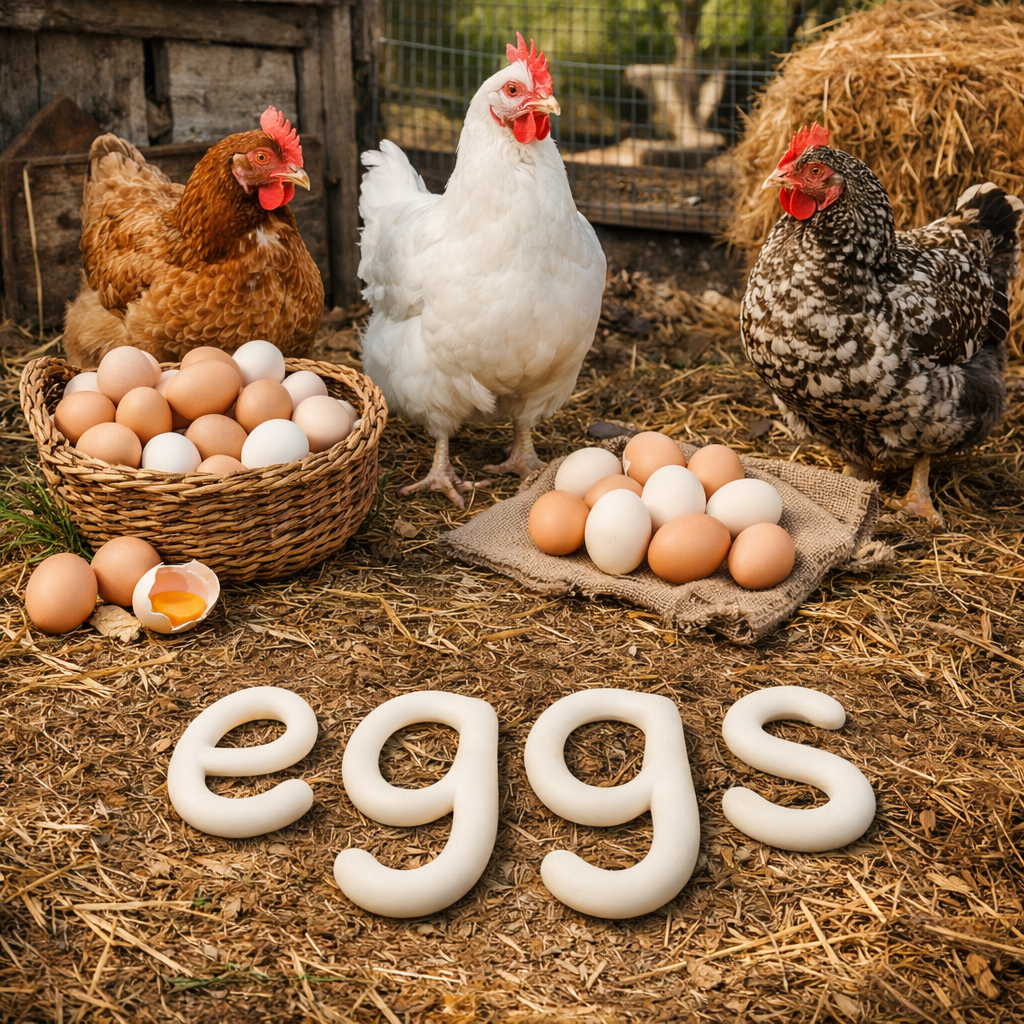
Which animal is pink has a curly tail?

Which animal is pink has a curly tail?

The horse is

The cat is

I have 3 yellow chickens and 3 brown. How many chickens do I have?
 Hi, I'm John Green, this is Crash Course U.S. History, and today, we're going to talk about slavery, which is not funny. 0:06 Yeah, so we put a lei on the eagle to try and cheer you up, but let's face it, this is going to be depressing. 0:10 With slavery, every time you think, like, "Aw, it couldn't have been that bad," it turns out to have been much worse. 0:14 Mr. Green, Mr. Green! But what about – 0:15 Yeah, Me from the Past, I'm going to stop you right there, because you're going to embarrass yourself. Slavery was hugely important to America. 0:20 I mean, it led to a civil war and it also lasted what, at least in U.S. history, counts as a long-ass time, from 1619 to 1865. 0:29 And yes, I know there's a 1200-year-old church in your neighborhood in Denmark, but we're not talking about Denmark! 0:35 But slavery is most important because we still struggle with its legacy. 0:38 So, yes, today's episode will probably not be funny, but it will be important. 0:42 [Theme Music] North & South economic ties 0:51 So the slave-based economy in the South is sometimes characterized as having been separate from the Market Revolution, but that's not really the case. 0:57 Without southern cotton, the North wouldn't have been able to industrialize, at least not as quickly, because cotton textiles were one of the first industrially products. 1:04 And the most important commodity in world trade by the nineteenth century, and 3/4 of the world's cotton came from the American South. 1:11 And speaking of cotton, why has no one mentioned to me that my collar has been half popped this entire episode, like I'm trying to recreate the Flying Nun's hat. 1:18 And although there were increasingly fewer slaves in the North as northern states outlawed slavery, cotton shipments overseas made northern merchants rich. 1:26 Northern bankers financed the purchase of land for plantations. 1:29 Northern insurance companies insured slaves who were, after all, considered property, and very valuable property. 1:35 And in addition to turning cotton into cloth for sale overseas, northern manufacturers sold cloth back to the South, where it was used to clothe the very slaves who had cultivated it. 1:45 But certainly the most prominent effects of the slave-based economy were seen in the South. Slave-based agriculture in the South 1:49 The profitability of slaved-based agriculture, especially King Cotton, meant that the South would remain largely agricultural and rural. 1:56 Slave states were home to a few cities, like St. Louis and Baltimore, but with the exception of New Orleans, 2:00 almost all southern urbanization took place in the upper South, further away from the large cotton plantations. 2:06 And slave-based agriculture was so profitable that it siphoned money away from other economic endeavors. 2:11 Like, there was very little industry in the South. 2:13 It produced only 10% of the nation's manufactured goods. 2:16 And, as most of the capital was being plowed into the purchase of slaves, there was very little room for technological innovation, like, for instance, railroads. 2:23 This lack of industry and railroads would eventually make the South suck at the Civil War, thankfully. 2:27 In short, slavery dominated the South, shaping it both economically and culturally, and slavery wasn't a minor aspect of American society. Popular attitudes concerning slavery 2:35 By 1860, there were four million slaves in the U.S., and in the South, they made up one third of the total population. 2:42 Although in the popular imagination, most plantations were these sprawling affairs with hundreds of slaves, 2:47 in reality, the majority of slaveholders owned five or fewer slaves. 2:51 And, of course, most white people in the South owned no slaves at all, though, if they could afford to, they would sometimes rent slaves to help with their work. 2:57 These were the so-called yeoman farmers who lived self-sufficiently, raised their own food, and purchased very little in the Market Economy. 3:04 They worked the poorest land and, as a result, were mostly pretty poor themselves. 3:08 But even they largely supported slavery, partly, perhaps, for aspirational reasons, and partly because the racism inherent to the system gave even the poorest whites legal and social status. 3:18 And southern intellectuals worked hard to encourage these ideas of white solidarity and to make the case for slavery. 3:23 Many of the founders, a bunch of whom you'll remember, held slaves, saw slavery as a necessary evil. 3:29 Jefferson once wrote, quote, "As it is, we have the wolf by the ear, and we can neither hold him, nor safely let him go. 3:37 Justice is on one scale, and self-preservation in the other." 3:41 The belief that justice and self-preservation couldn't sit on the same side of the scale was really opposed to the American idea, 3:47 and, in the end, it would make the Civil War inevitable. 3:50 But as slavery became more entrenched in these ideas of liberty and political equality were embraced by more people, 3:55 some southerners began to make the case that slavery wasn't just a necessary evil. 3:59 They argued, for instance, that slaves benefited from slavery. 4:03 Because, you know, because their masters fed them and clothed them and took care of them in their old age. 4:07 You still hear this argument today, astonishingly. 4:09 In fact, you'll probably see asshats in the comments saying that in the comments. 4:12 I will remind you, it's not cursing if you are referring to an actual ass. 4:15 This paternalism allowed masters to see themselves as benevolent and to contrast their family-oriented slavery with the cold, mercenary Capitalism of the free-labor North. 4:26 So yeah, in the face of rising criticism of slavery, some southerners began to argue that the institution was actually good for the social order. 4:33 One of the best-known proponents of this view was John C. Calhoun, who, in 1837, said this in a speech on the Senate floor: 4:40 "I hold that, in the present state of civilization, 4:43 where two races of different origin and distinguished by color and other physical differences as well as intellectual, are brought together, 4:51 the relation now existing in the slave-holding states between the two is, instead of an evil, a good. A positive good." 4:59 Now, of course, John C. Calhoun was a fringe politician, and nobody took his views particularly seriously. 5:04 Stan: Well, he was Secretary of State from 1844 to 1845. 5:07 John: Well, I mean, who really cares about the Secretary of State, Stan? 5:10 Danica: Eh, he was also Secretary of War from 1817 to 1825. 5:13 John: All right, but we don't even have a Secretary of War anymore, so... 5:16 Meredith: And he was Vice President from 1825 to 1832. 5:19 John: Oh my god, were we insane?! 5:21 We were, of course, but we justified the insanity with Biblical passages and with the examples of the Greeks and Romans, 5:28 and with outright racism, arguing that black people were inherently inferior to whites. 5:33 And that not to keep them in slavery would upset the natural order of things. 5:37 A worldview popularized millennia ago by my nemesis, Aristotle. God, I hate Aristotle. 5:42 You know what defenders of Aristotle always say? 5:44 "He was the first person to identify dolphins." 5:47 Well, ok, dolphin identifier. 5:50 Yes, that is what he should be remembered for, but he's a terrible philosopher! Lives & experiences of enslaved people 5:53 Here's the truth about slavery: 5:55 It was coerced labor that relied upon intimidation and brutality and dehumanization. 6:00 And this wasn't just a cultural system, it was a legal one. 6:03 I mean, Louisiana law proclaimed that a slave "owes his master... a respect without bounds, and an absolute obedience." 6:09 The signal feature of slaves' lives was work. 6:12 I mean, conditions and tasks varied, but all slaves labored, usually from sunup to sundown, and almost always without any pay. 6:20 Most slaves worked in agriculture on plantations, and conditions were different, depending on which crops are grown. 6:25 Like, slaves on the rice plantations of South Carolina had terrible working conditions, 6:29 but they labored under the task system, which meant that once they had completed their allotted daily work, they would have time to do other things. 6:36 But lest you imagine this is like how we have work and leisure time, bear in mind that they were owned and treated as property. 6:42 On cotton plantations, most slaves worked in gangs, usually under the control of an overseer, or another slave who was called a "driver." 6:49 This was back-breaking work done in the southern sun and humidity, and so it's not surprising that whippings – or the threat of them – were often necessary to get slaves to work. 6:58 It's easy enough to talk about the brutality of slave discipline, but it can be difficult to internalize it. 7:03 Like, you look at these pictures, but because you've seen them over and over again, they don't have the power they once might have. 7:09 The pictures can tell a story about cruelty, but they don't necessarily communicate how arbitrary it all was. 7:14 As, for example, in this story, told by a woman who was a slave as a young girl: 7:18 "[The] overseer... went to my father one morning and said, "Bob, I'm gonna whip you this morning." 7:22 Daddy said, "I ain't done nothing," and he said, "I know it, I'm going to whip you to keep you from doing nothing," 7:28 and he hit him with that cowhide – you know it would cut the blood out of you with every lick if they hit you hard." 7:33 That brutality – the whippings, the brandings, the rape – was real, and it was intentional, because, in order for slavery to function, slaves had to be dehumanized. 7:43 This enabled slaveholders to rationalize what they were doing, and it was hoped to reduce slaves to the animal property that is implied by the term "chattel slavery." 7:51 So the idea was that slaveholders wouldn't think of their slaves as human, and slaves wouldn't think of themselves as human. 7:57 But it didn't work. Let's go to the Thought Bubble. 7:59 Slaves' resistance to their dehumanization took many forms, but the primary way was by forming families. Family, love, & religion of enslaved people 8:05 Family was a refuge for slaves and a source of dignity that masters recognized and sought to stifle. 8:10 A paternalistic slave owner named Bennet H. Barrow wrote in his rules for the Highland Plantation: 8:15 "No rule that I have stated is of more importance than that relating to Negroes marrying outside of the plantation... It creates a feeling of independence." 8:23 Most slaves did marry, usually for life, and, when possible, slaves grew up in two-parent households. 8:28 Single-parent households were common, though, as a result of one parent being sold. 8:32 In the upper South, where the economy was shifting from tobacco to different, less labor-intensive cash crops, the sale of slaves was common. 8:40 Perhaps one-third of slave marriages in states like Virginia were broken up by sale. 8:45 Religion was also an important part of life in slavery. 8:47 While masters wanted their slaves to learn the parts of the Bible that talked about being happy in bondage, 8:52 slave worship tended to focus on the stories of Exodus, where Moses brought the slaves out of bondage, 8:57 or Biblical heroes, who overcame great odds, like Daniel and David. 9:01 And, although most slaves were forbidden to learn to read and write, many did anyway. And some became preachers. 9:07 Slave preachers were often very charismatic leaders, and they roused the suspicion of slave owners, and not without reason. 9:13 Two of the most important slave uprisings in the South were led by preachers. 9:16 Thanks, Thought Bubble. 9:17 Oh, it's time for the Mystery Document? Mystery Document 9:19 We're doing two set pieces in a row? All right. [buzzing noise] [music] 9:24 The rules here are simple. 9:26 I wanted to re-shoot that, but Stan said no. 9:29 I guess the author of the Mystery Document. 9:30 If I am wrong, I get shocked with the shock pen. 9:33 "Since I have been in the Queen's dominions I have been well contented, yes well contented for sure, man is as God intended he should be. 9:40 That is, all are born free and equal. 9:43 This is a wholesome law, not like the southern laws which puts man made in the image of God on level with brutes. 9:49 O, what will become of the people, and where will they stand in the day of judgment. 9:53 Would that the 5th verse of the 3rd chapter of Malachi were written as with a bar of iron, 9:59 and the point of a diamond upon every oppressor's heart that they might repent of this evil, and let the oppressed go free..." 10:06 All right, it's definitely a preacher, because only preachers have read Malachi. 10:10 Probably African American, probably not someone from the South. 10:13 I'm going to guess that it is Richard Allen, the founder of the African Methodist Episcopal Church? 10:18 [buzzing noise] DAAAH, DANG IT! 10:19 It's Joseph Taper, and Stan just pointed out to me that I should have known it was Joseph Taper because it starts out, 10:24 "Since I have been in the Queen's dominions..." 10:27 He was in Canada. He escaped slavery to Canada. The Queen's dominions! 10:31 All right, Canadians, I blame you for this, although, thank you for abolishing slavery decades before we did. 10:36 [electric sounds] AHHH! How people resisted & escaped slavery 10:37 So, the Mystery Document shows one of the primary ways that slaves resisted their oppression: by running away. 10:42 Although some slaves like Joseph Taper escaped for good by running away to northern free states, 10:47 or even to Canada, where they wouldn't have to worry about fugitive slave laws, even more slaves ran away temporarily, hiding out in the woods or the swamps, and eventually returning. 10:55 No one knows exactly how many slaves escaped to freedom, but the best estimate is that a thousand or so a year made the journey northward. 11:01 Most fugitive slaves were young men, but the most famous runaway has been hanging out behind me all day long: Harriet Tubman. 11:07 Harriet Tubman escaped to Philadelphia at the age of 29, and over the course of her life, she made about 20 trips back to Maryland to help friends and relatives make the journey north on the Underground Railroad. 11:17 But a more dramatic form of resistance to slavery was actual, armed rebellion, which was attempted. 11:22 Now, individuals sometimes took matters into their own hands and beat or even killed their white overseers or masters. 11:27 Like Bob, the guy who received the arbitrary beating, responded to it by killing his overseer with a hoe. 11:33 But that said, large-scale slave uprisings were relatively rare. 11:36 The four most famous ones all took place in a 35-year period at the beginning of the 19th century. Slave rebellions 11:41 Gabriel's Rebellion in 1800 – which we've talked about before – was discovered before he was able to carry out his plot. 11:45 Then, in 1811, a group of slaves upriver from New Orleans seized cane, knives, and guns, and marched on the city before militia stopped them. 11:52 And in 1822, Denmark Vesey, a former slave who had purchased his freedom, may have organized a plot to destroy Charleston, South Carolina. 11:59 I say "may have" because the evidence against him is disputed and comes from a trial that was not fair. 12:05 But regardless, the end result of that trial was that he was executed, as were 34 slaves. Nat Turner's Rebellion 12:09 But the most successful slave rebellion, at least in the sense that they actually killed some people, was Nat Turner's in August 1831. 12:15 Turner was a preacher, and with a group of about 80 slaves, he marched from farm to farm in South Hampton County, Virginia, 12:21 killing the inhabitants, most of whom were women and children, because the men were attending a religious revival meeting in North Carolina. 12:27 Turner and 17 other rebels were captured and executed, but not before they struck terror into the hearts of whites all across the American South. 12:34 Virginia's response was to make slavery worse, passing even harsher laws that forbade slaves from preaching, and prohibited teaching them to read. 12:42 Other slave states followed Virginia's lead and, by the 1830s, slavery had grown, if anything, more harsh. 12:47 So, this shows that large-scaled armed resistance was – Django Unchained aside – not just suicidal, but also a threat to loved ones and, really, to all slaves. How enslaved people resisted their oppression & why it matters 12:55 But, it is hugely important to emphasize that slaves did resist their oppression. 12:59 Sometimes this meant taking up arms, but usually it meant more subtle forms of resistance, 13:03 like intentional work slowdowns or sabotaging equipment, or pretending not to understand instructions. 13:08 And, most importantly, in the face of systematic legal and cultural degradation, they re-affirmed their humanity through family and through faith. 13:16 Why is this so important? 13:17 Because too often in America, we still talk about slaves as if they failed to rise up, 13:21 when, in fact, rising up would not have made life better for them or for their families. 13:26 The truth is, sometimes carving out an identity as a human being in a social order that is constantly seeking to dehumanize you, is the most powerful form of resistance. 13:34 Refusing to become the chattel that their masters believed them to be is what made slavery untenable and the Civil War inevitable, so make no mistake, slaves fought back. 13:45 And in the end, they won. I'll see you next week. Credits 13:48 Crash Course is produced and directed by Stan Muller. 13:50 The script supervisor is Meredith Danko. 13:52 Our associate producer is Danica Johnson. 13:54 The show is written by my high school history teacher Raoul Meyer and myself. 13:57 And our graphics team is Thought Cafe. 13:58 Every week, there's a new caption to the Libertage, but today's episode was so sad that we couldn't fit a Libertage in... 14:04 UNTIL NOW! [Libertage Rock Music] 14:08 Suggest Libertage caption in comments, where you can also ask questions about today's video that will be answered by our team of historians. 14:13 Thanks for watching Crash Course, and as we say in my home town, don't forget to be abolitionist. 1 .Sand soil • Has course/ large particles • they are larger than those of clay • Loses water quickly • Has less organic matter • Has good aeration • Allows good root penetration • Leaching of nutrients is more in sand soil. • Does not stick when wet 2. Clay soil • Has very fine particles which are closely packed • The soil is sticky when wet and can be moulded into any shape • It holds more water than sand and loam • It has poor drainage • It cracks when dry • It has poor aeration • It does not allow good root penetration 2 .Loam soil • Is a mixture of sand and clay particles • It half clay half sand • It can be easily moulded into a shape but easily crumbles • Holds water for a longer time than sand • It sticks on the hands when wet • It has good drainage • It has good aeration • It allows good root penetration • Loam is the best soil Soil Fertility • When soil has enough plant nutrients it is fertile • Soil fertility is the presence of nutrients in the soil • A farmer can add nutrients to the soil to make it fertile • This is done by applying fertilizers and compost. • A fertiliser is a substance that is added to the soil to increase fertility • Nutrients found in the soil include Nitrogen, Phosphorus and Potassium ( NPK ) • They are called major nutrients or macro nutrients because they are needed in large quantities Minor nutrients • Minor nutrients are needed in smaller quantities • Minor nutrients are also called micro nutrients or trace elements • Examples of minor nutrients are boron, iron, zinc, manganese, magnesium and molybdenum Soil erosion • Is the washing away of top soil by agents such as Water Wind Animals Humans 1. Water: • Water washes away soil when it rains. • Loose soil is washed away into dams and rivers. • Steep slopes also lead to soil erosion. • Ploughing 2 . Wind • The blowing away of soil by wind causes soil erosion. • When people cut down trees wind erosion easily takes place. • Type of soil also leads to wind erosion. Which soil type is easily eroded by wind? 3 . Animals • Animal cause soil erosion by overgrazing. • Overgrazing is when animals eat plant or vegetation leaving the ground surface bare. • Animals walking on the same pathway for a long time make the soil loose. • Animals that live underground also burrow loosening the soil. • This makes soil break easily and get washed away. WATER WATER CONSERVATION Water • Water is important in agriculture • It is used to: Clean farm tools Mould bricks Wash milking equipment Cool machines Provide homes(habitat) for fish Give animals drinking and bathing water Sources of Water Natural sources 1. Natural rains: • rain water from the clouds is a primary source of water. • It is used to water crops such as maize, millet, sorghum and so on during the rainy season. • Rain water that collects into the rivers and dams is used by animals and people for drinking. 2 . Rivers : • Rivers are some of the major sources of water for different activities such as fishing, boat cruising and irrigation. 3 . Streams : • A stream is a small river. • Streams supply water for irrigating garden crops especially in rural areas. • They are also a source of water for animals to drink and bath. Sources of Water 4 . Springs : • Springs are usually found on hilly areas. • They result from pressure of underground streams. • The pressure forces water underground to form a channel to the surface of the soil and flow above the ground. Sources of Water Man made sources Man discovered that water for agriculture was not enough during the rain and cool dry seasons. They decided to make structures which would harvest or collect and store water for future use. 1.Protected well: • Wells are dug in the ground by hand. • They are often lined with bricks and concrete so that they do not cave in. • Protected wells are covered, therefore are safe to drink from. 2 . borehole : • They are deep holes made by drilling machines. • Drilling can be done up to 70 metres deep. • Water is pumped using an electric pump or hand pump. Sources of Water 3 . Dams : • A dam is a large wall or barrier built to hold water to save it for future use. 4 . Weir : • A weir is made by construction a cement brick wall or concrete wall across a river to trap water and eroded soil. • water flows over the wall when the river is inflood. 5 .Water tank : • Is a temporary manmade water source. • Water from a water tank is usually harvested from roof tops or it works along a borehole or protected well as temporary storage. • Water is pumped from the borehole or protected well into the water tank. 6 . reservoir : • A large natural or manmade lake used as a source of water. PLANTS Uses of plants • Fibre for making clothes • Oil for cooking, making paint and chemicals • Sugar for tea • Wood for timber • Refreshing drinks and alcohol • Food for people and animals • Protect the soil from erosion • Plants supply us with fresh oxygen for breathing. • Some plant parts are used as medicine.Rent a Llama When Marcos slept, he dreamed. He dreamed of Ecuador. He dreamed of riding among sheep and llamas. When Marcos woke, he worried. Life was so different in America. Would it ever feel like home? Marcos's mother worried, too. She wanted him to be happy. "Marcos, today is your class trip to a ranch," she said one morning. Marcos said, "We used to live on a ranch, Mamá." "An American ranch will be different," she said. "Yes, just like everything else here," Marcos sighed. When Marcos got to school, he saw students excited about the trip. Mr. Perkins chose seat partners for the bus ride. Marcos sat with a boy named Ben. "Have you ever been to a ranch?" asked Ben. "Only in Ecuador," Marcos replied. "I go to this ranch every week to care for Mabel," said Ben. Marcos asked, "Who is Mabel?" "You'll see," said Ben. Soon they arrived at the ranch. The class met Ms. Vega, the owner. "Hello, everyone," said Ms. Vega. "And hi there, Ben," she added. Everyone looked at Ben. How did Ms. Vega know him? "Ben takes care of Mabel, one of our cows," said Ms. Vega. "I am in City to Farm," Ben explained. "It is a club where grownups help city kids learn about farms," he added. Ben continued, "I want to learn about cows, but I live in an apartment." "I can't keep a cow there," he joked. The class laughed. Ben added, "Ms. Vega rents Mabel to me for free, and I care for her." "Let's meet Mabel," said Ms. Vega. Ben led the class into a large barn with many stalls. When Marcos looked around, he got a surprise. In the second stall was a llama. Marcos spoke softly to the animal in Spanish. The llama stretched its long neck toward Marcos as if it understood. Marcos stroked its fur. Ms. Vega watched Marcos. "Do you like Ilamas?" she asked. Marcos nodded. "Sí. I mean, yes," he replied shyly. "My grandfather had llamas in Ecuador," he added. "Расо сame from Ecuador, too," said Ms. Vega. She smiled and asked, "Would you like to help care for him?" "Like Ben takes care of Mabel?" Marcos asked. Ms. Vega said, "Exactly." Marcos's heart sang. Ranches were different herebut llamas were the same!Good morning, class! Today we will talk about pets. Great! I love animals. Do you have a pet? Yes, I do. I have a pet dog. Does your dog have a tail? Yes, it does. It also has big ears. What are these? The first animal is a goat. The second animal is a rabbit. Are they good pets? Rabbits make good pets.They usually live in cages. Goats do not. They live on farms. What is this? It’s a lion. Do you like the lion? Yes! The lion is my favorite animal.Miss Jill: Good morning, class! Today we will talk about pets. Student: Great! I love animals. Miss Jill: Do you have a pet? Student: Yes, I do. I have a pet dog. Miss Jill: Does your dog have a tail? Student: Yes, it does. It also has big ears. Miss Jill: What are these? Student: The first animal is a goat. The second animal is a rabbit. Miss Jill: Are they good pets? Student: Rabbits make good pets. They usually live in cages. Goats do not. They live on farms. Miss Jill: What's this? Student: It's a lion. Miss Jill: Do you like the lion? Student: Yes! The lion is my favorite animal.Animal Rights and Diet Success Criteria I can explain key terms which describe the type of diets people have I can explain the advantages and disadvantages of different types of diet Animal Rights and Diet Match up the terms with the meaning Term Meaning Omnivore - eats fish but no other type of meat Vegetarian - eats most types of meat and vegetables Pescetarian - doesn’t eat any products that come from animals Vegan - doesn’t eat meat but will eat dairy products like milk Place the different diets on a spectrum All meat No animal products at all Vegetarian Vegan Omnivore Pescetarian Omnivore Omnivore Most people in the UK are omnivores Match the countries with the amount of meat eaten per person per year Country Meat per person per year India 9.9 kg USA 4.4 kg Bangladesh 120 kg UK 111.5kg Nepal 84.2 kg Australia 4 kg Numeracy How much meat is consumed in the UK per year? (Amount of meat eaten X the UK population) 2. How much meat is consumed in Bangladesh per year? (Amount of meat eaten X the Bangladesh population) Country Meat per person per year USA 120 kg Australia 111.5kg UK 84.2 kg Nepal 9.9 kg India 4.4 kg Bangladesh 4 kg UK – 64 million Bangladesh – 165 million http://www.telegraph.co.uk/travel/maps-and-graphics/world-according-to-meat-consumption/ 7 Why do people eat meat? Discuss Tradition (their family has always done it) Culture (celebrations) Taste Convenience Nutrients such as B12, protein and iron Consumption of meat is rising across developing countries because higher incomes generally mean more meat eating. Pescetarian "Yeah, I'm a vegetarian." "But that looks like fish you're eating." "Oh yeah, I eat fish.“ An estimated 5% - 6% of people in the UK are pescetarians. How many people is this? Approx. 3.6 million Calculation – 66,000,000 /100 x 5.5 = 3,630,000 9 Which group is cuter? Animals Fish 10 People often don’t feel as much love for fish as they do for fluffy, cute mammals. The may think fish don’t feel pain. They may be fussy. They think fish isn’t meat. Not farmed as much as mammals; can be wild. To get nutrients they wouldn’t get from just vegetables and grains. (Omega 3 is in plants but in higher concentrations in oily fish) Why are people pescetarians? https://www.vegsoc.org/sslpage.aspx?pid=753 http://articles.mercola.com/omega-3.aspx Fish – In a perfect world, fish can provide you all the omega-3s you need. Unfortunately, the vast majority of the fish supply is now heavily tainted with industrial toxins and pollutants, such as heavy metals which include mercury, lead, arsenic, and cadmium, PCBs, and radioactive poisons. These toxins make eating fish no longer recommended. 11 Vegetarianism Vegetarians will not eat any meat or product that comes from the slaughter of animals e.g. gelatine. About 3% of the UK population are vegetarian. How many people is this? 1.9 million 12 Why are people vegetarian? They don’t like the idea that animals are killed so they can eat Health reasons Don’t like meat Brought up vegetarian Environmental reasons Religious reasons (e.g. some Buddhist, Hindus) Watch the following clip twice. The second time, write down the fact which surprises you the most. https://www.youtube.com/watch?v=VW6wfpHFdaI The World Health Organization has classified processed meats – including ham, salami, sausages and hot dogs – as a Group 1 carcinogen (same as smoking/alcohol) which means that there is strong evidence that processed meats cause cancer. Red meat, such as beef, lamb and pork has been classified as a 'probable' cause of cancer. 13 Veganism Not just a diet Around 1% of the population of UK are vegans. A vegan is described by the Vegan Society as “a philosophy and way of living which seeks to exclude—as far as is possible and practicable—all forms of exploitation of, and cruelty to, animals for food, clothing or any other purpose; and by extension, promotes the development and use of animal-free alternatives for the benefit of humans, animals and the environment. In dietary terms it denotes the practice of dispensing with all products derived wholly or partly from animals” Why are people vegan? Why are people vegan? James Aspey: https://www.youtube.com/watch?v=a22XxXP3nU8 Warning: some of the content in this video clip may upset some viewers from 7:14 – 8:11 https://www.youtube.com/watch?v=BtqXeym7H8A Why are people vegan? “Don’t want bad karma” Feel healthier Reduce chances of diseases. Example heart disease. Don’t want to exploit animals Believe in animal rights Sustainability Environment Create a Table of Pros & Cons of Veganism Pros √ Cons - Create a Table of Pros & Cons of Veganism Pros Cons No animals have died for you to eat Some people think it is healthier Help the environment Fewer antibiotics/chemicals that are given to some animals Makes you feel good No vitamin B12 so have to supplement Harder to find food at shops or restaurants May be harder to get enough iron May be more expensive to get substitute meats Judged by family and friends Could put farmers out of business Group Work Source 1 Summarise it in your jotter Explain what the source is/what it says What does it suggest? What is your opinion? Feedback to rest of class https://www.youtube.com/watch?v=SYyjel5VuHg Farmer’s PoemThe Philippine Flag Our country is officially identified through our flag. The Philippine flag has three colors: white, blue, and red. White signifies purity; blue means hope and peace; and red denotes bravery. The three stars symbolize the three big groups of islands of our country-the Luzon, Visayas, and Mindanao. The eight rays of the sun signify the eight provinces that first revolted against the Spaniards. These are Bulacan, Pampanga, Tarlac, Nueva Ecija, Laguna, Batangas, Manila, and Cavite. We respect our flag to show that we respect our country. We should not treat it like an ordinary cloth because it symbolizes our country. An old flag should be burned and not be used as a rag. Title: National Hero Body text: Dr. Jose Rizal was from a middle-class family from Calamba, Laguna. He is regarded as a genius who fought the Spaniards through his writings, especially the novels "Noli Me Tangere" and "El Filibusterismo." The two novels exposed the anomalies and wrongdoings of the Spanish government against the Filipino people. He wrote the poem "Mi Ultimo Adios" the eve before his execution in Bagumbayan (now known as Rizal Park). National Fruit A mango is sour when it is green, but very sweet when it is ripe. This heart-shaped fruit symbolizes the kindness of the Filipinos. It has a big tree that bears fruits abundantly during summer. National Animal A carabao is a model of hard work and industry. It is the best companion of farmers in the field. It is black and looks like a tamaraw. A carabao is a very strong animal in terms of work. It symbolizes the Filipinos as hardworking and patient. National Bird The Philippine eagle, also known as haribon, stands over 5 feet (1.6 m) tall. It has a large, sharp, and aggressive beak and has powerful talons. Philippine eagles are excellent hunters, and live in tropical rainforests. These eagles lay just one or two eggs each year. National Tree The narra is a hardy tree that grows big and is found mainly in the Bicol Region, Mindanao, and Cagayan Valley forests. Most of the desks and tables in schools are made of narra. It signifies the strong personality of Filipinos in facing trials in life. National Flower The sampaguita has white, star-shaped petals with a sweet fragrance. It is made into garlands, which are given to visitors and special persons on occasions. It signifies purity and among Filipino women. National Fish Bangus or milkfish is our national fish. It grows in ponds or freshwater and tastes delicious. Its white, shiny scales signify our beautiful country. National Dance Cariñosa is a dance of love using a handkerchief and a fan. It symbolizes the true love expressed by Filipinos. National House A nipa hut is a small but beautiful house made from bamboo and sawali or cogon leaves. Filipinos used this kind of house during the olden times. At present, there are still people using this as a dwelling place, but most of the time, they use it as a rest place or cottage. National Costume Barong Tagalog is the national costume for Filipino men. It is made from pineapple fiber or other native materials. Filipinos wear this on special occasions such as formal events or weddings. Baro at Saya is the national dress for Filipino women. Most of them are made from jusi or pineapple fiber and other native materials. This dress shows the gracefulness of Filipino women. National Leaf Our national leaf is a palm tree. It is wide and narrow like an open fan. Farmers use this to protect their crops from the harsh sunlight and rain. It grows like a tree with thorns in its body. National Language Our national language is Filipino, which is based in Tagalog. Through the efforts of former President Manuel L. Quezon (known as the "Father of the National Language"), Filipino was widely disseminated and is now used in all parts of the country. With this, Filipinos in different cultures and native tongues can still communicate with each other. National Food Lechon (litson) is an important dish served at many occasions, especially on fiestas. Lechon is a suckling pig, slowly roasted over live coals to make it crispy and tasty. National Footwear Bakya is the national footwear of the Philippines. It was most popular from the 1950s to the 1970s before the introduction of rubber slippers. There are several colors and designs of bakya that suit the taste of most Filipinos. Valuing Our National Symbols Symbols represent a country and its people. We have to respect and value these symbols because they tell something about our country and of who we are as Filipinos. Here are some ways of valuing our national symbols: When singing the national anthem, stand straight and place your right hand on your left chest. Remove your cap or close your umbrella. Ask the people walking to stop while the flag is being raised. Tell other children to stop chatting while singing the national anthem. Most importantly, sing the national anthem wholeheartedly. Retirement of a Flag: A worn-out flag should be disposed of respectfully. It should be burned in a dignified ceremony, not thrown away or used for other purposes. Help in saving and conserving our forests. They serve as habitat of our national bird and other animals. You may also help organizations that promote reforestation, clean and green programs, and tree planting activities. Do not pick flowers when visiting parks. Instead, help in keeping these places clean and beautiful. Avoid throwing thrash in their surroundings. Patronize products that are made here in our country and made by Filipinos. Tell your family and friends to buy products of the Philippines especially those of which are our national symbol. Aside from patronizing our own products, let us use and love our national language. It is good to learn foreign languages, but do not forget to use our own language correctly and proudly.Administrative jobs involve performing administrative roles that support workers in the agriculture industry. b. Engineering jobs involve using high-level science and math to solve complex problems. Professionals, evaluate, design, test and install agricultural equipment and systems. c. Labor jobs require workers to perform manual tasks such as planting, harvesting, caring for animals and maintaining equipment Sales jobs are performed by professionals who are responsible for selling materials and products to customers. e. Science jobs are those of scientists who work in agriculture and specialize in crops, livestock or food production. Agricultural Jobs: a. Farm workers perform essential manual labor tasks under the supervision of farmers and ranchers. They harvest or inspect crops, assist in watering the plants, applying fertilizer and pesticides to control weeds and insects. b. Growers are responsible for taking care and raising crops that involves proper management of the growing plants and its environment to keep the crops/plants healthy. c. Grain Elevator operators assist in maintaining essential quality standards of grains by properly storing, shipping and purchasing grains. They receive incoming grain deliveries, store the grain safely and they may assist in preparing outgoing shipments, drying grain and blending different grain types. d. Agricultural equipment technicians maintain, install and repair machines and implements. They perform preventive maintenance, which may involve refueling machines, replacing batteries, changing the oil and lubricating moving parts. When they detect a malfunctioning equipment, they perform diagnostic tests and conduct necessary repairs. e. Purchasing agents are responsible for buying agricultural products and raw materials at wholesale for processing and reuse. These professionals often have to meet specific purchasing quotas for processors. They work with several farming clients, who serve as suppliers of grain, milk and other agricultural products. f. Farm warehouse managers are responsible for overseeing all activities related to storing, shipping and receiving agricultural materials. They send and receive shipments, including loading and unloading products and materials Agriculture specialists perform administrative support and clerical tasks that focus on a certain aspect of farming. Some agriculture specialists focus on storage, which requires them to work with farmers to develop high-performing crop and grain storage and inventory systems. h. Sales representatives sell materials and products to businesses and government agencies. They seek out prospective customers by attending trade shows, reviewing customer lists and following leads from existing clients. They determine customers' needs, explain how their products meet clients' needs and create packages that meet customers' budgetary and timeline needs. i. Crop managers oversee the many steps in the crop production process. They supervise seed sourcing, planting processes and scheduling as well as fertilizing, irrigation and harvesting. j. Environmental engineers use science and engineering principles to design and apply solutions to problems that occur on agricultural sites. They assess environmental conditions—including testing soil and analyzing drainage capabilities—and develop improvements. k. Feed mill managers supervise the production and storage of animal feed. They are responsible for monitoring inventory levels, scheduling feed production and inspecting the quality of the grain. These professionals set and maintain quality standards, assess and improve operating procedures and track customer complaints. l. Research scientists who specialize in agriculture often work as food scientists, who research and develop processes for manufacturing, storing and packaging food. They are responsible for developing or improving products, but some specialize in detecting contaminants or administering government regulations