Loading...

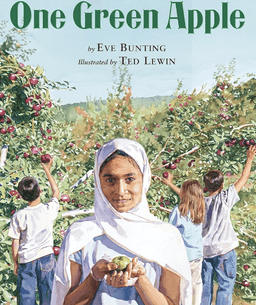
One Green Apple Vocab Quiz
Quiz by Tiphanie Faulkner
Customize this quiz to suit your class
Instantly translate to 100+ languages
Tag the questions with any skills you have. Your dashboard will track each student's mastery of each skill.
Give this quiz to my class
What is the definition of fondly?
to feed on growing grass
lovingly or affectionately
not nice, mean or causing pain
What is the definition graze?
not nice, mean or causing pain
to feed on growing grass
land planted with fruit trees
What is the definition of fondly?
What is the definition graze?
What is the definition of cruel?
What is the definition of orchard?
What is the definition of jolt?
 Hello friends, welcome to a new Happy Learning video. Have you ever wondered how plants feed? To answer this question, we need to understand... photosynthesis. Photosynthesis is a process in which plants make their own food to be able to grow and develop. In order to perform photosynthesis, they need various elements: sunlight, carbon dioxide obtained from air, and water, and chlorophyll, which is a green substance that all plants have and is fundamental for performing photosynthesis since it could not happen without it. By the way, chlorophyll is what gives all plants their green color. But how does photosynthesis take place? Look at this plant. As you can see, its roots are anchored to the ground. And through them, the plant absorbs water and minerals in the soil. Water with minerals are transported up the stem, reaching the leaves. The leaves are full of tiny pores called stomata which absorb carbon dioxide that the air in the surrounding contains. All this containing water, minerals and carbon dioxide is called raw sap. Now it's chlorophyll's turn. The chlorophyll in the leaves has all the necessary ingredients for photosynthesis to take place. And when it receives sunlight, the process begins by transforming the raw sap into elaborated sap, which also circulates around the plant and works as food. All plants feed from elaborated sap, and they store it in their roots like a carrot, or in their fruit, like an apple or a pear. Now we know how photosynthesis takes place, but why is it so important? Without plants, there would be no life on Earth. We wouldn't have oxygen to breathe or food to feed on. You already know that herbivores eat plants, and carnivores eat herbivores. Plants are fundamental for the food chain. And they are also fundamental for our respiration. Actually, when humans breathe, we turn oxygen into carbon dioxide. Quite the opposite of when plants perform photosynthesis. A curious fact you need to know is that at night, because plants don't have sunlight to photosynthesize, they breathe like humans do. They take in oxygen and release carbon dioxide. Remember that. And one last thing so you understand the importance of photosynthesis. When plants absorb dirty and contaminated gases, they transform them into pure air, into oxygen, and this way they clean the atmosphere and all nature. Plants are the best solution to fight against contamination, don't you think? Goodbye friends and don't forget to subscribe to Happy Learning TV.Orchard / fruit trees Importance of fruit trees • Fruit trees are important for the following uses: They are a source of food, they produce fruits Some are used for making medicines Others provide shade and can also act as wind breakers. Those with beautiful flowers are very decorative. They contain vitamins which means they have nutritional value. Classification of fruit trees • Fruit trees are classified as indigenous and exotic. Indigenous fruit trees • are those that natural grow in a country. • They take longer to grow. • Examples of indigenous fruit trees are: English name Shona Name Snot apple Water berry Red ivory Fig Monkey orange Wild custard apple Mobola fruit Exotic fruit trees • These are trees that were brought from other countries. • They are commercially grown in orchards. • Common exotic fruit trees include: • Exotic fruit trees grow faster than indigenous. Ornamental horticulture • It deals with the growing of decorative plants. • Decorative plants are collectively called ornamental plants. • They include trees, shrubs, flowers and lawn grasses. Importance of ornamental plants They beautify the environment. Flowers often produce a pleasing fragrance. Flowers attract insects like bees that are responsible for pollination. Plants produce oxygen that we need for breathing. • Some are used for making medicines. • Lawn grasses prevent soil erosion. • Plants provide shelter for birds and insects. Classification of ornamental plants • There are four classes of ornamental plants. Trees Shrubs Flowers Lawn Trees: • Ornamental trees are very useful as decorative plants. • This is because most of these trees produce beautiful flowers and some are ever green. • Examples of decorative trees include flamboyant, jacaranda, pines, Cyprus. Shrubs: • A shrub is a woody plant with many branches but smaller than a tree. • Some of them are ornamentals because they produce beautiful flowers. • Others can be cut into decorative shapes. • The golden duranta is good example because it can be cut into nice shapes. • The bougainvillea is another example of a decorative plant because: It can act as a climbing plant. It produces decorative flowers. It can also be cut into any shape using a hedge shear. Flowers: • Flowers have the following functions: They are used for decorations at weddings, hotels and parties. They are used as an expression of love and appreciation such as valentine’s day and get well soon messages. They are useful in bee farming called apiculture as they are a source of nectar used for making honey. Flowers produce a pleasant fragrance used in the production of soaps and scents for perfumes, deodorant and lotions. Lawn: • A lawn is an area of grass that is kept cut short and is usually part of someone's garden or backyard, or part of a park. • Some lawn grasses grown in Zimbabwe are Durban, kikuyu, couch and buffalo lawn. • They prevent soil erosion. • They also provide a comfortable outdoor resting place. Forestry Importance of trees • Trees are important to us and animals. • The Forestry Commission is responsible for taking care of trees in Zimbabwe. • Trees are also important to the environment because: They are a source of fuel in the form of firewood. They are used for making most of the furniture we use. Most medicines come from both exotic and indigenous trees, for example pine trees and gum trees are used for making cough medicines. Trees provide browsing animals like the kudu and giraffe with food. Fruits from both exotic and indigenous fruit trees are a rich source of vitamins Trees give out oxygen which we need for breathing. Trees provide timber that can be used for roofing. • Trees are grouped according to where they come from. • The groups are indigenous and exotic. 1 . Indigenous trees : • These are local trees that have always been grown in their country. Shona name English name Mutohwe Snot apple Mususu Yellow wood Mubvamaropa Blood wood Muuyu Baobab Muonde Fig tree Musasa msasa Characteristics of indigenous trees take longer to mature Do not produce straight poles Grow on their own Hard wood 2 .Exotic trees : • These are trees that have been brought from another country to be grown in Zimbabwe. Characteristics of exotic trees They are brought in a country from another country. Grow very fast. Have soft woods Usually grow straight Usually grown in orchards and plantations Common exotic trees in Zimbabwe are: Gum trees Pine trees Wattle Cyprus Date palm Mango Apple pawpaw Causes of plant damage • plant damage is when cultivated crops are kept from normal growth that leads to reduced yields. • plant damage is caused by both living and non living things. • Some of the common causes of crop damage are: (a)Pests • These are living organisms that cause physical damage to crops. • Examples of pests are weevils, army worm, aphids, cutworms and locusts. (b) Diseases • Plant diseases are caused by living organisms called pathogens. • These pathogens infest the plant and take away nutrients. • Fruit rot and bacteria spot are some of the examples of plant diseases. (c) Weeds • these are plant which grow where they are not wanted. • For example if black jack grows in a groundnut field, it is a weed. • Weeds compete for nutrients with cultivated plants. (d) Very high temperatures • High temperatures may cause crops to wither. • High temperatures may also lead to lightning and fires. • This can burn up crops. ( e) Frost • Frost damages crops in winter. • Tomatoes, potatoes, and beans are easily damaged by frost. (f) Drought • drought is when there is no rainfall in a season where it supposed to be raining. • It is one of the most serious forms of crop damage. • Plants wither and die if there is no rainfall. ( g) Animals • Wild animals like baboons often eat maize crops before they mature. • Birds also are a problem to crops like sorghum. Signs of plant damage • There are various signs that show plant damage. • Some can be corrected but some lead to total loss. • Some signs of plant damage include: Lodged plants Flowers and small fruits blown to the ground Dull leaf color Wilted plants Stunted growthOne of the worst things about living in a city is the high cost of living. Pros and Cons of Living in a City Living in a city offers numerous advantages, but it also comes with its own set of drawbacks. Here are the pros and cons of living in a city: Pros: Job Opportunities: Cities are often hubs for various industries and businesses, providing a wide array of job opportunities across different sectors. This can lead to better career prospects and higher earning potential for residents. Cultural Diversity: Cities are melting pots of different cultures, traditions, and lifestyles. This diversity enriches the social fabric of the city, offering exposure to various cuisines, arts, festivals, and languages. Access to Amenities: Cities typically offer an abundance of amenities such as restaurants, shopping centers, entertainment venues, healthcare facilities, educational institutions, and public services. Residents have easy access to these conveniences. Public Transportation: Many cities have well-developed public transportation systems, including buses, subways, trains, and trams. This can make commuting more convenient and reduce the need for personal vehicles. Entertainment and Recreation: Cities are known for their vibrant nightlife, cultural events, museums, theaters, sports venues, and recreational spaces. Residents can enjoy a wide range of entertainment options. Educational Opportunities: Cities often boast prestigious universities, colleges, and research institutions. This provides residents with access to quality education and lifelong learning opportunities. Healthcare Facilities: Major cities tend to have top-tier medical facilities and specialized healthcare services, ensuring that residents have access to advanced healthcare resources. Cons: Cost of Living: Cities are often associated with a higher cost of living due to expensive housing, transportation expenses, dining out costs, and other daily expenses. Noise and Pollution: Urban areas can be noisy and polluted due to heavy traffic, industrial activities, construction projects, and densely populated neighborhoods. Crowded Environment: Cities are densely populated, leading to crowded streets, public spaces, and public transportation systems. This can result in congestion and longer commute times. Limited Green Spaces: While cities offer many amenities, they may lack sufficient green spaces such as parks or gardens for residents to relax and connect with nature. Stressful Lifestyle: The fast-paced lifestyle in cities can contribute to higher stress levels for some individuals due to demanding work environments and busy schedules. Security Concerns: Certain urban areas may face higher crime rates compared to rural or suburban areas, leading to concerns about safety and security. Traffic Congestion: Heavy traffic congestion is a common issue in cities, leading to longer commute times and frustration for residents who rely on personal vehicles or public transportation. In conclusion, living in a city presents both advantages and disadvantages that individuals should carefully consider based on their lifestyle preferences and priorities. All living things are made up of one or more cells. A cell is the smallest unit that can carry on all of the processes of life. Beginning in the 17th century, curious naturalists were able to use microscopes to study objects too small to be seen with the unaided eye. Their studies led them to propose the cellular basis of life. Hooke In 1665, English scientist Robert Hooke studied nature by using an early light microscope, such as the one in Figure 4-1a. A light micro- scope is an instrument that uses optical lenses to magnify objects by bending light rays. Hooke looked at a thin slice of cork from the bark of a cork oak tree. “I could exceedingly plainly perceive it to be all perforated and porous,” Hooke wrote. He described “a great many little boxes” that reminded him of the cubicles or “cells” where monks live. When Hooke focused his microscope on the cells of tree stems, roots, and ferns, he found that each had similar little boxes. The drawings that Hooke made of the cells he saw are shown in Figure 4-1b. The “little boxes” that Hooke observed were the remains of dead plant cells, such as the cork cells shown in Figure 4-1c. SECTION 1 OBJECTIVES ● Name the scientists who first observed living and nonliving cells. ● Summarize the research that led to the development of the cell theory. ● State the three principles of the cell theory. ● Explain why the cell is considered to be the basic unit of life. VOCABULARY cell cell theory Robert Hooke used an early microscope (a) to see cells in thin slices of cork. His drawings of what he saw (b) indicate that he had clearly observed the remains of cork cells (300) (c). FIGURE 4-1 (a) (b) (c) Copyright © by Holt, Rinehart and Winston. All rights reserved. 70 CHAPTER 4 Leeuwenhoek The first person to observe living cells was a Dutch trader named Anton van Leeuwenhoek. Leeuwenhoek made microscopes that were simple and tiny, but he ground lenses so precisely that the magnification was 10 times that of Hooke’s instruments. In 1673, Leeuwenhoek, shown in Figure 4-2a, was able to observe a previ- ously unseen world of microorganisms. He observed cells with green stripes from an alga of the genus Spirogyra, as shown in Figure 4-2b, and bell-shaped cells on stalks of a protist of the genus Vorticella, as shown in Figure 4-2c. Leeuwenhoek called these organisms animalcules. We now call them protists. THE CELL THEORY Although Hooke and Leeuwenhoek were the first to report observ- ing cells, the importance of this observation was not realized until about 150 years later. At this time, biologists began to organize information about cells into a unified understanding. In 1838, the German botanist Matthias Schleiden concluded that all plants were composed of cells. The next year, the German zoologist Theodor Schwann concluded the same thing for animals. And finally, in his study of human diseases, the German physician Rudolf Virchow (1821–1902) noted that all cells come from other cells. These three observations were combined to form a basic theory about the cel- lular nature of life. The cell theory has three essential parts, which are summarized in Table 4-1. Anton van Leeuwenhoek (1632–1723) is shown here with one of his hand-held lenses (a). Leeuwenhoek observed an alga of the genus Spirogyra (b) and a protist of the genus Vorticella (c). FIGURE 4-2 TABLE 4-1 The Cell Theory All living organisms are composed of one or more cells. Cells are the basic units of structure and function in an organism. Cells come only from the reproduction of existing cells. (a) (b) (c) www.scilinks.org Topic: Cell Theory Keyword: HM60241 mb06se_csfs01.qxd 5/18/07 10:54 AM Page 70Hi, I'm John Green, this is Crash Course U.S. History, and today, we're going to talk about slavery, which is not funny. 0:06 Yeah, so we put a lei on the eagle to try and cheer you up, but let's face it, this is going to be depressing. 0:10 With slavery, every time you think, like, "Aw, it couldn't have been that bad," it turns out to have been much worse. 0:14 Mr. Green, Mr. Green! But what about – 0:15 Yeah, Me from the Past, I'm going to stop you right there, because you're going to embarrass yourself. Slavery was hugely important to America. 0:20 I mean, it led to a civil war and it also lasted what, at least in U.S. history, counts as a long-ass time, from 1619 to 1865. 0:29 And yes, I know there's a 1200-year-old church in your neighborhood in Denmark, but we're not talking about Denmark! 0:35 But slavery is most important because we still struggle with its legacy. 0:38 So, yes, today's episode will probably not be funny, but it will be important. 0:42 [Theme Music] North & South economic ties 0:51 So the slave-based economy in the South is sometimes characterized as having been separate from the Market Revolution, but that's not really the case. 0:57 Without southern cotton, the North wouldn't have been able to industrialize, at least not as quickly, because cotton textiles were one of the first industrially products. 1:04 And the most important commodity in world trade by the nineteenth century, and 3/4 of the world's cotton came from the American South. 1:11 And speaking of cotton, why has no one mentioned to me that my collar has been half popped this entire episode, like I'm trying to recreate the Flying Nun's hat. 1:18 And although there were increasingly fewer slaves in the North as northern states outlawed slavery, cotton shipments overseas made northern merchants rich. 1:26 Northern bankers financed the purchase of land for plantations. 1:29 Northern insurance companies insured slaves who were, after all, considered property, and very valuable property. 1:35 And in addition to turning cotton into cloth for sale overseas, northern manufacturers sold cloth back to the South, where it was used to clothe the very slaves who had cultivated it. 1:45 But certainly the most prominent effects of the slave-based economy were seen in the South. Slave-based agriculture in the South 1:49 The profitability of slaved-based agriculture, especially King Cotton, meant that the South would remain largely agricultural and rural. 1:56 Slave states were home to a few cities, like St. Louis and Baltimore, but with the exception of New Orleans, 2:00 almost all southern urbanization took place in the upper South, further away from the large cotton plantations. 2:06 And slave-based agriculture was so profitable that it siphoned money away from other economic endeavors. 2:11 Like, there was very little industry in the South. 2:13 It produced only 10% of the nation's manufactured goods. 2:16 And, as most of the capital was being plowed into the purchase of slaves, there was very little room for technological innovation, like, for instance, railroads. 2:23 This lack of industry and railroads would eventually make the South suck at the Civil War, thankfully. 2:27 In short, slavery dominated the South, shaping it both economically and culturally, and slavery wasn't a minor aspect of American society. Popular attitudes concerning slavery 2:35 By 1860, there were four million slaves in the U.S., and in the South, they made up one third of the total population. 2:42 Although in the popular imagination, most plantations were these sprawling affairs with hundreds of slaves, 2:47 in reality, the majority of slaveholders owned five or fewer slaves. 2:51 And, of course, most white people in the South owned no slaves at all, though, if they could afford to, they would sometimes rent slaves to help with their work. 2:57 These were the so-called yeoman farmers who lived self-sufficiently, raised their own food, and purchased very little in the Market Economy. 3:04 They worked the poorest land and, as a result, were mostly pretty poor themselves. 3:08 But even they largely supported slavery, partly, perhaps, for aspirational reasons, and partly because the racism inherent to the system gave even the poorest whites legal and social status. 3:18 And southern intellectuals worked hard to encourage these ideas of white solidarity and to make the case for slavery. 3:23 Many of the founders, a bunch of whom you'll remember, held slaves, saw slavery as a necessary evil. 3:29 Jefferson once wrote, quote, "As it is, we have the wolf by the ear, and we can neither hold him, nor safely let him go. 3:37 Justice is on one scale, and self-preservation in the other." 3:41 The belief that justice and self-preservation couldn't sit on the same side of the scale was really opposed to the American idea, 3:47 and, in the end, it would make the Civil War inevitable. 3:50 But as slavery became more entrenched in these ideas of liberty and political equality were embraced by more people, 3:55 some southerners began to make the case that slavery wasn't just a necessary evil. 3:59 They argued, for instance, that slaves benefited from slavery. 4:03 Because, you know, because their masters fed them and clothed them and took care of them in their old age. 4:07 You still hear this argument today, astonishingly. 4:09 In fact, you'll probably see asshats in the comments saying that in the comments. 4:12 I will remind you, it's not cursing if you are referring to an actual ass. 4:15 This paternalism allowed masters to see themselves as benevolent and to contrast their family-oriented slavery with the cold, mercenary Capitalism of the free-labor North. 4:26 So yeah, in the face of rising criticism of slavery, some southerners began to argue that the institution was actually good for the social order. 4:33 One of the best-known proponents of this view was John C. Calhoun, who, in 1837, said this in a speech on the Senate floor: 4:40 "I hold that, in the present state of civilization, 4:43 where two races of different origin and distinguished by color and other physical differences as well as intellectual, are brought together, 4:51 the relation now existing in the slave-holding states between the two is, instead of an evil, a good. A positive good." 4:59 Now, of course, John C. Calhoun was a fringe politician, and nobody took his views particularly seriously. 5:04 Stan: Well, he was Secretary of State from 1844 to 1845. 5:07 John: Well, I mean, who really cares about the Secretary of State, Stan? 5:10 Danica: Eh, he was also Secretary of War from 1817 to 1825. 5:13 John: All right, but we don't even have a Secretary of War anymore, so... 5:16 Meredith: And he was Vice President from 1825 to 1832. 5:19 John: Oh my god, were we insane?! 5:21 We were, of course, but we justified the insanity with Biblical passages and with the examples of the Greeks and Romans, 5:28 and with outright racism, arguing that black people were inherently inferior to whites. 5:33 And that not to keep them in slavery would upset the natural order of things. 5:37 A worldview popularized millennia ago by my nemesis, Aristotle. God, I hate Aristotle. 5:42 You know what defenders of Aristotle always say? 5:44 "He was the first person to identify dolphins." 5:47 Well, ok, dolphin identifier. 5:50 Yes, that is what he should be remembered for, but he's a terrible philosopher! Lives & experiences of enslaved people 5:53 Here's the truth about slavery: 5:55 It was coerced labor that relied upon intimidation and brutality and dehumanization. 6:00 And this wasn't just a cultural system, it was a legal one. 6:03 I mean, Louisiana law proclaimed that a slave "owes his master... a respect without bounds, and an absolute obedience." 6:09 The signal feature of slaves' lives was work. 6:12 I mean, conditions and tasks varied, but all slaves labored, usually from sunup to sundown, and almost always without any pay. 6:20 Most slaves worked in agriculture on plantations, and conditions were different, depending on which crops are grown. 6:25 Like, slaves on the rice plantations of South Carolina had terrible working conditions, 6:29 but they labored under the task system, which meant that once they had completed their allotted daily work, they would have time to do other things. 6:36 But lest you imagine this is like how we have work and leisure time, bear in mind that they were owned and treated as property. 6:42 On cotton plantations, most slaves worked in gangs, usually under the control of an overseer, or another slave who was called a "driver." 6:49 This was back-breaking work done in the southern sun and humidity, and so it's not surprising that whippings – or the threat of them – were often necessary to get slaves to work. 6:58 It's easy enough to talk about the brutality of slave discipline, but it can be difficult to internalize it. 7:03 Like, you look at these pictures, but because you've seen them over and over again, they don't have the power they once might have. 7:09 The pictures can tell a story about cruelty, but they don't necessarily communicate how arbitrary it all was. 7:14 As, for example, in this story, told by a woman who was a slave as a young girl: 7:18 "[The] overseer... went to my father one morning and said, "Bob, I'm gonna whip you this morning." 7:22 Daddy said, "I ain't done nothing," and he said, "I know it, I'm going to whip you to keep you from doing nothing," 7:28 and he hit him with that cowhide – you know it would cut the blood out of you with every lick if they hit you hard." 7:33 That brutality – the whippings, the brandings, the rape – was real, and it was intentional, because, in order for slavery to function, slaves had to be dehumanized. 7:43 This enabled slaveholders to rationalize what they were doing, and it was hoped to reduce slaves to the animal property that is implied by the term "chattel slavery." 7:51 So the idea was that slaveholders wouldn't think of their slaves as human, and slaves wouldn't think of themselves as human. 7:57 But it didn't work. Let's go to the Thought Bubble. 7:59 Slaves' resistance to their dehumanization took many forms, but the primary way was by forming families. Family, love, & religion of enslaved people 8:05 Family was a refuge for slaves and a source of dignity that masters recognized and sought to stifle. 8:10 A paternalistic slave owner named Bennet H. Barrow wrote in his rules for the Highland Plantation: 8:15 "No rule that I have stated is of more importance than that relating to Negroes marrying outside of the plantation... It creates a feeling of independence." 8:23 Most slaves did marry, usually for life, and, when possible, slaves grew up in two-parent households. 8:28 Single-parent households were common, though, as a result of one parent being sold. 8:32 In the upper South, where the economy was shifting from tobacco to different, less labor-intensive cash crops, the sale of slaves was common. 8:40 Perhaps one-third of slave marriages in states like Virginia were broken up by sale. 8:45 Religion was also an important part of life in slavery. 8:47 While masters wanted their slaves to learn the parts of the Bible that talked about being happy in bondage, 8:52 slave worship tended to focus on the stories of Exodus, where Moses brought the slaves out of bondage, 8:57 or Biblical heroes, who overcame great odds, like Daniel and David. 9:01 And, although most slaves were forbidden to learn to read and write, many did anyway. And some became preachers. 9:07 Slave preachers were often very charismatic leaders, and they roused the suspicion of slave owners, and not without reason. 9:13 Two of the most important slave uprisings in the South were led by preachers. 9:16 Thanks, Thought Bubble. 9:17 Oh, it's time for the Mystery Document? Mystery Document 9:19 We're doing two set pieces in a row? All right. [buzzing noise] [music] 9:24 The rules here are simple. 9:26 I wanted to re-shoot that, but Stan said no. 9:29 I guess the author of the Mystery Document. 9:30 If I am wrong, I get shocked with the shock pen. 9:33 "Since I have been in the Queen's dominions I have been well contented, yes well contented for sure, man is as God intended he should be. 9:40 That is, all are born free and equal. 9:43 This is a wholesome law, not like the southern laws which puts man made in the image of God on level with brutes. 9:49 O, what will become of the people, and where will they stand in the day of judgment. 9:53 Would that the 5th verse of the 3rd chapter of Malachi were written as with a bar of iron, 9:59 and the point of a diamond upon every oppressor's heart that they might repent of this evil, and let the oppressed go free..." 10:06 All right, it's definitely a preacher, because only preachers have read Malachi. 10:10 Probably African American, probably not someone from the South. 10:13 I'm going to guess that it is Richard Allen, the founder of the African Methodist Episcopal Church? 10:18 [buzzing noise] DAAAH, DANG IT! 10:19 It's Joseph Taper, and Stan just pointed out to me that I should have known it was Joseph Taper because it starts out, 10:24 "Since I have been in the Queen's dominions..." 10:27 He was in Canada. He escaped slavery to Canada. The Queen's dominions! 10:31 All right, Canadians, I blame you for this, although, thank you for abolishing slavery decades before we did. 10:36 [electric sounds] AHHH! How people resisted & escaped slavery 10:37 So, the Mystery Document shows one of the primary ways that slaves resisted their oppression: by running away. 10:42 Although some slaves like Joseph Taper escaped for good by running away to northern free states, 10:47 or even to Canada, where they wouldn't have to worry about fugitive slave laws, even more slaves ran away temporarily, hiding out in the woods or the swamps, and eventually returning. 10:55 No one knows exactly how many slaves escaped to freedom, but the best estimate is that a thousand or so a year made the journey northward. 11:01 Most fugitive slaves were young men, but the most famous runaway has been hanging out behind me all day long: Harriet Tubman. 11:07 Harriet Tubman escaped to Philadelphia at the age of 29, and over the course of her life, she made about 20 trips back to Maryland to help friends and relatives make the journey north on the Underground Railroad. 11:17 But a more dramatic form of resistance to slavery was actual, armed rebellion, which was attempted. 11:22 Now, individuals sometimes took matters into their own hands and beat or even killed their white overseers or masters. 11:27 Like Bob, the guy who received the arbitrary beating, responded to it by killing his overseer with a hoe. 11:33 But that said, large-scale slave uprisings were relatively rare. 11:36 The four most famous ones all took place in a 35-year period at the beginning of the 19th century. Slave rebellions 11:41 Gabriel's Rebellion in 1800 – which we've talked about before – was discovered before he was able to carry out his plot. 11:45 Then, in 1811, a group of slaves upriver from New Orleans seized cane, knives, and guns, and marched on the city before militia stopped them. 11:52 And in 1822, Denmark Vesey, a former slave who had purchased his freedom, may have organized a plot to destroy Charleston, South Carolina. 11:59 I say "may have" because the evidence against him is disputed and comes from a trial that was not fair. 12:05 But regardless, the end result of that trial was that he was executed, as were 34 slaves. Nat Turner's Rebellion 12:09 But the most successful slave rebellion, at least in the sense that they actually killed some people, was Nat Turner's in August 1831. 12:15 Turner was a preacher, and with a group of about 80 slaves, he marched from farm to farm in South Hampton County, Virginia, 12:21 killing the inhabitants, most of whom were women and children, because the men were attending a religious revival meeting in North Carolina. 12:27 Turner and 17 other rebels were captured and executed, but not before they struck terror into the hearts of whites all across the American South. 12:34 Virginia's response was to make slavery worse, passing even harsher laws that forbade slaves from preaching, and prohibited teaching them to read. 12:42 Other slave states followed Virginia's lead and, by the 1830s, slavery had grown, if anything, more harsh. 12:47 So, this shows that large-scaled armed resistance was – Django Unchained aside – not just suicidal, but also a threat to loved ones and, really, to all slaves. How enslaved people resisted their oppression & why it matters 12:55 But, it is hugely important to emphasize that slaves did resist their oppression. 12:59 Sometimes this meant taking up arms, but usually it meant more subtle forms of resistance, 13:03 like intentional work slowdowns or sabotaging equipment, or pretending not to understand instructions. 13:08 And, most importantly, in the face of systematic legal and cultural degradation, they re-affirmed their humanity through family and through faith. 13:16 Why is this so important? 13:17 Because too often in America, we still talk about slaves as if they failed to rise up, 13:21 when, in fact, rising up would not have made life better for them or for their families. 13:26 The truth is, sometimes carving out an identity as a human being in a social order that is constantly seeking to dehumanize you, is the most powerful form of resistance. 13:34 Refusing to become the chattel that their masters believed them to be is what made slavery untenable and the Civil War inevitable, so make no mistake, slaves fought back. 13:45 And in the end, they won. I'll see you next week. Credits 13:48 Crash Course is produced and directed by Stan Muller. 13:50 The script supervisor is Meredith Danko. 13:52 Our associate producer is Danica Johnson. 13:54 The show is written by my high school history teacher Raoul Meyer and myself. 13:57 And our graphics team is Thought Cafe. 13:58 Every week, there's a new caption to the Libertage, but today's episode was so sad that we couldn't fit a Libertage in... 14:04 UNTIL NOW! [Libertage Rock Music] 14:08 Suggest Libertage caption in comments, where you can also ask questions about today's video that will be answered by our team of historians. 14:13 Thanks for watching Crash Course, and as we say in my home town, don't forget to be abolitionist.1. Battle of Lexington At the Battle of Lexington in 1775, British soldiers and colonial militia faced each other on the village green. A shot was fired, but no one knows for sure who fired first. Even so, this moment is often called the beginning of the American Revolution. Why is the Battle of Lexington still considered the start of the American Revolution, even though it is unclear who fired the first shot? A. It marked the first time colonists and British soldiers fought in open battle B. It proved that colonists planned the war long before the fighting began C. It showed that British soldiers were fully responsible for starting the war D. It confirmed that colonists had already declared independence from Britain 2. Battle of Concord After the fighting at Lexington, British troops marched to Concord to destroy colonial supplies. Instead, colonial militia gathered and fought back, forcing the British to retreat toward Boston. Why is the Battle of Concord considered an important turning point in the early American Revolution? A. It showed that colonial militias could organize and successfully push back British troops B. It proved that the British army had already lost control of all the colonies C. It confirmed that the colonies had officially declared independence from Britain D. It demonstrated that foreign countries were already helping the colonial forces 3. Second Continental Congress Much of the early violent conflict between colonists and British soldiers took place in Boston. After fighting broke out at Lexington and Concord near Boston, colonial leaders met at the Second Continental Congress in 1775 to decide what to do next. Which answer best describes the main actions taken by the Second Continental Congress? A. They created an army, chose a leader, and tried to avoid war with Britain B. They declared independence, wrote the Constitution, and ended the war C. They raised taxes, formed a monarchy, and supported British rule D. They ended slavery, gave women rights, and expanded voting laws 4. Olive Branch Petition In 1775, colonial leaders sent a letter called the Olive Branch Petition to King George III of Britain. Based on this situation, what was the main purpose of the Olive Branch Petition sent to the king? A. To ask the king to restore peace between both sides B. To declare independence from Britain and begin a new nation C. To request help from foreign countries in the war effort D. To organize protests against British taxes across the colonies 5. Battle of Bunker Hill On June 17, 1775, during the Battle of Bunker Hill in Boston, colonial forces fought against the British on a hill overlooking the city. The fighting was intense and led to heavy losses on both sides. Which statement best explains why the Battle of Bunker Hill was an important battle in the war? A. The colonists won the battle, showing they were stronger than British forces B. The colonists won the battle, showing the British that the war would be short and easy for the colonists C. The British won the battle, showing the war would be difficult and costly for both sides D. The British won the battle, showing British forces could defeat the colonists easily 6. Pamphlets During the American Revolution, pamphlets were short printed writings that were inexpensive to produce and often written in everyday language so many colonists could read them. How did these features of pamphlets most affect their role in the American Revolution? A. They helped spread ideas widely, allowing more colonists to form and share opinions B. They limited ideas to educated leaders, keeping most colonists uninvolved C. They replaced newspapers entirely, becoming the only source of information D. They prevented disagreement, causing most colonists to think the same way 7. Thomas Paine’s Common Sense In 1776, Thomas Paine published Common Sense, a widely read piece of writing about the relationship between the colonies and Britain. How did this pamphlet most influence colonial thinking during the American Revolution? A. It encouraged colonists to support independence from Britain B. It convinced colonists to remain loyal to the British government C. It explained how colonial armies should organize attacks D. It described laws colonists were expected to follow 8. Declaration of Independence In July 1776, the Declaration of Independence listed complaints against King George III and explained the colonists’ ideas about government and rights. How do these parts of the Declaration of Independence work together to support the colonists’ decision? A. They connect ideas about rights to real examples, justifying separation from Britain B. They describe past events in detail, showing how the war had already ended C. They list future plans for government, explaining how leaders would be chosen D. They organize military actions, showing how the colonies planned to win 9. Washington Crosses the Delaware and Battle of Trenton In December 1776, George Washington led his army across the Delaware River and launched a surprise attack on Hessian mercenaries in Trenton. Which statement best explains why Washington’s crossing of the Delaware and the attack on Trenton was an important turning point in the war? A. It defeated British forces completely, ending the war in a short time B. It boosted morale, helping discouraged soldiers choose to keep fighting C. It brought foreign allies into the war, adding support for the colonies D. It led to independence, allowing the colonies to form a new nation 10. Battle of Saratoga In 1777, American forces defeated the British at the Battle of Saratoga, a major event during the American Revolution. Which statement best explains why the Battle of Saratoga was an important turning point in the war? A. It brought French support, helping Americans gain a strong advantage in the war B. It ended the war quickly, forcing Britain to surrender all control in the colonies C. It improved army training, helping soldiers become more skilled in future battles D. It changed leadership roles, causing new generals to take control of the army 11. Battle of Yorktown In 1781, American forces surrounded British troops at Yorktown, leading to a major moment in the American Revolution. Which statement best explains why the Battle of Yorktown was an important event in the war? A. French forces helped the Americans win, leading to the end of major fighting in the war B. Italian forces helped the British win, leading to a final victory over the American army C. German forces switched sides and helped the Americans win, leading to a final defeat for British troops D. French forces helped the British win, leading to a complete end of the war in the colonies 12. Treaty of Paris After the Battle of Yorktown, British public opinion turned against the war, and peace negotiations began. In 1783, American leaders signed the Treaty of Paris, which included agreements between the United States and Britain. Which statement best explains how the Treaty of Paris reflected the outcome of the American Revolution? A. Both sides made agreements, recognizing independence B. Americans gained independence, taking land without agreements C. British leaders kept control, ending the war with power D. Both sides refused compromise, continuing the warHere’s your **edited version** of the activity, now focused on **Shirley Jackson’s *“The Lottery”*** and **past and present participles**, while keeping the fun “Great Grammar Magician” game theme: --- ### 🎩 THE GREAT GRAMMAR MAGICIAN: “THE LOTTERY SPELL!” 🍀 It seems like you already know how **past and present participles** can transform simple verbs into more descriptive and expressive words. Now, it’s time to show your magical grammar powers and help the Great Grammar Magician complete her enchanting performance inspired by *“The Lottery”* by Shirley Jackson! --- ### 🌼 **THE LOTTERY SPELL!** **Directions:** The class will be divided into two groups, and each group will work together to help the Great Grammar Magician finish her magical act! Each group will receive **three magic flags** that can be used as advantages during the game: 🟩 **Green Flag** – Use for a clue about the question. 🟨 **Yellow Flag** – Use to look at the question first and decide whether to answer it or choose another one. 🟦 **Blue Flag** – Use to get another chance to answer the same question. The goal is to earn the **highest points** as a group. The first representative to raise their hand gets to choose a question to answer. There will be **six questions**, representing the **six stones** drawn during the “lottery.” Each stone contains a **Magic Spell Card** with a question your group must answer correctly to earn a point. --- ### 🪄 **MAGIC SPELL QUESTIONS** **1. Remembering** **Question:** Who is the author of *“The Lottery”?* **Expected Answer:** Shirley Jackson. --- **2. Understanding** **Question:** What is *“The Lottery”* mainly about? **Expected Answer:** It’s about a small town that follows a cruel tradition of holding a lottery where one person is chosen to be sacrificed. --- **3. Applying** **Question:** Identify a **past or present participle** used in *“The Lottery.”* Explain its function in the sentence. **Expected Answer:** Example: *“The children assembled first, of course.”* — “assembled” is a **past participle** used to describe what the children did before the lottery began. --- **4. Analyzing** **Question:** How does Shirley Jackson use participles to create suspense or describe actions in the story? **Expected Answer:** Participles like “gathered,” “watching,” or “whispered” make the actions more vivid and help build tension in the story. --- **5. Evaluating** **Question:** Do you think the townspeople’s calm behavior (described with participles like “smiling,” “talking,” “laughing”) makes the story more shocking? Why or why not? **Expected Answer:** (Open-ended) Yes, because the ordinary actions make the violent ending more disturbing / No, because it just shows how normal the ritual is to them. --- **6. Creating** **Question:** Write your own short two-line description using **past or present participles** to show tension or fear in a situation like the one in *“The Lottery.”* **Expected Answer:** (Open-ended) Example: *Shaking hands held the paper tight.* *The crowd waited, holding their breath.* --- ### 🪶 **Tie-Breaker Question** **Question:** If you were in *“The Lottery,”* what would you be doing as the black box was brought out? Use at least one participle in your answer. **Expected Answer:** (Open-ended; checks creativity and grammar) Example: *Standing in silence, I would watch the slips being drawn, my heart pounding.* --- Would you like me to make this version **visually formatted for a classroom printout** (e.g., with bold headers, emojis, and clear section boxes)?Maria's Family Celebration It is Mexican Independence Day! Maria and Luis are getting ready for a big party. "We can decorate the house," says Maria. "Let's paint a picture of our family." "Mama was born first. She is the oldest," says Maria. "Papa was born second," Maria says. "He is one year younger." "Next is Emily," says Maria. "She is Mama and Papa's first child." "After Emily, you were born," says Luis. "That's right!" says Maria. "I am Mama and Papa's second child." "What about me?" asks Luis. "You were the last to be born," says Maria. "You are the youngest." "There!" says Maria. "Our family picture is done!" "Green, white, and red are the colors of the Mexican flag," says Maria. Maria and Luis blow up five green balloons. They blow up five white balloons and five red balloons, too. "I'm out of breath!" says Luis. "Let's see," says Maria. "We painted a picture first. We blew up balloons second. The third thing we can do is fill the piñata." Maria gets the striped fish piñata from the shelf. Maria and Luis stuff the piñata with candy. When Luis thinks Maria isn't looking, he pops a piece of candy into his mouth. Maria gives him a hug. "You are silly," she says. Papa hangs the piñata. "We need a blindfold," says Maria. "We need a stick to break the piñata, toо." Abuela finds a red-checked scarf for Maria and a long stick for Luis. "The piñata is ready!" says Maria. "The fourth thing to do is practice dancing, Luis!" Maria and Luis dress in their party clothes. Then, they dance and spin. Soon, the house fills up with food, family, and music. There are six cousins, two aunts, three uncles, and three grandparents. There is Papa, Mama, Emily, Maria, and Luis, too. "There is one last thing we can do," Maria says. "And it's the most fun!" "What is it?" asks Luis. "CELEBRATE!" says Maria.