Loading...


Open Up 5
Quiz by Rachel Downie
Customize this quiz to suit your class
Instantly translate to 100+ languages
Tag the questions with any skills you have. Your dashboard will track each student's mastery of each skill.
Give this quiz to my class
I like . . .
play computer games.
plays computer games.
playing computer games.
played computer games.
What is this number? 4,567
forty-five, sixty-seven
four hundred, five thousand, sixty-seven
four thousand, five hundred, sixty-seven
I like . . .
What is this number? 4,567
Do you like having ICT?
She ___ English every morning.
Haruto always washes his hands before lunch.
How do you spell . . .
We're making a video now.
We always eat breakfast in the mornings.
What is this?

What is this?
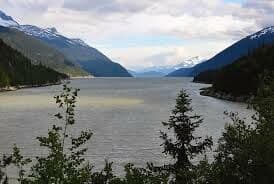
Everest is higher than Kilimanjaro.
Asia is _____ than Europe.
What can you see?

There are over 300 islands in Los Roques National Park.
Who is taller?

The elephant is the biggest animal.

Would you like to pay by cash or _____?
What is the highest mountain in Tanzania?
How often does Millie have Forest school?
What is this?

What are these?

There ___ a big parade.
There ___ any floats.
When is the Winter Carnival in Quebec, Canada?
What is the name of the float in the Unit 3 story?
I ___ embarrassed.
You ___ nervous.
What are these?
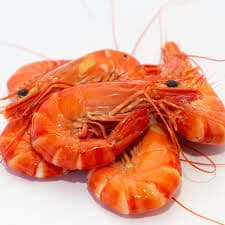
What do they have at 10.30?
What is the past tense of write?
What is the past tense of buy?
Did you have a lie-in today?
A meerkat is ______ than a cheetah.
A baboon is ______ at climbing trees than a crocodile.
A hippo is the _____ animal.
Model Rockets Liftoff! Three... two... one... liftoff! A model rocket shoots into the sky. The rocket can fly up to 1,500 feet (457 m) high! Watching these small rockets fly can be fun and exciting. Model rockets aren't just for fun, though. They also teach us about science and space. The History of Rockets. People in China invented rockets about eight hundred years ago. They filled tubes with gunpowder and shot them at their enemies. Later, scientists built rockets that could go into space. Starting in the 1950s, people began building model rockets for fun. Parts of a Model Rocket. A model rocket kit comes with all the parts a rocket needs. A model rocket's body is a long tube made of cardboard or plastic. The nose cone fits into the top of the tube. The size and shape of a rocket's body and nose cone can change how it flies. Fins help the rocket fly straight. The engine burns fuel to push the rocket into the air. A parachute helps the rocket fall safely back to Earth. People like to make their rockets look great. Many people paint their rockets with different colors and designs. Every rocket is one of a kind! At the Launchpad. The only place to launch a rocket is in an open space. The launch area needs to be far away from people and buildings. A large field or a playground is a good spot. First, set up the launchpad. Place the rocket over the guide wire on the pad. The guide wire keeps the rocket pointing straight up. A girl connects the wire that will allow the controller to start the rocket engine. when it lifts off. Connect the launch controller to the rocket engine. Then step back and press the button on the controller to start the engine. Whoosh! The rocket flies up and away. Clubs and Competitions. People who fly model rockets often join model rocket clubs. Schools or hobby groups can have information about model rocket clubs. A science center or museum might have a model rocket club, too. Many people enter model rocket competitions. They set off rockets and see which one flies the highest and the fastest. Model rocket competitions are held all over the world. In the United States, students between twelve and eighteen can enter the Team America Rocketry Challenge. Every spring, one hundred teams compete to become the best in the country. The winners go on to compete against other teams from around the world. Model rockets are a fun way to learn about science. Who knows how high a model rocket can take your imagination?Look out! You ... (fall) off the chair! are going to fall (prediction) It's so warm in my room now. I ... (open) the window. will open (unplanned decision) Shall I ........ (open ) the window? open (suggestion) I can't come to you with on Sunday because my parents ... (come) to stay with me. are coming (arrangement) On Monday ..... (play) football. I'm playing (play) We.............(see) that heavy bags for you. shall lift (offer) Don't be lazy, you .. (enter) the gym without sports shoes. won't enter (prediction) I promise, I ... (not tell) you parents! won't tell (promise) I think Susy ... (become) an architect one day, because she is really good at maths and drawing. will become (prediction) I promise I ... (be) there. will be (promise) I .... go running in the morning! will (spontaneous decision) Bank workers .............. (call) the police. are going to call (prediction) I ... help you with the shopping. will (offer) She ......... (dance) on a disco tonight. is going to dance (prediction) Lisa ........... (see) a sea this evening. is going to see (plan) I hope I ....my homework by 5 o'clock. will do (prediction) I promise I .......... (call). will call (promise) A-We don't have any bread. B- I know. I __________________ get some from the shop. a) am going to b) will will A: I'm really cold. B: I __________________ turn the heating on. a) am going to b) will will A: Are you going to John's party tonight? B: Yes. Are you going too? I __________________ give you a lift. a) am going to b) will will A: Why do you need to borrow my suitcase? B: I __________________ visit my mother in Scotland next month. a) am going to b) will am going to A: What are your plans after you leave university? B: I __________________ work in a hospital in Africa. I leave on the 28th. a) am going to b) will am going to (The phone rings) A: I __________________ get it! a) am going to b) will will A: Are you ready to order? B: I can't decide ... Okay, I __________________ have pasta, please. a) am going to b) will will A: Are you busy tonight? Would you like to have coffee? B: Sorry. I __________________ go to the library. I've been planning to study all day. a) am going to b) will am going to A: Why are you carrying a hammer? B: I __________________ put up some pictures. a) am going to b) will am going to1. Flammable materials, like alcohol, should never be dispensed or used near A. an open door. B. an open flame. C. another student. D. a sink. 2. If a laboratory fire erupts, immediately A. notify your instructor. B. run for the fire extinguisher. C. throw water on the fire. D. open the windows. 3. Approved eye protection devices (such as goggles) are worn in the laboratory A. to avoid eye strain. B. to improve your vision. C. only if you don’t have corrective glasses. D. any time chemicals, heat or glassware are used. 4. If you wear contact lenses in the school laboratory, A. take them out before starting the lab. B. you do not have to wear protective goggles. C. advise your science instructor that you wear contact lenses. D. keep the information to yourself. 5. If you do not understand a direction or part of a lab procedure, you should A. figure it out as you do the lab. B. try several methods until something works. C. ask the instructor before proceeding. D. skip it and go on to the next part. 6. After completing an experiment, all chemical wastes should be A. left at your lab station for the next class. B. disposed of according to your instructor’s directions. C. dumped in the sink. D. taken home. 7. If a lab experiment is not completed, you should A. discuss the issue with your instructor. B. sneak in after school and work alone. C. come in during lunch and finish while eating lunch. D. make up some results. 8. You are heating a substance in a test tube. Always point the open end of the tube A. toward yourself. B. toward your lab partner. C. toward another classmate. D. away from all people. Science Laboratory Safety teSt 9. You are heating a piece of glass and now want to pick it up. You should A. use a rag or paper towels. B. pick up the end that looks cooler. C. use tongs. D. pour cold water on it. 10. You have been injured in the laboratory (cut, burn, etc.). First you should A. visit the school nurse after class. B. see a doctor after school. C. tell the science instructor at once. D. apply first aid yourself. 11. When gathering glassware and equipment for an experiment, you should A. read all directions carefully to know what equipment is necessary. B. examine all glassware to check for chips or cracks. C. clean any glassware that appears dirty. D. All of the above. 12. You want to place a piece of glass tubing into a rubber stopper after the tubing has been fire polished and cooled. This is best done by A. lubricating the tubing with water or glycerin. B. using a towel or cotton gloves for protection. C. twisting the tubing and stopper carefully. D. all of the above. 13. Personal eyeglasses provide as much protection as A. a face shield. B. safety glasses. C. splashproof chemical goggles. D. none of the above. 14. Long hair in the laboratory must be A. cut short. B. held away from the experiment with one hand. C. always neatly groomed. D. tied back or kept entirely out of the way with a hair band, hairpins, or other confining device. 15. In a laboratory, the following should not be worn. A. loose clothing. B. dangling jewelry. C. sandals. D. all of the above. 16. The following footwear is best in the laboratory. A. sandals B. open-toed shoes C. closed-toed shoes D. shoes appropriate for the weather3 © 2017 Flinn Scientific, Inc. All Rights Reserved. 17. Horseplay or practical jokes in the laboratory are A. always against the rules. B. okay. C. not dangerous. D. okay if you are working alone. 18. If a piece of equipment is not working properly, stop, turn it off, and tell A. the custodian. B. your lab partner. C. your best friend in the class. D. the science instructor. 19. If an acid is splashed on your skin, wash at once with A. soap. B. oil. C. weak base. D. plenty of water. 20. When you finish working with chemicals, biological specimens, and other lab substances, always A. treat your hands with skin lotion. B. wash your hands thoroughly with soap and water. C. wipe your hands on a towel. D. wipe your hands on your clothes. True—False T F 22. ■ ■ Hot glass looks the same as cold glass. 23. ■ ■ All chemicals in the lab are to be considered dangerous. 24. ■ ■ Return all unused chemicals to their original containers. 25. ■ ■ Work areas should be kept clean and tidy. 26. ■ ■ Pipets are used to measure and dispense small amounts of liquids. You should draw the liquid into the pipet using your mouth. 27. ■ ■ Laboratory work can be started immediately upon entering the laboratory even if the instructor is not yet present. 28. ■ ■ Never remove chemicals or other equipment from the laboratory. T F 29. ■ ■ Chipped or cracked glassware is okay to use. 30. ■ ■ Read all procedures thoroughly before entering the laboratory. 31. ■ ■ All unauthorized experiments are prohibited. 32. ■ ■ You are allowed to enter the chemical preparation/storage area any time you need to get an item. 33. ■ ■ Laboratory aprons should be worn during all lab activities. 34. ■ ■ It’s okay to pick up broken glass with your bare hands as long as the glass is placed in the trash. 35. ■ ■ Never leave a lit burner unattended. 21. Draw a diagram of your science room and label the locations of the following: ■ Fire Blanket ■ Fire Extinguisher(s) ■ Exits ■ Eyewash Station ■ Emergency Shower ■ Closest Fire Alarm Station ■ Waste Disposal Container(s)4 © 2017 Flinn Scientific, Inc. All Rights Reserved. Name: ________________________________________________ Date: ______________________________________________ 1. Flammable materials, like alcohol, should never be dispensed or used near A. an open door. B. an open flame. C. another student. D. a sink. 2. If a laboratory fire erupts, immediately A. notify your instructor. B. run for the fire extinguisher. C. throw water on the fire. D. open the windows. 3. Approved eye protection devices (such as goggles) are worn in the laboratory A. to avoid eye strain. B. to improve your vision. C. only if you don’t have corrective glasses. D. any time chemicals, heat or glassware are used. 4. If you wear contact lenses in the school laboratory, A. take them out before starting the lab. B. you do not have to wear protective goggles. C. advise your science instructor that you wear contact lenses. D. keep the information to yourself. 5. If you do not understand a direction or part of a lab procedure, you should A. figure it out as you do the lab. B. try several methods until something works. C. ask the instructor before proceeding. D. skip it and go on to the next part. 6. After completing an experiment, all chemical wastes should be A. left at your lab station for the next class. B. disposed of according to your instructor’s directions. C. dumped in the sink. D. taken home. 7. If a lab experiment is not completed, you should A. discuss the issue with your instructor. B. sneak in after school and work alone. C. come in during lunch and finish while eating lunch. D. make up some results. 8. You are heating a substance in a test tube. Always point the open end of the tube A. toward yourself. B. toward your lab partner. C. toward another classmate. D. away from all people. Science Laboratory Safety teSt 9. You are heating a piece of glass and now want to pick it up. You should A. use a rag or paper towels. B. pick up the end that looks cooler. C. use tongs. D. pour cold water on it. 10. You have been injured in the laboratory (cut, burn, etc.). First you should A. visit the school nurse after class. B. see a doctor after school. C. tell the science instructor at once. D. apply first aid yourself. 11. When gathering glassware and equipment for an experiment, you should A. read all directions carefully to know what equipment is necessary. B. examine all glassware to check for chips or cracks. C. clean any glassware that appears dirty. D. All of the above. 12. You want to place a piece of glass tubing into a rubber stopper after the tubing has been fire polished and cooled. This is best done by A. lubricating the tubing with water or glycerin. B. using a towel or cotton gloves for protection. C. twisting the tubing and stopper carefully. D. all of the above. 13. Personal eyeglasses provide as much protection as A. a face shield. B. safety glasses. C. splashproof chemical goggles. D. none of the above. 14. Long hair in the laboratory must be A. cut short. B. held away from the experiment with one hand. C. always neatly groomed. D. tied back or kept entirely out of the way with a hair band, hairpins, or other confining device. 15. In a laboratory, the following should not be worn. A. loose clothing. B. dangling jewelry. C. sandals. D. all of the above. 16. The following footwear is best in the laboratory. A. sandals B. open-toed shoes C. closed-toed shoes D. shoes appropriate for the weather5 © 2017 Flinn Scientific, Inc. All Rights Reserved. 17. Horseplay or practical jokes in the laboratory are A. always against the rules. B. okay. C. not dangerous. D. okay if you are working alone. 18. If a piece of equipment is not working properly, stop, turn it off, and tell A. the custodian. B. your lab partner. C. your best friend in the class. D. the science instructor. 19. If an acid is splashed on your skin, wash at once with A. soap. B. oil. C. weak base. D. plenty of water. 20. When you finish working with chemicals, biological specimens, and other lab substances, always A. treat your hands with skin lotion. B. wash your hands thoroughly with soap and water. C. wipe your hands on a towel. D. wipe your hands on your clothes. 21. Draw a diagram of your science room and label the locations of the following: ■ Fire Blanket ■ Fire Extinguisher(s) ■ Exits ■ Eyewash Station ■ Emergency Shower ■ Closest Fire Alarm Station ■ Waste Disposal Container(s) True—False T F 22. ■ ■ Hot glass looks the same as cold glass. 23. ■ ■ All chemicals in the lab are to be considered dangerous. 24. ■ ■ Return all unused chemicals to their original containers. 25. ■ ■ Work areas should be kept clean and tidy. 26. ■ ■ Pipets are used to measure and dispense small amounts of liquids. You should draw the liquid into the pipet using your mouth. 27. ■ ■ Laboratory work can be started immediately upon entering the laboratory even if the instructor is not yet present. 28. ■ ■ Never remove chemicals or other equipment from the laboratory. T F 29. ■ ■ Chipped or cracked glassware is okay to use. 30. ■ ■ Read all procedures thoroughly before entering the laboratory. 31. ■ ■ All unauthorized experiments are prohibited. 32. ■ ■ You are allowed to enter the chemical preparation/storage area any time you need to get an item. 33. ■ ■ Laboratory aprons should be worn during all lab activities. 34. ■ ■ It’s okay to pick up broken glass with your bare hands as long as the glass is placed in the trash. 35. ■ ■ Never leave a lit burner unattended.Steps in Thematic Analysis.Step 4: Reviewing themes Now we have to make sure that our themes are useful and accurate representations of the data. Here, we return to the data set and compare our themes against it. Are we missing anything? Are these themes really present in the data? What can we change to make our themes work better? If we encounter problems with our themes, we might split them up, combine them, discard them or create new ones: whatever makes them more useful and accurate. For example, we might decide upon looking through the data that “changing terminology” fits better under the “uncertainty” theme than under “distrust of experts,” since the data labelled with this code involves confusion, not necessarily distrust. Step 5: Defining and naming themes Now that you have a final list of themes, it’s time to name and define each of them. Defining themes involves formulating exactly what we mean by each theme and figuring out how it helps us understand the data. Naming themes involves coming up with a succinct and easily understandable name for each theme. For example, we might look at “distrust of experts” and determine exactly who we mean by “experts” in this theme. We might decide that a better name for the theme is “distrust of authority” or “conspiracy thinking”. Step 6: Writing up Finally, we’ll write up our analysis of the data. Like all academic texts, writing up a thematic analysis requires an introduction to establish our research question, aims and approach. We should also include a methodology section, describing how we collected the data (e.g. through semi-structured interviews or open-ended survey questions) and explaining how we conducted the thematic analysis itself. The results or findings section usually addresses each theme in turn. We describe how often the themes come up and what they mean, including examples from the data as evidence. Finally, our conclusion explains the main takeaways and shows how the analysis has answered our research question. In our example, we might argue that conspiracy thinking about climate change is widespread among older conservative voters, point out the uncertainty with which many voters view the issue, and discuss the role of misinformation in respondents’ perceptions.A solution is composed of a solute dissolved in a solvent. In the sugar water described in Figure 5-1, the solute was sugar and the solvent was water, and the solute molecules diffused through the solvent. It is also possible for solvent molecules to diffuse. In the case of cells, the solutes are organic and inorganic compounds, and the solvent is water. The process by which water molecules diffuse across a cell membrane from an area of higher concentration to an area of lower concentration is called osmosis (ahs-MOH-sis). Because water is moving from a higher to lower concentration, osmosis does not require cells to expend energy. Therefore, osmosis is the passive transport of water. Direction of Osmosis The net direction of osmosis depends on the relative concentra- tion of solutes on the two sides of the membrane. Examine Table 5-1. When the concentration of solute molecules outside the cell is lower than the concentration in the cytosol, the solution outside is hypotonic to the cytosol. In this situation, water diffuses into the cell until equilibrium is established. When the concentration of solute molecules outside the cell is higher than the concentration in the cytosol, the solution outside is hypertonic to the cytosol. In this situation, water diffuses out of the cell until equilibrium is established. Observing Diffusion Materials 600 mL beaker, 25 cm dialysis tubing, funnel, 15 mL starch solution (10 percent), 20 drops Lugol’s solution, 300 mL water, 100 mL graduated cylinder, 20 cm piece of string (2) Procedure 1. Put on your disposable gloves, lab apron, and safety goggles. 2. Pour 300 mL of water in the 600 mL beaker. 3. Add 20 drops of Lugol’s solution to the water. CAUTION: Lugol’s solution is a poison and eye and skin irritant. 4. Open the dialysis tubing, and tie one end tightly with a piece of string. 5. Using the funnel, pour 15 mL of 10 percent starch solution into the dialysis tubing. 6. Tie the other end of the dialysis tubing tightly with the second piece of string, forming a sealed bag around the starch solution. 7. Place the bag into the solution in the beaker, and observe the setup for a color change. Analysis What happened to the color in the bag? What happened to the color of the water around the bag? Explain your observations. Quick Lab www.scilinks.org Topic: Osmosis Keyword: HM61090 mb06se_homs01.qxd 11/27/07 8:52 AM Page 98 HOMEOSTASIS AND CELL TRANSPORT 99 When the concentrations of solutes outside and inside the cell are equal, the outside solution is said to be isotonic to the cytosol. Under these conditions, water diffuses into and out of the cell at equal rates, so there is no net movement of water. Notice that the prefixes hypo-, hyper-, and iso- refer to the relative solute concentrations of two solutions. Thus, if the solution outside the cell is hypotonic to the cytosol, then the cytosol must be hyper- tonic to that solution. Conversely, if the solution outside is hypertonic to the cytosol, then the cytosol must be hypotonic to the solution. Water tends to diffuse from hypo- tonic solutions to hypertonic solutions. How Cells Deal with Osmosis Cells that are exposed to an isotonic external environment usually have no difficulty keeping the movement of water across the cell membrane in balance. This is the case with the cells of ver- tebrate animals on land and of most other organ- isms living in the sea. In contrast, many cells function in a hypotonic environment. Such is the case for unicellular freshwater organisms. Water constantly diffuses into these organisms. Because they require a relatively lower concentration of water in the cytosol to function normally, unicel- lular organisms must rid themselves of the excess water that enters by osmosis. Some of them, such as the paramecia shown in Figure 5-2, do this with contractile vacuoles (kon-TRAK-til VAK-y ̄ ̄o ̄ ̄o-OL), which are organelles that remove water. Contractile vacuoles collect the excess water and then contract, pumping the water out of the cell. Unlike diffusion and osmosis, this pumping action is not a form of passive trans- port because it requires the cell to expend energy. Copyright © by Holt, Rinehart and Winston. All rights reserved. (a) (b) Vacuole filling with water Vacuole contracting TABLE 5-1 Direction of Osmosis Condition External solution is hypotonic to cytosol External solution is hypertonic to cytosol External solution is isotonic to cytosol Net movement of water into the cell out of the cell none H2O H2O H2O H2O H2O H2O The paramecia shown below live in fresh water, which is hypotonic to their cytosol. (a) Contractile vacuoles collect excess water that moves by osmosis into the cytosol. (b) The vacuoles then contract, returning the water to the outside of the cell. (LM 315) FIGURE 5-2 100 CHAPTER 5 (a) HYPOTONIC Cell walls (b) HYPERTONIC (a) ISOTONIC (b) HYPOTONIC (c) HYPERTONIC Other cells, including many of those in multicellular organisms, respond to hypotonic environments by pumping solutes out of the cytosol. This lowers the solute concentration in the cytosol, bring- ing it closer to the solute concentration in the environment. As a result, water molecules are less likely to diffuse into the cell. Most plant cells, like animal cells, live in a hypotonic environ- ment. In fact, the cells that make up plant roots may be surrounded by water. This water moves into plant cells by osmosis. These cells swell as they fill with water until the cell membrane is pressed against the inside of the cell wall, as Figure 5-3a shows. The cell wall is strong enough to resist the pressure exerted by the water inside the expanding cell. The pressure that water molecules exert against the cell wall is called turgor pressure (TER-GOR PRESH-er). In a hypertonic environment, water leaves the cells through osmosis. As shown in Figure 5-3b, the cells shrink away from the cell walls, and turgor pressure is lost. This condition is called plasmolysis (plaz-MAHL-uh-sis), and is the reason that plants wilt if they don’t receive enough water. Some cells cannot compensate for changes in the solute con- Accidents are unexpected events or happening at home, school, on the road or at work which can lead to injuries or death. It can cause pain, sorrow, discomfort or deformation of the body. Some accidents are caused by mistakes, stubbornness, carelessness or disobedience. The accident at home is called domestic accident. TYPES OF ACCIDENT 1) BURNS: These are caused by hot objects like hot iron. Burns could be caused through fire incidents. 2) BITES: These are caused by animals such as snakes, dogs, insects etc. Some insect’s bites may lead to itching of the spot and its surroundings. This may later lead to a serious discomfort. 3) BRUISES: These are marks on the skin which results when one falls of hit by a person in a fight. This action causes the swelling of the skin. 4) SCALDS: Scalds are caused by hot water, hot oil or acid if it mistakenly touches or pours on the body. 5) CUTS: These are caused by sharp objects such as knife, blades, scissors. 6) ROAD ACCIDENTS: These are caused by Reckless driving, bad roads(potholes). 7) AIR AND SEA ACCIDENTS: These are mainly caused by poor weather and engine failure. It can lead to materials and human beings lost. 8) RAIL ACCIDENTS: These are caused by bad railways and careless crossing by motorists. THE FOLLOWING ARE THE WAYS OF PREVENTING ACCIDENTS. 1. Do not play near an open fire or flame. 2. Do not run up the staircase but walk smartly. 3. Do not dare a strange dog. 4. Do not play with sharp objects likes blades, knives and scissors. 5. Do not play with harmful insects. 6. Avoid rough plays to prevent bruises and wounds and other forms of accidents. 7. Remove all objects that can cause a fall on the way. 8. Wear dry rubber slippers before operating an electrical appliance like Television, refrigerator and pressing iron. 9. Always obey your parents’ instructions. 10. Always keep the floor clean at all time. How do you differentiate a house from home? House is a physical structure made of different materials, which protect the family from outside elements like rain, heat of the sun, and such other factors that cause harm to the family living in it. It is usually made of various materials like nipa, bamboo, wood, cement, tiles, and marble. A house is considered a home when there is spiritual guidance, security, and sense of belonging among the members of the family. Therefore, a home is where the family resides with an atmosphere of respect, love, and harmony. Can you tell now, is your house a home? Introduction: Objectives: Home Economics and Livelihood Education 7 Seibo College 68 At the end of the module you are expected to: differentiates a home from house ; identify the factors that make-up a wholesome family; strengthen family relationship by being an obedient and cooperative member of the family and participate actively in a family/group discussions. Directions: Write true if the statement is correct. If the statement is incorrect change the words or group of words with the correct answer. 1. Home is a physical structure built for man’s shelter. 2. House is a place where there is love and affection overflowing among the family members. 3. Affection is a feeling of love, care, and devotion towards family members. 4. Open communication helps the family maintain a harmonious relationship. 5. Children should not be given the opportunity to voice out their opinion. 6. All families will be happy, if they live in a mansion. 7. The feeling of being love boosts one’s self-confidence. 8. Negative feelings must be left unsaid to avoid hurting 9. Responsible parents supply all the materials wanted by their children. 10. Family who lives harmoniously is an ideal family.Question 1: Role Allocation a. How did your team decide on the roles and responsibilities for each team member? 1. By drawing lots 2. By assigning roles based on personal preferences 3. By discussing and considering each member's skills and interests 4. By letting the team leader decide Question 2: Role Allocation b. Did everyone in the team contribute to defining their roles and responsibilities? 1. Yes, everyone had a say in defining their roles 2. No, only the team leader decided the roles 3. Only a few members contributed to defining roles 4. Roles were assigned by the instructor Question 3: Role Allocation c. How does each team member's role contribute to the overall project? 1. Each member's role is unrelated to the project 2. Each member's role is equally important for the project's success 3. Some roles are more important than others 4. The team did not define specific roles for each member Question 4: Communication a. Describe the communication tools and strategies your team used to collaborate effectively. 1. We only communicated through email 2. We used a combination of email, messaging apps, and face-to-face meetings 3. We relied solely on face-to-face meetings 4. We did not have any specific communication tools or strategies Question 5: Communication b. How did your team handle disagreements or conflicts in communication? 1. We avoided conflicts by not discussing disagreements 2. We had open discussions and found compromises 3. Conflicts were resolved by the team leader's decision 4. We did not encounter any conflicts in communication Question 6: Communication c. Did you have regular team meetings, and how did they contribute to your project's progress? 1. We had regular meetings, but they did not contribute to the project's progress 2. We had irregular meetings, which hindered the project's progress 3. We had regular meetings, and they significantly contributed to the project's progress 4. We did not have any team meetings Question 7: Problem Solving a. Can you provide an example of a challenging problem your team encountered during the project, and how did you work together to solve it? 1. We did not encounter any challenging problems 2. We encountered a problem, but did not work together to solve it 3. We encountered a problem and worked together to find a solution 4. We encountered a problem, but only the team leader solved it Question 8: Problem Solving b. Did your team encounter any technical roadblocks, and how did you collectively address them? 1. We did not encounter any technical roadblocks 2. We encountered roadblocks, but did not address them collectively 3. We encountered roadblocks and collectively found solutions 4. Only a few team members addressed the technical roadblocks Question 9: Problem Solving c. Were there any innovative solutions or ideas that emerged through team collaboration? 1. No, there were no innovative solutions or ideas 2. Yes, there were some innovative solutions or ideas 3. Only the team leader came up with innovative solutions or ideas 4. The team did not collaborate on finding solutions or ideas Question 10: Project Planning and Organization a. How did your team plan and manage tasks and deadlines throughout the project? 1. We did not have a plan or manage tasks and deadlines 2. We had a plan, but did not manage tasks and deadlines effectively 3. We had a plan and managed tasks and deadlines effectively 4. Only the team leader managed tasks and deadlines Answer Key: 1. c 2. a 3. b 4. b 5. b 6. c 7. c 8. c 9. b 10. c