Loading...


Our atmosphere II
Quiz by Bill
Customize this quiz to suit your class
Instantly translate to 100+ languages
Tag the questions with any skills you have. Your dashboard will track each student's mastery of each skill.
Give this quiz to my class
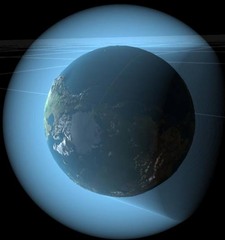
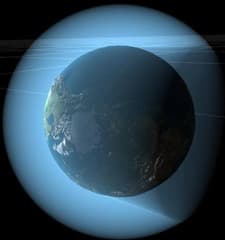
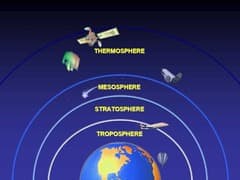
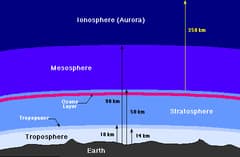

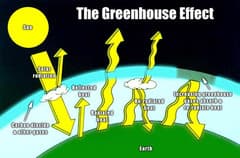
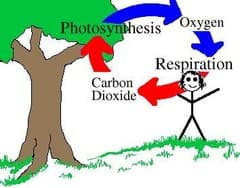

 Our AtmosphereAtmosphere of planets in our solar systemMission To prepare our students for a lifetime of endless potential. We accomplish this by: Preparing students for university transfer through academically rigorous programs grounded in the liberal arts tradition of William & Mary Expanding access to college credentials through strategic partnerships, specialized programming, and scalable innovation. Values A Friendly Family Atmosphere It is a constant theme that emanated from faculty, staff, and students. It is the comfort, the warmth, the family feeling that permeates the campus. An expansive atmosphere of support that allows all members of the college to uncover and act on their inherent potential. The atmosphere is valued, and it is embedded at the very core of the college. Enthusiastic Student Focused Service Ask any faculty of staff member at RBC why they come to work on any given day, and a single answer will resound: STUDENTS. We value that our mission centers on the success of our student body, and we endeavor to provide service of the highest quality to support their journey to success. Processes and proceeded are built, assessed, and improved in the name of the student, and we agree that nurturing that potential is our sole purpose. The Power of Difference Difference comes in many forms: the diversity of our campus population; the myriad ways that problems can be solved and risks mitigated; the various methods in which students learn and can be supported; the entrepreneurial spirit and nimbleness of faculty and staff. RBC continually stives to build an inclusive and welcoming community of individuals with diverse talents and skills from multitude of backgrounds who are committed to civility, mutual respect, and the free and open exchange of ideas. We value these differences because each new exchange expands out collective breadth of experience and knowledge and makes us stronger and better than we were. Building Confidence The dramatic transformation that occurs in students between Welcome Week and Commencement is incremental but astounding. Students move from the general idea of college education to fully formulated plans that include academic majors, professional goals, and transfer programs that strategically align their skills and dreams. Faculty and staff grow personally and professionally, and they hit stride on their career goals as they interact and engage with the campus. We value that RBC is a place where every individual can assist another human being in reaching the next stage of their life and career with newly discovered confidence or cultivate their own individual potential and fortitude. Quality Outcomes In the end the result matter and the faculty, staff and students of RBC value that we do our best to be the best. Through rigorous processes of assessment and adjustment, strategic change is continuously pursued to ensure that every outcome is of the highest quality, and that every initiative uses the efforts and resources of the College responsibly and efficiently. Vision As an extension of William & Mary, Richard Bland College is in the vanguard of learning-outcomes based liberal arts education for university transfer and a model for testing and applying outcomes-driven solutions in higher education.There are two numbers you need to know about climate change. The first is 51 billion. The other is zero. Fifty-one billion is how many tons of greenhouse gases the world typically adds to the atmosphere every year. This is where we are today. Zero is what we need to aim for. To stop the warming and avoid the worst effects of climate change, humans need to stop adding greenhouse gases to the atmosphere. This sounds difficult, because it will be. Every country will need to change its ways. Virtually every activity in modern life – growing things, making things, getting around from place to place – involves releasing greenhouse gases, and as time goes on, more people will be living this modern lifestyle. That’s good, because it means their lives are getting better. Yet if nothing else changes, the world will keep producing greenhouse gases, climate change will keep getting worse, and the impact on humans will be catastrophic. But “if nothing else changes” is a big If. I believe that things can change. We already have some of the tools we need, and as for those we don’t yet have, we can not only invent, but also deploy them, and, if we act fast enough, avoid a climate catastrophe. Two decades ago, I would never have predicted that one day I would be talking in public about climate change. My background is in software, not climate science. Things changed for me when I met with two former Microsoft colleagues who were starting non-profits focused on energy and climate. They brought along two climate experts who were well versed in the issues, and the four of them showed me the data connecting greenhouse gas emissions to climate change. I kept learning everything I could about climate and energy, agriculture, oceans, sea levels, glaciers, power lines, and more. One thing that became clear to me was that our current sources of renewable energy – wind and solar, mostly – could make a big dent in the problem, but we weren’t doing enough to deploy them. It also became clear why, on their own, they aren’t enough to get us all the way to zero. The wind doesn’t always blow and the sun doesn’t always shine. Within a few years, I had become convinced of three things: 1. To avoid a climate disaster, we have to get to zero. 2. We need to deploy the tools we already have, like solar and wind, faster and smarter. 3. We need to create breakthrough technologies that can take us the rest of the way.air mass a large area of air that has uniform temperature, humidity, and pressure. air pressure the force that a column of air applies on the air or a surface below it albedo the measure of the sun's reflectivity on Earth's different surfaces atmosphere the layers of gases surrounding Earth climate average weather conditions in a specific region over a long period of time coriolis effect the movement of wind or currents in a curved path due to Earth's rotation eddy Smaller, temporary loops of swirling water that can travel long distances before dispersing front a boundary between two air masses greenhouse gas a gas in the atmosphere that absorbs part Earth’s outgoing infrared radiation gyre a large circular system of ocean currents. humidity the amount of water vapor in the air hydrosphere system containing all the solid and liquid water on Earth jet stream Narrow bands of high speed wind high in the troposphere that move from west to east land breeze Winds that blow at night from land toward the sea. This is due to the fact that land has a low specific heat capacity and cools faster than water. This creates high pressure over the land at night and thus wind. local winds Winds that blow over short distances polar easterlies cold winds that blow from the east to the west near the North Pole and South Pole. prevailing wind distinct wind patterns caused by differences in pressure and the Coriolis effect sea breeze Winds that blow during the day from the sea toward land. This is due to water having a high specific heat capacity and it does not heat or cool quickly. High pressure then forms over the water during the day and blows toward the land. specific heat capacity The amount of heat that must be added to a substance to increase the tempurature by one degree Celsius storm surge water that has blown outward from the center of a tropical cyclone or hurricane and creates an abnormal rise in ocean waters on the coast surface current Currents near the surface of the ocean. Driven by wind, the Coriolis effect, and continental deflection trade winds Steady winds that flow from east to west between 30°N latitude and 30°S latitude along the equator tropical cyclone a rotating, organized system of clouds and thunderstorms that originates over tropical or subtropical waters typhoon a tropical cyclone occurring in the Pacific Ocean; especially in the region of the Philippines or the China Sea. weather the short-term atmospheric conditions in a given place and time westerlies steady winds that flow from west to east in the middle latitudes (30- 60 Degrees). These impact our weather in the US. wind shear A large shift in wind speed andHello friends, welcome to a new Happy Learning video. Have you ever wondered how plants feed? To answer this question, we need to understand... photosynthesis. Photosynthesis is a process in which plants make their own food to be able to grow and develop. In order to perform photosynthesis, they need various elements: sunlight, carbon dioxide obtained from air, and water, and chlorophyll, which is a green substance that all plants have and is fundamental for performing photosynthesis since it could not happen without it. By the way, chlorophyll is what gives all plants their green color. But how does photosynthesis take place? Look at this plant. As you can see, its roots are anchored to the ground. And through them, the plant absorbs water and minerals in the soil. Water with minerals are transported up the stem, reaching the leaves. The leaves are full of tiny pores called stomata which absorb carbon dioxide that the air in the surrounding contains. All this containing water, minerals and carbon dioxide is called raw sap. Now it's chlorophyll's turn. The chlorophyll in the leaves has all the necessary ingredients for photosynthesis to take place. And when it receives sunlight, the process begins by transforming the raw sap into elaborated sap, which also circulates around the plant and works as food. All plants feed from elaborated sap, and they store it in their roots like a carrot, or in their fruit, like an apple or a pear. Now we know how photosynthesis takes place, but why is it so important? Without plants, there would be no life on Earth. We wouldn't have oxygen to breathe or food to feed on. You already know that herbivores eat plants, and carnivores eat herbivores. Plants are fundamental for the food chain. And they are also fundamental for our respiration. Actually, when humans breathe, we turn oxygen into carbon dioxide. Quite the opposite of when plants perform photosynthesis. A curious fact you need to know is that at night, because plants don't have sunlight to photosynthesize, they breathe like humans do. They take in oxygen and release carbon dioxide. Remember that. And one last thing so you understand the importance of photosynthesis. When plants absorb dirty and contaminated gases, they transform them into pure air, into oxygen, and this way they clean the atmosphere and all nature. Plants are the best solution to fight against contamination, don't you think? Goodbye friends and don't forget to subscribe to Happy Learning TV.THE SOAR SYSTEM A solar system is a group of planets and other celestial bodies that revolve around a star. A solar nebula- a vast cloud of gas and dust, mostly hydrogen and helium. How the Solar System Form • COLLAPSE AND SPINNING DISK FORMATION - Gravity pulls material inward. The cloud flattens into a spinning disk due to conservation of angular momentum. • PROTOSTAR FORMATION- (BIRTH OF THE SUN). Material collects at the center, and begun to heat up. When it reaches to 10 million KELVIN, nuclear fusion begins. thus, SUN is born. • PLANETESIMALS AND PROTOPLANETS. Dust and gas in the disk stick together via static and gravitational forces. These form planetesimals, which grow into protoplanets collision and accretion. • PLANET FORMATION. Inner disk: too hot for gas rocky planets form Mercury, Venus, Earth, Mars. • PLANET FORMATION. Outer disk: gas and ice giants. Jupiter, Saturn, Uranus, Neptune • LEFTOVER DEBRIS. Remaining materials forms moon, asteroids, comets and dwarf planets. DIFFERENT HYPOTHESIS IN THE FORMATION OF SOLAR SYSTEM. 1. NEBULAR HYPOTHESIS- The Solar system formed from a rotating cloud of Gas and Dust (solar nebula). As it rotates conservation of angular momentum caused the cloud to flatten into a disk. the Sun formed at the center (DISK) while planets formed from the surrounding materials through acceleration. thus, it explains the coplanar and nearly circular orbit of the planets all planets orbits around the sun on the same flat, disk shaped plane. Proposed by Immanuel Kant in 1755 and Modified by Pierre Simon Laplace in 1756. PROTOPLANET HYPOTHESIS. The Solar system formed from a rotating cloud of Gas and Dust (solar nebula). As it rotates conservation of angular momentum caused the cloud to flatten into a disk. 2. Protoplanet hypothesis. Builds on the nebular model but focuses more on the role of planetesimals which then form into full planets. PROCESS: - Small solid particles stick together through collisions. As collisions takes place, it grows into kilometer-sized planetesimals. Gravitational interactions lead to the formation of planets. Lead to formation of steroids belts and varying planet sizes 3. Encounter hypothesis. States that the sun encountered a rogue star. The encounter led to the removal of hot gas from both stars due to their gravitational interaction. The hot gas then accumulated and formed the planets. The materials from the less dense rogue star formed the other planets, while that from the sun formed the inner planets. 4. TIDAL HYPOTHESIS. (also called the Tidal Theory) is an early scientific idea about how the solar system might have formed. Proposed by James Jeans and Harold Jeffreys. A massive star passed very close to the early Sun. The hot gas then accumulated and formed the planets. The materials from the less dense rogue star formed the other planets, while that from the sun formed the inner planets. Streams of hot gas were drawn out from the Sun in elongated shape. These streams eventually condensed and cooled, forming planets, moons, and other bodies in the solar system. 5. Not accepted theory. Later studies showed the streams of hot gas would disperse too quickly into space instead of condensing into planets. The theory also couldn’t explain the specific orbital patterns and compositions we see today. Modern science favors the Nebular Hypothesis, which explains solar system formation through the collapse of a rotating gas cloud. Earth as the only habitable planet 1. Right Distance from the Sun (The Goldilocks Zone). Not too hot, not too cold — just right for liquid water to exist. 2. Atmosphere with Oxygen. Earth has a mix of gases, especially oxygen, which most living things need to survive. 3. Liquid Water. Earth has oceans, rivers, and rain — water is essential for all life. 4. Magnetic Field. Earth’s magnetic field protects us from harmful solar radiation. 5. Stable Climate. The atmosphere and natural cycles keep temperatures and weather mostly stable over time. 6. Rich Resources. Earth has soil for growing food, minerals, and energy sources that support life and technology. Solar explorations 1. AUGUST 6, 2014. First space craft to orbit a comet (ROSETTA PROBE). Captures the comet photograph. -Comets have coma and tail as it approaches to the sun. 2. JULY 14, 2015. NASA’s New Horizons spacecraft made history by becoming the first spacecraft to fly by Pluto, giving us our first close-up look at the dwarf planet. First time visiting Pluto. Before this, Pluto was just a blurry dot in telescope images. Revealed a surprising world New Horizons showed mountains of ice, smooth plains, and a heart-shaped region called Tombaugh Regio. Changed what we knew. Scientists thought Pluto would be dull and frozen — instead, it turned out to be geologically active and incredibly complex. 3. SEPTEMBER 8, 2016. NASA launched OSIRIS-REx, the first U.S. mission to collect a sample from an asteroid and return it to Earth. Changed what we knew. Scientists thought Pluto would be dull and frozen — instead, it turned out to be geologically active and incredibly complex. OSIRIS-REx stands for: Origins, Spectral Interpretation, Resource Identification, Security–Regolith Explorer It was sent to study the asteroid Bennu, a near-Earth asteroid about 500 meters wide. Mission Goals: Collect a sample of surface material from Bennu Study the asteroid’s omposition, structure, and history. Mission Goals: Help scientists understand the origins of the solar system. Learn more about asteroids that could impact Earth. 4. August 12, 2018: Launch of NASA’s Parker Solar Probe, the first spacecraft to "touch" the Sun by flying through its outer atmosphere, called the corona. Mission Goal: To study the Sun up close and help scientists understand: How the solar wind (a stream of charged particles) is formed. Why the Sun’s corona is hotter than its surface. What causes solar storms that can affect Earth’s satellites and power grids. 5. November 26, 2018: NASA’s Insight Lander Touches Down on Mars. Its mission was focused on studying the interior of the Red Planet (crust, mantle, and core of the planet). Why the Sun’s corona is hotter than its surface. What causes solar storms that can affect Earth’s satellites and power grids 6. November 26, 2018: NASA’s Insight Lander Touches Down on Mars. Its mission was focused on studying the interior of the Red Planet (crust, mantle, and core of the planet) 7. JULY 30, 2020 PERSEVERANCE PROBE. Perseverance rover as part of the Mars 2020 mission aboard an Atlas V-541 rocket This marked a major step in Mars exploration. 8. DECEMBER 25, 2021-JAMES WEBB SPACE TELESCOPE. Investigate exoplanets’ atmospheres for signs of habitability. Observe the first galaxies formed after the Big Bang. Study the formation of stars and planetary systems. Look deeper into the infrared universe than ever before. RESULTS OF EXPLORATION • Evidence of Ancient Life-friendly Environment. • Sedimentary rocks formed in water-rich environments. • Signs of clay and carbonate minerals, which can preserve biosignatures (traces of past life). • Evidence of Ancient Life-friendly Environment. • Sedimentary rocks formed in water-rich environments. • Signs of clay and carbonate minerals, which can preserve biosignatures (traces of past life). • Evidence of Ancient Life-friendly Environment. • Sedimentary rocks formed in water-rich environments. • Signs of clay and carbonate minerals, which can preserve biosignatures (traces of past life).A solution is a mixture in which one or more substances are uniformly distributed in another substance. Solutions can be mixtures of liquids, solids, or gases. For example, plasma, the liquid part of blood, is a very complex solution. It is composed of many types of ions and large molecules, as well as gases, that are dissolved in water. A solute (SAHL-YOOT) is a substance dissolved in the solvent. The particles that compose a solute may be ions, atoms, or molecules. The solvent is the substance in which the solute is dissolved. For example, when sugar, a solute, and water, a solvent, are mixed, a solution of sugar water results. Though the sugar dissolves in the water, neither the sugar molecules nor the water molecules are altered chemically. If the water is boiled away, the sugar molecules remain and are unchanged. Solutions can be composed of various proportions of a given solute in a given solvent. Thus, solutions can vary in concentra- tion. The concentration of a solution is the amount of solute dis- solved in a fixed amount of the solution. For example, a 2 percent saltwater solution contains 2 g of salt dissolved in enough water to make 100 mL of solution. The more solute dissolved, the greater is the concentration of the solution. A saturated solution is one in which no more solute can dissolve. Aqueous (AY-kwee-uhs) solutions—solutions in which water is the solvent—are universally important to living things. Marine microorganisms spend their lives immersed in the sea, an aqueous solution. Most nutrients that plants need are in aqueous solutions in moist soil. Body cells exist in an aqueous solution of intercellu- lar fluid and are themselves filled with fluid; in fact, most chemical reactions that occur in the body occur in aqueous solutions. Copyright © by Holt, Rinehart and Winston. All rights reserved. Liquid water Solid water Ice (solid water) is less dense than liquid water because of the structure of ice crystals. The water molecules in ice are bonded to each other in a way that creates large amounts of open space between the molecules, relative to liquid water. FIGURE 2-12 solvent from the Latin solvere, meaning “to loosen” Word Roots and Origins CHEMISTRY OF LIFE 43 ACIDS AND BASES One of the most important aspects of a living system is the degree of its acidity or alkalinity. What do we mean when we use the terms acid and base? Ionization of Water As water molecules move about, they bump into one another. Some of these collisions are strong enough to result in a chemical change: one water molecule loses a proton (a hydrogen nucleus), and the other gains this proton. This reaction really occurs in two steps. First, one molecule of water pulls apart another water molecule, or dissociates, into two ions of opposite charge: H2O ∏ H OH The OH ion is known as the hydroxide ion. The free H ion can react with another water molecule, as shown in the equation below. H H2O ∏ H3O The H3O ion is known as the hydronium ion. Acidity or alkalin- ity is a measure of the relative amounts of hydronium ions and hydroxide ions dissolved in a solution. If the number of hydronium ions in a solution equals the number of hydroxide ions, the solution is said to be neutral. Pure water contains equal numbers of hydro- nium ions and hydroxide ions and is therefore a neutral solution. Acids If the number of hydronium ions in a solution is greater than the number of hydroxide ions, the solution is an acid. For example, when hydrogen chloride gas, HCl, is dissolved in water, its mol- ecules dissociate to form hydrogen ions, H, and chloride ions, Cl, as is shown in the equation below. HCl ∏ H Cl These free hydrogen ions combine with water molecules to form hydronium ions, H3O. This aqueous solution contains many more hydronium ions than it does hydroxide ions, making it an acidic solution. Acids tend to have a sour taste; how- ever, never taste a substance to test it for acidity. In concentrated forms, they are highly corrosive to some materials, as you can see in Figure 2-13. Bases If sodium hydroxide, NaOH, a solid, is dissolved in water, it dissociates to form sodium ions, Na, and hydroxide ions, OH, as shown in the equation below. NaOH ∏ Na OH Copyright © by Holt, Rinehart and Winston. All rights reserved. Eco Connection onnection Acid Precipitation Acid precipitation, more commonly called acid rain, describes rain, snow, sleet, or fog that contains high levels of sulfuric and nitric acids. These acids form when sulfur dioxide gas, SO2, and nitrogen oxide gas, NO, react with water in the atmosphere to produce sulfuric acid, H2SO4, and nitric acid, HNO3. Acid precipitation makes soil and bodies of water, such as lakes, more acidic than normal. These high acid levels can harm plant and animal life directly. A high level of acid in a lake may kill mollusks, fish, and amphibians. Even in a lake that does not have a very elevated level of acid, acid precipitation may leach aluminum and magnesium from soils, poisoning water- dwelling species. Reducing fossil-fuel consump- tion, such as occurs in gasoline engines and coal-burning power plants, should reduce high acid levels in precipitation. Sulfur dioxide, SO2, which is produced when fossil fuels are burned, reacts with water in the atmosphere to produce acid precipitation. Acid precipitation, or acid rain, can make lakes and rivers too acidic to support life and can even corrode stone, such as the face of this statue. FIGURE 2-13 44 CHAPTER 2 This solution then contains more hydroxide ions than hydronium ions and is therefore defined as a base. The adjective alkaline refers to bases. Bases have a bitter taste; however, never taste a substance to test for alkalinity. They tend to feel slippery because the OH ions react with the oil on our skin to form a soap. In fact, commercial soap is the product of a reaction between a base and a fat. pH Scientists have developed a scale for comparing the relative con- centrations of hydronium ions and hydroxide ions in a solution. This scale is called the pH scale, and it ranges from 0 to 14, as shown in Figure 2-14. A solution with a pH of 0 is very acidic, a solution with a pH of 7 is neutral, and a solution with a pH of 14 is very basic. A solution’s pH is measured on a logarithmic scale. That is, the change of one pH unit reflects a 10-fold change in the acidity or alkalinity. For example, urine has 10 times the H3O ions at a pH of 6 than water does at a pH of 7. Vinegar, has 1,000 times more H3O ions at a pH of 3 than urine at a pH of 6, and 10,000 times more H3O ions than water at a pH of 7. The pH of a solution can be measured with litmus paper or with some other chemical indicator that changes color at various pH levels. Buffers The control of pH is important for living systems. Enzymes can function only within a very narrow pH range. The control of pH in organisms is often accomplished with buffers. Buffers are chemi- cal substances that neutralize small amounts of either an acid or a base added to a solution. As Figure 2-14 shows, the composition of your internal environment—in terms of acidity and alkalinity— varies greatly. Some of your body fluids, such as stomach acid and urine, are acidic. Others, such as intestinal fluid and blood, are