Loading...

OUR FORESTS
Quiz by NOORJAHAN GUPTE
Customize this quiz to suit your class
Instantly translate to 100+ languages
Tag the questions with any skills you have. Your dashboard will track each student's mastery of each skill.
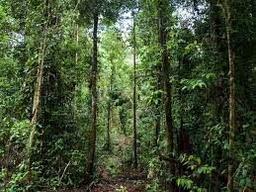
A large area of land where _______________________grow together naturally is called a forest
water
plants and animals
atmosphere
soil
Trees in evergreen forests do not shed their leaves all at once.
A large area of land where _______________________grow together naturally is called a forest
Trees in evergreen forests do not shed their leaves all at once.
Planting trees in an area where there used to be a forest
Forests are valuable resources. Explain.
Give this quiz to my class
 The future of our forestsThe Philippine Flag Our country is officially identified through our flag. The Philippine flag has three colors: white, blue, and red. White signifies purity; blue means hope and peace; and red denotes bravery. The three stars symbolize the three big groups of islands of our country-the Luzon, Visayas, and Mindanao. The eight rays of the sun signify the eight provinces that first revolted against the Spaniards. These are Bulacan, Pampanga, Tarlac, Nueva Ecija, Laguna, Batangas, Manila, and Cavite. We respect our flag to show that we respect our country. We should not treat it like an ordinary cloth because it symbolizes our country. An old flag should be burned and not be used as a rag. Title: National Hero Body text: Dr. Jose Rizal was from a middle-class family from Calamba, Laguna. He is regarded as a genius who fought the Spaniards through his writings, especially the novels "Noli Me Tangere" and "El Filibusterismo." The two novels exposed the anomalies and wrongdoings of the Spanish government against the Filipino people. He wrote the poem "Mi Ultimo Adios" the eve before his execution in Bagumbayan (now known as Rizal Park). National Fruit A mango is sour when it is green, but very sweet when it is ripe. This heart-shaped fruit symbolizes the kindness of the Filipinos. It has a big tree that bears fruits abundantly during summer. National Animal A carabao is a model of hard work and industry. It is the best companion of farmers in the field. It is black and looks like a tamaraw. A carabao is a very strong animal in terms of work. It symbolizes the Filipinos as hardworking and patient. National Bird The Philippine eagle, also known as haribon, stands over 5 feet (1.6 m) tall. It has a large, sharp, and aggressive beak and has powerful talons. Philippine eagles are excellent hunters, and live in tropical rainforests. These eagles lay just one or two eggs each year. National Tree The narra is a hardy tree that grows big and is found mainly in the Bicol Region, Mindanao, and Cagayan Valley forests. Most of the desks and tables in schools are made of narra. It signifies the strong personality of Filipinos in facing trials in life. National Flower The sampaguita has white, star-shaped petals with a sweet fragrance. It is made into garlands, which are given to visitors and special persons on occasions. It signifies purity and among Filipino women. National Fish Bangus or milkfish is our national fish. It grows in ponds or freshwater and tastes delicious. Its white, shiny scales signify our beautiful country. National Dance Cariñosa is a dance of love using a handkerchief and a fan. It symbolizes the true love expressed by Filipinos. National House A nipa hut is a small but beautiful house made from bamboo and sawali or cogon leaves. Filipinos used this kind of house during the olden times. At present, there are still people using this as a dwelling place, but most of the time, they use it as a rest place or cottage. National Costume Barong Tagalog is the national costume for Filipino men. It is made from pineapple fiber or other native materials. Filipinos wear this on special occasions such as formal events or weddings. Baro at Saya is the national dress for Filipino women. Most of them are made from jusi or pineapple fiber and other native materials. This dress shows the gracefulness of Filipino women. National Leaf Our national leaf is a palm tree. It is wide and narrow like an open fan. Farmers use this to protect their crops from the harsh sunlight and rain. It grows like a tree with thorns in its body. National Language Our national language is Filipino, which is based in Tagalog. Through the efforts of former President Manuel L. Quezon (known as the "Father of the National Language"), Filipino was widely disseminated and is now used in all parts of the country. With this, Filipinos in different cultures and native tongues can still communicate with each other. National Food Lechon (litson) is an important dish served at many occasions, especially on fiestas. Lechon is a suckling pig, slowly roasted over live coals to make it crispy and tasty. National Footwear Bakya is the national footwear of the Philippines. It was most popular from the 1950s to the 1970s before the introduction of rubber slippers. There are several colors and designs of bakya that suit the taste of most Filipinos. Valuing Our National Symbols Symbols represent a country and its people. We have to respect and value these symbols because they tell something about our country and of who we are as Filipinos. Here are some ways of valuing our national symbols: When singing the national anthem, stand straight and place your right hand on your left chest. Remove your cap or close your umbrella. Ask the people walking to stop while the flag is being raised. Tell other children to stop chatting while singing the national anthem. Most importantly, sing the national anthem wholeheartedly. Retirement of a Flag: A worn-out flag should be disposed of respectfully. It should be burned in a dignified ceremony, not thrown away or used for other purposes. Help in saving and conserving our forests. They serve as habitat of our national bird and other animals. You may also help organizations that promote reforestation, clean and green programs, and tree planting activities. Do not pick flowers when visiting parks. Instead, help in keeping these places clean and beautiful. Avoid throwing thrash in their surroundings. Patronize products that are made here in our country and made by Filipinos. Tell your family and friends to buy products of the Philippines especially those of which are our national symbol. Aside from patronizing our own products, let us use and love our national language. It is good to learn foreign languages, but do not forget to use our own language correctly and proudly.A. Hiking in Finland I've just come back from Finland. My friends from university invited me to join them on an eight-day hike. The walk is called the Bear Trail and it is in the Oulanka National Park in north-eastern Finland. It's a beautiful walk through forests and across rivers and lakes. We stayed at campsites and carried clothes, food and tents on our backs. I'm not the fittest person in the world but I was able to finish. I loved the incredibly clear air, the beautiful views and the sounds of nature. In my opinion, it is perfect for anyone who wants to start long distance walking as it is almost completely flat and well-signposted. Just try not to fill your backpack up with things which you won't need. B. Camino di Santiago It was the walk of a lifetime. Eight hundred kilometres from the south of France, over the Pyrenees mountains and across northern Spain to Santiago de Compostela. It all started so well. The path up to the Pyrenees was magical and it was good to meet other people doing the same walk. Everyone was enthusiastic about the walk ahead. But in Spain, the route often followed roads. It was noisy and monotonous, with unchanging views for hours and hours. More and more people joined the walk. They were generally friendly but it wasn't the experience I expected. I'd like to go back to the Pyrenees and hike there again but I'll stop there next time. C. The GR20, Corsica Corsica is a magnificent island with some wonderfully picturesque walks along the coast and inland. But for walkers, it is famous for the GR20, Europe's most difficult long distance walk. It goes from north to south and up and down from two hundred metres to over 2,200 metres above sea level. The frighteningly steep and rocky paths are beautiful but very demanding. Our guides will help you to complete the whole 180 km in fifteen days. The price includes transport, accommodation in tents and food. You should be in good health with experience of mountain walking and a good head for heights. No climbing experience is necessary. WHAT DOES THE WORLD GAIN WHEN WE PROTECT TIGERS? Tigers are one of the world’s most recognized animals. Throughout history they can be seen in cultural traditions across Asia, as well as in brand images and logos the world over. But while they might be omnipresent across our cultural landscape, their actual existence in the wild has been dramatically reduced to only a few pockets of their historical range. Wild tigers are now found in just 10 countries, their historical range shrunk by over 95%.er / WWF-US If tigers completely disappeared, we’d be losing so much more than an iconic species… Protecting water sources for millions of people Tiger habitats overlap nine of Asia’s most important watersheds which supply water to more than 800 million people. Protecting these tiger forests is the most cost-effective way to prevent droughts, reduce flooding, and limit the impacts of climate change. Protected Areas are proven to reduce deforestation and across Asia tigers are the driving force behind creating and effectively managing protected areas. For example, India recently declared its 51st Tiger Reserve, Srivilliputhur Megamalai, in southern India and this new protected area will safeguard more than 1,000km2 of key river habitat. Lose tigers, and lose entire forests Here in Cambodia, where I photographed the country’s last wild tiger in November 2007, tiger spirits were used by indigenous communities to help regulate the management of forests and wildlife. Harvesting of valuable plants was only permitted in certain times of the year and only after the tiger spirits had been appeased. Failure to adhere would result in wild tigers stalking you in the forest. However, with the extinction of the tiger the spirits have vanished, and the forests become an open free-for-all.aysia / Lau Ching Fong Protecting tigers also protects a multitude of other species Tiger-protected areas save much of Asia’s amazing wildlife. Take, for example, India’s Manas Tiger Reserve in Assam where tiger populations are increasing. In addition to tigers the grasslands and forests of Manas Tiger Reserve support the only viable global population of the world’s smallest, and rarest pig –pygmy hog – and, my personal favorite, the Bengal florican. This critically endangered gamebird, which I studied for my doctorate, finds a mate with an elaborate display involving males shooting themselves into the sky before plummeting down kicking their legs as if riding a bicycle. Without tigers, these and many more species would not be as well protected. A cultural and spiritual icon for millions There are plenty of examples of mythical animals, such as the unicorn, and extinct creatures, like the dodo and dinosaurs, which remain part of international consciousness. Tigers are a global phenomenon, but unless conservation is successful, they will only be known in zoos or in cultural media. A world without tigers would be economically and spiritually a much poorer place. Let us continue focusing our efforts towards doubling wild tigers and ensuring that this species does not become a vanished cultural icon.Broken windows are covered. Floorboards are patched and doors screwed back on. The road that was ruined by German tanks is shovelled and raked smooth. Boot-shaped bruises turn yellow then fade and disappear. Flowers grow and spread across the ugly German footprints stomped into garden beds. The village looks pretty once more. School stops for the summer and everyone is put to work on the kolkhoz, the village farm. Women and big boys begin harvesting the barley crops in the outer fields. The biggest girls milk the cows, morning and night, and keep the barns clean. Old Nikolay mends ploughs, horse harnesses, pitchforks and scythes in his workshop. Anna Pushinka teaches Yelena and her friends how to get the honey from the beehives that are scattered through the orchards. I am in charge of collecting eggs. My friends Olga and Nina help. Olga and Nina are five, a year younger than me. They are twins and look exactly alike, except Nina’s nose is a little bit crooked from when she fell out of bed and squashed it sideways on the floor. The hens, ducks and geese wander free in the summer, so collecting eggs is like a treasure hunt and takes hours. Catching the hens for their daily hugs takes even longer, but I think it’s important because hugs make everyone happy and happy hens lay bigger eggs. Olga says I’m the best hen-hugger in all of Russia. Nina says I’ll be the best cow-hugger, too, when my arms grow longer. But good hugs have nothing to do with the size of your arms. It’s all to do with the size of your heart. When we are done with the hens, Olga, Nina and I can spend the rest of the day doing whatever we like. We climb the apricot trees, chase squirrels, lie in the meadow marvelling at how hot Ushanka’s black fur becomes in the sunshine, make daisy chains and race little boats of bark in the stream. I teach Olga and Nina the alphabet and we use charcoal to write our letters and our names all over the village – on doors and walls and the freshly cut ends of firewood. In between, I practise my knots. In case the German princemonsters return. I slip into Old Nikolay’s workshop and tie knots in the harnesses hanging on the walls. I wander into gardens where the washing is hung out to dry and tie knots in the laces on pants and smocks. I creep up behind Anna Pushinka and tie knots in her apron strings. I find baling twine in the hay shed and tie my own ankles together. I do such a good job of these last knots that I can’t get them undone. I have to jump all the way to Olga and Nina’s house and ask them to cut me free with their mama’s knife. At the end of each day, Ushanka and I run out into the distant barley fields to meet Mama. This is my favourite part of the day, because Mama always shouts, ‘Little Rabbit!’ and smothers my head with kisses. And as we walk home, we sing. Everyone – women, big boys and me. I love to sing. Almost as much as I love to be kissed by Mama. Sometimes one of the boys, Mikhail, has his balalaika with him. He takes the instrument out from beneath the sheaves of barley piled high on the wagon and plays music. We sing about forests and orchards and people who find their true love. As we walk home, arm in arm, my heart fills with happiness and my belly swells with pride that I am allowed to sing along with the big boys. And I can almost forget about the German prince-monsters and their lies about Russia and their big ugly boots. Almost. But today, when Mikhail reaches for his balalaika, I see other things hiding beneath the barley sheaves. Three of the mamas rush forward and cover them up, but it’s too late. I know they are there. I’ve already seen them. Rifles. Lots of rifles. Mikhail hugs his balalaika to his chest and blushes. ‘So play!’ cries Mama, her voice oddly loud and high. ‘Let’s play Sasha’s favourite song, “The Little Birch Tree”.’ So Mikhail plays and everyone sings about the lovely birch tree with its curly leaves and the branches that will be turned into silver flutes. They sing too quickly, too loudly, and as they sing and walk, they cast nervous sideways glances at me. ‘It’s alright,’ I say, when the song comes to an end. ‘I didn’t see the rifles.’ Mama nods and smiles, and I know it was the right thing to say. But I did see the rifles. And I think about Yelena wanting to get lots of guns and dynamite for the Partisans so they can shoot the Germans and blow them into thousands of tiny pieces, and Mama looking as though she agreed, and I know this is what the mamas and the big boys are doing. As well as harvesting, they are helping the Partisans. Three days later, I wake before dawn and I am all alone. Yelena is always here beside me when I wake. But not this morning. I climb down from our bed above the stove. Mama is filling a cloth sack with bread. She ties it closed with a piece of string and hands it to Yelena. ‘Stay out of sight,’ says Mama. ‘And don’t return until after dark.’ ‘Where’s she going?’ I ask. ‘Nowhere,’ snaps Mama. ‘Then why does she need all that bread?’ I ask. ‘There’s nothing left for us.’ Mama baked four loaves last night and she has stuffed them all into the sack. Yelena opens her mouth, but before she can speak, Mama shoves her out the door and sends her on the way to nowhere. Mama turns and stares at me, her blue, blue cornflower eyes wide with worry. ‘I know,’ I say, flopping down on the bench. ‘I didn’t see any bread.’ Mama sits beside me and takes my hand. ‘And . . .?’ she prods, obviously waiting for more. I puzzle for a while, then say, ‘And I don’t have a sister called Yelena.’ Mama laughs, softly and with a little bit of sadness around the edges. ‘Sweet Little Rabbit! You do have a sister called Yelena.’ ‘I do?’ I ask, now confused. ‘I haven’t seen the rifles or the bread, but I have seen Yelena?’ ‘Yes.’ Mama smiles and the magic makes me smile, too. And I am glad that Yelena is real because I love her very much. ‘Yelena is real,’ Mama explains, ‘but she does not carry sacks of bread into the forest for the Partisans.’ ‘Of course not!’ I shout, slapping my forehead. ‘Because there is no bread!’ Mama laughs loudly now, with not a hint of sadness. She hugs me, pressing me against her warm, loving heart, covering my head with kisses. ‘Clever Little Rabbit,’ she murmurs, and then, in barely a whisper, ‘Your papa would be so proud.’ When I wake the next morning, Yelena is sleeping beside me, her mouth open, her braided hair unravelling. Mama is serving kasha to a strange woman seated at our table. I crawl down from above the stove and slide along the bench beside her. I stare at her pants, her tunic, the rope she is using as a belt and her big boots. She’s dressed like a man! And there’s a rifle leaning against the wall near the door. ‘Hello,’ I say. ‘I’m Sasha.’ The woman doesn’t reply. She just shovels down her kasha. I line my four wooden bears along the table in front of her bowl and say, ‘These are my bears: Big Bear, Medium Bear, Little Bear and Even Littler Bear.’ ‘Hello, Sasha. Hello, bears.’ She smiles but she doesn’t tell me her name. ‘Why are you dressed like a man?’ I ask, tugging at the sleeve of her tunic. ‘Because men’s clothes make it easier to run and climb and crawl and shoot,’ she says. ‘You’re a Partisan!’ I gasp. ‘But she’s not real,’ says Mama, placing a bowl of kasha before me. ‘Is the kasha real?’ I ask. Mama laughs. ‘Yes, Little Rabbit.’ I’m glad the food is real, because I’m hungry. But I’m disappointed that the woman is not real. I was going to ask if I could use her rope-belt to tie her ankles together. For practice. But if she’s not real, then the rope and her ankles aren’t either. The woman finishes her kasha, hangs her rifle over her shoulder, kisses Mama on the cheek then slips out the door. I run to the window to watch her leave, but by the time I get there, she’s gone. Vanished. ‘Because she’s not real,’ I whisper. A week later, Mama and I are working in the garden. We sing as we weed between the flowers and pluck caterpillars from the vegetables. Anna Pushinka is picking strawberries in her garden and wanders over. ‘Taste these,’ she says, holding out the basket. Mama reaches in and takes out a fat strawberry and a tiny piece of folded paper. The strawberry goes into her mouth, the paper into her pocket. ‘What’s on the paper?’ I ask. ‘Paper?’ Anna Pushinka replies with a wave of her hand. ‘Goodness, Sasha! Who has money for paper? These are lean times. We must choose between paper for writing and noodles for our soup. And I always choose noodles.’ She chuckles and I know the paper is yet another thing that is not real. That night, Mama slips the paper to Yelena, but she drops it on the floor. I pick it up for her, and I see that there are tiny words and numbers written all over it. I wish I could read better. I’m desperate to know what it says. Or rather, what it doesn’t say, because it’s not real. Later, when Mama has tucked us into our bed above the stove and Ushanka has wrapped herself around the top of my head, I ask Yelena, ‘What’s on the paper?’ ‘What paper?’ says Yelena. ‘The paper that isn’t real,’ I reply. Yelena stares at me, nibbling her lip, then whispers, ‘A message for the Partisans. Stuff about where the Germans have their headquarters and when their trains are travelling and where they store their ammunition.’ ‘Why?’ ‘So the Partisans can blow them up.’ Yelena grabs my arm. ‘But don’t tell anyone. It’s a secret.’ ‘What’s a secret?’ I ask. ‘The message.’ ‘What message?’ I say, my eyes wide. Yelena laughs. ‘Good boy, Sasha.’ My belly swells with pride. I know how to play this game. ‘How are your knots coming along?’ asks Yelena. ‘Good! Yesterday, I crept into the dairy and tied knots in the apron strings of all the girls who were milking and only one of them noticed. Today, I tied Olga’s ankles together with Mama’s embroidery thread and just now, while you were taking a bath, I tied the sleeves of your blouse together in an enormous knot.’ Yelena rolls her eyes, then says, ‘I’ll see if I can find you some rope for practising.’ ‘Practising what?’ I ask. ‘Your knots,’ she says. ‘What knots?’ Yelena, my big sister who is twelve and always serious tforest our life line Lena: Wow, Max! It feels so different in the forest. The air is so fresh! Max: I know! I love the fresh smell of the trees and plants. It’s peaceful here. Lena: And quiet too. Listen... total silence. Max: Yeah, I like the silence. It gives me a sense of calm. Lena: Me too. I also feel a sense of adventure! Let’s explore more! Max: I’m eager to find something cool—like an animal or a cave! Lena: Me too! I’m eager to take pictures for our nature project. Max: Look at those long shadows on the path! The sun is behind the trees. Lena: The shadows make everything look magical. It’s like a fairy tale! Max: Do you think animals have to adapt to the forest? Lena: Yes! They must adapt to the seasons and find food in all weather. Max: I like how animals live with so much freedom here. Lena: Yeah, that freedom to run, fly, and live in the wild is amazing. Max: Nature is awesome. I hope we can help protect the climate too. Lena: Yes, keeping the climate healthy is important for animals—and for us!Check reading comprehension of the following text:Last weekend was one of the most exciting weekends of my life. My friends and I decided to go on a hiking trip to the nearby forest. We started early in the morning, and as we walked, we chatted and laughed, enjoying the fresh air and the beautiful scenery. The sun was shining, and the birds were singing, and we felt free and adventurous. We were wearing comfortable shoes and carried backpacks with snacks and water. As we walked deeper into the forest, we suddenly heard a rustling sound in the bushes. We stopped and listened, and soon enough, a small black bear emerged from the trees. We froze, not knowing what to do, but our guide quickly instructed us to stay still and not to make any sudden movements. The bear seemed to be curious and sniffed around us, but eventually wandered off back into the forest. After the encounter with the bear, we were a bit shaken but also excited. We continued our hike, keeping a closer eye on our surroundings and being extra cautious. We talked about the bear encounter for the rest of the trip, and it became a story to tell to our friends and family back home. Even though it was a scary moment, it made the adventure even more memorable.