Know and apply the Remainder Theorem: For a polynomial p(x) and a number a, the remainder on division by x - a is p(a), so p(a) = 0 if and only if (x - a) is a factor of p(x)
Rearrange formulas to highlight a quantity of interest, using the same reasoning as in solving equations. For example, rearrange Ohm's law V = IR to highlight resistance R.
Solve simple rational and radical equations in one variable, and give examples showing how extraneous solutions may arise.
Rewrite expressions involving radicals and rational exponents using the properties of exponents.
Solve quadratic equations by inspection, taking square roots, completing the square, the quadratic formula and factoring, as appropriate to the initial form of the equation. Recognize when the quadratic formula gives complex solutions and write them as a ± bi for real numbers a and b.
Use the structure of an expression to identify ways to rewrite it.
Use function notation, evaluate functions for inputs in their domains, and interpret statements that use function notation in terms of a context.
Combine standard function types using arithmetic operations
Derive the formula for the sum of a finite geometric series (when the common ratio is not 1), and use the formula to solve problems.
For a function that models a relationship between two quantities, interpret key features of graphs and tables in terms of the quantities, and sketch graphs showing key features given a verbal description of the relationship.
Explain why the x-coordinates of the points where the graphs of the equations y = f(x) and y = g(x) intersect are the solutions of the equation f(x) = g(x); find the solutions approximately
Solve quadratic equations with real coefficients that have complex solutions.
Calculate and interpret the average rate of change of a function (presented symbolically or as a table) over a specified interval. Estimate the rate of change from a graph.*
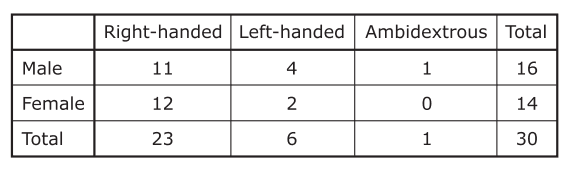
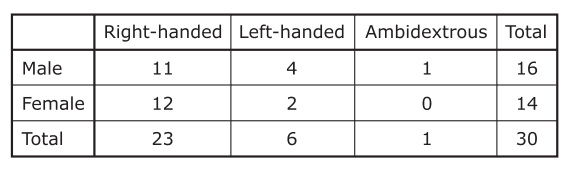
Construct and interpret two-way frequency tables of data when two categories are associated with each object being classified. Use the two-way table as a sample space to decide if events are independent and to approximate conditional probabilities.
Prove the Pythagorean identity sin^2(θ) + cos^2(θ) = 1 and use it to find sin(θ), cos(θ), or tan(θ) given sin(θ), cos(θ), or tan(θ) and the quadrant of the angle.
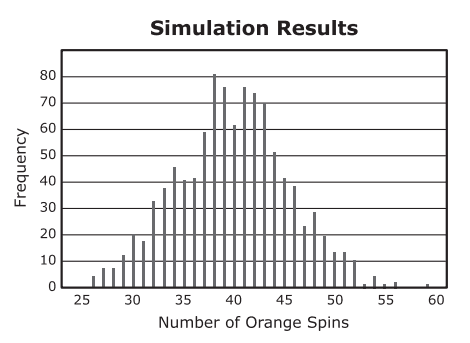
Decide if a specified model is consistent with results from a given data-generating process, e.g. using simulation.
Recognize the purposes of and differences among sample surveys, experiments, and observational studies; explain how randomization relates to each.
Use the mean and standard deviation of a data set to fit it to a normal distribution and to estimate population percentages. Recognize that there are data sets for which such a procedure is not appropriate. Use calculators, spreadsheets, and tables to estimate areas under the normal curve.
Solve a simple system consisting of a linear equation and a quadratic equation in two variables algebraically and graphically.
Write a function defined by an expression in different but equivalent forms to reveal and explain different properties of the function.
Use the process of factoring and completing the square in a quadratic function to show zeros, extreme values, and symmetry of the graph, and interpret these in terms of a context.
Fit a function to the data; use functions fitted to data to solve problems in the context of the data. Use given functions or choose a function suggested by the context. Emphasize linear, quadratic, and exponential models.
Graph exponential and logarithmic functions, showing intercepts and end behavior, and trigonometric functions, showing period, midline, and amplitude.
Track each student's skills and progress in your Mastery dashboards