Loading...


PART 3: TOEIC LISTENING QUIZ
Quiz by Ndeye Fatou Lagnane
Customize this quiz to suit your class
Instantly translate to 100+ languages
Tag the questions with any skills you have. Your dashboard will track each student's mastery of each skill.
Play the audio ONCE and anwer the questions in the picture.
Type your answer in this format : (A) (B) (C)
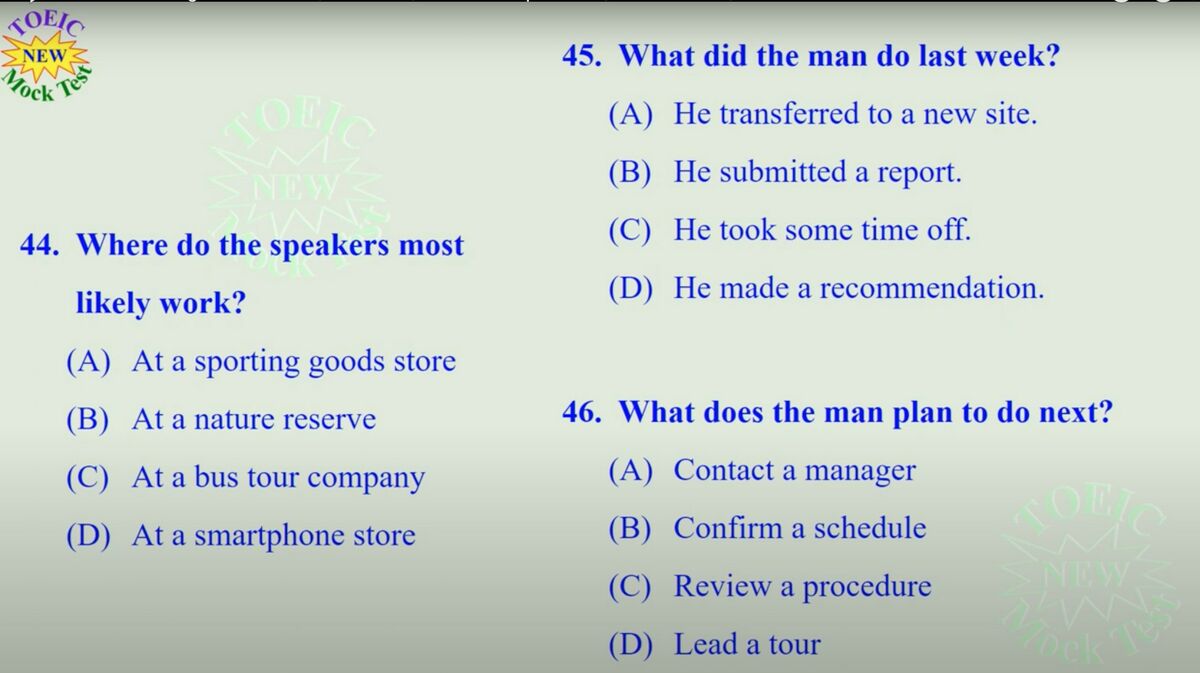
Play the audio ONCE and anwer the questions in the picture.
Type your answer in this format : (A) (B) (C)
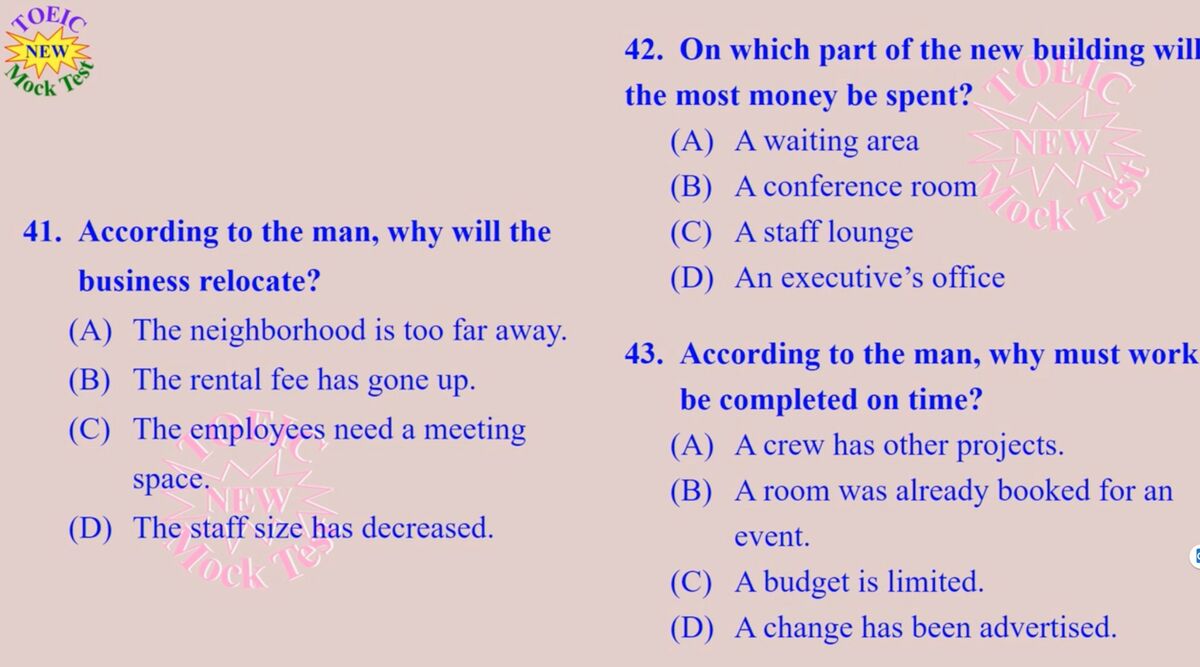
Play the audio ONCE and anwer the questions in the picture.
Type your answer in this format : (A) (B) (C)
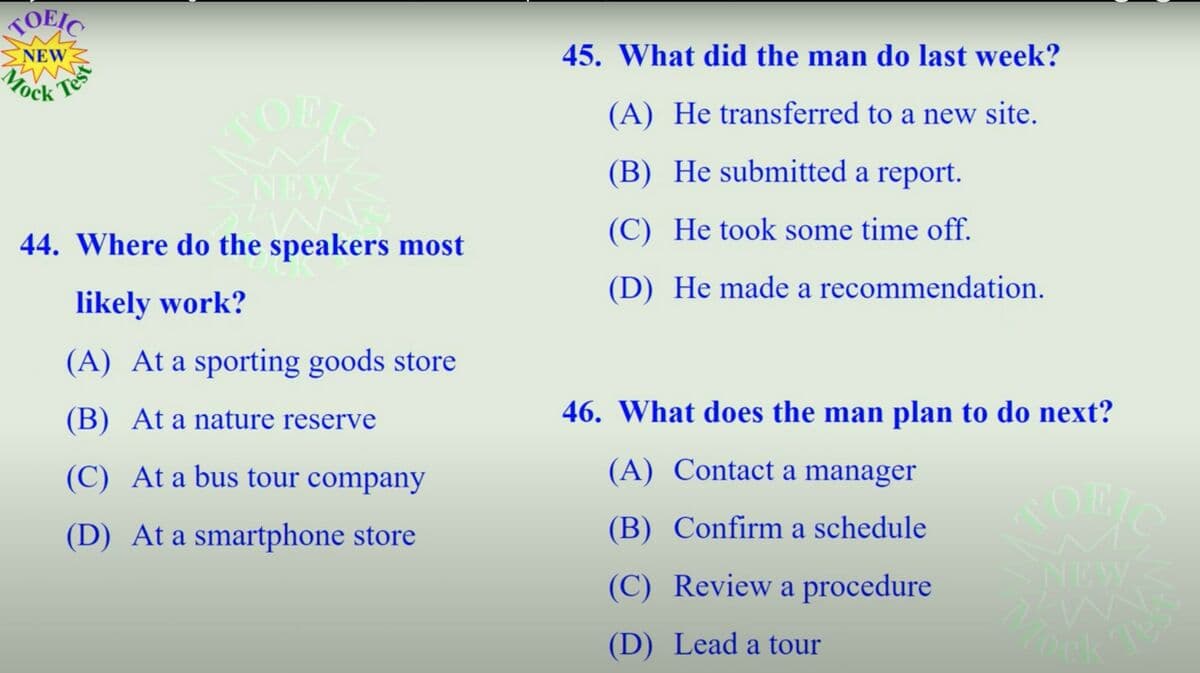
Play the audio ONCE and anwer the questions in the picture.
Type your answer in this format : (A) (B) (C)
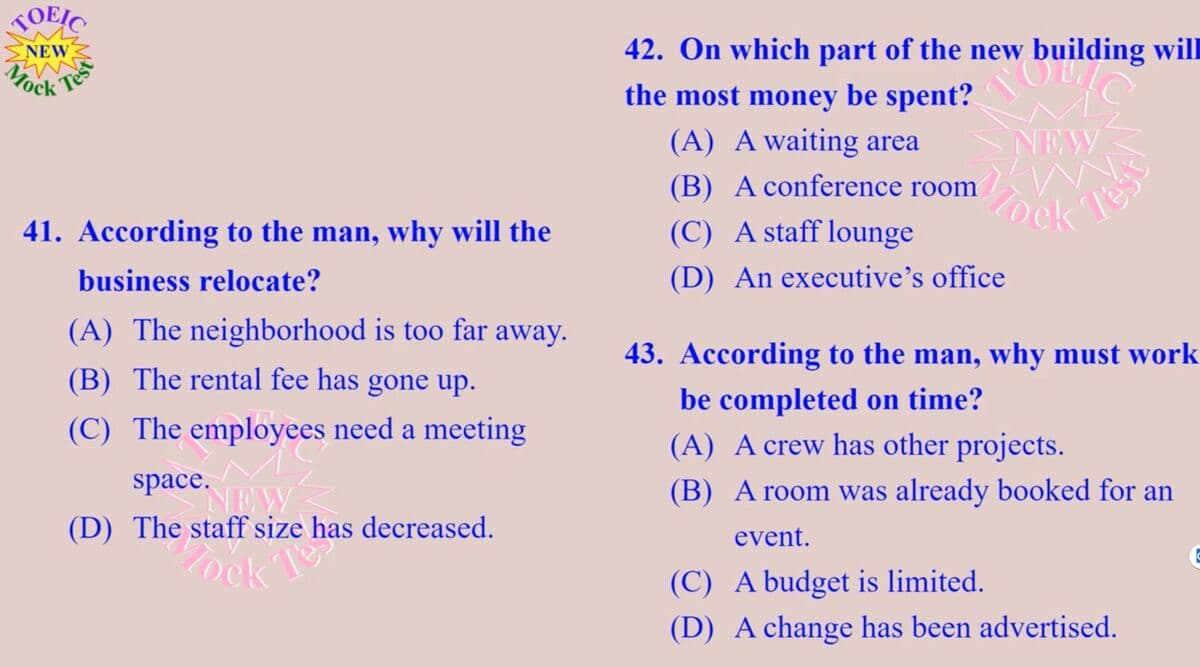
Give this quiz to my class
 CAA TOEIC W5 Listening Part 3 Short ConversationTo the Lakota, and other indigenous people on North America's Great Plains, the bison was an essential part of their culture ( expressed in the quote on the previous page). The bison provided meat for nutrition, a hide for clothing and shelter, bones for tools, and fat for soap. The bison was also central to their religious beliefs. So, when European settlers hunted the bison nearly to extinction, Lakota culture suffered. Culture is central to a society and the identity of its people, as well as its continued existence. Therefore, geographers study culture as a way to understand similarities and differences among societies across the world, and in some cases, to help preserve these societies. Analyzing Culture All of a group's learned behaviors, actions, beliefs, and objects are a part of culture. It is a visible force seen in a group's actions, possessions, and influence on the landscape. For example, in a large city you can see people working in offices, factories, and stores, and living in high-rise apartments or suburban homes. You might observe them attending movies, concerts, or sporting events. Culture is also an invisible force guiding people through shared belief systems, customs, and traditions. Culture is learned, in that it develops through experiences, and not merely transmitted through genetics. For example, many people in the United States have developed a strong sense of competitiveness in school and business, and believe that hard work is a key to success. These types of elements, visible and invisible, are cultural traits. A series of interrelated traits make up a cultural complex, such as the process of steps and acceptable behaviors related to greeting a person in different cultures. A single cultural artifact, such as an automobile, may represent many different values, beliefs, behaviors and traditions and be representative of a cultural complex. Since culture is learned there are many ways that one generation passes its culture to the next. Children and adults learn traits three ways: • imitation, as when learning a language by repeating sounds or behaviors from a person or television • informal instruction, as when a parent reminds a child to say "please" • formal instruction, as when students learn history in school 132 HUMAN GEOGRAPHY: AP" EDITION CULTURAL COMPLEX OF THE AUTOMOBILE The automobile provides much more than just transportation, as it reflects many values that are central to American culture. Origins of Culture The area in which a unique culture or a specific trait develops is a culture hearth. Classical Greece was a culture hearth for democracy more than 2,000 years ago. New York City was a culture hearth for rap music in the 1970s. Geographers study how cultures develop in hearths and diffuse-or spread-to other places. Geographers also study taboos, behaviors heavily discouraged by a culture. For example, many cultures have taboos against eating certain foods, such as pork or insects. What is considered taboo changes over time. In the United States, marriages between Protestants and Catholics were once taboo, but they are not widely opposed now. Traditional, Folk, and Indigenous Cultures With the beginning of the Industrial Revolution in the late 18th century, modern transportation and communication connected people as never before and led to extensive cultural mixing, especially as cities have grown. The world prior to this time was very different; however, remnants of the past are still evident in our modern cultures. Traditional, folk, and indigenous cultures share some important characteristics and are often grouped together, but they do have some subtle differences. Traditional Culture Recently, the meanings of traditional, folk, and indigenous culture have begun to merge, causing geographers to debate when each should be used. Increasingly, the term traditional culture is used to encompass all three cultural designations. All three types share the function of passing down long-held beliefs, values, and practices and are generally resistant to rapid changes in their culture. Folk Culture The beliefs and practices of small, homogenous groups of people, often living in rural areas that are relatively isolated and slow to change, are known as folk cultures. Like all cultures, they demonstrate the diverse ways that people have adapted to a physical environment. For example, people around the world learned to make shelters out of available resources, whether 3.1: INTRODUCTION TO CULTURE 133 it was snow or mud bricks or wood. However, people used similar resources such as wood differently. In Scandinavia, people used trees to build cabins. In the American Midwest, people processed trees into boards, built a frame, and attached the boards to it. Many traits of folk culture continue today. Corn was first grown in Mexico around 10,000 years ago, and it is still grown there today. While many elements of folk culture exist side by side with modern culture, there are people whose societies have changed little, if at all, from long ago. These people practice traditional cultures, those which have not been affected by modern technology or influences. They often live in remote regions, such as some small tribes in the Amazon rainforest, and have scant knowledge of the outside world. As the lines continue blurring between cultural designations, the Amish of Pennsylvania are often referenced as both folk and traditional culture. Indigenous Culture When members of an ethnic group reside in their ancestral lands, and typically possess unique cultural traits, such as speaking their own exclusive language, they are considered an indigenous culture. Some indigenous peoples have been displaced from their native lands, but still practice their indigenous culture. Native Americans in the United States, such as the Navajo, have kept indigenous cultural practices. First Nations of Canada, such as the Inuit, have also retained their indigenous culture. Globalization and Popular Culture As a result of the Industrial Revolution, improvements in transportation and communication have shortened the time required for movement, trade, or other forms of interaction between two places. This development, known as space-time compression (see Topics 1.4 and 3.6), has accelerated culture change around the world. In 1817, a freight shipment from Cincinnati needed 52 days to reach New York City. By 1850, because of canals and railroads, it took half that long. And by 1852, it took only 7 days. Today, an airplane flight takes only a few hours, and digital information takes seconds or less. Similar change has occurred on the global scale. People travel freely across the world in a matter of hours, and communication has advanced to a point where people share information instantaneously across the globe. The increased global interaction has had a profound impact on cultures, from spreading English across the world to instant sharing of news, events and music. Globalization specifically refers to the increased integration of the world economy since the 1970s. The process of intensified interaction among peoples, governments, and companies of different countries around the globe has had profound impacts on culture. The culture of the United States is intertwined with globalization. Through the influence of its corporations, Hollywood movies, and government, the United States exerts widespread influence in other countries. But other countries also shape American culture. For example, in 2019, the National Basketball Association included players from 38 countries or territories. When cultural traits- such as clothing, music, movies, and types of 134 HUMAN GEOGRAPHY: AP. EDITION businesses-spread quickly over a large area and are adopted by various groups, they become part of popular culture. Elements of popular culture often begin in urban areas and diffuse quickly through globalization processes such as the media and Internet. These elements can quickly be adopted worldwide, making them part of global culture. People around the world follow European soccer, Indian Bollywood movies, and Japanese animation known as anime. With people in many nations wearing similar clothes, listening to similar music, and eating similar food, popular cultural traits often promote uniformity in beliefs, values, and the cultural landscape across many places The cultural landscape, also known as the built environment (see Topic 3.2), is the modification of the environment by a group and is a visible reflection of that group's cultural beliefs and values. Traditional Culture to Popular Culture Popular culture emphasizes trying what is new rather than preserving what is traditional. Many people, especially older generations or those who follow a folk culture, openly resist the adoption of popular cultural traits. They do this by preserving traditional languages, religions, values, and foods. While older generations often resist the adoption of popular culture, they seldom are successful in keeping their traditional cultures from changing, especially among the young people of their society. One clash between popular and traditional culture is occurring in Brazil. As the population expands to the interior of the rain forest, many indigenous cultures, like the Yanamamo tribe, have more contact with outside groups. Remaining isolated by the forest is becoming increasingly difficult as many young people from the indigenous cultures become exposed to popular culture and begin to integrate into the larger Brazilian society. As the young people leave their communities, they are more likely to accept popular culture at the expense of their indigenous cultural heritage, which threatens the very existence of their folk culture. Traditional culture typically exhibits horizontal diversity, meaning each traditional culture has its own customs and language that makes it distinct from other culture groups. Yet, people people within each group are usually homogeneous, or very similar to each other. By contrast, popular culture typically exhibits vertical diversity, meaning that modern urban societies are usually heterogeneous, or exhibiting differences, within the society and usually contain numerous multiethnic neighborhoods. However, on a global scale popular cultures are relatively similar with the same type of malls, shops, fast food, and clothing. Urban global culture centers are not identical, yet, global cities often do not have as much horizontal diversity across space as folk cultures. 3.1: INTRODUCTION TO CULTURE 135 COMPARING TRADITIONAL AND POPULAR CULTURE Trait Traditional Culture Popular or Global Culture Society • Rural and isolated location • Urban and connected location • Homogeneous and • Diverse and multiethnic indigenous population population • Most people speak an • Many people speak a global indigenous or ethnic local language such as English or language Arabic • Horizontal diversity • Vertical diversity Social • Emphasis on community and • Emphasis on individualism and Structure conformity making choices • Families live close to each • Dispersed families other • Weakly defined gender roles • Well-defined gender roles Diffusion • Relatively slow and limited • Relatively rapid and extensive • Primarily through relocation • Often hierarchical • Oral traditions and stories • Social media and mass media Buildings and • Materials produced locally, • Materials produced in distant Housing such as stone or grass factories, such as steel or glass • Built by community or owner • Built by a business • Similar style for community • Variety of architectural styles • Different between cultures • Similar between cities • Traditional architecture • Postmodern / contemporary architecture Food • Locally produced • Often imported • Choices limited by tradition • Wide range of choice • Prepared by the family or • Purchased in restaurants community Spatial Focus • Local and regional • National and global Artifacts, Mentifacts, and Sociofacts Whether a cultural attribute is considered traditional, folk, indigenous, or popular in nature, it is valuable to differentiate between elements of culture that can be seen and those that can not. There are artifacts that comprise the material culture, which consists of tangible things, or those that can be experienced by the senses. Art, clothing, food, music, sports, and housing types are all tangible elements of culture. Another element of the study of artifacts is understanding the techniques to use or build a specific artifact. Artifacts can be unique to a particular culture, or can be shared. For example, people of all cultures need to communicate through language, yet there are many groups that possess languages unique to their culture. The ability to read, write and understand the English language is an artifact of importance for much of popular global culture. 136 HUMAN GEOGRAPHY: AP" EDITION Mentifacts comprise a group's nonmaterial culture and consist ofintangible concepts, or those not having a physical presence. Beliefs, values, practices, and aesthetics (pleasing in appearance) determine what a cultural group views as acceptable and desirable. Mentifacts can also be unique or shared. People of many cultures possess an belief in one or many deities, and often the deities are unique to that culture. The belief in a god is a mentifact-the religious building or symbols are artifacts. Cultural groups also possess sociofacts, which are the ways people organize their society and relate to one another. Taken altogether, people tend to see the whole of their culture as greater than the sum of its individual parts. Sociofacts are embodied through families, governments, sports teams, religious organizations, education systems, and other social constructs. As with artifacts and mentifacts, sociofacts may also be unique or similar to other societies. Families are the foundations of most societies, yet what constitutes the structure of a family may vary widely between cultural groups. For example, Western cultures tend to view the nuclear family, consisting of the parents and their children as the basic family unit. By contrast, in many Western African cultures the norm is the extended family, consisting of several generations and other family members such as cousins living under one roof.Toeic Part 3TOEIC Part 3 Short ConversationsTOEIC TOURISM PART 3TOEIC Part 5_Incomplete Sentence Practice(V.3)HEALTH EDUCATION 3. SPECIFIC OBJECTIVES: Students should able to know about_______ 1. definition of health education 2. aims of health education 3. objectives of health education 4. principles of health education 5. scope of health education 6. planning of health education 7. steps in planning health education 8. levels of health education 9. doctors s responsibility 4. INTRODUCTION: Health education is a term frequently used by health care professional. its aims at individual and community health. Health education is the translation of what is known about health into desirable individual and community behaviour pattern by means of an education process. Definition: “A process aimed at encouraging people to want to be healthy , to know how to stay healthy, to do what they can individually and collectively to maintain health And seek help when needed”. OBJECTIVES - To inform people or disseminate scientific knowledge about prevention of disease and promotion of health - To motivate people to change their habits and lifestyle that are harmful to their health also motivate people to adopt habits and ways of living conducive to healthy living. - To guide the people who need help to adapt and maintain healthy practices and lifestyle by showing proper community resources. --- PRINCIPLES OF HEALTH EDUCATION - Credibility Of Message: It is the degree to which the message to be communicated is perceived as trustworthy by the receiver. - Creating interest among participants: It is a psychological principle that people are unlikely to listen to things that are not of their interest. If a health programme is based on the felt needs, people will participate in the programme willingly. - Motivating the participants: Motivation is like a petrol engine that drives the mental engine. It is the fundamental desire in every person to learn. Motivation is contagious; one motivated person may spread motivation throughout the group. 13. - Enhance comprehension of content: It means health education should be based on the level of understanding, education and literacy of people at whom the teaching is directed. Teaching should be within the mental capacity of the audience. - Ensure reinforcement: Repetition at intervals is necessary to promote learning. Without reinforcement and feedback, students can go back to the pre-awareness stage. - Encourage active participation: Health education should aim at encouraging people to work actively with health workers and others in identifying their own health problems and also in developing solutions. 14. - Learning by doing: Teaching is effective when individuals actively participate in health education. Learning becomes active and quicker if the individuals are made active physically as well as psychologically. - Known to unknown: The people in a community know something and the health educator enlarges this knowledge. If the health educator links new knowledge with the old knowledge, it can enhance learning. - Maintaining good human relations: Sharing of information, ideas and feelings happens most easily between people who have a good relationship. 15. - Setting an example: The health educators should set a good example in the topic they are dealing with as it fosters better understanding. - Regular feedback: Feedback is one of the key concepts of the system approach. The health educator can modify the elements of the system in light of the feedback from his audience. For effective communication, feedback is of paramount importance - Efficient leadership: Leaders are agents of change and they can be made use of in health education work. Psychologists have shown and established that we learn best from people we respect and regard. 16. The essential attributes of a leader are as follows - Understands the needs of the community. - Provides proper guidance. - Takes initiative. - Is receptive to the views and suggestions of people. - Identifies himself with the community. Is selfless, honest, impartial, considerate and sincere. - Is easily accessible to people. 17. SCOPE OF HEALTH EDUCATION 1. Nutrition 2. Hygiene 3. Family health 4. Disease prevention and cantrol 5. Psychological health 6. Prevention of accident 7. Use of health services 8. Human biology 19. - Nutrition: The aim of nutrition education is to guide people to choose optimum and balanced diets, remove prejudices and promote good dietary habits. nutrition education is a major intervention for the prevention of malnutrition, promotion of health and improving the quality of life. 20. - Hygiene: This has two aspects: personal and environmental. Personal: The aim of personal hygiene is to promote standards of personal cleanliness . Environmental: Has two aspects: Domestic and community. All environmental sanitation programmes should include health education 21. - Family health: The family is the first defence as well as the chief reliance for the well-being of its members. One of the main tasks of health education is to promote family self-reliance, especially regarding the family's responsibilities in child bearing, child rearing, self-care and in influencing their children to adopt a healthy lifestyle. 22. - Disease prevention and control: Drugs alone will not solve health problems. Without health education, a person may fall sick again and again from the same disease. Educating the people about the prevention and control of locally endemic diseases is the first of the eight essential activities in primary health care. 23. - Psychological health: Psychological health problem can occur everywhere. There is a tendency to an increase in the prevalence of psychological diseases when there is a change in society from agriculture to an industrial economy and when people move from the warm intimacy of a village. 24. - Prevention of accidents: Accidents are a feature of the complexity of modern life. Accidents can occur in home, road and place of work. The predominant factor in accidents is carelessness that can be tackled by health education. 25. - Use of health services: Many people, particularly in rural areas, do not know what health services are available and many more do not know. There is a communication gap between the public and state health administration in the form of feedback for further improvement of health services. One of the declared aims of health education is to inform people about the health services available in their community. 26. PLANNING FOR HEALTH EDUCATION planning: is the process of making thoughtful and systemic decision about what needs to be done , how it has to be done, by whom And with what sources. 27. Principles of planning health education 1) Focus on actual current needs and context of community: It is important that plans are made with the needs and context of the community in mind. Health education should try to understand what is currently happening in the community one works in. 2) Plan for basic needs and interest of the community: Consider the basic needs and interests of the community. If the local needs and interests are not kept under consideration, the plans may not be effective. 28. 3) Planning with actual beneficiaries of health education: Plan with the people involved in the implementation of an activity. If people are included in planning, they will be more likely to participate and the plan will be more likely to succeed. 4) Identify and use all relevant community resources: It is essential that the health educator identify all the relevant resources that are locally available which could be used for benefit of people receiving the health education. 29. 5) Follow principle of flexibility: Planning should be flexible, not rigid. One should be able to modify the plans when necessary. For example, you would have to change your priorities if a new problem needing an urgent response arose. 6) A realistic plan not hypothetical: The planned activity should be achievable and take into consideration the financial, personal resources available and time constraints. Planning must be realistic; do not plan unachievable activities. 30. Steps in planning health education Planning is a continuous process. It does not just happen at the start of project . Health education must be well planned to actually improve and promote individual, family and community health 31. - Needs assessment: Conducting needs assessment is the first and probably the most important step in any successful planning process. assessment is the process of identifying and understanding the health problems of the community and their possible causes. - Identify priorities: After identifying the needs and resources of the community, the next is to identify their priorities because each community may have several problems but the urgent have to be given top priority in health education. For example: goitre 32. - Set the goals and objectives: In planning the process of health education, setting goals and objectives is the third and most essential step because these goals and objectives serve as consciously thought baseline parameters to be achieved during health education. - Develop strategies: Prior to the implementation of the health education intervention one must plan, develop and evaluate the several alternative strategies to achieve the set goals and objectives of health education because each problem and target community is quite unique. 33. - Implementation: This is the core phase of the health education process which includes carrying out the planned strategies so that the set goals and objectives of health education may be achieved. - Monitor and evaluation: This is the final step of the planning process of health education where continuous monitoring as well as end evaluation is carried out to ensure the degree to which stated goals and objectives have been achieved. 34. LEVELS/APPROACH OF HEALTH EDUCATION 35. INDIVIDUAL LEVEL - Individual Approach: The health education must first create an atmosphere of friendship and allow the individual to talk as much as possible. In this individual teaching we can discuss, argue and persuade the individual to change his behaviour. But by this we can reach to a small population and who come in contact with us. Methods of individual health education 1) Home visit 2) Personal contact/ counselling 3) Personnel letters 36. 1) Home visit: A home visit is one of the best approaches for individual health education because it can become one of the best opportunities for health education with individuals and their families. Home visits are important to understand the real background of families, their living conditions and the environment in which they live. 37. 2) Personal contact/counseling : Personal contacts or counselling (one-to-one communication) is a helping process where one person explicitly and purposefully gives his or her time to assist people explore their situations and act on a solution. After this the counsellor needs to work together with the person to find solutions that are appropriate to their situation. 38. 3) personal letters: Personal letters may also be used for individual health education, where health educators may get an opportunity to dispatch letters or printed education material to the people in a target community. 39. GROUP LEVEL Group health education may be useful way to deliver health education massages in efficient manner. A well organized group permits sharing of experiences and skills so that people are able to learn from each other. 40. Methods of group discussion 1)Lecture method: (Chalk & Talk ) A lecture may be defined as carefully prepared oral presentation of facts organized thoughts and ideas by a qualified person. The group should not be more than 30 and talk should not exceed 15-20 minutes. By using suitable audiovisual aids. 2) Group discussion: A group is an aggregation of people interacting in a face to face situation. It is a very effective method of health communication. 41. 3) Demonstration: A demonstration is a carefully prepared presentation to show how to perform a skill. This procedure is carried out step by step before an audience. 4) Panel discussion: In a panel discussion 4-8 qualified persons talk about the topic. Sit and discuss a given topic in front of a large group/audience. The chairman opens the meeting. Panel comprises of a chair person and 4-8 speakers. After the main aspect of the subject are explored, the audience is invited to take part. 42. 5) Symposium: It is a series of speeches on a selected subject. Each expert person present it briefly and at the end of session the chair person make a comprehensive summary. Audience are allowed to raise question. 6) Workshops : It consists of series of meetings usually 4 or more with emphasis on an individual work, within the group and with the help of consultants and response personnel. 7) Role play: This is a brief acting out of an actual situation for the benefit of the audience for better understanding. 43. 8) Conference and seminars: This programmes are usually held on a regional, state/national level. Where several experts from different disciplines meet to deliberate on a particular theme, to appraise others of latest knowledge and research in a particular field. 9) Open forum: It refers to the public meeting which are held for various purposes in the community, for example: gram sabha 44. COMMUNITY LEVEL It is meant for a defined community and is not only to create awareness but also to help people understand their health problems and needs, find alternatives solutions to their problems and needs , implement them, evaluate and get feedback and accordingly do the needful. For health education at the community level, it is better to approach local leaders who are influential and who have the people’s confidence. These may include local officers such as gramsevak, panchayat sarpanch ,police officer or block development officer etc . 45. HOSPITAL LEVEL 1) Health Education in OPD/Outdoor: The patient and his attendants have to spend a lot of time in the outpatient department for health check-up, treatment, registration, diagnosis, admission procedure etc. This period can be utilised for health education. For this, the following means/devices can be used: - Exhibiting pictures, posters, charts, bulletin board and models in the waiting hall. - Arranging group discussion, slide show, or documentary film in a proper place and on a proper topic. - Giving health education on a personal level in the consulting room. This mainly includes nutrition clinic, family planning clinic, psychiatric clinic etc. 46. - Distributing pamphlets. - Arranging street plays or nukkad naatak in the outpatient department or its neighbourhood. 47. 2) Health Education in wards/ IPD: While taking care of the patients the indoor patients, doctors s have the opportunities to educate them. This period can be fully utilised to give health education to the patients. For this the following methods can be effective: - Conversation with the patient and motivating him for change in his behaviour. - Imparting health education by arranging live demonstration for nutrition, treatment, diagnosis etc. - Providing clinical or bedside teaching. - Providing incidental teaching to patient and his attendants. 48. - Presenting examples. To describe the gains of health education in an individual suffering from the same health education in an individual suffering from the same disease and arranging a meeting between the patient and the cured old patients.Create me a multiple choice test questions with 4 options on the following topic:Consumer Education for Different Audience 1. Children and Youth: - Focus: Building foundational knowledge about basic consumer concepts, making safe choices, understanding money and value, and recognizing scams and unsafe situations. 2. Teens and Young Adults: - Focus: Building financial literacy, responsible debt management, understanding contracts and agreements, responsible technology use, online safety, and consumer rights. 3. Working Adults and Families: - Focus: Managing budgets, making informed purchasing decisions, understanding credit and debt, finding consumer protection resources, and navigating complex financial products (mortgages, insurance, investments). 4. Seniors: - Focus: Protecting themselves from scams and fraud, understanding common consumer issues like telemarketing, identity theft, and online scams, managing medications and healthcare costs, and accessing community resources. 5. Special Populations: - Focus: Adapting consumer education programs to the specific needs of people with disabilities, immigrants, refugees, and other marginalized communities. 6. Business and Industry:- Focus: Understanding ethical marketing practices, complying with consumer protection laws, and providing clear and accurate information to consumers. 7. Policymakers and Regulators: - Focus: Understanding consumer needs, developing effective consumer protection laws, enforcing regulations, and ensuring a fair and competitive marketplace. Adapting consumer education programs for children, teens, and seniors requires tailoring content and delivery methods to their unique needs and learning styles. Children (Ages 5-12): - Understanding the concept of money: Teaching children about saving, spending, and the value of money. - Developing basic budgeting skills: Helping children learn to make choices about how to spend their allowance or pocket money. EFFECTIVE STRATEGIES •Focus on basic concepts: Introduce core concepts like saving, spending, and budgeting in a fun and engaging way. Use simple language and relatable examples. •Real-life scenarios: Use age-appropriate scenarios to illustrate financial concepts, like buying toys or snacks. •Parental involvement: Encourage parent participation and provide resources to help them reinforce lessons at home. Teens (Ages 13-18): - Building budgeting and financial planning skills: Teaching teens how to manage their money, set financial goals, and plan for the future. - Navigating the digital marketplace: Equipping teens with the knowledge and skills to make safe and informed online purchases, understand digital marketing, and protect themselves from scams. EFFECTIVE STRATEGIES • Practical skills: Focus on skills relevant to teens, like managing money for social activities, saving for college, and understanding credit cards. • Digital literacy: Address the growing influence of online shopping, social media advertising, and financial scams. • Real-world applications: Connect financial concepts to real-life decisions teens make, like choosing a part-time job or making purchases online. Seniors (Ages 65+) - Managing retirement savings and healthcare costs: Providing information and resources on retirement planning, Medicare and Medicaid, and other healthcare options. - Navigating the digital world: Offering technology training and resources to help seniors access online services and information safely and securely. EFFECTIVE STRATEGIES • Addressing specific concerns: Focus on topics relevant to senior citizens, like retirement planning, managing healthcare expenses, and avoiding scams. • Clear and concise communication: Use simple language and visual aids to ensure easy understanding. • Social interaction: Create opportunities for seniors to share experiences and learn from each other. Teaching Financial Literacy in school and Communities In Schools: Curriculum Integration: Financial literacy concepts can be seamlessly integrated into existing subjects, making learning more relevant and engaging. - Math: Budgeting exercises, calculating interest rates, analyzing financial data, and understanding compound interest are all natural applications of math skills. - Social Studies: Exploring the history of money, financial institutions, economic systems, and the impact of financial decisions on society provide valuable context. - Economics: Discussions about supply and demand, inflation, investment, and the role of consumers in the economy enhance financial literacy. Dedicated Courses: Offering elective courses or workshops specifically focused on personal finance provides deeper dives into crucial topics. - Personal Finance: Cover budgeting, saving, investing, credit, debt management, and insurance. - Entrepreneurship: Introduce concepts like business planning, marketing, financial forecasting, and managing cash flow. In Communities: Community Centers and Libraries: Workshops, seminars, and classes tailored to adults and families provide accessible learning opportunities. - Financial Planning: Cover budgeting, retirement planning, debt management, and estate planning. - Homeownership: Provide guidance on buying, selling, and maintaining a home. - Consumer Protection: Educate individuals about their rights and how to avoid scams. Partnerships with Financial Institutions: Collaborations with banks, credit unions, and financial advisors offer valuable resources, workshops, and financial literacy programs. Consumer Education for Low-Income and Vulnerable Populations Low-income refers to individuals or households with limited financial resources, typically below a certain threshold. Low-income individuals may face challenges like: 1. Limited education and job opportunities 2. Poor living conditions and housing 3. Food insecurity and malnutrition Causes of low income: 1. Unemployment or underemployment 2. Low-paying jobs or minimum wage 3. Limited education or skills 4. Single parenthood or large family size Vulnerable population'' is a term that is used to describe a group of people who possess some sort of disadvantage. elderly people, people with low incomes, homeless people, people in prison, migrant workers, pregnant women, Family Consumer Education: Managing Household Finances and Resources Financial literacy is the ability to understand and manage personal finances effectively. 1. Debt Debt is money you spend that isn’t yours. If you borrow money from the bank, use a credit card, or take out a short-term loan, or a payday loan, you are accumulating debt. Good debt is considered money borrowed for things that are absolutely necessary for making a life e.g. a house and for advancing your money-making potential e.g. an education. Bad debt is considered borrowing money or using a credit card to pay for things you don’t need, such as expensive clothes, hi-tech electronics, eating out at restaurants, going on holidays, etc. 2. Saving Saving is an essential part of financial wellness, a secure present, and a happy future. 3. Budgeting Budgeting is the life skill of planning and managing your money. By understanding exactly where your money goes every month, you are empowered to create an actionable plan by which you can spend less, by curtailing those unnecessary expenses and saving more for the things you need and want. 4. Investing Investing is all about creating and growing the wealth you need to enjoy a financially secure and happy future. It’s about putting your money into something that will make you a profit over time, such as property, retirement funds, and unit trusts Integrating Consumer Education into the Home Economics Curriculum. Integrating consumer education into the home economics curriculum can provide students with essential skills for making informed choices about their personal finances, food, clothing, and overall well-being. Here are some strategies and ideas for effectively incorporating consumer education: Financial Literacy Budgeting: Teach students how to create and manage a personal budget, including setting financial goals, tracking expenses, and understanding savings. Saving and Investment: Cover the basics of saving, including different saving accounts, and introduce concepts related to investing. Food and Nutrition Food Label Literacy: Engage students in learning how to read and interpret food labels, including nutrition facts and ingredient lists. Grocery Shopping Skills: Teach students how to compare product costs, understand unit pricing, and make healthy, budget-friendly choices while shopping. Clothing and Textile Education Consumer Choices in Clothing:Discuss factors influencing clothing purchases, such as quality, price, and sustainability. Fashion and Trends: Analyze the impact of marketing and advertising on consumer behavior regarding clothing. Sustainable Purchasing Eco-Friendly Choices: Raise awareness about environmentally friendly products and the importance of sustainability in consumer choices. Project-Based Learning - Assign real-life projects where students must apply their knowledge, such as creating a meal plan within a budget, planning a shopping list based on nutrient needs, or evaluating the cost-effectiveness of different products. Technology Integration - Use technology to teach students about online shopping, price comparison websites, and apps that aid budgeting and financial planning. Collaborative Learning Opportunities - Organize team projects where students work together to solve consumer-related problems, emphasizing teamwork and communication skills. Assessment and Reflection - Incorporate assessments that allow students to reflect on what they have learned about consumer education and how they can apply these skills in their daily lives.