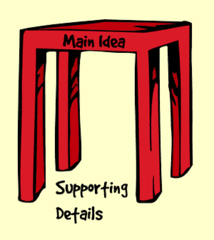
An assertion (arguable statement), usually supported by evidence
32
30 sec
Q.
Arranged in an certain way
33
30 sec
Q.
a title under the main title
34
30 sec
Q.
1. headings and subheadings to direct readers' attention to big idea
35
30 sec
Q.
The way in which an author presents the information in his/her story or article. Some of the most common text structures are: chronological order, problem and solution, cause and effect, compare and contrast
36
30 sec
Q.
a diagram that shows when events took place during a given period of time
37
30 sec
Q.
A belief or view about something, cannot be proven with facts
38
30 sec
Q.
a statement that can be supported with evidence/facts
39
30 sec
Q.
false- not true; assumption- the supposition that something is true
40
30 sec
Q.
make you think something
41
30 sec
Q.
the sequence of events in a story and it is generally built around a conflict, and it tells what happens, when, and to whom. it usually includes four stages, exposition, rising action, climax, falling action.
42
30 sec
Q.
End of the story where loose ends are tied up
43
30 sec
Q.
A comparison using like or as
44
30 sec
Q.
The problem that is the focus of the story and involves main characters
45
30 sec
Q.
the perspective from which a story is told
46
30 sec
Q.
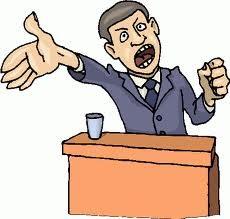
A talk or public address. The purpose of a speech may be to entertain, explain, persuade, or inspire.
47
30 sec
Q.
(v.) to portray; to represent or show in the form of a picture
48
30 sec
Q.
Comparable
49
30 sec
Q.
Different
50
30 sec
Q.
A part that can be considered or viewed
51
30 sec
Q.
Point of view in which narrator exists outside of all characters, but is privy to the feelings and thoughts of one character, presenting only the actions of all remaining characters
52
30 sec
Q.
Climax
53
30 sec
Q.
causing something without any direct or apparent effort
54
30 sec
Q.
acting in opposition to (against)
55
30 sec
Q.
including these details
56
30 sec
Q.
comparing two or more things/ideas
57
30 sec
Q.
A distinguishing feature or quality, character traits
58
30 sec
Q.
improved or brought up to date
59
30 sec
Q.
what was the purpose of?
60
30 sec
Q.
(n.) a representation (especially in drawing) in which the subject's characteristic features are deliberately exaggerated; (v.) to present someone or something in a deliberately distorted way
61
30 sec
Q.
Faulty Assumptions
62
30 sec
Q.
as a result
63
30 sec
Q.
A text structure that presents a problem and offers solutions to solve the problem.
64
30 sec
Q.
(Time Order) Events are arranged in the order in which they happened
65
30 sec
Q.
A step-by-step pattern.
66
30 sec
Q.
to direct one's words to (the speech was addressed to the American people, the subject of abortion was addressed)
67
30 sec
Q.
those goals, tasks, or activities that you judge as more important to do than others
68
30 sec
Q.
Independence: the capacity to rely on one's own capabilities, and to manage one's own affairs.
69
30 sec
Q.
before
70
30 sec
Q.
"I" and "Me" standpoint. Personal perspective.
71
30 sec
Q.
to show, to support, to suggest
72
30 sec
Q.
To stand for; symbolize
73
30 sec
Q.
a minor plot that relates in some way to the main story
74
30 sec
Q.
Repetition of initial consonant sounds
75
30 sec
Q.
a question phrased in such a way as to suggest the desired answer
76
30 sec
Q.
A result
77
30 sec
Q.
A conclusion one can draw from the presented details.
78
30 sec
Q.
shows, illustrates, supports
79
30 sec
Q.
A short poem in which a single speaker expresses personal thoughts and feelings
80
30 sec
Q.
A pattern of end rhymes that occurs consistently throughout a stanza or poem.
81
30 sec
Q.
A long narrative poem telling of a hero's deeds
82
30 sec
Q.
A regularly repeated line or group of lines in a poem or song