Loading...


Polymer D
Quiz by tinto alencherry
Customize this quiz to suit your class
Instantly translate to 100+ languages
Tag the questions with any skills you have. Your dashboard will track each student's mastery of each skill.
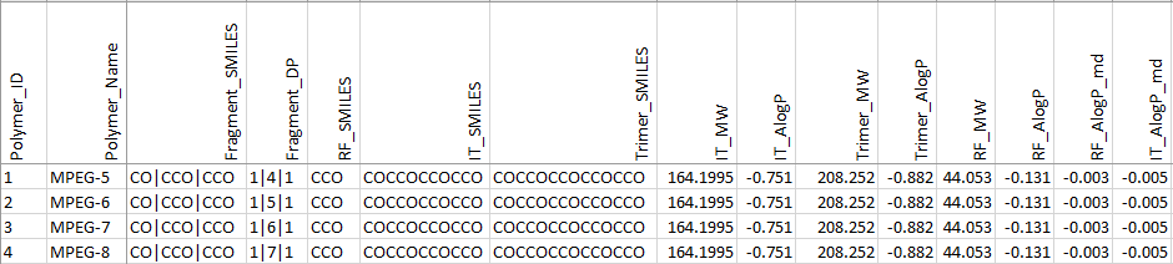
What sort of descriptor calculations might the trimer be worth keeping for?
atom counts
aqueous solubility
Give this quiz to my class
What sort of descriptor calculations might the trimer be worth keeping for?
 Make mcq quiz with 4 option in which one is correct -'10 Basis of Material Science • .....;;;";;;"~~;;,,;;,,,,;.;.,,;;,,,;,,;.;,.,------------ 6. Temporary materials: Some materials are meant to be placed in the oral cavity for a short period of time for different reasons. • Temporary crowns: While a permanent crown is prepared in the dental laboratory, the patient must wait for few days before it can be fabricated and cemented into place. Does patient experience any problems during this time period? If the tooth is vital (the pulp is alive), the patient is likely to experience pain and sensitivity while eating and drinking, also it looks unesthetic. What can be done to solve this problem? A temporary crown is placed before the patient leaves the clinic. It is constructed and luted in the same appointment in which the crown preparation is done. Temporary crowns are not very strong or esthetic but they serve adequately till the permanent crown is ready to be cemented. • Temporary restorations: Sometimes it is difficult to decide immediately the best line of treatment for a particular tooth. The exact condition of the pulp may not be obvious to the dentist from the patient's symptoms. A dentist removes all or part of the decay and then places a temporary restoration to have time to observe the behaviour of the pulp or to give the pilip time to heal before deciding the further treatment required. Classification based on Location of Fabrication 4,9 Materials can be classified based on the location of fabrication into: • Direct restorative materials. • Indirect restorative materials Direct restorative materials: They include those materials which are used to restore cavity preparations directly in the oral cavity (Box 1.5). Box 1.5: Examples of direct restorative materials Amalgam, composites, glass ionomer and other materials, which set by chemical reactions in the mouth. Indirect restorative materials: It includes those restorations which must be fabricated outside the mouth, indirectly on a cast/ model/ die, because their processing condition would harm oral tissues. Materials used in the construction of such prosthesis are called indirect restorative materials (Box 1.6). Box 1.6: Examples of indirect restorative materials Gold inlays, crowns of metal, ceramic and polymers, which are processed at elevated temperatures. Some indirect composite restorations can be processed under specific wavelength of light, e.g. Ceramage. Classification based on Longevity of Use 1. Permanent restorations: These restorations are not planned to be replaced for a particular time period. Though they are referred to as permanent, actually they are not, e.g. fillings, crowns, bridges and dentures do not last forever (Fig. 1.5). 2. Temporary restorations: These restorations are planned to be replaced in a short period of time, such as few days to weeks. For ~ Permanent C/) c c -.2 0 c- :;::; Cll co Interim ~ Q; 0 .8ll::1iJ C/) o~ Cll a:: c:=:J Temporary Time period Fig. 1.5: Diagram depicting the time period of use of a restoration. (Arrow in permanent restoration depicts that such restorations are not planned to be replaced for a long period of time.) Introducton to Dental Materials Dental materials Box 1.7: Characteristics of metals 1. High thermal and electrical conductivity 2. Ductility (pure metals are very soft and they can be bent without breaking) 3. Opacity (they do not transmit light) 4. Luster (they have a surface that strongly reflects light and appears bright and shiny) 5. They tend to dissolve to some extent in water or other aqueous solutions, producing cations. 6. All metals are white (actually gray) except for gold, which is yellow, and copper, which is reddish. 7. All metals are solid at room temperature except mercury, which is liquid at room temperature and is used with silver alloys as amalgam. 8. All metals have high melting temperatures because of high strength of the metallic bond that holds the atoms together. 3. Polymers 4. Composites Composites are mixtures of two or more of the first three classes in which the different components remain distinct from one another in the final structure. A common example is composite resin. Fig. 1.7a: Three-dimensional structure of iron (metal) Metals Metals are the oldest of the three classes of materials that have been used as dental materials. Metals are characterized by metallic bonds (Box 1.7) which will be discussed in the next chapter. Metals solidify with their atoms in a regular or crystalline arrangement (see Chapter 2), often in the form of a cube (Fig. 1.7a). example, temporary fillings done in a tooth during root canal treatment, which have to be replaced within 2-4 days during subsequent visits. They are used to protect the tooth and provide function till the final restoration is done. 3. Interim restoration: At times, dental treatment requires "long-term" definite temporary restorations or "interim" restorations. For examle, a 7-year-old child, met with trauma and fractured one of his central incisors. A large composite build- up may serve his immediate requirement until the root formation is completed and a permanent crown is placed. 5 Classification based on the Chemical Nature of the Material These are the atoms that make up a material and the way they are bonded together determine the properties of that materiaLS Weak bonds make for weak materials and vice versa (Table 1.4). Materials can be classified into different categories based on their primary atomic bonds (Fig. 1.6): 1. Metals 2. Ceramics Fig. 1.6: Classification of dental materials based on chemical nature 12 Basis of Material Science Box 1.9: Benefits of ceramics in dentistry 1. Many ceramic oxides are used as pigmenting agents. These oxides produce good range of colors. Due to this characteristic, we are able to match almost any tooth color with good esthetic results. 2. They are inert, i.e. not chemically reactive. This quality provides ceramics with good bio- compatibility. 3. Ceramic materials are translucent, like natural teeth. This translucency gives the ceramic crown a more natural appearance than any other dental material. Fig. 1.7b: Internal arrangement of tetrahedral structure of ceramic (silica) four large oxygen atoms surround smaller silicon atom Ceramics A ceramic is a compound formed by the union of a metallic and a non-metallic element (Box 1.8). Most of these materials are oxides, formed by the union of oxygen with metals such as silicon, aluminum, calcium and magnesium (Fig.1.7b). Ceramics may be simple or complex. Examples of simple ceramics are alumina and silica. Examples of complex ceramics are feldspar (potassium aluminum silicate) and kaolin (hydrated aluminum silicate). Ceramics may be crystalline or non- crystalline (i.e. amorphous). Porcelain is a specific type of ceramic used extensively in dentistry (Box 1.9). Box 1.8: Characteristics of ceramics 1. High melting points. 2. Brittleness, which means they cannot be bent or deformed (no sliding) to any extent without actually cracking and breaking. 3. They are poor conductor of heat and electricity. 4. They are chemically inert. 5. They have excellent esthetic result in terms of matching natural teeth. Fig. 1.8: Stucture of synthetic polymer Polymers They are the latest addition (early to mid- 1900s) to dental materials. Most of the polymers are nowadays synthesized by humans. Polymers are giant, long-chain organic molecules (Fig. 1.8). Polymers are characterized by covalent bonds within each molecule, giving them tremendous strength in a single direction. Try to break a nylon rope by pulling it! They are poor conductors of heat and electri- city. Most polymers have a structure containing thousands of carbon atoms linked together like beads on a string. Others, such as silicone polymers are formed with silicon-oxygen bonds. Introducton to Dental Materials Table 1.4: Characteristics of different materials 13 Characteristics Bond Properties Crystal structure Metals Metallic bonding High strength and hardness, high electrical and thermal conductivity BCC, FCC, or HCP unit cells Ceramics Ionic or covalent bonding, or both High hardness and stiffness, electrically insulating, refractory, and chemically inert Crystalline or amorphous Polymers Covalent bonding Low sensitivity, high electrical resistivity, and low thermal conductivity, strength and stiffness vary widely Amorphous and crystalline Composites Composites are combinations of any of the basic ceramic, metallic and polymeric materials (Box 1.10). Each material that makes up composites is called a phase. Their properties tend to be somewhere between those of their basic constituents and are used to enhance their performance, longevity and handling chracterstics. Box 1.10: Types of composites in dentistry 1. Ceramic - metallic composite: Tungsten carbide bur. 2. Metal - polymer composite: Die materials in dental laboratory. 3. Ceramic - polymer composite: Enamel, dentin, bone and restorative composites. A composite is a kind of "combination" of materials, which compliment each other. The properties lacking in one material are compensated by those of the other material. For example, restorative composite has two phases, namely resin and fillers. Teeth and bones are examples of natural composites. Enamel is a composite of hydroxyapatite (which is a ceramic material) and protein (which is a polymer). EVALUATION OF DENTAL MATERIALS Most manufacturers of dental materials maintain a quality assurance programme (As per international standard like ADA specifications) and materials are thoroughly tested before being released into the market for dental practitioner (Fig. 1.9). Laboratory Evaluations Most ADA/ ANSI specifications involve laboratory tests. The tests performed as per these specifications are useful but they all are performed in vitro, (carried out in the laboratory away from the clinical conditions) which have a lot of limitations in clinical practice.lO Clinical Notes 1. For example, most of the direct restorative materials are tested for their compressive strength but ultimately the material is subjected to a combination of compressive, tensile and shear stresses, which may decide the final success or failure of the material under masticatory load. 2. Similarly upper dentures mostly fracture along the midline because of bending. Hence a bending or transverse strength ~B-a-s-is-o-f-M-a-t-e-ria-I-S~c-ie-n-c-e-------------- ---------. test is far more meaningful for denture base materials than a compression test. Clinical Trials The majority of new materials are subjected to extensive clinical trials normally in co-operation with a dental college or hospital departments prior to their release. CONCLUSION As the number of available materials is going up, it is important that the dentist remains more aware about new products so that their judgement about the selection of material remains successful. Materials which have not been thoroughly evaluated should be avoided, specially with clinical dentistry falling under Consumer Protection Act (CPA). I Research and development I iI Manufacturer/analysis Ideal requirements for clinical use: Thermal, optical, mechanical, chemical, biological Available materials and their properties are evaluated Launch of new I product Choice and selection of material by the dentist Critical assessment based on clinical performance I I H feedback to IBiomedical Engineering Flashcard 1 Q: What is biomedical engineering? A: The field that designs medical solutions (devices, implants, machines, medicines) to improve health. Flashcard 2 Q: How many bones does an adult have? A: 206 bones. Flashcard 3 Q: How many bones are humans born with? A: About 270 bones. Flashcard 4 Q: What is a prosthetic? A: An artificial device used to replace a missing body part. Flashcard 5 Q: What must engineers consider when designing prosthetics? A: Connection to the body Communication with the body Life-like movement Flashcard 6 Q: What is internal fixation? A: Hardware attached inside the body directly to the bone to repair it. Flashcard 7 Q: Examples of internal fixation? A: Rods, screws, plates, pins, bone grafts. Flashcard 8 Q: What is external fixation? A: Supports outside the body used to stabilize bones while they heal. Flashcard 9 Q: Examples of external fixation? A: Casts, braces, slings, external screws. Flashcard 10 Q: What is biocompatibility? A: Materials that can safely exist in the body without causing harm or rejection. Circulatory System Flashcard 11 Q: What is the job of the circulatory system? A: Deliver oxygen and nutrients and remove wastes from cells. Flashcard 12 Q: What do arteries do? A: Carry blood away from the heart. Flashcard 13 Q: What do veins do? A: Carry blood back to the heart. Flashcard 14 Q: What do capillaries do? A: Exchange oxygen, nutrients, and waste with tissues. Flashcard 15 Q: What are the 4 main components of blood? A: Plasma Red blood cells White blood cells Platelets Flashcard 16 Q: Name 3 circulatory diseases. A: Arteriosclerosis Hypertension (high blood pressure) Coronary heart disease Flashcard 17 Q: What lifestyle choices increase circulatory disease risk? A: Tobacco use Alcohol use Poor nutrition Physical inactivity Obesity Stem Cells Flashcard 18 Q: What are stem cells? A: Cells that can develop into many different specialized cell types. Flashcard 19 Q: Why is embryonic stem cell research controversial? A: Because it involves destroying embryos, which some believe is destroying human life. pH and Indicators Flashcard 20 Q: What pH number is an acid? A: Below 7. Flashcard 21 Q: What pH number is neutral? A: 7. Flashcard 22 Q: What pH number is a base? A: Above 7. Flashcard 23 Q: Examples of pH indicators? A: Litmus paper Red cabbage indicator Anthocyanins Hydrogels Flashcard 24 Q: What is a hydrogel? A: A material made of polymer chains that can hold large amounts of water. Flashcard 25 Q: Examples of hydrogels? A: Gelatin Collagen Alginate Fireworks Flashcard 26 Q: What are the 4 main parts of fireworks? A: Oxidizer, fuel, binder, metal salt. Flashcard 27 Q: What color does Barium produce? A: Light green. Flashcard 28 Q: What color does Copper produce? A: Blue-green. Flashcard 29 Q: What color does Strontium produce? A: Dark red. Flashcard 30 Q: What color does Potassium produce? A: Light purple. Flashcard 31 Q: What color does Lithium produce? A: Orange-red. Flashcard 32 Q: What effect does Iron produce in fireworks? A: Sparks.Chemistry around the house, acids and bases in solutions, chemical reactions, acid and base reactions, acid rain, key concepts: materials science, metabolism, nucleic acid, polymer, acid, acidic, alkali, alkaline, base, indicator, neutralize, pH, litmus paper, neutralization, salt, acid rain, dry deposition, ozoneLARGE CARBON MOLECULES Many carbon compounds are built up from smaller, simpler molecules known as monomers (MAH-ne-mers), such as the ones shown in Figure 3-3. As you can also see in Figure 3-3, monomers can bond to one another to form polymers (PAWL-eh-mer). A polymer is a molecule that consists of repeated, linked units. The units may be identical or structurally related to each other. Large polymers are called macromolecules. There are many types of macromolecules, such as carbohydrates, lipids, proteins and nucleic acids. Monomers link to form polymers through a chemical reaction called a condensation reaction. Each time a monomer is added to a polymer, a water molecule is released. In the condensation reac- tion shown in Figure 3-4, two sugar molecules, glucose and fruc- tose, combine to form the sugar sucrose, which is common table sugar. The two sugar monomers become linked by a C—O—C bridge. In the formation of that bridge, the glucose molecule releases a hydrogen ion, H, and the fructose molecule releases a hydroxide ion, OH. The OH and H ions that are released then combine to produce a water molecule, H2O. In addition to building polymers through condensation reac- tions, living organisms also have to break them down. The break- down of some complex molecules, such as polymers, occurs through a process known as hydrolysis (hie-DRAHL-i-sis). In a hydrolysis reaction, water is used to break down a polymer. The water molecule breaks the bond linking each monomer. Hydrolysis is the reverse of a condensation reaction. The addition of water to some complex molecules, including polymers, under certain con- ditions can break the bonds that hold them together. For example, in Figure 3-4 reversing the reaction will result in sucrose breaking down into fructose and glucose. 2H2O Monomers Polymer C C O H OH C OH H CH2OH C H CH2OH C HO H C O H C OH H C CH2OH H C H OH O Sucrose C C O H OH C OH H CH2OH C H CH2OH C HO H C OH OH H C OH H C CH2OH H C H OH O Glucose Fructose H2O The condensation reaction below shows how glucose links with fructose to form sucrose. One water molecule is produced each time two monomers form a covalent bond. FIGURE 3-4 monomer from the Greek mono, meaning “single or alone,” and meros, meaning “a part” Word Roots and Origins A polymer is the result of bonding between monomers. In this example, each monomer is a six-sided carbon ring. The starch in potatoes is an example of a molecule that is a polymer. FIGURE 3-3 Copyright © by Holt, Rinehart and Winston. All rights reserved. 54 CHAPTER 3 ENERGY CURRENCY Life processes require a constant supply of energy. This energy is available to cells in the form of certain compounds that store a large amount of energy in their overall structure. One of these com- pounds is adenosine (uh-DEN-uh-SEEN) triphosphate, more commonly referred to by its abbreviation, ATP. The left side of Figure 3-5 shows a simplified ATP molecule struc- ture. The 5-carbon sugar, ribose, is represented by the blue carbon ring. The nitrogen-containing compound, adenine, is represented by the 2 orange rings. The three linked phosphate groups, —PO4 , are represented by the blue circles with a “P.” The phospate groups are attached to each other by covalent bonds. The covalent bonds between the phosphate groups are more unstable than the other bonds in the ATP molecule because the phosphate groups are close together and have negative charges. Thus, the negative charges make the bonds easier to break. When a bond between the phosphate groups is broken, energy is released. This hydrolysis of ATP is used by the cell to provide the energy needed to drive the chemical reactions that enable an organism to function.Organic Nomenclature. What are aliphatic compounds or aliphatic hydrocarbons? An aliphatic compound or aliphatic hydrocarbon is an organic compound containing hydrogen and carbon atoms that are usually linked together in chains that are straight. The term Aliphatic has been derived from the Greek word “Aleiphar” which translates to “fat”. It is used to describe hydrocarbons that are obtained by the chemical degradation of oils or fats. What are aliphatic compounds or aliphatic hydrocarbons? The simplest organic compounds are those composed of only two elements: carbon and hydrogen. These compounds are called hydrocarbons. Hydrocarbons are separated into two types: aliphatic hydrocarbons and aromatic hydrocarbons. Aliphatic hydrocarbons are hydrocarbons based on chains of C atoms. There are three types of aliphatic hydrocarbons: Alkanes are aliphatic hydrocarbons with only single covalent bonds. Alkenes are hydrocarbons that contain at least one C–C double bond, and alkynes are hydrocarbons that contain a C–C triple bond. Occasionally, we find an aliphatic hydrocarbon with a ring of C atoms; these hydrocarbons are called cycloalkanes (or cycloalkenes or cycloalkynes). The simplest alkanes have their C atoms bonded in a straight chain; these are called normal alkanes. They are named according to the number of C atoms in the chain. The smallest alkane is methane: molecule is three dimensional, with the H atoms in the positions of the four corners of a tetrahedron. The diagrams representing alkanes are called structural formulas because they show the structure of the molecule. As molecules get larger, structural formulas become more and more complex. One way around this is to use a condensed structural formula, which lists the formula of each C atom in the backbone of the Molecule. The condensed formulas show hydrogen atoms right next to the carbon atoms to which they are attached, as illustrated for butane: The ultimate condensed formula is a line-angle formula (or line drawing) , in which carbon atoms are implied at the corners and ends of lines, and each carbon atom is understood to be attached to enough hydrogen atoms to give each carbon atom four bonds. For example, we can represent pentane (CH3CH2CH2CH2CH3) and isopentane [(CH3)2CHCH2CH3] as follows: Unsaturated Hydocarbons: Alkenes and Alkynes Alkenes Organic compounds that contain one or more double or triple bonds between carbon atoms are described as unsaturated. Unsaturated hydrocarbons have less than the maximum number of H atoms possible. Unsaturated hydrocarbon molecules that contain one or more double bonds are called alkenes. Carbon atoms linked by a double bond are bound together by two bonds, one σ bond and one π bond. Double and triple bonds give rise to a different geometry around the carbon atom that participates in them, leading to important differences in molecular shape and properties. The differing geometries are responsible for the different properties of unsaturated versus saturated fats. Naming Alkenes and Alkynes Alkenes and alkynes are named in a similar fashion. The biggest difference is that when identifying the longest carbon chain, it must contain the C–C double or triple bond. Furthermore, when numbering the main chain, the double or triple bond gets the lowest possible number. This means that there may be longer or higher-numbered substituents than may be allowed if the molecule were an alkane. For example, this molecule is 2,4-dimethyl-3-heptene (note the number and the hyphens that indicate the position of the double bond). Unsaturated Hydocarbons: Alkenes and Alkynes Unsaturated Hydocarbons: Alkenes and Alkynes Alkynes Hydrocarbon molecules with one or more triple bonds are called alkynes; they make up another series of unsaturated hydrocarbons. Two carbon atoms joined by a triple bond are bound together by one σ bond and two π bonds. The sp-hybridized carbons involved in the triple bond have bond angles of 180°, giving these types of bonds a linear, rod-like shape. The simplest member of the alkyne series is ethyne, C2H2, commonly called acetylene. The Lewis structure for ethyne, a linear molecule, is: Properties of Unsaturated Hydocarbons: Alkenes and Alkynes Ethylene (the common industrial name for ethene) is a basic raw material in the production of polyethylene and other important compounds. Over 135 million tons of ethylene were produced worldwide in 2010 for use in the polymer, petrochemical, and plastic industries. Ethylene is produced industrially in a process called cracking, in which the long hydrocarbon chains in a petroleum mixture are broken into smaller molecules. Halogens can also react with alkenes and alkynes, but the reaction is different. In these cases, the halogen reacts with the C–C double or triple bond and inserts itself onto each C atom involved in the multiple bonds. This reaction is called an addition reaction. One example is Properties of Unsaturated Hydocarbons: Alkenes and Alkynes Hydrogen can also be added across a multiple bond; this reaction is called a hydrogenation reaction. In this case, however, the reaction conditions may not be mild; high pressures of H2 gas may be necessary. A platinum or palladium catalyst is usually employed to get the reaction to proceed at a reasonable pace: CH2=CH2+H2→metalcatalystCH3CH3 CH2=CH2+H2→metalcatalystCH3CH3. Polymer chemistryPolymer properties and processesOdorless Monomer Liquid and Polymer Powder