Loading...


Populations Study Guide
Quiz by Katie Shea
Customize this quiz to suit your class
Instantly translate to 100+ languages
Tag the questions with any skills you have. Your dashboard will track each student's mastery of each skill.
Give this quiz to my class
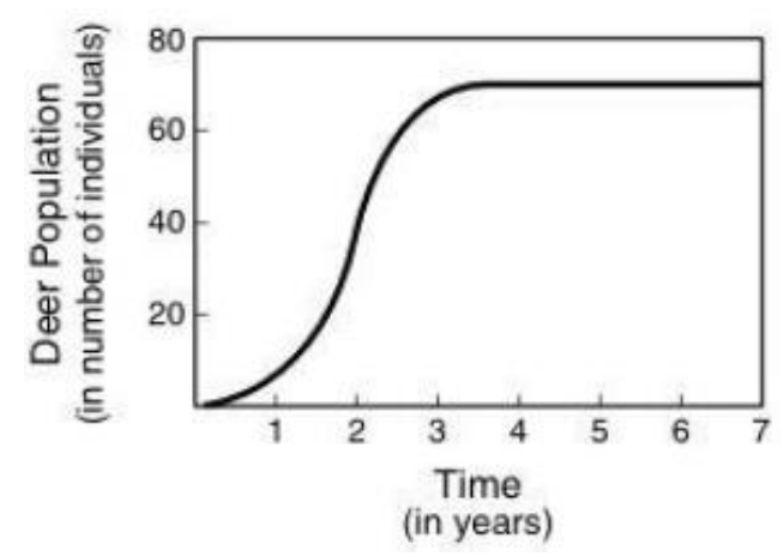
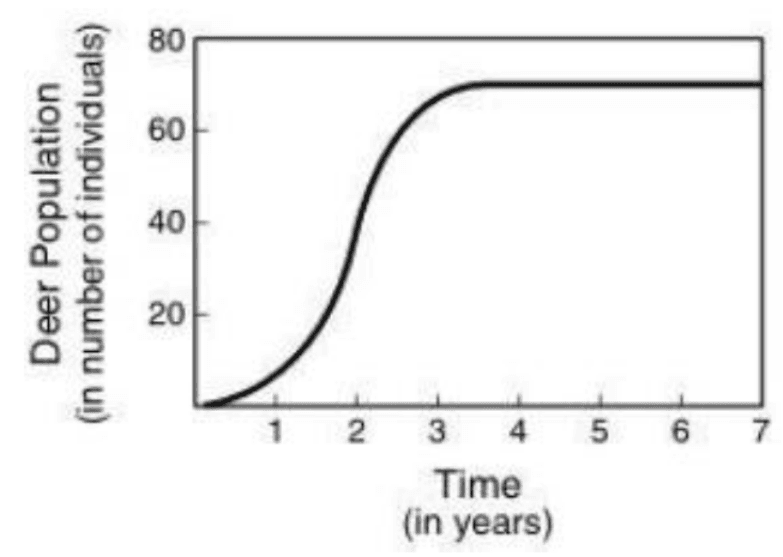
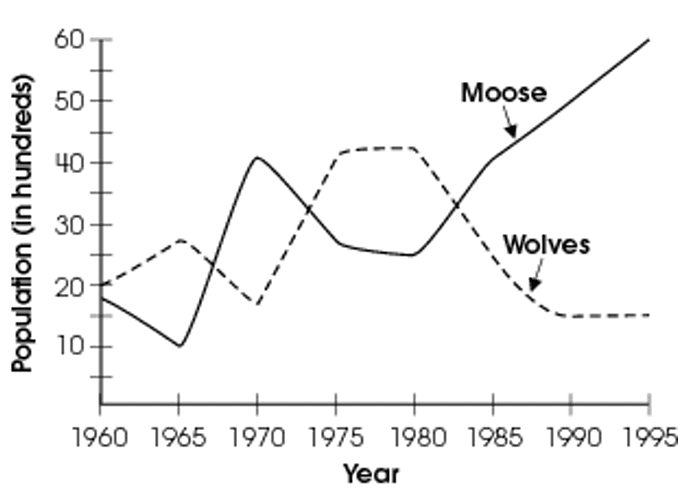
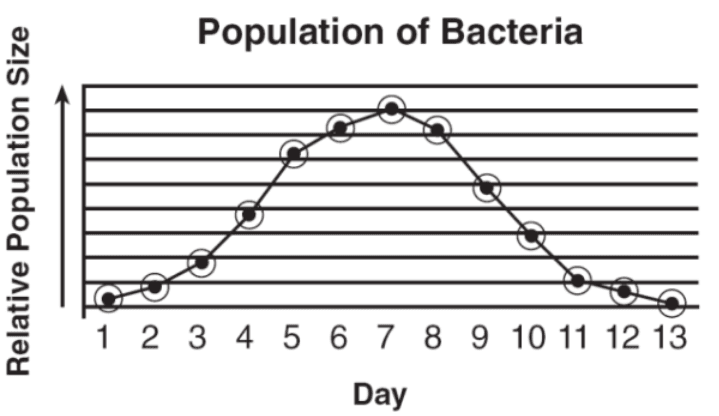 2.2 Study Guide [ 2.2 Sequence Assessment 1/21 and 1/22] Ecosystems and Ecological Relationships Invasive Species ● An invasive species is a plant, animal, or organism that is not native to a specific area and causes harm to the environment or human health. Why are they harmful? Invasive species often outcompete native species for food, water, and space. They can spread quickly because they lack natural predators in the new environment. What is their impact on the ecosystem? Invasive species can reduce biodiversity by pushing native species to extinction or by changing the habitat in which native species live. Biodiversity and Its Importance to Ecosystems Biodiversity refers to the variety of life in a specific area, including different species of plants, animals, and microorganisms, and the ecosystems they form. ● Stability: Biodiversity makes ecosystems more resilient to changes such as climate change, diseases, and natural disasters. ● Food chains and webs: A greater variety of species means more sources of food for different animals, helping maintain a balanced food web. For example, a forest with many species of plants and animals can recover from a drought more easily than a forest with fewer species. Predator-Prey Relationships In a predator-prey relationship, one organism (the predator) hunts and eats another organism (the prey). The predator benefits by getting food, while the prey loses its life.The population sizes of predators and prey are often linked. If there are more prey, the predator population may grow, but if too many predators eat the prey, the predator population will decrease. This relationship can be shown in the graph below. ● For example: Lions hunt zebras for food. When there are many zebras, lions have more food and their population can grow. However, if too many lions eat the zebras, the zebra population can decrease. Predator-prey relationships help keep animal populations balanced, preventing one species from becoming too numerous and harming the environment. Ecological Relationships There are several types of relationships between organisms in an ecosystem. These include commensalism, parasitism, and mutualism. Commensalism In commensalism, one organism benefits from the relationship while the other is neither helped nor harmed. An example would be Barnacles and Whales. Barnacles attach to the skin of whales. The barnacles get access to nutrient-rich water while the whale swims, but the whale is not affected by their presence. Parasitism In parasitism, one organism (the parasite) benefits at the expense of the other organism (the host), which is harmed. For example, fleas live on dogs and feed on their blood. The fleas benefit, but the dog may suffer from itching, infections, or even anemia. Another example are tapeworms and humans. Tapeworms live in the intestines of humans and absorb nutrients, leaving the human host malnourished. Mutualism In mutualism, both organisms benefit from the relationship. An example would be bees and flowers: Bees collect nectar from flowers to make honey, while helping the flowers by transferring pollen, which helps them reproduce.TCI SS L5 Population Density and Life in the NE Study GuideCreate a vocabulary quiz for 10th grade EFL students at CEFR B1 level. For example: adequate means: 1. sufficient 2. more and more 3. not enough. Use all the vocabulary below and provide accompanying definitions per the example to create this vocabulary quiz. The vocabulary quiz must contain at least 226 questions including the following vocabulary: addition advance advanced advertising among other things analysis appear approach as at least average be responsible for something be responsible for doing something before besides can challenge chance change characteristic claim come after come first come last common complicated concern conditions conduct consequence considerable cope critic current decrease delayed deliberately demonstrate design destruction development disagreement disaster discovery dislike do doubt drop educate efficient emphasis enjoyable essay essentially even if even though event exactly except that exist extraordinary feature feedback figure financial finding findings flexible flood flu focus on somebody or something focus frequent fresh frighten from gain generate guidance hopefully ideal illness illustrate image in terms of something in actual fact in connection with something in that case in the meantime initial instruction intelligence interest introduce invest investigate just about just about keep on doing something kind of knowledge lack landscape likely limited little look at something low material mean means measure mention miss misunderstand more or less must naturally nature necessarily nevertheless not at all not only notice objective occasional official on the one hand on the other hand once others otherwise out of date participate particular past perform personality personally planet planning plant point of view policy pollution popular population prevent priority private probable produce profession professor proof proposed protest provided (that) psychology public purpose quality question question questionnaire react reasonable recommend recycle regard region regular relevant reliable rely on/upon sb/sth request research result review revise risk run out of rural salary sample seldom sense set up sth or set sth up significant skilled slight specialist specific still structure study supposed surface take advantage of sth thanks to somebody or something theory throw away throw out something throw something away throw out transport trash treatment unfortunately unhealthy unique united universe unknown unlike unlikely urban vary view visible vision volume whom wildlife within worthwhile would additional analyze analyst appearance on average change characterize complicate concerned concerning concerned with something consequently cope with something criticize criticism currently deliberate demonstration designer developing developed educated educator efficiency efficiently emphasize enjoyment existence existing figure out something finance flexibility frequency hopeful illustration initially intelligent interested in something investor investment investigation investigator limitation meaning occasionally old-fashioned participant participation particularly performance planned pollute prevention producer professional psychological psychologist publicly reaction reasonably recommendation regardless regarding regional relevance researcher resulting revision sensible set out something set something out significantly significance skillful slightly specialize specifically specify theoretical transportation unfortunate unity unite universal variation viewerTo the Lakota, and other indigenous people on North America's Great Plains, the bison was an essential part of their culture ( expressed in the quote on the previous page). The bison provided meat for nutrition, a hide for clothing and shelter, bones for tools, and fat for soap. The bison was also central to their religious beliefs. So, when European settlers hunted the bison nearly to extinction, Lakota culture suffered. Culture is central to a society and the identity of its people, as well as its continued existence. Therefore, geographers study culture as a way to understand similarities and differences among societies across the world, and in some cases, to help preserve these societies. Analyzing Culture All of a group's learned behaviors, actions, beliefs, and objects are a part of culture. It is a visible force seen in a group's actions, possessions, and influence on the landscape. For example, in a large city you can see people working in offices, factories, and stores, and living in high-rise apartments or suburban homes. You might observe them attending movies, concerts, or sporting events. Culture is also an invisible force guiding people through shared belief systems, customs, and traditions. Culture is learned, in that it develops through experiences, and not merely transmitted through genetics. For example, many people in the United States have developed a strong sense of competitiveness in school and business, and believe that hard work is a key to success. These types of elements, visible and invisible, are cultural traits. A series of interrelated traits make up a cultural complex, such as the process of steps and acceptable behaviors related to greeting a person in different cultures. A single cultural artifact, such as an automobile, may represent many different values, beliefs, behaviors and traditions and be representative of a cultural complex. Since culture is learned there are many ways that one generation passes its culture to the next. Children and adults learn traits three ways: • imitation, as when learning a language by repeating sounds or behaviors from a person or television • informal instruction, as when a parent reminds a child to say "please" • formal instruction, as when students learn history in school 132 HUMAN GEOGRAPHY: AP" EDITION CULTURAL COMPLEX OF THE AUTOMOBILE The automobile provides much more than just transportation, as it reflects many values that are central to American culture. Origins of Culture The area in which a unique culture or a specific trait develops is a culture hearth. Classical Greece was a culture hearth for democracy more than 2,000 years ago. New York City was a culture hearth for rap music in the 1970s. Geographers study how cultures develop in hearths and diffuse-or spread-to other places. Geographers also study taboos, behaviors heavily discouraged by a culture. For example, many cultures have taboos against eating certain foods, such as pork or insects. What is considered taboo changes over time. In the United States, marriages between Protestants and Catholics were once taboo, but they are not widely opposed now. Traditional, Folk, and Indigenous Cultures With the beginning of the Industrial Revolution in the late 18th century, modern transportation and communication connected people as never before and led to extensive cultural mixing, especially as cities have grown. The world prior to this time was very different; however, remnants of the past are still evident in our modern cultures. Traditional, folk, and indigenous cultures share some important characteristics and are often grouped together, but they do have some subtle differences. Traditional Culture Recently, the meanings of traditional, folk, and indigenous culture have begun to merge, causing geographers to debate when each should be used. Increasingly, the term traditional culture is used to encompass all three cultural designations. All three types share the function of passing down long-held beliefs, values, and practices and are generally resistant to rapid changes in their culture. Folk Culture The beliefs and practices of small, homogenous groups of people, often living in rural areas that are relatively isolated and slow to change, are known as folk cultures. Like all cultures, they demonstrate the diverse ways that people have adapted to a physical environment. For example, people around the world learned to make shelters out of available resources, whether 3.1: INTRODUCTION TO CULTURE 133 it was snow or mud bricks or wood. However, people used similar resources such as wood differently. In Scandinavia, people used trees to build cabins. In the American Midwest, people processed trees into boards, built a frame, and attached the boards to it. Many traits of folk culture continue today. Corn was first grown in Mexico around 10,000 years ago, and it is still grown there today. While many elements of folk culture exist side by side with modern culture, there are people whose societies have changed little, if at all, from long ago. These people practice traditional cultures, those which have not been affected by modern technology or influences. They often live in remote regions, such as some small tribes in the Amazon rainforest, and have scant knowledge of the outside world. As the lines continue blurring between cultural designations, the Amish of Pennsylvania are often referenced as both folk and traditional culture. Indigenous Culture When members of an ethnic group reside in their ancestral lands, and typically possess unique cultural traits, such as speaking their own exclusive language, they are considered an indigenous culture. Some indigenous peoples have been displaced from their native lands, but still practice their indigenous culture. Native Americans in the United States, such as the Navajo, have kept indigenous cultural practices. First Nations of Canada, such as the Inuit, have also retained their indigenous culture. Globalization and Popular Culture As a result of the Industrial Revolution, improvements in transportation and communication have shortened the time required for movement, trade, or other forms of interaction between two places. This development, known as space-time compression (see Topics 1.4 and 3.6), has accelerated culture change around the world. In 1817, a freight shipment from Cincinnati needed 52 days to reach New York City. By 1850, because of canals and railroads, it took half that long. And by 1852, it took only 7 days. Today, an airplane flight takes only a few hours, and digital information takes seconds or less. Similar change has occurred on the global scale. People travel freely across the world in a matter of hours, and communication has advanced to a point where people share information instantaneously across the globe. The increased global interaction has had a profound impact on cultures, from spreading English across the world to instant sharing of news, events and music. Globalization specifically refers to the increased integration of the world economy since the 1970s. The process of intensified interaction among peoples, governments, and companies of different countries around the globe has had profound impacts on culture. The culture of the United States is intertwined with globalization. Through the influence of its corporations, Hollywood movies, and government, the United States exerts widespread influence in other countries. But other countries also shape American culture. For example, in 2019, the National Basketball Association included players from 38 countries or territories. When cultural traits- such as clothing, music, movies, and types of 134 HUMAN GEOGRAPHY: AP. EDITION businesses-spread quickly over a large area and are adopted by various groups, they become part of popular culture. Elements of popular culture often begin in urban areas and diffuse quickly through globalization processes such as the media and Internet. These elements can quickly be adopted worldwide, making them part of global culture. People around the world follow European soccer, Indian Bollywood movies, and Japanese animation known as anime. With people in many nations wearing similar clothes, listening to similar music, and eating similar food, popular cultural traits often promote uniformity in beliefs, values, and the cultural landscape across many places The cultural landscape, also known as the built environment (see Topic 3.2), is the modification of the environment by a group and is a visible reflection of that group's cultural beliefs and values. Traditional Culture to Popular Culture Popular culture emphasizes trying what is new rather than preserving what is traditional. Many people, especially older generations or those who follow a folk culture, openly resist the adoption of popular cultural traits. They do this by preserving traditional languages, religions, values, and foods. While older generations often resist the adoption of popular culture, they seldom are successful in keeping their traditional cultures from changing, especially among the young people of their society. One clash between popular and traditional culture is occurring in Brazil. As the population expands to the interior of the rain forest, many indigenous cultures, like the Yanamamo tribe, have more contact with outside groups. Remaining isolated by the forest is becoming increasingly difficult as many young people from the indigenous cultures become exposed to popular culture and begin to integrate into the larger Brazilian society. As the young people leave their communities, they are more likely to accept popular culture at the expense of their indigenous cultural heritage, which threatens the very existence of their folk culture. Traditional culture typically exhibits horizontal diversity, meaning each traditional culture has its own customs and language that makes it distinct from other culture groups. Yet, people people within each group are usually homogeneous, or very similar to each other. By contrast, popular culture typically exhibits vertical diversity, meaning that modern urban societies are usually heterogeneous, or exhibiting differences, within the society and usually contain numerous multiethnic neighborhoods. However, on a global scale popular cultures are relatively similar with the same type of malls, shops, fast food, and clothing. Urban global culture centers are not identical, yet, global cities often do not have as much horizontal diversity across space as folk cultures. 3.1: INTRODUCTION TO CULTURE 135 COMPARING TRADITIONAL AND POPULAR CULTURE Trait Traditional Culture Popular or Global Culture Society • Rural and isolated location • Urban and connected location • Homogeneous and • Diverse and multiethnic indigenous population population • Most people speak an • Many people speak a global indigenous or ethnic local language such as English or language Arabic • Horizontal diversity • Vertical diversity Social • Emphasis on community and • Emphasis on individualism and Structure conformity making choices • Families live close to each • Dispersed families other • Weakly defined gender roles • Well-defined gender roles Diffusion • Relatively slow and limited • Relatively rapid and extensive • Primarily through relocation • Often hierarchical • Oral traditions and stories • Social media and mass media Buildings and • Materials produced locally, • Materials produced in distant Housing such as stone or grass factories, such as steel or glass • Built by community or owner • Built by a business • Similar style for community • Variety of architectural styles • Different between cultures • Similar between cities • Traditional architecture • Postmodern / contemporary architecture Food • Locally produced • Often imported • Choices limited by tradition • Wide range of choice • Prepared by the family or • Purchased in restaurants community Spatial Focus • Local and regional • National and global Artifacts, Mentifacts, and Sociofacts Whether a cultural attribute is considered traditional, folk, indigenous, or popular in nature, it is valuable to differentiate between elements of culture that can be seen and those that can not. There are artifacts that comprise the material culture, which consists of tangible things, or those that can be experienced by the senses. Art, clothing, food, music, sports, and housing types are all tangible elements of culture. Another element of the study of artifacts is understanding the techniques to use or build a specific artifact. Artifacts can be unique to a particular culture, or can be shared. For example, people of all cultures need to communicate through language, yet there are many groups that possess languages unique to their culture. The ability to read, write and understand the English language is an artifact of importance for much of popular global culture. 136 HUMAN GEOGRAPHY: AP" EDITION Mentifacts comprise a group's nonmaterial culture and consist ofintangible concepts, or those not having a physical presence. Beliefs, values, practices, and aesthetics (pleasing in appearance) determine what a cultural group views as acceptable and desirable. Mentifacts can also be unique or shared. People of many cultures possess an belief in one or many deities, and often the deities are unique to that culture. The belief in a god is a mentifact-the religious building or symbols are artifacts. Cultural groups also possess sociofacts, which are the ways people organize their society and relate to one another. Taken altogether, people tend to see the whole of their culture as greater than the sum of its individual parts. Sociofacts are embodied through families, governments, sports teams, religious organizations, education systems, and other social constructs. As with artifacts and mentifacts, sociofacts may also be unique or similar to other societies. Families are the foundations of most societies, yet what constitutes the structure of a family may vary widely between cultural groups. For example, Western cultures tend to view the nuclear family, consisting of the parents and their children as the basic family unit. By contrast, in many Western African cultures the norm is the extended family, consisting of several generations and other family members such as cousins living under one roof.Can you make a multiple choice of test questions regarding this information given which is Curriculum from Different Points of View There are many definitions of curriculum. Because of this, the concept of curriculum is sometimes characterized as fragmentary, elusive and confusing. However, the numerous definitions indicate dynamism that connotes diverse interpretations of what curriculum is all about. The definitions are influenced by models of thought, pedagogies, political as well as cultural experiences. Let us study some of these definitions. 1. Traditional Points of View of Curriculum In early years of the 20th century, the traditional concepts held of the “curriculum is that it is a body of subjects or subject matter prepaid by the teachers for the student’s to learn”. It was synonymous to the “course of study” and “syllabus” Robert M. Hutchins views curriculum as “permanent studies” where the rules of grammar, reading, rhetoric and logic and mathematics for basic education are emphasized. Basic education should emphasize the 3 Rs and college education should be grounded on liberal education. On the other, Arthur Bestor as an essentialist, believes that the mission of the school should be intellectual training, hence curriculum should focus on the fundamental intellectual disciplines of grammar, literature and writing. It should also include mathematics, science, history and foreign language. The definition leads us to the view of Joseph Schwab that discipline is the sole source of curriculum. Thus in our education system, curriculum is divided into chunks of knowledge we call subject areas in basic education such as English, Mathematics, Science, Social Studies and others. In college, discipline may include humanities, sciences, language and many more. To Phoenix, curriculum should consist entirely of knowledge which comes from various disciplines. Academic discipline became the view of what curriculum is after the cold war and the race to space. Joseph Schwab, a leading curriculum theorist coined the term discipline as a ruling doctrine for curriculum development. Curriculum should consist only of knowledge which comes from disciplines which is the sole source. Thus curriculum can be viewed as a field of study. It is made up of its foundations (philosophical, historical, psychological and social foundations); domains of knowledge as well as its research theories and principles. Curriculum is taken as scholarly and theoretical. It is concerned with broad historical, philosophical and social issues and academics. Most of the traditional ideas view curriculum as written documents or a plan of action in accomplishing goals. 2. Progressive Points of View of Curriculum On the other hand, to a progressivist, a listing of school subjects, syllabi, course of study, and a list of courses or specific discipline do not make a curriculum. These can only be called curriculum if the written materials are actualized by the learner. Broadly speaking, curriculum is defined as the total learning experiences of the individual. This definition is anchored on John Dewey’s definition of experience and education. He believed that reflective thinking is a means that unifies curricular elements. Thought is not derived from action but tested by application. Caswell and Campbell viewed curriculum as “all experiences children have under the guidance of teachers”. This definition is shared by Smith, Stanley and Shores when they defined “curriculum as a sequence of potential experiences set up in the schools for the purpose of disciplining children and youth in group ways of thinking and acting”. Marsh and Willis on the other hand view curriculum as all the “experiences in the classroom which are planned and enacted by the teacher, and also learned by the students”. Points of View on Curriculum Development From the various definitions and concepts presented, it is clear that curriculum is a dynamic process. Development connotes changes which are systematic. A change for the better means any alteration, modification or improvement of existing condition. To produce positive changes, development should be purposeful, planned and progressive. This is how curriculum evolves. Let us look at the two models of curriculum development and concepts of Ralph Tyler and Hilda Taba. Ralph Tyler Model: Four Basic Principles. This is also popularly known as Tyler’s Rationale. He posited four fundamental questions or principles in examining any curriculum in schools. These four fundamental principles are as follows: 1. What educational purposes should the school seek to attain? 2. What educational experiences can be provided that are likely to attain these purposes? 3. How can these educational experiences be effectively organized? 4. How can we determine whether these purposes are being attained or not? In summary, Tyler’s Model show that in curriculum development, the following considerations should be made: (1) Purpose of the school, (2) Educational experiences related to the purposes, (3) Organization of the experiences, and (4) Evaluation of the experiences. On the other hand, Hilda Taba improved on Tyler’s Rationale by making a linear model. She believed that teachers who teach or implement the curriculum should participate in developing it. Her advocacy was commonly called the grassroots approach. She presented seven major steps to her model where teachers could have a major input. These steps are as follows: 1. Diagnosis of learner’s needs and expectations of the larger society. 2. Formulation of learning objectives. 3. Selection of learning content. 4. Organization of learning content. 5. Selection of learning experiences. 6. Organization of learning activities. 7. Determination of what to evaluate and the means of doing it. Thus as you look into curriculum models, the three interacting processes in curriculum development are planning, implementing and evaluating. Types of Curriculum Operating in Schools From the various concepts given, Allan Glatthorn(2000) describes seven types of curriculum operating in the schools. These are (1) Recommended curriculum- proposed by scholars and professional organizations. (2) Written Curriculum- appears in school, district, division or country documents. (3) Taught Curriculum- what teacher’s implement or deliver in the classrooms and schools. (4) Supported Curriculum- resources-textbooks, computers, audio- visual materials which support and help in the implementation of the curriculum. (5) Assessed Curriculum- that which is tested and evaluated. (6) Learned Curriculum- which the students actually learn and what is measured and (7) Hidden Curriculum- the unintended curriculum. 1. Recommended Curriculum- Most of the school curricula are recommended. The curriculum may come from a national agency like the Department of Education, Commission on Higher Education (CHED), Department of Science and Technology (DOST) or any professional organization who has stake in education. For example the Philippine Association for Teacher Education (PAFTE) or the Biology Teacher Association (BIOTA) may recommend a curriculum to be implemented in the elementary or secondary education. 2. Written Curriculum- This includes documents, course of study or syllabi handed down to the schools, districts, division, departments or colleges for implementation. Most of the written curricula are made by curriculum experts with participation of teachers. These were pilot-tested or tried out in sample schools or population. Example of this is the Basic Education Curriculum (BEC). Another example is the written lesson plan of each classroom teacher made up of objectives and planned activities of the teacher. 3. Taught Curriculum- The different planned activities which are put into action in the classroom compose the taught curriculum. These are varied activities that are implemented in order to arrive at the objectives or purposes of the written curriculum. These are used by the learners with the guidance of teachers. Taught curriculum varies according to the learning styles of students and the teaching styles of teachers. 4. Supported Curriculum- In order to have a successful teaching, other than the teacher, there must be materials which should support or help in the implementation of a written curriculum. These refer to the support curriculum that includes material resources such as textbooks, computers, audio-visual materials, laboratory equipment, playgrounds, zoos and other facilities. Support curriculum should enable each learner to achieve real and lifelong learning. 5. Assessed Curriculum- This refers to a tested or evaluated curriculum. At the duration and end of the teaching episodes, series of evaluations are being done by the teachers to determine the extent of teaching or to tell if the students are progressing. This refers to the assessed curriculum. Assessment tools like pencil-and-paper tests, authentic instruments like portfolio are being utilized. 6. Learned Curriculum- This refers the learning outcomes achieved by the students. Learning outcomes are indicated by the results of the tests and changes in behavior which can either be cognitive, affective or psychomotor. 7. Hidden Curriculum- This is the unintended curriculum which is not deliberately planned but may modify behavior or influenced learning outcomes. There are lots of hidden curricula that transpire in the schools. Peer influence, school environment, physical condition, teacher-learner interaction, mood of the teachers and many other factors made up the hidden curriculum.Figure 18-11 represents the amount of energy stored as organic material in each trophic level in an ecosystem. The pyramid shape of the diagram indicates the low percentage of energy transfer from one level to the next. On average, 10 percent of the total energy consumed in one trophic level is incor- porated into the organisms in the next. Why is the percentage of energy transfer so low? One reason is that some of the organisms in a trophic level escape being eaten. They eventually die and become food for decomposers, but the energy contained in their bodies does not pass to a higher trophic level. Even when an organism is eaten, some of the molecules in its body will be in a form that the consumer cannot break down and use. For example, a cougar cannot extract energy from the antlers, hooves, and hair of a deer. Also, the energy used by prey for cellu- lar respiration cannot be used by predators to synthesize new bio- mass. Finally, no transformation or transfer of energy is 100 percent efficient. Every time energy is transformed, such as during the reactions of metabolism, some energy is lost as heat. Limitations of Trophic Levels The low rate of energy transfer between trophic levels explains why ecosystems rarely contain more than a few trophic levels. Because only about 10 percent of the energy available at one trophic level is transferred to the next trophic level, there is not enough energy in the top trophic level to support more levels. Organisms at the lowest trophic level are usually much more abundant than organisms at the highest level. In Africa, for exam- ple, you will see about 1,000 zebras, gazelles, and other herbivores for every lion or leopard you see, and there are far more grasses and shrubs than there are herbivores. Higher trophic levels con- tain less energy, so, they can support fewer individuals.A population is a group of organisms that belong to the same species and live in a particular place at the same time. All of the bass living in a pond during a certain period of time make up a pop- ulation because they are isolated in the pond and do not interact with bass living in other ponds. The boundaries of a population may be imposed by a feature of the environment, such as a lake shore, or they can be arbitrarily chosen to simplify a study of the population. The humans shown in Figure 19-1 are part of the pop- ulation of a city. The properties of populations differ from those of individuals. An individual may be born, it may reproduce, or it may die. A population study focuses on a population as a whole—how many individuals are born, how many die, and so on. Population Size A population’s size is the number of individuals that the population contains. Size is a fundamental and important population property but can be difficult to measure directly. If a population is small and composed of immobile organisms, such as plants, its size can be determined simply by counting individuals. Often, though, individ- uals are too abundant, too widespread, or too mobile to be counted easily, and scientists must estimate the number of individuals in the population. Suppose that a scientist wants to know how many oak trees live in a 10 km2 patch of forest. Instead of searching the entire patch of forest and counting all the oak trees, the scientist could count the trees in a smaller section of the forest, such as a 1 km2 area. The scientist could then use this value to estimate the population of the larger area. SECTION 1 OBJECTIVES ● Describe the main properties that scientists measure when they study populations. ● Compare the three general patterns of population dispersion. ● Identify the measurements used to describe changing populations. ● Compare the three general types of survivorship curves. VOCABULARY population population density dispersion birth rate death rate life expectancy age structure survivorship curve FIGURE 19-1 A population can be widely distributed, as Earth’s human population is, or confined to a small area, as species of fish in a lake are. Copyright © by Holt, Rinehart and Winston. All rights reserved. 382 CHAPTER 19 If the small patch contains 25 oaks, an area 10 times larger would likely contain 10 times as many oak trees. A similar kind of sampling technique might be used to estimate the size of the pop- ulation shown in Figure 19-2. To use this kind of estimate, the sci- entist must assume that the distribution of individuals in the entire population is the same as that in the sampled group. Estimates of population size are based on many such assumptions, so all esti- mates have the potential for error. Population Density Population density measures how crowded a population is. This measurement is always expressed as the number of individuals per unit of area or volume. For example, the population density of humans in the United States is about 30 people per square kilome- ter. Table 19-1 shows the population sizes and densities of humans in several countries in 2003. These estimates are calculated for the total land area. Some areas of a country may be sparsely popu- lated, while other areas are very densely populated. Dispersion A third population property is dispersion (di-SPUHR-zhuhn). Dispersion is the spatial distribution of individuals within the popu- lation. In a clumped distribution, individuals are clustered together. In a uniform distribution, individuals are separated by a fairly con- sistent distance. In a random distribution, each individual’s location is independent of the locations of other individuals in the popula- tion. Figure 19-3 illustrates the three possible patterns of dispersion. Clumped distributions often occur when resources such as food or living space are clumped. Clumped distributions may also occur because of a species’ social behavior, such as when animals gather into herds or flocks. Uniform distributions may result from social behavior in which individuals within the same habitat stay as far away from each other as possible. For example, a bird may locate its nest so as to maximize the distance from the nests of other birds. These migrating wildebeests in East Africa are too numerous and mobile to be counted. Scientists must use sampling methods at several locations to monitor changes in the population size of the animals. FIGURE 19-2 TABLE 19-1 Population Size and Density of Some Countries Population size Population density Country (in millions) (in individuals/km2) China 1,289 135 India 1,069 325 United States 292 30 Russia 146 8 Japan 128 337 Mexico 105 54 Kenya 32 54 Australia 20 3 dispersion from the Latin dis-, meaning “out,” and spargere, meaning “to scatter” Word Roots and Origins Copyright © by Holt, Rinehart and Winston. All rights reserved. POPULATIONS 383 The social interactions of birds called gannets, which are shown in Figure 19-3b, result in a uniform distribution. Each gannet chooses a small nesting area on the coast and defends it from other gannets. In this way, each gannet tries to maximize its distance from all of its neighbors, which causes a uniform distribution of individuals. Few populations are truly randomly dispersed. Rather, they show degrees of clumping or uniformity. The dispersion pattern of a population sometimes depends on the scale at which the popu- lation is observed. The gannets shown in Figure 19-3b are uni- formly distributed on a scale of a few meters. However, if the entire island on which the gannets live is observed, the distribution appears clumped because the birds live only near the shore. POPULATION DYNAMICS All populations are dynamic—they change in size and composition over time. To understand these changes, scientists must know more than the population’s size, density, and dispersion. One important measure is the birth rate, the number of births occur- ring in a period of time. In the United States, for example, there are about 4 million births per year. A second important measure is the death rate, or mortality rate, which is the number of deaths in aAs long as the birth rate of a population exceeds the death rate, the population size will continue to increase. At a steady, positive per capita growth rate, the population will add a larger number of indi- viduals with each generation. So, a population can increase rapidly with even a small growth rate. A pattern of increase in number due to a steady growth rate is called exponential growth. The observa- tion that populations can grow in this pattern is called the exponential (EKS-poh-NEN-shuhl) model of population growth. One way to understand the exponential model is to study a graph of population size over time. A graph of exponential growth makes the characteristic J-shaped curve shown in Figure 19-6. With expo- nential growth, population size grows slowly when it is small, but growth speeds up as individuals join the population. The exponen- tial model leads us to predict that the population size will increase indefinitely and by a greater number with each time period. Applying the Exponential Model A scientific model is useful if it helps to predict or explain pat- terns that can be observed in reality. Indeed, the exponential model matches observed patterns of growth of real populations, but only under certain conditions and for limited periods of time. For example, a population of microorganisms can grow exponen- tially if provided with an abundance of food and space and if waste is removed. Figure 19-7 shows the growth of bacteria in a laboratory. However, the exponential model does not apply to most popu- lations. In natural environments, populations cannot grow indefi- nitely because the resources they depend on become scarce and harmful wastes accumulate. Any factor, such as space, that restrains the growth of a population is called a limiting factor. All populations are ultimately limited by their environment.SPECIES INTERACTIONS Just as populations contain interacting members of a single species, communities contain interacting populations of many species. Many species have specific types of interactions with other species. This chapter introduces the five major types of interactions among species: predation, competition, parasitism, mutualism, and commensalism. These categories are based on whether each species causes any benefit or harm to the other species in a given relationship. PREDATION In predation (pree-DAY-shuhn), an individual of one species, called the predator, eats all or part of an individual of another species, called the prey. Predation is a powerful force in a community. The relationship between predator and prey influences the size of each population and affects where and how each species lives. Examples of predators include carnivores—predators that eat ani- mals—and herbivores—predators that eat plants. Many types of organisms can act as predators or prey. All heterotrophs are either predators or parasites or both. Predator Adaptations Natural selection favors the evolution of predator adaptations for finding, capturing, and consuming prey. For example, rattlesnakes have an acute sense of smell and have heat-sensitive pits located below each nostril. These pits enable a rattlesnake to detect warm- bodied prey, even in the dark. Many snakes use venom to disable or kill their prey. A venomous rat- tlesnake is shown in Figure 20-1. Other predator adaptations include the sticky webs of spiders, the flesh-cutting teeth of wolves and coyotes, the speed of cheetahs, and the striped pat- tern of a tiger’s coat, which provides camouflage in a grassland habitat. Many herbivores have mouthparts suited to cutting and chewing tough vegetation. A predator’s survival depends on its ability to capture food, but a prey’s survival depends on its ability to avoid being captured. Therefore, natural selection also favors adaptations in prey that allow the prey to escape, avoid, or otherwise ward offStatistics Branch of science that deals with the collection, organization, analysis, interpretation, and presentation of data. Purpose of statistics is to make an inference about a population by examining a sample. Collection of Data Refers to the process of gathering information. Primary source: questionnaires, interviews. Secondary source: journals, books. Presentation of Data Organization and arrangement of data in tabular form (tables), graphical representation (graphs). Analysis of Data Application and interpretation using statistical tools to derive meaning. Inspection of Data Descriptive Statistics: Involves describing the basic features of the data in a study. Provides simple summaries about the sample and measures. Inferential Statistics: Makes judgments and reaches conclusions about populations based on samples. Population vs Sample Population: entirety Sample: only part of population Fundamental or Descriptive Statistics: Measures Of Central Tendency: Mean (average) Median (middle value) Mode (most frequent) Measures Of Dispersion/Variability: Range (difference between highest & lowest) Variance & standard deviation Measures Of Position: Quartiles & percentiles Measures Of Relationship Between Variables: Correlation coefficient Types Of Data: Primary Data – original source. Secondary Data – derived from primary. Major Characteristics Of Data Sources: Primary Source – direct from respondent; more accurate; costly; time-consuming. Secondary Source – characteristic not