Loading...


Position and Movement
Quiz by Ms. Vivian Ose Changilan
Customize this quiz to suit your class
Instantly translate to 100+ languages
Tag the questions with any skills you have. Your dashboard will track each student's mastery of each skill.
Give this quiz to my class
What movement is it showing?
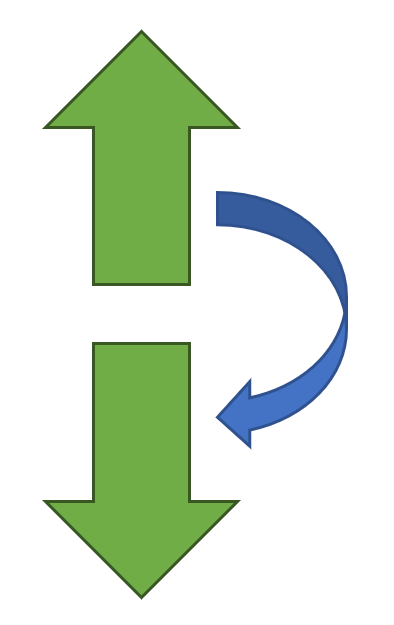
quarter turn clockwise
quarter turn anticlockwise
half turn anticlockwise
What movement is it showing?
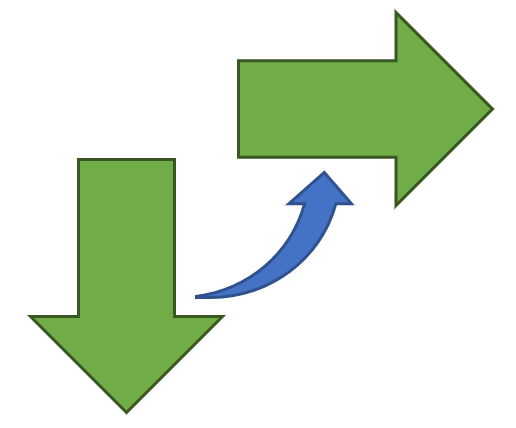
half turn anticlockwise
quarter turn clockwise
half turn clockwise
What movement is it showing?
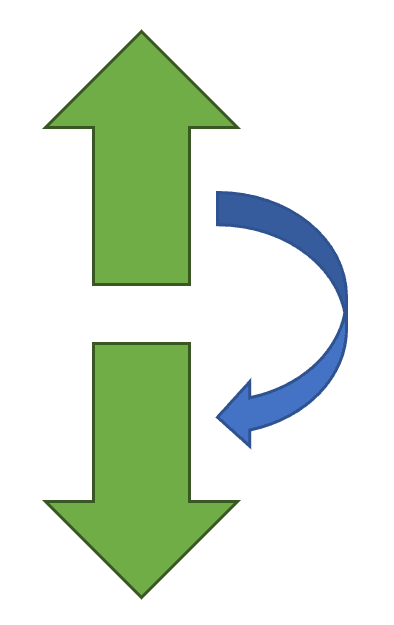
What movement is it showing?
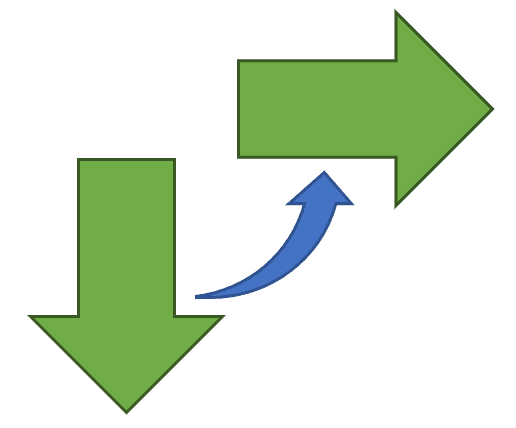
What movement is it showing?
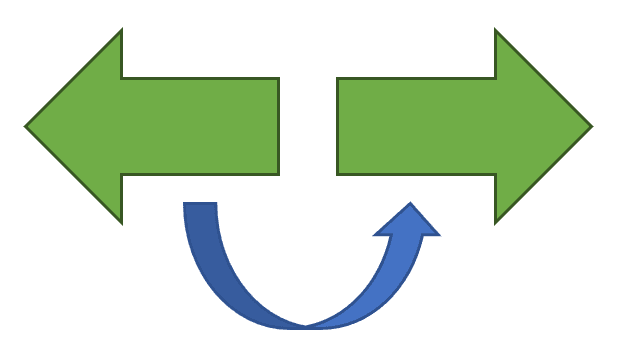
What movement is it showing?

Make a half turn clockwise.
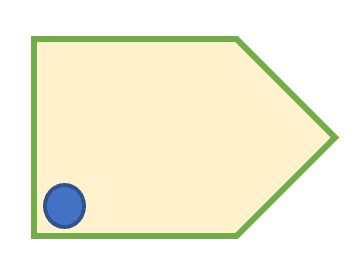
Make a quarter turn anticlockwise.
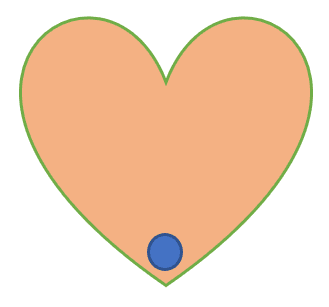
How many right angle turns are there?
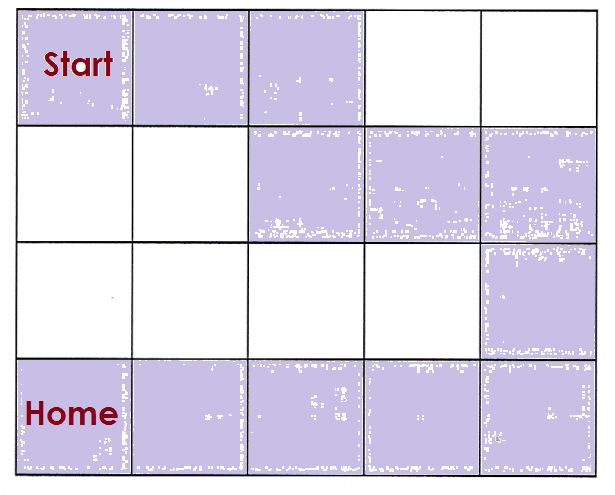
How many quarter turns anticlockwise are there?
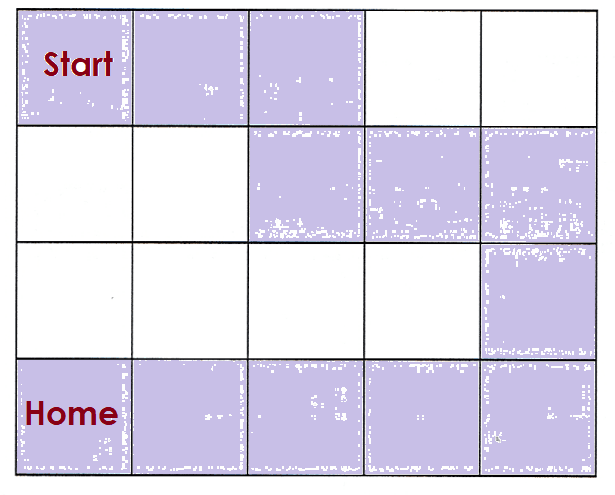
How many quarter turns clockwise are there?
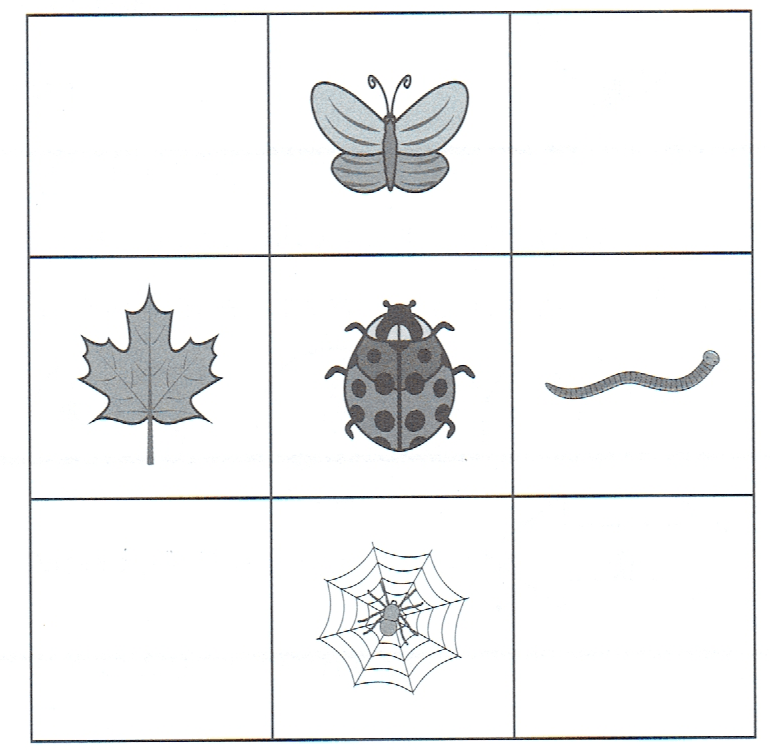
Can the ladybird face the butterfly again when she makes 4 quarter turns clockwise?
 EVALUATION: Basic Hand Movements and Position in Cheer DanceRotations In a doubles game, the players have to take turns hitting the ball with their partner. After each shot, a player has to move out so that the partner can get into the best position for the next shot. It is very important that both players establish an effective rotation pattern and alternative rotation patterns. 1. Circular Rotations (Figure 16.1) Each player moves in a circular way behind the partner after each shot and should be ready to move up and hit. Both players move the same way and two left-handed or right-handed aggressive players can use this movement. 125 16.1 circular rotations 2. Up and Down Rotations (Figure 16.2) Each player moves toward table in a diagonal way to return a shot then back up the same way. One left-handed and one right-handed pair use this rotation. 16.2 up and down rotations 3. T-Rotations (Figure 16.3) The front person moves sideways and the back person moves back and forth. Mostly pairs of one fast style player (front) and one loop style player (back), or one close-table offensive player (front) and one slice style player (back) use this rotation. 16.3 “T” rotations 4. Triangle Rotations (Figure 16.4) Each player using this rotation pattern moves to sides to return shot, then step back to the middle for the next shot in a triangle way. It is used often to return angles shots to sides and it is similar to the circular rotation. 126 16.4 triangle rotations Teamwork and Strategies 1. Establish a good rotation and movement patterns. 2. Create chances for your partner when returning a shot or serve. 3. Cover your partner's weaknesses. 4. Attack the weaker opponent. 5. Hit to the opponent who just finished the shot and is moving away. 6. Use your best serves and shots in games to ensure your best play and reduce mistakes. 7. Change serves and shots to keep opponents guessing what the next motion will be. 8. Change speed, power, lines and placement of the shots and serves to avoid opponents adapting to them. 9. Combine spin and flat serves to force opponent make more mistakes. 10. Attack opponents’ weaknesses. 11. Avoid the strength of opponent. For example, hit to the backhand if opponent is strong at forehand, or use more short chop shots if opponent is very aggressive. 12. Hit to the openings, weak side, and an opponent's body.position , movement and directionLand warfare is a complex domain that involves the application of military power on the ground to achieve political and strategic objectives. Modern military doctrine, such as that used by the U.S. Army and the Indian Army, categorizes these elements into Combat Power and the Principles of War. 1. The 8 Elements of Combat Power Combat power is the total means of destructive, constructive, and information capabilities that a military unit can apply. It is typically broken down into eight key elements: ElementDescriptionLeadershipThe "multiplier" of all other elements. It provides purpose, direction, and motivation to soldiers.InformationEnables commanders to make informed decisions and creates opportunities to achieve results.Mission CommandThe system used to integrate the other elements. It focuses on decentralized execution based on the commander's intent.Movement & ManeuverThe movement of forces to gain a positional advantage over the enemy to deliver lethal or non-lethal effects.IntelligenceThe understanding of the enemy, terrain, weather, and civil considerations.FiresThe use of weapon systems (artillery, mortars, air support) to create specific lethal or non-lethal effects.SustainmentThe logistics required to maintain operations, including ammunition, fuel, food, and medical support.ProtectionThe preservation of the force so that the commander can apply maximum combat power.2. The Principles of War These are the enduring "rules of thumb" that guide how land forces are employed strategically and tactically: Objective: Direct every operation toward a clearly defined and attainable goal. Offensive: Seize, retain, and exploit the initiative. You cannot win by defending alone. Mass: Concentrate the effects of combat power at the most advantageous place and time. Economy of Force: Allocate the minimum essential combat power to secondary efforts so you can "mass" elsewhere. Maneuver: Place the enemy in a position of disadvantage through flexible movement. Unity of Command: Ensure all forces operate under a single responsible commander toward a common objective. Security: Prevent the enemy from gaining an unexpected advantage. Surprise: Strike the enemy at a time, place, or in a manner for which they are unprepared. Simplicity: Prepare clear, uncomplicated plans to minimize confusion in the "fog of war." 3. The Modern Legal Framework Land warfare is also governed by the Law of Land Warfare (International Humanitarian Law), which rests on four pillars: Military Necessity: Actions must be necessary to achieve a legitimate military goal. Distinction: Forces must distinguish between combatants and non-combatants (civilians). Proportionality: The anticipated harm to civilians must not be excessive in relation to the concrete military advantage gained. Unnecessary Suffering: Weapons and methods must not cause gratuitous or superfluous injury. Note: Contemporary land warfare is increasingly "Multi-Domain," meaning land forces must now integrate with cyber, space, and electronic warfare to be effective. , While land warfare uses many tools, the two primary "philosophies" of how to win a war are Attrition and Maneuver. Most modern conflicts are a spectrum of both, but understanding the pure form of each helps explain military strategy. 1. Attrition Warfare: The "Sledgehammer" Attrition warfare is a strategy where one side attempts to win by wearing down the enemy to the point of collapse through continuous losses in personnel, equipment, and supplies. Core Logic: "I have more than you." It assumes that if you can destroy the enemy’s resources faster than they can replace them, you will eventually win. Focus: Firepower and mass. Success is measured by "body counts," equipment destroyed, and the steady seizing of terrain. Command Style: Usually centralized and methodical. It requires strict synchronization of massive resources (artillery, logistics, manpower). Historical Example: The Battle of Verdun (WWI). German Chief of Staff Erich von Falkenhayn famously stated his goal was to "bleed France white" by forcing them to defend a position they could not afford to lose, regardless of the cost in lives. 2. Maneuver Warfare: The "Scalpel" Maneuver warfare seeks to shatter the enemy’s moral and physical cohesion—their ability to act as a unified force—rather than simply destroying every soldier. Core Logic: "I am faster and more unpredictable than you." It aims to create a state of chaos where the enemy's leadership can no longer make effective decisions. Focus: Speed, surprise, and dislocation (forcing the enemy to be in the wrong place at the wrong time). The OODA Loop: Developed by Col. John Boyd, this is the heart of maneuver theory. It stands for Observe, Orient, Decide, Act. The goal is to cycle through these steps faster than the enemy, essentially "getting inside" their decision-making process until they collapse from confusion. Historical Example: The 1940 Invasion of France (Blitzkrieg). Instead of fighting a line-by-line battle of attrition, German forces used speed and concentrated armor to bypass strongpoints, cut communication lines, and cause a total systemic collapse of the French military in weeks. 3. Key Differences at a Glance FeatureAttrition WarfareManeuver WarfareObjectivePhysical destruction of the enemy army.Functional/Psychological collapse of the enemy.TargetThe enemy's strength (mass).The enemy's weakness (vulnerability).Primary ToolMassed Firepower.Movement and Tempo.Command"Command Push" (Top-down, rigid)."Recon Pull" (Decentralized, flexible).Success MetricExchange ratios (Kill counts).Disruption and loss of enemy control.4. The Modern Synthesis: "Schwerpunkt" In practice, no army is purely "maneuver" or "attrition." To maneuver successfully, you often need a period of attrition to punch a hole in the enemy's line. A critical concept here is the Schwerpunkt (Center of Gravity/Focus of Effort). A commander identifies the single most important place to strike and concentrates all available "elements of power" there. While the rest of the front might look like attrition, the Schwerpunkt is where the maneuver happens to achieve a breakthrough. Modern Reality: In high-intensity conflicts today (like the war in Ukraine), we see a "return to attrition" because modern sensors (drones, satellites) make it very difficult to achieve the surprise needed for pure maneuver warfare. When you can see everything, it's hard to be "unexpected."Ethnic composition Southeast Asia’s population includes a wide variety of ethnic groups and cultures. This diversity is related to its position as a focus of converging land and sea routes. In addition, over the span of human habitation, the region alternately has been a bridge and a barrier to the movement of people. The peopling of Southeast Asia took place through various southward migrations. The initial peoples arrived from the Asian continental interior. Successive movement displaced these initial settlers and created a complex ethnic pattern. On the mainland the Khmer peoples of Cambodia remain as ancestors of earlier Pareoean peoples. Similarly, remnants of the Mon group are found in parts of Myanmar and Thailand; the ethnic mixture there has been produced by overlaying Tibeto-Burman and Tai, Lao, and Shan peoples. The contemporary Vietnamese population originated from the Red River area in the north and may be a mixture of Tai and Malay peoples. Added to these major ethnic groups are such less numerous peoples as the Karens, Chins, and Nāgas in Myanmar, who have affinities with other Asiatic peoples. Insular Southeast Asia contains a mixture of descendants of Proto-Malay (Nesiot) and Pareoean peoples who were influenced by Malayo-Polynesian and other groups. In addition, Arabic, Indian, and Chinese influences have affected the ethnic pattern of the islands. In modern times the Burmans account for more than two-thirds of the ethnic stock of Myanmar, while ethnic Thais and Vietnamese account for about four-fifths of the respective populations of those countries. Indonesia is clearly dominated by the Javanese and Sundanese ethnic groups, while Malaysia is more evenly split between the Malays and the Chinese. Within the Philippines, the Tagalog, Cebuano, Ilocano, and Bicol groups are significant.During daytime, the sky is bright and clear because the sun shines bright. We can see clouds, the sun and sometimes there is a rainbow. The sun is the nearest and brightest star on earth, the reason why we don’t see stars during daytime because the sun overpowers the weak lights of the stars. Do you know that the sun changes its position at different time of the day? Yes, early in the morning we can see the sun rising at the East. At this time of the day our surroundings is bright but not very hot, this is the reason why many children especially new born are placed under the sun because the light coming from the sun is good for them. At noontime the sun is overhead. It is very hot at this time of the day. This is the reason why it is not advisable for us to go outside. In the afternoon, we can see the sun setting at the West part of the sky. It is said that this the best time for the children to play outside because the sky s less bright and the temperature is cooler. SCIENCE 2 – MODULE 10 SEIBO COLLEGE 5 It is during daytime we do our chores, like cleaning the house, washing clothes, going to school or office and play. What do you think the reason why we do all these things during daytime? Now, close your eyes then imagine it is nighttime already. What can you see in the sky? Open your eyes then observe the picture below. Can you see these? Very good! You can see the moon and the stars. Sometimes you can see shooting stars or falling stars. At nighttime, we can not see the sun because it is already dark, we can only see the moon and the stars twinkling in the sky. Since there is no sun at night, the temperature is cooler. This is also the best time for us to rest and sleep. Do you know that the moon doesn’t have its own light? Yes, the moon only reflects the light from the sun. Do you now understand the difference of daytime from nighttime? Very good! But the question is how and why do we experience day and night? We experience day and night because the earth is moving around its axis. This movement is called rotation. SCIENCE 2 – MODULE 10 SEIBO COLLEGE 6 When the earth continuously rotates on its axis, part of it faces the sun and the other part is dark. The part of the earth that faces the sun experience daytime and the other part that is dark experience nighttime.Camshaft: A rotating shaft in an engine that controls the opening and closing of the intake and exhaust valves. Aftercooler (air to air): A device that cools the compressed air from a turbocharger using outside air. Glow Plugs: Heating elements used to aid in starting diesel engines in cold temperatures. Timing Cover: The cover that protects the timing gears and belt or chain in an engine. Exhaust Manifold: A component that collects exhaust gases from multiple cylinders and directs them to the exhaust pipe. Oil Suction Tube: A tube that draws oil from the oil pan to the oil pump. Air Compressor: A device that increases the pressure of air and is often used to power air brakes or pneumatic tools. Oil Cooler: A device that cools the engine oil, helping prevent it from overheating. Supercharger/Blower: A device that increases the pressure of the air-fuel mixture entering the engine to boost power. Piston Rings: Rings around the piston that seal the combustion chamber, control oil consumption, and conduct heat. Crankshaft: A shaft that converts the linear motion of the pistons into rotational motion to power the vehicle. Oil Pan: A reservoir at the bottom of the engine that collects and holds the engine oil. Connecting Rod: Connects the piston to the crankshaft, converting the piston's motion into rotational motion. Stroke: The distance the piston travels within the cylinder, from top dead center to bottom dead center. 2 Cycle: A type of engine that completes a power cycle in two strokes of the piston. Crankshaft Main Bearing: The bearing that supports the crankshaft in the engine block. Aftercooler (water/coolant): A device that cools the compressed air from a turbocharger using water or coolant. Water Pump: A pump that circulates coolant through the engine and radiator to prevent overheating. Oil Filter: A filter that removes contaminants from the engine oil. Vibration Dampener: A device attached to the crankshaft to reduce engine vibrations. Piston Wrist Pin: The pin that connects the piston to the connecting rod. Valve Cover: The cover that protects the engine's valves and camshaft. Cylinder Block: The main structure of an engine that houses the cylinders and other components. ECM/ECU: Electronic Control Module or Electronic Control Unit, which controls various engine functions. Cylinder Head: The top part of the cylinder that contains the combustion chamber, valves, and spark plugs. Oil Pump: A pump that circulates oil through the engine to lubricate moving parts. Cylinder Liner: A sleeve inside the cylinder that protects it from wear and corrosion. TDC (Top Dead Center): The highest position the piston reaches in its stroke. Bore: The diameter of a cylinder in an engine. Flywheel: A heavy wheel that stores rotational energy to smooth out engine operation. Crankshaft Rod Bearing: The bearing that connects the crankshaft to the connecting rod. Push Tube / Push Rod: Rods that transmit motion from the camshaft to the valves. Piston: A cylindrical component that moves up and down within the cylinder to create power. Flywheel Housing: The casing that surrounds and supports the flywheel. Valve Lifter or Cam Follower: A component that follows the camshaft lobes to open and close the valves. Turbo: A device that increases the engine’s power by forcing more air into the combustion chamber. Intake & Exhaust Valves: Valves that control the intake of air and the exhaust of gases in the engine. Intake Manifold: A manifold that distributes the air-fuel mixture or air to the cylinders. Rocker Arm: A lever that transfers camshaft motion to the valves. Wastegate: A valve that controls the exhaust gases flowing to the turbocharger, preventing excessive boost pressure. Fuel Injector: A device that sprays fuel into the combustion chamber. Fuel Pump: A pump that moves fuel from the fuel tank to the engine. BDC (Bottom Dead Center): The lowest position the piston reaches in its stroke. 4 Cycle: A type of engine that completes a power cycle in four strokes (intake, compression, power, exhaust). Articulated Piston: A piston with two pieces (crown and skirt) joined by a pivot, allowing some flexibility in movement.Filmic Techniques Based on the work of Brad Smilanich Mis-en-Scene: originally a French theatrical term arrangements of all the visual elements of the stage area in film – “the contents of the frame and the way those contents are organized” include: lighting, costume, décor, props, camera movement or distance . . . all photographic decisions etc. Proxemics: Spatial relationship among characters within the mis-en-scene Rule of Thirds: a compositional rule of thumb in painting, design, photography etc. suggests image divided into 9 equal parts with two vertical and two horizontal lines important elements of the mis-en-scene should be placed along these lines and their intersections some suggest aligning with intersections makes for more interesting pictures than just centreing the subject Proxemics Camera Distance: Quite literally, how far the camera is from the subject being filmed The Hand Camera Camera Distance: Quite literally, how far the camera is from the subject being filmed Extreme Close Up: Singles out one small portion of the body or object Used to intensify emotion, or show reaction Camera Distance: Close up Shot: Shows head of character or small significant object Used to show emotions Camera Distance: Medium Shot: shows figures from the waist up allows character to be seen within background Camera Distance: Long Shot: shows figures from feet up similar to the “stage” in live theatre orients audience to figures within a location or surrounding Camera Distance: Extreme Long Shot: Sometimes called an ‘establishing shot’ Panoramic view of an exterior location orients audience to a location Camera Distance: Camera Angle: Camera’s angle of view relative to the subject being photographed High Angle Shot: looks down on the subject often used to make the subject look small and insignificant (in combination with camera distance) puts the camera (audience) in ‘power’ position Camera Angle: Low Angle Shot: looks up at the subject often used to make the subject look large and powerful puts the camera (audience) in a ‘submissive’ position Camera Angle: Flat Angle Shot: camera on same plane as the subject feels most ‘normal’ to an audience Camera Angle: Canted Shot: frame is unbalanced in relation to the subject may indicate a symbolic unbalance in the character Camera Angle: Camera Movement literally the camera moving with or around or to follow the subjects in the mis-en-scene or frame Camera Movement: Tilting Movement camera moves up or down on a horizontal axis similar to head nodding movement may be used to show subjects relation to surroundings Camera Movement: Panning Movement camera moves side to side on a vertical axis similar to head shaking movement may be used to establish setting Camera Movement: Dolly Movement camera mounted on a vehicle that moves along with the subject (camera moves, not pivots) follows the subject to signify something important Camera Movement: Crane Shot camera mounted on a crane or boom permits camera to move in & out, up & down, backward & forward often used for high aerial establishing shots Misc. Shots: Hand Held: camera carried to seem jerky, giving ‘realistic feel’ Push In: camera moves up to a character’s face to indicate an epiphany (realization) Spiral: camera circles subject for effect End for ELA 20-2 and 10-1 Shot Transitions/Editing: artificial editing done to string together multiple shots to create a narrative scene or sequence a cut is the change from one shot to another usually separated in to ‘soft’ and ‘hard’ cuts Jump Cut: an instantaneous change from one shot to another this can be very natural or may disorient the audience, depending on how it is used Transitions/Editing Swish Pan: A pan where the speed of the camera is so fast that images are blurry used often to connect events in different settings that are connected by time Transitions/Editing Dissolve: transition where one shot gradually dissapears while another shot gradually appears often used to suggest change of setting or long time passage i.e. flashbacks Transitions/Editing Fade In/Out: transition where the shot gradually overexposes to white or underexposes to black often used to suggest a lengthy passage of time or change in location Transitions/Editing Wipe: transition where one shot is gradually eliminated as another shot moves onto the screen can be vertically or horizontally often suggests movement of the camera to another location Transitions/Editing Iris In/Out: transition where one shot gradually appears as an expanding circle in the middle of an old image suggests . . .??? Transitions/Editing Shot-Reverse Shot: one character is shown looking (often off-screen) at another character, and then the other character is shown looking "back" at the first character. Since the characters are shown facing in opposite directions, the viewer unconciously assumes that they are looking at each other. Transitions/Editing Two-Shot: Face-up shot of two people. Often used in interviews, or when two presenters are hosting a show. A "One-Shot" could be a mid-shot of either of these subjects. A "Three-Shot", unsurprisingly, contains three people. Transitions/Editing Shot Transitions/Editing: Sound: used to reflect or enhance what is shown visually on the screen can include dialogue, music, sound effects, voiceover etc. Diegetic Sound: sound that has a source in the world of the story dialogue spoken by characters, sound made by objects, or music coming from a source grounded in the story of the film Non-diegetic Sound: sound that has a source outside the world of the story usually part of the score or the soundtrack Parallel Sound: sound that complements the image shown i.e. romantic music during a love scene Counterpoint Sound: sound that contradicts the ‘feeling’ of the image a happy song played while images of graphic violence are portrayed Voiceover: voice of a non-visible narrator laid over the scene often provides some comment about the narrative of the film Sound Bridge: used to ‘soften’ the transition between one scene and another takes sound from the next shot and overlays it on the current shot 2-3 seconds earlier than we see the image Examples of Diegetic/Non-Diegetic: In the first clip, the non-diegetic music changes to diegetic music when the main character moves inside of the convenience store. In the second clip, the “duhn duhn duuuuh” which often is non-diegetic becomes diegetic because it is the band in the passing bus playing that music! End for ELA 20-1 Lighting: Can be used by a director to: Control the mood of a scene guide a viewer’s eye to a specific place in mis-en-scene Emphasize and de-emphasize elements in frame Add texture and color Make people look beautiful, ugly, sinister, or angelic Standard 3-Point Lighting: uses three lights called the key light, fill light and back light forms the basis of most lighting. once you understand three point lighting you are well on the way to understanding all lighting. Key Light: main light usually the strongest and has the most influence on the look of the scene. it is placed to one side of the camera/subject so that side is well lit and other side has shadow. Fill Light: secondary light is placed on the opposite side of the key light used to fill the shadows created by key softer and less bright than key Back Light: placed behind the subject ; lights it from the rear. provides definition and subtle highlights around the subject's outlines. Separates subject from background provides a three-dimensional look. Standard 3-Point Lighting: http://www.zvork.fr/vls/ Try using this simulator to play with lighting with those 3 points.