Loading...

Prevention of Lifestyle Diseases
Quiz by Merry Joy Gerona
Customize this quiz to suit your class
Instantly translate to 100+ languages
Tag the questions with any skills you have. Your dashboard will track each student's mastery of each skill.
Give this quiz to my class
One of the tips to Overcoming Obesity is...
Evaluate your diet and see if your drinking liquid calories
Chew fast
Start Big as soon as possible
Eating more than 3 big meals a day
One of the ways to avoid heart problem...
Not eating fruits, vegetable and whole grain.
Stay stress and avoid hapiness.
Adopt a healthy lifestyle
Limited physical activities
One of the tips to Overcoming Obesity is...
One of the ways to avoid heart problem...
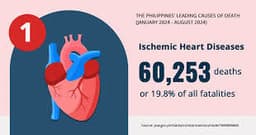
2024 Top 1 cause of death in the Philippines according to PSA is...
It is a general term for conditions that affect the heart's structure and function.
This is a condition wherein the amount of sugar (glucose) in blood is too high. The body cannot use it properly because it cannot enter the body's cell.
Weight category of <18.5 Based on BMI is consider...
BMI stands for...
These are Dos and Don'ts of eating except...
This is the excessive fat gained from food and an inactive lifestyle.
All of them are the common lifestyle Diseases except...
Any medical disorder or condition thought to be produced or exacerbated by aspects of a person's lifestyle, such as diet and level of physical activity.
Lifestyle means...
Weight category of 30.00 - 39.99 based on BMI is consider...
What is the importance of proper eating habits in preventing lifestyle diseases? explain.
 HEALTH EDUCATION 3. SPECIFIC OBJECTIVES: Students should able to know about_______ 1. definition of health education 2. aims of health education 3. objectives of health education 4. principles of health education 5. scope of health education 6. planning of health education 7. steps in planning health education 8. levels of health education 9. doctors s responsibility 4. INTRODUCTION: Health education is a term frequently used by health care professional. its aims at individual and community health. Health education is the translation of what is known about health into desirable individual and community behaviour pattern by means of an education process. Definition: “A process aimed at encouraging people to want to be healthy , to know how to stay healthy, to do what they can individually and collectively to maintain health And seek help when needed”. OBJECTIVES - To inform people or disseminate scientific knowledge about prevention of disease and promotion of health - To motivate people to change their habits and lifestyle that are harmful to their health also motivate people to adopt habits and ways of living conducive to healthy living. - To guide the people who need help to adapt and maintain healthy practices and lifestyle by showing proper community resources. --- PRINCIPLES OF HEALTH EDUCATION - Credibility Of Message: It is the degree to which the message to be communicated is perceived as trustworthy by the receiver. - Creating interest among participants: It is a psychological principle that people are unlikely to listen to things that are not of their interest. If a health programme is based on the felt needs, people will participate in the programme willingly. - Motivating the participants: Motivation is like a petrol engine that drives the mental engine. It is the fundamental desire in every person to learn. Motivation is contagious; one motivated person may spread motivation throughout the group. 13. - Enhance comprehension of content: It means health education should be based on the level of understanding, education and literacy of people at whom the teaching is directed. Teaching should be within the mental capacity of the audience. - Ensure reinforcement: Repetition at intervals is necessary to promote learning. Without reinforcement and feedback, students can go back to the pre-awareness stage. - Encourage active participation: Health education should aim at encouraging people to work actively with health workers and others in identifying their own health problems and also in developing solutions. 14. - Learning by doing: Teaching is effective when individuals actively participate in health education. Learning becomes active and quicker if the individuals are made active physically as well as psychologically. - Known to unknown: The people in a community know something and the health educator enlarges this knowledge. If the health educator links new knowledge with the old knowledge, it can enhance learning. - Maintaining good human relations: Sharing of information, ideas and feelings happens most easily between people who have a good relationship. 15. - Setting an example: The health educators should set a good example in the topic they are dealing with as it fosters better understanding. - Regular feedback: Feedback is one of the key concepts of the system approach. The health educator can modify the elements of the system in light of the feedback from his audience. For effective communication, feedback is of paramount importance - Efficient leadership: Leaders are agents of change and they can be made use of in health education work. Psychologists have shown and established that we learn best from people we respect and regard. 16. The essential attributes of a leader are as follows - Understands the needs of the community. - Provides proper guidance. - Takes initiative. - Is receptive to the views and suggestions of people. - Identifies himself with the community. Is selfless, honest, impartial, considerate and sincere. - Is easily accessible to people. 17. SCOPE OF HEALTH EDUCATION 1. Nutrition 2. Hygiene 3. Family health 4. Disease prevention and cantrol 5. Psychological health 6. Prevention of accident 7. Use of health services 8. Human biology 19. - Nutrition: The aim of nutrition education is to guide people to choose optimum and balanced diets, remove prejudices and promote good dietary habits. nutrition education is a major intervention for the prevention of malnutrition, promotion of health and improving the quality of life. 20. - Hygiene: This has two aspects: personal and environmental. Personal: The aim of personal hygiene is to promote standards of personal cleanliness . Environmental: Has two aspects: Domestic and community. All environmental sanitation programmes should include health education 21. - Family health: The family is the first defence as well as the chief reliance for the well-being of its members. One of the main tasks of health education is to promote family self-reliance, especially regarding the family's responsibilities in child bearing, child rearing, self-care and in influencing their children to adopt a healthy lifestyle. 22. - Disease prevention and control: Drugs alone will not solve health problems. Without health education, a person may fall sick again and again from the same disease. Educating the people about the prevention and control of locally endemic diseases is the first of the eight essential activities in primary health care. 23. - Psychological health: Psychological health problem can occur everywhere. There is a tendency to an increase in the prevalence of psychological diseases when there is a change in society from agriculture to an industrial economy and when people move from the warm intimacy of a village. 24. - Prevention of accidents: Accidents are a feature of the complexity of modern life. Accidents can occur in home, road and place of work. The predominant factor in accidents is carelessness that can be tackled by health education. 25. - Use of health services: Many people, particularly in rural areas, do not know what health services are available and many more do not know. There is a communication gap between the public and state health administration in the form of feedback for further improvement of health services. One of the declared aims of health education is to inform people about the health services available in their community. 26. PLANNING FOR HEALTH EDUCATION planning: is the process of making thoughtful and systemic decision about what needs to be done , how it has to be done, by whom And with what sources. 27. Principles of planning health education 1) Focus on actual current needs and context of community: It is important that plans are made with the needs and context of the community in mind. Health education should try to understand what is currently happening in the community one works in. 2) Plan for basic needs and interest of the community: Consider the basic needs and interests of the community. If the local needs and interests are not kept under consideration, the plans may not be effective. 28. 3) Planning with actual beneficiaries of health education: Plan with the people involved in the implementation of an activity. If people are included in planning, they will be more likely to participate and the plan will be more likely to succeed. 4) Identify and use all relevant community resources: It is essential that the health educator identify all the relevant resources that are locally available which could be used for benefit of people receiving the health education. 29. 5) Follow principle of flexibility: Planning should be flexible, not rigid. One should be able to modify the plans when necessary. For example, you would have to change your priorities if a new problem needing an urgent response arose. 6) A realistic plan not hypothetical: The planned activity should be achievable and take into consideration the financial, personal resources available and time constraints. Planning must be realistic; do not plan unachievable activities. 30. Steps in planning health education Planning is a continuous process. It does not just happen at the start of project . Health education must be well planned to actually improve and promote individual, family and community health 31. - Needs assessment: Conducting needs assessment is the first and probably the most important step in any successful planning process. assessment is the process of identifying and understanding the health problems of the community and their possible causes. - Identify priorities: After identifying the needs and resources of the community, the next is to identify their priorities because each community may have several problems but the urgent have to be given top priority in health education. For example: goitre 32. - Set the goals and objectives: In planning the process of health education, setting goals and objectives is the third and most essential step because these goals and objectives serve as consciously thought baseline parameters to be achieved during health education. - Develop strategies: Prior to the implementation of the health education intervention one must plan, develop and evaluate the several alternative strategies to achieve the set goals and objectives of health education because each problem and target community is quite unique. 33. - Implementation: This is the core phase of the health education process which includes carrying out the planned strategies so that the set goals and objectives of health education may be achieved. - Monitor and evaluation: This is the final step of the planning process of health education where continuous monitoring as well as end evaluation is carried out to ensure the degree to which stated goals and objectives have been achieved. 34. LEVELS/APPROACH OF HEALTH EDUCATION 35. INDIVIDUAL LEVEL - Individual Approach: The health education must first create an atmosphere of friendship and allow the individual to talk as much as possible. In this individual teaching we can discuss, argue and persuade the individual to change his behaviour. But by this we can reach to a small population and who come in contact with us. Methods of individual health education 1) Home visit 2) Personal contact/ counselling 3) Personnel letters 36. 1) Home visit: A home visit is one of the best approaches for individual health education because it can become one of the best opportunities for health education with individuals and their families. Home visits are important to understand the real background of families, their living conditions and the environment in which they live. 37. 2) Personal contact/counseling : Personal contacts or counselling (one-to-one communication) is a helping process where one person explicitly and purposefully gives his or her time to assist people explore their situations and act on a solution. After this the counsellor needs to work together with the person to find solutions that are appropriate to their situation. 38. 3) personal letters: Personal letters may also be used for individual health education, where health educators may get an opportunity to dispatch letters or printed education material to the people in a target community. 39. GROUP LEVEL Group health education may be useful way to deliver health education massages in efficient manner. A well organized group permits sharing of experiences and skills so that people are able to learn from each other. 40. Methods of group discussion 1)Lecture method: (Chalk & Talk ) A lecture may be defined as carefully prepared oral presentation of facts organized thoughts and ideas by a qualified person. The group should not be more than 30 and talk should not exceed 15-20 minutes. By using suitable audiovisual aids. 2) Group discussion: A group is an aggregation of people interacting in a face to face situation. It is a very effective method of health communication. 41. 3) Demonstration: A demonstration is a carefully prepared presentation to show how to perform a skill. This procedure is carried out step by step before an audience. 4) Panel discussion: In a panel discussion 4-8 qualified persons talk about the topic. Sit and discuss a given topic in front of a large group/audience. The chairman opens the meeting. Panel comprises of a chair person and 4-8 speakers. After the main aspect of the subject are explored, the audience is invited to take part. 42. 5) Symposium: It is a series of speeches on a selected subject. Each expert person present it briefly and at the end of session the chair person make a comprehensive summary. Audience are allowed to raise question. 6) Workshops : It consists of series of meetings usually 4 or more with emphasis on an individual work, within the group and with the help of consultants and response personnel. 7) Role play: This is a brief acting out of an actual situation for the benefit of the audience for better understanding. 43. 8) Conference and seminars: This programmes are usually held on a regional, state/national level. Where several experts from different disciplines meet to deliberate on a particular theme, to appraise others of latest knowledge and research in a particular field. 9) Open forum: It refers to the public meeting which are held for various purposes in the community, for example: gram sabha 44. COMMUNITY LEVEL It is meant for a defined community and is not only to create awareness but also to help people understand their health problems and needs, find alternatives solutions to their problems and needs , implement them, evaluate and get feedback and accordingly do the needful. For health education at the community level, it is better to approach local leaders who are influential and who have the people’s confidence. These may include local officers such as gramsevak, panchayat sarpanch ,police officer or block development officer etc . 45. HOSPITAL LEVEL 1) Health Education in OPD/Outdoor: The patient and his attendants have to spend a lot of time in the outpatient department for health check-up, treatment, registration, diagnosis, admission procedure etc. This period can be utilised for health education. For this, the following means/devices can be used: - Exhibiting pictures, posters, charts, bulletin board and models in the waiting hall. - Arranging group discussion, slide show, or documentary film in a proper place and on a proper topic. - Giving health education on a personal level in the consulting room. This mainly includes nutrition clinic, family planning clinic, psychiatric clinic etc. 46. - Distributing pamphlets. - Arranging street plays or nukkad naatak in the outpatient department or its neighbourhood. 47. 2) Health Education in wards/ IPD: While taking care of the patients the indoor patients, doctors s have the opportunities to educate them. This period can be fully utilised to give health education to the patients. For this the following methods can be effective: - Conversation with the patient and motivating him for change in his behaviour. - Imparting health education by arranging live demonstration for nutrition, treatment, diagnosis etc. - Providing clinical or bedside teaching. - Providing incidental teaching to patient and his attendants. 48. - Presenting examples. To describe the gains of health education in an individual suffering from the same health education in an individual suffering from the same disease and arranging a meeting between the patient and the cured old patients.Management and Globalization Global Management Why companies go global How companies for global Global Business environments Global Business Types of global business Pros and cons of global businesses Ethnic Challenges for global business Culture and Global Diversity Cultural intelligence Silent language of culture Tight and loose cultures Values and national cultures Global Management Learning Are management theories universal? Intercultural competencies Global learning goals Key concepts of the challenges of globalisation: Global economy Resources, markets and competition are worldwide in scope Internationalisation The process of increasing involvement in international operations Globalization/Deglobalization Glob- the growing interdependence among elements in the global economy The worldwide interdependence of resource flows, product markets and business competition World 3.0 Different views: World flat vs. round Distance is a metaphor that represents the degree of dissimilarities between countries Balancing cooperation in the global Global Management Global management - managing things in different countries Managing business and organizations with interests in more than one country What do we expect from global Managers Knowing how to adapt Knowing the language Global Manager Is culturally aware and informed on international affairs International Business Conducting for-profit transactions of goods and services across national boundaries International Motive Why do firms internatioalize their activities Cheaper labour Labour tax Natural resources Enrolments to do business Clientele Exclusive materials Personal benefits: Taxes Reasons why businesses go global Customers Suppluers Capital During (1993) - 4 motive 1. Market seeking 2. Efficiency Seeking 3. Resource seeking 4. Strategic Asset Seeking Cuervo Cazurra, Narula and un (2015) - 4 motive s Internationalization Motives A company may also explore the opportunities in different markets in order to take advantage and in some cases extend the product life cycle What is a Market Entry Strategy Involves the sale of goods or services to foreign markets but do not require expensive investments Franchising Exporting and importing Involve the sale of goods or services to foreign markets but do Types of market entry strategies Global sourcing Exporting Importing Licensing agreement Franchising Types of Foreign Direct Investment (FDI) strategies: Joint venture Strategic alliance Owned Subsidiary (sometimes called WOS) How to go abroad What conditions will affect the decisions of firms on how to internationalize their activities? During (1978)- Eclectic paradigm OLI model OLI- Ownership, Location and Internalization Advantages Ownership advantages Resources owned by the organization that can be transferred across locations include trademarks, production techniques and processes, managerial skills and other resources not available to the competitors Location Advantages Represent the implications of choosing to produce or to perform activities in a specific location (country or region) Internalization Advantages: The ability to internalize or to incorporate activities that add value to its business Evolution of Concepts- New Elements Although economic factors are certainly important to explain the formation, growth and expansion of firms within and across national borders, they are not sufficient to explain the additional complexity when a firm decides to expand its activities across national borders Economic factors Investigate the economic elements that affect the internationalization of firms Behavioural Elements Explaining the additional challenges (and perhaps opportunities) a firm faces in foreign host countries when compared to indigenous (local) firms Behavioural theories Johanson and Wiedersheim-Paul (1975) and Johanson and Vahlne (1977) Included the psychic Distance concept (beckerman,1956) to explain the internationalization behaviour of firms The Uppsala internationalization model Psychic distance is: the sum of factors preventing the flow of infomatio from and to the market Psychic Distance is a broad concept that includes several elements such as: language, culture, political systems, level of education, level of industrial development Firms behave in a “Risk Averse” manner It means that when the perceived risk goes down, the firm increase its commitment to the foreign market \ The Haier Group Data Strategy Big DATA and Small DATA The use of small data to satisfy individual customers’ needs, however, the book mentions a huge cultural shock at the plant in Camden, south caroline Ex: top down, hard hat colors and hierarchy Culutral Differnces can have a huge impact on the internationalization of firms Kogut and Singh (1988)- Cultural Distance Index First statsical study on the implication of ciltiral distance to the selection of entry mode When investigating in culturally distant countries, foreign firms can choose to partner with foreign firms in order to gain local knowledge and share the risk associated to the investment (higher commitment = higher risk) How Companies Go Global Global sourcing The process of purchasing materials or services around teh world for local use Exporting Selling locally made products in foreign markets Importing Buying foreign made products and selling them domestically Exports correspond to what percentage of Candain GDP What countries are the major trending partners of Canada Management and Globalization How Companies Go Global Licensing Agreement One firm pays a fee for rights to make or sell another company’s products What are the potential risks associated to licesning The case of new balance in China Franchising A fee is paid for the rights to use another firms name, branding and methods Insourcing Insourcing: refers to local job creation that results from foreign direct investment Types of insourcing Joint ventures: operate in a foreign country through co-ownership by foreign and local partners Strategic alliances: A partnership in which foreign and domestic firms share resources and knowledge for mutual gains Foreign subsidiaries: local operation completely owned by a foreign firm Criteria for choosing a joint venture partner: Familiarity with your firm’s major business String local workforce Values its customers Future expansion possibilities Strong local market for partner’s own products Good Profit potential Sound financial standing Global business environments Legal and poliical systems Trade agreements and trade barriers Regional economic alliances Legal and political systems Differing laws and practices regards Business ownership Negotiation and implementation of contracts Foreign currency exchange Protection of intellectual property rights Counterfeit merchandise Political risk Potential loss in value of foreign investment due to instability and political changes in the host country Political risk analysis (expertise/experience) Forecast political disruptions that threaten the value of a foreign investment Changes in the rules of the game Brexit US Trade Wars-mexico-China Other examples Bolivia, Venezuela, China De-globalization The process of weakening interdependence among nations Trade Agreements and trade Barriers World trade organization Most favourd nation status Tariffs Nontariss barriers (quotes, restrictions, etc.) Protectionism Regional Economic Alliances USMCA (replacment for the NAFTA-North American Free trade Agreement) EU- European Union APEC- Aisa Pacific Economic Copperation ASEAN - Association of Southeast Asian Nationas SADC - Southern Africa Development Community MERCOSUR- Chapter 5- Global Management and Cultural Diversity (part 2) Review Types of global business Global corporation MNE (multinational enterprise) or MNC (multinational corporation) with extensive business operations in more than one foreign country Transnational corporation A global corporation that operates worldwide on borderless basis Some host country complaints about MNCs Host Country companits about MNCs: Excessive profits Interference with local government Domination of local economy Interference with local government Hiring the best local talent Limited technology transfer Disrespect for local customers Examples - War in Ukraine Disruption in global -value chains and increased pressure and interference of MNCs with local government Fertilizer imports in Brazil (one of the major producers of agricultural commodities) We must consider the triple bottom line and the impact in society, the environment and the economy $2.5 billion invest in potash mine in Brazill What about Globalization gap Large multinationals adn industrilizednaitons gaining disporoportinonally form globalization Globalization gap: Large multinational and industrialized nations gaining disproportionally from Globalization Some MNC complaints about host countries MNC Complaints about host countries: Profiit limitations Laws and regulations Overpirce resources Exploitative rules Foreign exchange restriction Failure to uphold contracts Mutual benefits for host countries and multinational companies Mutual benefits for host country and global corporation of MNC: Shared growth opportunities Shared income opportunities Shared learning opportunities Share development opportunities Develop projects together What are some of the ethical challenges for global business Ethincal challenges for global business Child labour Employmnet of children for worl otherwise done by adults Sweatshops Employment of workers at very low wages for long hours in poor working conditions Ex: Nike bad labour prices Unsafe working conditions Corruption Illegal practices that further one’s business interests Corrupiotn of froeign public officials Act makes it illegal for Candain firms and their representatives to engage in corrupt practices overseas Bribes to foreign officials Excessive commissions Non-monetary gifts Sweatshops Conflict materials What is culture Culture : The shared set of beliefs, values, and patterns of behvaiourr common to a group of people Food preferences Values and traditions Language and beliefs Religion Art music Life style Hofstede defines culture as: “The collectiv programing of teh mind distinguishing the members of one group or category of people from others” What is culture shock Culture Shock: Confusion and discoumfert a person experiences in an unfaamiliar culture Stages to adjusting to a new culture Confusion Small vitorires The honeymoon Irritation and anger Reality Cultural Intelligence The ability to adapt and adjust to new cultures What is Ethnocentrism Tendency to consider one’s own culture as superior others Slinet languages of culture Contect Low context High context Space Proxemics Ex: personal space Time Monochronic Polychronic High and low contexts cultures Edward T.Hall (1959) Def: Part of a discourse that surround a word or passage and can throw on its meaning Low context cultures Emphizes communication via spoken or written words Countries like United States, Canada and Germany High context cultures Rely on nonverbal and situational cues as well as on spoken or written works Thailand Malaysia Time Monochronic cultures People tend to do one thing at a time Canda Polychronic cultures Time is used to accomplish many different things at once Egypt Space Proxemics Study of how people use space to communicate In North American people value “personal space’ Many Latin and Asian cultures expect much less personal space Tight and Loose Cultures Cultural tightness-looseness Tight = Strength of norms that govern social behvaviour Japan, Korea, Malaysia Loose = tolerance for any deviation from norms Australia, Brazil, Hungary Values and national cultures (Hofstede) Power distance Uncertainty avoidance Individalism-collectivism Masculinity-femininty Time Orientation Indulgence vs. Restraint Comparative management How management pratices systematically differ among countries and /or cultures Intercultural competencies Skills and personal characteristics that help us be successful in cross cultural situations Global Managers (know how to adapt) Need to successfully apply management functions across interantional boundaries Global Learning goals Not universal Engage critical thinking Look everywhere for new management ideas Always consider culture Prevention of Substance use and abuse (Cigarette and Alcohol)Prevention of Substance Use and AbuseGRADE 8- PREVENTION OF SUBSTANCE USE AND ABUSE (GATEWAY DRUGS: CIGARETTE AND ALCOHOL) -4TH QUARTER (H8S)Health 1- Prevention of Childhood Injuries Conservation means prevention of loss or damage to something. Conservation of natural resources means keeping or managing and preventing our natural resources from being wasted, damaged or going into extinction, that is disappearing. Natural resources are nature’s gifts to human beings. Therefore, we should keep and manage them well. WHY NATURAL RESOURCES SHOULD BE CONSERVED(MANAGED): The following are the reasons why natural resources should be conserved(managed): 1. To prevent waste of our resources. 2. To preserve them for future use, For examples Land, trees etc. 3. To generate more income and develop our economy. For example, Zoological gardens, mineral resources and tourist centres like Ikogosi warm and cold-water spring. 4. To prevent some rare birds and animals from going into extinction (stop existing). 5. To prevent erosion. This is because these trees help to hold the soil and prevent it from being washed away easily by erosion. HOW TO MANAGE (CONSERVE) OUR NATURAL RESOURCES. The following are ways to manage our natural resources: 1. Avoiding bush burning. 2. Tree planting should be encouraged. 3. Creation of more games reserves like Yankari Game Reserve. 4. Avoiding of oil spillage and dumping of wastes into drains. 5. Adding of manures and fertilizers to enrich our soil. Identifying agencies responsible for control and prevention of communicable diseases