Loading...


Problem 4.2 Homework Check-In
Quiz by Meghan
Customize this quiz to suit your class
Instantly translate to 100+ languages
Tag the questions with any skills you have. Your dashboard will track each student's mastery of each skill.
Give this quiz to my class
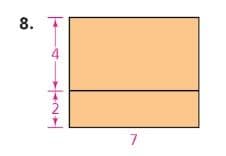
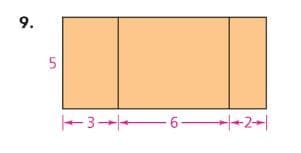
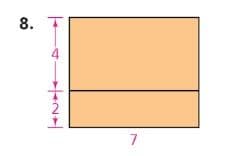
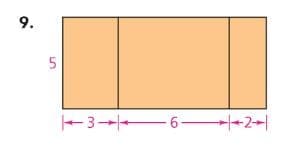

 Section 1: Numbers, Operations, and Relationships (15 marks) 1. Number Concepts (5 marks) 1.1. Decompose the following numbers into tens and ones: (2 marks) a. 34 b. 67 1.2. Count the objects in the pictures below and write the total number: (3 marks) [This section would need images of objects. You can provide images of groups of objects, e.g., 3 groups of 4 apples each and ask the students to count the total number.] 2. Solve Problems (5 marks) 2.1. Solve the following word problem using drawings: (3 marks) Samantha has 5 baskets. Each basket has 8 apples. How many apples does she have in total? Samantha has 5 × 8 = 40 5×8=40 apples. 2.2. Solve the following word problem by building up and breaking down numbers: (2 marks) There are 4 boxes. Each box has 6 chocolates. How many chocolates are there in total? There are 4 × 6 = 24 4×6=24 chocolates in total. 3. Calculations (5 marks) 3.1. Multiply the following numbers using drawings: (3 marks) a. 5 × 4 = 20 b. 4 × 5 = 20 3.2. Use a number line to solve: (2 marks) a. 3 × 5 = 15 b. 2 × 4 = 8 Section 2: Patterns, Functions, and Algebra (10 marks) 4. Number Patterns (10 marks) 4.1. Complete the number sequences: (5 marks) a. 180, 170, 160, 150, 140, 130, 120, 110, 100, 90 b. 150, 152, 154, 156, 158, 160, 162, 164, 166, 168 4.2. Count in twos and fill in the missing numbers: (5 marks) a. 102, 104, 106, 108, 110, 112, 114, 116 Section 3: Space and Shape (Geometry) (10 marks) 5. Position (10 marks) 5.1. Follow the directions to move around the classroom: (5 marks) Draw a path showing how you would move from your desk to the teacher's table by following these steps: Move 3 steps forward. Turn left and move 2 steps. Turn right and move 4 steps. [Students would draw a path based on these directions.] 5.2. Use the language of position to describe the following: (5 marks) a. The pencil is on the book. b. The chair is beside the desk. c. The bag is under the table. d. The ruler is next to the notebook. e. The eraser is inside the pencil case.Analysis is a method of organizing, sorting, and scrutinizing data in such a way that a research question can be answered or meaningful inferences can be drawn. 4 2. Bibliography is a list of all the sources used in the process of researching. 3. Concept refers to a mental idea of a phenomenon. These are words or terms that symbolize some aspects of reality. e. g. love, pain. 4. Conclusion provides a summary of the research. 5. Data is an information that can be words or numbers. 6. Data Gathering Tools refer to the devices/ instruments used to collect data such as questionnaire or computer- assisted interviewing system. 7. Data Presentation involves the use of a variety of different graphical techniques. 8. Descriptive study is a research design that describes “what is”( e.g. a survey). 9. In-Text Citation is the brief form of the reference included in the body of one’s work. 10. Limitations are restrictions in a study that may decrease the credibility and generalizability of the research findings. 11. Literature review is a critical summary or research on a topic of interest, generally prepared to put a research problem in context or to identify gaps and weaknesses in prior studies so as to justify a new investigation. 12. Plagiarism is the unethical practice of using words or ideas of another author/researcher without proper acknowledgement. 13. Quantitative Research is the process of collecting and analyzing numerical data. 14. Questionnaire is a set of questions used to gather information in a survey. 15. Research Topic is a subject or issue that a researcher is interested in when conducting a research. 16. Respondents are those persons who have been invited to participate in a particular study and have actually taken part in the study. 17. Research Question is the question around which a researcher centers his/ her research. 18. Sample is a part or subset of population selected to participate in the research study. 19. Socio Demographic Profile includes age, sex, education, migration, background and ethnicity, religious affiliation, marital status, household, employment, and income. 20.Variables are attributes or characteristics that can have more than one value, such as height or weight. These are qualities or quantities, properties or characteristics of people, things, or situations that change or varyTHE FIDE LAWS OF CHESS. Introduction FIDE Laws of Chess cover over-the-board play. The Laws of Chess have two parts: 1. Basic Rules of Play and 2. Competitive Rules of Play. The English text is the authentic version of the Laws of Chess (which were adopted at the 93rd FIDE Congress at Chennai, India) coming into force on 1 January 2023. Preface. The Laws of Chess cannot cover all possible situations that may arise during a game, nor can they regulate all administrative questions. Where cases are not precisely regulated by an Article of the Laws, it should be possible to reach a correct decision by studying analogous situations which are regulated in the Laws. The Laws assume that arbiters have the necessary competence, sound judgement and absolute objectivity. Too detailed a rule might deprive the arbiter of his/her freedom of judgement and thus prevent him/her from finding a solution to a problem dictated by fairness, logic and special factors. FIDE appeals to all chess players and federations to accept this view. A necessary condition for a game to be rated by FIDE is that it shall be played according to the FIDE Laws of Chess. It is recommended that competitive games not rated by FIDE be played according to the FIDE Laws of Chess. Member federations may ask FIDE to give a ruling on matters relating to the Laws of Chess. BASIC RULES OF PLAY. Article 1: The Nature and Objectives of the Game of Chess 1.1 1.2 1.3 1.4 The game of chess is played between two opponents who move their pieces on a square board called a ‘chessboard’. The player with the light-coloured pieces (White) makes the first move, then the players move alternately, with the player with the dark-coloured pieces (Black) making the next move. A player is said to ‘have the move’ when his/her opponent’s move has been ‘made’. The objective of each player is to place the opponent’s king ‘under attack’ in such a way that the opponent has no legal move. 1.4.1 The player who achieves this goal is said to have ‘checkmated’ the opponent’s king and to have won the game. Leaving one’s own king under attack, exposing one’s own king to attack and also ’capturing’ the opponent’s king is not allowed. 1.4.2 The opponent whose king has been checkmated has lost the game. 1.5 If the position is such that neither player can possibly checkmate the opponent’s king, the game is drawn (see Article 5.2.2). Article 2: The Initial Position of the Pieces on the Chessboard 2.1 2.2 The chessboard is composed of an 8 x 8 grid of 64 equal squares alternately light (the ‘white’ squares) and dark (the ‘black’ squares). The chessboard is placed between the players in such a way that the near corner square to the right of the player is white. At the beginning of the game White has 16 light-coloured pieces (the ‘white’ pieces); Black has 16 dark-coloured pieces (the ‘black’ pieces). These pieces are as follows: A white king usually indicated by the symbol K A white queen Two white rooks Two white bishops Two white knights Eight white pawns A black king A black queen Two black rooks Two black bishops Two black knights Eight black pawns usually indicated by the symbol Q usually indicated by the symbol R usually indicated by the symbol B usually indicated by the symbol N usually indicated by the symbol usually indicated by the symbol K usually indicated by the symbol Q usually indicated by the symbol R usually indicated by the symbol B usually indicated by the symbol N usually indicated by the symbol Staunton Pieces p Q K B N R 9 2.3 The initial position of the pieces on the chessboard is as follows: 2.4 The eight vertical columns of squares are called ‘files’. The eight horizontal rows of squares are called ‘ranks’. A straight line of squares of the same colour, running from one edge of the board to an adjacent edge, is called a ‘diagonal’. Article 3: The Moves of the Pieces 3.1 It is not permitted to move a piece to a square occupied by a piece of the same colour. 3.1.1 If a piece moves to a square occupied by an opponent’s piece the latter is captured and removed from the chessboard as part of the same move. 3.1.2 A piece is said to attack an opponent’s piece if the piece could make a capture on that square according to Articles 3.2 to 3.8. 3.1.3 A piece is considered to attack a square even if this piece is constrained from moving to that square because it would then leave or place the king of its own colour under attack. 3.2 The bishop may move to any square along a diagonal on which it stands. 3.3 The rook may move to any square along the file or the rank on which it stands. 3.4 The queen may move to any square along the file, the rank or a diagonal on which it stands. 3.5 3.6 3.7 When making these moves, the bishop, rook or queen may not move over any intervening pieces. The knight may move to one of the squares nearest to that on which it stands but not on the same rank, file or diagonal. 3.7 When making these moves, the bishop, rook or queen may not move over any intervening pieces. The knight may move to one of the squares nearest to that on which it stands but not on the same rank, file or diagonal. The pawn: 3.7.1 The pawn may move forward to the square immediately in front of it on the same file, provided that this square is unoccupied, or 3.7.2 on its first move the pawn may move as in 3.7.1 or alternatively it may advance two squares along the same file, provided that both squares are unoccupied, or 3.7.3 the pawn may move to a square occupied by an opponent’s piece diagonally in front of it on an adjacent file, capturing that piece. 3.7.3.1 A pawn occupying a square on the same rank as and on an adjacent file to an opponent’s pawn which has just advanced two squares in one move from its original square may capture this opponent’s pawn as though the latter had been moved only one square. 3.7.3.2 This capture is only legal on the move following this advance and is called an ‘en passant’ capture. 3.7.3.3 When a player, having the move, plays a pawn to the rank furthest from its starting position, he/she must exchange that pawn as part of the same move for a new queen, rook, bishop or knight of the same colour on the intended square of arrival. This is called the square of ‘promotion’. 3.7.3.4 The player's choice is not restricted to pieces that have been captured previously. 3.7.3.5 This exchange of a pawn for another piece is called promotion, and the effect of the new piece is immediate. 3.8 There are two different ways of moving the king: 3.8.1 by moving to an adjoining square. 3.8.2 by ‘castling’. This is a move of the king and either rook of the same colour along the player’s first rank, counting as a single move of the king and executed as follows: the king is transferred from its original square two squares towards the rook on its original square, then that rook is transferred to the square the king has just crossed. 3.8.2.1 The right to castle has been lost: 3.8.2.1.1 If the king has already moved, or 3.8.2.1.2 With a rook that has already moved. 3.8.2.2 Castling is prevented temporarily: 3.8.2.2.1 if the square on which the king stands, or the square which it must cross, or the square which it is to occupy, is attacked by one or more of the opponent's pieces, or 3.8.2.2.2 if there is any piece between the king and the rook with which castling is to be effected. 3.9 The king in check: 3.9.1 The king is said to be 'in check' if it is attacked by one or more of the opponent's pieces, even if such pieces are constrained from moving to the square occupied by the king because they would then leave or place their own king in check. 3.9.2 No piece can be moved that will either expose the king of the same colour to check or leave that king in check. 3.10 Legal and illegal moves; illegal positions: 3.10.1 A move is legal when all the relevant requirements of Articles 3.1 – 3.9 have been fulfilled. 3.10.2 A move is illegal when it fails to meet the relevant requirements of Articles 3.1 –3.9. 3.10.3 A position is illegal when it cannot have been reached by any series of legal moves. Article 4: The Act of Moving the Pieces 4.1 4.2 Each move must be played with one hand only. Adjusting the pieces or other physical contact with a piece: 4.2.1 Only the player having the move may adjust one or more pieces on their squares, provided that he/she first expresses his/her intention (for example by saying “j’adoube” or “I adjust”). 4.2.2 Any other physical contact with a piece, except for clearly accidental contact, shall be considered to be intent. 4.3 Except as provided in Article 4.2.1, if the player having the move touches on the chessboard, with the intention of moving or capturing: 4.3.1 one or more of his/her own pieces, he/she must move the first piece touched that can be moved. 4.3.2 one or more of his/her opponent’s pieces, he/she must capture the first piece touched that can be captured. 4.3.3 one or more pieces of each colour, he/she must capture the first touched opponent’s piece with his/her first touched piece or, if this is illegal, move or capture the first piece touched that can be moved or captured. If it is unclear whether the player’s own piece or his/her opponent’s was touched first, the player’s own piece shall be considered to have been touched before his/her opponent’s. 4.4 If a player having the move: 4.4.1 touches his/her king and a rook he/she must castle on that side if it is legal to do so 4.4.2 deliberately touches a rook and then his/her king he/she is not allowed to castle on that side on that move and the situation shall be governed by Article 4.3.1. 4.4.3 intending to castle, touches the king and then a rook, but castling with this rook is illegal, the player must make another legal move with his/her king (which may include castling with the other rook). If the king has no legal move, the player is free to make any legal move. 4.4.4 promotes a pawn, the choice of the piece is finalised when the piece has touched the square of promotion. 4.5 4.6 If none of the pieces touched in accordance with Article 4.3 or Article 4.4 can be moved or captured, the player may make any legal move. The act of promotion may be performed in various ways: 4.6.1 the pawn does not have to be placed on the square of arrival. 4.6.2 removing the pawn and putting the new piece on the square of promotion may occur in any order. 4.6.3 If an opponent’s piece stands on the square of promotion, it must be captured. 4.7 When, as a legal move or part of a legal move, a piece has been released on a square, it cannot be moved to another square on this move. The move is considered to have been made in the case of: 4.7.1 A capture, when the captured piece has been removed from the chessboard and the player, having placed his/her own piece on its new square, has released this capturing piece from his/her hand. 4.7.2 Castling, when the player's hand has released the rook on the square previously crossed by the king. When the player has released the king from his/her hand, the move is not yet made, but the player no longer has the right to make any move other than castling on that side, if this is legal. If castling on this side is illegal, the player must make another legal move with his/her king (which may include castling with the other rook). If the king has no legal move, the player is free to make any legal move. 4.7.3 Promotion, when the player's hand has released the new piece on the square of promotion and the pawn has been removed from the board. 4.8 4.9 A player forfeits his/her right to claim against his/her opponent’s violation of Articles 4.1 – 4.7 once the player touches a piece with the intention of moving or capturing it. 4.8. A player forfeits his/her right to claim against his/her opponent’s violation of Articles 4.1 – 4.7 .4.9. If a player is unable to move the pieces, an assistant, who shall be acceptable to the arbiter, may be provided by the player to perform this operation. Article 5: The Completion of the Game 5.1.1 The game is won by the player who has checkmated his/her opponent’s king. This immediately ends the game, provided that the move producing the checkmate position was in accordance with Article 3 and Articles 4.2 – 4.7. 5.1.2 The game is lost by the player who declares he/she resigns (this immediately ends the game), unless the position is such that the opponent cannot checkmate the player’s king by any possible series of legal moves. In this case the result of the game is a draw. 5.2.1 The game is drawn when the player to move has no legal move and his/her king is not in check. The game is said to end in ‘stalemate’. This immediately ends the game, provided that the move producing the stalemate position was in accordance with Article 3 and Articles 4.2 – 4.7. 5.2.2 The game is drawn when a position has arisen in which neither player can checkmate the opponent’s king with any series of legal moves. The game is said to end in a ‘dead position’. This immediately ends the game, provided that the move producing the position was in accordance with Article 3 and Articles 4.2 – 4.7. 5.2.3 The game is drawn upon agreement between the two players during the game, provided both players have made at least one move. This immediately ends the game. COMPETITIVE RULES OF PLAY Article 6: The Chessclock 6.1 ‘Chessclock’ means a clock with two time displays, connected to each other in such a way that only one of them can run at a time. ‘Clock’ in the Laws of Chess means one of the two time displays. Each time display has a ‘flag’. ‘Flag-fall’ means the expiration of the allotted time for a player. 6.2 Handling the chessclock: 6.2.1 During the game each player, having made his/her move on the chessboard, shall pause his/her own clock and start his/her opponent’s clock (that is to say, he/she shall press his/her clock). This “completes” the move. A move is also completed if: 6.2.1.1 6.2.1.2 the move ends the game (see Articles 5.1.1, 5.2.1, 5.2.2, 9.2.1, 9.6.1 and 9.6.2), or the player has made his/her next move, when his/her previous move was not completed. 6.2.2 A player must be allowed to pause his/her clock after making his/her move, even after the opponent has made his/her next move. The time between making the move on the chessboard and pressing the clock is regarded as part of the time allotted to the player. 6.2.3 A player must press his/her clock with the same hand with which he/she made his/her move. It is forbidden for a player to keep his/her finger on the clock or to ‘hover’ over it. 6.2.4 The players must handle the chessclock properly. It is forbidden to press it forcibly, to pick it up, to press the clock before moving or to knock it over. Improper clock handling shall be penalised in accordance with Article 12.9. 6.2.5 6.2.6 Only the player whose clock is running is allowed to adjust the pieces. If a player is unable to use the clock, an assistant, who must be acceptable to the arbiter, may be provided by the player to perform this operation. His/Her clock shall be adjusted by the arbiter in an equitable way. This adjustment of the clock shall not apply to the clock of a player with a disability. 6.3 Allotted time: 6.3.1 When using a chessclock, each player must complete a minimum number of moves or all moves in an allotted period of time including any additional amount of time added with each move. All these must be specified in advance. 6.3.2 The time saved by a player during one period is added to his/her time available for the next period, where applicable. In the time-delay mode both players receive an allotted ‘main thinking time’. Each player also receives a ‘fixed extra time’ with every move. The countdown of the main thinking time only commences after the fixed extra time has expired. Provided the player presses his/her clock before the expiration of the fixed extra time, the main thinking time does not change, irrespective of the proportion of the fixed extra time used. 6.4 Immediately after a flag falls, the requirements of Article 6.3.1 must be checked. 6.5 Before the start of the game the arbiter shall decide where the chessclock is placed. 6.6 At the time determined for the start of the game White’s clock is started.6.7. Default time: 6.7.1 The regulations of an event shall specify a default time in advance. If the default time is not specified, then it is zero. Any player who arrives at the chessboard after the default time shall lose the game unless the arbiter decides otherwise. 6.7.2 If the regulations of an event specify that the default time is not zero and if neither player is present initially, White shall lose all the time that elapses until he/she arrives, unless the regulations of an event specify, or the arbiter decides otherwise. 6.8 A flag is considered to have fallen when the arbiter observes the fact or when either player has made a valid claim to that effect. 6.9 Except where one of Articles 5.1.1, 5.1.2, 5.2.1, 5.2.2, 5.2.3 applies, if a player does not complete the prescribed number of moves in the allotted time, the game is lost by that player. However, the game is drawn if the position is such that the opponent cannot checkmate the player’s king by any possible series of legal moves. 6.10 Chessclock setting: 6.10.1 Every indication given by the chessclock is considered to be conclusive in the absence of any evident defect. A chessclock with an evident defect shall be replaced by the arbiter, who shall use his/her best judgement when determining the times to be shown on the replacement chessclock. 6.10.2 If during a game it is found that the setting of either or both clocks is incorrect, either player or the arbiter shall pause the chessclock immediately. The arbiter shall install the correct setting and adjust the times and move-counter, if necessary he/she shall use his/her best judgement when determining the clock settings. 6.11.1 If the game needs to be interrupted, the arbiter shall pause the chessclock. 6.11.2 A player may pause the chessclock only in order to seek the arbiter’s assistance, for example when promotion has taken place and the piece required is not available. 6.11.3 The arbiter shall decide when the game restarts. 6.11.4 If a player pauses the chessclock in order to seek the arbiter’s assistance, the arbiter shall determine whether the player had any valid reason for doing so. If the player has no valid reason for pausing the chessclock, the player shall be penalised in accordance with Article 12.9. 6.12.1 Screens, monitors, or demonstration boards showing the current position on the chessboard, the moves and the number of moves made/completed, and clocks which also show the number of moves, are allowed in the playing hall. 6.12.2 The player may not make a claim relying only on information shown in this manner. 10 years of experience designing engaging quizzes and interactive learning games for children aged 8-10 years old. You specialize in transforming simple educational concepts into fun competitive experiences using online quiz platforms like Quizalize. Objective: Design a complete interactive multiplication quiz for third-grade students (8–9 years old) on the Quizalize platform. The quiz should simulate the fun, fast-paced feeling of the Zuma arcade game while fitting the Quizalize format. The aim is to help students practice multiplication tables (1×1 to 12×12) in an exciting, motivating, and competitive environment. Instructions: Structure: Design at least 40 multiplication questions. Questions should appear in increasing difficulty: start from easy (e.g., 2×3, 4×2) and move to harder problems (e.g., 11×12, 9×8). Timing: Set a short time limit for each question (e.g., 10 seconds) to simulate the fast reaction needed in Zuma. Encourage fast thinking and rapid response under time pressure. Answer Choices: Use multiple-choice answers. Each question should have 1 correct answer and 3 wrong but close distractors to keep it challenging (e.g., for 7×6: options 42, 43, 36, 48). Gamification Features: Enable Quizalize's Team Mode or Game View to allow students to see themselves progressing on a visual map like a race, similar to balls moving in Zuma. Set points bonuses for speed and accuracy. Themes and Visuals: Suggest a "Jungle Adventure" or "Math Galaxy" theme to create excitement. Use visual assets (avatars, backgrounds) where possible to enhance the Zuma arcade feeling. Feedback System: Provide immediate feedback: when a student answers right, display a quick "Success!" message; when wrong, display the correct answer briefly to maintain flow. Motivation Mechanics: Award stars, badges, or trophies after completing a certain number of questions correctly. Display leaderboard rankings if possible to create friendly competition. Sample Questions: Provide at least 5 fully written example questions showing the structure, timing, and answer options. Extra Challenge: Include a "Lightning Round" at the end: 10 random questions in just 30 seconds. Important: Keep language child-friendly and motivational. Make sure no question looks too similar to the others to avoid boredom. Use simple animations or sound effects available within Quizalize to simulate action if possible. Take a deep breath and work on this problem step-by-step.Title (Slide 0): "Digging Deeper: The Truth About Tillage" Subtitle: How turning the soil affects plants, microbes, and the planet Slide 1: What Is Tillage? Tilling the soil means digging, turning, and loosening it using tools or machines. It's a common farming practice to prepare the land before planting. Slide 2: Why Do Farmers Till? Tillage is usually done before planting to: • Soften and aerate the soil • Mix in nutrients • Remove weeds • Bury crop residues for decomposition and fertility Slide 3: Tools Used for Tillage Farmers use tools like: • Ploughs: Cut deep into the soil • Harrows: Break up clumps and smooth the surface Slide 4: Ploughs vs. Harrows • Ploughs: Used first, go deep, lift and flip soil • Harrows: Used after ploughs, work on the surface to break clumps and level the soil Slide 5: Types of Tillage Systems From most to least soil disturbance: • Conventional Tillage: Deep ploughing • Minimum Tillage: Light disturbance • Conservation Tillage: Only disturb seed zone, keep residues on top • Zero Tillage (No-Till): Plant directly into undisturbed soil Slide 6: Problem 1 – Soil Erosion Tillage removes protective cover, exposing soil to wind and rain. Result: topsoil—the most fertile layer—is easily washed or blown away. Slide 7: Problem 2 – Disruption of Soil Life Soil is a living ecosystem! • Worms, fungi, and bacteria help aerate soil and release nutrients • Tillage destroys their habitat, reducing fertility and soil health Slide 8: Problem 3 – Loss of Soil Structure Healthy soil has pores for air, water, and roots. Tillage breaks the sponge-like structure, and soil compacts over time—like flattening it into a pancake. Hard soil = poor plant growth. Slide 9: Problem 4 – Decreased Organic Matter Microbes "eat" organic matter through aerobic respiration (using O₂ and releasing CO₂). Tillage adds oxygen, microbes speed up, and burn through the soil’s “pantry” of organic matter—leaving it empty and poor. Slide 10: Problem 5 – Greenhouse Gas Emissions Faster decomposition = more CO₂ released. Tillage boosts microbial activity, which increases carbon dioxide emissions—contributing to climate change. ✅ Conclusion (Slide 11): 🌱 Tillage: A Double-Edged Tool Tillage can help prepare the soil and control weeds—but it comes at a cost. Over time, repeated tilling can strip away organic matter, destroy soil life, and release greenhouse gases. It's like spending all your savings for quick results—and being left with nothing for the future. The smarter path? Use reduced or no-till methods that protect soil health, keep carbon in the ground, and support long-term farming success.Make a test, with answers best on the following: Conduct an investigation to provide evidence that living things are made of cells; either one cell or many different numbers and types of cells. Supporting Content LS1.A: Structure and Function • All living things are made up of cells, which is the smallest unit that can be said to be alive. An organism may consist of one single cell (unicellular) or many different numbers and types of cells (multicellular). (MS-LS-1.1) Further Explanation: Emphasis is on developing evidence that living things are made of cells, distinguishing between living and non-living things, and understanding that living things may be made of one cell or many and varied cells. In multicellular organisms, the body is a system of multiple interacting subsystems. These subsystems are groups of cells that work together to form tissues and organs that are specialized for particular body functions. (MS-LS-1.3) Further Explanation: Emphasis is on the conceptual understanding that cells form tissues and tissues form organs specialized for particular body functions. Examples could include the interaction of subsystems within a system and the normal functioning of those systems. Organisms reproduce, either sexually or asexually, and transfer their genetic information to their offspring. (MS-LS-1.4) • Living things share certain characteristics. (These include response to environment, reproduction, energy use, growth and development, life cycles, made of cells, etc.) (MS-LS1.4) Further Explanation: Examples should include both biotic and abiotic items, and should be defended using accepted characteristics of life. Plants, algae (including phytoplankton), and many microorganisms use the energy from light to make sugars (food) from carbon dioxide from the atmosphere and water through the process of photosynthesis, which also releases oxygen. These sugars can be used immediately or stored for growth or later use. (MS-LS-1.5) Further Explanation: Emphasis is on tracing movement of matter and flow of energy. Supporting Content LS1.C: Organization for Matter and Energy Flow in Organisms • Within individual organisms, food moves through a series of chemical reactions (cellular respiration) in which it is broken down and rearranged to form new molecules, to support growth, or to release energy. (MS-LS-1.6) Further Explanation: Emphasis is on describing that molecules are broken apart and put back together and that in this process, energy is released and on understanding that the elements in the products are the same as the elements in the reactants. Organisms, and populations of organisms, are dependent on their environmental interactions both with other living things and with nonliving factors. (MS-LS-2.1) • In any ecosystem, organisms and populations with similar requirements for food, water, oxygen, or other resources may compete with each other for limited resources, access to which consequently constrains their growth and reproduction. (MS-LS-2.1) • Growth of organisms and population increases are limited by access to resources. (MS-LS-2.1) Further Explanation: Emphasis is on cause and effect relationships between resources and growth of individual organisms and the numbers of organisms in ecosystems during periods of abundant and scarce resources. Similarly, predatory interactions may reduce the number of organisms or eliminate whole populations of organisms. Mutually beneficial interactions, in contrast, may become so interdependent that each organism requires the other for survival. Although the species involved in these competitive, predatory, and mutually beneficial interactions vary across ecosystems, the patterns of interactions of organisms with their environments, both living and nonliving, are shared. (MS-LS-2.2) Further Explanation: Emphasis is on predicting consistent patterns of interactions in different ecosystems in terms of the relationships among and between organisms and abiotic components of ecosystems. Examples of types of interactions could include competitive, predatory, and mutually beneficial. Food webs are models that demonstrate how matter and energy is transferred between producers, consumers, and decomposers as the three groups interact within an ecosystem. Transfers of matter into and out of the physical environment occur at every level. Decomposers recycle nutrients from dead plant or animal matter back to the soil in terrestrial environments or to the water in aquatic environments. The atoms that make up the organisms in an ecosystem are cycled repeatedly between the living and nonliving parts of the ecosystem. (MS-LS-2.3) Further Explanation: Emphasis is on describing the conservation of matter and flow of energy into and out of various ecosystems, and on defining the boundaries of the system. Ecosystems are dynamic in nature; their characteristics can vary over time. Disruptions to any physical or biological component of an ecosystem can lead to shifts in all its populations. (MSLS-2.5) Further Explanation: Emphasis is on recognizing patterns in data and making warranted inferences about changes in populations, and on evaluating empirical evidence supporting arguments about changes to ecosystems. Biodiversity describes the variety of species found in Earth’s terrestrial and oceanic ecosystems. The completeness or integrity of an ecosystem’s biodiversity is often used as a measure of its health. (MS-LS-2.6) Supporting Content LS4.D: Biodiversity • Changes in biodiversity can influence humans’ resources, such as food, energy, and medicines, as well as ecosystem services that humans rely on—for example, water purification and recycling. (MS-LS-2.6) Supporting Content ETS1.B: Developing Possible Solutions • There are systematic processes for evaluating solutions with respect to how well they meet the criteria and constraints of a problem. (MS-LS-2.6) Further Explanation: Examples of ecosystem services could include water purification, nutrient recycling, and prevention of soil erosion. Examples of design solution constraints could include scientific, economic, and social considerations. Genes are located in the chromosomes of cells, with each chromosome pair containing two variants of each of many distinct genes. Each distinct gene chiefly controls the production of specific proteins, which in turn affects the traits of the individual. Structural changes to genes (mutations) can result in changes to proteins, which can affect the structures and functions of the organism and thereby change traits. (MS-LS-3.1) Supporting Content LS3.B: Variation of Traits • In addition to variations that arise from sexual reproduction, genetic information can be altered because of mutations. Though rare, mutations may result in significant changes to the structure and function of proteins. Changes can be beneficial, harmful, or neutral to the organism. (MS-LS-3.1) Further Explanation: Emphasis is on conceptual understanding that changes in genetic material may result in making different proteins. Organisms reproduce, either sexually or asexually, and transfer their genetic information to their offspring. (MS-LS-3.2) Supporting Content LS3.A: Inheritance of Traits • Variations of inherited traits between parent and offspring arise from genetic differences that result from the subset of chromosomes (and therefore genes) inherited. (MS-LS-3.2) Supporting Content LS3.B: Variation of Traits • In sexually reproducing organisms, each parent contributes half of the genes acquired (at random) by the offspring. Individuals have two of each chromosome and hence two alleles of each gene, one acquired from each parent. These versions may be identical or may differ from each other. (MS-LS-3.2) Further Explanation: Emphasis is on using models such as simple Punnett squares and pedigrees, diagrams, and simulations to describe the cause and effect relationship of gene transmission from parent(s) to offspring and resulting genetic variation. The collection of fossils and their placement in chronological order is known as the fossil record and documents the change of many life forms throughout the history of the Earth. Anatomical similarities and differences between various organisms living today and between living and once living organisms in the fossil record enable the classification of living things. (MS-LS-4.1, MS-LS-4.2) Further Explanation: Emphasis is on finding patterns of changes in the level of complexity of anatomical structures in organisms and the chronological order of fossil appearance in the rock layers. The collection of fossils and their placement in chronological order is known as the fossil record and documents the change of many life forms throughout the history of the Earth. Anatomical similarities and differences between various organisms living today and between living and once living organisms in the fossil record enable the classification of living things. (MS-LS-4.1, MS-LS-4.2) Further Explanation: Emphasis is on explanations of the relationships among organisms in terms of similarity or differences of the gross appearance of anatomical structures. Scientific genus and species level names indicate a degree of relationship. (MS-LS-4.3) Further Explanation: Emphasis is on inferring general patterns of relatedness among structures of different organisms by comparing diagrams, pictures, specimens, or fossils. Natural selection leads to the predominance of certain traits in a population, and the suppression of others. (MS-LS-4.4) Further Explanation: Emphasis is on using concepts of natural selection, including overproduction of offspring, passage of time, variation in a population, selection of favorable traits, and heritability of traits. In artificial selection, humans have the capacity to influence certain characteristics of organisms by selective breeding. One can choose desired parental traits determined by genes, which are then passed to offspring. (MS-LS-4.5) Further Explanation: Emphasis is on identifying and communicating information from reliable sources about the influence of humans on genetic outcomes in artificial selection (such as genetic modification, animal husbandry, gene therapy), and on the influence these technologies have on society as well as the technologies leading to these scientific discoveries. Adaptation by natural selection acting over generations is one important process by which species change over time in response to changes in environmental conditions. Traits that support successful survival and reproduction in the new environment become more common; those that do not become less common. Thus, the distribution of traits in a population changes. (MS-LS-4.6) Further Explanation: Emphasis is on using mathematical models, probability statements, and proportional reasoning to support explanations of trends in changes to populations over time. Examples could include Peppered Moth population changes before and after the industrial revolution. Formative Assessment Q4 Math 4 Module 2 - Problem Areas of Triangle, Square, Rectangle, Parallelogram, TrapezoidMake mcq quiz with 4 option in which one is correct -'10 Basis of Material Science • .....;;;";;;"~~;;,,;;,,,,;.;.,,;;,,,;,,;.;,.,------------ 6. Temporary materials: Some materials are meant to be placed in the oral cavity for a short period of time for different reasons. • Temporary crowns: While a permanent crown is prepared in the dental laboratory, the patient must wait for few days before it can be fabricated and cemented into place. Does patient experience any problems during this time period? If the tooth is vital (the pulp is alive), the patient is likely to experience pain and sensitivity while eating and drinking, also it looks unesthetic. What can be done to solve this problem? A temporary crown is placed before the patient leaves the clinic. It is constructed and luted in the same appointment in which the crown preparation is done. Temporary crowns are not very strong or esthetic but they serve adequately till the permanent crown is ready to be cemented. • Temporary restorations: Sometimes it is difficult to decide immediately the best line of treatment for a particular tooth. The exact condition of the pulp may not be obvious to the dentist from the patient's symptoms. A dentist removes all or part of the decay and then places a temporary restoration to have time to observe the behaviour of the pulp or to give the pilip time to heal before deciding the further treatment required. Classification based on Location of Fabrication 4,9 Materials can be classified based on the location of fabrication into: • Direct restorative materials. • Indirect restorative materials Direct restorative materials: They include those materials which are used to restore cavity preparations directly in the oral cavity (Box 1.5). Box 1.5: Examples of direct restorative materials Amalgam, composites, glass ionomer and other materials, which set by chemical reactions in the mouth. Indirect restorative materials: It includes those restorations which must be fabricated outside the mouth, indirectly on a cast/ model/ die, because their processing condition would harm oral tissues. Materials used in the construction of such prosthesis are called indirect restorative materials (Box 1.6). Box 1.6: Examples of indirect restorative materials Gold inlays, crowns of metal, ceramic and polymers, which are processed at elevated temperatures. Some indirect composite restorations can be processed under specific wavelength of light, e.g. Ceramage. Classification based on Longevity of Use 1. Permanent restorations: These restorations are not planned to be replaced for a particular time period. Though they are referred to as permanent, actually they are not, e.g. fillings, crowns, bridges and dentures do not last forever (Fig. 1.5). 2. Temporary restorations: These restorations are planned to be replaced in a short period of time, such as few days to weeks. For ~ Permanent C/) c c -.2 0 c- :;::; Cll co Interim ~ Q; 0 .8ll::1iJ C/) o~ Cll a:: c:=:J Temporary Time period Fig. 1.5: Diagram depicting the time period of use of a restoration. (Arrow in permanent restoration depicts that such restorations are not planned to be replaced for a long period of time.) Introducton to Dental Materials Dental materials Box 1.7: Characteristics of metals 1. High thermal and electrical conductivity 2. Ductility (pure metals are very soft and they can be bent without breaking) 3. Opacity (they do not transmit light) 4. Luster (they have a surface that strongly reflects light and appears bright and shiny) 5. They tend to dissolve to some extent in water or other aqueous solutions, producing cations. 6. All metals are white (actually gray) except for gold, which is yellow, and copper, which is reddish. 7. All metals are solid at room temperature except mercury, which is liquid at room temperature and is used with silver alloys as amalgam. 8. All metals have high melting temperatures because of high strength of the metallic bond that holds the atoms together. 3. Polymers 4. Composites Composites are mixtures of two or more of the first three classes in which the different components remain distinct from one another in the final structure. A common example is composite resin. Fig. 1.7a: Three-dimensional structure of iron (metal) Metals Metals are the oldest of the three classes of materials that have been used as dental materials. Metals are characterized by metallic bonds (Box 1.7) which will be discussed in the next chapter. Metals solidify with their atoms in a regular or crystalline arrangement (see Chapter 2), often in the form of a cube (Fig. 1.7a). example, temporary fillings done in a tooth during root canal treatment, which have to be replaced within 2-4 days during subsequent visits. They are used to protect the tooth and provide function till the final restoration is done. 3. Interim restoration: At times, dental treatment requires "long-term" definite temporary restorations or "interim" restorations. For examle, a 7-year-old child, met with trauma and fractured one of his central incisors. A large composite build- up may serve his immediate requirement until the root formation is completed and a permanent crown is placed. 5 Classification based on the Chemical Nature of the Material These are the atoms that make up a material and the way they are bonded together determine the properties of that materiaLS Weak bonds make for weak materials and vice versa (Table 1.4). Materials can be classified into different categories based on their primary atomic bonds (Fig. 1.6): 1. Metals 2. Ceramics Fig. 1.6: Classification of dental materials based on chemical nature 12 Basis of Material Science Box 1.9: Benefits of ceramics in dentistry 1. Many ceramic oxides are used as pigmenting agents. These oxides produce good range of colors. Due to this characteristic, we are able to match almost any tooth color with good esthetic results. 2. They are inert, i.e. not chemically reactive. This quality provides ceramics with good bio- compatibility. 3. Ceramic materials are translucent, like natural teeth. This translucency gives the ceramic crown a more natural appearance than any other dental material. Fig. 1.7b: Internal arrangement of tetrahedral structure of ceramic (silica) four large oxygen atoms surround smaller silicon atom Ceramics A ceramic is a compound formed by the union of a metallic and a non-metallic element (Box 1.8). Most of these materials are oxides, formed by the union of oxygen with metals such as silicon, aluminum, calcium and magnesium (Fig.1.7b). Ceramics may be simple or complex. Examples of simple ceramics are alumina and silica. Examples of complex ceramics are feldspar (potassium aluminum silicate) and kaolin (hydrated aluminum silicate). Ceramics may be crystalline or non- crystalline (i.e. amorphous). Porcelain is a specific type of ceramic used extensively in dentistry (Box 1.9). Box 1.8: Characteristics of ceramics 1. High melting points. 2. Brittleness, which means they cannot be bent or deformed (no sliding) to any extent without actually cracking and breaking. 3. They are poor conductor of heat and electricity. 4. They are chemically inert. 5. They have excellent esthetic result in terms of matching natural teeth. Fig. 1.8: Stucture of synthetic polymer Polymers They are the latest addition (early to mid- 1900s) to dental materials. Most of the polymers are nowadays synthesized by humans. Polymers are giant, long-chain organic molecules (Fig. 1.8). Polymers are characterized by covalent bonds within each molecule, giving them tremendous strength in a single direction. Try to break a nylon rope by pulling it! They are poor conductors of heat and electri- city. Most polymers have a structure containing thousands of carbon atoms linked together like beads on a string. Others, such as silicone polymers are formed with silicon-oxygen bonds. Introducton to Dental Materials Table 1.4: Characteristics of different materials 13 Characteristics Bond Properties Crystal structure Metals Metallic bonding High strength and hardness, high electrical and thermal conductivity BCC, FCC, or HCP unit cells Ceramics Ionic or covalent bonding, or both High hardness and stiffness, electrically insulating, refractory, and chemically inert Crystalline or amorphous Polymers Covalent bonding Low sensitivity, high electrical resistivity, and low thermal conductivity, strength and stiffness vary widely Amorphous and crystalline Composites Composites are combinations of any of the basic ceramic, metallic and polymeric materials (Box 1.10). Each material that makes up composites is called a phase. Their properties tend to be somewhere between those of their basic constituents and are used to enhance their performance, longevity and handling chracterstics. Box 1.10: Types of composites in dentistry 1. Ceramic - metallic composite: Tungsten carbide bur. 2. Metal - polymer composite: Die materials in dental laboratory. 3. Ceramic - polymer composite: Enamel, dentin, bone and restorative composites. A composite is a kind of "combination" of materials, which compliment each other. The properties lacking in one material are compensated by those of the other material. For example, restorative composite has two phases, namely resin and fillers. Teeth and bones are examples of natural composites. Enamel is a composite of hydroxyapatite (which is a ceramic material) and protein (which is a polymer). EVALUATION OF DENTAL MATERIALS Most manufacturers of dental materials maintain a quality assurance programme (As per international standard like ADA specifications) and materials are thoroughly tested before being released into the market for dental practitioner (Fig. 1.9). Laboratory Evaluations Most ADA/ ANSI specifications involve laboratory tests. The tests performed as per these specifications are useful but they all are performed in vitro, (carried out in the laboratory away from the clinical conditions) which have a lot of limitations in clinical practice.lO Clinical Notes 1. For example, most of the direct restorative materials are tested for their compressive strength but ultimately the material is subjected to a combination of compressive, tensile and shear stresses, which may decide the final success or failure of the material under masticatory load. 2. Similarly upper dentures mostly fracture along the midline because of bending. Hence a bending or transverse strength ~B-a-s-is-o-f-M-a-t-e-ria-I-S~c-ie-n-c-e-------------- ---------. test is far more meaningful for denture base materials than a compression test. Clinical Trials The majority of new materials are subjected to extensive clinical trials normally in co-operation with a dental college or hospital departments prior to their release. CONCLUSION As the number of available materials is going up, it is important that the dentist remains more aware about new products so that their judgement about the selection of material remains successful. Materials which have not been thoroughly evaluated should be avoided, specially with clinical dentistry falling under Consumer Protection Act (CPA). I Research and development I iI Manufacturer/analysis Ideal requirements for clinical use: Thermal, optical, mechanical, chemical, biological Available materials and their properties are evaluated Launch of new I product Choice and selection of material by the dentist Critical assessment based on clinical performance I I H feedback to I