Loading...

Processes and Landforms Along Plate Boundaries
Quiz by Ma. Elisa Salino
Customize this quiz to suit your class
Instantly translate to 100+ languages
Tag the questions with any skills you have. Your dashboard will track each student's mastery of each skill.
Give this quiz to my class
Why does the oceanic crust subducts under the continental crust when they collide?
Oceanic crust is thinner than continental crust.
Oceanic crust is thicker than continental crust.
Oceanic crust is denser than continental crust.
Oceanic crust is less dense than continental crust.
Which of the following geologic events and features that form when two adjacent plates collide to each other?
subduction
all of these
volcanoes
mountains
Why does the oceanic crust subducts under the continental crust when they collide?
Which of the following geologic events and features that form when two adjacent plates collide to each other?
All of the following statement are TRUE about the continental crust and oceanic crust EXCEPT
Most earthquakes are located
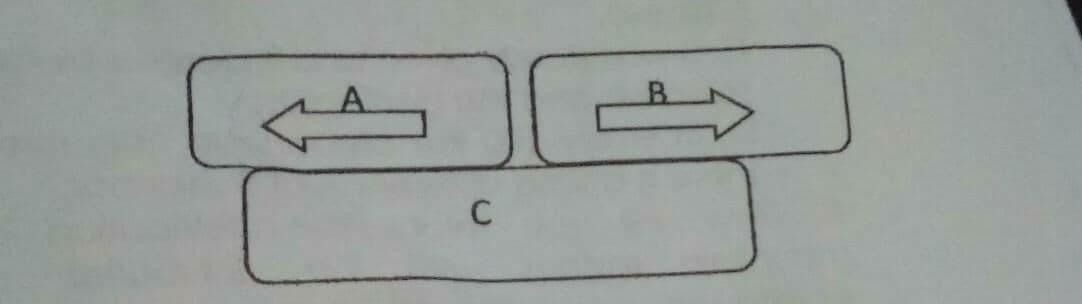
Plates A and B shows a divergent boundary. If plate C is adjacent to both plates and does not show any relative motion, what type of plate boundary is present between A and C?
 Science - Processes and Landforms along Plate Boundaries - Grade 10 Q1Module 3 Processes and Landforms along Plate BoundariesA. The continental plate remains above, while the oceanic plate subducts. The older and denser oceanic plate subducts beneath the younger plate. A subduction is the process by which an oceanic plate slide under a less dense plate, can be a continental or another oceanic plate. In this process, the plates involved are oceanic plate and continental plate. Oceanic Plate is thinner plate, Dense,generally, slides under into the mantle; and especially when it is older than the other oceanic plate. They may slide over given that it is the younger oceanic plate in the oceanic-oceanic subduction. In case of oceanic-continental subduction, even younger oceanic plate can never slide over it. Continental Plate is thicker plate, less dense and slides over and experiences compression and volcanic activity. Another concept is about buoyancy. Consider the Earth’s mantle as a giant swimming pool. Floating on top of it are the Earth's tectonic plates—some thin and dense, like the oceanic crust, and others thick and less dense, like the continental crust. Imagine the thin oceanic plate and the thick continental crusts are like tennis ball and soccer ball, respectively. When placed in water, the tennis ball sinks at the bottom and easily subducted as it is smaller and denser. Contrary, the soccer ball is larger and more buoyant, thus, resists subduction and tends to stay afloat. Therefore, during subduction, the thin and dense oceanic crust or an older oceanic crust slide under another plate due to its low buoyancy. Consequently, the thick and denser continental plate or younger oceanic plate slides over because of its high buoyancy. In the subduction zone, there are two landforms that are formed in the process, namely, trench and volcanic arcs. Trenches are deep valleys formed at the edges of the colliding plates, where an oceanic plate bends downward and starts to subduct another plate. It looks like a long, narrow depression where marks the zone where subduction begins. The other landform is the volcanic arc, a chain of volcanoes that formed on the overriding plates where water and sediments from the sinking slab cause the mantle wedge above it to melt, making the magma rise to the surface and forming the volcanoes. a. The formation of trench When these two plates collide, the oceanic plate is subducted and pulled into the mantle. The edges of the plates create a deep valley which we call trench. b. Formation of volcanic arcs When a denser oceanic plate collides with a less dense continental plate, oceanic plate is subducted and pulled into the mantle. As it reaches the mantle, the plate is subjected to extremely high pressure and temperature. This causes the trapped water and air in the plate to be released. The plate eventually melted back as magma. The formed magma rises to the surface. This gives rise to the formation of volcanic arcs. The same is true between the collision of two oceanic crusts as the older crust is subducted over the younger crust. However, the collision of two continental crusts will not result in the formation of trenches. • Landscape management A landscape is the evident factor of a land, its landforms, and the combined features of natural or artificial elements. Landscape management includes maintenance and integration of physical elements, water bodies, land cover, indigenous vegetation, human elements, such as structures and buildings, and climatic conditions. • Soil Preparation In the list of farming practices, soil preparation is placed second because of its importance for seed germination. Before a crop is grown, the soil is leveled and plowed a bit deeply to prepare it for the sowing of seed. After plowing, the soil loosens and develops proper aeration in the soil. • Sowing Seed selection from good quality varieties is the principal step of sowing. After preparing the soil, seeds are spread over the field, called sowing. Manual and mechanical (seeders) methods of sowing can be used. Some plants, such as rice, are first grown as seedlings in a small space and later transplanted to fields. • Manuring Plants need nutrients for their growth and fruit/seed production. Therefore, nutrients must be consumed at even intervals. Fertilization is the stage at which nutrients are introduced into the lands. These nutrients can be natural manure or artificial fertilizers. Decomposed products and waste of plants and animals are used as manure because of their nutrient richness. • Irrigation Irrigation means supplying water to plants. Water sources can be dams, ponds, wells, canals, etc. Excessive irrigation can damage crops and lead to waterlogging. The irrigation interval and frequency must be monitored, as they vary with the crop. • Weeding Unwanted plants grown alongside field crops are known as weeds. These plants are removed with the help of weed killers (weedicides), manually plucking with hands. Several weeds can be removed with better soil preparation techniques. • Integrated Pest Management • IPM – Integrated Pest Management, is a successful and ecologically sensitive technique to manage pests using combined sustainable practices. IPM is a series of methods including pest assessment, decision, and control techniques • Integrating Crops and Livestock Integrating crops and livestock increases the diversity and environmental sustainability of both sectors. In the meantime, it will offer opportunities to increase overall agricultural production and profitability. • Storage/Selling In the end steps of agricultural practices, the resulting grains are stored in warehouses for later use and selling purposes. Therefore, better plant protection methods must be used to protect grains from rodents and insect pests. The stores should be cleaned, dried, well-fumigated, etc., before storing grains. • Harvesting Among steps of farming practices, harvesting needs significant care otherwise it will result in yield reduction. When the crop reaches maturity, the cutting starts, and the produce will be stored in a dry place. This process is known as harvesting. After harvesting, manual or mechanical thrashing is done to separate grains from the plants.Coastal Processes and landformsRiver processes and landformsAQA GCSE geography glacial processes and landformsConstructive and Destructive Processes - Landforms