Loading...


Production des pommes-chips_niveau 1 --> opérateur (AFP)
Quiz by Olivier Tordion
Customize this quiz to suit your class
Instantly translate to 100+ languages
Tag the questions with any skills you have. Your dashboard will track each student's mastery of each skill.
Give this quiz to my class
Vous travaillez dans la plus grosse entreprise de suisse de fabrication de pommes-chips, vous êtes opérateur de ligne chez:



Les suisses consomment environ 1.5kg de chips par année, surtout au paprikas
Vous travaillez dans la plus grosse entreprise de suisse de fabrication de pommes-chips, vous êtes opérateur de ligne chez:
Les suisses consomment environ 1.5kg de chips par année, surtout au paprikas
Dans la pomme de terre, on retrouve principalement de l'eau et des sucres (principalement de l'amidon sous forme de granules dans leurs cellules, comme sur cette photo):

Chez Zweifel, la principale variété des pommes de terre utilisée pour les chips est la:
Séparez les paramètres de conservation des pommes de terre. Formez 2 groupes: paramètres positifs et paramètres négatifs
Sous quelles conditions physico-chimiques sont créés les acrylamides dans les chips? Choisissez la réponse la plus juste.
Concernant les processus industriels de fabrication des pommes chips et des frites congelées:
Associer les OU avec les bons numéros

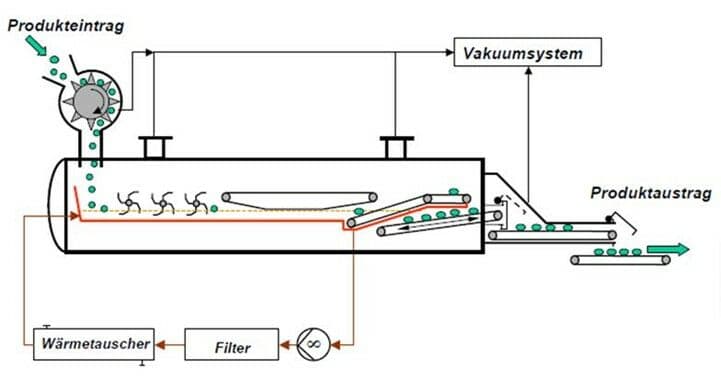
Cette installation permet de diminuer leur formation
Par rapport à la photo suivante, trouvez les affirmation correctes
 Dès le début de vos recherches, vous allez collecter, produire et exploiter des données. La gestion des données (Research Data Management - RDM) fait partie du processus de recherche. Elle concerne l'ensemble des opérations de collecte, description, stockage, traitement, analyse, archivage et mise en accès des données. (extrait de : Passeport pour la Science Ouverte. Guide pratique pour les doctorants ) "La science ouverte est la diffusion sans entrave des publications et des données de la recherche. Elle s’appuie sur l’opportunité que représente la mutation numérique pour développer l’accès ouvert aux publications et – autant que possible – aux données de la recherche. "Les données de la recherche sont la matière première de la connaissance. Les partager, c'est ouvrir de nouvelles perspectives scientifiques" Source : Plan national pour la Science ouverte - Ministère ESR - Juillet 2018 Source image : https://bibliotheques.univ-tlse3.fr/file/composantes-science-ouverte Cette page est une introduction à la gestion des données de recherche. Elle présente quelques concepts et étapes clés pour vous engager dans cette démarche. Consultez les liens pour approfondir vos connaissances. • What are data ? Définition des données de recherche de l’OCDE (2007) « Enregistrements factuels (chiffres, textes, images, sons) utilisés comme source principale pour la recherche scientifique et généralement reconnus par la communauté scientifique comme nécessaires pour valider les résultats de la recherche. Un ensemble de données de recherche constitue une représentation systématique et partielle du sujet faisant l’objet de la recherche ». Exemples • les images d’une ville préhistorique deviennent des données pour un chercheur qui étudie l’histoire de cette ville; • les « données » d’un linguiste peuvent être des écrits ou des discours, des enregistrements de locuteurs ; • les « données » d’un médiéviste sont des sources archivistiques, archéologiques, épigraphiques, iconographiques, littéraires ; • les « données » d’un géologue rassemblent des coupes et observations de terrain consignées sur un carnet, des résultats de carottage, des analyses d’échantillons, des données sismographiques… • • Pourquoi partager ses données ? "La science ouverte vise à construire un écosystème dans lequel la science est plus cumulative, plus fortement étayée par des données, plus transparente, plus rapide et d’accès plus universel.La science ouverte favorise également les avancées scientifiques, particulièrement les avancées imprévues, ainsi que l’innovation, les progrès économiques et sociaux, en France, dans les pays développés et dans les pays en développement. Enfin, la science ouverte constitue un levier pour l’intégrité scientifique et favorise la confiance des citoyens dans la science. Elle constitue un progrès scientifique et un progrès de société." Source : Plan national pour la Science Ouverte (2018) Les enjeux de l'Open Data • enjeux patrimoniaux o preuve et mémoire (éviter les pertes de données) • enjeux économiques o valeur économique de la donnée o réutilisation gratuite ou payante des données, exploitation des résultats de recherches antérieures (éviter de refaire ce qui a déjà été validé), o accélération de l'innovation et le retour sur investissement dans la R&D • enjeux scientifiques o de "hypothesis-driven" à "data-driven" o plus de visibilité pour le scientifique • enjeux sociétaux o participation des citoyens et de la société civile : "Citizen science" o confiance en la recherche Pour aller plus loin • Site Doranum : https://doranum.fr/enjeux-benefices/fiche-synthetique/ • Adopter de bonnes pratiques tout au long du cycle de vie des données De bonnes pratiques de gestion à toutes les étapes du cycle de vie de la donnée sont un préalable indispensable à l’ouverture des données et à leur réutilisation. • Rechercher des données Pour identifier des jeux de données (datasets) pertinents pour votre thèse, des outils de recherche sont disponibles. Suivez ces liens pour les découvrir : • Site Doranum : https://doranum.fr/acces-visualisation/rechercher-donnees/ • Site DataCC - Vos besoins, trouver des données : https://www.datacc.org/vos-besoins/trouver-des-donnees/ • Fiche CoopIST : Trouver des jeux de données via des bases pluridisciplinaires et des moteurs de recherche Pensez-aussi à consulter l'entrepôt institutionnel Data INRAE Page de présentation du portail • Choisir les bons formats et bien organiser vos données Choisir des formats de fichier : https://www6.inrae.fr/datapartage/Gerer/Choisir-des-formats-de-fichier Nommer et organiser vos fichiers de données : https://www6.inrae.fr/datapartage/Gerer/Nommer-et-organiser-ses-fichiers-de-donnees Pour aller plus loin • Jaouen, G.- Gérer ses données. Pourquoi, Comment ? Séminaire - Guadeloupe, du 25 au 27 Novembre 2019 – CRAG INRA • Bien décrire et documenter ses données La description d’un jeu de données se fait à l’aide de métadonnées (*) qui doivent apporter suffisamment d'éléments (sur la collecte des données, les unités de mesure employées...) pour chercher et trouver le jeu de données, juger de sa qualité/fiabilité, et pouvoir le comprendre ou le réutiliser dans un autre contexte. (*) Définition des métadonnées : Ensemble d’informations structurées qui décrit, explicite, localise une ressource informationnelle, dans le but d’en faciliter la recherche, l’usage, et la gestion. Source : NISO. Understanding Metadata. 2004. Quelques liens utiles : • Site Doranum : https://doranum.fr/metadonnees-standards-formats/ • DataCC : https://www.datacc.org/vos-besoins/documenter-ses-donnees/metadonnees/ • Site DataPartage INRAE : https://www6.inrae.fr/datapartage/Gerer/Documenter-les-donnees En complément des métadonnées, la rédaction d'un fichier READ ME.txt est également recommandée. • Stocker, sécuriser, préserver ses données Bien différencier les notions de stockage et d'archivage. Anticiper pour déterminer les données à éliminer et celles qui doivent être préservées à long terme. • Dans l'environnement INRAE : https://www6.inrae.fr/datapartage/Gerer/Stocker-les-donnees • Site Doranum : https://doranum.fr/stockage-archivage/ • Site DataCC : https://www.datacc.org/vos-besoins/conserver-ses-donnees/ • Partager, ne pas partager ses données ? Dans le cadre de la Science Ouverte, il y a de plus en plus d'incitations voire d'exigences pour rendre accessibles les données, en particulier les données liées aux publications : • de l'édition scientifique : de plus en plus de revues adoptent une "data policy" (à consulter dans les instructions aux auteurs) et exigent des auteurs qu'ils fournissent les données associées aux publications, • des organismes de financement (ANR, Commission Européenne ...), • des politiques nationale (Plan national pour la Science ouverte - Ministère ESR - Juillet 2018) et institutionnelle. Mais attention, toutes les données ne sont pas partageables : assurez-vous que vos données sont bien diffusables au regard du droit et des conditions d'exercice de votre thèse et de son mode de financement (se reporter à votre contrat de thèse). Les données produites dans les organismes de recherche publics sont communicables à tous si elles n'entrent pas dans le cadre d'exceptions légales (sécurité défense, sécurité des populations, patrimoine scientifique et technique, données personnelles, données liées au secret, statistique, etc.) Liens utiles : • sur le site Data Partage, la page Partager-Publier ou la page : "Données de la recherche : qui a les droits, qui doit partager ?" • le site INRAE dédié à la protection des données personnelles et l'application du RGPD (Règlement général sur la protection des données) : https://intranet.inrae.fr/cil-dpo • Valoriser ses données Voici les principales voies de diffusion • Partager ses données en les déposant dans un entrepôt Choisir un entrepôt Déposer dans Data INRAE Partager ses données comme matériel supplémentaire d'un article (à la demande de l'éditeur) Publier un Data Paper (article de données) : la meilleure voie en terme de visibilité des données, et pour faciliter leur réutilisation. Pour aller plus loin • Site Doranum o Dépôts et entrepôts. Comment et où déposer mes données ? o Data papers et Data journals. Comment publier mes données comme un article scientifique ? • Site DataCC o Valoriser ses données • Site CoopIST o Déposer des données de recherche dans un entrepôt o Rédiger et publier un data paper dans une revue scientifique A télécharger : Synthèse du processus de rédaction d'un article avec des données associées • Pourquoi ne pas rédiger un plan de gestion de données (PGD) pour votre thèse ? La thèse peut être assimilée à un projet et certaines universités au Royaume Uni, aux Pays-Bas et plus récemment en France préconisent la rédaction d'un plan de gestion associé à la thèse. Le PGD (ou DMP = Data Management Plan) est un outil de planification qui peut vous aider à anticiper et bien gérer toutes les étapes du cycle de vie de vos données, à limiter les risques de perte ou corruption de données, à adopter de bonnes pratiques de gestion, pour in fine produire des données respectueuses des principes FAIR, adoptés aujourd'hui par l'ensemble des acteurs de la recherche. Il est désormais exigé par la plupart des financeurs de la recherche (Commission Européenne et ANR ...) dans le cadre de projets financés. Rédiger un PGD pour votre thèse, peut être un bon exercice pour vous préparer à la future rédaction de réponses à des appels d'offre. Comment faire en pratique ? • Site DataPartage : Pourquoi et comment rédiger un plan de gestion de données ? • Site Doranum : https://doranum.fr/plan-gestion-donnees-dmp/, La minute vidéo PGD • Site DataCC : https://www.datacc.org/bonnes-pratiques/adopter-un-plan-de-gestion-des-donnees/ • Suivre une classe virtuelle INRAE : Open Class "Rédaction d'un PGD" • Produire des données FAIR ! Favoriser la production de données FAIR (Findable - Accessible - Interoperable - Reusable) est aujourd'hui un objectif soutenu par l'ensemble des acteurs de la recherche. Source : https://open-science-training-handbook.gitbook.io/book/ Si vous suivez les conseils et recommandations de cette page, vous avez toutes les chances d'avoir produit des données de qualité. Si vous préférez une version illustrée : "Pensez FAIR" - https://datapartage.inrae.fr/Gerer/Cycle-de-la-donnee Affiche cycle de vie des données réalisée dans le cadre des Missions QualiNous & RGPD, INRAE-ACT Vous pouvez tester le niveau de "Fairification" de vos données grâce à ces outils : ARDC : https://ardc.edu.au/resources/working-with-data/fair-data/fair-self-assessment-tool • D'autres ressources pour se former ou s'autoformer En interne INRAE • Formation à la science ouverte OSCAR - Module "Gestion et partage des données" • Le site "Gestion et partage des données" • Des classes virtuelles d'environ 2h (Open Class) sont régulièrement proposées sur : o la rédaction des plans de gestion de données, o le dépôt et la description d'un jeu de données dans Data INRAE, o la rédaction et la publication de data papers, Sites externes • Le site DORANUM (Données de la Recherche : Apprentissage NUMérique à la gestion et au partage) propose un dispositif de formation à distance intégrant de nombreuses ressources d’auto-formation déclinées sur différents supports (textes, infographies, vidéos) et sur 9 thématiques. o Parcours interactif sur la gestion des données de la recherche (2020) o • Le site DataCC. Accompagnement à la gestion des données de recherche en physique et en chimie : https://www.datacc.org/ o Data Stories : https://www.datacc.org/reseau-datacc/data-stories/ o • Le dossier "Open Access & Open Data" réalisé par l'Ecole des Ponts - ParisTech • • The Open Science Training Handbook : https://www.ouvrirlascience.fr/the-open-science-training-handbook/I Définition La proposition commerciale est une offre adressée à un client ou prospect suite à sa demande. Le commercial doit donc veiller à soigner sa présentation, car la proposition commerciale est la vitrine de l’entreprise La proposition commerciale est le support de la relation entre l’entreprise et le client/prospect. II La finalité d’une proposition commerciale La proposition commerciale permet de répondre précisément aux attentes du client qui souhaite passer une commande. Dans cette optique, la proposition doit être : - claire, - personnalisée - différenciée de celles de la concurrence. La proposition commerciale permet également de renseigner le client non pas uniquement sur les prestations proposées mais aussi sur l’entreprise elle-même grâce à son numéro d’identification (SIRET) délivré par l’INSEE III Le système d’information client Pour réaliser la proposition commerciale, le commercial doit collecter des informations sur la clientèle, sur les produits mais également sur l’environnement commercial. Elle consulte donc le système d’information client dont l’acronyme est SIC. Il est constitué de fichiers commerciaux utilisables par tous les collaborateurs de l’entreprise afin d’améliorer la connaissance de la clientèle et des propsects. Son contenu est le suivant : IV Les logiciels pour préparer une proposition commerciale. Il est possible de préparer les propositions commerciales sur un texteur, un tableur, un logiciel spécialisé en gestion commerciale ou un progiciel de gestion intégré : Logiciels pouvant être utilisés Traitement de texte (Word, Open Writer, etc.) Tableur (Excel, Open Calc, etc.) Logiciel de gestion commerciale (EBP, Ciel, etc.) PGI (Cegid, Sage, EBP) Si l’entreprise possède un PGI ou un logiciel de gestion commerciale, la proposition commerciale sera effectuée sur ce type de logiciel. Dans le cas contraire, il est recommandé d’utiliser le tableur. Le progiciel est l’outil privilégié par les entreprises car il regroupe un ensemble de logiciels (modules) intégrant les principales fonctions nécessaire à la gestion des flux monétaires et physiques de l’entreprise. Tous ces modules accèdent à des ressources communes, stockées dans une base de données unique. Les modules les plus courants sont : Ainsi, le PGI permet d’éviter les saisies redondantes, qui sont sources d’erreurs et de perte de temps. V Distinguer devis et proposition commerciale 1. Le devis C’est une offre adressée à un client ou un prospect destinée à répondre à son besoin suite à la demande du client. Son contenu se limite souvent à la référence des produits et leurs prix. Le devis est donc un engagement de l’entreprise pour réaliser une prestation ou pour délivrer un produit au prix indiqué et dans les délais annoncés. Seules la signature du client et la date donnent au devis la valeur juridique d’un contrat. Il peut donc ajouter « Lu et accepté » ou encore « bon pour travaux » par exemple. 2. La proposition commerciale Par rapport au devis, la proposition commerciale nécessite une analyse plus poussée des besoins du client, un chiffrage de l’offre plus complexe et un document plus personnalisé VI Les étapes pour réaliser une offre commerciale Les étapes de la mise en œuvre d’une proposition commerciale sont : – l’analyse des besoins du client ; – la recherche des informations qui permettent d’établir l’offre correspondant aux besoins du client (prix, délai de livraison, planning de production, etc.) ; – la mise en forme de la proposition : On peut donc la schématiser ainsi : VII Les mentions obligatoires à faire figurer sur la proposition commerciale VIII Les sanctions en cas de non respect des mentions obligatoires Tout manquement peut aboutir à une contravention pouvant aller jusqu’à 1500 € d’amende.News Opinion Sport Culture Lifestyle Show more Books Music TV & radio Art & design Film Games Classical Stage ‘Hollywood doesn’t do very much of that business, they have the nice sign, and everything’s good, but they don’t do very much,’ said Trump. View image in fullscreen ‘Hollywood doesn’t do very much of that business, they have the nice sign, and everything’s good, but they don’t do very much,’ said Trump. Photograph: Lucy Nicholson/Reuters Film ‘I’m not trying to hurt the industry’: Trump softens tone on movie tariffs California governor Gavin Newsom announces a $7.5bn tax incentive scheme as Trump’s announcement of 100% tariffs on films ‘produced in foreign lands’ is mocked by Jimmy Kimmel and Fallon Andrew Pulver Tue 6 May 2025 11.24 BST Share Donald Trump appears to be softening his tone after widespread dismay in Hollywood and further afield at his bombshell announcement of 100% tariffs on films “produced in foreign lands”, saying he was “not looking to hurt the industry”. In remarks reported by CNBC, Trump said he was planning to discuss the plan with film industry leaders. “I’m not looking to hurt the industry, I want to help the industry.” He added: “So we’re going to meet with the industry. I want to make sure they’re happy with it because we’re all about jobs.” Trump also took aim again at California state governor Gavin Newsom, saying the film industry “has been decimated by other countries taking them out, and also by incompetence, like in Los Angeles, the governor [Gavin Newsom] is a grossly incompetent man, he’s just allowed it to be taken away from”. Trump added: “Hollywood doesn’t do very much of that business, they have the nice sign, and everything’s good, but they don’t do very much.” Trump’s talk of film tariffs makes no sense, but it’s already doing damage – to Hollywood Peter Bradshaw Peter Bradshaw Read more Newsom responded with a statement saying: “Governor Newsom continues to champion California’s iconic film and television industry – recognising it as a cornerstone of the state’s economy, one that sustains hundreds of thousands of good-paying jobs across every sector around the state.” “His plan to more than double the state’s film and television tax credit reflects a commitment to keeping production here at home, supporting workers and maintaining California’s global leadership in entertainment. If the President announces a proposal with more details, we will review it.” Newsom had earlier responded to Trump’s announcement by proposing a $7.5bn federal tax incentive scheme, saying in a statement to Variety: “Building on our successful state program, we’re eager to partner with the Trump administration to further strengthen domestic production.” Tax incentive schemes in the US currently operate on a state-by-state basis, and Newsom had announced a plan in April to boost California’s to $750m. California senator Adam Schiff also condemned Trump’s tariff proposal while backing calls for a federal tax credit scheme, saying in a statement: “Blanket tariffs on all films would have unintended and potentially damaging impacts, [but] we have an opportunity to work together to pass a major federal film tax credit to re-shore American jobs in the industry.” Late night TV hosts Jimmy Kimmel and Jimmy Fallon also joined the chorus of dismay and bafflement at Trump’s plan. Commenting that Trump was “now aiming his wrecking ball at Hollywood”, Kimmel questioned whether foreign-made movies were a “national security threat” as Trump claimed. “I don’t care where they’re made. I really don’t. I guess it’s what the late, great Hannibal Lecter would’ve wanted. Sonic, the illegal immigrant hedgehog, is a national security threat and he must be stopped!” Kimmel also mocked actor Jon Voight’s role in Trump’s thinking, saying: “This is where he reportedly got the tariff movies idea – from Angelina Jolie’s 86-year-old father she won’t talk to. What a great idea. Next year, The White Lotus is gonna be set at a Hampton Inn.” Fallon also took aim at Trump’s implication that foreign locations were somehow taboo, saying: “Gonna be fun seeing the next Lord of the Rings filmed in Bayonne, New Jersey,” adding: “If you don’t like that, you can also watch Emily in Des Moines [instead of Emily in Paris]. It’s just as charming.” Explore more on these topics Film Film industry Donald Trump Trump tariffs Gavin Newsom Jimmy Kimmel Jimmy Fallon news Share Reuse this content Most viewed Live German parliament votes again on Merz’s bid to be chancellor after humiliating first round – Europe live Trump and Carney to meet at White House in closely watched encounter Mushroom lunch’s sole surviving guest details deadly meal and its aftermath as trial of Erin Patterson continues ‘It’s the misogyny slop ecosystem!’ How Candace Owens and the American right declared war on Blake Lively Wisconsin woman missing for more than 60 years found ‘alive and well’ Received: 26 November 2019 Revised: 10 January 2020 Accepted: 19 January 2020 DOI: 10.1111/obr.13005 PEDIATRICS/PHYSIOLOGY Adipokines: A gear shift in puberty Desirée Nieuwenhuis | Natàlia Pujol-Gualdo Amanda J. Kiliaan Department of Anatomy, Radboud university medical center, Donders Institute for Brain, Cognition and Behaviour, Preclinical Imaging Center PRIME, Nijmegen, The Netherlands Correspondence Amanda J. Kiliaan, PhD, Associate Professor, Department of Anatomy, Donders Institute for Brain, Cognition, and Behaviour, Preclinical Imaging Center PRIME, Radboud university medical center, 6500 HB Nijmegen, Geert Grooteplein 21N 6525 EZ Nijmegen, The Netherlands. Email: amanda.kiliaan@radboudumc.nl Funding information Europees Fonds voor Regionale Ontwikkeling (EFRO), Grant/Award Number: BriteN 2016 1 | INTRODUCTION The prevalence of obesity in adolescents and children is increasing in | Ilse A.C. Arnoldussen | Summary In this review, we discuss the role of adipokines in the onset of puberty in children with obesity during adrenarche and gonadarche and provide a clear and detailed overview of the biological processes of two major players, leptin and adiponectin. Adipokines, especially leptin and adiponectin, seem to induce an early onset of puberty in girls and boys with obesity by affecting the hypothalamic-pituitary- gonadal (HPG) axis. Moreover, adipokines and their receptors are expressed in the gonads, suggesting a role in sexual maturation and reproduction. All in all, adipokines may be a clue in understanding mechanisms underlying the onset of puberty in child- hood obesity and puberty onset variability. KEYWORDS adipokines, obesity, puberty 1,2 the age of 5 years were overweight or were with obesity in 2016, and 3 Obesity is defined by an excessive accumulation of white adipose tissue (WAT), and it is often indicated by a body mass index (BMI) 4 above 30. Two main types of adipose tissue were described: WAT and brown adipose tissue (BAT), which differ in morphology and func- 5-7 Ilse A.C. Arnoldussen and Amanda J. Kiliaan contributed equally to this work. This is an open access article under the terms of the Creative Commons Attribution License, which permits use, distribution and reproduction in any medium, provided the original work is properly cited. © 2020 The Authors. Obesity Reviews published by John Wiley & Sons Ltd on behalf of World Obesity Federation Obesity Reviews. 2020;21:e13005. wileyonlinelibrary.com/journal/obr 1 of 10 https://doi.org/10.1111/obr.13005 alarming rates. Specifically, worldwide, 41 million children below this number is expected to increase to 70 million in 2025. obesity is associated with various severe health complications, includ- ing increased risk of diabetes mellitus type 2, hypertension, heart dis- eases, and disturbances in sex hormone levels. 5,6 and mitochondria and plays a role in thermogenesis. Adipocytes in tion. BAT consists of adipocytes containing multiple lipid droplets WAT contain only a few mitochondria and a single lipid droplet. Adipose tissue has several functions including the storage of energy, thermogenesis, and the production and secretion of adipokines Generally, two physiological processes, adrenarche and gonadarche, 11,24 Childhood 5,7,8 a key role in puberty onset. Puberty is known as a period through which the body changes physically, being a physiological process resulting in the maturation of children, i.e. they develop sexual characteristics and obtain reproduc- 9,11 Adipokines are involved in a number of physiological processes including blood pressure, metabo- lism, glucose, and vascular homeostasis and may play amongst others 8-10 (hormones, cytokines, and peptides). tive functions. between obesity and puberty,2,12-23 the biological mechanisms under- lying obesity and puberty onset remain unclear. Hereafter, we review in detail the role of adipokines in the onset of puberty in childhood obesity. Although many studies have shown associations 2 | INITIATION OF PUBERTY PHYSIOLOGICAL PROCESSES IN THE interact to regulate the onset of puberty. During adrenarche, the adrenal cortex secretes steroid hormones (including 2 of 10 NIEUWENHUIS ET AL. androstenedione, dehydroepiandrosterone, dehydroepiandrosterone sulfate (DHEAS), androstenedione, and cortisol), insulin-like growth factor, and growth hormone, which contribute to the pubertal insights on new genetic loci (e.g. melanocortin-4 receptor, mitochon- drial carrier 2, and mitogen-activated protein kinase 13) and on sev- eral pathways that regulate the timing of puberty; however, it partly 34 9,24,25 Both adrenarche and gonadarche are involved in the development growth spurt, body odor, skin oiliness, and skeletal maturation. explains puberty timing variation. Thereby, defining the role of 25 adipokines is of importance in elucidating the variability in puberty as the expression of adipokines is sex-specific and is altered with body composition, adiposity, and during growth spurts. Moreover, adipokines and their receptors are expressed in gonads and several brain regions suggesting involvement in the onset of puberty and sex- ual maturation. Lastly, adipokines interfere in processes regulating timing and duration of puberty, for instance in the HPA and HPG axes which are both key players during adrenarche and gonadarche. Involvement of adipokines in the onset of puberty and specifically in individuals with obesity will be further reviewed in the next 2,24 3 | Puberty onset in girls is assessed using different markers, such as thelarche (breast development), menarche (the start of of pubic hair. pituitary-gonadal (HPG) axis is activated,2,26 and several hormones have been identified to participate in the activation of the HPG axis During gonadarche (Figure 1), the hypothalamic- 2,27 Kisspeptin, neurokinin B, and dynorphin are released by specialized including kisspeptin, neurokinin B, dynorphin, leptin, and ghrelin. 28 key regulator of the pulsatile secretion of gonadotropin releasing neurons, the KNDy neurons in the hypothalamus. Kisspeptin is a 29,30 B stimulates, and dynorphin inhibits the release of kisspeptin, which hormone (GnRH) from the hypothalamus. In addition, neurokinin implies that both coordinate a pulsatile release of kisspeptin. 31 Sub- sections. sequently, the activated HPG axis induces the pituitary gland to secrete luteinising hormone (LH) and follicle stimulating hormone (FSH). As a result, gametogenesis occurs, and the gonads will release sex hormones. Consequently, secondary sex characteristics develop including breast development in girls and an increased testicular vol- 2,26,32 is possibly due to differences in levels of body fat, hypothalamic-pitui- THE ONSET OF PUBERTY IN GIRLS ume in boys. The age at puberty onset varies greatly among individuals, which 19 35 menstruation), and pubic hair development. 33 genome-wide association studies have provided important new tary-adrenal (HPA) axis activity, and genetic background. Recent The average age of However, this age differs between cultures and ethnicities, and since 1980, age at menarche is girls at start of menarche is 12.4 years. 36 significantly decreasing. 36-39 F I G U R E 1 Hormonal regulation in the initiation of puberty in boys and girls. The secretion of kisspeptin, neurokinin B, and dynorphin from KNDy neurons initiate the release of gonadotropin releasing hormone (GnRH) from the hypothalamus. This activates the pituitary gland to produce and secrete luteinising hormone (LH) and follicle stimulating hormone (FSH), which in turn stimulate the gonads to produce estrogen and testosterone in girls and boys, respectively 1467789x, 2020, 6, Downloaded from https://onlinelibrary.wiley.com/doi/10.1111/obr.13005, Wiley Online Library on [10/03/2024]. See the Terms and Conditions (https://onlinelibrary.wiley.com/terms-and-conditions) on Wiley Online Library for rules of use; OA articles are governed by the applicable Creative Commons License NIEUWENHUIS ET AL. 3 of 10 T A B L E 1 Summary of included studies Authors Year Country Study Design Primary Outcome Sex Sample Size (n) Age (y) Data Collection Lian et al21 2019 China Cross-sectional Puberty starts earlier in Chinese Han girls with obesity compared with Chinese Han girls with normal weight. Girls 2996 9-19 2012 and 2013 Biro et al12 Lazzeri et al20 2018 USA 2018 Italy Longitudinal Cross-sectional Body mass index had a greater effect on age at menarche than did race and ethnicity. Girls 946 6-16 2004-2014 Li et al23 2018 China Longitudinal For both, boys and girls, a higher BMI (ie, overweight and obese) is associated with earlier onset of puberty Girls Girls Boys Girls 542 Deng et al22 Flom et al15 2017 China Cross-sectional Increased BMI is associated with early timing spermarche and menarche. Boys Girls Girls 1278258 9-15 2005-2012 He et al24 Holmgren et al17 2017 China 2017 Sweden Cross-sectional Longitudinal Onset of puberty is not related to obesity in boys. Boys Boys Girls Girls 782 7-17 972 929 5839 Kelly et al19 2017 UK 2016 Brazil 2016 USA Longitudinal prospective cohort Higher BMI in girls is associated with the onset of menstruation at an earlier age. 11 10-18 11-17 Barcellos Gemelli et al25 Cross-sectional Longitudinal Excess weight is associated with early age of menarche. Girls 727 2014 2003-2009 Glass et al16 Lee et al26 In girls, but not in boys, greater adiposity is associated with the earlier onset of puberty. Boys Girls 135 Cabrera et al27 Leonibus et al14 2014 USA 2013 Italy Cross-sectional Longitudinal Thelarche occurred earlier than recently reported, while age of menarche remained unchanged. Girls 610 3-17.9 2007 2005-2012 Currie et al13 2012 Europe, USA, Canada Cross-sectional Overweight/obesity during childhood predicts the early onset of puberty in girls. Girls 20410 11, 13, 15 2005-2006 2017 USA Prospective birth cohort Overweight/obese status at the age of 7 ye was associated with increased risk of early menarche 788 From birth to menarche occurred Pregnancies 1959-1966 2016 USA Cross-sectional Boys with overweight enter puberty earlier compared with boys with normal weight or obesity, while puberty starts later in boys with obesity compared with boys with normal weight and overweight. Boys 3872 6-16 2005-2010 Overweight during childhood shows a relation with the early onset of puberty in girls. 6535 4259 695 11 15 5.8-12.2 2009/2010 2013/2014 2014-2017 Higher BMI during childhood is associated with early puberty. 2008 and 2009 2000-2002 Obesity during childhood is related to the earlier onset of puberty. Boys Girls 84 123 71 (Continues) 1467789x, 2020, 6, Downloaded from https://onlinelibrary.wiley.com/doi/10.1111/obr.13005, Wiley Online Library on [10/03/2024]. See the Terms and Conditions (https://onlinelibrary.wiley.com/terms-and-conditions) on Wiley Online Library for rules of use; OA articles are governed by the applicable Creative Commons License 4 of 10 NIEUWENHUIS ET AL. 3.1 | Fat storage For the initiation of puberty, the timing of stimulation and/or inhibi- tion of different hormones is important, and additionally, a certain amount and distribution of body fat is needed in order to start menar- che, which emphasizes the importance of body fat. From an evolution- ary point of view, body fat increases in mammalian females during puberty onset, and it highlights the need to guarantee a healthy preg- 40 women with anorexia nervosa. particularly body fat localized predominantly on the gluteofemoral fat depots, is profoundly associated with start of menarche, more than nancy, offspring, and maternal survival. fat, sex-hormones, and neuroendocrine alterations can evolve in men- strual dysfunction, for instance, in women with severe obesity or in 41-43 44-46 to gluteofemoral fat depots suggesting that leptin may convey infor- amount of total body fat. mation on body fat distribution to the hypothalamus during puberty. An improper level of body Importantly, body fat distribution, Blood leptin levels are strongly related 45 3.2 | HPG axis The HPG axis is activated by the release of kisspeptin resulting in the release of GnRH from the hypothalamus, and LH and FSH from the pituitary gland. In girls, FSH is involved in the development of the folli- cles in the ovaries, and it promotes the secretion of estrogen. LH stim- ulates the production of androgen hormones and induces ovulation 48 9,47 the release of kisspeptin and neurokinin B, and kisspeptin thereby (Figure 1). The secretion of estrogen has an inhibitory effect on inhibits the GnRH release from the hypothalamus. pattern of GnRH is important for the regulation of the menstrual cycle. This roughly 28-day-cycle comprises several phases, including the follicular phase and luteal phase. During the follicular phase, increasing levels of FSH stimulate the maturation of follicles and the production of estrogen from the ovaries. This in turn inhibits the release of FSH from the pituitary gland. A high level of estrogen will induce the production of LH by the pituitary gland, resulting in ovula- tion. The matured follicle secretes progesterone thereby inhibiting the release of GnRH. When the corpus luteum is demolished, there is less 48 3.3 | Adipokines According to results from studies reported in Table 1, girls with obe- sity enter puberty earlier compared with girls with normal higher leptin concentrations inhibit the intake of food and increases inhibition of GnRH. As a consequence, the cycle will start again. whole process, starting from the activated HPG axis, results in the development of the secondary sex characteristics in girls including 9,47 thelarche and menarche. 13,14,16-23,49-51 weight. these girls might be found in the secretion of adipokines. For instance, leptin is positively associated with the amount of body fat. Generally, energy expenditure. 9,52-54 An explanation for the early onset of puberty in The expression This TABLE 1 (Continued) Authors Year Country Study Design Primary Outcome Sample Sex Size (n) Age (y) Data Collection Herman-Giddens et al28 2012 USA Cross-sectional Observed mean ages of beginning genital and pubic hair growth and early testicular volumes were earlier than in past studies, depending on the characteristic and race/ethnicity. Boys 4131 6-16 2005-2010 Sorensen et al29 Aksglaede et al30 2010 2009 Denmark Denmark Cross-sectional/longitudinal Longitudinal Puberty onset at earlier ages was associated with an increased BMI in boys. Boys 1528 5.8-19.9 1991-1993/2006-2008 1930-1969 Juul et al31 Ribeiro et al32 2007 2006 Denmark Portugal Retrospective cohort Cross-sectional Higher BMI is associated with early voice break. 11-15 10-15 1990-1999 Kaplowitz et al18 Abbreviation: BMI, body mass USA Cross-sectional The early onset of puberty in Caucasian girls is likely related to an increased BMI. 5-12 1992-1993 2001 index. The higher BMI in boys and girls at 7 y of age, the earlier they enter puberty. Boys 21 612 Girls 135 223 Boys 463 Boys 382 Girls 437 Girls 10 750 Early sexual maturation in boys and girls is associated with overweight. 1467789x, 2020, 6, Downloaded from https://onlinelibrary.wiley.com/doi/10.1111/obr.13005, Wiley Online Library on [10/03/2024]. See the Terms and Conditions (https://onlinelibrary.wiley.com/terms-and-conditions) on Wiley Online Library for rules of use; OA articles are governed by the applicable Creative Commons License NIEUWENHUIS ET AL. 5 of 10 Leptin may possibly play a role in adrenarche as its plasma level increases with higher levels of body fat and as it can modulate both girls. 33 ing adrenarche. In coherence, in children with obesity, the androgen These findings suggested that lower reproductive status was associated with higher total adiponectin concentrations and that a higher reproductive status was related to higher HMW adiponectin the HPA and HPG axes. These axes are functionally integrated dur- DHEAS was positively associated with leptin levels. Nevertheless, concentrations in girls. In addition, individuals with obesity often another study showed that enhanced adrenal androgen secretion in girls with premature adrenarche was not explained by leptin or BMI 55 ated with androgen levels in girls ; however, it was not related to levels. and IL-6. TNF-α alters, and IL-6 inhibits the expression of 56 8 In addition, the adipokine adiponectin was negatively associ- 57 differences of adiponectin seem to develop during the progression of 56 adiponectin (Figure 2). Thereby, a low level of total adiponectin and/or high levels of inflammatory cytokines in individuals with obe- sity can promote the onset of puberty. Many more adipokines are secreted by WAT including omentin, 52,65-67 9,36,62,68 adrenarche in girls with Prader-Willi syndrome. Interestingly, sex puberty. adrenarche; however, both are not required factors. Thus, leptin and adiponectin might be able to influence In gonadarche, leptin can stimulate the secretion of kisspeptin, and subsequently activation of the HPG axis, which eventually increases the expression of estrogen and androstenedione in the ova- 58 2,60 65-67 The expression of these ries (Figure 2). Ob gene in WAT, resulting in the synthesis and secretion of leptin. Thus, high levels of leptin promote onset of puberty in girls via secre- tion of kisspeptin, and estrogen stimulates leptin secretion addition- ally. Moreover, adiponectin can affect the HPG axis due to the expression of adiponectin receptors in the hypothalamus, pituitary In return, estrogen stimulates the expression of the 59 gland, and gonads. onset as it inhibits the secretion of kisspeptin and GnRH in the hypo- thalamus and the release of GH and LH in the pituitary gland, and 2,60-62 52,60 63 girls with central precocious puberty (CPP). Moreover, total adiponectin had negative correlations with progression of puberty in girls (defined by Tanner stages), whereas HMW adiponectin had FIGURE 2 Adipokinesaffectingthe initiation of puberty in girls. Leptin stimulates the release of kisspeptin in KNDy neurons, which activates the hypothalamus to produce gonadotropin releasing hormone (GnRH). In response to the release of GnRH, the pituitary gland secretes follicle stimulating hormone (FSH) and luteinising hormone (LH), which stimulates the ovaries to release estrogen resulting in the formation of secondary sex characteristics in girls. Estrogen stimulates the production of leptin. Adiponectin inhibits GnRH release resulting in reduced levels of GnRH and thereby a delayed onset of puberty. TNF- α and IL-6 inhibit the production of adiponectin and therefore stimulate the onset of puberty In detail, adiponectin is a regulator of puberty thereby inhibiting the onset of puberty (Figure 2). with obesity often have low levels of adiponectin. et al. showed that total adiponectin was significantly lower, whereas high molecular weight (HMW) adiponectin was significantly higher in ment. 55 63 develop a chronic low-grade inflammatory state, which can be indi- cated by a high level of circulating inflammatory cytokines like TNF-α 64 Individuals Sitticharoon positive associations with LH levels and the progression of puberty in 63 visfatin, resistin, and chemerin. and visfatin are expressed in the ovaries. adipokines in the ovaries suggests a role within the reproductive sys- tem; however, the exact biological processes have to be examined. Thus, specifically leptin, adiponectin, and inflammatory cytokines pro- duced by WAT could be permissive key players during an early onset of puberty in girls with obesity. As an exception, HMW adiponectin seems to have a stimulatory effect on peripheral repro- ductive function as HMW is not able to cross the blood brain 63 barrier. 4 | Markers that are used to assess puberty onset in boys are THE ONSET OF PUBERTY IN BOYS spermarche, voice break, testicular volume, and pubic hair develop- 35 spermarche develop in the early stages of puberty onset, voice In women, omentin, chemerin, While pubic hair development, larger testicular volume, and 69 testicular volume increases, which occurs at an average age of break usually appears in later stages of puberty. Generally, first 1467789x, 2020, 6, Downloaded from https://onlinelibrary.wiley.com/doi/10.1111/obr.13005, Wiley Online Library on [10/03/2024]. See the Terms and Conditions (https://onlinelibrary.wiley.com/terms-and-conditions) on Wiley Online Library for rules of use; OA articles are governed by the applicable Creative Commons License 6 of 10 NIEUWENHUIS ET AL. 11.9 years, followed by the development of pubic hair at 12.2 years of average, and lastly, boys experience spermarche around an aver- 55 related with leptin levels. Thereby, leptin plausibly has a minor impact in adrenarche in boys. Since leptin receptors are found in the hypothalamus, pituitary gland, and testes, they might be involved in the onset of puberty by affecting the HPG axis during gonadarche. Leptin stimulates the release of kisspeptin and GnRH, and as a consequence, it accelerates the onset of puberty (Table 1, Figure 3). In contrast, adiponectin inhibits the secretion of GnRH, GH, LH, and FSH therewith delaying the onset of puberty. However, adiponectin levels are generally lower in men compared with women and even lower in men with obe- age age of 13.4 years. 70 4.1 | Fat storage Many aspects of the reproductive physiology are energetically demanding,71 and therefore, an adequate energy level is necessary. In boys, a dynamic change in body composition occurs around the age of 10 to 13 years, in which they gain approximately 40% of sity. culating inflammatory cytokines. levels can stimulate the HPG axis and therewith an early onset of puberty in boys. Nevertheless, leptin can inhibit the production of tes- 72 mostly consisting of lean mass, which causes exhaustion of most of fat. Subsequently, a growth spurt follows in which they gain tissue 72 in boys, an adequate amount of body fat is important in the onset of their body fat. These alterations in amount of body fat indicate that 4.2 | Puberty in boys is initiated by the release of kisspeptin. As mentioned before, this activates the HPG axis, resulting in the release of GnRH from the hypothalamus, and consequently the release of LH and FSH 9,74 puberty. tosterone from the testes, to estrogen (Figure 3). of the development of secondary sex characteristics in boys. Additionally, leptin can affect fertility in men as it can modulate the nutritional support of spermatogenesis, and moreover, dysfunction of spermatogenesis is associated with an increased leptin level and 73 58 2,60-62 HPG axis from the pituitary gland (Figure 1). and LH stimulates the secretion of testosterone from the testes, which inhibits the release of kisspeptin from the KNDy neurons and 9,48 in men, the release of kisspeptin is more consistent, causing a con- 29,48 subsequently GnRH from the hypothalamus. receptors expressed on KNDy neurons. In humans, KNDy neurons Contrarily to women, LH-induced testosterone levels lead to the stant release of LH. development of secondary sex characteristics in boys. differences between sexes in kisspeptin release are related to a sex- specific and sex steroid-dependent kisspeptin system as estrogen and progesterone modulate kisspeptin activity through the sex-steroid 48 in the infundibular nucleus are involved in negative and positive sex- 48 tal exposure to sex steroids and result in sex-specific differences in steroid feedbacks. kisspeptin release. These sexual dimorphisms are induced by perina- 75,76 4.3 | Adipokines The association between obesity and puberty onset in boys is rather controversial compared with findings in girls. Most studies reported an early onset of puberty in boys associated with increased ate adipose tissue from actual breast tissue. stages are more difficult to assess than female stages as boys lack a more determined marker such as menarche. Thirdly, puberty onset can be indicated by the activation of the HPG axis, and the presence of these secondary sex characteristics is the result of hormonal 2 14,17,22,23,50,51,77,78 BMI, 20,49 all while others reported no associations at Current markers used 79 16,80 or a delayed onset of puberty (Table 1). The presence of excessive adipose tissue can be involved in puberty onset in boys as the secretion of adipokines can modulate both adrenarche and gonadarche. Leptin can affect adrenarche by modulating both the HPG and HPA axes,33 and moreover, androgen levels were positively 55 nal androgen secretion in boys with premature adrenarche was not associated with plasma leptin levels. Nevertheless, enhanced adre- 9 In more detail, 61,62 adiponectin, and individuals with obesity often have high levels of cir- Moreover, inflammatory cytokines, TNF-α, and IL-6, inhibit expression of the leptin receptor in the testis. FSH induces spermatogenesis, too. function and role still have to be examined. 64 High leptin and low adiponectin and fat tissue can convert testosterone Both processes might result in the delay 29,61,79 81,82 In men, other adipokines like chemerin are found in the gonads 65 Thus, particularly high leptin and low adiponectin levels stimulate the HPG axis and thereby accelerate the onset of puberty in boys. Additionally, leptin can dysregulate the development of secondary sex characteristics and spermatogenesis by affecting testosterone levels and nutritional sup- port of spermatogenesis. 5 | LIMITATIONS AND FUTURE RESEARCH DIRECTIONS Even though multiple epidemiological studies have shown the link between puberty onset and obesity, there are some important limita- tions. Firstly, determining both the onset and stage of puberty is rather difficult. For instance, assessing the stage of breast develop- ment in girls with obesity is complicated as clinicians should differenti- 2 changes in response to the activated HPG axis. to determine the onset of puberty refer to secondary sex characteris- tics, such as testicular volume in boys and breast development in girls. A more accurate measurement of puberty onset would be to combine secondary sex characteristics with plasma or serum hormone level measurements such as LH, FSH, adipokines, e.g. leptin. Thereby, differences in puberty measurements could explain variations in the age of puberty onset between boys and girls within different Thereby, resistin is expressed in the testes of rats, but its exact 83 Secondly, male pubertal 1467789x, 2020, 6, Downloaded from https://onlinelibrary.wiley.com/doi/10.1111/obr.13005, Wiley Online Library on [10/03/2024]. See the Terms and Conditions (https://onlinelibrary.wiley.com/terms-and-conditions) on Wiley Online Library for rules of use; OA articles are governed by the applicable Creative Commons License NIEUWENHUIS ET AL. 7 of 10 FIGURE 3 Adipokines affecting the initiation of puberty in boys. Leptin activates kisspeptin secretion in KNDy neurons, this activates the production of gonadotropin releasing hormone (GnRH) from the hypothalamus. GnRH stimulates the pituitary gland to secrete follicle stimulating hormone (FSH) and luteinising hormone (LH), activating the production of testosterone from the testes allowing the development of secondary sex characteristics. Leptin also inhibits the production of testosterone, which may cause a delayed onset of puberty. Adiponectin inhibits GnRH release. Low levels of adiponectin, as a result of TNF-α and IL-6 expression, lead to a reduced inhibition of GnRH. In response to GnRH release, the pituitary gland will secrete FSH and LH, and the testes will produce testosterone resulting in the development of secondary sex characteristics in boys countries, and In addition, the inclusion of a of puberty. ferent time points is complicated, as subjects examined several decades ago presented pronounced differences concerning lifestyle patterns such as nutrition and exercise habits. Lastly, obesity or over- weight is often determined by BMI, a classification based on weight and height measurements. Additionally, it is important that all studies studies or across continents, ethnicities proper age range (8-16 years) is important when assessing the onset (Figure 4). 12-15,17,20-23,49,77-79,84,85 30,47 Furthermore, comparison between studies from dif- 86 Specifically in children, BMI is often dependent on age and growth use the same anthropometric standards and sex-specific cut-offs. 13,14,16-23,49-51,77-80 fat and would represent a more accurate measurement in its regard. Based on this review, several suggestions can be made for further research. Firstly, the roles of adipokines like resistin, chemerin, visfatin, and omentin in puberty onset, fertility, and sexual maturation should be examined in detail. Secondly, future research examining the onset of puberty should combine indicators of puberty onset (e.g. breast development or testicular volume) with plasma or serum hor- mone measurements such as LH, FSH, sex-steroids, adipokines (e.g. spurts. ment in case of growth spurts. distribution of body fat should be taken into account in determining puberty and obesity in children. For instance, the body adiposity index (BAI), which was introduced in 2011 by Bergman et al.,87 uses hip cir- cumference and height in order to estimate the percentage of body 87 Thereby, BMI is a less accurate measure- F I G U R E 4 87,88 Therefore, both percentage and Average age of puberty onset in Europe, China, and the United States according to several studies from Table 1. Age of puberty onset ranges from 8.47 to 13.33 years in girls and from 8.63 leptin), and body fat distribution (e.g. BAI,87 waist-hip ratio's and/or dual-energy X-ray absorptiometry (DXA)2). Additionally, defining con- sistent and general measurements of puberty in both boys and girls, combined with a proper age range (8-16 years), would facilitate the comparisons between different studies and their results. 12-15, 17, 20-23, 25-29, 31 to 13.7 years in boys. included if average age of markers used to assess puberty was not reported. Pink: girls. Blue: boys Studies (Table 1) were not 39, 56 1467789x, 2020, 6, Downloaded from https://onlinelibrary.wiley.com/doi/10.1111/obr.13005, Wiley Online Library on [10/03/2024]. See the Terms and Conditions (https://onlinelibrary.wiley.com/terms-and-conditions) on Wiley Online Library for rules of use; OA articles are governed by the applicable Creative Commons License 8 of 10 NIEUWENHUIS ET AL. 6 | CONCLUSION In conclusion, epidemiological data regarding obesity and puberty onset in girls show similar outcomes as adiposity results in the early onset of puberty in girls. The majority of the studies examining boys with obesity indicate an early onset of puberty, while not all reported an earlier onset of puberty. In detail, high leptin, TNF-α, and IL-6 levels combined with low adiponectin levels stimulate the activation of the HPG axis in girls and boys with obesity, and 5, 45, 50, 51 REFERENCES 1. Kumar S, Kelly AS. Review of childhood obesity: from epidemiology, etiology, and comorbidities to clinical assessment and treatment. May- o Clin Proc. 2017;92(2):251-265. 2. Reinehr T, Roth CL. Is there a causal relationship between obesity and puberty? The Lancet Child & adolescent health. 2019;3(1):44-54. 3. WorldHealthOrganization. Facts and figures on childhood obesity. 2017. 4. Guglielmi V, Sbraccia P. Obesity phenotypes: depot-differences in adipose tissue and their clinical implications. Eat Weight Disord. 2018; 23(1):3-14. 5. Gomez-Hernandez A, Beneit N, Diaz-Castroverde S. Escribano O. Dif- ferential role of adipose tissues in obesity and related metabolic and vas- cular complications. 2016;2016:1-15, 1216783. 6. Zwick RK, Guerrero-Juarez CF, Horsley V, Plikus MV. Anatomical, physiological, and functional diversity of adipose tissue. Cell Metab. 2018;27(1):68-83. 7. Gulyaeva O, Dempersmier J, Sul HS. Genetic and epigenetic control of adipose development. Biochimica et Biophysica Acta (BBA)— Molecular and Cell Biology of Lipids. 2019;1864:3-12. 8. Khan M, Joseph F. Adipose tissue and adipokines: the association with and application of adipokines in obesity. Forensic Sci. 2014;2014: 711-724, 328592. 9. Alotaibi MF. Physiology of puberty in boys and girls and pathological disorders affecting its onset. J Adolesc. 2019;71:63-71. 10. Cousminer DL, Stergiakouli E, Berry DJ, et al. Genome-wide associa- tion study of sexual maturation in males and females highlights a role for body mass and menarche loci in male puberty. Hum Mol Genet. 2014;23(16):4452-4464. 11. Ahmed ML, Ong KK, Dunger DB. Childhood obesity and the timing of puberty. Trends in endocrinology and metabolism: TEM. 2009;20(5): 237-242. 12. Biro FM, Pajak A, Wolff MS, et al. Age of menarche in a longitudinal US cohort. J Pediatr Adolesc Gynecol. 2018;31(4):339-345. 13. Currie C, Ahluwalia N, Godeau E, Nic Gabhainn S, Due P, Currie DB. Is obesity at individual and national level associated with lower age at menarche? Evidence from 34 countries in the Health Behaviour in School-aged Children Study. The Journal of adolescent health: official publication of the Society for Adolescent Medicine. 2012;50(6): 621-626. 14. De Leonibus C, Marcovecchio ML, Chiavaroli V, de Giorgis T, Chiarelli F, Mohn A. Timing of puberty and physical growth in obese children: a longitudinal study in boys and girls. Pediatr Obes. 2014; 9(4):292-299. 15. Flom JD, Cohn BA, Tehranifar P, et al. Earlier age at menarche in girls with rapid early life growth: cohort and within sibling analyses. Ann Epidemiol. 2017;27(3):187-93.e2. 16. Glass NA, Torner JC, Letuchy EM, et al. The relationship between greater prepubertal adiposity, subsequent age of maturation, and bone strength during adolescence. Journal of bone and mineral research: the official journal of the American Society for Bone and Min- eral Research. 2016;31(7):1455-1465. 17. Holmgren A, Niklasson A, Nierop AF, et al. Pubertal height gain is inversely related to peak BMI in childhood. Pediatr Res. 2017;81(3): 448-454. 18. Kaplowitz PB, Slora EJ, Wasserman RC, Pedlow SE, Herman- Giddens ME. Earlier onset of puberty in girls: relation to increased body mass index and race. Pediatrics. 2001;108(2):347-353. 19. Kelly Y, Zilanawala A, Sacker A, Hiatt R, Viner R. Early puberty in 11-year-old girls: Millennium Cohort Study findings. Arch Dis Child. 2017;102(3):232-237. 20. Lazzeri G, Tosti C, Pammolli A, et al. Overweight and lower age at menarche: evidence from the Italian HBSC cross-sectional survey. BMC Womens Health. 2018;18(1):168-174. thereby an early onset of obesity. leptin can inhibit the production of testosterone in boys and subse- quently inhibit the development of secondary sex characteristics affecting spermatogenesis. for other adipokines, like resistin and omentin, are present in the testes and ovaries suggesting a role in puberty or reproduction; 58, 71 however, their plausible function is still unknown. that adipokines may be key regulators in an early onset of puberty in both girls and boys with obesity, specifically by affecting the HPG axis during gonadarche. Future research should focus on assessing puberty onset by measuring consistent puberty markers and determine the percentage of body fat and its distribution and adipokines and hormone serum levels particularly involved in the HPG axis. CONFLICTS OF INTEREST The authors declare no conflict of interest. FUNDING INFORMATION This research was funded by Europees Fonds voor Regionale Ontwikkeling (EFRO), project BriteN 2016. ORCID Ilse A.C. Arnoldussen Amanda J. Kiliaan https://orcid.org/0000-0002-7395-5284 https://orcid.org/0000-0002-2158-6210 13, 14, 16-26, 29-32 Furthermore, several receptors Nevertheless, We conclude Search strategy We searched PubMed for articles published before Novem- ber 15th, 2019 using relevant keywords, including ‘onset of puberty and adiposity/obesity’, ‘onset of puberty’, ‘children with obesity’, ‘adipose tissue’, ‘childhood obesity’, ‘adiposity’, ‘obesity’, ‘adipokine(s)’, ‘HPG axis’, ‘adipokines ovary/ova- ries’, or ‘adipokines testes’, either alone or in combination. Selection criteria used were English language, longitudinal or cross-sectional studies assessing the onset of puberty, including menarche, thelarche, spermarche, or voice break, combined with high BMI or obesity/adiposity, and articles assessing or reviewing adipokines and its effects on the reproductive system. 1467789x, 2020, 6, Downloaded from https://onlinelibrary.wiley.com/doi/10.1111/obr.13005, Wiley Online Library on [10/03/2024]. See the Terms and Conditions (https://onlinelibrary.wiley.com/terms-and-conditions) on Wiley Online Library for rules of use; OA articles are governed by the applicable Creative Commons License NIEUWENHUIS ET AL. 9 of 10 21. Lian Q, Mao Y, Luo S, et al. Puberty timing associated with obesity and central obesity in Chinese Han girls. BMC Pediatr. 2019; 19(1):1-7. 22. Deng Y, Liang J, Zong Y, et al. Timing of spermarche and menarche among urban students in Guangzhou, China: trends from 2005 to 2012 and association with Obesity. Sci Rep. 2018;8(1):263-270. 23. Li W, Liu Q. Association of prepubertal obesity with pubertal devel- opment in Chinese girls and boys: a longitudinal study. 2018;30: e23195. 24. Mendle J, Beltz AM, Carter R, Dorn LD. Understanding puberty and its measurement: ideas for research in a new generation. Journal of research on adolescence: the official journal of the Society for Research on Adolescence. 2019;29(1):82-95. 25. Pagani S, Meazza C, Gertosio C, Bozzola E, Bozzola M. Growth hor- mone receptor gene expression in puberty. Hormone and metabolic research = Hormon- und Stoffwechselforschung = Hormones et metabolisme. 2015;47:581-584. 26. Abreu AP, Kaiser UB. Pubertal development and regulation. Lancet Diabetes Endocrinol. 2016;4(3):254-264. 27. Aguirre RS, Eugster EA. Central precocious puberty: from genetics to treatment. Best Pract Res Clin Endocrinol Metab. 2018;32(4): 343-354. 28. Sultan C, Gaspari L, Maimoun L, Kalfa N, Paris F. Disorders of puberty. Best Pract Res Clin Obstet Gynaecol. 2018;48:62-89. 29. Skorupskaite K, George JT, Anderson RA. The kisspeptin-GnRH path- way in human reproductive health and disease. Hum Reprod Update. 2014;20(4):485-500. 30. Dahl SK, Amstalden M, Coolen L, Fitzgerald M, Lehman M. Dynorphin immunoreactive fibers contact GnRH neurons in the human hypothal- amus. Reprod Sci. 2009;16(8):781-787. 31. Navarro VM, Gottsch ML, Chavkin C, Okamura H, Clifton DK, Steiner RA. Regulation of gonadotropin-releasing hormone secretion by kisspeptin/dynorphin/neurokinin B neurons in the arcuate nucleus of the mouse. J Neurosci. 2009;29(38):11859-11866. 32. Zhai L, Liu J, Zhao J, et al. Association of obesity with onset of puberty and sex hormones in chinese girls: a 4-year longitudinal study. PLoS ONE. 2015;10(8):1-12, e0134656. 33. Cizza G, Dorn LD, Lotsikas A, Sereika S, Rotenstein D, Chrousos GP. Circulating plasma leptin and IGF-1 levels in girls with premature adrenarche: potential implications of a preliminary study. Horm Metab Res. 2001;33(3):138-143. 34. Cousminer DL, Widén E, Palmert MR. The genetics of pubertal timing in the general population: recent advances and evidence for sex-spec- ificity. Curr Opin Endocrinol Diabetes Obes. 2016;23(1):57-65. 35. Marshall WA, Tanner JM. Variations in pattern of pubertal changes in girls. Arch Dis Child. 1969;44(235):291-303. 36. Lacroix AE, Whitten R. Physiology. Treasure Island (FL): Menarche. StatPearls. StatPearls Publishing; 2018. 37. McDowell MA, Brody DJ, Hughes JP. Has Age at Menarche Chan- ged? Results from the National Health and Nutrition Examination Sur- vey (NHANES) 1999–2004. J Adolesc Health. 2007;40(3):227-231. 38. de Muinich Keizer SM, Mul D. Trends in pubertal development in Europe. Hum Reprod Update. 2001;7(3):287-291. 39. Talma H, Schönbeck Y, van Dommelen P, Bakker B, van Buuren S, Hirasing RA. Trends in menarcheal age between 1955 and 2009 in the Netherlands. PLoS ONE. 2013;8:e60056-e60056. 40. Kaplan HS, Lancaster JB. An evolutionary and ecological analysis of human fertility, mating patterns, and parental investment. Off- spring: Human fertility behavior in biodemographic perspective. 2003;1: 170-223. 41. Mitan LA. Menstrual dysfunction in anorexia nervosa. J Pediatr Adolesc Gynecol. 2004;17(2):81-85. 42. Xu H, Li P-H, Barrow TM, et al. Obesity as an effect modifier of the association between menstrual abnormalities and hypertension in young adult women: Results from Project ELEFANT. PLoS ONE. 2018; 13(11):e0207929-e0207929. 43. Tauqeer Z, Gomez G, Stanford FC. Obesity in women: insights for the clinician. J Womens Health (Larchmt). 2018;27(4):444-457. 44. de Ridder CM, Thijssen JH, Bruning PF, Van den Brande JL, Zonderland ML, Erich WB. Body fat mass, body fat distribution, and pubertal development: a longitudinal study of physical and hormonal sexual maturation of girls. J Clin Endocrinol Metab. 1992;75(2): 442-446. 45. Lassek W, Gaulin S. Brief communication: menarche is related to fat distribution. Am J Phys Anthropol. 2007;133(4):1147-1151. 46. Loomba-Albrecht LA, Styne DM. Effect of puberty on body composi- tion. Curr Opin Endocrinol Diabetes Obes. 2009;16:10-15. 47. Simonneaux V, Bahougne T. A multi-oscillatory circadian system times female reproduction. Front Endocrinol. 2015;6:1-15. 48. Marques P, Skorupskaite K, George JT, Anderson RA. Physiology of GNRH and gonadotropin secretion. In: Feingold KR, Anawalt B, Boyce A, et al., eds. Endotext. Endotext.org: South Dartmouth (MA); 2000. 49. Barcellos Gemelli IF, Farias EDS, Souza OF. Age at menarche and its association with excess weight and body fat percentage in girls in the Southwestern Region of the Brazilian Amazon. J Pediatr Adolesc Gynecol. 2016;29(5):482-488. 50. Aksglaede L, Juul A, Olsen LW, Sorensen TI. Age at puberty and the emerging obesity epidemic. PLoS ONE. 2009;4:1-6, e8450. 51. Ribeiro J, Santos P, Duarte J, Mota J. Association between over- weight and early sexual maturation in Portuguese boys and girls. Ann Hum Biol. 2006;33(1):55-63. 52. Budak E, Fernandez Sanchez M, Bellver J, Cervero A, Simon C, Pellicer A. Interactions of the hormones leptin, ghrelin, adiponectin, resistin, and PYY3-36 with the reproductive system. Fertil Steril. 2006;85(6):1563-1581. 53. Castellano JM, Tena-Sempere M. Metabolic control of female puberty: potential therapeutic targets. Expert Opin Ther Targets. 2016; 20(10):1181-1193. 54. Venancio JC, Margatho LO, Rorato R, et al. Short-term high-fat diet increases leptin activation of CART neurons and advances puberty in female mice. Endocrinology. 2017;158(11):3929-3942. 55. l'Allemand D, Schmidt S, Rousson V, Brabant G, Gasser T, Gruters A. Associations between body mass, leptin, IGF-I and circulating adrenal androgens in children with obesity and premature adrenarche. Eur J Endocrinol. 2002;146(4):537-543. 56. Böttner A, Jr K, Müller G, et al. Gender Differences of adiponectin levels develop during the progression of puberty and are related to serum androgen levels. J Clin Endocrinol Metabol. 2004;89(8):4053- 4061. 57. Unanue N, Bazaes R, Iñiguez G, Cortes F, Avila A, Mericq V. Adre- narche in Prader-Willi syndrome appears not related to insulin sensi- tivity and serum adiponectin. Horm Res. 2007;67(3):152-158. 58. Michalakis K, Mintziori G, Kaprara A, Tarlatzis BC, Goulis DG. The complex interaction between obesity, metabolic syndrome and repro- ductive axis: a narrative review. Metabolism: clinical and experimental. 2013;62(4):457-478. 59. Machinal-Quelin F, Dieudonne MN, Pecquery R, Leneveu MC, Giudicelli Y. Direct in vitro effects of androgens and estrogens on ob gene expression and leptin secretion in human adipose tissue. Endo- crine. 2002;18(2):179-184. 60. Dobrzyn K, Smolinska N, Kiezun M. Adiponectin: A new regulator of female reproductive system. Int J Endocrinol. 2018;2018:1-12, 7965071. 61. Martin LJ. Implications of adiponectin in linking metabolism to testic- ular function. Endocrine. 2014;46(1):16-28. 62. Mathew H, Castracane VD, Mantzoros C. Adipose tissue and repro- ductive health. Metabolism: clinical and experimental. 2018;86:18-32. 1467789x, 2020, 6, Downloaded from https://onlinelibrary.wiley.com/doi/10.1111/obr.13005, Wiley Online Library on [10/03/2024]. See the Terms and Conditions (https://onlinelibrary.wiley.com/terms-and-conditions) on Wiley Online Library for rules of use; OA articles are governed by the applicable Creative Commons License 10 of 10 NIEUWENHUIS ET AL. 63. Sitticharoon C, Sukharomana M, Likitmaskul S, Churintaraphan M, Maikaew P. Corrigendum to: Increased high molecular weight adiponectin, but decreased total adiponectin and kisspeptin, in central precocious puberty compared with aged-matched prepubertal girls. Reprod Fertil Dev. 2017;29:2506-2517. 64. Das UN. Is obesity an inflammatory condition? Nutrition. 2001; 17(11-12):953-966. 65. Comninos AN, Jayasena CN, Dhillo WS. The relationship between gut and adipose hormones, and reproduction. Hum Reprod Update. 2014; 20(2):153-174. 66. Singh A, Choubey M, Bora P, Krishna A. Adiponectin and chemerin: contrary adipokines in regulating reproduction and metabolic disor- ders. Reproductive sciences (Thousand Oaks, Calif). 2018;25:1462- 1473. 67. Tsatsanis C, Dermitzaki E, Avgoustinaki P, Malliaraki N, Mytaras V, Margioris AN. The impact of adipose tissue-derived factors on the hypothalamic-pituitary-gonadal (HPG) axis. Hormones (Athens). 2015; 14:549-562. 68. Kang MJ, Oh YJ, Shim YS, Baek JW, Yang S. Hwang IT. The usefulness of circulating levels of leptin, kisspeptin, and neurokinin B in obese girls with precocious puberty. 2018;34:627-630. 69. Lee J, Song J, Hootman JM, et al. Obesity and other modifiable fac- tors for physical inactivity measured by accelerometer in adults with knee osteoarthritis: data from the osteoarthritis initiative (OAI). Arthritis Care Res (Hoboken). 2012;53-61. 70. Bramswig J, Dubbers A. Disorders of pubertal development. Deutsches Arzteblatt international. 2009;106:295-303. quiz 04 71. Elias CF, Purohit D. Leptin signaling and circuits in puberty and fertil- ity. Cell Mol Life Sci. 2013;70(5):841-862. 72. Riumallo J, Durnin JV. Changes in body composition in adolescent boys. Eur J Clin Nutr. 1988;42(2):107-112. 73. Siervogel RM, Demerath EW, Schubert C, et al. Puberty and body composition. Horm Res. 2003;60(Suppl 1):36-45. 74. Zhang J. Gong M. Andrologia: Review of the role of leptin in the regu- lation of male reproductive function; 2018. 75. Kauffman AS, Gottsch ML, Roa J, et al. Sexual differentiation of Kiss1 gene expression in the brain of the rat. Endocrinology. 2007;148(4): 1774-1783. 76. Zeydabadi Nejad S, Ramezani Tehrani F, Zadeh-Vakili A. The role of kisspeptin in female reproduction. Int J Endocrinol Metab. 2017;15:1- 11, e44337. 77. Sorensen K, Aksglaede L, Petersen JH, Juul A. Recent changes in pubertal timing in healthy Danish boys: associations with body mass index. J Clin Endocrinol Metab. 2010;95(1):263-270. 78. Juul A, Magnusdottir S, Scheike T, Prytz S, Skakkebaek NE. Age at voice break in Danish boys: effects of pre-pubertal body mass index and secular trend. Int J Androl. 2007;30(6):537-542. 79. Lee JM, Wasserman R, Kaciroti N, et al. Timing of puberty in overweight versus obese boys. Pediatrics. 2016;137(2):137-146, e20150164. 80. He F, Guan P, Liu Q, Crabtree D, Peng L, Wang H. The relationship between obesity and body compositions with respect to the timing of puberty in Chongqing adolescents: a cross-sectional study. BMC Pub- lic Health. 2017;17:664-673. 81. Ishikawa T, Fujioka H, Ishimura T, Takenaka A, Fujisawa M. Expres- sion of leptin and leptin receptor in the testis of fertile and infertile patients. Andrologia. 2007;39(1):22-27. 82. Martins AD, Moreira AC, Sa R, et al. Leptin modulates human Sertoli cells acetate production and glycolytic profile: a novel mechanism of obesity-induced male infertility? Biochim Biophys Acta. 1852;2015: 1824-1832. 83. Morash BA, Willkinson D, Ur E, Wilkinson M. Resistin expression and regulation in mouse pituitary. FEBS Lett. 2002;526(1-3):26-30. 84. Cabrera SM, Bright GM, Frane JW, Blethen SL, Lee PA. Age of thelarche and menarche in contemporary US females: a cross- sectional analysis. Journal of pediatric endocrinology & metabolism: JPEM. 2014;27(1-2):47-51. 85. Herman-Giddens ME, Steffes J, Harris D, et al. Secondary sexual characteristics in boys: data from the Pediatric Research in Office Settings Network. Pediatrics. 2012;130(5):e1058-e1068. 86. WHO. Physical status: the use and interpretation of anthropometry. Report of a WHO Expert Committee. World Health Organ Tech Rep Ser. 1995;854:1-452. 87. Akin I, Tolg R, Hochadel M, et al. No evidence of “obesity paradox” after treatment with drug-eluting stents in a routine clinical practice: results from the prospective multicenter German DES.DE (German Drug-Eluting Stent) Registry. JACC Cardiovasc Interv. 2012;5(2): 162-169. 88. Marcovecchio ML, Chiarelli F. Obesity and growth during childhood and puberty. World Rev Nutr Diet. 2013;106:135-141. How to cite this article: Nieuwenhuis D, Pujol-Gualdo N, Arnoldussen IAC, Kiliaan AJ. Adipokines: A gear shift in puberty. Obesity Reviews. 2020;21:e13005. https://doi.org/ 10.1111/obr.13005 1467789x, 2020, 6, Downloaded from https://onlinelibrary.wiley.com/doi/10.1111/obr.13005, Wiley Online Library on [10/03/2024]. See the Terms and Conditions (https://onlinelibrary.wiley.com/terms-and-conditions) on Wiley Online Library for rules of use; OA articles are goverConfidentialité et protection des données Voici le vocabulaire essentiel extrait des 4 leçons, organisé par thématique pour faciliter votre révision. ### 🔐 Leçon 1 : Identité Numérique & Sécurité Cette leçon porte sur la protection de votre accès et la distinction entre vie privée et vie scolaire. * **Identité Numérique Scolaire :** Votre "passeport" pour l'école. L'identifiant est au format `prenom.nom@studentfr.ch`. * **Session Locale vs Web Personnel :** La distinction importante entre l'environnement de l'école (scolaire) et votre navigation privée à la maison. * **MFA (Double Authentification) :** Le "verrou supplémentaire". Système de sécurité qui demande deux preuves d'identité (le mot de passe + une validation sur téléphone). * **Microsoft Authenticator :** L'application mobile requise pour valider votre identité via la double authentification. * **Mot de passe fort :** Un code d'accès qui respecte 4 règles (8 caractères min., 1 majuscule, 1 chiffre, 1 symbole). --- ### 💬 Leçon 2 : Teams (Communication) Le vocabulaire ici concerne la navigation dans votre "salle de classe virtuelle". * **Équipes :** Représente une classe virtuelle ou une matière (ex: "EPAI-Bureautique"). * **Canal "Général" :** Le tableau d'affichage officiel où le professeur publie les annonces importantes pour toute la classe. * **Canal (Public) :** Espace de discussion visible par toute la classe. * **Conversation (Privé) :** Messages directs visibles uniquement par les participants (comme un SMS/chat). * **Onglet "Fichiers" :** La bibliothèque de la classe où sont rangés les documents de cours (PDF, supports). --- ### 📂 Leçon 3 : Rangement Numérique Les termes techniques pour organiser efficacement vos documents sur un ordinateur. * **Arborescence :** La structure d'organisation des dossiers, visualisée comme les branches d'un arbre. * **Racine :** Le dossier principal qui contient tous les autres (le point de départ, ex: `2025_PRENOM_NOM`). * **Sous-dossiers :** Dossiers créés à l'intérieur de la racine (ex: "01_Administratif", "02_Cours"). * **Caractères interdits :** Symboles qu'il ne faut jamais utiliser pour nommer un fichier (ex: `/ \ : * ? " < > |`). * **Cycle de vie d'un fichier :** Les 3 étapes à maîtriser : Créer → Nommer → Enregistrer. --- ### ☁️ Leçon 4 : Cloud, Partage & IA Comprendre le stockage moderne et les nouveaux outils d'assistance. * **Cloud (Nuage) / OneDrive :** Espace de stockage en ligne ("clé USB invisible"). Accessible partout avec internet, contrairement au Disque Dur Local. * **Disque Dur Local (C:) :** Stockage physique sur l'ordinateur. Les données ne sont accessibles que sur cet appareil précis. * **Partage de lien :** Méthode moderne d'envoi de fichier (plus léger et sûr qu'une pièce jointe) permettant de travailler sur une version unique du document. * **IA (Intelligence Artificielle) :** Outil assistant (comme ChatGPT ou Gemini) qui répond à des instructions. * **Prompt :** L'instruction ou la question précise que l'on donne à une IA pour obtenir une réponse. 1. Laquelle des formes juridiques suivantes offre la meilleure protection du patrimoine personnel de l'entrepreneur ? a) Entreprise individuelle b) Société c) Association de fait d) Aucune de ces réponses 2. Quel est l'inconvénient majeur de l'entreprise individuelle ? a) Difficulté de création b) Régime fiscal complexe c) Responsabilité illimitée de l'entrepreneur d) Impossibilité d'avoir des employés 3. Laquelle des affirmations suivantes concernant la société est vraie ? a) Elle n'a pas d'existence juridique propre. b) Le patrimoine des associés est confondu avec celui de la société. c) Elle peut poursuivre ses activités même après le décès d'un associé. d) Elle est toujours soumise à l'impôt sur le revenu des personnes physiques. 4. Dans une association de fait, que se passe-t-il en cas de mauvaise gestion financière de l'un des associés ? a) Seul l'associé responsable est tenu de rembourser les dettes. b) Tous les associés sont solidairement responsables des dettes. c) L'association est automatiquement dissoute. d) Un tribunal désigne un administrateur judiciaire pour gérer les finances. 5. Lequel des éléments suivants est un avantage de la société par rapport à l'entreprise individuelle ? a) Simplicité de création et de gestion b) Responsabilité limitée des associés c) Contrôle total et décisions unilatérales d) Fiscalité moins avantageuse 6. Qu'est-ce qu'une personne morale ? a) Un individu exerçant une activité commerciale en son nom propre b) Une entité juridique distincte de ses membres, dotée de droits et d'obligations c) Un contrat par lequel deux personnes s'engagent à mettre en commun des biens ou leur travail d) Une forme d'entreprise réservée aux professions libérales 7. Laquelle des affirmations suivantes est vraie concernant l'association de fait ? a) Elle nécessite la création d'une personne morale. b) Elle offre une protection du patrimoine personnel des participants. c) Elle peut être considérée comme une entreprise si elle verse des bénéfices à ses membres. d) Elle est soumise aux mêmes obligations comptables que les sociétés. 8. Quel est l'un des avantages de la société en matière de continuité d'activité ? a) Elle est dissoute automatiquement au décès de son fondateur. b) Elle peut être facilement transmise aux héritiers en cas de décès d'un associé. c) Elle cesse son activité si un associé décide de se retirer. d) Elle doit être liquidée en cas d'incapacité de travail d'un associé. 9. Lequel des critères suivants peut influencer le choix entre une entreprise individuelle et une société ? a) Le montant du capital initial b) Le nombre d'employés c) Le secteur d'activité d) La volonté de protéger son patrimoine personnel 10. Quel est l'un des risques majeurs liés à l'absence de séparation des patrimoines dans l'entreprise individuelle ? a) La responsabilité limitée de l'entrepreneur b) La saisie du patrimoine personnel en cas de dettes de l'entreprise c) L'impossibilité de déduire les charges professionnelles de ses revenus d) La difficulté d'obtenir un financement bancaireLe vieillissement est l’ensemble des processus physiologiques et psychologiques qui modifient la structure et les fonctions de l’organisme à partir de l’âge mûr. Il résulte des effets combinés de facteurs génétiques et environnementaux auxquels est soumis l’organisme tout au long de sa vie. Il s’agit d’un processus lent et progressif qui est la conséquence de l’action du temps sur les fonctions de l’organisme. La sénescence est le processus de vieillissement biologique, la suite des changements irréversibles dans un organisme qui conduisent à la mort. Ce processus physiologique débute après la phase de maturité et se traduit par la dégradation progressive et inéluctable des fonctions vitales : reproduction, motricité, système immunitaire, etc. La sénilité est la détérioration pathologique (liée à une maladie) des facultés physiques et mentales d’un individu âgé. Il existe trois modalités différentes de vieillissement : le vieillissement réussi, avec une absence ou une atteinte minime des fonctions physiologiques et une absence de pathologies ; le vieillissement habituel, avec des atteintes considérées comme physiologiques, liées à l’âge, de certaines fonctions, mais sans pathologies invalidantes ; le vieillissement pathologique lié à des maladies sévères évolutives ou compliquées et responsable le plus souvent d’une dépendance importante. À ces trois notions, il est important d’ajouter la notion de fragilité qui correspond à un état d’équilibre précaire avec l’impossibilité de répondre de façon adaptée à un stress qu’il soit médical, psychologique ou social. Après 65 ans, 10 à 20% des personnes peuvent être considérées comme fragiles et jusqu’à 50% après 85 ans. Il s’agit de personnes à haut risque d’hospitalisation, d’institutionnalisation et de décès. Les psychologues décrivent 5 grands types de personnalité liés au vieillissement, plus ou moins présents chez chacun : le mature est actif, tolérant et il s’adapte parfaitement à son évolution ; le pantouflard est passif, indulgent envers lui-même et il utilise son âge pour valoriser son inactivité ; le blindé est mentalement rigide, il a peur de la déchéance et s’enferme dans ses souvenirs de jeunesse ; le mécontent est amer, intolérant et pessimiste, anxieux face à la mort ; il en veut au monde entier de son état et de ses échecs ; le déprécié est dépressif, insatisfait de sa vie, sans estime de soi et envahi de regrets sur le passé ; il envisage la mort comme une délivrance ou une finalité. La solitude a un effet important sur la santé. Si nous comparons des personnes âgées qui conservent un vaste réseau de relations sociales à d’autres qui sont isolées, ces dernières auraient un risque supérieur de mort prématurée. Parler et échanger avec les autres est essentiel au bien-être. Stimuler la mémoire d’une personne âgée lui permettra de conserver son autonomie et de retarder la dépendance. Pour rester en forme, le cerveau doit travailler de manière complète. Plusieurs activités peuvent donc permettre à la personne dépendante de garder une bonne mémoire le plus longtemps possible : tenir un agenda, rédiger un journal, jouer à des jeux ou encore pratiquer des activités de création. Pour stimuler l’activité sociale d’une personne âgée, faire des rencontres est le meilleur moyen de rester en forme : rencontrer des personnes, poursuivre les activités qu’on aime, se servir du téléphone et même d’internet si possible. Il y a des personnes âgées qui ne parlent à personne pendant des semaines. Pour d’autres, le contact se limite aux relations avec les caissières des supermarchés. Avec l’âge, certains de nos aînés sont murés dans le silence. Pas par choix. Mais parce que les liens familiaux se sont distendus ou n’existent plus. Ils se retrouvent alors seuls, sans échange, sans partage et sans affection. Un des grands défis à relever pour l’avenir est la lutte contre la solitude des personnes âgées. Il faut savoir que la solitude est désormais considérée comme un facteur de risque de la maladie d’Alzheimer. Lutter contre la solitude, c’est prévenir l’exclusion, la pauvreté et la perte d’autonomie. Quel est le secret pour préserver son corps malgré les années ? Un peu d’activité physique et des repas équilibrés ! Pour lutter contre l’apparition des rides ou la chute des cheveux et conserver ses capacités physiques et cognitives, mieux vaut surveiller son assiette. Inutile d’aller chercher des produits miracles pour rester jeune : il faut commencer par manger mieux! Car en fonction des aliments qu’on choisit, on préserve son capital santé et on garde la forme durant de longues années. Les problèmes alimentaires spécifiques au vieillissement apparaissent à des âges variables et sont beaucoup plus marqués après 85 ans. Une bonne nutrition a un rôle de prévention de mieux en mieux connu sur les pathologies liées à l’âge. Un bon régime pour un senior comprend beaucoup de fruits et de légumes, du pain, du riz, des pâtes et des fibres. Il ne faut pas oublier le poisson, surtout le thon, le saumon et les sardines, et limiter les viandes rouges, en préférant le poulet, la dinde ou le lapin. Il faut aussi réduire le sel et le sucre, et tous les aliments riches en graisses comme les frites, les fritures ou les gâteaux. L’eau est très importante, mais on peut aussi boire du thé, des jus de fruits sans sucre ou du lait écrémé ou demi – écrémé. Il faut aussi de la vitamine D pour garder les os en bonne santé. On peut la trouver dans le poisson, la margarine et les céréales du petit déjeuner. Le corps produit tout seul la vitamine D quand il est exposé au soleil, il est donc conseillé de profiter du soleil de temps en temps avec de la protection pour aider le corps à produire cette vitamine. Étape naturelle de la vie d’une femme, la ménopause mérite quelques attentions sur le plan nutritionnel à cause de la modification du statut hormonal. Beaucoup de femmes prennent du poids à la cinquantaine. Souvent tout simplement parce que leur mode de vie change, avec moins de dépenses physiques et plus de temps pour apprécier les plaisirs de la table ! Mais aussi parce que les transformations hormonales de la ménopause vont favoriser la mise en réserve de graisses. Le premier antidote contre ce risque de surpoids est une activité physique suffisante et, en complément, une alimentation allégée grâce à l’élimination des calories «inutiles». À éviter ou à consommer avec beaucoup de modération : les boissons sucrées comme les sodas, les bonbons, les biscuits salés ou sucrés, l’alcool sous toutes ses formes, les glaces et les pâtisseries, les plats riches en graisses, les frites et les fritures, les sauces classiques, la mayonnaise, les sauces barbecue et tous les laitages au lait entier. Les modifications hormonales et la diminution de l’activité physique ont également pour conséquence une “fonte” progressive de la masse musculaire. Pour lutter contre ce phénomène, il y a une seule solution : bouger !