Tag the questions with any skills you have. Your dashboard will track each student's mastery of each skill.
Give this quiz to my class
Q 1/111
Score 0
Nick wanted to see how high an ice cube would float in different temperatures of water. Identify the independent variable.
30
size of ice cube
amount of water
height of ice cube
temperature of water
Q 2/111
Score 0
Mario studied how far room temperature water would spurt out of a plastic milk carton when 3mm holes were punched at different heights from the bottom of the container. Identify a constant.
30
distance water traveled out of carton
ice water from Iceland
different heights of holes in container
3 mm holes
111 questions
Q.
Nick wanted to see how high an ice cube would float in different temperatures of water. Identify the independent variable.
1
30 sec
Q.
Mario studied how far room temperature water would spurt out of a plastic milk carton when 3mm holes were punched at different heights from the bottom of the container. Identify a constant.
2
30 sec
Q.
Tiffany was investing how fast it took Hayden to react to different sounds. Identify the dependent variable.
3
30 sec
Q.
“If the forest is clear-cut (cutting down all the trees in an area of forest), then it will result in drier soils because there will not be any trees to protect the soil from sunlight” is an example of:
4
30 sec
Q.
The______________ variable is the variable you are observing and that changes in response to the ______________variable.
5
30 sec
Q.
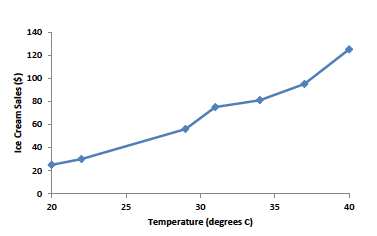
Using the graph, estimate ice cream sales when the temperature was 25 degrees C:
6
30 sec
Q.
Chemical properties is what allows matter to change into something new during a chemical change
7
30 sec
Q.
The nucleus has a neutral charge because the neutrons have no charge while protons have a positive charge.
8
30 sec
Q.
The part of the atom that has a positive charge is the
9
30 sec
Q.
Negatively charged particles that move around the atom's nucleus are the
10
30 sec
Q.
Atoms that have the same number of protons but different numbers of neutrons are called
11
30 sec
Q.
Atoms with an electrical charge due to giving up or taking on more electrons are called
12
30 sec
Q.
The atomic number is the same thing as the number of ______________.
13
30 sec
Q.
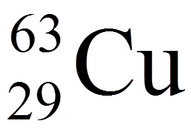
How many protons, neutrons and electrons are there in the atom in the image?
14
30 sec
Q.
Which of the following statements is correct?
15
30 sec
Q.
How many protons, neutrons and electrons are there in the atom in the image?
16
30 sec
Q.
All matter consists of particles called________________.
17
30 sec
Q.
How many electrons does a neutral atom of Sodium have? Atomic #= 11 Mass #= 23
18
30 sec
Q.
How many protons & neutrons are in the nucleus of an atom of Protactinium?
19
30 sec
Q.
Who used the gold foil experiment to discover the atom is made of mostly empty space and has positive protons in the center?
20
30 sec
Q.
This scientist compared electron's path around nucleus similar to the path planets take to orbit the sun.
21
30 sec
Q.
According to the image, how many electrons does Magnesium (Mg) have?
22
30 sec
Q.
According to the image, how many electrons does Sulfur (S) have?
23
30 sec
Q.
Potassium (K) has a mass number of 19.
24
30 sec
Q.
The metal part of your seatbelt burns your leg when you sit on it after the car sat in the sun all day.
25
30 sec
Q.
When two objects are touching?
26
30 sec
Q.
The halogens tend to form anions because….
27
30 sec
Q.
Name the only element touching the stair-step line that is NOT a metalloid
28
30 sec
Q.
When a metal atom becomes a cation…
29
30 sec
Q.
How many valence electrons does one atom of boron have?
30
30 sec
Q.
Each column(vertical) of the periodic table is
31
30 sec
Q.
The three main groups of elements are metals, nonmetals, and
32
30 sec
Q.
Metals tend to be
33
30 sec
Q.
Non-metals are shiny, ductile, and malleable.
34
30 sec
Q.
Metals are located in region ___?
35
30 sec
Q.
Metalloids are located in region ___?
36
30 sec
Q.
Non-metals are located in region ___?
37
30 sec
Q.
Elements that are gases, brittle, and poor conductors are ____.
38
30 sec
Q.
What group has
3 valence e- ?
39
30 sec
Q.
Halogens are represented by what letter?
40
30 sec
Q.
Alkaline Earth are represented by what letter?
41
30 sec
Q.
Noble gases are represented by what letter?
42
30 sec
Q.
Alkali metals are represented by what letter?
43
30 sec
Q.
This group has 4 valence electrons.
44
30 sec
Q.
This group has 6 valence electrons.
45
30 sec
Q.
What family of elements in located in the middle region of the periodic table?
46
30 sec
Q.
An allotrope of carbon that is extremely strong is
47
30 sec
Q.
The indium (II) and indium (III) ions
48
30 sec
Q.
What is the charge the metallic ion in the compound CuCl2?
49
30 sec
Q.
What is the formula for the compound formed by copper (III) sulfate?
50
30 sec
Q.
Name the compoundZn3(PO4)2
51
30 sec
Q.
When electrons are hogged by one atom in a bond is it said to be a
52
30 sec
Q.
The compound formed between element X and oxygen has the chemical formula X2O. Which element would X most likely represent?
53
30 sec
Q.
Ionic bond is formed between atoms of ________ and _______.
54
30 sec
Q.
In an ionic bond, electrons are :
55
30 sec
Q.
In a covalent bond, electrons are _______.
56
30 sec
Q.
What is the name of the compound whose formula is CaSO4?
57
30 sec
Q.
n a reaction with hydrochloric acid, powdered magnesium reacts faster than the same mass of magnesium ribbon. Why is this?
58
30 sec
Q.
The following is an example of which reaction? CH4 + O2(g) -> CO2(g) + H2O(g)
59
30 sec
Q.
The following is an example of which reaction? MgBr2(aq) + NaCl(aq) -> MgCl2(aq) + NaBr(aq)
60
30 sec
Q.
Consider the reaction represented by the chemical equation: NO3(aq) + NaCl(s) -> NO3Cl(aq) + Na(s) What type of chemical reaction is this?
61
30 sec
Q.
Consider the reaction represented by the chemical equation: AgNO3(aq) + NaCl(s) -> AgCl(s) + NaNO3(aq) What are the products?
62
30 sec
Q.
In the following single-displacement reaction, what would be the second product formed? Na + LiCl2 -> Li + ______
Balance the reaction: ___CaCO3 + ____HCl ------>___CaCl2 + ____H2CO3
65
60 sec
Q.
Balance the reaction: __Zn + ___H2SO4 -----> ____ZnSO4 + ___H2
66
60 sec
Q.
Students measure 3 g of baking soda and 10 g of vinegar. They mix them together in a beaker and watch bubbles form. The mass of the results liquid is 12.5 g. Based on the Law of Conservation of Mass, what should the mass of the gas that escaped be?
67
60 sec
Q.
The Law of Conservation of Mass states that matter is not gained or lost in a chemical reaction. Which of the following correctly restates this law? In a chemical reaction
68
60 sec
Q.
What are the coefficients that will balance this reaction? ___ HCl (aq) + ___ Mg(OH)2 (aq) → ___ H2O (l) + ___MgCl2 (aq)
69
60 sec
Q.
If a reaction is exothermic,
70
60 sec
Q.
If a reaction is endothermic,
71
60 sec
Q.
In the phase change graph, what phase is letter A in?
72
60 sec
Q.
In the phase change graph, what letter represents the melting point?
73
60 sec
Q.
In the phase change graph, letter represents the boiling point?
74
60 sec
Q.
In the phase change graph, what phase is E in?
75
60 sec
Q.
In the phase change graph, what phase is C in?
76
60 sec
Q.
A beta particle is
77
60 sec
Q.
A gamma ray is
78
60 sec
Q.
An alpha particle is
79
60 sec
Q.
Which is not true about nuclear fission?
80
60 sec
Q.
Which is not true about nuclear fusion?
81
60 sec
Q.
What radioactive particle would complete this equation?
82
60 sec
Q.
What number would be found where letter A is?
83
60 sec
Q.
What number would be found where letter B is?
84
60 sec
Q.
What element symbol would replace X?
85
60 sec
Q.
What number would replace letter A?
86
60 sec
Q.
What type of radiation is shown?
87
60 sec
Q.
Which statement about the Kinetic Molecular Theory is false?
88
60 sec
Q.
What is NOT true about gases?
89
60 sec
Q.
Boyle's Law states
90
60 sec
Q.
Charles Law states
91
60 sec
Q.
Gay-Lussac's Law States
92
60 sec
Q.
A gas occupies 100 mL at 278 mm Hg. How will the volume change if the pressure is changed to 403 mm Hg?
93
60 sec
Q.
What is the pressure of a gas that is at 4.3 atm and 2.3 L that is compressed to 1.2 atm?
94
60 sec
Q.
When a solution can dissolve more solute it is a _____________ solution.
95
60 sec
Q.
A __________solution contains the maximum amount of dissolve solute for a given amount of solvent.
96
60 sec
Q.
_________solutions are very unstable and form crystals.
97
60 sec
Q.
How does temperature affect solubility?
98
60 sec
Q.
An acidic solution has more _____________ ions.
99
60 sec
Q.
A basic solution has more _____________ ions.
100
60 sec
Q.
Acids have a pH range of
101
60 sec
Q.
Bases have a pH range of
102
60 sec
Q.
What is the solubility of HCl at 30C?
103
60 sec
Q.
Using the solubility curve, 50g of KClO3 dissolved in 100g of water at 90C is
104
60 sec
Q.
Using the solubility curve, 10g of SO2 dissolved in 100g of water at 10C is
105
60 sec
Q.
Using the solubility curve, 150g of KI dissolved in 100g of water at 10C is
106
60 sec
Q.
The percent by mass of CaCl is 2.7%. Calculate the mass of CaCl dissolved in 80 g of water. Show your work.
107
60 sec
Q.
10 grams of sugar are dissolved in 120 g of water What is the mass percent of sugar in the solution?