Interpret and compute quotients of fractions (including mixed numbers), and solve word problems involving division of fractions by fractions. Example 1: Given a story context for (2/3) ÷ (3/4), explain that (2/3) ÷ (3/4) = 8/9 because 3/4 of 8/9 is 2/3. (In general, (a/b) ÷ (c/d) = (a/b) × (d/c) = ad/bc.) Example 2: How wide is a rectangular strip of land with length 3/4 mi and area 1/2 square mi? Example 3: How many 2 1/4-foot pieces can be cut from a 15 1/2-foot board?
Solve problems involving operations (+, –, ×, and ÷) with whole numbers, decimals (through thousandths), straight computation, or word problems.
Apply number theory concepts (specifically, factors and multiples).
Apply the distributive property to express a sum of two whole numbers, 1 through 100, with a common factor as a multiple of a sum of two whole numbers with no common factor. Example: Express 36 + 8 as 4(9 + 2).
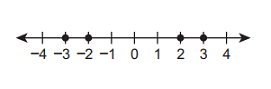
Understand that positive and negative numbers are used together to describe quantities having opposite directions or values and locations on the number line and coordinate plane.
Write, interpret, and explain statements of order for rational numbers in real-world contexts. Example: Write – 3°C > – 7°C to express the fact that – 3°C is warmer than – 7°C.
Interpret the absolute value of a rational number as its distance from 0 on the number line and as a magnitude for a positive or negative quantity in a real-world situation. Example: For an account balance of – 30 dollars, write |– 30| = 30 to describe the size of the debt in dollars, and recognize that an account balance less than – 30 dollars represents a debt greater than 30 dollars.
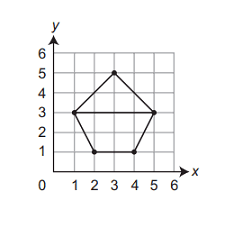
Solve real-world and mathematical problems by plotting points in all four quadrants of the coordinate plane. Include use of coordinates and absolute value to find distances between points with the same first coordinate or the same second coordinate.
Represent and/or solve realworld and mathematical problems using rates, ratios, and/or percents.
Use ratio language and notation (such as 3 to 4, 3:4, 3/4) to describe a ratio relationship between two quantities. Example 1: “The ratio of girls to boys in a math class is 2:3 because for every 2 girls there are 3 boys.” Example 2: “For every five votes candidate A received, candidate B received four votes.”
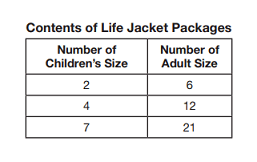
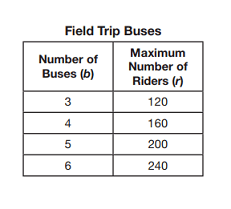
Construct tables of equivalent ratios relating quantities with whole-number measurements, find missing values in the tables, and/or plot the pairs of values on the coordinate plane. Use tables to compare ratios.
Solve unit rate problems including those involving unit pricing and constant speed. Example: If it took 7 hours to mow 4 lawns, then at that rate, how many lawns could be mowed in 35 hours? At what rate were lawns being mowed?
Find a percent of a quantity as a rate per 100 (e.g., 30% of a quantity means 30/100 times the quantity); solve problems involving finding the whole, given a part and the percentage.
Identify, write, and evaluate numerical and algebraic expressions.
Evaluate expressions at specific values of their variables, including expressions that arise from formulas used in real-world problems. Example: Evaluate the expression b2 – 5 when b = 4.
Apply the properties of operations to generate equivalent expressions. Example 1: Apply the distributive property to the expression 3 (2 + x) to produce the equivalent expression 6 + 3x. Example 2: Apply the distributive property to the expression 24x + 18y to produce the equivalent expression 6(4x + 3y). Example 3: Apply properties of operations to y + y + y to produce the equivalent expression 3y
Create, solve, and interpret onevariable equations or inequalities in real-world and mathematical problems.
Solve real-world and mathematical problems by writing and solving equations of the form x + p = q and px = q for cases in which p, q, and x are all non-negative rational numbers.
Write an inequality of the form x > c or x < c to represent a constraint or condition in a real-world or mathematical problem and/or represent solutions of such inequalities on number lines.
Use variables to represent two quantities in a real-world problem that change in relationship to one another.
Write an equation to express the relationship between the dependent and independent variables. Example: In a problem involving motion at a constant speed of 65 units, write the equation d = 65t to represent the relationship between distance and time
Analyze the relationship between the dependent and independent variables using graphs and tables and/or relate these to an equation.
Find area, surface area, and volume by applying formulas and using various strategies.
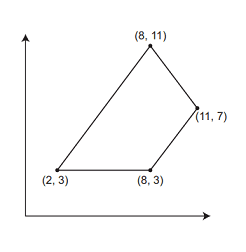
Given coordinates for the vertices of a polygon in the plane, use the coordinates to find side lengths and area of the polygon (limited to triangles and special quadrilaterals). Formulas will be provided.
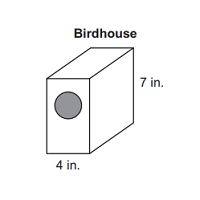
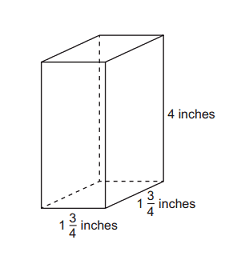
Determine the volume of right rectangular prisms with fractional edge lengths. Formulas will be provided.
Determine the surface area of triangular and rectangular prisms (including cubes). Formulas will be provided.
Display, analyze, and summarize numerical data sets in relation to their context.
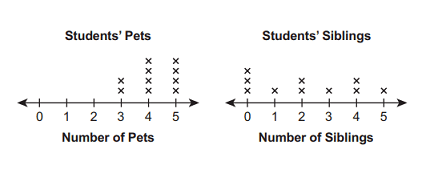
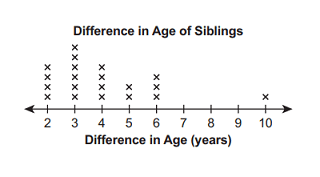
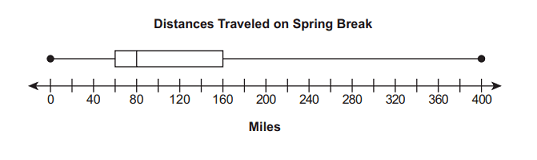
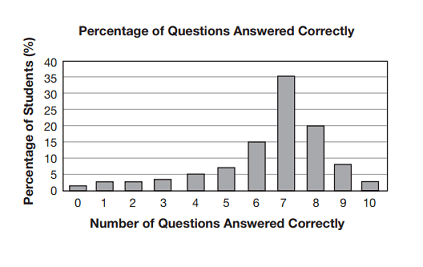
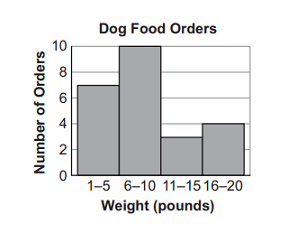
Display numerical data in plots on a number line, including line plots, histograms, and box-andwhisker plots.
Determine quantitative measures of center (e.g., median, mean, mode) and variability (e.g., range, interquartile range, mean absolute deviation).
Describe any overall pattern and any deviations from the overall pattern with reference to the context in which the data were gathered.
Track each student's skills and progress in your Mastery dashboards