Apply properties of operations to multiply and divide rational numbers, including real-world contexts; demonstrate that the decimal form of a rational number terminates or eventually repeats.
Solve real-world and mathematical problems involving the four operations with rational numbers
Apply properties of operations to add and subtract rational numbers, including real-world contexts.
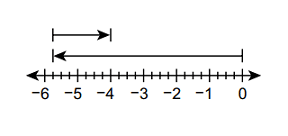
Represent addition and subtraction on a horizontal or vertical number line.
Compute unit rates associated with ratios of fractions, including ratios of lengths, areas, and other quantities measured in like or different units. Example: If a person walks 1/2 mile in each 1/4 hour, compute the unit rate as the complex fraction 1/2 / 1/4 miles per hour, equivalently 2 miles per hour
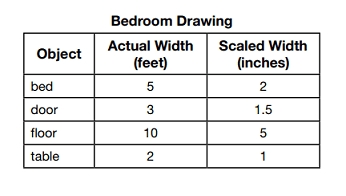
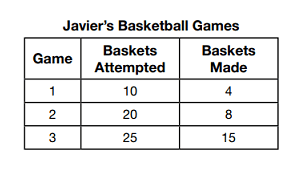
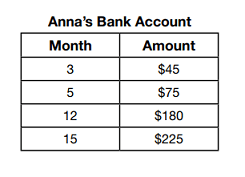
Determine whether two quantities are proportionally related (e.g., by testing for equivalent ratios in a table, graphing on a coordinate plane and observing whether the graph is a straight line through the origin).
Identify the constant of proportionality (unit rate) in tables, graphs, equations, diagrams, and verbal descriptions of proportional relationships.
Explain what a point (x, y) on the graph of a proportional relationship means in terms of the situation, with special attention to the points (0, 0) and (1, r), where r is the unit rate.
Use proportional relationships to solve multi-step ratio and percent problems. Examples: simple interest, tax, markups and markdowns, gratuities and commissions, fees, percent increase and decrease.
Apply properties of operations to add, subtract, factor, and expand linear expressions with rational coefficients. Example 1: The expression 1/2 • (x + 6) is equivalent to 1/2 • x + 3. Example 2: The expression 5.3 – y + 4.2 is equivalent to 9.5 – y (or – y + 9.5). Example 3: The expression 4w – 10 is equivalent to 2(2w – 5).
Solve word problems leading to inequalities of the form px + q > r or px + q < r, where p, q, and r are specific rational numbers, and graph the solution set of the inequality. Example: A salesperson is paid $50 per week plus $3 per sale. This week she wants her pay to be at least $100. Write an inequality for the number of sales the salesperson needs to make and describe the solutions.
Determine whether a sample is a random sample given a real-world situation.
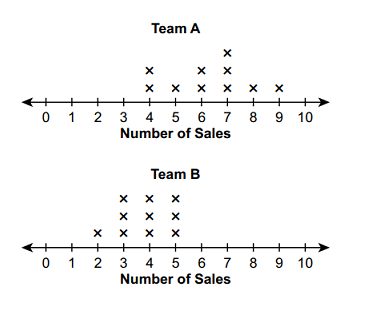
Use statistical measures to compare two numerical data distributions.
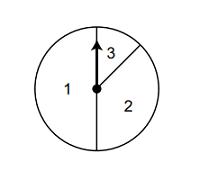
Predict or determine whether some outcomes are certain, more likely, less likely, equally likely, or impossible (i.e., a probability near 0 indicates an unlikely event, a probability around 1/2 indicates an event that is neither unlikely nor likely, and a probability near 1 indicates a likely event).
Determine the probability of a chance event given relative frequency. Predict the approximate relative frequency given the probability. Example: When rolling a number cube 600 times, predict that a 3 or 6 would be rolled roughly 200 times but probably not exactly 200 times.
Track each student's skills and progress in your Mastery dashboards