Loading...


Push and Pull Forces Part 2
Quiz by Storm Rider
Customize this quiz to suit your class
Instantly translate to 100+ languages
Tag the questions with any skills you have. Your dashboard will track each student's mastery of each skill.
Give this quiz to my class


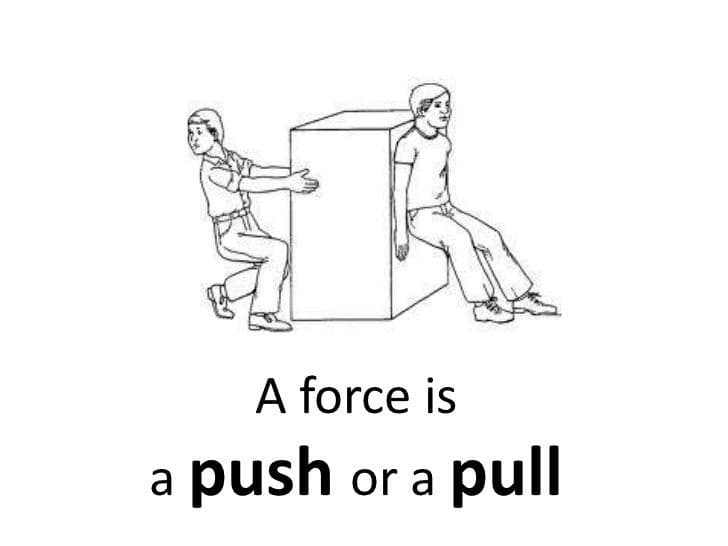


 Continental Drift Theory. From the discussion of the rock cycle, it has been pointed out that through Earth's external and internal processes. Earth's surface is constantly changing. However, this idea of a changing environment did not conform with the belief of earlier scientists. Rather, they thought that the geographic positions of ocean basins and continents have been static since the beginning of time. It was around the 1500s when Leonardo da Vinci, upon his discovery of fossil seashells found at the high mountains of Italy, first thought of the idea that the areas where mountains are located may have been oceans in the past. Through time, other fossils of marine organisms found far above the current sea level further supported the idea that mountains were uplifted and weathering wore them down. At around the 1800s, most scientists have accepted the idea that Earth's crust is undergoing large vertical movements or uplifting. There was also evidence of possible horizontal movements, but the scientists then were not convinced about it. Alfred Wegener showed evidence of horizontal or lateral movement of the continents in his continental drift theory. According to him, the continents have drifted around the world and have once formed a giant landmass or supercontinent called Pangaea. To support his theory, Alfred Wegener presented a set of geographical, biological, and climatic evidence.Wegener's geographical evidence included the jigsaw puzzle fit of the current continents. He pointed out that the coastlines of South America and Africa seem to fit together. He also pointed the presence of mountain ranges having similar rock types and age but separated by vast oceans, like that of the folded rocks of the Caledonian mountains. The same folded rocks run through West Africa, North America, Newfoundland, Ireland, Wales, Scotland, Greenland, and Norway, all of which are now separated by the Atlantic Ocean. A geographical evidence on the similar rock types in West Africa, North America, Greenland, and Europe is found. The biological evidence came in the discovery of similar plant and animal fossils in different continents separated by oceans. The animal fossils of Mesosaurus and Lystrosaurus indicate that they were not capable of crossing the oceans to reach the other continents. If they were, the fossils should have been more widely distributed Africa, Australia, India, and South America were too large to be carried by wind. This indicates that the areas where the fossils were found were closely linked. It has also been found out that the plant only grew in areas with subpolar climate, which would indicate that the landmasses were located near the South Pole.Lastly, for his climatic evidence, Wegener discovered that a glacial period occurred during the late Paleozoic era in Southern Africa, South America, Australia, and India. The initial explanation for this event was global cooling, but it was rejected because large tropical swamps with so much vegetation were found at the same time in the Northern Hemisphere. This further supported the idea that the supercontinent was indeed near the South Pole, and the continents in Northern Hemisphere were once near the equator. The glacial period also left glacial striations, or the scratches glaciers make as they move across on the underlying bedrock, on the aforementioned continents. For such an event to happen, the continents would have to be connected. SCIENCE PIONEER. Alfred Wegener (1880-1930). Alfred Wegener was a German polar researcher, geophysicist, and meteorologist. He was known for his work on the continental drift theory. In his effort to defend his work, he went to the Greenland ice sheet where he died.Even with all the compelling evidence, the continental drift theory hardly convinced the scientific community at that time because Wegener was unable to identify a credible mechanism that drives the continental drift. He was unable to clearly explain how the continents moved and how the larger continents broke through the ocean floor. Eventually, critics of the continental drift began to accept the theory when new evidence supporting the theory was discovered. The new evidence led to a more encompassing theory the theory of plate tectonics. This theory provided a more convincing explanation as to how the continents moved. The evidence that paved the way for the theory of plate tectonics was the idea of wandering poles. Scientists began studying volcanic rocks to determine the location of the magnetic poles. When volcanic rocks crystallize, the minerals with magnetic properties align themselves parallel to Earth's magnetic field at the time the minerals were formed. This finding allowed scientists to determine the polarity of Earth's magnetic field and the magnetic inclination that showed the location of the poles. Upon studying the paleomagnetism of the rocks, geophysicists found out that rocks from various locations point to different magnetic north poles, suggesting that the poles have wandered. Since movement of magnetic poles is very unlikely, scientists have accepted the idea that the continents are indeed moving. And if the continents are moving, scientists thought that maybe the ocean basins are moving too. They also discovered that some rocks showed magnetic reversals, which led them to believe that the magnetic north pole now was not always the magnetic north pole. Seafloor Spreading. After World War II, exploration on the ocean floor became the focus of many geologic studies. It was only then that the ocean ridge system was discovered. A geologist in Princeton University named Harry Hess, along with other scientists, studied this ocean ridge system and hypothesized that the oceanic crust was moving away from the ridge. His hypothesis, known as seafloor spreading, showed that the ocean floor is split along the ridge where the magma rises to form the new ocean floor.Because of this, rocks located near the ridge are younger than those that are located magnetic polarity of Earth is also preserved in those rocks. Withe ridge scientists were able to see the magnetic reversals in the ocean floor, and they were able to make use of information to determine that the ocean floor is moving at a rate of about 10 cm per year. Plate Tectonics. Confirmation of the seafloor spreading hypothesis proved that continents are not moving above the ocean floor. Rather, it is the fragments of the lithosphere. The lithosphere is the rigid layer that is composed of the uppermost mantle and the crust that carry the continents and the ocean basins along. These fragments of the lithosphere are called plates. Underneath the lithosphere is a weaker region in the mantle known as asthenosphere that behaves like a fluid. Thus, the lithosphere floats above the asthenosphere, making it detached and free to move. This became the basis of the theory of plate tectonics. Now that it has been made clear that it is the plates which are moving, the question as to how they move remained. Sir Arthur Holmes proposed the driving force for this plate movement in 1919. He suggested that the movement in the mantle carries the plates along. It was previously discussed that Earth's interior is very hot due to the heat produced by radioactive decay. Convection takes place in the mantle, keeping the asthenosphere hot and weak. The convection currents produced in the asthenosphere are the ones carrying the lithospheric plates and making them move. However, convection currents are not enough. Mechanisms such as ridge push and slab pull aid the convection currents to slowly move the lithospheric plates. Ridge push occurs at mid ocean ridges which are higher in elevation than the surrounding trenches and abyssal plains. The new ocean floor from the ridge is hot and relatively thin. As it moves away from the ridge, it cools down and gets denser, heavier, and thicker. Below this cooling ocean floor is the asthenosphere, which is less dense. This area becomes a massive shear zone and the new ocean floor will effectively slide down the slope of the asthenosphere. When the plate collides with another plate with lesser density, the denser plate sinks and a subduction zone is formed. When the subducting plate sinks, it pulls on the rest of the plate behind it. These mechanisms explain the movement of the plates.Earth has seven major lithospheric plates that account for 94% of Earth's surface. These are the North American Plate, South American Plate, Pacific Plate, African Plate, Eurasian Plate, Indo-Australian Plate, and Antarctic Plate. These plates are constantly moving relative to the other plates. Thus, the interaction of plates occurs mostly along the boundaries. These movements are plotted using information from earthquakes and volcanic activities. There are three main types of plate boundaries: convergent, divergent, and transform boundaries Convergent boundaries are boundaries where two plates move towards each other A convergent boundary is also known as destructive margin since this is where the collision between two plates occhins. There are three types of convergence-oceanic oceanic, oceanic-continental, and continental-continental. Trenches are features of the ocean floor that are present in both oceanic-oceanic boundary and oceanic-continental boundary. Subduction occurs at the trenches, therefore, these are characterized as the deepest parts of Earth. A divergent boundary is the opposite of convergent boundary: two plates move away from each other. Divergent boundaries create new crust; thus, they are also known as constructive margins. The ocean ridge system is a divergent boundary where new ocean floor is produced as magma rises, pushing the older rocks aside.Transform boundary is also known as conservative plate margin since two plates just move past one another, neither creating nor destroying land. Earthquake epicenters are usually detected at transform boundaries because the rocks tend to break and not fold or sink, like in convergent boundaries. Evolution of the Ocean Basins. Both the movement of the plates and seafloor are responsible for the evolution of ocean basins. Along the divergent boundary where ocean ridge systems are found, magma is released and new ocean floor is created. Along convergent boundaries, the ocean floor is being destroyed. The evolution of the ocean basins started during the time when Pangaea was still present and was surrounded by the vast ocean or superocean known as Panthalassa, also called Paleo-Pacific or "old Pacific." Upon the initial break up of Pangaea into Laurasia and Gondwanaland, the Tethys Sea began to form. Then, the Eurasian and North about, forming the North Atlantic. The South Atlantic only started to form when the African Plate and South American Plate separated. The continued movement of the plates created the Himalayas at one side and separated the Pacific Ocean and Atlantic Ocean at the other side, which consequently formed the current ocean basins. Both the movement of the plates and seafloor are responsible for the evolution of ocean basins. Along the divergent boundary where ocean ridge systems are found, magma is released and new ocean floor is created. Along convergent boundaries, the ocean floor is being destroyed. The evolution of the ocean basins started during the time when Pangaea was still present and was surrounded by the vast ocean or superocean known as Panthalassa, also called Paleo-Pacific or "old Pacific." Upon the initial break up of Pangaea into Laurasia and Gondwanaland, the Tethys Sea began to form. Then, the Eurasian and North about, forming the North Atlantic. The South Atlantic only started to form when the African Plate and South American Plate separated. The continued movement of the plates created the Himalayas at one side and separated the Pacific Ocean and Atlantic Ocean at the other side, which consequently formed the current ocean basins.Continents do not immediately end at the point where the ocean meets the land. They may extend slightly into the oceans. The portion of the continent that is submerged is called continental margin. There are two types of continental margin: passive margin and active margin. A passive continental margin consists of a continental shelf, continental slope, and continental rise. It is not associated with plate boundaries; thus, there are very little tectonic activities. An active continental margin only has a continental shelf and a continental slope. It is associated with plate boundaries; thus, a main feature of this boundary is a trench. The different features of a continental margin are the following: 1. The continental shelf is the gently-sloping submerged portion of the continent. 2. The continental slope is the steep slope after the continental shelf. It is still part of the continent. 3. The continental rise is the gently-sloping area after the continental slope and before the ocean floor. 4. The trenches are the deepest parts of the ocean. These are narrow depressions caused by the subduction of the ocean floor along the convergent boundaries. 5. The mid-oceanic ridge is the mountain range system in the ocean. It is responsible for the production of new ocean floor. This is the region where new magma constantly emerges from. SCIENCE CAREER. A scientific illustrator uses art to inform and communicate complex details and concepts of science. He/She makes use of scientifically informed observations and research along with his/her technical art and aesthetic skills to make accurate representations. In Natural History, the scientific illustrators recreate how the extinct species look like by working with scientists and fossil records. Moreover, with the advances in technology, illustrators are now into 3D modelling, animation, and video making. Earth's History. All the processes that have been discussed require long periods of time to create a noticeable change on Earth's surface. You can just imagine how long it would take to create an oceanas vast as the Pacific Ocean if the ocean floor moves only at about 10 cm/year. It is then important to know the history of Earth to learn the complexities of its past and be able to use it to understand the present. Just like learning the history of a country that requires one to read a lot of books, learning the history of Earth involves studying a lot of rocks. Rocks, especially sedimentary rocks, contain a lot of information about Earth's past. It holds the key to most of the geologic processes that happened on Earth and the key to uncovering how life on Earth evolved. But these discoveries are worthless if there is no time perspective. Thus, one of the most important contributions of geologists to mankind is the geologic time scale, which holds a history that is exceedingly long.PUSH AND PULL FORCESUnderstanding Push and Pull Forces - Starter QuizForces- push and pullLand warfare is a complex domain that involves the application of military power on the ground to achieve political and strategic objectives. Modern military doctrine, such as that used by the U.S. Army and the Indian Army, categorizes these elements into Combat Power and the Principles of War. 1. The 8 Elements of Combat Power Combat power is the total means of destructive, constructive, and information capabilities that a military unit can apply. It is typically broken down into eight key elements: ElementDescriptionLeadershipThe "multiplier" of all other elements. It provides purpose, direction, and motivation to soldiers.InformationEnables commanders to make informed decisions and creates opportunities to achieve results.Mission CommandThe system used to integrate the other elements. It focuses on decentralized execution based on the commander's intent.Movement & ManeuverThe movement of forces to gain a positional advantage over the enemy to deliver lethal or non-lethal effects.IntelligenceThe understanding of the enemy, terrain, weather, and civil considerations.FiresThe use of weapon systems (artillery, mortars, air support) to create specific lethal or non-lethal effects.SustainmentThe logistics required to maintain operations, including ammunition, fuel, food, and medical support.ProtectionThe preservation of the force so that the commander can apply maximum combat power.2. The Principles of War These are the enduring "rules of thumb" that guide how land forces are employed strategically and tactically: Objective: Direct every operation toward a clearly defined and attainable goal. Offensive: Seize, retain, and exploit the initiative. You cannot win by defending alone. Mass: Concentrate the effects of combat power at the most advantageous place and time. Economy of Force: Allocate the minimum essential combat power to secondary efforts so you can "mass" elsewhere. Maneuver: Place the enemy in a position of disadvantage through flexible movement. Unity of Command: Ensure all forces operate under a single responsible commander toward a common objective. Security: Prevent the enemy from gaining an unexpected advantage. Surprise: Strike the enemy at a time, place, or in a manner for which they are unprepared. Simplicity: Prepare clear, uncomplicated plans to minimize confusion in the "fog of war." 3. The Modern Legal Framework Land warfare is also governed by the Law of Land Warfare (International Humanitarian Law), which rests on four pillars: Military Necessity: Actions must be necessary to achieve a legitimate military goal. Distinction: Forces must distinguish between combatants and non-combatants (civilians). Proportionality: The anticipated harm to civilians must not be excessive in relation to the concrete military advantage gained. Unnecessary Suffering: Weapons and methods must not cause gratuitous or superfluous injury. Note: Contemporary land warfare is increasingly "Multi-Domain," meaning land forces must now integrate with cyber, space, and electronic warfare to be effective. , While land warfare uses many tools, the two primary "philosophies" of how to win a war are Attrition and Maneuver. Most modern conflicts are a spectrum of both, but understanding the pure form of each helps explain military strategy. 1. Attrition Warfare: The "Sledgehammer" Attrition warfare is a strategy where one side attempts to win by wearing down the enemy to the point of collapse through continuous losses in personnel, equipment, and supplies. Core Logic: "I have more than you." It assumes that if you can destroy the enemy’s resources faster than they can replace them, you will eventually win. Focus: Firepower and mass. Success is measured by "body counts," equipment destroyed, and the steady seizing of terrain. Command Style: Usually centralized and methodical. It requires strict synchronization of massive resources (artillery, logistics, manpower). Historical Example: The Battle of Verdun (WWI). German Chief of Staff Erich von Falkenhayn famously stated his goal was to "bleed France white" by forcing them to defend a position they could not afford to lose, regardless of the cost in lives. 2. Maneuver Warfare: The "Scalpel" Maneuver warfare seeks to shatter the enemy’s moral and physical cohesion—their ability to act as a unified force—rather than simply destroying every soldier. Core Logic: "I am faster and more unpredictable than you." It aims to create a state of chaos where the enemy's leadership can no longer make effective decisions. Focus: Speed, surprise, and dislocation (forcing the enemy to be in the wrong place at the wrong time). The OODA Loop: Developed by Col. John Boyd, this is the heart of maneuver theory. It stands for Observe, Orient, Decide, Act. The goal is to cycle through these steps faster than the enemy, essentially "getting inside" their decision-making process until they collapse from confusion. Historical Example: The 1940 Invasion of France (Blitzkrieg). Instead of fighting a line-by-line battle of attrition, German forces used speed and concentrated armor to bypass strongpoints, cut communication lines, and cause a total systemic collapse of the French military in weeks. 3. Key Differences at a Glance FeatureAttrition WarfareManeuver WarfareObjectivePhysical destruction of the enemy army.Functional/Psychological collapse of the enemy.TargetThe enemy's strength (mass).The enemy's weakness (vulnerability).Primary ToolMassed Firepower.Movement and Tempo.Command"Command Push" (Top-down, rigid)."Recon Pull" (Decentralized, flexible).Success MetricExchange ratios (Kill counts).Disruption and loss of enemy control.4. The Modern Synthesis: "Schwerpunkt" In practice, no army is purely "maneuver" or "attrition." To maneuver successfully, you often need a period of attrition to punch a hole in the enemy's line. A critical concept here is the Schwerpunkt (Center of Gravity/Focus of Effort). A commander identifies the single most important place to strike and concentrates all available "elements of power" there. While the rest of the front might look like attrition, the Schwerpunkt is where the maneuver happens to achieve a breakthrough. Modern Reality: In high-intensity conflicts today (like the war in Ukraine), we see a "return to attrition" because modern sensors (drones, satellites) make it very difficult to achieve the surprise needed for pure maneuver warfare. When you can see everything, it's hard to be "unexpected."Force, push and pull, applied force, gravitational force, muscular force, magnetic force, frictional forceMagnets Work! Did you know magnets are all around you? Magnets help you do amazing things! Keep reading! See if you think magnets have surprising uses. Magnets Pull. Look closely and you will see. Magnets can be found on a can opener. The magnet attracts, or pulls, the lid off of a soup can. A push or pull is called a force. There is also a magnet in a refrigerator. It pulls the metal in the door to make a tight seal. Do you know how? A magnet's force pulls objects made of metals called iron and steel. It will not pull other things. It will not pull a wooden pencil or a plastic toy. A magnet does not attract all items. Magnets Have Poles. You have proved, or shown, that magnets can pull some things to it. Why is this true? The two ends of a magnet are its poles. Every magnet has a north pole and a south pole. Have you ever played with trains that have magnets? Sometimes, you try to put two train cars together, but they repel. This means they push away from each other. Then you turn one of the cars around. The two cars snap together as quick as a wink. That's right! If you have played with these trains, you know it is true. When the train cars push away, two of the same poles are facing each other. However, if you put the north and south poles together, they will snap together like the train. Magnets Can Be Powerful. We know that magnets can move objects. But does the heaviness of an object matter? Can magnets move objects that have different weights? Yes, they can. Scientists are using magnets in new ways. People often wish they could travel at a faster speed than a train. There is a new train that uses powerful magnets to travel more quickly. Magnets lift the train above the track and push the train forward. The train appears to be moving as fast as lightning! Scientists have measured these train speeds. They are much faster than the trains we know. Can you imagine what magnets will help us do in the future? 10Push and Pull