Loading...


Q2 - Polarity of Molecules
Quiz by Shynne Izza Clemente
Tag the questions with any skills you have. Your dashboard will track each student's mastery of each skill.
The general trend of electronegativity as you move from top to bottom of the periodic table is increasing.
Water, with a bent molecular shape, is classified as a polar molecule.
Hydrogen cyanide (HCN) exhibits a linear geometry
In a polar covalent bond, electrons are shared unequally by two atoms in a compound.
In a nonpolar covalent bond, electrons are shared equally by two atoms in a compound.
From the given Lewis structure of NH3, how many nonbonding pair/s of electron are around the central atom?
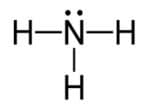
What do you call the relative ability of a bonded atom to attract shared electron pairs?
S and O are bonded by a polar covalent bond because its electronegativity difference value is 1.0.
Atoms with high electronegativity have a lesser tendency to attract electrons toward itself.
Polarity of molecules are determined both by polarity of bonds and molecular geometry.
Which is a correct Lewis structure for carbon dioxide (CO2)?
What molecular geometry does this molecule exhibit?
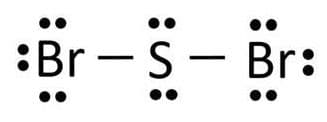
Which is the correct order for the Pauling electronegativity values of the listed atoms?
Supposedly a hypothetical molecule has an absolute electronegativity difference of 0.5, what is the type of chemical bond present?
A molecule shape is a three-dimensional arrangement of atoms or bonding groups around a central atom. The molecular shape is governed by the valence shell electron repulsion (VSEPR) theory.