Loading...


Q2_SUMMATIVE TEST #4
Quiz by Salvacion Adona
Tag the questions with any skills you have. Your dashboard will track each student's mastery of each skill.
Which term refers to the length between b and c in the given figure?
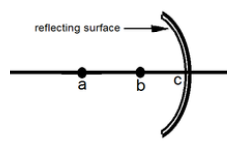
Radius
Focal length
Center of curvature
Vertex
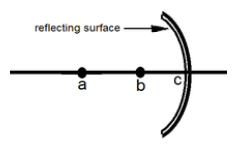
Which term refers to the length between b and c in the given figure?
Which of the following supports the laws of reflection?
I. The angle of incidence is equal to the angle of reflection.
II. The angle of incidence is greater than or less than the angle of reflection depending on
the medium.
III. The incident ray, the normal line, and the reflected ray lie on the same plane.
IV. The incident ray, the normal line and the reflected ray lie on different planes.
Which is true about the image formed in the plane mirror?
I. Real
II. Virtual
III. Upright
IV. Inverted
V. Same size
VI. Magnified
VII. Diminished
What image will be produced by a convex mirror?
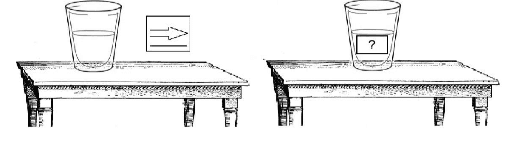
As shown in the figure below, a glass of water is placed in front of an arrow. Which of the following will most likely be the image you will perceive?
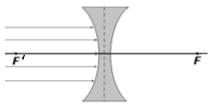
If the light rays strike the diverging lens (as shown in the figure at the right), what will happen with the light rays?
Where will the image form if the object is placed betweenF and 2F as shown in the figure on the right?
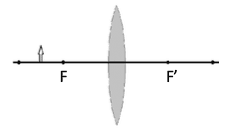
What kind of image will be formed in this figure?
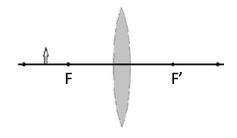
From the ray diagram of a double convex lens, why there is NO image formed when an object is located at the primary focus?
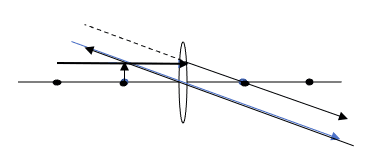
A candle was placed 8 cm in front of a convex mirror having a focal length of
6 cm. Applying the ray diagramming, how do you described the image formed?
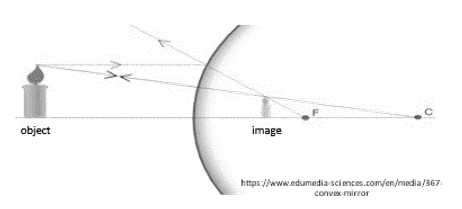
Which is the correct orientation of the image produced by a Galilean telescope with respect to the object?
Why do astronomers prefer to use reflecting telescope in viewing astronomical objects?
A group of tourists wishes to see the “milky way”. Which optical instrument will give them a wider field of view?
A compound microscope uses a system of lenses. Which property of light is observed in this device?
Which instrument produces a virtual, larger, and upright image?
How would you describe the image produced by a microscope?
An enlarged image of a cell was flashed on a screen. Which optical set was able to produce the image?
Reflecting telescopes and microscopes produce an enlarged image of the object. Which is TRUE about these optical instruments?
Why is it ideal to use large concave mirrors than large convex lens in viewing distant stars?
How are mirrors and lenses used in telescopes?