Loading...

Quiz for new employees From Safety Dept.
Quiz by Pitchakorn T.
Customize this quiz to suit your class
Instantly translate to 100+ languages
Tag the questions with any skills you have. Your dashboard will track each student's mastery of each skill.
Give this quiz to my class
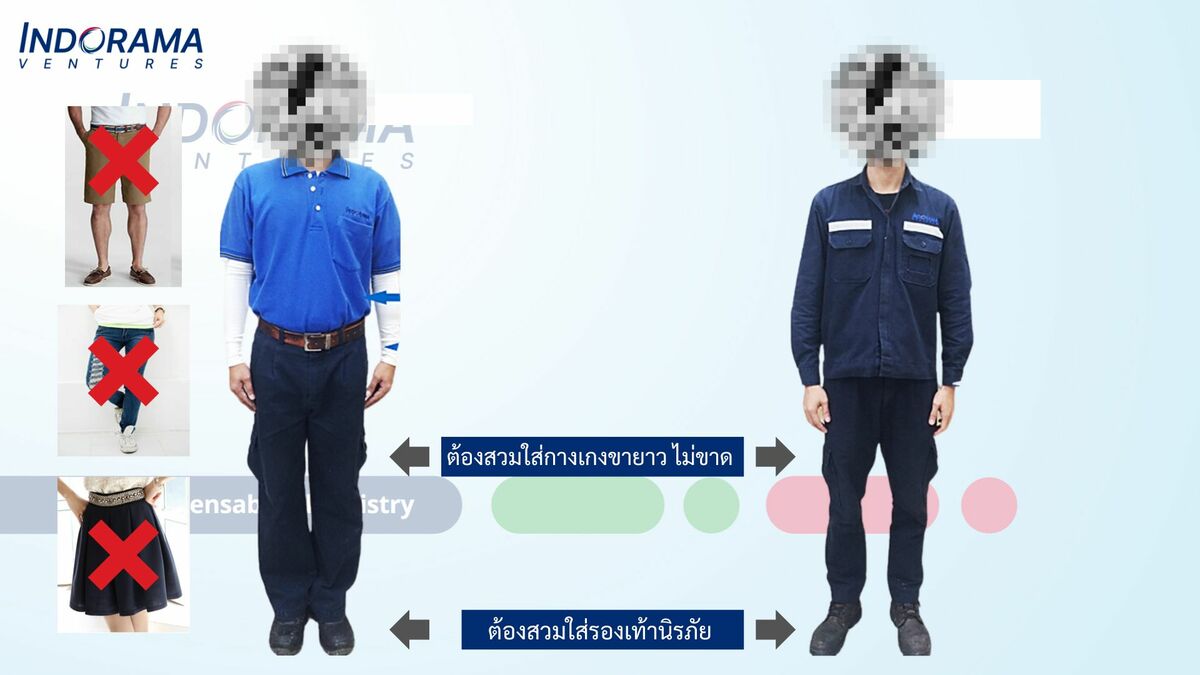
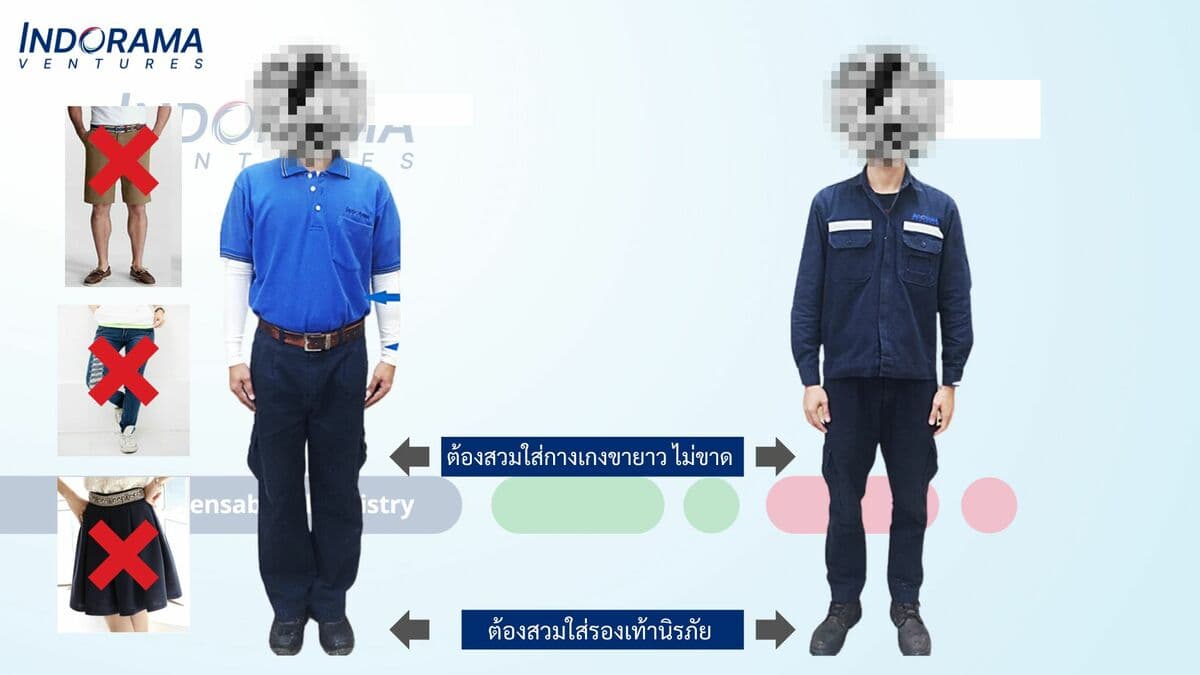
เมื่อผ่านป้อม 2 ต้องสวมใส่รองเท้าเซฟตี้ตลอดเวลา
ข้อใดคือลักษณะการทำงานที่ผิดการยศาสตร์
วุ้นปวดหลังจากการยกกล่องลังซ้าๆ ทุกวัน
เบียร์เจ็บข้อเท้าจากการสะดุดแผ่นเหล็ก
อั้มปวดข้อมือจากการเล่นโทรศัพท์นาน
เจนนี่ปวดขาจากการออกกาลังกายอย่างหนัก
เมื่อผ่านป้อม 2 ต้องสวมใส่รองเท้าเซฟตี้ตลอดเวลา
ข้อใดคือลักษณะการทำงานที่ผิดการยศาสตร์
สัญลักษณ์ GHS นี้หมายถึงอะไร
ถ้าสูบบุหรี่นอกพื้นที่ห้ามสูบ ต้องเสียค่าปรับไม่เกินกี่บาท
จป.วิชาชีพสาวสวยที่สอนในวันนี้มีชื่อว่าอย่างไร

 I'm wanting to make a vocab quiz using the following 1. Supply chain a) The sequence of activities involved in the production and distribution of a product (Correct) b) The sequence of activities involved in marketing a product (Incorrect - refers to a different aspect of business operations) c) The sequence of activities involved in hiring employees (Incorrect - unrelated to product production) d) The sequence of activities involved in customer service (Incorrect - unrelated to product production) 2. Intermediaries a) Middlemen or brokers who facilitate transactions between two parties (Correct) b) The final consumers of a product (Incorrect - refers to end-users, not intermediaries) c) The employees working at a company's headquarters (Incorrect - unrelated to transaction facilitation) d) The shareholders of a company (Incorrect - unrelated to transaction facilitation) 3. Specialization a) Focusing on a specific task or aspect of production to achieve expertise and efficiency (Correct) b) Expanding business operations to new markets (Incorrect - refers to a different concept) c) Maximizing profits through cost-cutting measures (Incorrect - unrelated to specialization) d) The process of developing new products (Incorrect - unrelated to specialization) 4. Coordination a) Organizing and harmonizing different elements or activities to work together effectively and efficiently (Correct) b) Maintaining independence and autonomy among different departments (Incorrect - opposite meaning of coordination) c) Creating a hierarchical structure within an organization (Incorrect - unrelated to coordination) d) Maximizing competition among employees (Incorrect - unrelated to coordination) 5. Outsourcing a) Hiring external companies or individuals to perform specific tasks or functions (Correct) b) Expanding business operations to international markets (Incorrect - refers to a different concept) c) Merging with other companies to form a larger entity (Incorrect - unrelated to outsourcing) d) Expanding the scope of in-house operations (Incorrect - opposite meaning of outsourcing) 6. Inspection a) Examining and evaluating suppliers, products, or processes to ensure compliance with quality standards (Correct) b) Promoting new products through advertising campaigns (Incorrect - unrelated to inspection) c) Conducting market research to understand customer preferences (Incorrect - unrelated to inspection) d) Developing prototypes for new products (Incorrect - unrelated to inspection) 7. Efficiency a) Accomplishing tasks or goals with minimum waste of time, effort, or resources (Correct) b) Maximizing profits through aggressive pricing strategies (Incorrect - unrelated to efficiency) c) Expanding business operations to new markets (Incorrect - refers to a different concept) d) Streamlining organizational hierarchy through downsizing (Incorrect - unrelated to efficiency) 8. Expertise a) Specialized knowledge or skill in a particular field or area (Correct) b) Broad knowledge across multiple disciplines (Incorrect - opposite meaning of expertise) c) Entry-level knowledge and skills (Incorrect - unrelated to expertise) d) General knowledge applicable to various industries (Incorrect - opposite meaning of expertise) 9. Trend a) General direction or pattern of change or development over time (Correct) b) A one-time occurrence or isolated event (Incorrect - opposite meaning of trend) c) A static and unchanging state (Incorrect - opposite meaning of trend) d) A minor fluctuation in a stable market (Incorrect - unrelated to trend) 10. Demand a) Desire or need for a particular product or service (Correct) b) The quantity of a product produced by a company (Incorrect - refers to supply, not demand) c) The pricing strategy employed by a company (Incorrect - unrelated to demand) d) The promotional activities carried out by a company (Incorrect - unrelated to demand)Make a vocabulary quiz with below.Crisis: a very difficult situation or emergency; “Investors are worried that continuing problems in the stock market might lead to another financial crisis.” Short-staffed: not having enough employees or workers; “We laid off dozens of employees to save money, but now we’re short-staffed and can’t fill orders quickly.” To drive someone nuts: to make someone upset or annoyed; “The autocorrect feature on my mobile phone really drives me nuts.” To arise: to happen or start to develop, especially for problems or situations; “Problems arose for the developers when local residents voted against construction of the new shopping mall.” To moan: to complain about something, especially in a way that bothers other people; “Every Monday morning my colleagues moan about having to come to the office so early.” Optimism: the feeling or belief that good things will happen; “Analysts are expressing optimism that the real estate market will bounce back quickly.” Pessimism: the tendancy or belief that the worst will happen. “Now is not the time for pessimism, we need to believe we can do this or we will fail.” Hurdle: a problem that must be overcome or dealt with in order to reach a goal or do something; “Lack of capital is a major hurdle for many young entrepreneurs with good business ideas.” © 2013 All rights reserved: www.businessenglishpod.com 2 To give up: to stop trying to do or achieve something; “After being rejected by over a dozen universities, Roger gave up on his plans to study for an MBA.” To keep your eye on the prize: to stay motivated and focused on your final goal or reward; “Okay folks, I know things have been really busy, but let’s keep our eye on the prize and we’ll get this done before Christmas.” Down the road: in the future; “Sales our good in our retail outlets, but 10 years down the road we’re going to have to be more competitive in the online market.” To overcome: to deal with a problem successfully; “You are going to have to overcome your lack of confidence if you want to be a good salesman.” Decisiveness: having the ability to make decisions and act firmly. “Decisiveness is a quality we look for in new managers.” Bumpy: we can use “bumpy” to describe a road or process that has many problems; “We had a pretty bumpy start-up phase, but we finally managed to turn a profit in our fifth year of operations.” To display: to show a feeling, emotion, or characteristic; “David displayed tremendous preparation and diplomacy during the negotiations.” On the fence: someone who is “on the fence” is having difficulty making a decision or taking a position; “While the executives support expansion wholeheartedly, the shareholders are still on the fence about it.” All-in: in poker, if you are “all-in” you put all your money on one bet, but we can use this expression more generally to say you are completely committed to something, especially a plan; “This sounds like a good idea, but before I go all-in I need to know more about the project partners.” To have what it takes: to have the ability or intelligence to do something; “I thought I’d enjoy law, but after a few years as a junior lawyer I realized I don’t really have what it takes.🧠 Game Objective: Agents analyze partial client profiles, then choose the best discovery questions to uncover the hidden insurance need. You’ll present: A brief, vague client case A list of potential fact-finding questions (mix of good/bad) The agent selects up to 5 questions Points are based on: How many “high-value” questions they choose Whether their questions align to the true need Bonus: If they uncover the hidden clue or issue (revealed after) 🎯 Quiz Format for Quizalize: Question Type: Multiple Select (choose up to 5) Scoring: 1 point per strong question, 0 or -1 for irrelevant/weak questions Bonus Reveal Slide: Show the full case need after each question 🔍 Sample Quizalize Scenario Set 🔹 Client Case #1: "James & April" James (38) is a freelance graphic designer. He and April (36) have one 3-year-old child. They just moved into their first home with a $400k mortgage. James doesn’t currently have employer benefits. April works part-time and doesn’t have group coverage. Question Prompt: Choose up to 5 questions to uncover James and April’s real protection need. Answer Options: ✅ What income would April need if you weren’t here to support your family? ✅ Do you have any existing life insurance or savings to cover the mortgage? ✅ How long would you want your family financially protected if something happened to you? ✅ Do either of you have any disability coverage? ✅ Would you want your child’s future education covered if something happened? ❌ How much do you currently pay for car insurance? ❌ Do you see yourself buying another house soon? ❌ What’s your favorite thing about your neighborhood? ✅ Hidden Need: Income replacement + mortgage protection for a non-benefits freelancer. 🔹 Client Case #2: "Rosa" Rosa is 29 and single. She recently got a promotion, moved into a new apartment, and is paying off $45k in student loans. She loves to travel and has no dependents. Answer Options: ✅ If something happened to you, who would take care of your student loans or final expenses? ✅ Do you have any emergency savings or a safety net? ✅ Would you be interested in locking in permanent coverage while you're young and healthy? ✅ Do your parents or anyone else rely on you financially, even occasionally? ❌ Are you planning to have children in the next 6 months? ❌ Do you want a pet in the next year? ❌ Do you have renter’s insurance? ✅ Hidden Need: Final expense coverage + early whole life for cash value & lock-in pricing. 🔹 Client Case #3: "The Smith Family" Mark (45) and Tasha (42) have two teenagers, ages 13 and 16. Mark makes $120k as a consultant; Tasha runs their household. They just finished paying off a second mortgage. They’re “starting to think about college and retirement.” Answer Options: ✅ Would you want the kids’ college plans funded if something happened to you? ✅ Do you have enough coverage to protect your spouse’s lifestyle if your income stopped? ✅ Have you considered combining life protection with cash value to support future goals? ✅ How are you currently saving for retirement? ❌ Have you started planning your estate yet? ❌ Do you plan on buying another property this year? ✅ Hidden Need: Blended whole/term strategy for income replacement and cash value for college/retirement. 🎮 Bonus Twist Slide (after each case): 💥 Hidden Need Revealed! Here’s what many missed: James has no group benefits — he needs full protection as a freelancer. a quiz for new teachers about retrieval practiceSample Quiz for New FeatureMake a fun quiz for an induction into online learning for a new home education platformNew Quiz for TeachersMake a simple reading comprehension quiz for beginners: Our New Neighbor Nancy is our new next-door neighbour. She's a pilot. She was in the Royal Air Force (R.A.F). She will fly to New York next month. The month after next she'll fly to Tokyo. At the moment, she's in Madrid. She flew to Spain a week ago. She'll return to London the week after next. She's only forty-one years old, and she has already been to nearly every country in the world. Nancy is a very lucky woman. But her dog isn't very lucky. It usually stays at home!