Loading...

Quiz1 on Digital Circuit Design
Quiz by PRIYAJIT MUKHERJEE
Customize this quiz to suit your class
Instantly translate to 100+ languages
Tag the questions with any skills you have. Your dashboard will track each student's mastery of each skill.
Give this quiz to my class
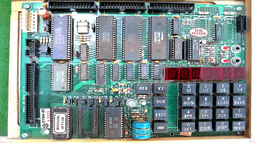
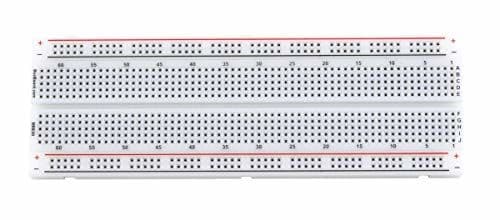
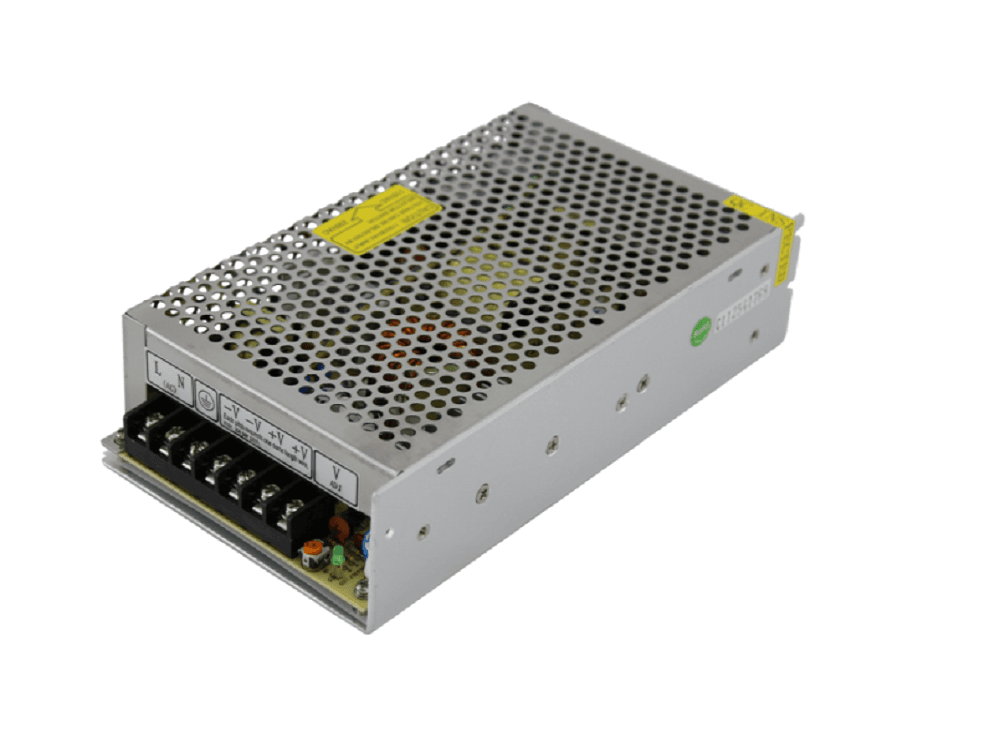
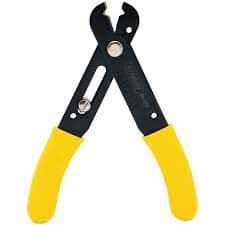
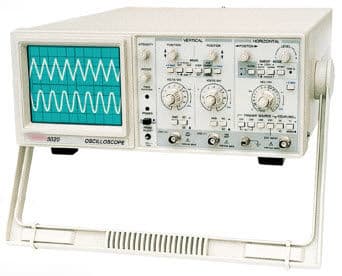
Identify the instrument/component that you have not used in designing circuits in this Lab
How many OR gates does a 74LS32 IC have?
1
3
2
4
Identify the instrument/component that you have not used in designing circuits in this Lab
How many OR gates does a 74LS32 IC have?
If Pin No. 1, 2 and 14 of a 74LS08 IC are connected at 5V what would be the voltage measured at Pin 3 of the IC?
If by mistake one input of an AND gate is connected to GND line output of the AND Gate will be -
Why have we connected resistances in series with the LEDs in Breadboard circuits?
 Quiz on Digital LearningHere’s a **quiz on Lesson 1: Introduction to Analog Communication (Unit 8)** based on your file 👇 --- # 🧠 **Quiz – Lesson 1 (Analog Communication)** **Marks:** 20 --- ## ✍️ **Part 1: Choose the correct answer (8 marks)** 1. A signal is: a) A device b) A physical quantity that carries information c) A type of wire d) A computer 2. A continuous signal is defined over: a) Discrete values b) Infinite real values c) Only integers d) Binary values 3. Digital signals have: a) Infinite values b) Two values (0 and 1) c) Random values d) Analog values 4. Sampling is used to: a) Increase noise b) Convert analog to digital c) Amplify signals d) Reduce bandwidth 5. A deterministic signal: a) Cannot be predicted b) Has known values c) Is always random d) Has no pattern 6. Even signal satisfies: a) x(t) = -x(-t) b) x(t) = x(-t) c) x(t) = 0 d) x(t) ≠ x(-t) 7. Periodic signal repeats after: a) Time T b) Infinite time c) No time d) Random time 8. A system is: a) A signal only b) Input only c) Takes input and gives output d) A wire --- ## ✍️ **Part 2: Complete (6 marks)** 1. A signal can be represented as __________. 2. Continuous signals are defined over __________ values. 3. Digital signals take values like __________ and __________. 4. A random signal cannot be __________ easily. 5. Odd signal satisfies __________. 6. A periodic signal repeats every __________. --- ## ✍️ **Part 3: True or False (6 marks)** 1. Analog signals are continuous. ( ) 2. Digital signals can take infinite values. ( ) 3. Sampling converts analog to digital signal. ( ) 4. Deterministic signals are predictable. ( ) 5. Odd signals pass through origin. ( ) 6. Aperiodic signals repeat over time. ( ) --- ## 🎯 **Bonus Question (Optional)** Give one example of: * Analog signal * Digital signal -We found you were making a quiz on the subject of "What is a rubric? A tool comprising a set of criteria (with possible levels of performance quality on the criteria) developed to assess learners’ work, from written to oral to visual. It is used tomeasureperformance,suchastheprocess of doing something (e.g.,playing a musical instrument, making a speech) or products of the learners’ work (e.g., concept map, laboratory report, bookshelf) (Brookhart, 2013). BENEFITS OF USING RUBRICS Support authentic assessment Reflects how well learners are able to apply knowledge inthe real-world context. Communicate expectations Gives learners an idea of what is expected of them. It is especially useful when the rubrics are communicated to the learners before they are assessed. Improve performance Explicit criteria and performance level descriptions allow learners to understand the desired performance. Learners are able to assess themselves by referring to the specific criteria and performance-level descriptions. Provide informative feedback Instructors are able to provide constructive feedback to learners on their weaknesses and strengths. Promote thinking andlearning 4 Provide informative feedback Instructors are able to provide constructive feedback to learners on their weaknesses and strengths. Learners are able to review and revise their work,thus reflecting on their learning experiences. Ensure fairness Learner performance assessed fairly given its objectivity. It helps avoid disputes between learners and instructors about the scores/grades achieved. TYPES OF RUBRIC ANALYTIC It consists of individual criterion with corresponding descriptor of performance. HOLISTIC It consists of performance descriptors that are placed together to refeclet to overalll performance. ANATOMY OF ANANALYTIC RUBRIC Rating scales with corresponding scores or weights The row represents the criteria for the desired performance, while the column represents the evaluation score. Under the rating scale (corresponding weights orscorescanbeassigned),theperformance descriptors are explicitly stated ANATOMYOF AHOLISTICRUBRIC Descriptions: It comprises the rating scale (corresponding weights or scores can be assigned) in the row while the combined desired performance descriptors are placed in the column. Description of the task The purpose of the assignment is to assess learner’s cognitive and analytic skills in applying knowledge gained and constructed throughout the course Diffusion of Innovation,bywatching the Surrogates movieand writing ananalytical review of the movie in the context of innovation diffusion.Iwant to provide learners with informative feedback on their cognitive and analytic skills such as the following: applying the concepts of innovation diffusion,making judgmentson the scenes related to innovation diffusion identified from the movie,selecting and critiquing theories of innovation diffusion and making connections between the theories,aswell asarguingand proposing necessary solutions to the problemss hown in the movie. ESTABLISHING ALTERNATIVEASSESSMENTINHIGHEREDUCATION VALIDITYAND RELIABILITYOF RUBRICS. Validity Measuring what is supossedto be measured. Reability Yielding consists results. Instruments that are used in the alternative assessment must be aligned to the learning outcomes and measure well what it intends to measure (valid) and produce consistent scores (reliable). The valid instrument will manifest the true ability (latent trait) of learners and permit appropriate inferences to be made about a specific group of people for specific purposes. TYPES OF VALIDITY FACE VALIDITY Simple form of validity thatapplies a superficial and subjective assessment whether the instrument measures what it is supposed to measure. CONTENT VALIDITY Refers to the extent to which the items on a measure assess the same content or how wellthe content material was sampled inthe measure. CONSTRUCT VALIDITY Refers to the extent to which the test may be said to measure a theoretical construct or trait. CONCURRENT VALIDITY Refers to the extent to which scores onanewmeasure are related to scores from a criterion measure administered at the same time. PREDICTIVE VALIDITY Refers to the uses of the scores from the new measure to predict performance on a criterion measure administered ata later time. STEPS TO CONSIDER WHEN ESTABLISHING CONTENT VALIDITY Calculate the level of expert agreeement for the content validity, get expert to verfy. Interview the expert ,make meta contentdata análisis from literatura. STEPS TO CONSIDER WHEN ESTABLISHING CONSTRUCCT VALIDITY Administer the instrument for alll learners, revise any item necccesay, run an apropriates statistical analiysis, administerthe instrument to learners as a pilot test . CONSTRUCTMAP Morepreciseconceptthan construct. Ranges from one extreme to another(fromhightolow,small tolarge,positivetonegative,or strongtoweak). Identifiesthepositionofthe respondentsinthisrange. Representativenessofsampling (questions and ability of respondents). EXAMPLEO FACONSTRUCTMAP:AFFECTIVE LEVELOF AFFECTIVE VARIABLES EXAMPLESOFITEMSIN MEASURINGTEAM WORKING SKILLS 5. Characterisation Learnersvolunteerstodothe groupworks. 4. Organisation Learners are willing to help others,althoughitisnottheir scopeoftask. 3. Valuing Learners respect other team members’opinionwhendoing thediscussion. 2. Responding Learnergivescooperationwhen neededingroupworks. 1. Receiving Learneracceptsthediversityof races and nationalities among groupmembers. EXAMPLEOFACONSTRUCTMAP:PSYCHOMOTOR LEVELOF PSYCHOMOTOR VARIABLES EXAMPLESOFITEMSIN MEASURING DIGITAL SKILLS 7.Origination Learnerscanmodifytheirowndevicesto performbetter. 6.Adaptation Learnerscansolveandtroubleshootthe problemwhileusingthecomputer. 5.ComplexOvertResponse Learnerscanusethecomputercompetently. 4.Mechanism Learners can use the computer independently,butstillmakeminorerrors. 3.GuidedResponses Learnerscanusethecomputer,butstill needguidance. 2.Set Learnersarereadytousethecomputer. 1.Perception Learnerscanobservehowtousecomputer. EXAMPLEOFACONSTRUCTMAP:COGNITIVE LEVELOF COGNITIV E VARIABLES EXAMPLESOFITEMS IN MEASURING THINKINGSKILLS 6. Creating Learners are able to suggest anewmodelorframeworkof learningdigitalcommunity. 5. Evaluating Learners are able to judge the impactofthescenariotowards educationperspective. 4. Analysing Learnerscandifferentiate the factsusingafew theories. 3. Applying Learnerscansolveproblems usingthefactsgiven. 2. Understanding Learnersareabletoexplainthe factsusingtheirownwords. 1. Remembering Learnersonlymemorisethe. Direction of Increasing “X” Learners Learners with high “X” Learners with mid range “X” Learners with low “X” Responses to Item Item response indicate highest level of X Item response indicate higher level of X Item response indicate lower level of X The construct map shows the lower ability students are in line with the lower level of items. This shows that when educators plan to develop an instrument, it Item response indicate lowest level of X Direction of Decreasing “X” is crucial to create an item difficulty thatrepresents learners’ ability. Learners’ ability Learners who engage in level characterisation Learners who engage in level organisation Learners who engage in level valuing Learners who engage in level responding Learners who engage in level receiving Direction of Decreasing“X” MEASURINGCONSTRUCTVALIDITY Unlike content validity, this construct validity can be analysed using statistical analysis. Use Exploratory FactorAnalysis [EFA], Confirmatory FactorAnalysis [CFA] or Unidimensionality to confirm all items are measuring the right construct and the raw variance explained for the latent variables is sufficient. Gap initem map also can show accuracy in construct validity. RELIABILITY The degree to which test scores are consistent over repeated administrations of the same/ equivalent test and therefore considered dependable and repeatable for an individual learner.A test thatproduces highly consistent and stable results (i.e. relative free from random error) is said to be highly reliable. TYPESOFRELIABILITY Test-retest demonstrates the stability of a measure over time 01 Internal consistency most of the items within a rating scale of a concept show consistency of scoring. Inter-rater the extent to which two or more independent raters are consistent in observing, recording and scoring data (should be 70% or higher agreement) 04 Intra-rater relies on one rater to rate an object or event twice (70% or higher of agreement) FACTORSAFFECTING VALIDITYANDHOWTO INCREASEVALIDITY? FACTORS AFFECTING VALIDITY HOWTO INCREASE VALIDITY? 1. Inaccuracy of items in measuringtheoutcomes 1. Vetting session to get reviewsfromtheexpert. 2. Pooritemsdevelopment 2. Followtheformatandtips indevelopinggooditems. 3. Unclearinstructions 3. Do pilot testing to measuretheusabilityof thetest. 4. Interveningevents 4. Controltheinternalthreats validityfactors. 5. Itemsdifficultyisnot suitableforthelearners 5. Create a construct map toensurethereisanitem thatrepresentslearners ability. FACTORS AFFECTING RELIABILIT Y HOWTOINCREASERELIABILITY? 1. TestLength 1. Thetestlengthshouldbeappropriate withtestdifficulty. 2. Test retest interval 2. Suggesteddurationisbetween3 weeksto2months. 3. Variability of scores 3. Doconstructmaptoensuretheitems aresuitablewithlearners’ability. 4. Guessing 4. Penalisetheguessinganswers.You alsocandetecteitherthelearnersare guessing or not using the statistical analysis named guessing analysis andpersonfitanalysis. 5. Inconsistency score from different raters 5. Appointtheratertomarkcertain questionsforalllearners(Thisalways happen when you have more than onesectionandhavemorethanone lecturer). CONCLUSION Coming back to the issue of validity and reliability in assessment, there is a need for educators to put an effort to ensurethattheitemsintheformofquestionsorinstructions arenotonlyclearbutalsoabletomeasurewhatitisintended tomeasurebasedontherelatedlearningoutcomes. Establishingvalidityandreliabilityofinstrumentscan provide educators with some indications of the quality of the measuring tools being used. Valid and reliable instruments enabletheeducatorstocontinuouslyusethemeasuringtools withoutreservation. Reliablenot valid Precisenot Accurate Reliableand valid Preciseand Accurate NotReliable butvalid NotPrecisebut Accurate NotReliable butNotvalid NotPrecisebut NotAccurate 94 ". Would you like to continue making it or start afresh?RPMS Quiz: Quality vs. Efficiency 1. A teacher spends five hours creating a highly interactive digital game for a single 40-minute lesson. This is an example of prioritizing: • A) Quality over Efficiency • B) Efficiency over Quality • C) Administrative Competence • D) Resource Management • Hint: The focus is on high-level engagement, but the time investment is very high. 2. Which of the following best describes "Efficiency" in the context of the RPMS? • A) Submitting all MOVs and reports on or before the deadline with minimal errors. • B) Ensuring 100% of students pass the quarterly examination. • C) Creating the most aesthetically pleasing portfolio in the department. • D) Conducting home visits for every single student in a class of 50. • Hint: Look for the option that emphasizes timeliness and resource use. 3. Using a "template" or a "reusable slide deck" for lesson planning is a strategy to improve: • A) Efficiency • B) Instructional Diversity • C) Subject Matter Mastery • D) Classroom Discipline • Hint: Templates reduce the time spent on repetitive formatting. 4. If a teacher provides detailed, personalized feedback to every student but submits the grades two weeks late, they have achieved: • A) High Quality, Low Efficiency • B) Low Quality, High Efficiency • C) High Quality, High Efficiency • D) Low Quality, Low Efficiency • Hint: The work itself is excellent, but the timing is poor. 5. Which tool improves Efficiency without sacrificing the Quality of assessment data? • A) Automated Google Forms for multiple-choice quizzes. • B) Giving everyone a passing grade to save time on checking. • C) Writing long paragraphs of feedback on 200 paper-based essays. • D) Skipping assessments entirely to finish the syllabus faster. • Hint: Look for a balance where technology handles the "busy work." 6. When discussing Quality in your RPMS portfolio, which "Means of Verification" (MOV) is most appropriate? • A) Sample of student work with constructive teacher comments. • B) A logbook showing you arrived at school at 7:00 AM daily. • C) A certificate for attending a 1-hour webinar. • D) A photo of your organized teacher's cabinet. • Hint: Quality is evidenced by the impact on student learning. 7. The concept of "Doing the right things" (Effectiveness) represents: • A) Quality • B) Efficiency • C) Speed • D) Compliance • Hint: "Doing the right things" is about results; "Doing things right" is about process. 8. How does "Efficiency" help a teacher maintain "Quality" in the long run? • A) It prevents burnout by optimizing workload, leaving energy for creative teaching. • B) It allows the teacher to take more side jobs. • C) It ensures the teacher never has to talk to parents. • D) It proves that the teacher is smarter than their peers. • Hint: Consider the relationship between teacher well-being and performance. 9. If a teacher's RPMS rating for Quality is 5 (Outstanding) but Efficiency is 2 (Fair), what is the most likely reason? • A) The teacher produces excellent work but often misses deadlines. • B) The teacher is very fast but makes many mistakes in their reports. • C) The teacher is both slow and produces poor results. • D) The students are failing despite the teacher being very organized. • Hint: Check the gap between the high-standard output and the slow delivery. 10. What is the ultimate goal of balancing Quality and Efficiency in the PPST-RPMS? • A) To achieve sustainable professional excellence that benefits the learners. • B) To get a higher salary increase only. • C) To impress the School Head during the observation. • D) To finish the school year with the least amount of work possible. • Hint: It's about long-term growth for both teacher and student. ________________________________________ Answer Key: 1. A | 2. A | 3. A | 4. A | 5. A | 6. A | 7. A | 8. A | 9. A | 10. A ________________________________________Use the questions and answers below to make a 10 question quiz: Which principle of interactive media is most impacted by its ‘ubiquity’? A) Restricted access control B) Global market presence and integration C) Limited reach to specific user demographics D) Single-channel broadcasting Answer: B Which feature of interactive media ensures that users can actively control and manipulate the content they access? A) Multimedia integration B) UI simplification C) User interactivity D) System automation Answer: C How does globalisation enhance user experience in interactive media systems, according to 1.1.1? A) By reducing content to a single cultural standard B) By supporting diverse user needs through varied, accessible content C) By enforcing a common global pricing structure D) By allowing one-way communication only Answer: B Why is copyright compliance critical in the context of interactive media? A) It allows users to freely distribute content B) It supports ethical use and protects creators from unauthorized distribution C) It restricts all users from accessing online media D) It focuses solely on preventing duplication of digital games Answer: B In interactive media, 'UX' primarily focuses on what aspect of user engagement? A) Monitoring users’ online activities B) Enabling dynamic user experiences tailored to user intent and satisfaction C) Simplifying multimedia formats to save storage D) Reducing user interaction to maintain control Answer: B What is a key distinction between ‘social issues’ and ‘ethical issues’ in interactive media development? A) Social issues focus on technical concerns, while ethical issues are user-centered B) Social issues relate to user interactions, while ethical issues focus on moral responsibilities C) Social issues address individual rights, whereas ethical issues involve systemic improvements D) Social issues are about compliance, whereas ethical issues concern legal standards Answer: B Which component is crucial to creating an accessible interactive media system for users with disabilities? A) High-end processing units B) Customizable UI elements, such as voice and visual aids C) Limited content based on user demographics D) Exclusive copyright protections Answer: B How does data quality contribute to an interactive media system's success? A) By maximizing data storage for multimedia content B) By ensuring content is relevant, current, and accurate for the intended audience C) By focusing on visual appeal over functionality D) By reducing interaction requirements to enhance performance Answer: B Which factor in interactive media systems enhances global engagement through a seamless user experience? A) Interactivity B) Ubiquity C) Restricted Access D) Content Redundancy Answer: B Why might legal implications arise in interactive media systems despite ethical intentions? A) Compliance with global standards B) Misinterpretations of user intent in a diverse cultural context C) Excessive content validation D) Limited user feedback channels Answer: BRevolutionising Education: Unleash AI to Spark Joy in the Classroom. What is Artificial Intelligence (AI)? • Definition: AI involves creating computer systems that can perform tasks typically requiring human intelligence. These include learning, reasoning, problem-solving, perception, and language understanding. • Examples in Everyday Life: From personal assistants like Siri and Alexa to more complex applications like predictive analytics in healthcare and autonomous driving. Two Types Artificial Intelligence (AI) • Generative AI: refers to a type of artificial intelligence technology that can generate new content, such as text, images, music, and videos. It leverages advanced algorithms to understand and replicate patterns from existing data, allowing it to create original outputs that mimic human-like creativity. Examples include models that can write like a human, generate realistic images from textual descriptions, or compose music. • Large Language Models: are a subset of Generative AI specifically designed to understand and generate human language. These models are trained on vast amounts of text data, which enable them to perform a variety of language-based tasks such as translation, summarization, answering questions, and even engaging in conversation. Notable examples include OpenAI's ChatGPT, Google Bard, and Microsoft Bing. AI in Education? • Enhancing Learning: AI can personalise learning based on individual student needs by adapting materials and pacing. • Automating Tasks: AI can automate administrative tasks like lesson planning and scheduling, allowing educators more time to focus on teaching and building relationships. Ethical Considerations? • Privacy and Security: Ensuring student data is protected and not misused. • Bias and Fairness: Developing AI systems that provide equal opportunities for all students and do not inherit or amplify biases. • Transparency and Accountability: Making AI decisions in education understandable and subject to checks and balances. Our Top 10 AI For Educators • Classroom conductor – ChatGPT - A versatile AI that assists teachers with emails, lesson plans, generating quiz questions, and example student pieces. • Digital Design Dynamo – Canva - With its AI Magic Media app, Canva helps create engaging visuals and videos, making digital design accessible. • Maetstro of Music – Suno - Instantly generates songs on any lesson topic or converts your lyrics into music, enhancing learning with tunes. • Teacher’s AI Ally – School AI - Focused on educator needs, it features tools for creating interactive exit tickets and engaging chat bots. • Differentiator – Diffit - Transforms PDFs and YouTube videos into differentiated worksheets and activities across languages and reading levels. • Quiz Master – Quizalize - Turns any content into quizzes or games, engaging students with interactive challenges based on lesson material. • Presentation Pro – Gamma - Helps create stunning presentations quickly, ideal for classroom use or professional meetings. • Interactive Lesson Launcher – Cruipod - Quickly generates interactive presentations for classroom use, integrating activities seamlessly into lessons. • Note-Taking Ninja – LLava - Produces study notes and quiz questions from any photo or image, simplifying study material generation. • Creative Story Spinner – StroyWizard - Enables teachers to create custom stories incorporating elements from their own classrooms, linking imagination with academic achievement.QUIZ ON Comprehensive Epidemiology Disease MeasurementQuiz on "Los Saludos"