Loading...


Reading a clock
Quiz by Elisabeth Mallory
Customize this quiz to suit your class
Instantly translate to 100+ languages
Tag the questions with any skills you have. Your dashboard will track each student's mastery of each skill.
Give this quiz to my class
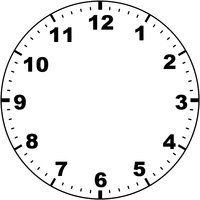
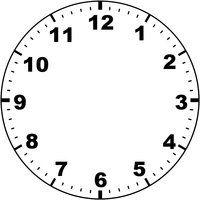
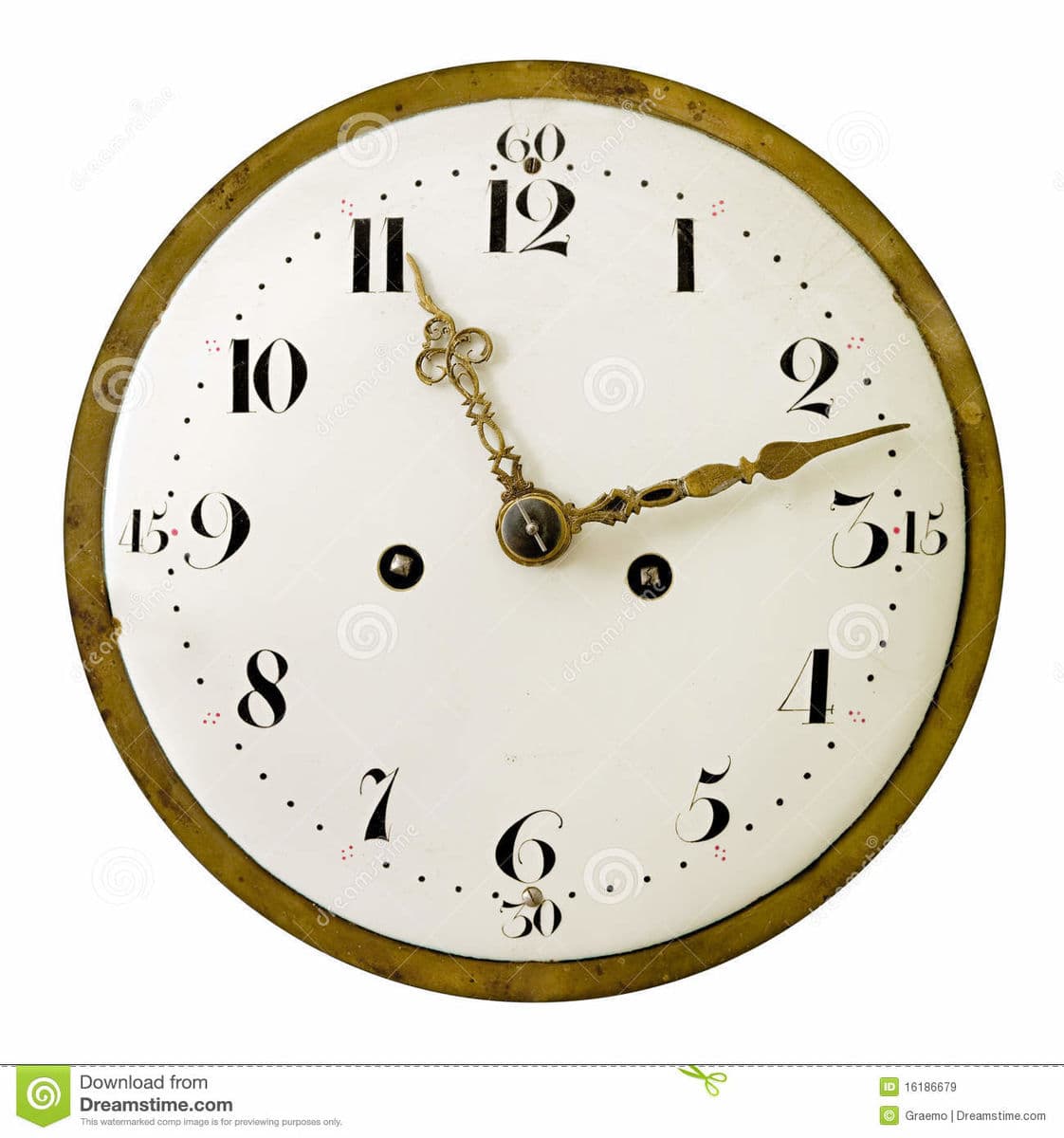
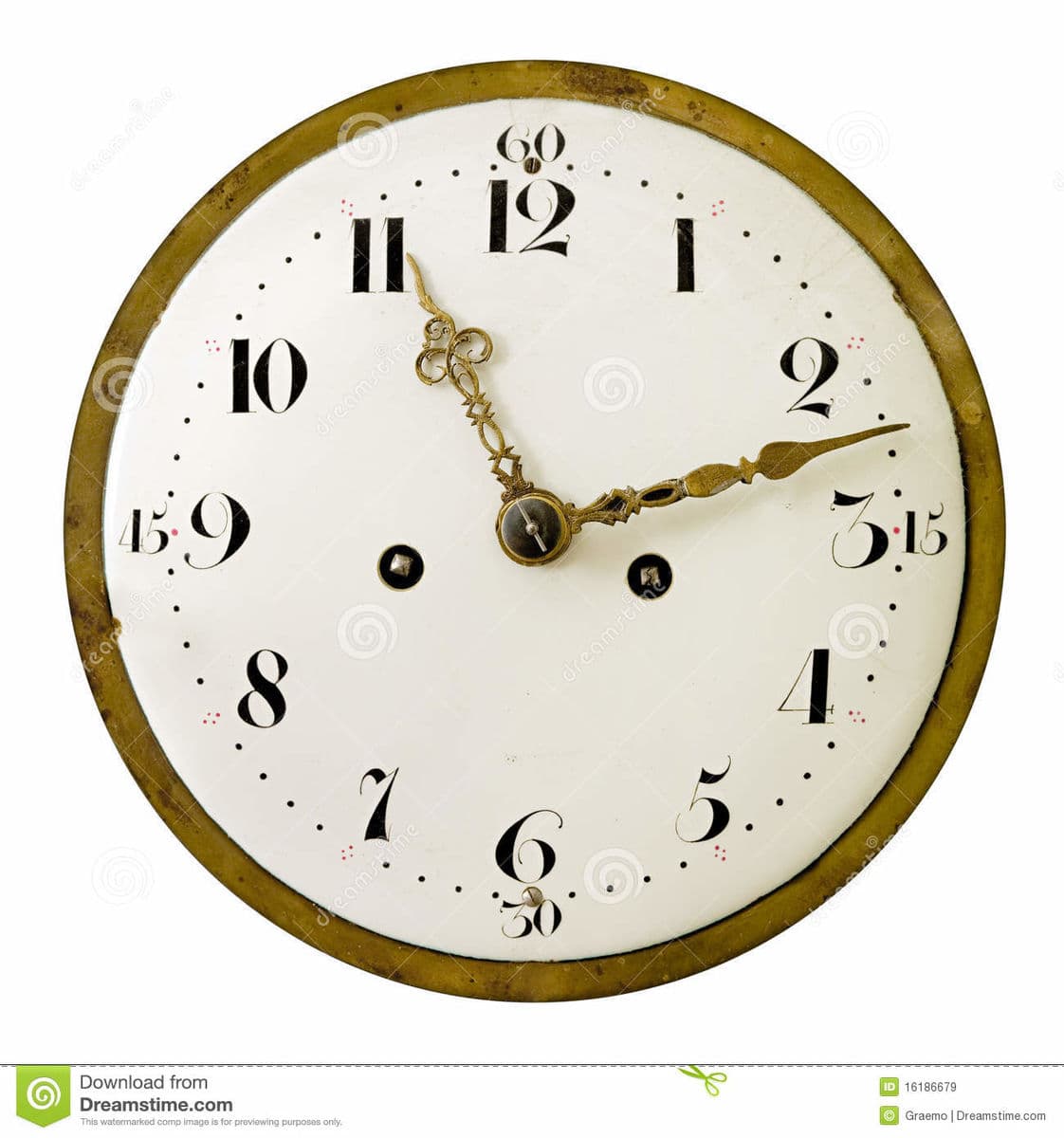
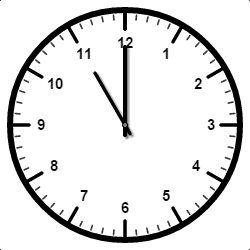
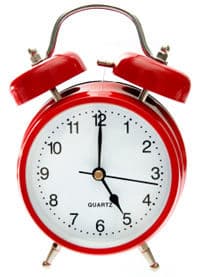
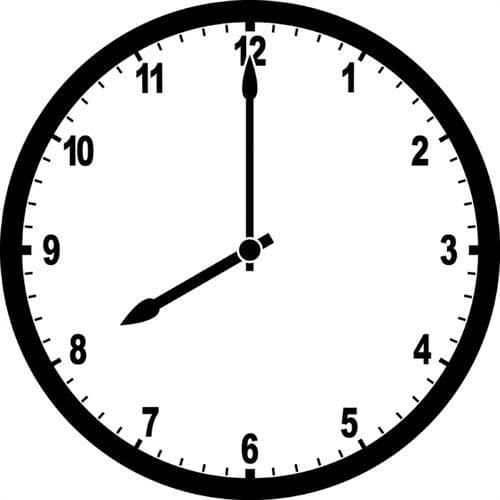
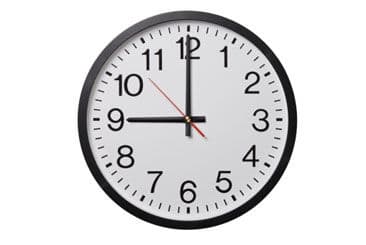 Time-Telling Quiz: Half Past the Hour Name: ______________________ Date: ______________ What does "half past" specifically mean on an analog clock? A) 15 minutes have passed B) 30 minutes have passed C) 45 minutes have passed D) The hour has just begun When the minute hand points to 6, what position represents "half past"? A) The start of the hour B) Exactly halfway through the hour C) The end of the hour D) A quarter of the way through the hour If the hour hand is between 4 and 5, and the minute hand is on 6, what time is it? A) 4:15 B) 4:45 C) 4:30 D) 5:00 Which statement best describes how the hour hand moves? A) It moves quickly between numbers B) It moves slowly between numbers C) It stays in one place all the time D) It moves only at the top of each hour How many minutes are in a complete circle on a clock? A) 12 minutes B) 24 minutes C) 60 minutes D) 30 minutes When reading an analog clock for "half past", which hand should you look at first? A) The hour hand B) The second hand C) The minute hand D) The decorative hand What is the most important position of the minute hand when identifying "half past"? A) Pointing to 3 B) Pointing to 12 C) Pointing to 6 D) Pointing to 9 If a clock shows half past 7, how would this be written numerically? A) 7:15 B) 7:45 C) 7:30 D) 8:00 Which of the following is TRUE about clock hands? A) The shorter hand always shows minutes B) The longer hand always shows hours C) The longer hand shows minutes, the shorter hand shows hours D) Both hands move at exactly the same speed What is the primary challenge when learning to read "half past" times? A) Remembering the minute hand must be on 6 B) Counting all the numbers on the clock C) Understanding what an hour is D) Knowing the difference between AM and PM Answer Key: B B C B C C C C C AAlright, Isti — here’s a longer and more detailed English version of the Isaac Newton text, still written at a level that’s accessible for Grade 4 students, but rich enough in information to meet PISA literacy expectations and EF A2-level vocabulary. I’ve kept sentences short, clear, and with explanations for new concepts so it’s easier for young learners to follow, while still including both famous facts and lesser-known stories. ⸻ Isaac Newton: The Man Who Changed the Way We See the World A Boy from a Small Village Isaac Newton was born on January 4, 1643, in Woolsthorpe, a small village in England. His life was not easy. His father died before he was born. When he was just a few months old, his mother remarried and left him to live with his grandmother. Isaac missed his parents, but he kept himself busy by making things and exploring the world around him. As a child, Isaac liked to build models and machines. He made a small windmill that could turn with the wind. He built a water clock that told the time by dripping water into a container. He even made a sundial — a clock that tells the time by using the shadow of the sun. 💡 Did you know? The sundial marks that Isaac carved as a boy can still be seen today on the wall of his old house. ⸻ School and Curiosity When Newton first went to school, he was not the top student. At first, he did not pay much attention in class. But one day, another boy teased him for not being smart. Newton decided to study hard to prove him wrong. Soon, he became the best in his class. Isaac loved asking questions. He wanted to know how and why things happened. He enjoyed watching the stars at night and thinking about how the world worked. ⸻ The Falling Apple and Gravity One of the most famous stories about Newton is the falling apple. One afternoon, Isaac sat in his mother’s garden and saw an apple drop from a tree. This made him think: “Why does the apple fall straight down? Why doesn’t it fly up into the sky?” From this question, Newton began to think about gravity — an invisible force that pulls objects toward each other. Gravity is what keeps our feet on the ground. It’s also what keeps the Moon moving around the Earth and the planets moving around the Sun. 💡 Fun fact: The apple did not hit Newton’s head. That’s just a story people made up later to make the tale more exciting. ⸻ Newton’s Three Laws of Motion Newton studied movement and wrote three important rules: 1. Objects stay still or keep moving unless something makes them change. • Example: A ball will not roll unless you push it. 2. The bigger the push, the bigger the movement. • Example: If you kick a ball harder, it will go faster and farther. 3. Every action has an equal and opposite reaction. • Example: When you jump off a boat, the boat moves backward as you move forward. These three laws are still used today to understand how cars, rockets, and even roller coasters work. ⸻ Discoveries in Light and Color Newton also studied light. He found that white light is not just one color — it is made of many colors. He used a glass prism to split sunlight into a rainbow. This helped scientists understand how colors work. ⸻ Inventions and New Ideas Newton made a special telescope that used mirrors instead of lenses. This type of telescope made images of planets and stars much clearer. It is still called the Newtonian telescope today. He also worked in mathematics and helped create a new type of math called calculus, which is used to study changes and movement. ⸻ Strange Experiments Newton was so curious that he sometimes tested ideas on himself. Once, he put a thin needle, called a bodkin, beside his eye to see how it would change his vision. It was very dangerous, but luckily he did not go blind. 💡 Did you know? Newton also studied alchemy — an old kind of science where people tried to turn metal into gold. He never succeeded, but it showed how wide his interests were. ⸻ Later Life and Work At the age of 27, Newton became a professor at Cambridge University. He later worked for the Royal Mint, making sure coins were made safely and stopping people from making fake money. He was very strict, and some criminals were sent to prison because of his work. Newton never married. He spent most of his life reading, writing, and doing experiments. ⸻ The End of His Life Isaac Newton died in 1727 at the age of 84. He was buried in Westminster Abbey, a famous place in London where great people of Britain are honored. His work changed the world forever. Even today, scientists, engineers, and students still use Newton’s laws and ideas. 💬 Newton once said: “If I have seen further, it is by standing on the shoulders of giants.” This means we can make new discoveries by learning from the work of others who came before us. give 10 questions to each passage with PISA literacy standard for kid 10 years, 1. Nikola Tesla: The Man Who Dreamed of Lightning Born: July 10, 1856 Died: January 7, 1943 When Nikola Tesla was a boy in Croatia, he saw a flash of lightning and asked his mother, “Can we catch the light?” That question never left him. As he grew older, Tesla became a brilliant inventor, especially fascinated by electricity. He believed in a future where energy could be sent wirelessly through the air—like music through the radio! Tesla invented the alternating current (AC) system, which became the foundation of modern electricity. At the time, Thomas Edison promoted direct current (DC), and the two men had a fierce competition. Many laughed at Tesla's bold ideas, but he never gave up. He dreamed of wireless communication, flying machines, and even free energy for everyone. Though he died alone and poor, today the world honors his vision. Think About It: Why do you think people didn’t believe Tesla at first? What can we learn from Tesla’s courage to dream big? 2. Charles Darwin: The Man Who Studied the World’s Weirdest Creatures Born: February 12, 1809 Died: April 19, 1882 When young Charles Darwin got on a ship called HMS Beagle, he didn’t know he would change science forever. He sailed around the world for five years, collecting plants, animals, and fossils. On the Galápagos Islands, he noticed something curious: finches had different beaks depending on their island. Why? Darwin’s observations led him to write the theory of evolution by natural selection. It explained how animals adapt and survive. But his ideas shocked many people because they seemed to challenge religious beliefs. Despite the controversy, Darwin continued his work. His book On the Origin of Species changed how we see life on Earth. Think About It: Should scientists share their ideas even if they go against what others believe? How did traveling help Darwin make new discoveries? 3. Marie Curie: The Woman Who Glowed in the Dark Born: November 7, 1867 Died: July 4, 1934 Marie Curie was born in Poland at a time when girls were not allowed to study science. But that didn’t stop her. She moved to France, worked day and night, and discovered radioactivity, a powerful energy hidden inside atoms. She and her husband, Pierre Curie, found two new elements: polonium and radium. She became the first woman to win a Nobel Prize, and the only person to win in two different sciences: physics and chemistry. Even when Pierre died in an accident, Marie continued their work. Her discoveries helped doctors treat cancer—but working with radioactive materials also harmed her health. She died from radiation exposure, but her legacy lives on. Think About It: What challenges did Marie Curie face as a woman in science? Why is it important to balance discovery with safety? 4. Galileo Galilei: The Star Watcher Who Defied the Church Born: February 15, 1564 Died: January 8, 1642 Galileo loved looking at the stars. He built one of the first powerful telescopes and made stunning discoveries: mountains on the Moon, moons around Jupiter, and that the Earth orbits the Sun—not the other way around. This idea, called heliocentrism, went against the teachings of the Church. He was put on trial and forced to say he was wrong. But he wasn’t. He spent his last years under house arrest, quietly writing. Today, Galileo is called the father of modern science for daring to question what others blindly believed. Think About It: Why do you think Galileo was punished for telling the truth? Should science always follow evidence, even if it goes against powerful beliefs? 5. Isaac Newton: The Man Who Asked “Why?” When an Apple Fell Born: January 4, 1643 Died: March 31, 1727 One day, an apple fell from a tree, and Isaac Newton began to wonder: Why did it fall down, not sideways or up? This simple question led to his theory of gravity. Newton also invented calculus, described the laws of motion, and changed physics forever. But Newton wasn’t just a genius—he was curious, quiet, and often worked alone. He believed everything in nature followed rules, and it was our job to discover them. Thanks to him, we understand how planets move, how rockets launch, and why you fall when you trip. Think About It: How did Newton’s curiosity lead to great discoveries? Do you think working alone helped or hurt Newton? 6. Ada Lovelace: The First Computer Programmer Before Computers Existed Born: December 10, 1815 Died: November 27, 1852 Ada Lovelace was the daughter of the famous poet Lord Byron, but she didn’t love poetry—she loved numbers! At a time when girls were expected to sew, Ada studied mathematics. She met Charles Babbage, who designed an early computer called the Analytical Engine. Ada imagined the machine could do more than just math—it could create music, art, and even write! She wrote what is now considered the first computer program, long before real computers were built. Think About It: How did Ada imagine something that didn’t exist yet? Why do we call her a pioneer in technology? 7. Albert Einstein: The Man Who Brought Time and Space Together Born: March 14, 1879 Died: April 18, 1955 Albert Einstein wasn’t always a good student. In fact, his teachers thought he was slow. But Einstein thought deeply. He asked big questions like, “What if you could ride a beam of light?” His theories of relativity changed how we see space, time, and gravity. He also warned the world about the dangers of nuclear weapons, even though his ideas helped create them. Einstein believed science should help people, not harm them. With his messy hair, kind smile, and brilliant mind, he remains a symbol of genius. Think About It: Can someone be bad in school but still be brilliant? Should scientists be responsible for how their inventions are used? 8. Pythagoras: The Musician Who Loved Math Born: Around 570 BC Died: Around 495 BC Long ago in ancient Greece, Pythagoras believed the universe followed numbers. He discovered the Pythagorean Theorem, a rule about triangles that helps us build houses, design computers, and navigate space. He also believed that music had math inside it—that certain notes made perfect harmony because of mathematical ratios. Pythagoras started a secret school and taught his students to search for truth through numbers, shapes, and sound. Think About It: Why do you think Pythagoras saw math in everything? How does music relate to math? 9. Rosalind Franklin: The Woman Behind the DNA Discovery Born: July 25, 1920 Died: April 16, 1958 Rosalind Franklin loved looking closely at things. She used a special machine called X-ray crystallography to photograph molecules. One of her greatest photos, called Photo 51, showed the shape of DNA, the molecule that carries life’s instructions. But her work was taken without credit. Two men, Watson and Crick, used her photo to build their famous model of DNA and won the Nobel Prize. Rosalind died young and never knew how important her work became. Think About It: Why is it important to give credit in science? What can we learn from Rosalind’s quiet strength? 10. Carl Linnaeus: The Man Who Gave Names to Everything Born: May 23, 1707 Died: January 10, 1778 Have you ever wondered why a tiger is called Panthera tigris? That’s thanks to Carl Linnaeus, a Swedish scientist who created a way to name and organize every living thing. His system is still used today in biology. Linnaeus loved nature and spent his life collecting plants, animals, and even rocks. He believed that by organizing life, we could better understand it. Thanks to him, we now have a global “dictionary of nature.” Think About It: Why is it important to name and organize living things? How does order help us understand the world?To understand melody in music, think about some music you’re familiar with. If you were asked to hum it, what would that sound like? The part of the music that you’d hum is the melody. It’s the main thread of sound that your brain tracks and holds onto when you’re listening to music. In vocal music, the melody is sung by the lead singer. Other vocalists can provide harmony and instruments can add accompaniment, but the melody is the star of the show.What are the characteristics of melody in music? How do you describe a melody in music? A melody needs to have two things. The first is a sequence of notes, or pitches, which range from high to low. The second is rhythm, which is the timing and duration of each note. These two simple elements can create an incredible variety of combinations. Even though a melody only consists of one note at a time, it can convey so much energy and emotion. Melodies can be fast and sparkly, like “The Flight of the Bumblebee.” They can be slow and majestic, like “Finlandia.” They might be sweeping and graceful, like a Strauss waltz. Or they can be fun and exciting, like your favorite pop tunes that you love to sing along with. Melodies often tell you a lot about where a piece of music comes from. It’s easy to recognize and identify melodies from different folk traditions such as the Japanese folk song “Sakura” or the Irish tune “Star of the County Down.” Learn how to play your favorite melodies on piano, and more! Sign up now. What is melody in music? Here are some examples. Here is the famous melody for the song “Lean on Me” written out on a staff. Notice the way that the notes move up, down, and then repeat. What is melody in music? Example of Lean On Me notes on treble staff. A melody all by itself is great, but music can be even more fun when there’s an accompaniment. Here are a few bars of “Lean on Me” with the accompaniment written out. As you listen to this song, notice how the accompaniment has a very similar rhythm and movement to the melody. Then there’s that one note in the bass line that comes along every measure with its own rhythm, which adds some extra energy and movement to the song. What makes a good melody? When you create a melody, there are four types of movement you can use: Repeat (same note) Step (up or down) Skip (up or down) Leap (up or down) Stepping and repeating are the most common types of melodic motion, and this makes a melody easier to sing. Most “hummable” tunes use steps and repeats almost exclusively. This kind of melody is called conjunct. Beethoven’s “Ode to Joy,” one of the most famous melodies of all time.Skips and leaps are generally more sparing in melodies, but when thoughtfully placed they can have a powerful emotional impact. Tunes with a lot of leaps are called disjunct. Listen to Sarah Brightman sing All I Ask of You from The Phantom of the Opera starting at 0:39. This is a very disjunct melody, and challenging to sing. Great melodies also incorporate patterns that blend unity, repetition, and contrast. Our ears love patterns, but they also love novelty and growth. A good melody incorporates all of these elements. For example, listen to John William’s “Princess Leia Theme.” Can you hear the repeated pattern in the melody that gradually moves higher as the theme progresses? Now listen to the way it changes and develops into something that fits with what came before but sounds new at the same time. This is some great melodic writing! Can melody exist without rhythm? There is no way for a melody to exist without rhythm. Even if your melody only has one note, that note has a duration, and that’s the rhythm. If your melody has two notes, how long those notes last and how much time passes between hearing them is also a rhythm. A melody in music can often be recognized even when it’s performed with different rhythms. This frequently happens in live performances of pop, rock, and jazz, in which singers typically improvise slight rhythmic differences with each performance. No two renditions are exactly the same, and this constant reinterpretation keeps the music fresh. How to make a melody for a song on piano Creating your own melodies on the piano is easy and fun! There are so many ways you can discover a melody all your own. Here are a few ideas. Get some inspiration from the world around you. What can you hear right now? A clock ticking? A bird song? A car passing by your house? See if you can find some notes on the piano that imitate the sounds you hear. Think of a feeling you’d like to put into a melody. What are some ways you could make a string of notes sound happy, sad, angry, or maybe just thoughtful. Choose a line from a poem you like, or write your own. Read it out loud and put some feeling into it. Did your voice rise and fall in pitch as you were reading? Now go to the piano, start on any note you like, and try to imitate what happened when you read. Go up when your voice naturally went up, go down when your voice naturally went down. How did that sound? Now you have the perfect melody to go with those words. Too many keys on the piano? The truth is, most melodies use only a limited number of different notes. Try creating a melody using only the black keys. These form what’s called a pentatonic scale. It’s used in a lot of folk music traditions around the world and can be a great place to start if you want to create your own melodies. Remember, when you create your melody, keep it simple. Use repeated notes and steps, but add a few skips to keep things interesting. One tip about leaps: when you do put in a big leap, try doubling back and filling in the empty space you leaped over. This keeps the melody self-contained and easier to sing. Also, see if you can use the same patterns of notes and rhythms to give the melody unity, but also change those patterns to give it variety. There is no right or wrong way to create your own music. Keep trying combinations of notes and rhythms until you find something that you like. How many bars and notes are in a melody? Many types of music tend to have a prescribed number of bars, or measures. This will vary widely between different genres, and creates an overall sense of musical structure. If you’re writing a pop song, a verse will usually have between eight and sixteen bars. The prechorus that follows often has just four bars, and this “foreshortening” creates a sense of acceleration, driving the listener toward the chorus. The number of notes can also vary widely. A melody in music needs at least two notes, and a long and complex one can have hundreds or even thousands of notes. What is a countermelody in music? How many melodies should a song have? A counter melody is a melodic line that interacts with the primary melody as an independent but supportive voice. A great example of this is the song “We Don’t Talk about Bruno.” Each character sings their own melody during the piece, but these melodies all combine at the end as countermelodies. This produces a musical texture known as counterpoint. The same thing happens in “One Day More” from Les Miserables. The different melodies are first sung separately, but end up being combined in a splendid, complex texture that leads the music to its thrilling conclusion. The difference between a countermelody and regular harmony is that harmony usually supports the rhythms of the melody. A countermelody will move more independently, with different rhythms from those of the melody, and will often sound “melodic” when sung or played all by itself. A melodic song should have one main melody. This is the part that the lead voice sings. It’s usually in the spotlight, and will be the most memorable part of the music. Anything else is either harmony, countermelody, or accompaniment. Does all music have to have a melody? A piece of music doesn’t have to have a melody. There are many different kinds of music without melody. For example, a lot of music played on percussion instruments won’t have a melody. Listen to this example of Tahitian drumming. This is some great music, exciting and fun to listen to, but you’d have a hard time humming it. It’s music, but it doesn’t have a melody. Rap music is another style of music where there doesn’t have to be a melody. In rap, words are chanted rather than sung. The performer will raise and lower the pitch of their voice for emphasis, but it’s the rhythm of the words that creates most of the music. Music can even lack any melody, at least in some sections. Listen to the opening chords of “Duel of the Fates.” This choral passage is all about harmony, with little rhythmic variance or sense of melody. But it makes an effective contrast with the next section, which is bustling with rapid instrumental melodies. In some pieces, there are multiple melodic lines but there is no one main melody. When music is made up of equally important countermelodies, it creates a contrapuntal texture. Baroque composer J.S. Bach was one of the greatest masters of this style, such as in his Little Fugue in G minor. It starts with a single melodic line, the subject, but then a countermelody is added, and then more and more until several melodic lines are playing together. It’s fun to listen to, but once all the countermelodies are playing together it becomes hard to decide which part to hum along with! You’ll also hear a lot of counterpoint in jazz music, in which the different instruments are all playing together and improvising their own melodies that combine to create a rich, thick musical texture. Experience the wonder of melody in music! Whether you’re humming your favorite tune, or creating a new song all your own, melody is a memorable, shareable part of music. Enrich your music experience by being aware of, listening for, and enjoying the melodies all around you.Computers have completely changed the way we live, learn, and work. We now live in the Information Age, a time when finding and sharing information is easier than ever before. With just a few clicks, we can learn about history, science, cooking, or almost anything we want. However, using computers too much can have negative effects, especially on our brains. Some studies show that people’s attention span is getting shorter because they are used to quick information. It can also be harder to remember things when we always rely on our phones instead of thinking deeply for ourselves. To keep your brain strong and healthy, it is important to take regular breaks from screens. Reading books, going for walks, and having face-to-face conversations can help. Technology is a wonderful tool, but it’s important to use it wisely and not let it replace real-world experiences. Think before you act online Sometimes what we post on our favourite social networks have consequences we didn't expect. One weekend, 20-year-old James Miller posted on his Facebook page that his job was soooo boring. When he got to work on Monday his boss told him to clear his desk and get out. He gave him a letter, too. It said: 'After reading your comments on Facebook about our company, we understand you are not happy with your work. We think it is better for you to look for something that you will find more interesting." A few years ago, a girl's birthday party turned into a nightmare. Fifteen-year-old Cathy posted an invitation to her birthday party online. She posted her address, too. When her parents got back from the cinema that evening, they couldn't believe their eyes. There were 500 people at the party, and some of them were smashing windows, breaking potted plants and making a total mess of the house. Most teens think they know everything about social media, and that things like this could never happen to them. A study shows that last year alone, more than three million young people worldwide got into trouble because of their online activities. Here are some important tips. None of them can guarantee 100% Internet security, but all of them will help you to be safer online. RULE 1: Share with care! Not everyone will like what you write on Facebook or Twitter. Think before you post something. You can never completely control who sees your profile, your texts, your pictures, or your videos. Before clicking 'post', everyone should ask themselves two questions: 'How will I feel if my family or teachers see this?' and 'How might this post be bad for me in three, five or ten years from now?" RULE 2: Be polite when you write! Imagine someone is unfriendly in real life. You don't like it, right? Well, the same is true of online communication. Politeness matters, and anyone can be polite. No one likes it when you 'shout' in your messages. DON'T USE ALL CAPITALS!!!!!!!! If you feel angry or frustrated while you're writing a message, wait a bit. Read it again later and then send it. RULE 3: Protect and respect! Don't share your passwords with anyone. Don't post your home or email address online. Beware of 'cyberbullying' - don't forward rumours about other people, and don't say negative things about them. If you get messages like that or see them online, talk to an adult you know.Reading- A popular city (True/ False)Reading a Dossier. Reading a section of the non-fiction book 'Rushing Rivers'