Tag the questions with any skills you have. Your dashboard will track each student's mastery of each skill.
Give this quiz to my class
Q 1/11
Score 0
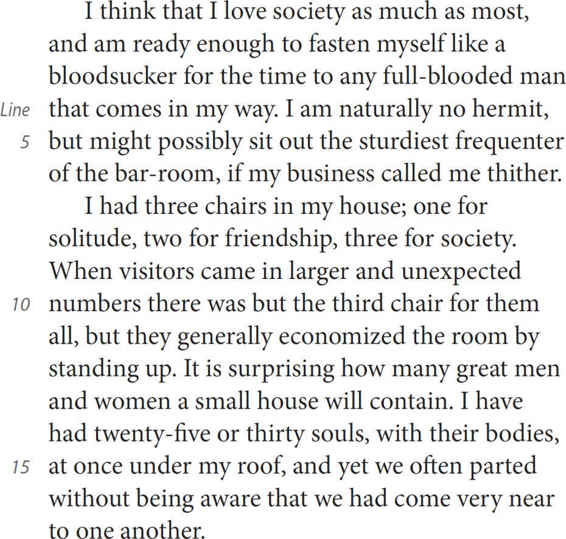
1. The main narrative point of view of the passage is of
30
a man adjusting to life in a big city after growing up on a farm.
a sailor discussing the pond on which he grew up and how it affected his friendships.
a man discussing the potential of big thoughts and their need to be expressed.
a discussion of visitors to a small house away from city life.
Q 2/11
Score 0
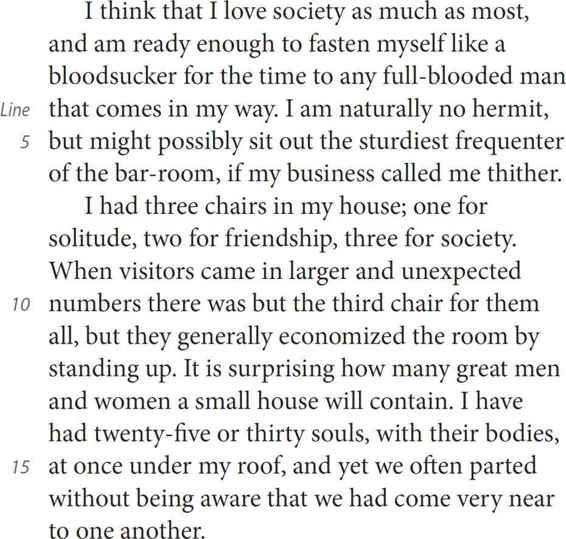
2. The passage suggested which of the following about the author?
30
He had more visitors to his home in the country than at any other time in his life.
He needed to throw dinner parties to entice guests to come from town to his home.
He enjoyed living in the country near a pond.
He felt that having more than three people in his house was too many.
11 questions
Q.
1. The main narrative point of view of the passage is of
1
30 sec
Q.
2. The passage suggested which of the following about the author?
2
30 sec
Q.
3. Which choice provides the best evidence for the answer to the previous answer?
3
30 sec
Q.
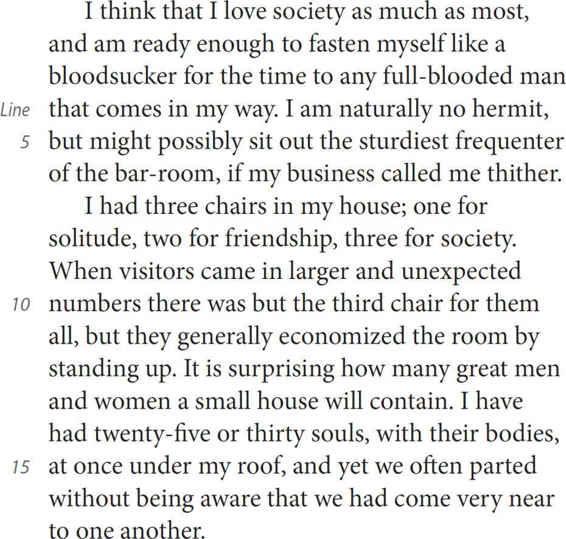
4. As used in line 11, "economized" most nearly means
4
30 sec
Q.
5. It can be inferred from the passage that "big thoughts" (line 21) must
5
30 sec
Q.
6. In the context of the passage, the phrase "as when you throw two stones into calm water so near that they break each other's undulations" (lines 37-39) is best described as
6
30 sec
Q.
As used in line 27, "plow" most nearly means
7
30 sec
Q.
8. What happens when the author does not have enough food for his guests?
8
30 sec
Q.
9. The passage suggests that housekeepers most likely
9
30 sec
Q.
10. What does the author mean when he said that "only the finest sediment was deposited" (lines 84-85) on him?
10
30 sec
Q.
11. What choice provides the best evidence for the answer to the previous question?