Loading...


Recap of concepts Week 4
Quiz by Anita Rathore
Customize this quiz to suit your class
Instantly translate to 100+ languages
Tag the questions with any skills you have. Your dashboard will track each student's mastery of each skill.
Give this quiz to my class
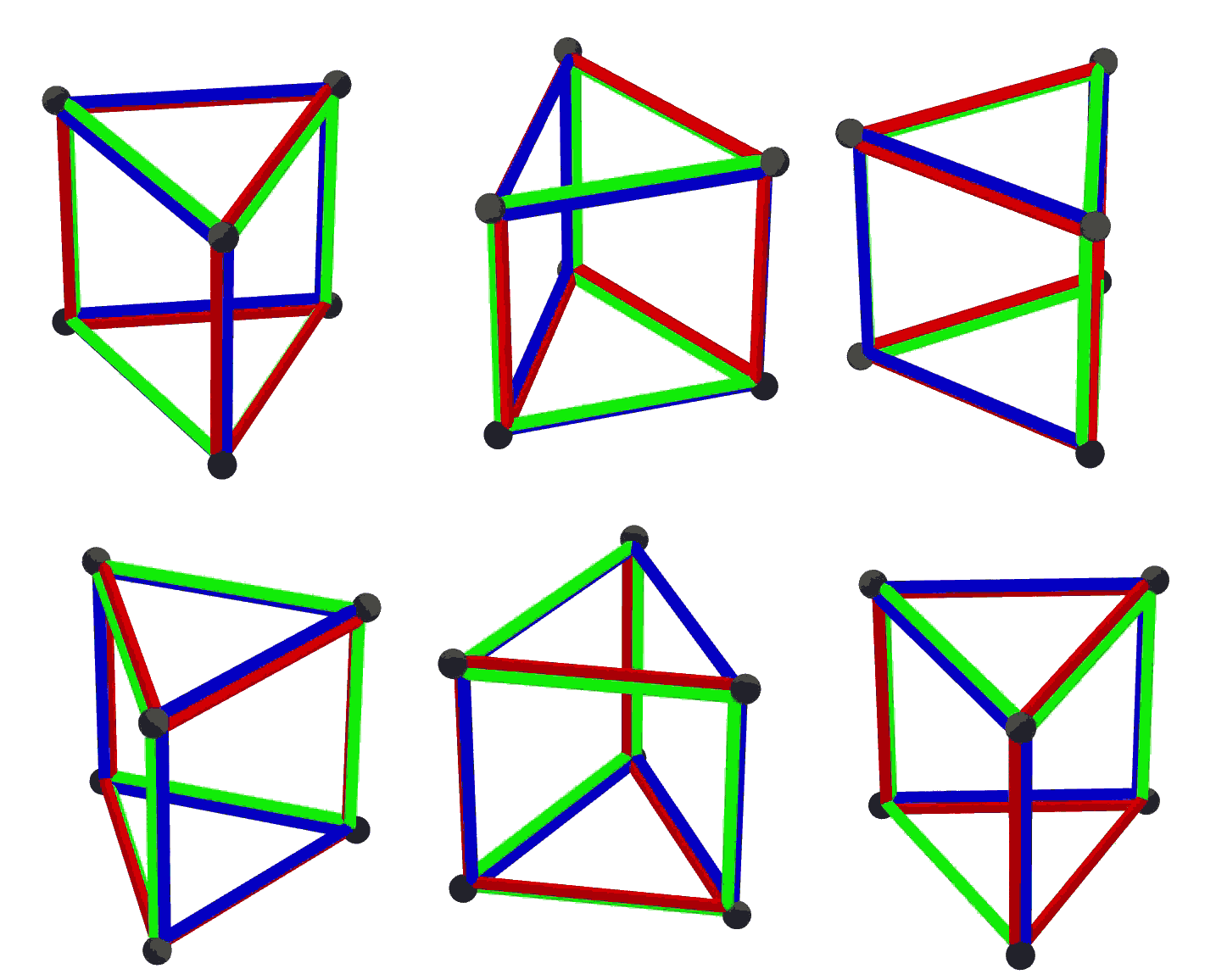
Q1. Identify the given 3D shape and select the number of corners


Q2. Read the clock and select the correct time.
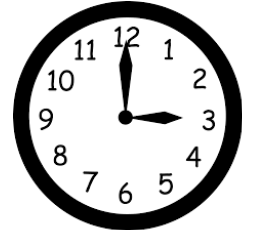
12:00
2:00
1:00
3:00
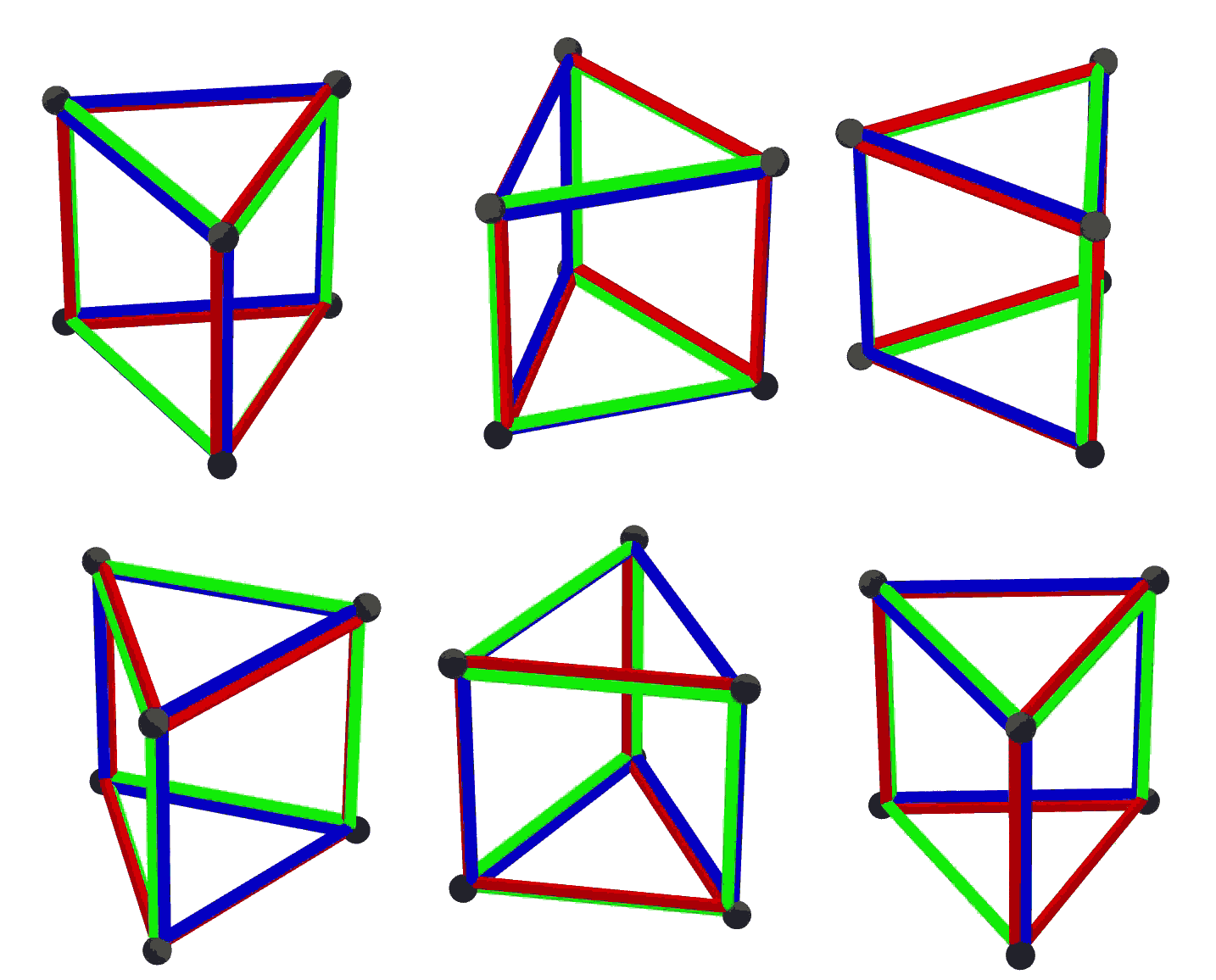
Q1. Identify the given 3D shape and select the number of corners
Q2. Read the clock and select the correct time.

Q3. Read the clock and select the correct time.

Q4. Mrs. Jane and her family are eating dinner . Which time is it most likely?

Q5. Match the shapes with its corners.
Q6. Compare and arrange the numbers in Descending order.
Q7. Compare and arrange the numbers in Ascending order.
Q8. Sort and arrange the skip of 10 and 2
Q9. Select the 3D shape that has 2 faces.
Q 10. Which number comes after twenty-eight?
Q 11. Which number comes before thirty-four?
 MATH NOV WEEK 4 RECAP OF CONCEPTSNumeracy - Recap of all conceptsNumeracy - Recap of the conceptsElectrostatics The section of CBSE Class 12 Physics electrostatic potential and capacitance notes mainly deals with the in-depth analysis of electromagnetic phenomena when they are not performing any movements. Additionally, it is divided into ten further sub-topics to study the companion processes of reaching the state. These are - 1. Electric charge In this section of Physics ch 2 Class 12 notes, you get to learn about the basic features of electric charge and its expression in Physics. Along with its basics, the sections help to understand the full potential of charge. Different aspects of Charge included in Class 12 Physics Chapter 2 notes are - Definition Type: Positive and Negative Charge Unit and dimensional formula Point Charge Properties of Charge Comparison of Charge and Mass Methods of Charging Electroscope 2. Coulomb's Law Force is created when charges of opposite signs attract each other, and they repulse if the signs are the same. Coulomb's law tries to define this phenomenon through a mathematical formula, explicitly mentioned in Physics Class 12 notes Chapter 2. Moreover, there is key information about the variation of the constant k and its effect on a medium. Coulomb's law's vector form and the principle of superimposition are also explained in ch 2 Physics Class 12 notes. (Image will be uploaded soon) 3. Electric Field As stated in Class 12 Physics Chapter 2 notes, every positively or negatively charged particle has their respective electric fields. It feels a force at the time of interaction which might be attraction or repulsion. As it arises from electric charge, it is crucial to know about its different parts like - Electric field intensity Relation between electric force and electric field Super imposition of electric field Point charge Continuous charge distributions Properties of Electric Field Lines Motion of Charged Particles in an Electric field Learning more about the electric field from electric potential and capacitance notes Class 12 helps a student to get a grasp of upcoming chapters. 4. Electric Potential Energy When energy helps a charge to move from an electric field, it is known as the Electric Potential Energy. This section of electrostatic chapter Class 12 notes requires a student to study the Electron volt (eV), and the potential energy that an n number of charges can hold. 5. Electric Potential This section of Class 12 Physics Chapter 2 notes focuses on in-depth learning of Electric Potential or Voltage. Basically, it defines the potential movement of energy. 6. Relation between Electric Field and Potential Apart from knowing more about the relationship between the two values, Physics Class 12 Chapter 2 notes also discuss equipotential surfaces. 7. Electric Dipole Essentially, 'Dipoles' are two opposite points of charge represented with q and –q, with their distance between each other being 2a. Electric Dipoles are crucial in your study of Physics Class 12 Chapter 2 notes to learn more about electric fields and their potential. Additionally, Class 12 Physics Chapter 2 notes focus on the influence of electric dipoles on a uniform electric field mainly through Force and Torque, Work, and Potential Energy. In the last part of Electrostatics, further focus is on using the formulas to their fullest potential. It includes subsections of Electric Field, Electric Potential Energy, Electric Potential, and Electric Dipole. In the notes for electrostatic potential and capacitance, you will find proper solutions accompanied by clear and crisp diagrams for better understanding. 8. Gauss's Law Apart from just discussing the Gauss's Law, in Physics Class 12 ch 2 notes there is a thorough explanation of its properties and applications. The Gauss' Law states that net electric flux passing through a hypothetical closed surface is equal to the net electric charge present within the same closed surface. Being a broad part of the whole chapter, you may need to spend a little more time on it. Moving forward, it starts discussing the properties of conductors in relation to Gauss's Law. The Class 12 Physics notes Chapter 2 perfectly defines the journey to Gauss' Law from Coulomb's Law. Here is the Gauss's Law present in the Class 12 Physics ch 2 notes, (image will be uploaded soon) 9. Capacitors There is a dedicated section about Capacitors in the Class 12 Physics Chapter 2 notes elucidating its functions and importance as storage of potential electric energy. After explaining the structure of a capacitor, it points out the different types, parallel plate, spherical and cylindrical. The section of Chapter 2 notes of Physics Class 12 is further divided into subheads like: Properties of an ideal battery Grouping of capacitors Simple circuits (Series and Parallel) Dielectric Van de Graaff generator Combination of drops Charge distribution method Wheatstone Bridge-based circuit Extended Wheatstone Bridge Infinite network of capacitors Redistribution of charge between two capacitors Vedantu prepares the Class 12 Physics Chapter 2 notes with help from subject matter experts. In the PDF, you get a comprehensive idea of the topic along with potential answers to the most asked questions. Furthermore, the detailed explanation on each section and subsections are written in a simple language allows a student to ace their exams with wholesome knowledge. These Physics Chapter 2 Class 12 notes are going to be one of the best supplementary study materials besides a student’s textbooks. Visit the Vedantu website or download the app to get your hands on all important notes! Important Questions A charge of 4 × 10⁻⁸C is uniformly distributed on the surface of a spherical conductor, having a radius of 15 cm. Determine the electric field just outside this sphere at a point that is 15 cm from the centre of this sphere. Determine the capacitance given that the distance between the two plates has been reduced by half and the parallel plate capacitor holds a capacitance of 20 pF (where 1pF = 10-12 F) having air between the two plates. What will be the total capacitance of a combination where three capacitors, each having a capacitance of 20 pF, are connected in series. A square having a side of 10 cm has a 500 µC charge at its centre. Determine the work done to move a charge of 10 µC between two points that are diagonally opposite each other on the square. At an equatorial point, what will be the electrostatic potential because of an electric dipole? Calculate the work done to move a test charge, q, through a length of 1 cm along the equatorial axis of an electric dipole? Polarisation A capacitor has its plates enclosed in a medium that can be filled by insulating substances. A net dipole moment is then induced by an electric field in the dielectric. This event causes the field in an opposite direction. Equipotential Surface An equipotential surface is a type of surface where the potential always has a constant value. If considered as a point charge, the concentric spheres that are centred at a particular area of this charge are basically equipotential surfaces. Advantages of Vedantu's Revision Notes: A Comprehensive Resource for Effective Learning There are several reasons why one may refer to Vedantu's revision notes for studying a subject like Electrostatic Potential and Capacitance. Here are some key points: Comprehensive Coverage: Vedantu's revision notes provide a comprehensive coverage of the entire topic, ensuring that all important concepts and subtopics are included. Concise and Organized: The notes are designed to be concise, focusing on the key points and core ideas. They are organized in a structured manner, making it easy for students to navigate and revise the content. Simplified Explanation: The revision notes offer simplified explanations of complex concepts, making them more accessible and easier to understand. This helps students grasp the material more effectively. Key Formulas and Equations: The notes highlight the key formulas and equations relevant to the topic, ensuring that students have a clear understanding of the mathematical aspects of Electrostatic Potential and Capacitance. Examples and Illustrations: Vedantu's revision notes often include examples and illustrations that help clarify concepts and provide practical applications, enabling students to better relate theory to real-world scenarios. Quick Recap: The revision notes serve as a quick recap of the important points, allowing students to review the material efficiently before exams or assessments. Exam-Oriented Approach: Vedantu's revision notes are designed with an exam-oriented approach, focusing on the topics and concepts that are frequently asked in examinations. This helps students prepare effectively and increase their chances of scoring well. Accessible Anytime: Vedantu's revision notes are easily accessible online, allowing students to study at their convenience and revise the material anytime, anywhere.RECAP OF PRE NUMBER CONCEPTS AND SHAPESRecap of all the concepts in Unit 4Slide 1: • Title slide with the presentation topic: "Understanding Context in Film Analysis" Slide 2: • Introduction to the importance of context in film analysis. • Engaging visuals to capture students' attention. • Emphasize that context provides a deeper understanding of a film's meaning. Slide 3: • Definition of Context: • Context refers to the surrounding circumstances or conditions that influence the creation, interpretation, and reception of a film. • Analyzing context helps uncover layers of meaning, societal influences, and enhances critical thinking skills. Slide 4: • Historical Context: • Definition: Historical context refers to the specific time period in which a film was created and/or set. • Importance: Understanding the historical context helps us connect the film to its time period and comprehend the influence of historical events, social norms, and cultural movements. • Example: Analyzing the historical context of "Gone with the Wind" (1939) allows us to appreciate how the film reflects the post-Civil War era in the United States and addresses themes of race, class, and gender. Slide 5: • Social Context: • Definition: Social context refers to the social structures, norms, and values prevalent during the time of a film's creation and/or setting. • Importance: Examining the social context helps us understand how societal attitudes and values shape the film's narrative, characters, and themes. • Example: Analyzing the social context of "The Breakfast Club" (1985) reveals how the film explores the social dynamics and stereotypes within a high school setting, reflecting the cultural climate of the 1980s. Slide 6: • Political Context: • Definition: Political context refers to the political climate and ideologies present during the time of a film's creation and/or setting. • Importance: Understanding the political context helps us uncover political messages, power dynamics, and social commentary within the film. • Example: Examining the political context of "V for Vendetta" (2005) allows us to appreciate how the film critiques totalitarianism and explores themes of government control and individual freedom. Slide 7: • Authorial/Directorial Context: • Definition: Authorial/Directorial context refers to the background, artistic choices, and intentions of the director or filmmaker. • Importance: Analyzing this context helps us understand the director's unique vision, influences, and storytelling techniques, which shape the film's style and thematic focus. • Example: Exploring the authorial/directorial context of "Pulp Fiction" (1994) reveals Quentin Tarantino's nonlinear storytelling, pop culture references, and exploration of morality and violence. Slide 8: • Importance of considering multiple contexts together: • Analyzing multiple contexts together provides a comprehensive understanding of a film's meaning and impact. • Exploring the interplay between historical, social, political, and authorial/directorial contexts deepens our insights and enhances critical analysis skills. Slide 9: • Case studies: • Present two different films as case studies. • Example 1: Analyzing the historical context, social context, and authorial/directorial context of "Black Panther" (2018) provides insights into its exploration of Afrofuturism, cultural identity, and representation. • Example 2: Examining the historical context, political context, and authorial/directorial context of "Citizen Kane" (1941) reveals its commentary on power, media, and the American dream. Slide 10: • Summary slide: • Recap the main points about context in film analysis. • Encourage students to apply these concepts to their own analysis.Recap of number names and up and down concept.