Loading...


Reflections in mirrors
Customize this quiz to suit your class
Instantly translate to 100+ languages
Tag the questions with any skills you have. Your dashboard will track each student's mastery of each skill.
Give this quiz to my class
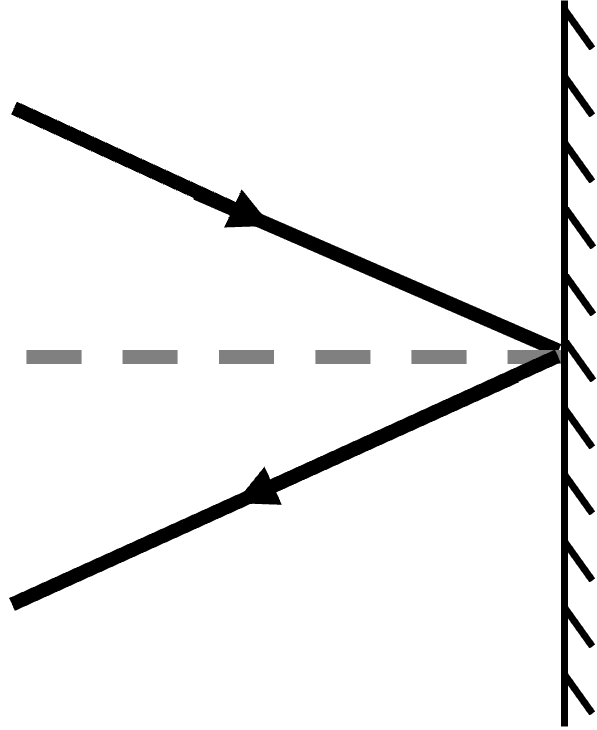
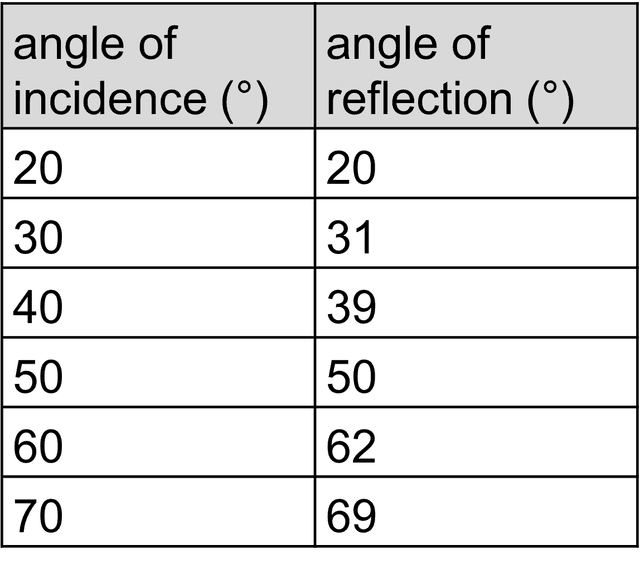 Vocabulary List 1. Avocation Definition: A hobby or activity someone enjoys doing in addition to their main work. Example: Drawing cartoons was his favorite avocation after school. 2. Supercolossal Definition: Extremely large; even bigger than enormous. Example: They ordered a supercolossal pizza to share. 3. Repress Definition: To hold back or keep feelings or thoughts hidden. Example: She tried to repress her anger during the argument. 4. Subliminally Definition: In a way that affects the mind without someone realizing it. Example: The music subliminally made the store feel calmer. 5. Thrombosis Definition: A medical condition where a blood clot forms inside a blood vessel. Example: The doctor warned that lack of exercise can increase the risk of thrombosis. 6. Sclerosis Definition: A hardening of body tissue, especially arteries or organs. Example: The patient was diagnosed with sclerosis that affected his mobility. 7. Distortion Definition: A change that makes something appear different from what it really is. Example: The funhouse mirror caused a distortion of her reflection. 8. Philanthropy Definition: The act of giving money or help to improve the lives of others. Example: His philanthropy helped build a new library for the town. 9. Prevarications Definition: Lies or evasive statements used to avoid telling the truth. Example: The teacher grew tired of the student’s prevarications about missing homework. 10. Syndrome Definition: A group of symptoms or behaviors that occur together. Example: The doctor studied the syndrome to better understand the illness. 11. Schizophrenic Definition: Relating to a mental disorder where a person may have difficulty distinguishing reality from imagination. Example: The character in the story showed schizophrenic behavior. 12. Subsidize Definition: To support financially, usually with money from the government or an organization. Example: The city decided to subsidize public transportation. 13. Phenomenal Definition: Very remarkable or impressive. Example: The athlete gave a phenomenal performance in the race. 14. Demented Definition: Showing disturbed or irrational behavior. Example: The villain in the movie had a demented laugh. 15. Patron Definition: A person who supports or regularly visits a business, artist, or organization. Example: She was a loyal patron of the local bookstore. 16. Cultural Lag Definition: When ideas and beliefs take longer to change than technology or society. Example: Cultural lag can make it hard for laws to keep up with new technology. 17. Omens Definition: Signs believed to predict something that will happen in the future. Example: Some people think black cats are omens of bad luck. 18. Antagonistic Definition: Showing hostility or opposition. Example: The rival teams were antagonistic toward each other. 19. Voluptuous Definition: Curvy and attractive in a full, rich way. Example: The sculpture showed a voluptuous figure. 20. Oscilloscope Definition: A device used to view and measure electrical signals. Example: The scientist used an oscilloscope to study the sound waves. 21. Putrid Definition: Rotting and giving off a very bad smell. Example: The garbage smelled putrid after sitting in the sun. 22. Fixated Definition: Focused or obsessed with something. Example: He became fixated on winning the competition. 23. Mundane Definition: Ordinary, dull, or routine. Example: She was tired of the mundane chores she had to do every day. 24. Ghouls Definition: Evil or ghost-like creatures that feed on the dead in stories or legends. Example: The haunted house story was filled with ghouls and monsters. 25. Maladjusted Definition: Unable to cope well with the demands of life or society. Example: The counselor helped the maladjusted student deal with stress. 26. Incongruous Definition: Not fitting in; out of place. Example: The fancy chandelier looked incongruous in the small cabin. 27. Tribute Definition: Something done or given to show respect or admiration. Example: The concert was a tribute to the famous musician. 28. Audibly Definition: In a way that can be heard clearly. Example: He audibly sighed when the test ended. 29. Proficiency Definition: Skill or competence in doing something. Example: Her proficiency in math helped her tutor other students.Strand 4.2 Professional reflection and learning 4.2.1 Demonstrate understanding of how professional reflection and learning can be used in improving practice. 4.2.2 Apply professional reflection and learning to improve one’s practice. 4.2.3 Initiate professional reflections and promote learning opportunities with other school heads to improve practice. 4.2.4 Model exemplary leadership practices within and beyond school contexts in critically evaluating practice and setting clearly defined targets for professional development.Fed. 51: To the People of the State of New York: TO WHAT expedient, then, shall we finally resort, for maintaining in practice the necessary partition of power among the several departments, as laid down in the Constitution? The only answer that can be given is, that as all these exterior provisions are found to be inadequate, the defect must be supplied, by so contriving the interior structure of the government as that its several constituent parts may, by their mutual relations, be the means of keeping each other in their proper places. Without presuming to undertake a full development of this important idea, I will hazard a few general observations, which may perhaps place it in a clearer light, and enable us to form a more correct judgment of the principles and structure of the government planned by the convention. In order to lay a due foundation for that separate and distinct exercise of the different powers of government, which to a certain extent is admitted on all hands to be essential to the preservation of liberty, it is evident that each department should have a will of its own; and consequently should be so constituted that the members of each should have as little agency as possible in the appointment of the members of the others. Were this principle rigorously adhered to, it would require that all the appointments for the supreme executive, legislative, and judiciary magistracies should be drawn from the same fountain of authority, the people, through channels having no communication whatever with one another. Perhaps such a plan of constructing the several departments would be less difficult in practice than it may in contemplation appear. Some difficulties, however, and some additional expense would attend the execution of it. Some deviations, therefore, from the principle must be admitted. In the constitution of the judiciary department in particular, it might be inexpedient to insist rigorously on the principle: first, because peculiar qualifications being essential in the members, the primary consideration ought to be to select that mode of choice which best secures these qualifications; secondly, because the permanent tenure by which the appointments are held in that department, must soon destroy all sense of dependence on the authority conferring them. It is equally evident, that the members of each department should be as little dependent as possible on those of the others, for the emoluments annexed to their offices. Were the executive magistrate, or the judges, not independent of the legislature in this particular, their independence in every other would be merely nominal. But the great security against a gradual concentration of the several powers in the same department, consists in giving to those who administer each department the necessary constitutional means and personal motives to resist encroachments of the others. The provision for defense must in this, as in all other cases, be made commensurate to the danger of attack. Ambition must be made to counteract ambition. The interest of the man must be connected with the constitutional rights of the place. It may be a reflection on human nature, that such devices should be necessary to control the abuses of government. But what is government itself, but the greatest of all reflections on human nature? If men were angels, no government would be necessary. If angels were to govern men, neither external nor internal controls on government would be necessary. In framing a government which is to be administered by men over men, the great difficulty lies in this: you must first enable the government to control the governed; and in the next place oblige it to control itself. A dependence on the people is, no doubt, the primary control on the government; but experience has taught mankind the necessity of auxiliary precautions. This policy of supplying, by opposite and rival interests, the defect of better motives, might be traced through the whole system of human affairs, private as well as public. We see it particularly displayed in all the subordinate distributions of power, where the constant aim is to divide and arrange the several offices in such a manner as that each may be a check on the other that the private interest of every individual may be a sentinel over the public rights. These inventions of prudence cannot be less requisite in the distribution of the supreme powers of the State. But it is not possible to give to each department an equal power of self-defense. In republican government, the legislative authority necessarily predominates. The remedy for this inconveniency is to divide the legislature into different branches; and to render them, by different modes of election and different principles of action, as little connected with each other as the nature of their common functions and their common dependence on the society will admit. It may even be necessary to guard against dangerous encroachments by still further precautions. As the weight of the legislative authority requires that it should be thus divided, the weakness of the executive may require, on the other hand, that it should be fortified. An absolute negative on the legislature appears, at first view, to be the natural defense with which the executive magistrate should be armed. But perhaps it would be neither altogether safe nor alone sufficient. On ordinary occasions it might not be exerted with the requisite firmness, and on extraordinary occasions it might be perfidiously abused. May not this defect of an absolute negative be supplied by some qualified connection between this weaker department and the weaker branch of the stronger department, by which the latter may be led to support the constitutional rights of the former, without being too much detached from the rights of its own department? If the principles on which these observations are founded be just, as I persuade myself they are, and they be applied as a criterion to the several State constitutions, and to the federal Constitution it will be found that if the latter does not perfectly correspond with them, the former are infinitely less able to bear such a test. There are, moreover, two considerations particularly applicable to the federal system of America, which place that system in a very interesting point of view. First. In a single republic, all the power surrendered by the people is submitted to the administration of a single government; and the usurpations are guarded against by a division of the government into distinct and separate departments. In the compound republic of America, the power surrendered by the people is first divided between two distinct governments, and then the portion allotted to each subdivided among distinct and separate departments. Hence a double security arises to the rights of the people. The different governments will control each other, at the same time that each will be controlled by itself. Second. It is of great importance in a republic not only to guard the society against the oppression of its rulers, but to guard one part of the society against the injustice of the other part. Different interests necessarily exist in different classes of citizens. If a majority be united by a common interest, the rights of the minority will be insecure. There are but two methods of providing against this evil: the one by creating a will in the community independent of the majority that is, of the society itself; the other, by comprehending in the society so many separate descriptions of citizens as will render an unjust combination of a majority of the whole very improbable, if not impracticable. The first method prevails in all governments possessing an hereditary or self-appointed authority. This, at best, is but a precarious security; because a power independent of the society may as well espouse the unjust views of the major, as the rightful interests of the minor party, and may possibly be turned against both parties. The second method will be exemplified in the federal republic of the United States. Whilst all authority in it will be derived from and dependent on the society, the society itself will be broken into so many parts, interests, and classes of citizens, that the rights of individuals, or of the minority, will be in little danger from interested combinations of the majority. In a free government the security for civil rights must be the same as that for religious rights. It consists in the one case in the multiplicity of interests, and in the other in the multiplicity of sects. The degree of security in both cases will depend on the number of interests and sects; and this may be presumed to depend on the extent of country and number of people comprehended under the same government. This view of the subject must particularly recommend a proper federal system to all the sincere and considerate friends of republican government, since it shows that in exact proportion as the territory of the Union may be formed into more circumscribed Confederacies, or States oppressive combinations of a majority will be facilitated: the best security, under the republican forms, for the rights of every class of citizens, will be diminished: and consequently the stability and independence of some member of the government, the only other security, must be proportionately increased. Justice is the end of government. It is the end of civil society. It ever has been and ever will be pursued until it be obtained, or until liberty be lost in the pursuit. In a society under the forms of which the stronger faction can readily unite and oppress the weaker, anarchy may as truly be said to reign as in a state of nature, where the weaker individual is not secured against the violence of the stronger; and as, in the latter state, even the stronger individuals are prompted, by the uncertainty of their condition, to submit to a government which may protect the weak as well as themselves; so, in the former state, will the more powerful factions or parties be gradnally induced, by a like motive, to wish for a government which will protect all parties, the weaker as well as the more powerful. It can be little doubted that if the State of Rhode Island was separated from the Confederacy and left to itself, the insecurity of rights under the popular form of government within such narrow limits would be displayed by such reiterated oppressions of factious majorities that some power altogether independent of the people would soon be called for by the voice of the very factions whose misrule had proved the necessity of it. In the extended republic of the United States, and among the great variety of interests, parties, and sects which it embraces, a coalition of a majority of the whole society could seldom take place on any other principles than those of justice and the general good; whilst there being thus less danger to a minor from the will of a major party, there must be less pretext, also, to provide for the security of the former, by introducing into the government a will not dependent on the latter, or, in other words, a will independent of the society itself. It is no less certain than it is important, notwithstanding the contrary opinions which have been entertained, that the larger the society, provided it lie within a practical sphere, the more duly capable it will be of self-government. And happily for the REPUBLICAN CAUSE, the practicable sphere may be carried to a very great extent, by a judicious modification and mixture of the FEDERAL PRINCIPLE. PUBLIUS.1. Which factor is most crucial to verify first when selecting an ICT resource for instruction? A) Content alignment with the textbook B) Alignment with learning objectives C) The resource's popularity among peers D) Cost-effectiveness of the resource 2. When evaluating ICT resources, what is the purpose of checking cultural relevance? A) Ensuring it aligns with current trends B) Making sure it's accessible to all students C) Reflecting the diverse backgrounds of students D) Avoiding resources that are too complex 3. Which key aspect determines the accessibility of an ICT resource? A) How popular the resource is with students B) Its compatibility with existing technology C) Cost of using the resource D) Engagement levels it provides 4. In assessing content quality, why is accuracy important? A) To make resources easier to use B) To ensure alignment with curriculum standards C) To enhance visual appeal D) To provide a more engaging experience 5. Why is it essential for an ICT resource to offer interactivity? A) To improve download speeds B) To promote active learning and engagement C) To meet all technical requirements D) To minimize costs associated with the resource 6. What should be assessed regarding the usability of an ICT resource? A) How much it costs compared to other resources B) How easily students can navigate and use it C) How interactive it is D) Its level of engagement 7. Which of the following best describes the importance of feedback mechanisms in ICT resources? A) They reduce the need for grading B) They allow for automatic updates C) They provide immediate feedback to enhance learning D) They increase the cost-effectiveness of the resource 8. What is an advantage of resources that are scalable and flexible? A) They can adapt to different class sizes or teaching methods B) They are often free C) They do not require technical support D) They are easier to assess 9. Which tool would you use to gain structured feedback from students about an ICT resource? A) Rubrics B) Peer reviews C) Online review platforms D) Student feedback 10. When is a checklist most beneficial in evaluating an ICT resource? A) To provide structured guidelines for scoring B) For highlighting key features and requirements C) To measure student engagement D) To analyze technical support needs 11. Which of these tools helps teachers gather insights from colleagues on a resource's effectiveness? A) Online review platforms B) Student feedback C) Peer review D) Rubrics 12. In the planning stage, how can ICT benefit lesson development? A) By providing only audio resources B) By assisting in research for updated content C) By reducing the need for lesson objectives D) By limiting content access 13. During content delivery, how does ICT enhance the lesson experience? A) By allowing remote control of student devices B) By adding interactivity and visual elements C) By only focusing on text-based resources D) By limiting engagement 14. What is a key advantage of using ICT-based assessment tools? A) Reducing the need for reflection B) Tracking student progress and providing feedback C) Replacing lesson objectives D) Focusing solely on multiple-choice questions 15. Which ICT feature is most beneficial in the reflection stage of a lesson? A) Technical support options B) Feedback mechanisms for immediate assessment C) Tools for students to document learning, like online portfolios D) Interactive quizzes 16. How does ICT aid in skill development? A) By encouraging only memorization B) By fostering digital literacy and critical thinking C) By minimizing interactions with the teacher D) By restricting content variety 17. What does a cost-effective ICT resource entail? A) Being free of charge for all students B) Offering a good balance of educational value and cost C) Having the most features available D) Minimizing interactivity to reduce expenses 18. Why is teacher training crucial in ICT integration? A) To learn troubleshooting for technical issues B) To help only in the planning stage C) To reduce the need for ICT support D) To assess the cultural relevance of ICT tools 19. What challenge might schools face in accessing ICT resources? A) Lack of teacher motivation B) Availability of devices and internet connectivity C) High levels of student engagement D) Excessive interactivity 20. Why should teachers regularly evaluate the ICT resources they use? A) To determine if students enjoy using them B) To assess cost-effectiveness only C) To ensure resources remain effective and up-to-date D) To simplify lesson planningDeveloping reading preferences in Year 3 through personal reflectionDeveloping reading preferences in Year 6 through personal reflectionDeveloping reading preferences in Year 4 through personal reflectionDeveloping reading preferences in Year 5 through personal reflection