


Report Text
Quiz by Utami Nur Dzikri
Feel free to use or edit a copy
includes Teacher and Student dashboards
Measure skillsfrom any curriculum
Tag the questions with any skills you have. Your dashboard will track each student's mastery of each skill.
- edit the questions
- save a copy for later
- start a class game
- automatically assign follow-up activities based on students’ scores
- assign as homework
- share a link with colleagues
- print as a bubble sheet
- Q 1/10Score 0
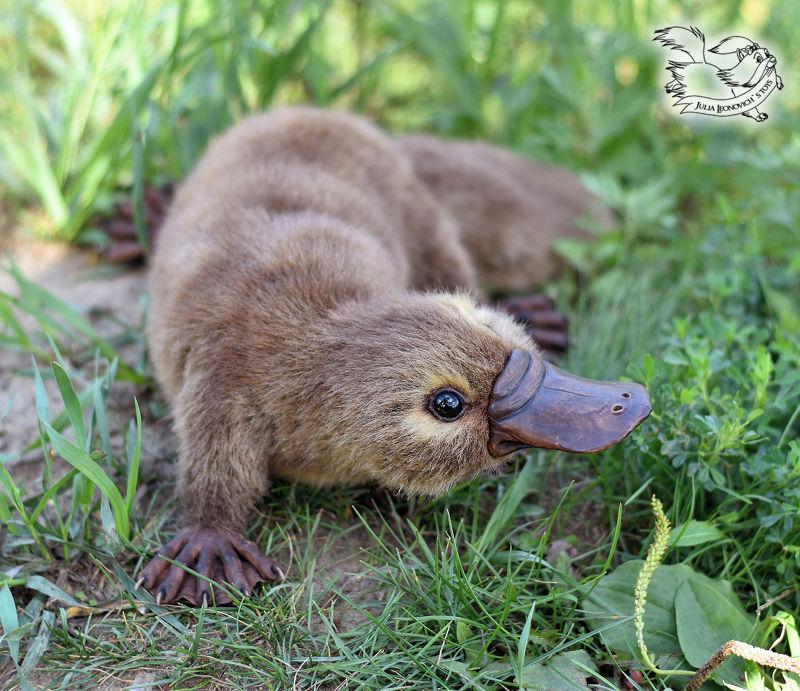
The platypus is a semi-aquatic mammal endemic to East to NorthAustralia, including Tazmania. The only mammal that lays eggs instead of giving birth. The body and the broad flat tail of these animals are covered with dense brown fur, including to keep the animals warm. These are species that are closer to those of ducks, than to these known mammals. Weight varies considerably from 0.7 to2.4 kg with males being larger than females. And male averages 50 cm total length while the female major approximately 45 cm. The platypus has an average temperature of 32 degrees Celsius rather than 37 degrees Celsius that is typical of placental mammals
What animal is being described in the monologue?
29Mosquitos
Octopus
Hippopotamus
Platypus


- Q1
The platypus is a semi-aquatic mammal endemic to East to NorthAustralia, including Tazmania. The only mammal that lays eggs instead of giving birth. The body and the broad flat tail of these animals are covered with dense brown fur, including to keep the animals warm. These are species that are closer to those of ducks, than to these known mammals. Weight varies considerably from 0.7 to2.4 kg with males being larger than females. And male averages 50 cm total length while the female major approximately 45 cm. The platypus has an average temperature of 32 degrees Celsius rather than 37 degrees Celsius that is typical of placental mammals
What animal is being described in the monologue?
Mosquitos
Octopus
Hippopotamus
Platypus
300s - Q2
The platypus is a semi-aquatic mammal endemic to East to NorthAustralia, including Tazmania. The only mammal that lays eggs instead of giving birth. The body and the broad flat tail of these animals are covered with dense brown fur, including to keep the animals warm. These are species that are closer to those of ducks, than to these known mammals. Weight varies considerably from 0.7 to2.4 kg with males being larger than females. And male averages 50 cm total length while the female major approximately 45 cm. The platypus has an average temperature of 32 degrees Celsius rather than 37 degrees Celsius that is typical of placental mammals
How much does the Platypus weigh?
0.7 to 2.4 kg
0.7 to 2.3 kg.
0.7 to 2.5 kg.
0.7 to 2.6 kg.
300s - Q3
The polar bear is a bear native to the Arctic Ocean and its surrounding seas. An adult male weighs about four hundred to six hundred and eighty kilograms, while an adult female is about half that size. Although it is closely related to the brown bear, it has paws adapted for cold temperatures, moving across the snow, ice, open water, and hunting seals. Although most polar bears are born on land, it spends most of their time at sea.
What does the adult male bear weigh?
480 – 600 kg
680 – 880 kg
400 – 680 kg
880 – 1500 kg
300s - Q4
The polar bear is a bear native to the Arctic Ocean and its surrounding seas. An adult male weighs about four hundred to six hundred and eighty kilograms, while an adult female is about half that size. Although it is closely related to the brown bear, it has paws adapted for cold temperatures, moving across the snow, ice, open water, and hunting seals. Although most polar bears are born on land, it spends most of their time at sea.
Where did the animal live?
In the North Atlantic Ocean
In the Pacific Ocean
In the Arctic Ocean
In the Indian Ocean
300s - Q5
Napoleon is a favorite fish for divers in many regions of the world. The fish can instantly be recognized by its size, color, and shape. It is one of the largest reef fish in the world. They can grow up to 230 cm and weigh 190 kg. They have fleshy lips and a hump over the head that is similar to a napoleon hat. The Hump becomes more prominent with age.
Colors vary with age and sex. Males range from bright electric blue to green or purplish-blue. Mature males develop a black stripe along the sides, blue spots on their body scales, and blue scribbles on the head. Juveniles can be identified by their pale greenish color and two black lines running behind the eye. Females, both old and young, are red-orange on the upper parts of their bodies and red-orange to white yellow.
Napoleon fish are carnivorous. They can be seen feasting on shellfish, other fish, sea stars, sea urchins, and crabs, crushing the shells to get the animal within. They also crush large chunks of dead coral rubble with peg-like teeth to feed on the burrowing mussels and worms.
What is the text about?
Napoleon’s family
The divers’ favorite animals
The physical characteristics of carnivorous fish
The description of Napoleon fish
300s - Q6
Napoleon is a favorite fish for divers in many regions of the world. The fish can instantly be recognized by its size, color, and shape. It is one of the largest reef fish in the world. They can grow up to 230 cm and weigh 190 kg. They have fleshy lips and a hump over the head that is similar to a napoleon hat. The Hump becomes more prominent with age.
Colors vary with age and sex. Males range from bright electric blue to green or purplish-blue. Mature males develop a black stripe along the sides, blue spots on their body scales, and blue scribbles on the head. Juveniles can be identified by their pale greenish color and two black lines running behind the eye. Females, both old and young, are red-orange on the upper parts of their bodies and red-orange to white yellow.
Napoleon fish are carnivorous. They can be seen feasting on shellfish, other fish, sea stars, sea urchins, and crabs, crushing the shells to get the animal within. They also crush large chunks of dead coral rubble with peg-like teeth to feed on the burrowing mussels and worms.
From the text, we know that...
Napoleons are herbivores
Males both old and young have the same color
Napoleons can grow up to 190 cm with weigh 230 kg
Females both old and young have the same color
300s - Q7
Every single rock on the surface of the Earth-whether it is gravestone, a piece of solidified lava from a volcano or a boulder that has broken from a cliff or mountain-is slowly being broken down. This breaking down of rocks at or near the Earth’s surface is called weathering. The word is used because the weather is mainly responsible. Weathering turns solid rock into soft materials that may eventually form soil.
Air and water are the cause of most weathering. Sometimes they change the chemical in the rocks, and sometimes they just break apart the rock physically. If water seeps into the cracks in the rocks, for example, it may later freeze if the temperature falls below 0 degrees Celsius. As the water turns to ice, it expands, pushing against the sides of the rock with a pressure believe to be as much as 2,100 kilograms per square centimeter. This forces the cracks open. Repeated freezing and thawing causes the fragments to break away from the original rock, these may slide down a cliff or mountain and form a sloping mass of fragments at the bottom, called scree.
According to the text,….
chemical in the rocks causes weathering in every single rock-
there are two kinds of rock, gravestone and a boulder
a cliff or mountain may slide down because of the water in the rocks
soft materials will turn to solidified lava through weathering
300s - Q8
Every single rock on the surface of the Earth-whether it is gravestone, a piece of solidified lava from a volcano or a boulder that has broken from a cliff or mountain-is slowly being broken down. This breaking down of rocks at or near the Earth’s surface is called weathering. The word is used because the weather is mainly responsible. Weathering turns solid rock into soft materials that may eventually form soil.
Air and water are the cause of most weathering. Sometimes they change the chemical in the rocks, and sometimes they just break apart the rock physically. If water seeps into the cracks in the rocks, for example, it may later freeze if the temperature falls below 0 degrees Celsius. As the water turns to ice, it expands, pushing against the sides of the rock with a pressure believe to be as much as 2,100 kilograms per square centimeter. This forces the cracks open. Repeated freezing and thawing causes the fragments to break away from the original rock, these may slide down a cliff or mountain and form a sloping mass of fragments at the bottom, called scree.
The first paragraph is about….
the definition of weathering
the materials of weathering
the process of weathering
the impact of weathering
300s - Q9
Remote sensing is the acquisition of information about an object or phenomenon, without making physical contact with the object. In modern usage, the term generally refers to the use of aerial sensor technology to detect and classify objects on Earth (both on the surface, and in the atmosphere and ocean) by means of propagated signals (e.g. electromagnetic radiation emitted from aircraft or satellites).
There are two main types of remote sensing: passive remote sensing and active remote sensing. Passive sensors detect natural radiation that is emitted or reflected by the objects or surrounding area being observed. Reflected sunlight is the most common source of radiation measured by passive sensors. Examples of passive remote sensors include film photography, infra-red, charge-coupled devices, and radiometers. Active collection, on the other hand, emits energy in order to scan objects and areas whereupon a sensor then detects and measures the radiation that is reflected or backscattered from the target. RADAR and LIDAR are examples of active remote sensing where the time delay between emission and return is measured, stabilizing the location, height, speed, and direction of an object.
From the text, we know that remote sensing…
Is a way to obtain information about an object or phenomenon
Makes physical contact with the object
Does not difficult to do
Does not make use of censors
300s - Q10
Remote sensing is the acquisition of information about an object or phenomenon, without making physical contact with the object. In modern usage, the term generally refers to the use of aerial sensor technology to detect and classify objects on Earth (both on the surface, and in the atmosphere and ocean) by means of propagated signals (e.g. electromagnetic radiation emitted from aircraft or satellites).
There are two main types of remote sensing: passive remote sensing and active remote sensing. Passive sensors detect natural radiation that is emitted or reflected by the objects or surrounding area being observed. Reflected sunlight is the most common source of radiation measured by passive sensors. Examples of passive remote sensors include film photography, infra-red, charge-coupled devices, and radiometers. Active collection, on the other hand, emits energy in order to scan objects and areas whereupon a sensor then detects and measures the radiation that is reflected or backscattered from the target. RADAR and LIDAR are examples of active remote sensing where the time delay between emission and return is measured, stabilizing the location, height, speed, and direction of an object.
Based on the text we can say that..Medical science can be improved through remote sensing
Remote sensing is useful for transportation
Remote sensing make it possible to collect information of an object in a dangerous area
Remote sensing is expensive technology
300s


